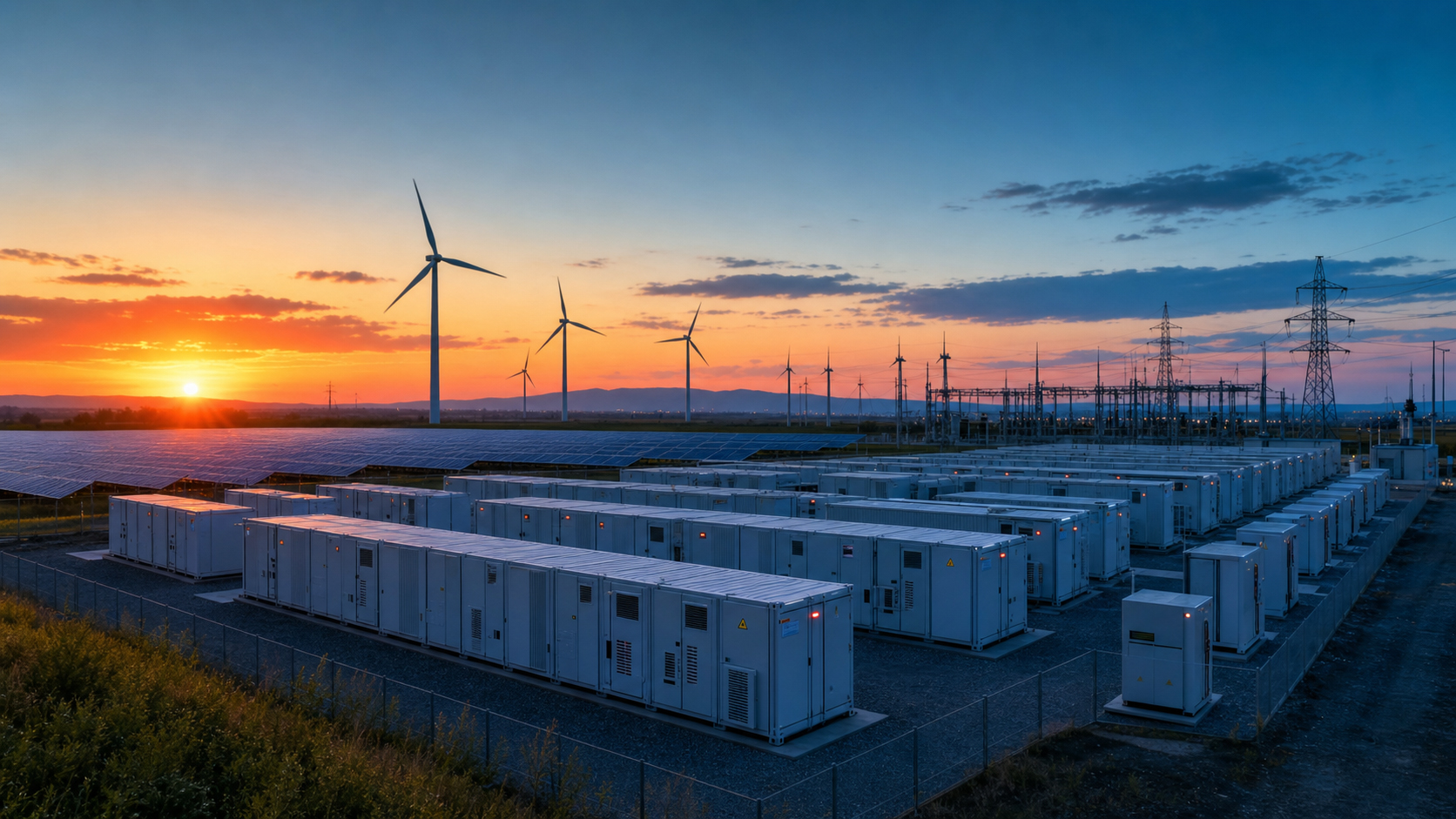
Energy storage transformation sought | Electricity gap instead of gas gap: Summer surplus and winter shortage – The bitter truth about our electricity grid – Creative image on the topic, with AI: Xpert.Digital
Germany's absurd electricity problem: Why we are giving away massive amounts of energy
Fatal investment brake: How politics is blocking the most important part of the energy transition
While Germany anxiously watches its gas storage facilities dwindle in late summer 2026, an even more serious challenge fades into the background: the looming electricity gap of the energy transition. While clear legal reserves exist for natural gas, the electricity grid reveals a fatal structural flaw. On sunny and windy days, the country already produces more renewable energy than it can consume – with the absurd consequence that negative prices are achieved on the exchange, and producers even have to pay to get rid of their electricity. At the same time, this energy is lacking on dark, windless winter days. Although the market is currently reacting with an unprecedented boom in battery storage, unclear political frameworks, looming grid fees, and protracted approval processes are severely hindering development. The following article examines why we must not only generate the electricity of the future but also store it – and which obstacles for a genuine "storage revolution" urgently need to be removed now.
From the gas gap to the electricity gap: Why Germany needs a storage revolution
A historic low as a wake-up call
German gas storage facilities were emptier in the summer of 2026 than they had been in years. In mid-August, the fill level was around 50 percent, compared to almost 67 percent on the same day the previous year – a shortfall of more than 17 percentage points. This means that significant quantities are missing to reach the legally mandated interim target of 80 percent by November 1st, and industry associations like INES point out that the rate of injection would practically have to double to reach this mark. While the Federal Network Agency continues to assess the supply situation as fundamentally stable, it is monitoring developments with a particular focus on the minimum fill level requirement of 30 percent by February 1st, 2027. It is telling that no one in Germany seriously doubts the necessity of gas storage facilities. Since the 2022 energy crisis, they have been considered an indispensable component of security of supply, hardly ever discussed politically anymore, but rather accepted as a technical and regulatory given. Conversely, this debate about natural gas reveals how inadequate the corresponding debate on electricity has been so far, even though the challenge there is in some respects even greater.
The wasted energy of the energy transition
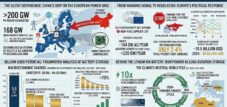
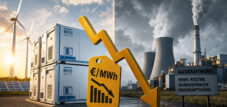
While there is ongoing debate about gas reserves, Germany is now regularly producing significantly more renewable electricity than it currently needs. The most visible symptom of this phenomenon is the sharp increase in negative electricity prices on the exchange. In the record year of 2025, around 575 hours with negative day-ahead prices were recorded on the EPEX Spot exchange, more than twice as many as in 2023 (around 300 hours) and considerably more than in 2016, when only 97 such hours were registered. Forecasts for the current year, 2026, predict 700 to 900 negative hours, driven by the continued expansion of photovoltaics and a simultaneous decrease in the flexibility of conventional power plants. On May 1, 2026, the intraday price temporarily plummeted to minus 855 euros per megawatt-hour, while the day-ahead price reached minus 499.99 euros, just one cent away from the then-current technical price floor of the exchange. In response to such extreme values, EPEX Spot has now lowered the price floor from minus 500 to minus 600 euros per megawatt hour. These figures illustrate a system that, on sunny and windy days, literally generates more energy than it can reasonably use or export, while during the same hours, producers sometimes even pay someone to take the electricity off their hands.
Why the problem is structural in nature
A comparison between gas and electricity reveals a fundamental asymmetry in German energy policy: Legally enshrined storage obligations with clear target levels exist for fossil fuels, while a comparable logic is still lacking for the increasingly renewable electricity generation. Photovoltaic capacity continues to grow by approximately 15 gigawatts per year, without sufficient flexibility and storage capacity being built up at the same pace to smooth out the significant fluctuations in generation throughout the day. The result is an electricity system that experiences a surplus during many midday hours in spring and summer, while remaining dependent on conventional reserve capacities or imports on dark, windless winter days, the so-called "dark doldrums." This pattern is not a temporary teething problem of the energy transition, but rather a structural characteristic of a system based on weather-dependent generation technologies. Without significantly more storage capacity, the gap between generation surplus and deficit will tend to widen further with every additional gigawatt of installed wind and solar power.
Battery storage as the fastest available answer
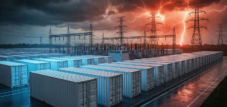
The market is now responding to this challenge with a veritable boom in battery storage. In the first half of 2026, approximately 2,483 megawatts of new installed capacity were connected to the grid in Germany, an increase of about one-third compared to the same period of the previous year, while newly installed storage capacity rose by almost 76 percent to around 5,642 megawatt-hours. A total of approximately 2.6 million battery storage systems with a combined output of about 18,500 megawatts and a capacity of around 31,500 megawatt-hours are now connected to the German grid. The large-scale battery storage segment is developing particularly dynamically, with new installations increasing by around 290 percent in the first quarter of 2026 compared to the previous year. Should this pace continue, the total installed storage capacity in Germany could grow to approximately 35 gigawatt-hours by the end of 2026. Unlike pumped storage power plants, which are limited to geographically specific locations, or hydrogen storage facilities, which are still in the early stages of technological and economic maturity, large-scale battery storage systems can be built within a few months and placed virtually anywhere grid connection capacity and available space are available. Battery storage is therefore currently by far the fastest scalable tool for buffering short-term generation surpluses and making them available again during periods of high demand.
The difference between growth and actual demand
Despite these impressive growth rates, industry analysts warn against uncritically interpreting the current boom as proof of sufficient storage development. An analysis by the consulting firm Enervis concludes that, under unfavorable conditions, the addition of large-scale storage capacity by 2029 could reach only around 15 gigawatt-hours, even though projects with a total volume of approximately 58 gigawatt-hours are in the planning stages. Only about one-fifth of the registered large-scale storage projects are currently considered sufficiently secure, indicating considerable uncertainties regarding financing, grid connection, and permitting. Bottlenecks are also evident in grid connection itself: Projects with a total capacity of 3.4 gigawatts were originally projected for 2026, but according to market analysts, actual commissioning regularly falls short of the ambitious pipeline forecasts because grid connection deadlines delay commercial operation. This discrepancy between registered pipeline and actual realized capacity makes it clear that a sustained high growth rate is not a given, but depends on political and regulatory decisions in the coming years.
Network charges as an investment brake
One of the key uncertainties for investors concerns the future treatment of grid fees for storage facilities. Currently, battery storage systems benefit from a substantial exemption from grid fees under Section 118, Paragraph 6 of the German Energy Industry Act (EnWG), provided they are commissioned between August 2011 and August 2029. This exemption is valid for 20 years from the date of commissioning. Without this regulation, storage operators would have to pay grid fees both when storing and subsequently discharging the same electricity, effectively resulting in a double charge averaging around nine cents per kilowatt-hour and potentially rendering many business models unprofitable. The Federal Network Agency (Bundesnetzagentur) is currently working on a fundamental reform of the grid fee system within the framework of the so-called AgNes procedure. This reform aims to preclude a complete exemption from grid fees for new storage projects in the future, as this is considered unsustainable under European law. However, in its interim report from May 2026, the agency reversed course and significantly strengthened the protection of legitimate expectations for projects already implemented or in advanced stages of financing, meaning that existing facilities will generally retain their current exemption. For new storage projects without a timely investment decision, a moderate capacity charge of approximately four to seven euros per kilowatt of connected load per year is planned, without additional operating charges and explicitly without double charging for injection and withdrawal. Dynamic, grid-condition-dependent charges, intended to reward grid-friendly behavior, are planned for implementation no earlier than 2030 and ideally by 2033.
Between legal certainty and regulatory risk
Even though the Federal Network Agency's recent signals have a generally positive effect on the energy storage sector, a considerable degree of uncertainty remains, complicating investment decisions. The final draft of the grid fee reform is not expected until the end of 2026, market communication is slated to follow in 2028, and the actual implementation is not scheduled until early 2029. Until then, project developers must work with a regulatory roadmap that has changed several times: from a proposed complete abolition of the exemption, through an initial shift in policy in January 2026, to the current, more investor-friendly position from May of the same year. This situation is exacerbated by the parallel discussions surrounding so-called Flexible Connection Agreements, which would link the grid connection of storage facilities to specific operating conditions. Industry analysts point out that grid fees and such connection restrictions can reinforce each other, and that under worst-case scenarios, the return on a storage project could fall from around 20 percent to below 10 percent – the threshold at which projects become difficult to finance for many financiers. This mix of fundamentally positive, but not yet definitively fixed regulatory guidelines explains why, despite impressive market growth, only a fraction of the registered project pipeline is considered truly secure.
The role of storage for grid stability
Battery storage systems now do far more than simply shift energy quantities over time. They increasingly provide ancillary services that were previously almost exclusively provided by conventional power plants, such as frequency control, voltage regulation, and the provision of balancing power within milliseconds. These capabilities are gaining importance because the phasing out of fossil fuel baseload power plants simultaneously eliminates a portion of the previous grid stabilization capacity, which renewable energy sources cannot readily compensate for due to physical limitations. In this respect, large-scale battery storage systems fulfill a dual function: They buffer short-term generation peaks and simultaneously contribute to the technical stability of a grid that is increasingly characterized by decentralized, weather-dependent generation. The German Solar Association (BSW-Solar) also points out that a growing number of battery storage systems could significantly reduce the need for expensive reserve gas-fired power plants, which would otherwise have to be maintained solely to cover periods of low wind and solar output. The existing stock of stationary battery storage systems is theoretically sufficient to store the average daily electricity consumption of around three million German private households, which underlines the increasing system relevance of this technology.
The gap between summer surplus and winter shortage
A crucial aspect often overlooked in public debate is the fundamental difference between short-term and long-term storage needs. Battery storage is ideally suited to balancing daily fluctuations, such as making the midday solar surplus available for the evening hours. However, for seasonal fluctuations—that is, balancing sunny summer months with dark, windless winter weeks—the currently available and economically viable battery capacity is far from sufficient. Realistically, this gap can only be closed by a combination of different technologies, including pumped-storage hydroelectric plants, hydrogen storage to a limited extent, and significantly more flexible demand-side behavior. This is precisely where the real parallel to the gas storage debate becomes apparent: Just as there is a legally mandated fill level regulation for natural gas to ensure seasonal balancing between summer and winter, a similarly binding set of instruments that systematically addresses the seasonal need for flexibility is currently lacking for electricity. Without such an overarching strategy, German electricity storage policy tends to remain reactive and market-driven, rather than proactively planned.
What a true storage revolution would have to achieve
A consistent shift towards energy storage would mean pursuing the expansion of storage capacities with the same political priority that has been given to the expansion of wind and solar power plants over the past two decades. This requires, first and foremost, regulatory planning certainty, as investors need reliable and stable long-term framework conditions to finance multi-billion-euro projects with amortization periods of ten to twenty years. Equally important is an accelerated permitting process for grid connections, since the current discrepancy between registered and actually realized storage capacity is largely due to delays in connection dates. Furthermore, it is essential to consistently treat storage systems as what they are systemically: namely, flexibility providers that actively contribute to the stability and cost-efficiency of the overall system through grid-supportive behavior, instead of treating them regulatoryally like mere consumers or mere producers. The differentiation between grid fees with a financing function and those with an incentive function, as envisioned by the Federal Network Agency, points in this direction, but in its final design, it must actually reward grid-supportive behavior instead of simply generating additional costs. Finally, there needs to be an honest social and political debate about the fact that storage capacity is not a luxury, but a necessary investment in the security of supply of an electricity system that increasingly relies on weather-dependent generation.
Looking ahead
The currently low gas storage levels highlight a principle that applies to the electricity sector just as much as to fossil fuels: without sufficient reserves, every energy system becomes vulnerable to price fluctuations and supply risks. The rapid but uneven expansion of battery storage demonstrates that the market has fundamentally recognized the problem and is reacting with considerable speed, albeit under difficult and sometimes contradictory regulatory conditions. The next two to three years, during which the grid fee reform is finalized and the transitional provisions of the Energy Industry Act expire, will be crucial in determining whether Germany can expand its storage capacity at the necessary pace and scale. Should policymakers provide clarity and reliable incentives, Germany will have the technological and economic foundation to further develop its energy transition from a mere generation shift to a genuine systemic transformation, in which storage capacity is considered as much a matter of course as gas storage is today during the winter.