Join us! EBK Start-up Challenge 2026: This unusual deal changes everything for German hardware founders – Image: EBK Group
The dangerous gap in the startup scene: Why so many hardware prototypes never become products
Startup boom in Germany: AI is boosting startups, but industry is left out
Lots of scale, little substance: Why thousands of new AI companies won't save us from job losses
Germany will experience a record number of new business start-ups in 2026 – but the jubilation masks a pressing structural problem. While thousands of new, small software companies are springing up almost effortlessly, often as a side hustle, thanks to artificial intelligence, genuine industrial value creation is falling by the wayside. Hardware start-ups, in particular, are failing en masse in the "death zone" between a functioning prototype and marketable series production, due to a lack of manufacturing experience, capital, and supplier networks. Yet, this is precisely where the untapped potential for new, future-proof jobs lies. Closing this gap requires more than just financial injections; it demands a collaboration between two worlds: the innovative power of young founders must meet the deeply rooted production know-how of established medium-sized businesses. Initiatives like the EBK Start-up Challenge are now demonstrating how this bridge can be built in practice – by providing machine time and engineering expertise free of charge to transform promising ideas into the real industrial products of tomorrow.
The EBK Challenge 2026/27 at a glance
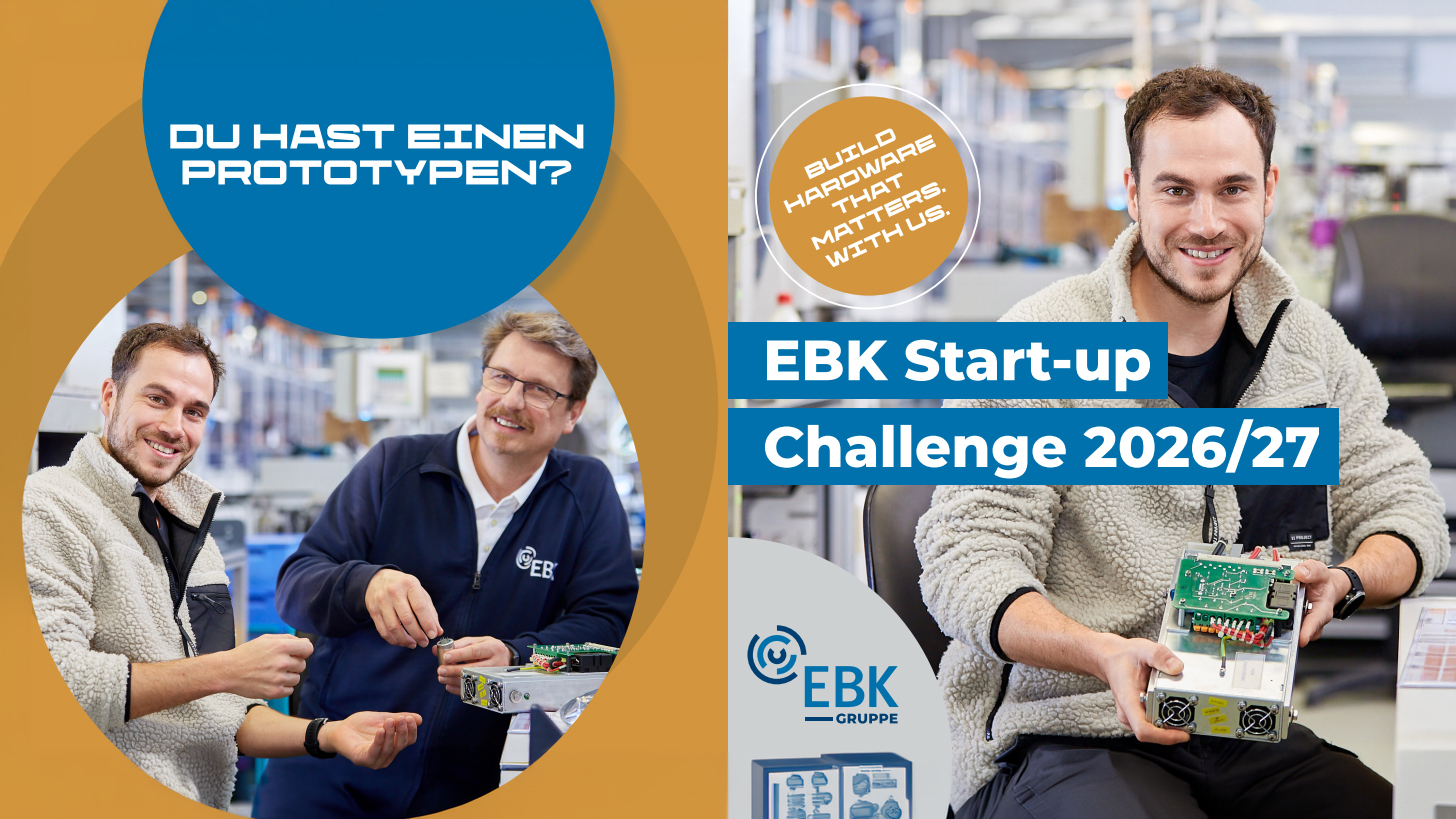
With this challenge, the EBK Group supports a hardware start-up/scale-up with the goal of developing a prototype to market and series production readiness. The team that convinces the expert panel of its functioning proof of concept receives six months of support from an experienced development, certification, and sales team, valued at €30,000. No participation fee. No equity stake required.
- Application period: September 1st – October 31st, 2026
- Pitch Day – Presentation to the jury in Berlin-Adlershof
- The winning team will receive a funding package worth €30,000. This includes 6 months of full EBK support, for example in the form of:
- 10 hours/week EBK technician
- 10 hours/week EBK manufacturing
- 4 hours/week marketing,
- Sales & Administration
- Access to our supplier network of 600+
- Location: Berlin-Adlershof
- Participation fee: none
- Company share transfer: none
- Further information: ebk-gruppe.com/start-up-challenge-2026
Record numbers, zero growth – Germany's startup scene celebrates itself while industry bleeds dry
Germany set a historic record for startups in the first half of 2026. With 3,053 new companies, 52 percent more startups were founded than in the second half of 2025 and more than in the entire year of 2024. June 2026, with over 600 new businesses, was the strongest month since systematic data collection began in 2019. Politicians and industry associations are celebrating this development as evidence of a new era of entrepreneurship, but a closer look at the economic substance of these startups significantly tempers the euphoria. Minister of Economic Affairs Katherina Reiche spoke of a new dynamic in the ecosystem, while the German Startup Association hailed the figures as a historic turning point. However, a more detailed examination reveals that the sheer number of startups says little about their economic viability.
Artificial intelligence as a double-edged sword
The central driver of this boom is artificial intelligence, which has radically simplified and reduced the cost of starting a business. AI tools now handle many operational tasks, from accounting and marketing to software development, making self-employment accessible to significantly more people. Approximately one in three new businesses, specifically 1,038 of the 3,053 companies, has a clear connection to AI. With 844 new businesses, the software sector remains by far the strongest industry, well ahead of medicine, food, and manufacturing. It is also striking that 70 percent of these startups were part-time ventures – a new record that demonstrates how accessible starting a business has become. This accessibility is both a cause and a symptom of a structural problem: where barriers to entry fall, the average company size often falls as well.
Lots of bulk, little industrial substance
The sheer number of startups says nothing about their impact on employment, and this is precisely the crux of the economic problem. Most of the newly formed companies remain structurally small, often sole proprietorships or micro-enterprises in the software and service sectors, which create hardly any additional jobs. By comparison, in the US, around eight percent of all employees work in startups and scale-ups, while in Germany, despite the current boom, this figure is only around one percent of total employment. This discrepancy illustrates that while Germany is catching up quantitatively, structurally it still lags far behind comparable innovation economies. A software startup with two or three founders can be profitable and successful without ever creating more than a handful of full-time jobs, whereas a hardware company that makes the leap to mass production brings with it entire production lines and thus dozens to hundreds of industrial jobs.
When skills shortage becomes a matter of survival
While the startup scene is booming, established medium-sized businesses are grappling with a contrasting problem: a structural shortage of skilled workers that is eroding the foundations of industry. More than 40 percent of medium-sized companies with over 20 employees continue to report significant difficulties filling vacancies, considerably more than large companies at around 19 percent. Approximately 71.7 percent of all unfilled positions in Germany are in small and medium-sized enterprises, with a particular shortage of skilled workers in production and manufacturing. The German Economic Institute (IW) has estimated the economic cost of this skilled worker shortage at €49 billion in lost production potential per year – a figure that could rise to as much as €74 billion by 2027. Around a third of the affected medium-sized businesses even see their own existence threatened in the medium to long term due to the labor shortage. These figures demonstrate that medium-sized businesses possess something that young hardware startups lack: experienced manufacturing personnel. Conversely, startups have access to fresh ideas and innovative strength that the aging medium-sized businesses often lack. Therefore, an integration of both worlds makes economic sense.
A strategy that starts at the wrong end
In July 2026, the German Federal Government responded with a new startup and scaleup strategy, which the Federal Cabinet adopted, comprising around 150 individual measures across eight areas of action. The strategy pursues three stated goals: facilitating business start-ups, accelerating growth, and retaining innovation within the country. These goals are supported by multi-billion-euro financing instruments such as the continuation of the Future Fund and a Germany Fund with a budget of up to €130 billion. Key measures include expanding EXIST funding programs for university spin-offs, digitizing start-up processes through the "Faster Start-ups" project, and developing new instruments for security and defense technologies. It is noteworthy that a significant portion of the measures focuses precisely on the area where over 3,000 new start-ups already represent a historic record: accelerating the start-up process itself. The real bottleneck, the transition from a functioning prototype to marketable series production, remains comparatively under-represented in the strategy, even though this is precisely where the crucial job creation effects would occur.
The prototype that never becomes a product
Hardware startups, in particular, often face a problem frequently described in innovation economics as the "death zone" between prototype and mass production. A technically convincing proof of concept can be relatively easily realized in small workshops or using rapid prototyping methods, but the leap to certified, cost-efficient, and quality-assured mass production requires manufacturing experience, supplier networks, and capital intensity that young teams rarely possess. It is precisely at this point that many technically promising approaches fail before they even have the chance to create jobs. This gap is not a peripheral issue, but rather the real bottleneck between innovation dynamics and real value creation in Germany.
When the middle class becomes the enabler
This is precisely where the EBK Group's EBK Start-up Challenge 2026 and 2027 comes in – an initiative that exemplifies how medium-sized companies can practically close the gap between prototype and series production. Within the framework of the Challenge, the EBK Group specifically supports a single hardware start-up or scale-up with the clearly defined goal of developing an already functioning prototype into a market-ready and mass-produced product. The crucial entry hurdle is the rigorous selection process: only teams that can present a working proof of concept to the expert panel are eligible to apply – not just an idea or a concept paper, but a technically robust, fully functional product sample. This selection logic differs fundamentally from traditional early-stage funding programs, which often start with the initial idea generation phase, and ensures that limited resources are allocated precisely where the real bottleneck lies: namely, the transition from a functioning individual solution to industrial-scale production.
The winning team will receive six months of support from an experienced development, certification, and sales team, valued at €30,000. Specifically, this support package is divided into several parallel support strands: ten hours per week from EBK technicians who will assist with design and technical questions related to series production; another ten hours per week of direct manufacturing capacity at the EBK plants themselves; and four hours per week for marketing, sales, and administration – the business functions that young teams often lack, along with technical manufacturing expertise. In addition, the team will gain access to a supplier network with more than 600 partners, an advantage that is often underestimated in practice, even though procuring components, materials, and services at competitive prices is one of the biggest operational hurdles for hardware startups on their path to series production. The combination of technical development support, real manufacturing capacity, commercial support and established supplier access thus forms a complete ecosystem that a single start-up could hardly build on its own to this extent.
Particularly noteworthy are the conditions under which this funding package is awarded. Participation in the challenge is completely free of charge, and the winning team does not have to relinquish any company shares in return. This point deserves special attention because it fundamentally distinguishes the model from classic incubators, accelerators, or venture capital structures, where relinquishing company shares in exchange for capital or infrastructure is standard practice and young founding teams have to relinquish control and future profits at an early stage. The EBK Group deliberately forgoes this consideration and thus explicitly positions the challenge as a contribution to local responsibility and not as an instrument for its own equity investment or profit generation.
The challenge's timeline is clearly structured. The application phase runs from September 1st to October 31st, 2026, giving interested teams two full months to submit their proof of concept and concept. This is followed by a Pitch Day, where the remaining applicants will present their projects in person to a panel of experts at the EBK site in Berlin-Adlershof, one of Germany's most established technology and research locations with close ties to scientific institutions and industry partners. The choice of this location is no coincidence, as Adlershof has served for decades as an interface between research, the startup scene, and industrial application, symbolically embodying precisely the bridge between innovation and manufacturing that the challenge aims to build. Further details about the application process and the exact terms and conditions of participation are available on the EBK Group website at ebk-gruppe.com/start-up-challenge-2026 .
🎯🎯🎯 Data-driven B2B industry hub as a quasi-in-house solution

The quasi-in-house solution: How Xpert.Digital closes operational gaps in B2B marketing and sales – Smart Content-Driven Business - Image: Xpert.Digital
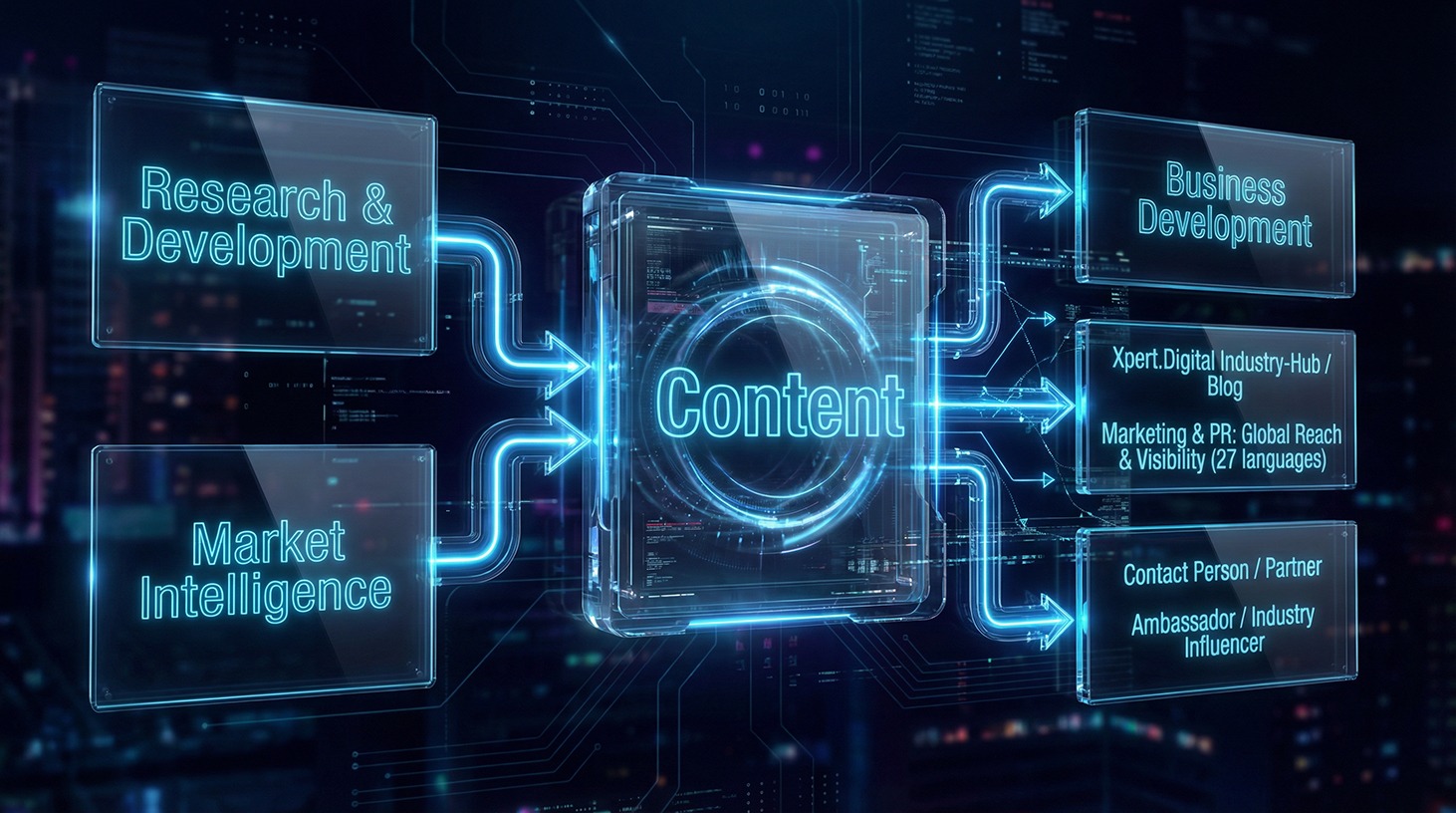
Xpert.Digital is a data-driven B2B industry hub led by Konrad Wolfenstein . The company acts as an external, quasi-in-house solution for industrial partners, closing operational gaps in marketing, content, and sales – without requiring additional resources on the client side.
More information here:
From prototype to product: Why industrial power is more important than government funding
Thirty years of experience as an asset
The EBK Group itself is a production partner for discontinued series, small series, and spare parts, employing over 160 people in a 10,000-square-meter production facility and boasting thirty years of experience in production and engineering. Its long-standing customers include renowned industrial corporations such as Siemens, Bosch, Mercedes-Benz, BMW, Porsche, Panasonic, Deutsche Bahn, and the Berlin public transport company (BVG). This industrial foundation provides the company with precisely the practical manufacturing expertise that many startups lack in the final stages of market readiness. The managing directors of the EBK Group – Daniel Heidrich, Martin Lehmann, and Michael Schneider – explain their commitment by stating that they regularly see technically impressive prototypes that nevertheless never lead to marketable products and thus jobs because they lack crucial manufacturing experience. Their thesis is that medium-sized businesses must actively share this experience instead of using it solely for their own competitive advantage, so that Germany as an industrial location can continue to produce global market leaders in ten years' time. The EBK Group is also part of the DIMIDIA innovation hub, where medium-sized companies and start-ups pool their resources in the areas of engineering and data analytics.
Why such initiatives achieve structurally more than multi-billion-dollar programs
From an economic perspective, a model like the EBK Start-up Challenge is remarkable because it provides precisely the resource that government funding programs can hardly replace: namely, practical production know-how accumulated over decades. Capital injections from funds like the Germany Fund or the Future Fund can close financing gaps, but they don't replace the technical knowledge of how to cost-effectively mass-produce, certify, and ensure the quality of a component. It is precisely this knowledge gap that causes many hardware prototypes to fail before they can even be tested on the market. When medium-sized companies like the EBK Group open their production capacities, technicians, and supplier networks to start-ups in a targeted and free manner, a transfer mechanism is created that complements government funding policies, but doesn't replace them; rather, it supplements them at a crucial point.
Two economic worlds that need each other
Demographic trends further exacerbate the urgency of this integration. According to the German Economic Institute (IW), the skills gap in Germany could grow to around 768,000 unfilled positions by 2028, while at the same time approximately 400,000 people of working age leave the labor market annually due to demographic reasons. Small and medium-sized enterprises (SMEs) are thus continuously losing experienced specialists, while young startup teams, although innovative, rarely possess practical manufacturing experience. The following table illustrates the complementary starting points of both groups:
| feature | Established medium-sized businesses | Young hardware start-ups |
|---|---|---|
| Manufacturing experience | Extensive, often built up over decades | Mostly missing or rudimentary |
| Speed of innovation | Structuring slower, bound to existing processes | High, often AI-supported |
| Personnel structure | Aging workforce, lack of young talent | Young, small teams, often working part-time |
| Access to capital | Established, but often conservative | Volatile, heavily dependent on venture capital |
| Market access | Existing customer relationships and supplier networks | Lack of access to sales and certification structures |
This comparison makes it clear that a structural partnership between the two worlds makes more economic sense than isolated support for the start-up phase alone.
What the founding record really means
The record 3,053 new business start-ups in the first half of 2026 is undoubtedly a testament to entrepreneurial courage and technological dynamism in Germany, but it is not an automatic indicator of economic growth or new industrial jobs. The German government is right to reduce bureaucratic hurdles and mobilize more private capital with its start-up and scale-up strategy, but these measures primarily affect the entry point of the ecosystem, while the real value creation only occurs afterward: when a prototype actually becomes a marketable, mass-produced product. Initiatives like the EBK Start-up Challenge exemplify how German SMEs can close this gap on their own by actively passing on their decades of accumulated manufacturing expertise to the next generation of founders, without demanding company shares or participation fees. Whether the current start-up boom actually translates into an industrial upswing will therefore depend less on the number of new businesses than on how many of these young companies actually make the leap from idea to mass production.
📈🚀 From visibility to trust 👀🤝 Your scalable path with Xpert.Digital

From visibility to trust: Your scalable path with Xpert.Digital - Image: Xpert.Digital
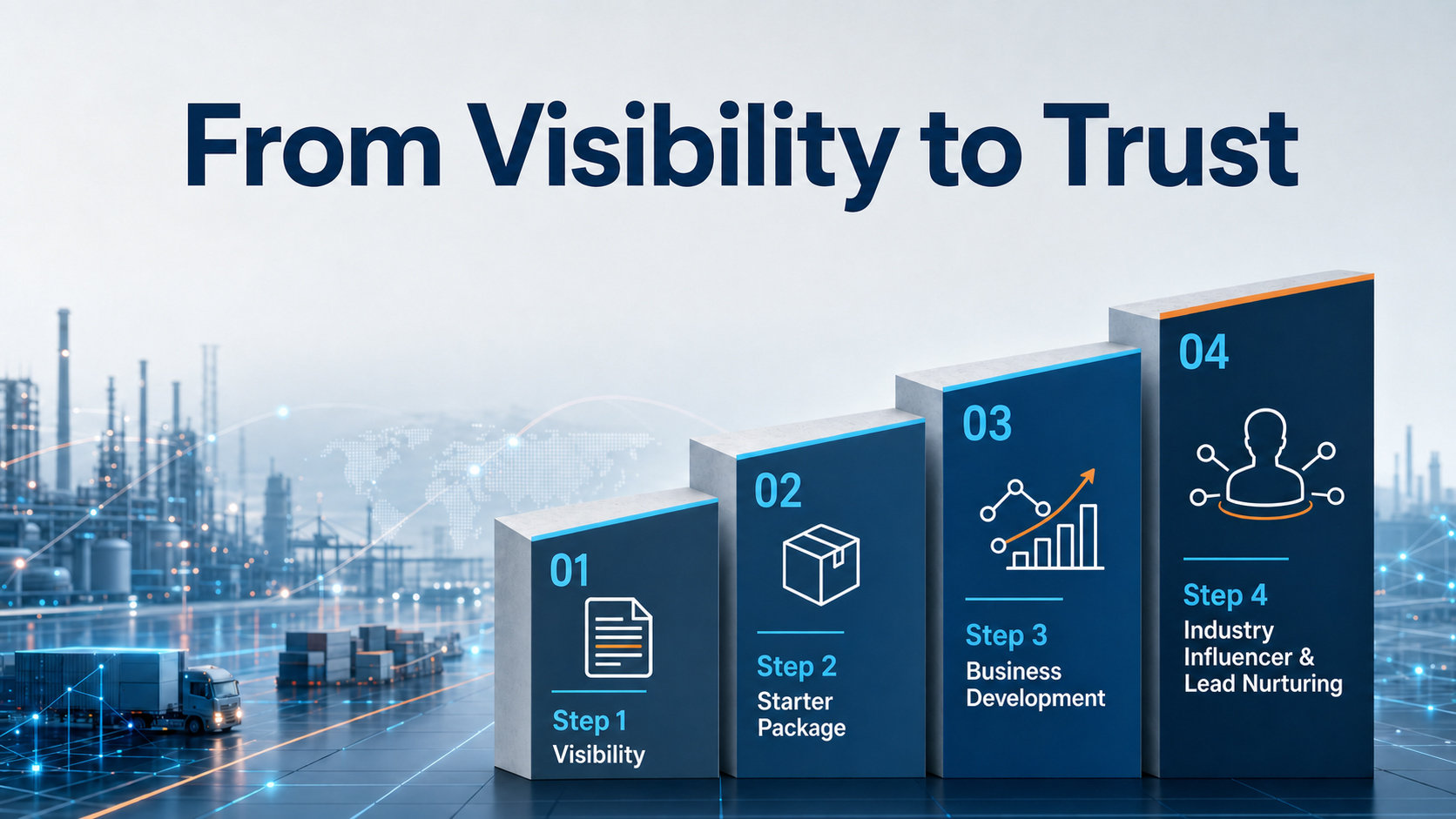
In industrial B2B, sustainable business relationships rarely emerge overnight. They develop step by step – through visibility, professional relevance, recurring touchpoints, and growing trust. Xpert.Digital's 4-stage model addresses precisely this: It offers a structured path that begins with a manageable entry point and can evolve into deeper collaboration in business development if needed.
Instead of relying on loud marketing promises, this model puts the relationship at the forefront. Companies start with clearly defined, easily calculable measures and then decide, based on their own experience, how far they want to expand the collaboration. A key factor for this undisturbed trust-building process: The platform completely avoids annoying advertising ads, so the editorial focus remains solely on the companies' expertise.
More information here:
Your global marketing and business development partner
☑️ Our business language is English or German
☑️ NEW: Correspondence in your native language!

Konrad Wolfenstein
I and my team are happy to be available to you as your personal advisor.
You can contact me by filling out the contact form here wolfenstein@xpert.digital:or simply call me at +49 7348 4088 965. My email address is
I'm looking forward to our joint project.