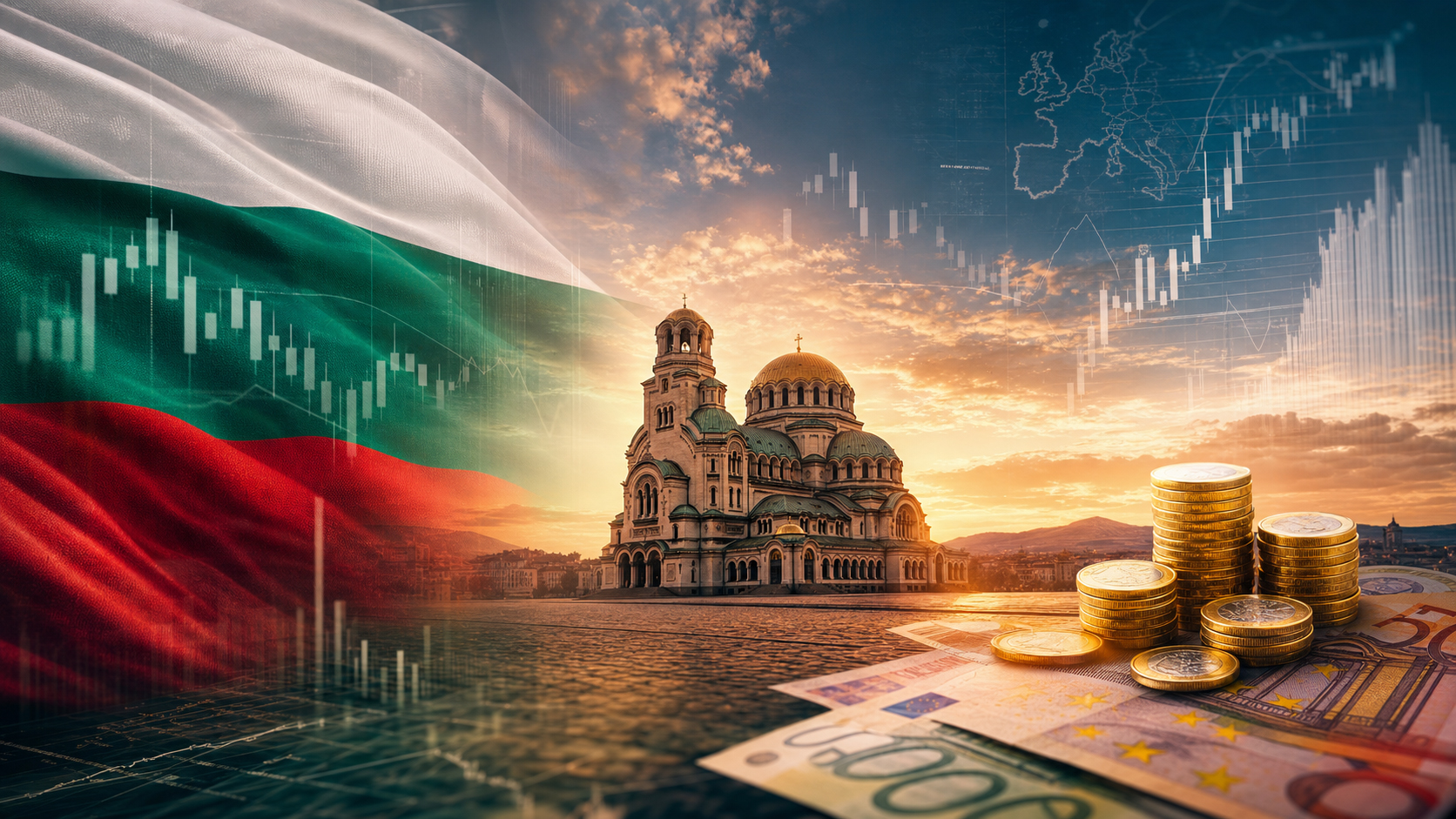
Bulgaria's move to the Euro: Anchor of stability or economic gamble? – Image: Xpert.Digital
Initial assessment after 100 days: Will the feared "Teuro" shock fail to materialize in Bulgaria?
Despite political chaos: Why Bulgaria's economy is growing twice as fast as the EU's
In fact, for almost 30 years: The secret behind Bulgaria's smooth introduction of the euro
While fears of a massive price shock proved unfounded after the first 100 days, and the economy boasts impressive growth rates, the country is being shaken by an unprecedented, protracted political crisis. Faced with mass protests, deeply entrenched corruption, and the eighth parliamentary election in five years, a pressing question arises: Is the common currency the long-awaited anchor of stability for the poorest EU country, or an economic gamble? A comprehensive analysis of the Bulgarian reality, caught between a gold rush mentality, strong trade ties with Germany, and unresolved structural problems.
Between gold rush fever and street protests – what the currency change really means
When the first euro banknotes dispensed from Bulgarian ATMs at midnight on January 1, 2026, the mood in the country was more divided than ever before. On one side were the optimists who saw the common currency as a sign of a new beginning. On the other was a deep, historically rooted skepticism towards anything imposed from above. This ambivalence is no accident – it reflects the complex economic, political, and social reality of a country that, despite considerable progress, remains the poorest member of the European Union.
A long road to a common currency
Bulgaria joined the Eurozone as its 21st member state on January 1, 2026. This leaves only six of the 27 EU member states outside the monetary union: Sweden, Poland, the Czech Republic, Hungary, Romania, and Denmark. For Bulgaria, this accession was the culmination of a decades-long process – involving both institutional discipline and monetary policy decisions made long before its formal entry into the Eurozone.
The key to understanding the Bulgarian path lies in 1997. At that time, following a devastating banking and currency crisis with hyperinflation that at times exceeded 2,000 percent per year, Bulgaria introduced a so-called currency board – a system in which the domestic currency is pegged to an anchor currency, initially the Deutsche Mark, and since 1999 the Euro. The exchange rate of 1.95583 lev per euro has never been touched and corresponded exactly to the rate at which the Deutsche Mark was originally converted to the Euro. Therefore, anyone asking whether Bulgaria's population truly received a new currency must answer honestly: For most practical purposes, the country has effectively been living with the Euro for almost 30 years without actually possessing it.
This fact is economically significant because it explains why the transition proceeded without exchange rate turbulence. There was no risk of appreciation or depreciation. The risks lay, and still lie, elsewhere.
Economic indicators compared
The infographic from the German Economic Institute shows Bulgaria's key economic data for 2024 in comparison to Germany. A dispassionate look at these figures reveals a complex picture.
Bulgaria's nominal gross domestic product (GDP) in 2024 was €104.77 billion – a considerable economic output, but less than one-fortieth of Germany's GDP of €4,328.97 billion. Purchasing power parity (PPP) adjusted GDP per capita in Bulgaria was €26,300, compared to €45,500 in Germany. This gap of almost 73 percent is one of the key findings: Bulgaria is dynamic, but it still has a long way to go to achieve economic convergence with Western Europe.
The growth differential is remarkable. While Bulgaria's real economic output increased by 2.8 percent in 2024, the German economy contracted by 0.5 percent. According to the Federal Statistical Office, Bulgaria's economic growth in 2024 was even higher at 3.4 percent, significantly exceeding the eurozone average of 0.9 percent. Various international institutions confirm this dynamic: The World Bank forecasts growth of 3 percent for 2025, and Allianz Trade described Bulgaria as one of the fastest-growing economies in Central and Eastern Europe.
At first glance, public finances appear exemplary. In 2024, the debt-to-GDP ratio stood at just 24.1 percent – compared to 63.5 percent in Germany, thus significantly below the 60 percent limit stipulated in the Maastricht Treaty. The budget deficit, at minus 3.4 percent of GDP, was precisely at the Maastricht limit. The current account balance was also negative at minus 3.0 percent of GDP, indicating a structural dependence on imports. These figures reveal a country that is macroeconomically sound, but by no means without structural vulnerabilities.
The euro as a promise: What joining the monetary union actually means
The economic literature on the benefits of a monetary union is extensive and sometimes contradictory. In the case of Bulgaria, however, specific transmission channels through which the euro is intended to operate can be identified.
First, transaction costs decrease. Previously, Bulgarian companies had to hedge their international trade or bear the residual exchange rate risk from the currency board. Both of these requirements are eliminated. While this effect is small due to the existing peg, it is not negligible – credit agencies had rated Bulgaria lower despite the stable exchange rate because government debt was formally considered foreign currency debt. With the euro, this so-called "foreign currency penalty" is eliminated, improving the country's creditworthiness and thus its refinancing costs.
Secondly, market access improves. Over 40 percent of Bulgaria's foreign trade already went to the Eurozone in 2024. The elimination of currency barriers makes price comparisons easier, contracts simpler, and integration into European supply chains more attractive. This is particularly relevant for the metallurgical industry and the growing electromobility sector, where Bulgaria has established itself as a supplier to e-bike manufacturers.
Thirdly, Bulgaria gains a say in the European Central Bank. What at first glance appears to be a mere formality is significant for the real economy: a seat on the ECB Governing Council means a vote in interest rate decisions that directly affect the entire Eurozone – and thus also the Bulgarian economy. Bulgarians now effectively no longer pay higher interest rates than the French or Spanish.
Fourth, foreign investors' confidence is growing. The eurozone is internationally regarded as a haven of institutional reliability. Petar Ganev, Senior Research Fellow at the Institute for Market Economics in Sofia, emphasizes that the decisive effect is long-term: strengthened confidence in the purchasing power of the currency and in the country's overall institutional foundation. This intangible factor is difficult to quantify, but historically it has led to measurable increases in investment for other accession countries.
The "Teuro" question: What has become of the fear of inflation?
According to an EU Commission survey, around half of the Bulgarian population rejected the common currency – primarily out of fear of rising prices. This fear is psychologically understandable and has historical precedents: In Germany, the introduction of the euro was perceived by many as "Teuro" (a play on words combining "euro" and "expensive"), even though inflation figures only partially confirmed this impression.
What do the first few months in Bulgaria reveal? After 100 days of the euro in Bulgaria, the European Central Bank has published a remarkably sobering report: The feared rapid price increase failed to materialize. The annual inflation rate fell from 3.7 percent in December 2025 to lower levels in the following months. Consumer prices rose slightly more than usual in January 2026 compared to the previous month – an effect that was, however, classified as temporary and seasonal. In February, price developments returned to normal.
Bulgaria's National Statistical Office calculated a monthly inflation rate of 0.7 percent and an annual rate of 3.6 percent for January 2026 – a level far below the feared shock. Price increases were concentrated primarily in the service sector, where there is less competition, and in areas such as accommodation and food services. According to the Euro Coordination Council, food prices rose by 2.5 to 3.5 percent – in line with normal seasonal fluctuations.
This finding aligns with international experience. When Germany introduced the euro, the inflation rate increased by an average of just under 0.5 percentage points in the first three years compared to the same period of the previous year. The ECB had previously calculated an additional inflationary impulse of 0.2 to 0.4 percentage points for other accession countries. In practice, this corresponds to an increase of a maximum of four cents on a €10 purchase – an effect that is barely perceptible amidst the noise of normal price fluctuations.
Nevertheless, it would be premature to dismiss the population's inflation concerns as irrational. The previous price level in Bulgaria was significantly below the EU average. Any gradual convergence with EU price levels—which will occur regardless of the currency system—will be perceived by many Bulgarians as being due to the euro, even if there is no causal link. This perception problem has plagued the eurozone since its inception.
Foreign trade on the rise: Germany as the most important partner
Germany is by far Bulgaria's most important trading partner. In 2024, around 15 percent of Bulgarian exports went to Germany, and about 10 percent of imports came from there. This asymmetric dependency is strategically significant: if the German economy weakens—as it did in 2024 and 2025 with negative or stagnant growth rates—this has a direct impact on Bulgaria's export performance.
German trade statistics nevertheless show a positive trend. From January to October 2025, Germany exported goods worth €5.3 billion to Bulgaria – an increase of 7.2 percent compared to the same period of the previous year. The most important German exports were motor vehicles and parts, valued at €919 million (+11.9 percent), followed by machinery at €692 million and foodstuffs, particularly chocolate, which saw an increase of 33.3 percent. On the import side, Germany primarily sourced precious metal scrap and waste (€752 million), electrical equipment, and metals from Bulgaria.
Since Bulgaria's accession to the EU in 2007, German exports to Bulgaria have more than doubled (+141 percent), while imports from Bulgaria to Germany have more than quadrupled (+345 percent). These figures demonstrate deep economic integration, which is likely to become even closer with the introduction of the euro. The German-Bulgarian Chamber of Commerce (AHK Bulgaria) views the introduction of the euro as a concrete improvement in investment security and a reduction in transaction costs for bilateral trade.
Industrial base and economic strengths
Bulgaria's economy rests on a broader industrial base than its image as the poorest EU country would suggest. The metallurgical industry remains a backbone of the economy: the country produces coal, iron, copper, and lead. More than 120,000 people are employed in the mining sector – Bulgaria is the fourth-largest producer of lignite in the EU. This structural dependence on fossil fuels is also one of the country's biggest medium-term challenges.
In parallel, a modern industrial sector has developed. The Bulgarian electrical industry has made a name for itself throughout Europe as a supplier to e-bike manufacturers. The IT sector, particularly in Sofia and Plovdiv, is growing at an above-average rate and attracting international companies. Low labor costs – despite significant wage increases in recent years – combined with a well-educated, technically skilled workforce make Bulgaria attractive for the nearshoring strategies of European corporations. In this context, the OECD specifically recommends the expansion of digital and road infrastructure to further increase the return on investment for investors.
The unemployment rate in Bulgaria was 4.2 percent in 2024 – compared to 3.4 percent in Germany – and is surprisingly low by historical and European standards. The Federal Statistical Office even recorded an unemployment rate of just 3.6 percent for October 2025, significantly below the Eurozone average of 6.4 percent. The labor market is therefore robust, but it suffers from a structural problem: the persistent shortage of skilled workers and a massive brain drain. Hundreds of thousands of qualified Bulgarians have emigrated to other EU countries in recent decades. As a result, the population of around 6.3 million has stabilized at a historically low level.
Our EU and German expertise in business development, sales and marketing

Our EU and German expertise in business development, sales and marketing - Image: Xpert.Digital
Industry focus areas: B2B, digitalization (from AI to XR), mechanical engineering, logistics, renewable energies and industry
More information here:
A thematic hub offering insights and expertise:
- Knowledge platform covering global and regional economies, innovation and industry-specific trends
- A collection of analyses, insights, and background information from our key areas of focus
- A place for expertise and information on current developments in business and technology
- A hub for companies seeking information on markets, digitalization, and industry innovations
Between EU funding and brain drain: Bulgaria's path to competitiveness
The coal dilemma: Between EU climate policy and social reality
One of the most contentious issues in Bulgarian economic policy is the question of phasing out coal. Originally, Bulgaria was supposed to exit coal-fired power generation by 2026 – a target enshrined in the EU recovery plan. However, the Bulgarian parliament postponed this phase-out to 2038 by a vote of 187 to 2. The rationale is understandable from a socio-political perspective: coal-fired power plants and mines cover roughly half of Bulgaria's electricity needs during the summer months and almost 60 percent during the heating season. A hasty phase-out would jeopardize tens of thousands of jobs and the country's energy security.
This conflict is symptomatic of a tension familiar to many Eastern European EU countries: Europe's climate targets are ambitious and economically sound in the long term. However, the costs of the transformation are hitting regions that are simultaneously struggling with structural weaknesses, outmigration, and a lack of economic diversification. Bulgaria has received EU funding from the Recovery and Resilience Fund (RRF) intended for the green transition – but its implementation has stalled due to political instability. The European Commission explicitly states in its Autumn 2025 Forecast that accelerated RRF disbursement should support public investment.
Achieving a climate-neutral energy supply by 2038 requires massive investments in renewable energies, grids, and storage technologies. The OECD emphasizes in its outlook that these infrastructure investments will be crucial for the country's future competitiveness. The window of opportunity in which Bulgaria can manage this transformation, both politically and socially, will not remain open indefinitely.
Perpetual political crisis: Eight elections in five years
Bulgaria's economic data tells a relatively positive story. The country's political history, however, is far less encouraging. In December 2025, just weeks before the introduction of the euro, the minority government under Prime Minister Rosen Shelyaskov resigned following massive protests. The trigger was the country's first euro-denominated budget proposal, which the demonstrators considered riddled with corruption. Up to 150,000 people are estimated to have protested in Sofia alone.
In January 2026, attempts to form a government completely failed after all leading parties refused to accept a mandate. President Rumen Radev subsequently announced new elections—the eighth in five years. A new parliamentary election was scheduled for April 2026. This almost incomprehensible instability has concrete economic costs: four of the last five fiscal years began without an approved state budget. Investments are stalled, EU funding cannot be accessed due to a lack of political decision-makers, and the confidence of international investors is suffering—even though the underlying macroeconomic data remains sound.
The causes of this ongoing political crisis are multifaceted. A proportional electoral system without an electoral threshold leads to severe party fragmentation. Historically established oligarchic networks permeate state institutions and security apparatuses. The judiciary is perceived by many as politically dependent. The demonstrators in December 2025 explicitly demanded an independent judiciary, the use of electronic voting machines to combat vote buying, and a fundamental renewal of the political class. These demands are not new – they have accompanied Bulgaria since the protests against Prime Minister Boyko Borissov in 2020.
Corruption as a systemic issue
No issue is hindering Bulgaria's economic potential as much as systemic corruption. In Transparency International's 2024 Corruption Perceptions Index, Bulgaria scored 43 out of a possible 100 points, ranking 76th out of 180 countries. The score worsened further in the 2025 index, falling to 40 points – the worst result since 2012. This places Bulgaria, along with Hungary, at the bottom of the list of all EU member states. The EU average is 62 points.
These figures are far more than an abstract ranking. Corruption increases the cost of economic transactions, distorts competition, deters foreign direct investors, and undermines public trust in state institutions. The OECD explicitly states in its analysis that a more business-friendly investment climate with lower operating costs and reduced awareness of corruption would attract more domestic and foreign capital. The European Parliament, in its report on the introduction of the euro, also pointed to persistent problems in the areas of corruption, money laundering, and governance.
The Konrad Adenauer Foundation and other Western observers warn that the elections in April 2026 could alter the country's pro-Western course if pro-European parties are weakened by internal disputes and populist or pro-Russian forces emerge strengthened from the elections. The Vazarzhdane party, which sits in the same group in the European Parliament as the AfD, attempted shortly before the end of the year to postpone the introduction of the euro by one year via a resolution.
Wage dynamics and the convergence trap
One of the most interesting and simultaneously ambivalent developments in Bulgaria is the continued strong wage growth. Rising minimum wages, pension increases, and a tight labor market have noticeably improved the purchasing power of broad segments of the population and support private consumption as the main driver of growth. This is positive for the economy as a whole, as it signals a reduction in inequality and stronger domestic market dynamics.
At the same time, this very wage dynamic carries an inflationary risk. The OECD explicitly warns that strong wage growth, due to indexation mechanisms for minimum wages and pensions, poses the risk of high and sustained inflation. Since Bulgaria is now a member of the Eurozone, it no longer has its own monetary policy instrument to counteract this inflation. The ECB sets interest rate policy for the entire Eurozone, without being able to address specific Bulgarian overheating tendencies.
This is a well-known structural problem of the monetary union, already observed in the case of Spain and Ireland before 2008, or in the Baltic states after their accession to the euro: countries with higher growth rates tend to experience higher inflation, but cannot counteract this with their own monetary policy. The fiscal instrument – that is, budgetary policy – must take over. This is precisely where Bulgaria's greatest challenge lies: a consolidation policy that dampens inflation requires stable governments. And stable governments are currently in short supply in Bulgaria.
Growth prospects in the European context
International institutions are generally optimistic about Bulgaria's economic future – albeit with increasingly cautious stances. The World Bank raised its growth forecast for 2025 to 3 percent. Allianz Trade forecasts annual GDP growth of over 3 percent for the period 2025 to 2027. The European Commission expects growth of 2.7 percent for 2026, and the OECD 2.3 percent. These ranges reflect the uncertainty stemming from the political situation.
In comparison to other European countries, Bulgaria remains a growth outperformer. According to the Commission, average EU GDP growth for 2025 and 2026 is projected at 1.4 percent. Bulgaria is therefore growing more than twice as fast as the EU average. This is a structural characteristic of a more mature market economy: Catching-up economies benefit from a lower starting point, better resource allocation through market liberalization, and increased human capital investment. Nevertheless, purchasing power parity-adjusted GDP per capita is still barely more than half the EU average. Convergence is a generational project, not a quarterly phenomenon.
The structural obstacles to growth remain the same as they have been for Bulgaria since its EU accession in 2007: an economy that is too small with too many low-wage sectors, inadequate digital and physical infrastructure outside the capital, a large informal economy that siphons off tax revenue, and a brain drain that systematically decimates the country's human capital. Joining the Eurozone is not a panacea for these structural deficits.
What the Euro means for Bulgaria's economic future
In conclusion, it can be said that Bulgaria's accession to the Eurozone is neither an economic miracle nor a catastrophe. It is a necessary but not sufficient instrument for sustainable economic catch-up.
The immediate benefits are real and measurable: improved creditworthiness, lower transaction costs, increased planning certainty for companies, easier access to European capital markets, and greater confidence from foreign investors. The feared price surge has so far failed to materialize, and the first 100 days have been far calmer than predicted by skeptics.
However, the medium- and long-term challenges are structural in nature and will not be solved by monetary union alone. Bulgaria needs political stability to reform state institutions. It needs a functioning, independent judiciary to effectively combat corruption. It needs a realistic energy transition strategy that maintains social cohesion in the coal-mining region while simultaneously taking the EU climate targets seriously. And it needs proactive demographic and education policies to stop the brain drain and retain young, qualified people in the country.
The question posed by economists like Rossitsa Rangelova of the Bulgarian Academy of Sciences remains open and pressing: Can Bulgaria automatically raise its standard of living through the euro without implementing the necessary institutional reforms? The honest answer is no. The euro is a necessary, but not sufficient, condition for economic prosperity. What Bulgaria needs is the political courage to change – and the country itself must summon this courage, with or without the common currency.
🎯🎯🎯 Data-driven B2B industry hub as a quasi-in-house solution


The quasi-in-house solution: How Xpert.Digital closes operational gaps in B2B marketing and sales – Smart Content-Driven Business - Image: Xpert.Digital
Xpert.Digital is a data-driven B2B industry hub led by Konrad Wolfenstein . The company acts as an external, quasi-in-house solution for industrial partners, closing operational gaps in marketing, content, and sales – without requiring additional resources on the client side.
More information here:
Your global marketing and business development partner
☑️ Our business language is English or German
☑️ NEW: Correspondence in your native language!

Konrad Wolfenstein
I and my team are happy to be available to you as your personal advisor.
You can contact me by filling out the contact form here wolfenstein@xpert.digital:or simply call me at +49 7348 4088 965. My email address is
I'm looking forward to our joint project.