
Saxovent Renewables acquires 76 MWp agri-PV project: Mega deal drives solar expansion in German fields
Xpert pre-release

Available in 27 languages 📢
Prefer Xpert.Digital on GoogleⓘPublished on: August 6, 2025 / Updated on: August 6, 2025 – Author: Konrad Wolfenstein
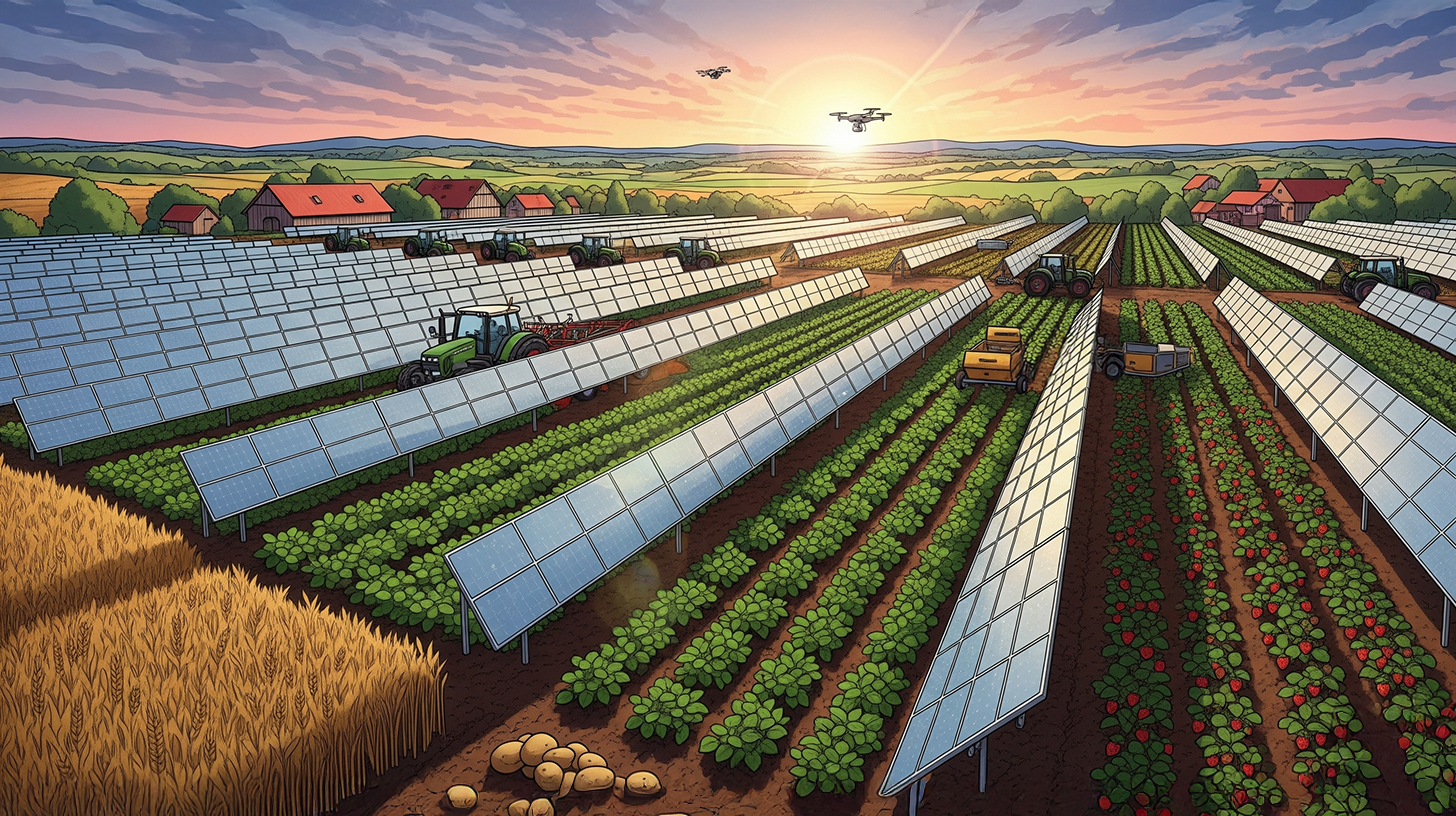
Saxovent Renewables acquires 76 MWp agri-PV project: Mega deal drives solar expansion in German fields – Image: Xpert.Digital
Saxovent Renewables expands with new agri-PV project in Northern Germany
76 MWp solar power and agriculture: Sustainable energy and agriculture combined
On August 4, 2025, Saxovent Renewables announced that it had entered into an agreement to acquire an agri-photovoltaic project with a planned capacity of 76 megawatts peak (MWp). The seller is a project development subsidiary of the listed Orrön Energy. The project is located in northeastern Germany and is designed as an agri-PV plant that combines solar power generation with agricultural use on the same land area.
Suitable for:

Who is Saxovent Renewables and what position does the company hold in the market?
Saxovent Renewables is a renewable energy company specializing in the development, planning, and implementation of sustainable energy generation projects. The company pursues a comprehensive renewable energy strategy and strives to be active in all key areas of renewable energy. Based in Berlin, Saxovent is positioning itself as a key player in the German energy transition. The company is led by CEO Thorsten Freise, who is responsible for strategic decisions and represents the company externally.
What exactly is an agri-PV project?
An agri-PV project, also known as agri-photovoltaics or agricultural photovoltaics, is an innovative concept in which solar power is generated and agriculture is carried out simultaneously on a single piece of land. The photovoltaic modules are installed in such a way that agricultural activities can continue below or between them. This can be achieved, for example, by raising the modules, increasing row spacing, or special mounting systems. The concept enables dual land use, thus addressing the increasing competition for land between energy production and agriculture.
Details of the acquired project
What are the technical specifications of the project you have taken on?
The project acquired by Saxovent Renewables has a planned capacity of 76 megawatts peak. This capacity refers to the maximum electrical output that the photovoltaic system can generate under optimal conditions. With this size, it is a significant solar project that can make a substantial contribution to the regional energy supply. The exact site size and the specific design of the agri-PV components were not described in detail in the announcement, which is common for project announcements in early development stages.
Where exactly is the project located and why is this location relevant?
The project is located in northeastern Germany, although the exact location was not disclosed in the press release. This region is attractive for the development of photovoltaic projects for several reasons. Northeastern Germany boasts extensive agricultural land and comparatively low land prices. Furthermore, there is a significant demand for renewable energy in this region to advance the energy transition and achieve regional climate goals. The choice of location also underscores Saxovent Renewables' northern strategy, which is specifically expanding its portfolio in this region.
What stage of development is the project currently in?
The press release indicates that the project is still in a relatively early phase. Saxovent speaks of an "early securing of a strategically important site," which indicates that significant development work still lies ahead. This typically includes obtaining necessary permits, detailed planning of the plant, negotiations with landowners and agricultural businesses, and preparing the grid connection. The early acquisition allows Saxovent to develop the project according to its own ideas and standards.
Strategic importance of the acquisition
How does this acquisition fit into Saxovent Renewables' overall strategy?
The acquisition of the 76 MWp agri-PV project is an integral part of Saxovent Renewables' growth strategy. The company pursues a two-pronged approach that encompasses both organic growth and targeted acquisitions. With this acquisition, Saxovent is continuously expanding its portfolio in all major renewable energy market segments. The acquisition demonstrates the company's ambition to not only operate in traditional photovoltaic segments but also to advance innovative concepts such as agri-PV.
What strategic advantages does agri-PV technology offer?
Agri-PV technology offers several strategic advantages that make it an attractive business area. First, it addresses the problem of land competition between energy production and agriculture through the dual use of land. Second, it can lead to greater social acceptance of photovoltaic projects, as agricultural use is maintained and farmers can continue to generate income from managing their land. Third, it opens up new business models and partnerships between energy companies and the agricultural sector. Fourth, in certain cases, it can even have positive synergy effects for agriculture, for example, through shading or protection from extreme weather events.
Why is securing the project early important?
Securing the project early gives Saxovent Renewables several competitive advantages. In an increasingly competitive renewable energy market, suitable sites are a scarce commodity. This early acquisition allows the company to advance project development according to its own quality standards and timelines. It also enables early involvement of local stakeholders and the establishment of long-term partnerships with agricultural companies. The early phase also offers greater flexibility in the technical design and optimization of the project.
Market environment and industry context
How is the agri-PV market developing in Germany?
The agri-PV market in Germany is experiencing dynamic growth. This development is being driven by several factors: ambitious expansion targets for renewable energies, increasing land scarcity, and the growing realization that innovative concepts for the multiple use of land are necessary. Policymakers have recognized the importance of agri-PV and are working to improve the framework conditions. Technological advances are making agri-PV systems increasingly more economical, and initial successful pilot projects are demonstrating the concept's feasibility. The industry expects significant growth in this segment in the coming years.
What regulatory framework applies to agri-PV projects?
The regulatory framework for agri-PV projects in Germany is complex and, in some cases, still under development. In principle, agri-PV systems must meet the same building and energy law requirements as conventional photovoltaic systems. In addition, there are specific requirements for agricultural use that are intended to ensure that a sensible dual use actually takes place. The Renewable Energy Sources Act (EEG) provides special regulations for agri-PV, including specific tendering segments. The exact requirements can vary depending on the federal state, requiring careful project planning.
How does Orrön Energy position itself as a seller in this business?
Orrön Energy, as a publicly listed company, is apparently pursuing a portfolio optimization strategy. The sale of the agri-PV project to Saxovent Renewables could have various strategic reasons: focusing on other business areas, capitalizing on development successes in early project phases, or geographical reorientation. For Orrön Energy, the sale may represent an opportunity to release capital and reinvest it in other projects. The transaction also demonstrates that there is active trading of project rights in the renewable energy market.
Impact on local stakeholders
What significance does the project have for the region in northeastern Germany?
The 76 MWp agri-PV project is of significant importance for the region in northeastern Germany. It contributes to the regional energy transition and has the potential to strengthen local energy security. The project will create jobs and generate regional added value during construction and operation. For local communities, it will generate additional revenue through trade tax and potentially lease payments. The agri-PV component ensures that the region's agricultural character is preserved and farmers can continue to cultivate their land.
How do farms benefit from agri-PV projects?
Farms can benefit from agri-PV projects in a variety of ways. They receive additional income through lease or usage fees for making their land available. At the same time, they can continue to use the land for agricultural purposes, thus preserving their core business. In some cases, the partial shading provided by the PV modules can even have positive effects, for example, for specialty crops that benefit from some protection from direct sunlight. The systems can also provide protection against hail or heavy rain. Furthermore, partnerships with energy companies open up new business opportunities and diversification options.
What role do municipalities and regional service providers play?
Municipalities are key stakeholders in the implementation of agri-PV projects. They are responsible for obtaining building permits and, through their planning authority, can help shape the framework. Successful projects require close cooperation with the municipalities, which should be involved in the planning process from the very beginning. Regional service providers benefit during the construction and operation phases through contracts for various services, from earthworks to electrical installations and maintenance services. This strengthens the regional economy and creates local employment.
Novel photovoltaic solution for reducing costs and saving time

Novel photovoltaic solution for reducing costs and saving time: Xpert.digital
More about it here:
Agri-PV as a future technology: Opportunities and challenges of dual land use
Technical and practical aspects of agri-PV
What technical challenges must be overcome in agri-PV projects?
The technical implementation of agri-PV projects presents specific challenges. The structure must be designed to allow agricultural machinery to operate unhindered, which requires higher elevations or wider row spacing. The statics of the systems must take into account additional loads caused by agricultural activities. Shading must be optimized to ensure both efficient power generation and sufficient light for plant growth. Furthermore, the electrical installations must be specially protected to prevent damage caused by agricultural activities.
Suitable for:

How is the balance between energy production and agriculture achieved?
Balancing energy production and agricultural use requires careful planning and coordination. Factors such as crop selection, module orientation and tilt, and row spacing must be optimized. Modern agri-PV systems often use tracking systems that adapt to the position of the sun while allowing more light to reach the plants when needed. The area is divided so that typically 60-80 percent of the land remains suitable for agricultural use. Monitoring systems continuously monitor both energy production and agricultural yields.
What types of agricultural use are possible under agri-PV systems?
The range of possible agricultural uses under agri-PV systems is diverse and depends on the specific system configuration. Crops such as potatoes, various grains, and vegetables have proven successful. The cultivation of specialty crops such as berries or herbs is also possible. Grassland use with grazing by sheep or cattle is another option. The choice of crops depends on various factors, including local climatic conditions, soil characteristics, and the specific design of the PV system.
Economic considerations
How do agri-PV projects compare economically with conventional PV systems?
The economic viability of agri-PV projects differs from conventional PV systems due to higher investment costs due to their special designs. However, these additional costs are offset by various factors: the possibility of building in areas where pure PV systems would not be approved, additional income from agricultural use, and potentially higher compensation or subsidies for innovative concepts. The dual use of the land leads to better overall economic viability when both types of use are considered. In the long term, agri-PV projects can prove economically advantageous, especially when social acceptance and thus the likelihood of implementation are taken into account.
Which financing models are suitable for agri-PV projects?
Agri-PV projects can be financed through various models. Traditional project financing through banks is possible, although credit institutions are increasingly gaining experience with this technology. Civic participation models are gaining importance as they promote local acceptance and mobilize capital from the region. Institutional investors are showing growing interest in agri-PV as a sustainable investment option. Cooperation models between energy companies and agricultural businesses, in which both partners contribute capital, are also conceivable. Funding programs at the state, federal, and EU levels can complement financing.
What long-term economic prospects does the agri-PV segment offer?
The agri-PV segment offers promising long-term economic prospects. With advancing technology development and economies of scale, costs are expected to decline. Growing demand for sustainable land-use solutions and policy support will drive market growth. New business models, such as the commercialization of "dual-sustainability" products from agri-PV land, could open up additional revenue streams. The integration of storage technologies and smart energy management systems will further improve economic viability. In the long term, agri-PV could become a standard model for sustainable land use.
Social and ecological dimension
How does agri-PV contribute to social acceptance of the energy transition?
Agri-PV projects can significantly contribute to public acceptance of the energy transition. Preserving agricultural use allays fears of the "sprouting" of the landscape and the loss of arable land. Involving local farmers as partners creates local allies. The visible connection between traditional agriculture and modern energy production can serve as a symbol of a balanced transformation. Transparent communication about the benefits and the involvement of the public in planning processes promote understanding and support. Regional value creation makes the advantages of the energy transition tangible.
What ecological benefits does agri-PV technology offer?
The ecological benefits of agri-PV are manifold. Dual-use significantly reduces land use for the energy transition. Partial shading can protect plants from extreme weather and reduce water requirements in times of climate change. The systems can provide habitats for various animal species, especially when natural design elements are integrated. Compared to intensive agriculture, the reduced cultivation intensity beneath the modules can promote biodiversity. The combination of CO2-free power generation and sustainable agriculture maximizes the climate protection effect per unit area.
How does agri-PV affect biodiversity?
The impacts of agri-PV on biodiversity can be positive with thoughtful planning. The structural diversity created by combining sunny and shaded areas creates diverse microhabitats. More extensive cultivation beneath the modules can provide refuges for insects and small animals. Flower strips and near-natural edge areas can be systematically integrated. Reduced pesticide and fertilizer use in shaded areas benefits biodiversity. Studies show that well-planned agri-PV systems can even increase biodiversity compared to intensively used agricultural land.
Future prospects and market development
How will the agri-PV market in Germany develop in the coming years?
The agri-PV market in Germany is poised for significant growth. Experts predict a multiple increase in installed capacity over the next five to ten years. This growth will be driven by ambitious climate targets, improved regulatory frameworks, and the increasing economic viability of the technology. The standardization of system designs and approval procedures will accelerate market development. New players will enter the market, while established companies like Saxovent will expand their positions. The integration of agri-PV into agricultural policy and funding programs will provide additional impetus.
What technological innovations can be expected in the agri-PV sector?
The agri-PV sector will benefit from various technological innovations. New module technologies with higher light transmittance or spectrally selective properties are being developed. Intelligent tracking systems that adapt to plant needs will become standard. The integration of sensor technology and AI will enable optimized control of shading and irrigation. Robotics and automation will revolutionize agricultural management under PV systems. New mounting systems will simplify installation and reduce costs. Combining these with storage technologies will enable energy self-sufficiency for farms.
What role will agri-PV play in the German energy transition?
Agri-PV will play an increasingly important role in Germany's energy transition. As a solution to the competition for land, it enables the necessary expansion of photovoltaics without massive interference with agriculture. Experts estimate that agri-PV could account for a significant share of new PV installations in the medium term. The technology will be particularly relevant in densely populated regions with scarce land. As a bridging technology between agriculture and the energy industry, it promotes cross-sectoral integration. Political support will make agri-PV a key element of the energy transition strategy.
What does the acquisition mean specifically for Saxovent Renewables' market position?
The acquisition of the 76 MWp agri-PV project significantly strengthens Saxovent Renewables' market position. The company is positioning itself as a pioneer in the growing agri-PV segment and demonstrating its innovative capabilities. Early presence in this future market provides competitive advantages and learning curve effects. Expanding the portfolio to include agri-PV makes Saxovent a more versatile and resilient player in the renewable energy market. Its regional presence in northeastern Germany is strengthened, opening up further business opportunities. Overall, the acquisition solidifies Saxovent's position as a major developer of sustainable energy projects.
What challenges does Saxovent have to overcome in project development?
The development of an agri-PV project faces various challenges. Coordinating energy and agricultural requirements requires expertise in both areas. Approval procedures for agri-PV are often complex and require intensive coordination with various authorities. Acceptance among local stakeholders must be ensured through transparent communication and fair participation models. Technical challenges in system design must be overcome. Economic viability must be ensured despite higher initial investments. Integration into existing agricultural operations requires flexible solutions.
What can we learn from this transaction for the future of the energy market?
The transaction between Saxovent Renewables and Orrön Energy illustrates several important trends in the energy market. Active trading in project rights demonstrates the dynamism and maturity of the renewable energy market. The focus on innovative concepts such as agri-PV demonstrates that the industry is moving beyond traditional approaches. The importance of land use efficiency and social acceptance is becoming a decisive competitive factor. Partnerships between different sectors are gaining importance. The regionalization of the energy transition is progressing. Companies that embrace future trends early on can secure market advantages. The integration of various sustainability aspects is becoming standard. These developments will shape the energy markets in the coming years and drive the transformation to a sustainable energy system.
We are there for you – advice – planning – implementation – project management
☑️ Construction and advice on photovoltaic open-space systems
☑️ Solar park planning ☑️ Agri-photovoltaic implementation
☑️ Solar outdoor systems with dual-use solutions
Xpert.Solar is your ideal partner for the planning, consulting and construction implementation of ground-mounted photovoltaic systems and agricultural photovoltaic projects due to our many years of experience and expertise in the solar energy industry. Xpert.Solar has an experienced team of professionals that offers tailored solutions to farmers and investors. From location analysis to financial and legal advice to technical implementation and monitoring, Xpert.Solar supports its customers professionally and reliably to ensure successful and sustainable implementation.

Konrad Wolfenstein
I would be happy to serve as your personal advisor.
You can contact me by filling out the contact form below or simply call me on +49 7348 4088 965 (Munich) .
I'm looking forward to our joint project.
Write to me

Xpert.digital – Konrad Wolfenstein
Xpert.Digital is a hub for industry with a focus on digitalization, mechanical engineering, logistics/intralogistics and photovoltaics.
With our 360° business development solution, we support well-known companies from new business to after sales.
Market intelligence, smarketing, marketing automation, content development, PR, mail campaigns, personalized social media and lead nurturing are part of our digital tools.
You can find more at: www.xpert.digital – www.xpert.solar – www.xpert.plus
Keep in touch








