
Smart Picking – Smart Order Picking

Available in 27 languages 📢
Prefer Xpert.Digital on GoogleⓘPublished on: July 13, 2021 / Updated on: October 27, 2021 – Author: Konrad Wolfenstein

Smart Picking – Smart order picking – Image: Zapp2Photo|Shutterstock.com
Robots and Virtual Reality in Warehouse Logistics
Robots have been ubiquitous in the German economy for decades. Until now, however, their primary use has been in manufacturing and assembly, while they have largely remained in the background in logistics. With the advent of Industry 4.0 and increasing networking and automation in warehouses, the era of robots is now beginning there as well.
When considering the use of robots in warehousing, it's noticeable that they are mostly employed for transporting goods using automated guided vehicles (AGVs). Automated solutions are currently rare in the areas of storage and order picking. However, given the rapid pace of technological development and the advantages of automated systems in terms of efficiency, speed, and safety, the industry is undergoing a shift in thinking. More and more logistics companies are now considering—or already implementing— use of robotic systems in storage and order picking
Related to this:
This is also necessary because, given the skilled labor shortage exacerbated by demographic change and already clearly noticeable, and the steady growth in throughput, the logistics industry faces major challenges. To counteract this, automated systems and autonomous order picking make perfect sense. While transporting goods through a warehouse using conveyor belts or AGVs is relatively straightforward, order picking is far more difficult to automate. According to statistics, manual labor still accounts for over 90 percent of order picking. This is because, until now, it has simply been too complicated to satisfactorily and cost-effectively replicate the human eye and hand, including their sense of touch, for a robotic solution.
Related to this:
- Extended: Extended Reality for Business and Industry
- Continuous improvements and advancements in Extended Reality
Another challenge lies in the fact that robots in a warehouse must not only navigate safely but also cope with constantly changing conditions. They must independently avoid other systems and, furthermore, be able to precisely pick items of varying sizes at the storage location or picking station. Since human labor cannot be completely dispensed with in the near future, robots must also interact in human-robot collaboration without disturbing or even endangering the worker.
Precise grasping and recognition – the two major problems of robots
Developers have now mastered the complex software control, which forms the basis for the coordinated movements of the robotic grippers. A much bigger problem, however, is gripping the goods themselves, primarily due to the heterogeneity of the product range. The goods to be picked in a warehouse sometimes differ significantly in terms of shape, stiffness, strength, weight, volume, and surface area. Various techniques are used to successfully handle these items. But whether clamping, traction, or vacuum grippers, none of them can cover the entire product spectrum on its own. Therefore, even more versatile solutions are needed to reliably pick all goods.
Another reason for the difficulty of automated picking with robots is the lack of flexibility in image processing by the automated systems. Until now, the devices simply struggled to clearly identify the multitude of different goods. Companies therefore resorted to painstakingly listing each item to be processed beforehand, including its properties in terms of material, weight, and special handling instructions. This solution might still make sense for a manageable inventory, but reaches its limits with a product range of several hundred or even thousands of items. However, with a combination of 2D and 3D image processing, it is now possible for robots to be less easily confused by the variety of goods and to identify a wide range of products and packaging, even those stacked or arranged at an angle.
French jewelry manufacturer Maty , having successfully automated the provision of its products. At the heart of the system is a software-controlled pick-and-place robot that automatically prepares jewelry pieces and their corresponding cases for further order picking. Compared to manual order processing, this method has increased the output of ready-to-ship packages by 50 percent.
Smart Robotics Palletizing Technology: Productivity Increase in Pallet Warehouses and Palletizing Systems
- High-bay warehouse consulting & planning: Automated high-bay warehouse – Optimize pallet storage fully automatically – Warehouse optimization
- Buffer storage: For e-commerce, retail and manufacturing industries
- Warehouse optimization methods: Warehouse optimization with order picking: 5 steps to increased productivity with optimized order picking
Semi-automated solutions using virtual reality techniques
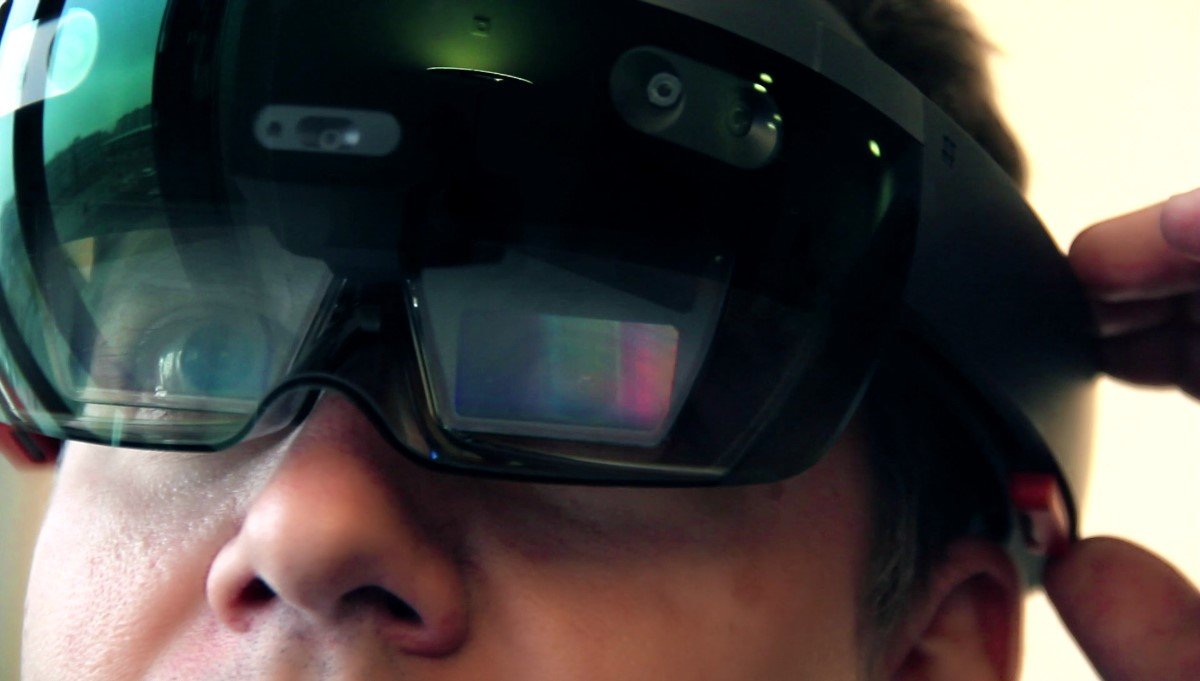
HoloLens as a picking aid (Source: Richard Hagl)
Systems that support warehouse workers during order picking have taken this a step further. After smart glasses have already found their way into logistics, the use of virtual and mixed reality solutions is heralding another revolution. Unlike the small displays of smart glasses, the HoloLens , doesn't pose the risk of users' eyes tiring too quickly or experiencing discomfort such as headaches. VR headsets have much larger and therefore more user-friendly displays, which also allows for extended use. However, since closed VR headsets block out the user's real-world surroundings, these systems are currently unsuitable for regular use in logistics.

Digital order picking aid (Source: TU Munich)
With the semi-transparent HoloLens solution, this problem doesn't occur, as the user retains their usual field of vision. In the warehouse, relevant information is provided contextually, based on location, time, and viewing angle, significantly simplifying the work. In real-world applications, the HoloLens recognizes the storage location of an item to be picked and always guides the order picker along the optimal route. Upon arrival at the storage location, the correct container holding the item to be retrieved is displayed using overlaid symbols. A scanner module verifies the picked item and immediately marks it as processed in the electronic pick list. This increases both the speed and precision of picking operations.
Extended Reality pioneering achievement with Xpert.Digital : As part of a university project at the University of Neu-Ulm, in collaboration with Xpert.Digital and VR expert Richard Hagl, a developer of digital B2B solutions for the virtual future, the impact of using HoloLens glasses on order picking processes in warehouses was investigated. For this purpose, the smart glasses were equipped with specially developed picking software, the user-friendliness of which was tested and optimized during the project.
If successful, this innovative pick-by-view well replace traditional methods in the future and bridge the gap between manual work and automation in the warehouse. However, improvements in the weight and battery life of the devices are still needed for regular use.
Gain the expertise for warehouse optimization combined with extended reality in the areas of smart picking and order fulfillment with Xpert.Digital!

Konrad Wolfenstein
I would be happy to serve as your personal advisor.
You can contact me by filling out the contact form below or simply call me on +49 7348 4088 965 .
I'm looking forward to our joint project.
Write to me

Xpert.Digital – Konrad Wolfenstein
Xpert.Digital is a hub for industry focusing on digitalization, mechanical engineering, logistics/intralogistics and photovoltaics.
With our 360° Business Development solution, we support renowned companies from new business to after-sales.
Market intelligence, smarketing, marketing automation, content development, PR, mail campaigns, personalized social media and lead nurturing are part of our digital tools.
You can find more information at: www.xpert.digital – www.xpert.solar – www.xpert.plus
Keep in touch










