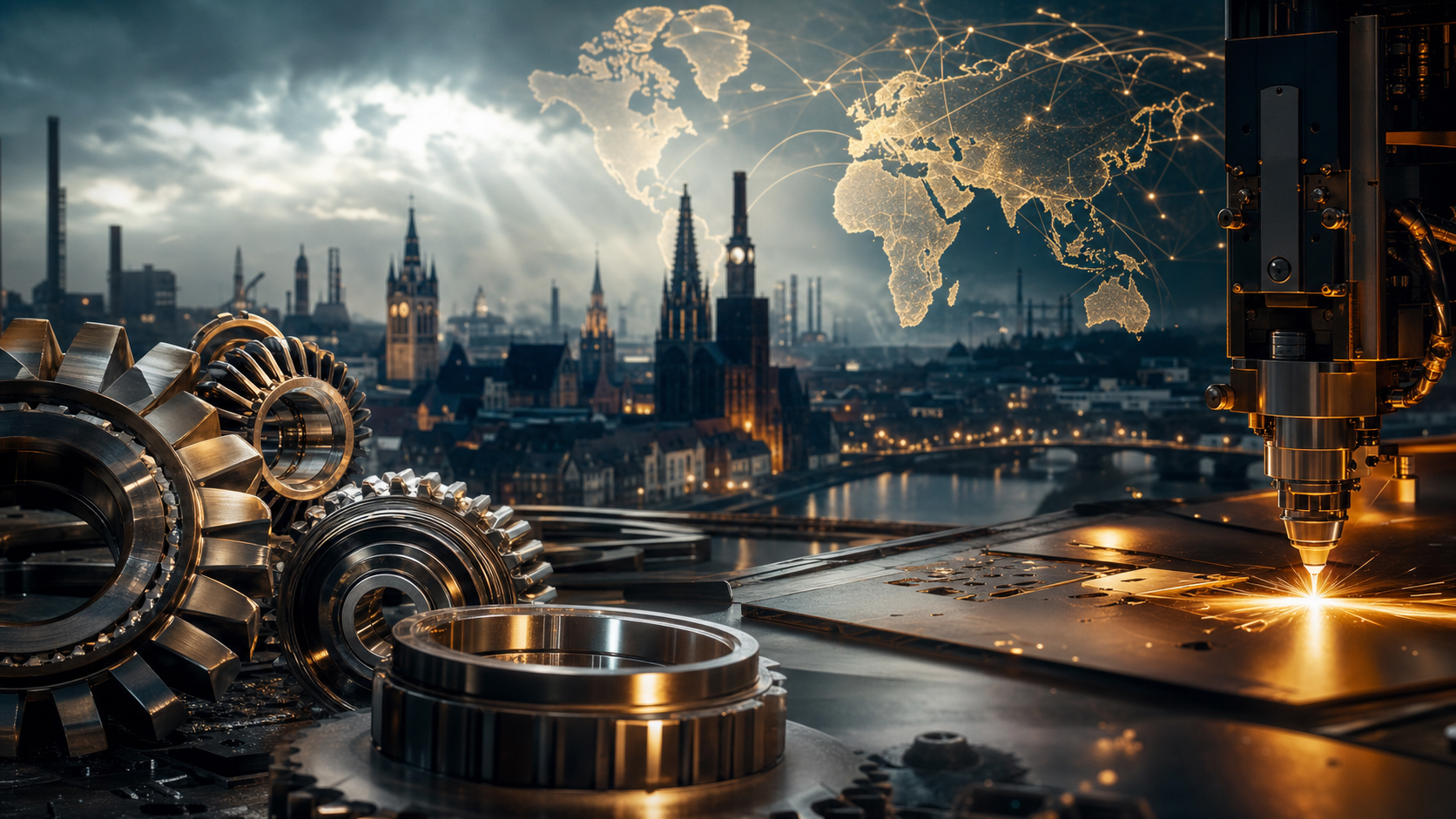
When Berlin fails, the provinces deliver: Quiet world-makers – Germany's elite hidden champions despite the crisis – Image: Xpert.Digital
Neither Berlin nor Munich: Why Germany's true strength lies in Schwanau, Kirchhundem and Künzelsau
Better than China, stronger than the crisis: The incredible secret to success of Germany's provincial bosses
Forget the DAX companies! These 1,602 unknown firms are currently saving our prosperity – How German “hidden champions” are dominating the world markets
Germany is in crisis – at least that's the prevailing sentiment in politics and mainstream media. Faced with economic stagnation, fears of deindustrialization, and growing competition from the Far East, the former economic powerhouse seems to be inexorably losing its luster. But away from the clamor of Berlin debates and far from the glass towers of the DAX, another elite is quietly posting impressive record figures: Germany's "hidden champions." These mostly family-run global market leaders from the most remote corners of the country – from Künzelsau to Schwanau – defy inflation, tariffs, and global upheavals with a radical focus, boundless innovative power, and unwavering resilience. This in-depth analysis of the silent saviors of the German economy reveals why this "doer class" is the true, crisis-proof foundation of our prosperity, how it holds its own against the multi-billion-dollar superpower from China, and why policymakers must finally steer clear of them instead of regulating them.
The "doer class" strikes back: How quiet global market leaders are saving Germany from collapse
Germany is currently being discussed in a tone reminiscent of the end of an era. The business press reports the longest period of stagnation in the history of the Federal Republic, industry associations warn of structural deindustrialization, and international investors observe the former economic powerhouse with a mixture of concern and schadenfreude. But behind this noisy crisis scene, which gets bogged down in the minutiae of a political battle over resources, another, far quieter and more focused class of companies is at work: Germany's hidden champions. They are the silent foundation on which Germany stood and on which it will stand again. Anyone who wants to understand why Germany isn't simply collapsing, even though the general conditions appear worse than they have been in decades, needs to know these companies.
The crisis diagnosis tableau: Where Germany has really been headed
To properly assess the relevance of hidden champions, a sober look at the actual state of the German economy is necessary. Gross domestic product (GDP) shrank in 2023 and 2024 and recovered by a meager 0.2 percent in 2025—the third consecutive year without real growth, a unique occurrence in post-war German history. German economic research institutes have lowered their forecast for 2026 to just 0.6 percent, after initially expecting growth of 1.3 percent—another setback triggered by the energy price shock resulting from the Iran-Iraq War and ongoing trade policy uncertainty.
Industry, for decades the backbone of the German economy, is facing a structural crisis. Chemical industry production has reached a historic low of approximately 70 percent. 143,000 industrial jobs were lost in 2025—an average of 392 per day. German industry is losing significant competitive ground in key sectors such as automotive manufacturing: China is now the world's largest car exporter, while Germany ranks only fourth. According to a study by Deloitte and the Federation of German Industries (BDI), 68 percent of companies are even considering relocating their production from Germany to other countries.
At the same time, small and medium-sized enterprises (SMEs) are losing confidence: In December 2025, the willingness of SMEs to invest was at its lowest level since the 2009 financial crisis. Almost a fifth (19 percent) of the approximately 3.9 million German SMEs now face increasing competitive pressure from Chinese suppliers—and not just on price, but increasingly also on product quality. German exports to China plummeted by more than nine percent in 2025.
The political response to this complex situation has so far fallen short of the challenges it has faced. While the German government's 2026 annual economic report sets ambitious goals—reducing bureaucracy, lowering energy costs, and investing in infrastructure from the €500 billion package—the hoped-for economic boost has yet to materialize. Instead, the economy is stagnating, while new jobs are being created almost exclusively in the public sector. The result, when all this is considered together, is a picture of a country bogged down in debates and failing to adequately recognize those companies that are achieving extraordinary results entirely without government attention.
The phenomenon at its core: What makes a hidden champion
The term "hidden champion" wasn't invented in a government ministry, but rather through empirical analysis. Economist and management consultant Hermann Simon first coined it in 1990 in a magazine article titled "Hidden Champions – Spearhead of the German Economy." He was searching for an explanation for Germany's export success, which couldn't be explained solely by well-known corporations like Volkswagen, Siemens, or BASF, and found it in a layer of companies that were virtually invisible to the public.
The definition is precise: A company is considered a hidden champion if it ranks among the top three in its market globally or is a market leader on its own continent, has an annual turnover of less than five billion euros, and is largely unknown to the general public. These companies are usually owner-managed, not publicly traded, rooted in rural Germany, and strongly export-oriented. Their high level of vertical integration—they cover the majority of their value chain themselves—is another key characteristic that secures them exceptional control over quality and supply chains.
Hermann Simon currently counts 1,602 Hidden Champions in Germany—out of approximately 4,000 worldwide. This means that Germany accounts for almost half of all Hidden Champions worldwide, even though the country represents less than one percent of the global population. If you combine the German-speaking countries of Germany, Austria, and Switzerland, they are home to about 56 percent of all Hidden Champions. Almost a third of all Hidden Champions in Germany come from the cutting-edge and high-tech sectors. Over 80 percent are in the manufacturing industry. Around 25 percent of German exports originate from these companies.
The Association of German Hidden Champions (VDHC) succinctly defines their core characteristics: They do not strive for large market shares in mass markets, but rather pursue a focused strategy in a narrow niche. Only focus leads to world-class performance—this principle defines their entire strategic approach. Through the depth of their specialization, they create unique products with which they are better than all others, and they concentrate on precisely this with a consistency that is structurally alien to large corporations.
The secret to success: Innovation, focus, and stability as a system
What makes hidden champions so remarkable compared to other companies of their size is their systematic approach to innovation. A study by the Centre for European Economic Research (ZEW), based on the Mannheim Innovation Panel, revealed that over 80 percent of hidden champions have introduced product or process innovations in the past three years—that's ten percent more than comparable companies of their size. With similarly high research and development expenditures, hidden champions achieve significantly higher revenues through these innovations. According to ZEW studies, their profit margins are on average two percentage points higher than those of comparable medium-sized companies, and their productivity is even 29 percent higher.
This advantage stems from three interconnected sources: first, a radical focus on a narrowly defined niche, which allows the company to build up deeper knowledge than any competitor over decades; second, close customer relationships, which ensure that innovations are developed from real customer problems rather than conceived in a laboratory; and third, a high level of vertical integration, which keeps quality control, expertise, and flexibility within the company instead of outsourcing them to suppliers. Another factor is the ownership structure: as owner-managed family businesses, these companies think in terms of generations, not quarters. Studies show that family-controlled companies are significantly more resilient in complex crises—the share price decline is, on average, less severe, and the recovery is faster.
At the same time, hidden champions exhibit more aggressive growth planning through innovation than other companies in Germany. They know their customers better, react more quickly to their needs, and thus avoid costly misinvestments in technologies that miss the mark. This pragmatic understanding of innovation—the combination of visionary ambition and practical implementation—transforms specialized companies into true global market leaders.
Portraits of the steadfast: Concrete success stories in the crisis
Abstract strengths only become tangible when viewed through concrete business data. The following examples demonstrate that the success of hidden champions is neither a coincidence nor an economic fairy tale, but rather a lived economic reality – even under adverse conditions.
Würth: The world market leader in screws will make record history in 2025
Würth, headquartered in the tranquil town of Künzelsau in Baden-Württemberg, is the archetypal hidden champion. For decades, the company has manufactured and sold assembly and fastening materials through a globally unique direct sales model. In fiscal year 2025, the Würth Group achieved sales of approximately €20.7 billion—another record figure, representing an increase of 2.3 percent compared to the previous year. Adjusted for currency fluctuations, this equates to growth of 3.2 percent. International business grew significantly faster than domestic business, increasing by 3.3 percent to €12.7 billion, impressively underscoring the company's structural independence from the German domestic economy. Reinhold Würth's company employs around 86,400 people worldwide, of whom approximately 44,000 work in sales—a direct sales force simply unavailable to other companies.
Stihl: Chainsaw king on a global growth trajectory despite tariffs
Stihl, based in Waiblingen near Stuttgart, is the world's leading manufacturer of chainsaws and motorized garden tools. In an environment marked by US tariffs, regional consumer restraint, and negative exchange rate effects, the family-owned company increased its revenue to €5.48 billion in 2025—a rise of 2.8 percent compared to 2024 and nearly reaching the level of the record year 2022. Remarkably, more than 91 percent of revenue is generated abroad. The company-wide transition to battery technology is gaining momentum—in 2025, battery-powered products already accounted for 27 percent of global sales, compared to 25 percent the previous year. In Western Europe, around two-thirds of the tools sold are now battery-powered. Stihl exemplifies how a hidden champion can understand technological transformation not as a threat, but as a market opportunity, and consistently implement it using its own resources.
Kärcher: World market leader in cleaning equipment grows despite trade barriers
The Winnenden-based family business Alfred Kärcher, the global market leader in professional cleaning technology, increased its revenue to €3.483 billion in 2025, a growth of 1.1 percent, or 3.2 percent adjusted for currency effects. Rising trade barriers and tariffs significantly hampered growth—without these burdens, the growth momentum would have been even higher following a 4.6 percent increase in revenue in 2024. Kärcher operates in 85 countries through more than 170 companies with over 17,000 employees. The company invested over €200 million in 2024 to secure its leading market position. A strategically revealing detail: In 2024, the subsidiary Kärcher Futuretech supplied the German Armed Forces with equipment worth nearly €24 million—an indication that Kärcher is strategically transferring its core competence in cleaning technology to growth markets such as defense and security.
TRUMPF: Laser specialist defies downturn with technological leadership
TRUMPF, based in Ditzingen, is one of the global market and technology leaders in machine tools and lasers for industrial manufacturing. Unlike the figures for Würth and Stihl, the 2024/25 fiscal year was indeed a challenging one: Sales fell by 16 percent to €4.3 billion, and order intake declined by 7 percent. These figures directly reflect the global reluctance to invest in the manufacturing industry and the slump in demand, particularly in China. Nevertheless, TRUMPF remains in an unparalleled structural position: With a research and development ratio of 12 percent of sales, the company is investing in the future on a scale that is unthinkable for most competitors during downturns. Germany remains its largest single market in terms of sales, followed by the USA. TRUMPF demonstrates that even hidden champions are not immune to every economic cycle—but they retain the structural strength that allows them to emerge from crises earlier and more decisively than others.
Symrise: Fragrance and flavor manufacturer on a global path to success
Symrise, based in Holzminden, Lower Saxony, is a prime example of the invisibility of hidden champions in everyday perception and their simultaneous omnipresence in real life. The company supplies fragrances and flavorings for over 30,000 products worldwide—with exports accounting for 90 percent. In fiscal year 2024, despite challenging economic conditions, Symrise achieved sales of €4.999 billion, an increase of 5.7 percent. EBITDA grew to €1.033 billion, and the margin rose to 20.7 percent, compared to 19.1 percent in the previous year. Latin America experienced particularly dynamic growth, with organic growth of 15.2 percent. In 2025, Symrise continued this trajectory with organic growth of 2.8 percent and a further improved EBITDA margin of 21.9 percent. Symrise impressively demonstrates how a hidden champion can cushion economic fluctuations through global diversification and continuous innovation investments.
Herrenknecht: Tunnel boring machine king in the global infrastructure market
Herrenknecht, based in Schwanau in the Ortenau district, is the world's leading manufacturer of tunnel boring machines and a company that is literally undermining global infrastructure. In December 2024, the company secured the contract for India's largest tunnel boring machines for the Mumbai Coastal Road North Project: two mixshield machines with a record diameter of 15.62 meters each. At the Brenner Base Tunnel, one of Europe's most important transport projects, Herrenknecht won contracts for a total of eight tunnel boring machines; the third boring on the Italian side was successfully completed in 2025. For the Lyon-Turin railway line, the company received orders for five machines, one of which is for the 57-kilometer-long Mont Cenis Base Tunnel. Herrenknecht is a prime example of how a German medium-sized company can dominate a technological niche so completely that it is indispensable for virtually every major tunneling project in the world.
Mennekes: From industrial plug to the standard of electromobility
Mennekes, based in Kirchhundem in the Sauerland region of Germany, exemplifies how hidden champions not only survive megatrends but actively shape them. For decades, the family-owned company was the global market leader in standardized industrial connectors. In 2008, the year Elon Musk unveiled the first Tesla Roadster, Walter Mennekes developed the first charging connector for electric vehicles. In 2014, the European Parliament declared the Mennekes Type 2 charging connector the EU standard for charging electric cars—a pivotal decision with epochal economic implications. With a turnover of around €300 million and operations in over 90 countries, the company has thus established a standard that permanently links every electric vehicle sold in Europe to Kirchhundem in the Sauerland. This is perhaps the most striking example of what German engineering and entrepreneurial vision can achieve together.
Our EU and German expertise in business development, sales and marketing

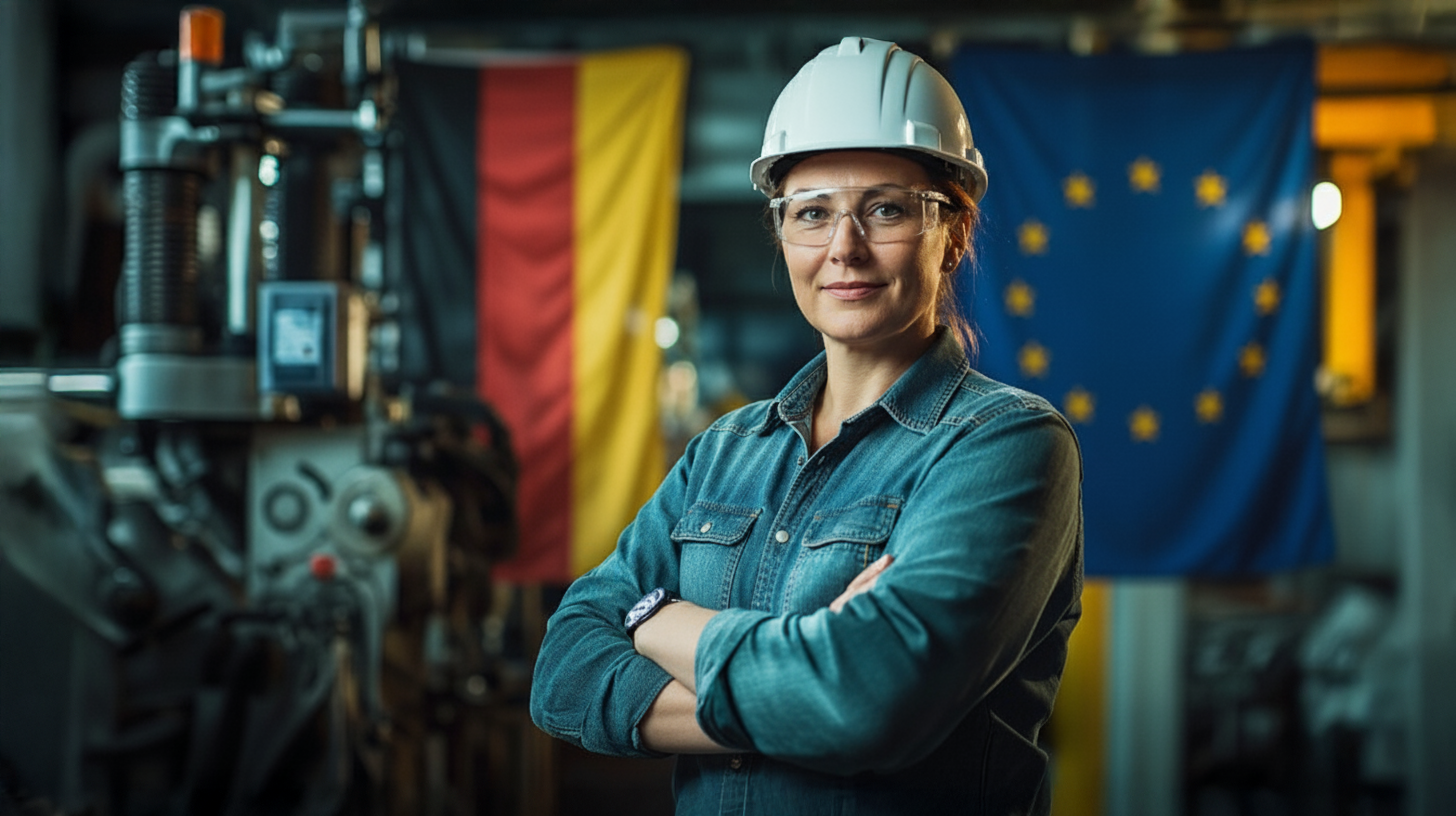
Our EU and German expertise in business development, sales and marketing - Image: Xpert.Digital
Industry focus areas: B2B, digitalization (from AI to XR), mechanical engineering, logistics, renewable energies and industry
More information here:
A thematic hub offering insights and expertise:
- Knowledge platform covering global and regional economies, innovation and industry-specific trends
- A collection of analyses, insights, and background information from our key areas of focus
- A place for expertise and information on current developments in business and technology
- A hub for companies seeking information on markets, digitalization, and industry innovations
Precision instead of PR: How Germany's hidden champions are quietly shaping the global economy
Structural superiority: Why hidden champions keep rising
The case studies illustrate a pattern that extends beyond individual companies. Hidden champions possess structural characteristics that make them resilient even when the overall economic environment is hostile. These characteristics are not accidental, but rather the result of conscious strategic decisions made over decades.
Equity capital is one such factor. The average equity ratio in German SMEs rose slightly again in 2024 to 30.7 percent. For hidden champions, which are predominantly owner-managed and not dependent on external investors, this ratio is often significantly higher. These capital buffers allow them to invest in research and development even during recessions, instead of being under pressure from short-term profit expectations like publicly traded corporations. Despite the economic headwinds, the total revenues of the 3.87 million small and medium-sized enterprises in Germany rose slightly by 2 percent to €5.2 trillion in 2024. Never before have so many people found employment in SMEs: the number of employees increased by 207,000 to 33.01 million.
Global diversification is also crucial: A company like Stihl, which generates 91 percent of its revenue abroad, or Symrise with an export share of 90 percent, is structurally decoupled from the German domestic economy. The German economic slowdown affects these companies significantly less than companies primarily dependent on the domestic market. The president of the Fraunhofer Society, Holger Hanselka, summed it up perfectly: Although Germany represents only 0.9 percent of the world's population, it is the third-largest economy and export nation—and this success is largely due to hidden champions.
Their geographical roots in rural areas are not a weakness, but often a strength. A particularly large number of hidden champions are found in South Westphalia, the Baden region, Franconia, and other rural areas where the bond between company, employee, and region is deeper than in anonymous metropolises. This emotional and social embeddedness creates a culture of loyalty that becomes a crucial productivity factor in times of crisis—when stock markets crash and corporations close locations. The share of poorly capitalized medium-sized companies with equity ratios below 10 percent fell by 5.2 percentage points to 28.4 percent in 2024—this also reflects the structural recovery of that segment of the Mittelstand (SMEs) that ranks among the world's best.
The challenges: Structural risks that even hidden champions cannot ignore
Despite all their resilience, it would be analytically dishonest to ignore the challenges that even the hidden champions face. The Handelsblatt commentary, "The golden era of German world market leaders is over," is not an exaggeration, but a sobering call to action.
China has become a serious technological competitor, not just the cheap imitation market of the past. Chinese competitors are no longer just catching up on price, but also on product quality. According to the KfW SME Panel, 29 percent of German industrial companies are already feeling increasing pressure from high-quality Chinese products. Those operating as hidden champions in markets where Chinese state-owned enterprises operate with massive subsidies face a distortion of competition that cannot always be compensated for by superior engineering alone. China has demonstrably pumped at least $230 billion in subsidies into its own automotive industry—and similar logic is at work in robotics, mechanical engineering, and specialized technologies.
Added to this is the structural shortage of skilled workers, which is particularly acute for owner-managed companies based in rural areas. According to a study, 62 percent of medium-sized companies fear they will be unable to fill vacant apprenticeship positions in 2025. Demographic change is depriving German SMEs of human capital in the long term, which is indispensable for knowledge-based niche production. The burden of bureaucracy is considered problematic by 65 percent of SMEs competing internationally—more so than the burden of high taxes (60 percent) or energy costs (41 percent). This is remarkable: For many hidden champions, the regulatory burden is heavier than the economic costs of the energy crisis.
The wave of takeovers by Chinese investors was another structural risk until 2016, which, although contained by stricter investment control laws, was not completely eliminated. Technological expertise built up over generations in provincial German towns can quickly migrate away through strategic acquisitions. The increasing need to establish local value chains in key markets like the US and China—further fueled by Trump's tariffs—increases capital requirements and management complexity for companies that have deliberately remained lean and focused.
Germany needs a name for its best: The concept of the “elite makers”
At this point, a strategic question comes into play that goes beyond economics and extends into the realm of national brand strategy. What should one call that part of Germany which, despite all political mismanagement and economic gloom, delivers world-class performance, quietly enjoying respect in every corner of the industrialized world, unconcerned by media reports of crises?
The term "hidden champion" is analytically precise, but strategically inadequate. It emphasizes the hidden—and thus, unwittingly, the invisibility. What Germany needs is a term that emphasizes the opposite: not the concealed, but the proud, the provocative, the self-assured. A term that tells the world: You may laugh at Germany's current paralysis, but watch out—when Germany gets back on track, it will be precisely these companies that demonstrate the country's capabilities.
One such term could be "Precision Pioneers"—reflecting the technological depth and inventiveness of these companies. Or "Quiet World Makers"—a term that emphasizes their global impact without denying their understated nature. In English, "Germany's Quiet Giants" would be a respectable translation for international discourse. For a provocative, attention-grabbing brand positioning, however, "Unseen Dominators" is also an option—a term that communicates unequivocally: These companies are not small, not insignificant, and not in crisis. They are global and unbeatable, while Germany overlooks them.
Another candidate is "Germany's Deep Tech Aristocracy"—a term that highlights the combination of technological depth, long-term generational reach, and global dominance that distinguishes these companies from both startups and corporations. From a distinctly German perspective, "The Maker Class" would be a concise, culturally rooted term—it combines pragmatism ("doing" instead of "talking"), the class consciousness of an elite, and the ambition to shape the future. In political discourse, such a term could also serve an orienting function: It would reveal where Germany's true potential lies and which companies deserve the protection, support, and freedom they need to operate within an economic policy agenda.
Regardless of the terminology, the substance remains the same. The president of the Fraunhofer Society, Holger Hanselka, aptly put it at TRANSFORM 2025: These companies are the backbone of Germany's industrial innovation and must receive stronger political support. In plain terms: The state should not steer, but rather empower. Reduce bureaucracy, stabilize energy prices, modernize infrastructure—and then clear the way for companies that can handle the rest better than any government ministry.
The future outlook: How hidden champions could lift Germany back to the top
The political signals of recent months at least show that Germany has taken a new direction in fiscal policy. The €500 billion infrastructure package, the High-Tech Agenda Germany with its focus on artificial intelligence, quantum technologies, microelectronics, biotechnology, fusion research and climate-neutral energy, and the federal government's forecast of growth of around 1.0 percent for 2026 – all these are initial building blocks in a response to the structural crisis.
The potential is real. For 2026, the major economic research institutes expect GDP growth of 0.6 percent—despite the energy price shock—and 1.9 percent for 2027. The DIW Berlin put it succinctly at the beginning of 2026: If the already adopted fiscal policy measures take full effect, a noticeable recovery is possible, and growth of over one percent appears realistic. For the hidden champions, this means less of a starting signal than an acceleration: They are already on the move. What they need is not a tailwind from the government, but rather the reduction of headwinds.
DATEV's SME data for May 2025 showed positive development for the first time in two years: Medium-sized companies achieved a revenue increase of 6.4 percent, and small companies of 3.9 percent—initial signs that the necessary resources are there, provided the general conditions improve. The stock markets are already anticipating what's to come: DJE fund manager Jens Ehrhardt even believes the MDAX could outperform the DAX by 2026—driven by hidden champions that have demonstrated their resilience.
Germany's long-term structural advantage remains the depth of its knowledge base. A high-performance quantum computer is expected to be operational in Germany by 2030. New fields of application are emerging in medical technology, biotechnology, and industrial AI, where the combination of German engineering expertise, precision manufacturing competence, and global customer proximity—the core competencies of the hidden champions—can lead the world. Those who have not yet caught up in the global manufacturing sector lag behind in quantum technology applications for the manufacturing industry or in AI-controlled precision machinery. It is precisely here that German SMEs can cultivate the next generation of hidden champions.
Final economic assessment: The dual Germany
The economic reality of Germany in 2026 is a story of two Germanys. One is loud and visible: a country that manages its strengths through energy policy mistakes, bureaucratization, chronic reluctance to invest, and political paralysis, rather than developing them. This Germany is shrinking, losing industrial jobs, and ranking at the bottom of the European growth scale.
The other Germany is quiet and invisible: a network of 1,602 hidden champions that dominate the world in their niche, often producing and selling on four or five continents, and not capitulating in crises but investing heavily. They generate around 25 percent of German exports, employ almost a million people in North Rhine-Westphalia alone, with annual sales exceeding 150 billion euros, and are simply irreplaceable for their international customers.
The crucial question for Germany is not whether it can break free from stagnation. It is whether policymakers are wise enough to stop burdening the companies that have sustained the country for decades and instead empower them. Hidden champions don't need subsidies, five-year plans, or government strategy papers. They need a functioning infrastructure, competitive energy prices, a bureaucracy that doesn't paralyze, and a political environment that understands that economic renewal doesn't arise in the power struggles of Berlin, but in the machine shops of Schwanau, the laboratories of Holzminden, and the design offices of Ditzingen.
When Germany regains its former prestige, it will be these companies that paved the way — quietly, precisely, and with a global market share that no crisis has wiped out.
🎯🎯🎯 Data-driven B2B industry hub as a quasi-in-house solution

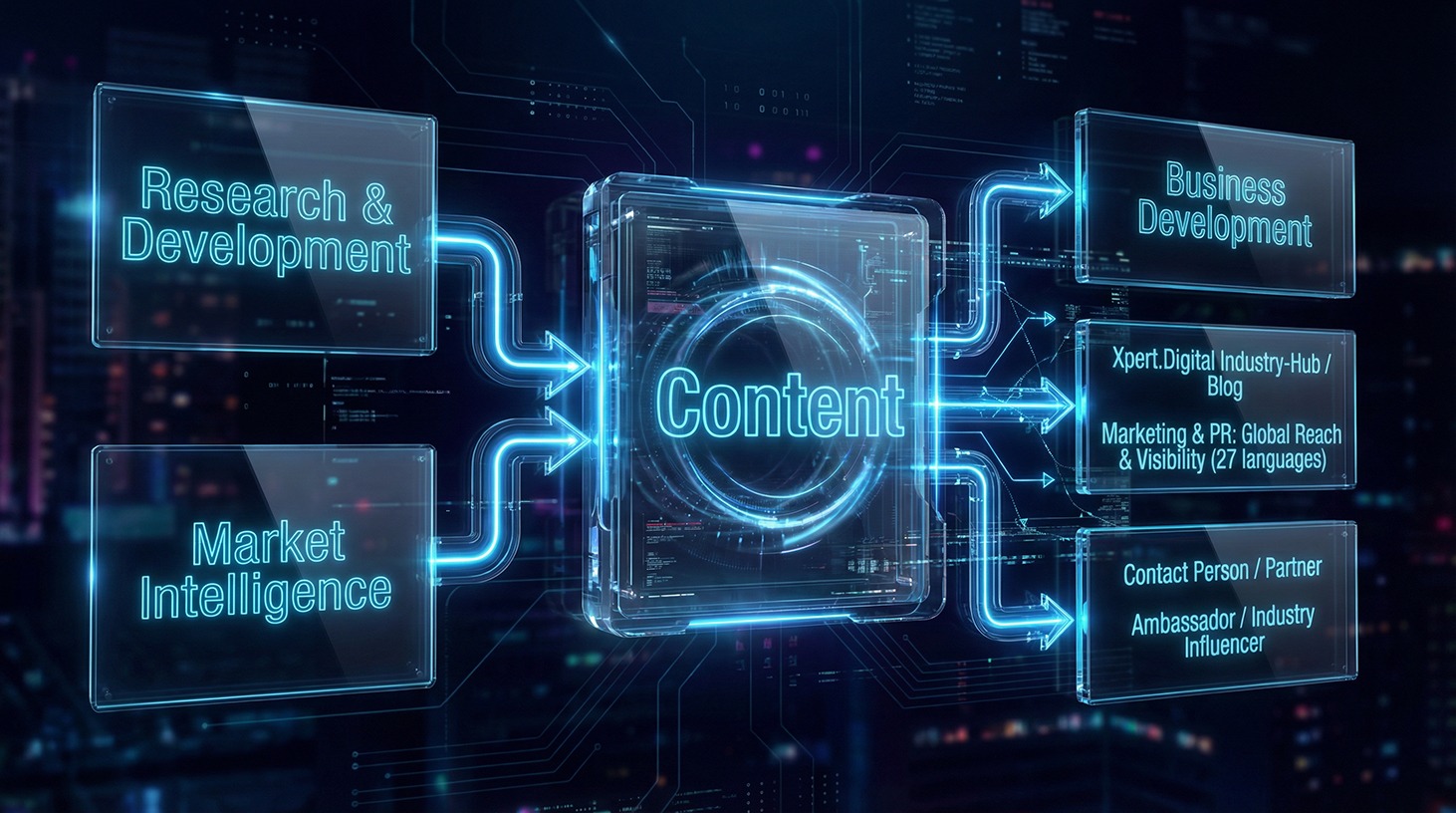
The quasi-in-house solution: How Xpert.Digital closes operational gaps in B2B marketing and sales – Smart Content-Driven Business - Image: Xpert.Digital
Xpert.Digital is a data-driven B2B industry hub led by Konrad Wolfenstein . The company acts as an external, quasi-in-house solution for industrial partners, closing operational gaps in marketing, content, and sales – without requiring additional resources on the client side.
More information here:
Your global marketing and business development partner
☑️ Our business language is English or German
☑️ NEW: Correspondence in your native language!

Konrad Wolfenstein
I and my team are happy to be available to you as your personal advisor.
You can contact me by filling out the contact form here wolfenstein@xpert.digital:or simply call me at +49 7348 4088 965. My email address is
I'm looking forward to our joint project.