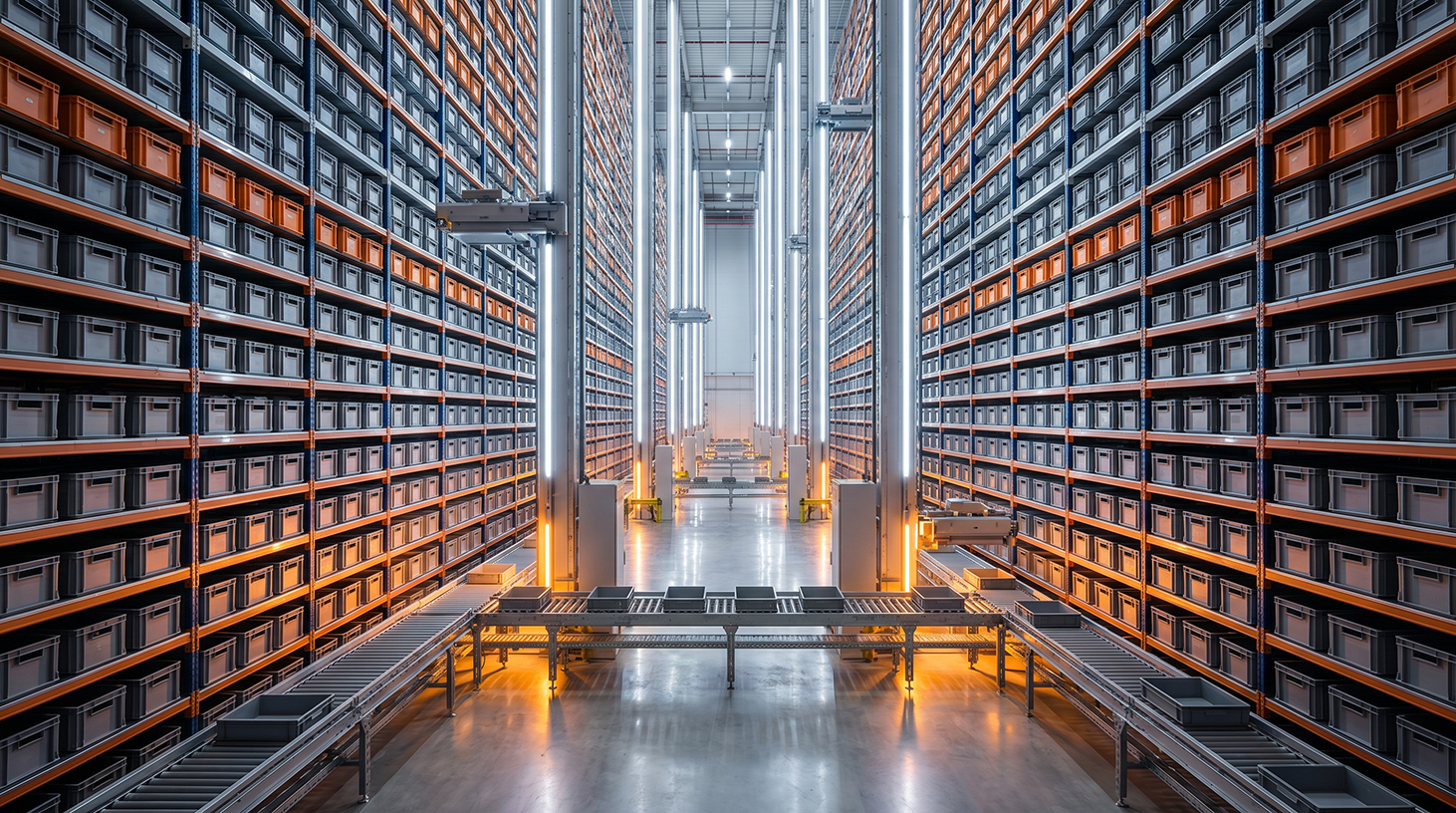
The silent transformation of global logistics: How intelligent systems are solving the biggest margin problem in e-commerce – Image: Xpert.Digital
The end of the globalization dogma: Why top companies are now focusing on radical control instead of cheap prices
It's not the one who plans fastest who wins – but the one who functions best under pressure
The logistics industry is facing a historic turning point. For years, it was considered merely a necessary evil – a pure cost center optimized for maximum efficiency, global outsourcing, and minimal margins. But this paradigm is outdated. Driven by geopolitical shocks, rapid technological advances, and relentless competition for the shortest delivery times, logistics is transforming before our very eyes into a crucial strategic asset. From systems with "agentic AI" that solve problems before humans even notice them, to autonomous climbing robots in high-tech warehouses, to the electrification of last-mile delivery: anyone who still believes that simply moving goods from A to B is enough is about to be left behind. The transformation is happening quietly, but with a force that is redefining global trade. One thing is already clear: in the logistics of the future, success will no longer go to those who plan most cheaply, but to those whose systems react most effectively under pressure.
When industries reinvent themselves, it rarely happens loudly
The transformation in the logistics industry is not occurring through a single spectacular breakthrough, but rather through the synchronous interplay of several technological, organizational, and market-driven shifts. While these shifts may seem manageable individually, together they are creating a fundamentally new system. What is currently happening can best be described as a structural realignment: Logistics is ceasing to be a means to an end and is itself becoming a core strategic asset. Those who underestimate this shift will not only lose efficiency—they will lose market position.
The global market for logistics automation had a volume of approximately US$88 billion in 2025 and is projected to grow to over US$260 billion by 2034, representing an average annual growth rate of nearly 13 percent. In parallel, the market for digital logistics is growing from a starting value of US$35 billion in 2024 to a projected US$151 billion by 2032, with an annual growth rate of almost 20 percent. These figures do not describe a gradual evolutionary process, but rather a cataclysmic acceleration. Behind the statistics lie specific companies, technologies, and decisions that are already redefining the rules of competition.
From analytical tool to autonomously acting system
The most profound change in modern logistics is not technical, but conceptual: systems are ceasing to merely record and analyze data and are beginning to make independent decisions and take action. This shift from passive data collection systems to active action systems is changing the entire operational logic of a supply chain.
Shipsy, a Gartner-recognized provider and featured in the Magic Quadrant for Transportation Management Systems for the third consecutive year since 2024, exemplifies this development with its AgentFleet platform. The system comprises specialized AI agents organized by operational function—including Clara for managing customer exceptions, Nexa for autonomous cargo handling, Astra for the driver experience, and Vera for dispute resolution. These agents continuously monitor signals, make decisions within defined rules, and execute tasks across the system—without requiring human intervention as long as no escalation threshold is exceeded. As a result, the role of operations managers shifts from firefighting to leadership: instead of managing deviations, they oversee a system that autonomously resolves deviations before they escalate.
Shipsy currently serves nine Fortune 500 companies and more than 250 customers in over 30 countries, demonstrating that agentic AI in logistics has long since moved beyond the proof-of-concept stage and become an integral part of daily operations in global supply chains. The crucial question is no longer whether such systems work, but rather which companies create the organizational prerequisites to benefit from them. Technology alone is not enough – it requires processes that enable decisions to be made where they are intended to have an impact.
Agentic AI is not a fringe topic: According to the Sphera Supply Chain Risk Report 2026, 94.5 percent of the companies surveyed already use AI in their supplier or risk management processes. The use of autonomous decision-making systems has thus become a de facto industry standard – the differentiation lies in the depth of integration and the quality of the underlying data.
Returns as a value creation field – and as an economic pressure point
One of the most underestimated areas of activity in logistics is returns management. In an e-commerce-dominated retail world, returns are no longer a marginal phenomenon, but a structural cost problem that directly impacts gross margins. Since 2020, return volumes in the US have grown twice as fast as e-commerce overall – while returns-related fraud is increasing four times faster.
Two Boxes, a Denver-based startup specializing in AI-powered returns management, already processes nearly $1 billion worth of returns annually across three continents. The platform uses image classification and anomaly detection to inspect returned goods in real time and support the handling process—whether it's restocking, repair, or fraud reporting. Investors now refer to the returns market as a "margin battleground," as uncontrolled returns management can cannibalize even profitable e-commerce growth. Two Boxes recently raised $3.2 million in a funding round, bringing its total funding to $13 million.
What makes this example strategically significant extends beyond the individual company: it illustrates how value destruction can be transformed into value preservation through data-driven process transparency. Returns were long considered an unavoidable cost factor; they are increasingly becoming an area for optimization that both protects margins and feeds product quality feedback into the supply chain. This is not merely a marginal efficiency improvement – it is a paradigm shift in the evaluation of reverse logistics.
Delivery time as a product feature – the race for the shortest second
The transformation of delivery speed from a service feature to an independent product value is one of the most consequential market shifts of recent years. What was once considered a premium option has become an expectation in core markets – with direct implications for conversion rates, customer loyalty, and ultimately, market share.
Zalando introduced same-day and next-day delivery in more than 30 German cities back in 2019 and has gradually expanded the service. Internal company surveys showed that 59 percent of customers want to receive their order the next day, and 40 percent prefer evening delivery. Through its partnership with Tiramizoo, the service is now also offered from partner brick-and-mortar stores, which allows for more flexible buffer and storage capacities. Zalando explicitly positions same-day delivery as the new e-commerce standard, not an exception.
Amazon surpasses this development with a quantitative dimension that speaks for itself: In 2025, the company delivered more than 13 billion items worldwide via same-day or next-day delivery – the fastest delivery times in its history. This is made possible by the consistent regionalization of its logistics network: Instead of centralized warehousing, Amazon divides its network into smaller, self-sufficient regions, with AI models dynamically deciding which products are stocked in which regional centers. For Prime members, this results in an average annual saving of $550 – a tangible benefit that reinforces their willingness to pay for memberships.
The economic consequence of this development is clear: companies that do not recognize delivery speed as a strategic investment opportunity face a structural competitive disadvantage that can hardly be compensated for by price reductions. Speed is no longer optional – it has become a prerequisite for competitive e-commerce.
Control beats efficiency – the end of the global optimization dogma
For decades, the credo of supply chain strategy was: optimization means globalization. Cheapest sources of supply, maximum specialization along global value chains, minimal buffers. This paradigm has been exposed as structurally fragile by a series of shocks – pandemics, geopolitical tensions, commodity crises. What follows is not a retreat from globalization, but a fundamental rebalancing of costs and control.
According to the Alpega Trend Report 2026, 64 percent of manufacturers have already regionalized their production or are in the process of doing so. PwC data shows that 40 percent of companies have launched initiatives to regionalize their supply chains in order to cope with disruptions. Nearshoring – the process of bringing production and procurement closer to sales markets – is no longer primarily discussed as a cost factor, but rather as a risk management tool.
Lightship, the American manufacturer of all-electric mobile homes, exemplifies this shift in thinking at the corporate level: The company sources 80 percent of the component value of its flagship product from American suppliers, a strategic decision explicitly focused on independence and resilience. With $34 million in Series B funding and a planned fourfold increase in manufacturing capacity in Colorado, the company continues its growth trajectory on this foundation. In parallel, Arrive AI is expanding its infrastructure for autonomous delivery networks and further strengthened its technological independence with the issuance of its tenth patent in March 2026. The company is explicitly focused on building the network layer for autonomous logistics, while partners contribute hardware and systems—a division of labor designed for long-term independence.
What is emerging here is a new paradigm of supply chain logic: The cheapest solution under normal conditions is no longer the optimization goal. The goal is the solution that functions most robustly under real-world conditions – with volatility, geopolitical disruptions, and regulatory changes. Resilience is not the alternative to efficiency; it is the overarching category under which efficiency is re-evaluated.
LTW Intralogistics Solutions

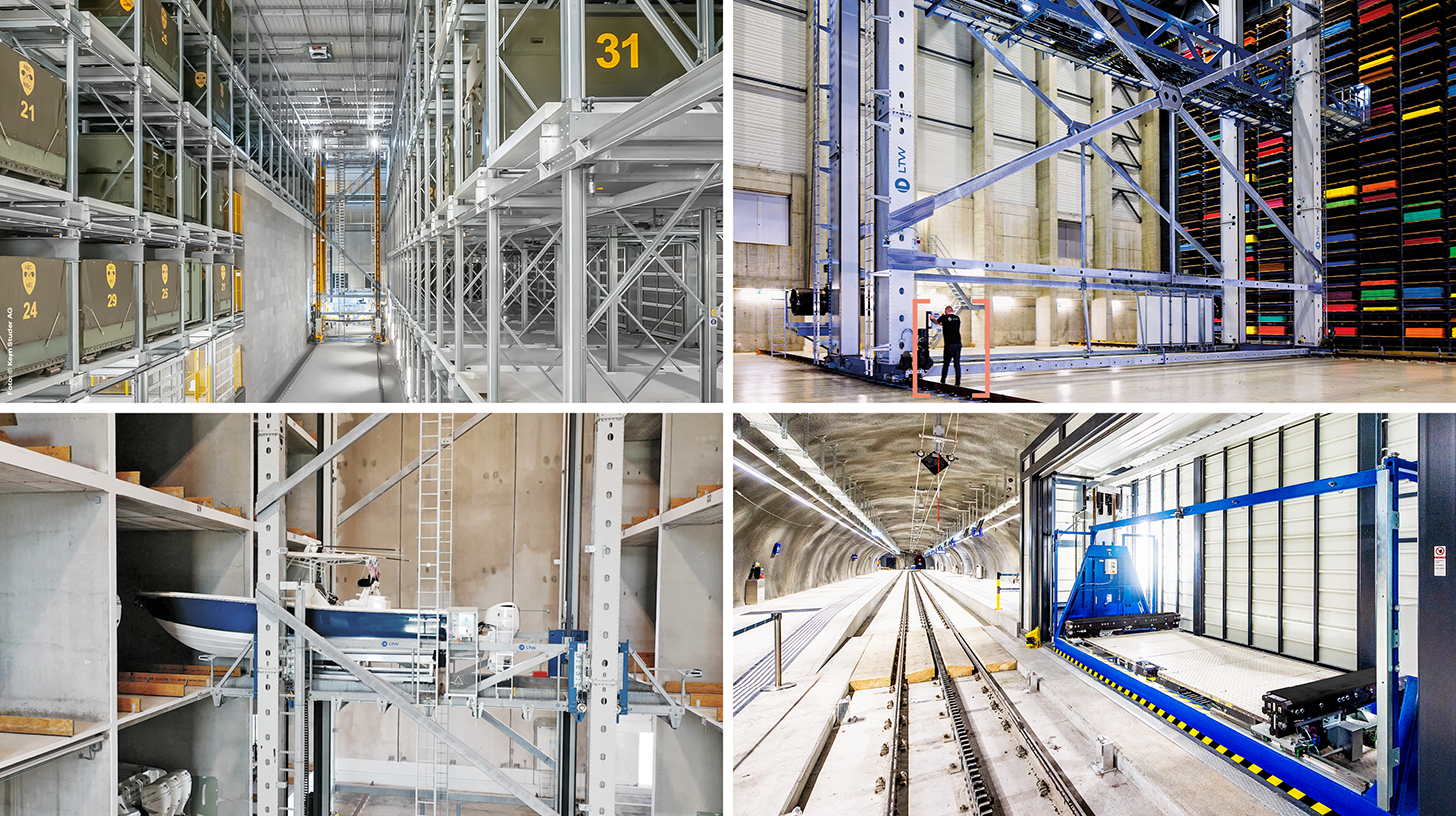
LTW Intralogistics – Engineers of Flow - Image: LTW Intralogistics GmbH
LTW offers its customers not individual components, but integrated complete solutions. Consulting, planning, mechanical and electrotechnical components, control and automation technology, as well as software and service – everything is networked and precisely coordinated.
In-house production of key components is particularly advantageous. This allows for optimal control of quality, supply chains, and interfaces.
LTW stands for reliability, transparency, and collaborative partnership. Loyalty and honesty are firmly anchored in the company's philosophy – a handshake still means something here.
Related to this:
Scalable fleets, better space utilization: Lessons from modern warehouse centers
Redefining the camp – physics and intelligence merge
Automation in intralogistics is not a new topic. What has changed is the qualitative dimension: systems are now capable not only of performing predefined tasks, but also of reacting flexibly to variable conditions, navigating autonomously, and operating as part of coordinated fleets. The modern warehouse is evolving from manual operation with isolated automation islands to an integrated, AI-driven operating system.
Cainiao, the logistics division of the Alibaba Group, has developed the ZeeBot, a shelf-climbing robot that combines both dimensions of movement in the warehouse: horizontal navigation through extremely narrow aisles at speeds of up to four meters per second and vertical climbing of shelves up to five stories high in just ten seconds. The first operational ZeeBot warehouse in Guangdong has increased productivity in storage and retrieval by 100 percent and improved space utilization by 40 percent. Previous systems lost throughput due to transfers between separate horizontal and vertical systems; ZeeBot eliminates these transfers structurally. Its modular design allows for dynamic adjustment of fleet sizes to accommodate changes in volume.
Toyota Industries is deploying autonomous forklifts with dual navigation: vehicles seamlessly switch between reflector-based guidance in defined areas and natural navigation based on environmental features in other parts of the warehouse. This technology enables automation for the first time in warehouse sections that were previously unsuitable for autonomous systems due to the lack of structured floor markings. Coupang, the Korean e-commerce giant, has brought AI-powered robotic arms to its logistics centers through investments in the startup Contoro. These robots achieve a 99 percent success rate when unloading containers and truckloads. The robots combine AI with human remote control to handle a wide variety of box sizes and weights and utilize large language models that interact directly with the machines to learn new techniques and diagnose machine performance.
Amazon is focusing on a systemic approach: Inventories and routes are adjusted in real time, AI forecasts customer demand regionally and dynamically decides on distribution within the network. Through the acquisition of the Swiss robotics company Rivr, whose four-legged robots can navigate stairs and uneven terrain, Amazon is also opening up delivery scenarios right to the customer's doorstep, which are inaccessible to traditional vehicle logistics. By the end of 2026, Amazon plans to invest four billion US dollars to triple the size of its rural delivery network. Automation is thus becoming an actively controlling system – no longer a supplement to human labor, but its structural reorganization.
Electromobility as a system component for the last mile
The electrification of vehicle fleets is often treated in debates as an isolated technological issue – a question of range, charging infrastructure expansion, and acquisition costs. This perspective is too narrow. The true strategic value of electric vehicles in urban logistics lies not primarily in their drive technology, but in their connectivity, their compliance with urban emission restrictions, and their long-term cost structure in the context of rising CO2 pricing.
The German CO2 price will fluctuate between €55 and €65 per ton in 2026, and with the European Emissions Trading System (ETS2), which will include road transport in 2027, a further significant increase in the cost of fossil fuel vehicles is imminent. For logistics companies with large diesel fleets, this means a structural cost shift that is already influencing long-term investment decisions. The combination of regulatory pressure and rising energy costs makes last-mile electrification not an option, but a business necessity.
The market for electric last-mile delivery vehicles reflects this dynamic: According to GM Insights, it is projected to grow from $22.9 billion in 2025 to $103.5 billion by 2034. In this growth market, the Leapmotor T03 – a joint project between Leapmotor International and its European majority shareholder Stellantis – is a remarkable case study in the democratization of all-electric urban mobility. With a starting price of €18,900 in Germany, a WLTP range of 265 kilometers, and a real-world range of 290 kilometers measured in the ECOBEST Challenge 2025, exceeding the standard figure by nine percent, the vehicle sets a new price-performance benchmark in its segment. The 70 kW electric motor with 158 Nm of torque, a top speed of 130 km/h and a charging capacity of up to 45 kW make the T03 a practical city vehicle that significantly reduces the economic hurdles for the electrification of urban fleets.
The crucial conceptual step lies in no longer viewing vehicles as isolated resources, but rather as networked elements of an integrated delivery system. Electric, networked, and production-ready vehicles like the T03 provide the physical infrastructure upon which data-driven control, real-time dispatching, and autonomous decision-making can be operationalized in the first place. Without this hardware layer, software intelligence remains abstract.
The structural superiority of adaptable systems
What connects the developments described is not a shared technology stack, a dominant company, or a unified strategy. What connects them is a changed system logic: The goal is not achieving optimal states under stable conditions, but rather the ability to remain operational under dynamic, disruption-prone conditions.
In its analysis of supply chain resilience 2025, Deloitte characterizes this capability as the core of modern competitiveness: Resilience means not only warding off disruptions, but also the ability to adapt flexibly to changing conditions and to quickly regain operational capability after crises. In a PwC survey, 63 percent of companies stated that they adapt their supply chains to manage disruptions – among the so-called supply chain champions, 93 percent pursue a holistic approach. These figures do not describe proactive crisis prevention, but rather the response to an environment in which disruption has become the norm.
The economic implications of this shift are profound: capital allocation in logistics must be reassessed. Investments in flexibility, regionalization, and intelligent management do not generate an immediately measurable ROI in the form of cost reductions – but they create a strategic option whose value unfolds in times of crisis. Companies that invest in resilience are acting rationally in a world where the costs of supply chain disruptions are sometimes greater than the cumulative savings of years of efficiency optimization. According to McKinsey estimates, AI agents in logistics can reduce operating costs by up to 20 percent – but this value is secondary to the ability to maintain delivery capability in a crisis situation.
Agentic AI: The next stage of logistics evolution
The term "agentic AI" describes a concept that goes beyond classic automation and analytical AI: systems that not only recognize patterns and make recommendations, but also make independent decisions and initiate actions – within defined boundaries, but without human approval for each individual step. In logistics, this means: an agent detects a delivery delay, automatically checks alternative routes and carriers, initiates replanning, and informs the customer – all in real time and without intervention from a dispatcher.
Between 45 and 63 percent of logistics companies are already using AI technologies, including AI agents for automation and analytics. The limiting factor is less about technology availability than data quality and governance: According to IBM, scaling complex AI workflows often fails due to insufficient data quality. Companies that established this structural prerequisite—clean, consistent data available in real time—early on gain a competitive advantage that increases, not diminishes, with growing system complexity.
The new logic is this: data is not just a basis for decision-making, it is operational infrastructure. Anyone investing in AI systems without simultaneously investing in data hygiene and process structuring will not be able to realize the full value of agentic-based automation. The technological superiority of modern systems is only as good as the quality of the input signals on which they are based.
Regulatory pressure as an accelerator of structural transformation
In addition to technological drivers, the regulatory framework acts as an external accelerator of the transformation. The EU regulation on electronic freight information (eFTI) obliges authorities to accept electronic freight information via certified platforms by July 2027 – thus establishing a binding framework for the digitization of document exchange in transport logistics. The EU-wide emissions trading system ETS2 will come into force in 2027 and will introduce CO2 pricing in road transport for the first time, structurally worsening the cost structure of diesel-powered fleets.
These regulatory developments have a dual effect: they increase the costs of maintaining the status quo while simultaneously reducing the relative costs of future-oriented investments in digitalization and electrification. For logistics companies that have already invested in digital infrastructure and electric vehicles, this is a dividend on forward-thinking decisions. For everyone else, the competitive position worsens with each year of delay.
The strategically sound approach is not to react to regulation when it takes effect. It is to interpret regulatory direction as market information and prioritize investment decisions accordingly. Companies investing today in eFTI-compatible systems, low-CO2 vehicle fleets, and data-driven operating models are not only positioning themselves regulatory-wise, but also creating the operational infrastructure for the competitive model of the coming decade.
What determines who wins the transformation?
The developments described – autonomous systems, returns management as a value creation area, speed as a product feature, resilience as a strategic priority, warehouse automation with new system depth, electromobility as an integrated system component – are not independent trends. They are manifestations of the same fundamental shift: logistics is transforming from a cost center into a competitive differentiator because it increasingly defines whether a company remains capable of delivering under real-world conditions.
No single company masters all the described dimensions simultaneously. Amazon leads in speed and AI-driven inventory distribution; Cainiao in physical warehouse automation; Shipsy in TMS platforms with Agentic AI; Two Boxes in the professionalization of reverse logistics; and Lightship and Leapmotor in combining electromobility and manufacturing resilience. What they have in common is their willingness to invest in the structural prerequisites for adaptability – even if the short-term ROI isn't immediately apparent.
The crucial management question is therefore not: Which technology should be implemented? It is: What organizational prerequisites must be created so that the technology can reach its full potential? Because speed, control, and automation are not products you buy – they are qualities a company develops by consistently aligning decision-making processes, data architecture, and operational structures for adaptability. The logistics of tomorrow will not be measured by how precisely it plans. It will be measured by how effectively it reacts when reality overtakes the plan.
Consulting - Planning - Implementation

Konrad Wolfenstein
I would be happy to serve as your personal advisor.
You can contact me at wolfenstein∂xpert.digital or
Just call me on +49 7348 4088 965 .
Your intralogistics experts

Consulting, planning and implementation of complete solutions for high-bay warehouses and automated storage systems - Image: Xpert.Digital
More information here: