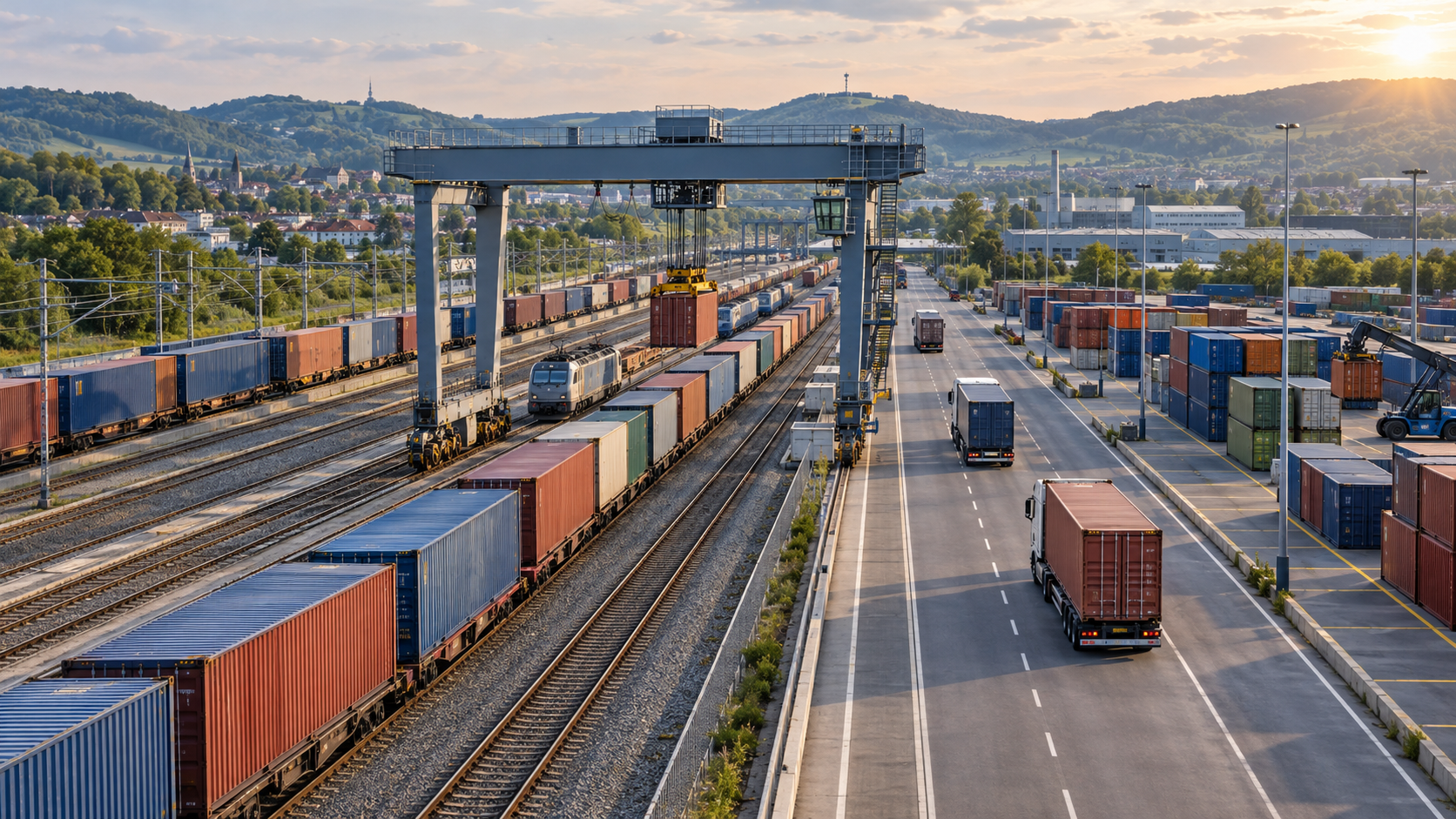
Euregio Railport in Stolberg: Freight transport on the rails – New intermodal freight terminal faces a long test – Creative image on the topic, with AI: Xpert.Digital
€29.3 million in funding: Why the Euregio Railport needs more than one new terminal
Stolberg is focusing on rail: These factors will determine the success of the Euregio Railport
The planned Euregio Railport at Stolberg's main train station aims to link freight transport between road and rail. The European Commission has approved €29.3 million in German state aid for this project. Operations are scheduled to begin in 2035, with full capacity expected to be reached by 2037. However, a funding commitment is no guarantee of economic success: Crucially, companies will need to utilize the terminal, sufficient freight can be consolidated, and the entire transport chain can remain competitive. For Stolberg and the Aachen region, the project offers the opportunity for improved interregional connections and additional transport options. Whether this translates into lasting economic and environmental benefits, however, depends on demand, reliable rail connections, competitive costs, and careful performance monitoring.
How Stolberg plans to put its economic future on track with €29.3 million in funding – the location still has to earn its competitiveness
The planned Euregio Railport at Stolberg Central Station is more than just a regional infrastructure project. It addresses a fundamental economic policy question: Under what conditions can freight transport be shifted from road to rail while simultaneously strengthening industrial competitiveness, security of supply, and climate protection? On October 30, 2026, the European Commission approved German state aid of €29.3 million for the new multimodal freight terminal. The direct grant is earmarked for EVS EUREGIO Verkehrsschienennetz GmbH, which will be the future owner of the facility. Operations are scheduled to begin in 2035, with full capacity expected by 2037.
These key data points represent both an opportunity and a demanding economic test. Funding of this magnitude can close a crucial financing gap. However, it guarantees neither sufficient freight nor reliable train connections, competitive prices, or sustainably profitable operations. A terminal initially creates the possibility of linking different modes of transport. Whether this results in a viable business model and a benefit to the national economy will only be determined by the interplay of demand, infrastructure quality, operational organization, and site development.
This presents a strategic opportunity for Stolberg and the Aachen region. A high-performance transshipment hub can improve access to supra-regional goods flows and open up additional transport options for companies. The crucial question, therefore, is not how impressive the construction project will be. What matters is whether it succeeds in creating an infrastructure that companies will actually want to use in their daily competition.
What the funding decision means economically – and what it doesn't
First, an important distinction must be made: The European Commission has approved German state aid. This does not mean that the €29.3 million will be provided directly from the EU budget. Nor can the total investment volume be derived from the approved grant. The funding amount is a financing figure, but not a complete cost estimate for the project. Information on additional equity, further financing components, or a final total investment should not be equated with it.
Even state aid approval is not a guarantee of future profitability. It answers a different question: Under what conditions may the state support a company without unduly distorting competition?
The Commission considers the support necessary and appropriate to promote rail transport. At the same time, it assumes that the investment would not be undertaken without public support. The support should be limited to the necessary minimum and have only a limited impact on competition and trade.
Economically, this describes a typical scenario for large infrastructure projects. The desired social benefits can outweigh the immediate economic returns. A private investor primarily considers revenues, costs, and risks. Public authorities, on the other hand, can additionally factor in traffic relief, environmental impacts, and regional development. Precisely for this reason, funding must be assessed based on measurable results and not solely on the fact that a facility is built.
The real value lies in the connection of transport systems
A multimodal terminal connects different modes of transport. In the case of the Euregio Railport, the focus is on the transshipment between road and rail. The economic idea behind this is not to completely replace trucks. Rather, it aims to combine their strengths on short and flexible routes with the consolidation advantages of rail on suitable longer connections.
Trucks often handle the initial leg from the sender to the terminal and the final leg from the destination terminal to the recipient. Rail transports bundled loads on the main leg. However, this division of labor only becomes economically viable when the advantages of rail transport offset the additional costs and time required for transshipment.
This shifts the focus from individual modes of transport to the entire transport chain. Inexpensive rail transport is of little use if a company has to accept long journeys, additional storage times, or difficult-to-calculate connection risks. Conversely, a well-organized terminal location can facilitate access to rail and thus reach companies that do not have their own rail siding.
The railport should therefore be evaluated primarily as an interface. Its value arises from the quality of the connections, not from the size of paved areas or the number of installed handling devices.
Why the Stolberg location offers a cross-border perspective
The location in the Aachen area and the Euregio makes a purely municipal perspective too narrow. For economic evaluation, it's not just about which companies are directly located in Stolberg. A functional catchment area is relevant, defined by travel times, accessibility, transport costs, and available connections.
Especially in border regions, administrative boundaries can differ from actual goods flows. A company doesn't choose a terminal simply because it's located in the same state or country. Reliable services, convenient departure times, and a competitive overall price are the deciding factors.
This presents both an opportunity and competitive pressure. A location can benefit from cross-border customer relationships. At the same time, it competes with other transshipment points accessible to the same shippers. Geographic location alone, therefore, does not guarantee a lasting advantage.
A sound location strategy would need to examine which goods flows can actually be consolidated within the regional catchment area. Crucially, it would also be necessary to determine which destinations companies regularly serve and whether sufficiently concentrated volumes are available for these destinations. The real question is not whether Stolberg is conveniently located on the map, but whether economically viable transport chains can be organized from there.
Demand is not created by capacity, but by specific transport needs
In infrastructure projects, there's a temptation to infer demand from supply: if a modern facility is available, customers will follow. This assumption is particularly risky for freight terminals.
Companies only shift their transport needs if the new service meets their requirements. These include price, reliability, transit time, shipment tracking, risk of damage, and organizational effort. The frequency of departures also plays a crucial role. A train that is attractively priced can be useless if it doesn't fit the customer's production schedule.
Therefore, before a reliable capacity forecast can be made, a distinction must be drawn between theoretically achievable freight volume and actual shiftable demand. Not every ton currently transported by road is equally suitable for combined transport.
Particularly relevant are regularly recurring goods flows with predictable time windows. More challenging are highly fluctuating, very short-notice, or small-scale transports, where additional interfaces can negate the advantages of rail.
For Euregio Railport, a clearly defined customer portfolio would therefore be more economically meaningful than a general expectation of increasing freight volumes. The crucial factor is which companies would actually use which routes, with what volumes, and under what conditions.
The crucial difference lies between handling volume and transport performance
A data-driven evaluation must clearly distinguish between different key performance indicators. Throughput describes how much freight is moved within the terminal. Transport performance additionally considers the distance traveled. It is usually expressed in ton-kilometers: one ton of freight over one kilometer equals one ton-kilometer.
This distinction is important because a large volume of goods handled does not automatically translate into a correspondingly large reduction in road traffic. If goods are only shifted to rail over short distances, the avoided truck traffic is lower than with the same volume over a long route.
Similarly, new rail services must be distinguished from mere relocations of existing facilities. If freight is handled in Stolberg instead of another terminal in the future, this may be beneficial for individual companies. However, the additional economic benefit will not be on the same scale as with an actual shift of existing road transport.
For subsequent performance evaluation, several metrics would therefore be required: the volume of freight handled, the number of trains actually run, the average distances, the capacity utilization, and the changes in the entire transport chain. Only this combination will show whether the railport creates new capabilities or primarily rearranges existing structures.
The cost calculation is decided outside the terminal fence
From the perspective of a shipping company, the handling fee alone is not what matters. What is crucial are the total logistics costs from origin to recipient.
This includes pre-carriage by truck, handling at the terminal, rail transport, transshipment at the destination, and on-carriage. Additional costs may include storage, insurance, organizational effort, and expenses for extra inventory. Delay risks also have economic value.
A simplified example illustrates the relationship: If a company saves on transport costs on the main route but simultaneously has to build up additional buffer stocks, some of the savings can be lost again. Conversely, a reliable rail connection can be economically attractive despite a slightly longer transit time if it is easily planned and secures capacity in the long term.
The competitiveness of Euregio Railport therefore depends not only on efficient transshipment technology. Equally important are short processing times, reliable booking processes, coordinated timetables, and good accessibility.
A terminal can function exceptionally well internally and still be part of an unattractive transport chain. It only becomes successful when the entire connection is convincing from the customer's perspective. This requires close cooperation between infrastructure companies, terminal operators, railway companies, freight forwarders, and shippers.
High fixed costs make capacity utilization the central economic lever
Freight terminals are characterized by significant upfront costs. Sites must be prepared, tracks built, technical equipment installed, and operational structures established. A large portion of these costs is incurred regardless of whether the facility is operating at high or low capacity.
This results in a strong correlation between capacity utilization and unit costs. If fixed costs are spread across a small number of transactions, each individual transaction becomes expensive. If utilization increases, average costs can decrease, provided no new bottlenecks arise.
This mechanism explains why the initial phase is particularly challenging. Customers want frequent connections and low prices. Both are easier to offer when there is already sufficient freight volume. However, operators need precisely these customers to build up the necessary volume.
Public subsidies can reduce the investment burden and thus improve the conditions. However, they do not eliminate the link between capacity utilization and profitability. A facility that is consistently underutilized remains problematic even with subsidized construction.
Therefore, economically sensible options would include reliable anchor customers, gradually expanding connections, and capacities that can be adjusted as flexibly as possible to demand. Oversizing would be just as risky as an undersized facility that quickly reaches its limits if the market develops successfully.
The long time horizon changes the entire investment logic
Approximately nine years lie between the approval of the aid in 2026 and the planned start of operations in 2035. The timeframe to full capacity, planned for 2037, extends to roughly eleven years. This project is therefore not a short-term solution to current bottlenecks, but rather an investment in the logistics infrastructure of the next decade.
This time horizon requires particular caution when making forecasts. Production locations, energy prices, transport technologies, and trade relations can all change by then. The cost structure of different modes of transport is also subject to change.
A demand analysis should therefore not simply extrapolate current trade flows. It should consider various development paths. These include increased regionalization of industrial supply chains, as well as changing import structures, technological advances in road freight transport, and new requirements for low-emission transport.
At the same time, the long lead time makes it clear why infrastructure planning must be forward-looking. Those who only build when demand is fully apparent risk reacting too late to bottlenecks. The economic challenge lies in distinguishing between necessary precautions and speculative overcapacity.
Verifiable intermediate goals are useful for this: How is potential customer demand developing? Which connections remain attractive? Which technical requirements are changing? A long-term project doesn't need unchanging planning, but rather a robust framework with room for adjustment.
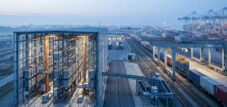
LTW Intralogistics Solutions – Intermodal Transport

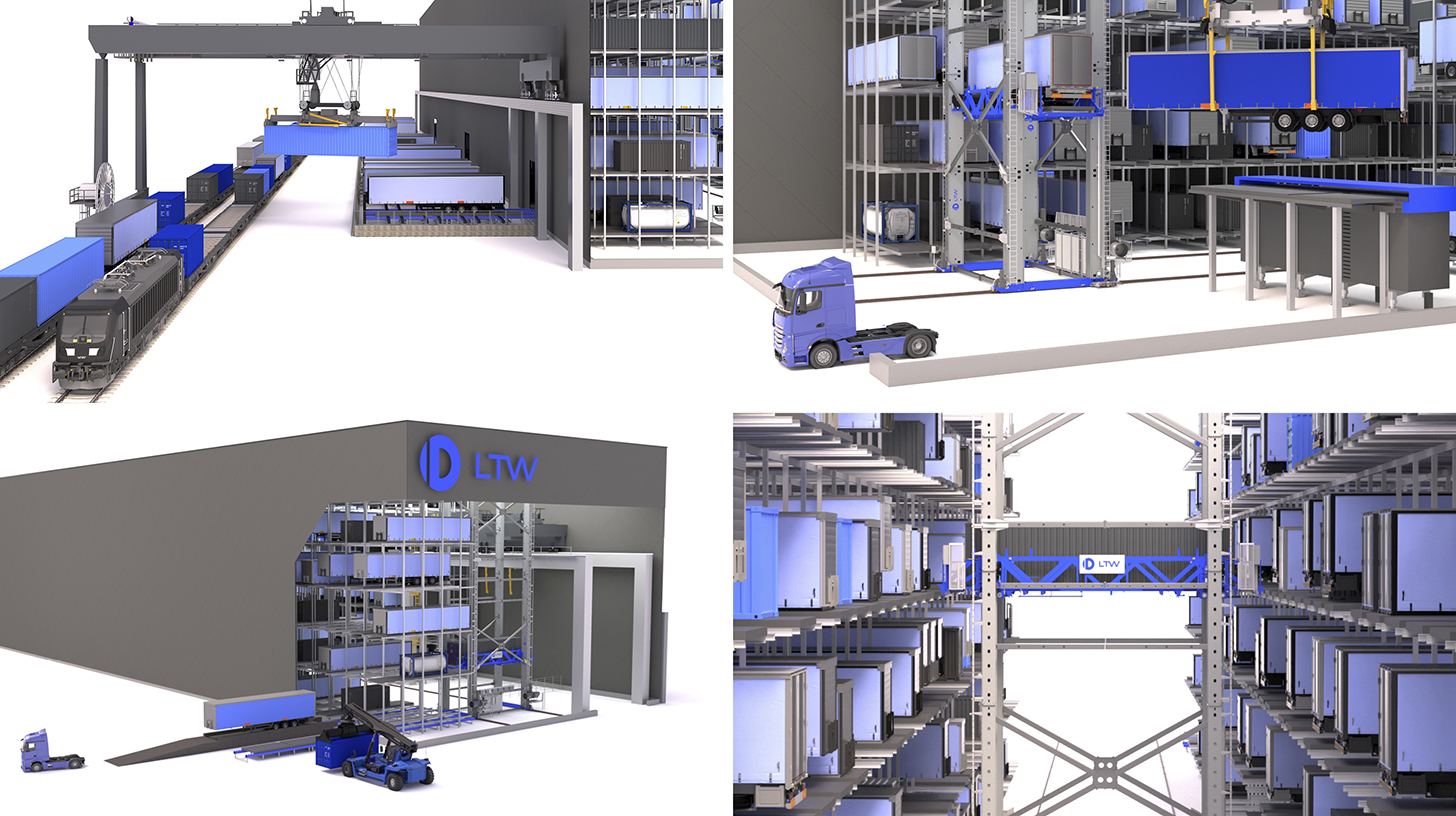
LTW Intralogistics Solutions – Intermodal Transport – Image: LTW Intralogistics GmbH
LTW offers its customers not individual components, but integrated complete solutions. Consulting, planning, mechanical and electrotechnical components, control and automation technology, as well as software and service – everything is networked and precisely coordinated.
In-house production of key components is particularly advantageous. This allows for optimal control of quality, supply chains, and interfaces.
LTW stands for reliability, transparency, and collaborative partnership. Loyalty and honesty are firmly anchored in the company's philosophy – a handshake still means something here.
Related to this:
Sustainability in freight transport: A look at the Railport
Construction costs, financing, and delays should not be considered separately
Several risks interact in a long-term infrastructure project. Rising construction costs can increase financing needs. Delays can postpone revenues. Technical adjustments can trigger additional expenses. These developments can potentially reinforce each other.
The approved grant of €29.3 million is therefore only one part of the economic analysis. Without reliable information on total costs, payment dates, and the financing structure, neither a sound return on investment nor a complete calculation of the required capital can be made.
From an economic perspective, time also plays a role. Benefits that only materialize many years later must be assessed differently than immediately available relief. A saved transport hour or avoided emission in 2037 is not the same as a benefit realized today.
This does not imply any fundamental criticism of the project. It does, however, highlight the need for a thorough life cycle assessment. This assessment should consider construction, financing, maintenance, renewal, and operation, as well as revenues and societal impacts.
A clear distinction between one-off investment subsidies and potential ongoing support needs is particularly important. Subsidized construction can be beneficial. However, a permanently unsustainable operational structure would be a different economic policy problem.
The climate benefits arise throughout the entire transport chain
Shifting suitable freight transport to rail can reduce environmental impact. However, the fundamental relationship is more nuanced than a simple comparison between trucks and freight trains. Crucial factors include energy supply, capacity utilization, distances, and the additional road journeys to and from the terminal. The German Federal Environment Agency cites the shift to rail and inland waterway transport as one approach to reducing the environmental impact of freight traffic.
For Stolberg, a transport chain-specific climate impact assessment would therefore be necessary. It would have to record which truck journeys are actually eliminated and which new ones are created. A long lead time can negate some of the benefit. The same applies to underutilized trains or avoidable empty runs.
In addition, the environmental impacts of construction and subsequent operation must be considered. Land use, building materials, energy consumption, and technical installations must all be included in a comprehensive analysis. Such burdens can be justified by future savings, but must first be transparently accounted for.
Furthermore, the technology will continue to develop before the planned commissioning. A proper comparison must consider the alternatives available at that time, not just today's average diesel truck. Therefore, the railport should not be justified solely on a blanket climate promise. A more reliable approach would be to demonstrate on which specific routes it offers advantages over realistic alternatives.
Road relief and local traffic congestion can occur simultaneously
A terminal can reduce long-distance truck traffic while simultaneously generating additional truck traffic in its immediate vicinity. There is no contradiction here. These are different spatial levels of the same transport chain.
If the main transport route is by rail, long road journeys can be eliminated. However, feeder services still need to reach the terminal. Therefore, access routes, traffic management, operating hours, and waiting areas are crucial for residents and local businesses.
A blanket statement that the project will relieve traffic congestion is insufficient without spatial differentiation. What is relevant is which long-distance journeys will be eliminated, which local journeys will be added, and how the increased traffic will be distributed over time.
Operational organization also influences this balance. Digital time slots, rapid processing, and adequately sized waiting areas can help prevent traffic jams from spilling onto the public road network. Equally important is coordination with other traffic needs at the location.
Therefore, the acceptance of the railport will depend not only on the overall economic calculations. The population must be able to understand how local burdens will be limited. Regional benefits lose their political persuasiveness if their immediate costs are permanently concentrated in individual residential areas or transport corridors.
For industry, security of supply is just as important as the transport price
The importance of a logistics hub extends beyond favorable freight rates. For manufacturing companies, the availability of additional transport options can have its own economic value.
A company that relies solely on one mode of transport has fewer alternative options in the event of disruptions. An accessible rail network can expand these options. However, whether this actually leads to greater resilience depends on its practical usability.
A theoretically existing alternative is of little use if vehicles, time slots, or handling capacities are lacking when needed. It must also be clarified whether products, packaging, and operational processes are suitable for the change of transport mode.
This presents a potential additional benefit for the Euregio Railport: it could facilitate companies' entry into more diversified transport concepts. However, this benefit should not be confused with complete independence from disruptions. Rail transport also depends on functioning networks, personnel, and operational coordination.
A combination of predictable scheduled services and realistic contingency plans would be economically convincing. Resilience is not created by having as many theoretical options as possible, but by prepared alternatives that function under actual operating conditions.
Small and medium-sized enterprises need more than a rail connection
A regional terminal can be attractive for companies whose individual transport volumes are too small to justify their own rail services. The potential advantage lies in consolidation: several shippers share a connection and thus indirectly share its fixed costs.
For this model to work, barriers to entry must be low. Complicated booking processes, opaque surcharges, or high minimum order quantities can exclude smaller companies, even though the infrastructure is fundamentally open.
For broad customer access, easily understandable products are crucial. Companies need to be able to see which services they are booking, what the terms and conditions are, and who is responsible in case of discrepancies. Especially for occasional users, a reliable contact person is often more important than a particularly detailed technical description of the offer.
In this way, the railport could contribute to the attractiveness of the location for small and medium-sized enterprises (SMEs). However, this would require the development of efficient organizational services between the terminal and shippers.
Public funding creates the necessary infrastructure, but not automatically an easily accessible market. Only through freight forwarding services, bundling models, and reliable customer support does infrastructure become an accessible transport service. Success should therefore also be measured by whether new user groups are reached, and not just established major customers.
Regional value creation is more than just the number of new jobs
Large infrastructure projects are often justified by their employment effects. However, the construction phase, ongoing operation, and indirect effects must be considered separately.
During the construction phase, there is a temporary demand for services. Later, during operation, technical, commercial, and logistical tasks are required, among others. Furthermore, companies can benefit from improved transportation options. These effects vary economically and should not be lumped together into a single, general figure.
The available data for the Euregio Railport does not contain any reliable information regarding additional jobs. Therefore, any such figures would be speculative without further investigation.
Furthermore, a purely employment-based analysis would be incomplete. An efficient terminal operation can become more productive through automation without creating a significant number of additional jobs. Nevertheless, it can improve the competitiveness of regional companies.
Conversely, not every job at a new location represents an additional job for the economy as a whole. Some may result from relocations within the region or between existing locations.
A broader analysis would therefore be more meaningful: What additional services are created? Which companies save costs? Which investments are actually enabled by the infrastructure? How are skills and productivity developing? Only from this can the regional value creation contribution be reliably derived.
Digitalization must reduce waiting times and improve decision-making
Digital technology can increase the performance of a terminal. However, its benefit is not measured by the number of applications used, but by concrete operational improvements.
Reliable information about arrival times, available capacities, and the status of individual transport units is particularly important. If all parties involved are working with different or delayed data, unnecessary waiting times and coordination costs arise.
A coordinated digital process chain could help manage truck access, utilize handling equipment effectively, and anticipate delayed train arrivals. This could result in shorter waiting times and better utilization of existing capacities.
However, this requires that data can actually be exchanged between companies. Isolated technical solutions or unclear access rights can limit its usefulness.
Artificial intelligence would only be useful where it improves sound decision-making. Forecasts regarding quantities, delays, or maintenance needs can be valuable. However, they do not replace sufficient data quality or clearly defined responsibilities.
For a terminal not planned until the 2030s, an adaptable digital architecture is therefore more important than committing to individual, currently available products. The systems should be scalable and support operational processes, rather than creating new dependencies.
Protection of competition is a prerequisite for lasting acceptance
Publicly funded infrastructure must not only be useful but also competitively viable. If a new terminal location displaces existing providers without creating additional capacity, some of the expected benefits can simply be redistributed.
In its decision, the Commission emphasized the limited impact on competition and trade, as well as the proportionality of the support. However, the specific design of the support remains crucial for economic practice.
Transparent access conditions and comprehensible fees can help enable various market participants to use the infrastructure. However, the ownership role should not be prematurely equated with all subsequent operational functions. The fact that EVS is slated to be the future owner does not automatically answer every question regarding the organization of all transport and handling services.
From an economic perspective, a terminal would be particularly valuable if it enabled additional services and expanded the options available to shippers. A structure that favored individual users or created new dependencies would be less convincing.
Competition between transport modes and locations should therefore not be seen as a disruptive factor. It is an important testing mechanism to determine whether the subsidized infrastructure provides services that customers demand under real market conditions.
Three development paths show what the project can decide on
A sound economic analysis does not require a seemingly precise individual forecast. It is more helpful to distinguish between different development paths and to disclose their conditions.
In a favorable scenario, the railport will quickly secure reliable anchor customers. The rail connections will align with their freight flows, increasing capacity utilization and reducing unit costs. More users will be attracted as the service becomes more frequent and appealing. The location will then benefit from a reinforcing network effect.
In a moderate scenario, a functional terminal is established with a limited but stable customer base. The regional impact remains positive, but is smaller than politically hoped. Some connections work, while others fail to reach the necessary demand. A disciplined adjustment of the service would then be crucial.
In a worst-case scenario, costs rise while key customers stay away or goods flows change. Low utilization leads to high unit costs, making it difficult to attract new users. The subsidy would then have enabled construction, but would not have created a sufficiently viable transport service.
These scenarios are not predictions. They illustrate which factors need to be monitored and influenced. The economic focus is on customer loyalty, operational reliability, and the ability to adjust capacities and offerings in a timely manner.
A reliable measure of success must be established before the opening
An infrastructure project should not define its success only after its completion. Otherwise, there is a risk of retrospectively selecting those key performance indicators that present the most favorable picture.
For the Euregio Railport, economic, transport-related, and environmental criteria would need to be considered together. Economic factors include capacity utilization, revenue quality, operating costs, and long-term maintenance requirements. Transport-related factors include actual service connections, reliability, and newly acquired rail traffic.
The environmental assessment should be based on actual transport chains. This includes the avoided road traffic volume as well as additional pre- and post-carriage. Regionally, it would be necessary to examine which companies benefit and what local burdens arise.
The development over several years would be particularly revealing. A single weak start-up year proves failure no more than a one-time high turnover necessarily proves lasting success.
Furthermore, a realistic comparison is important: What would have happened without the terminal? Only by comparing it to this alternative can the additional benefit be determined.
Such a performance review would not be a vote of no confidence in the project. It would be an expression of professional investment policy. The longer the impact of public funding, the more important it is to have transparent criteria against which its results can be evaluated.
Stolberg's opportunity lies in the functioning network, not in subsidized construction
The Euregio Railport can become a significant component for more efficient and better-connected logistics in the Aachen and Stolberg region. The approved subsidy of €29.3 million provides an important financial framework for this. However, with planned operations commencing in 2035 and full capacity anticipated by 2037, this is a long-term project whose benefits can only be demonstrated through future market and operational results.
The economically grounded perspective is therefore neither unbridled euphoria nor blanket criticism of subsidies. Public support can be justified if it enables a socially beneficial infrastructure that would not exist without funding. However, it remains subject to conditions: sufficient demand, competitive transport chains, reliable rail services, and transparent handling of costs and risks.
The greatest opportunity for the region lies in providing companies with better access to supra-regional freight flows. This can lead to locational advantages, additional transport options, and environmental benefits. However, none of these effects will automatically result from the construction.
Ultimately, the success of the railport will not be measured by the amount of funding approved. The decisive factor will be whether companies can transport their goods via Stolberg more reliably, economically, and with lower overall environmental impact. Only then will the subsidized infrastructure become a sustainably productive asset for the regional economy.
Consulting - Planning - Implementation

Konrad Wolfenstein
I would be happy to serve as your personal advisor.
You can contact me at wolfenstein∂xpert.digital or
Just call me on +49 7348 4088 965 .
Your intralogistics experts

Consulting, planning and implementation of complete solutions for high-bay warehouses and automated storage systems - Image: Xpert.Digital
More information here: