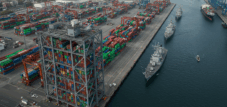
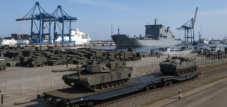
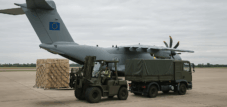
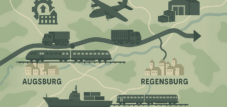
Seaport modernization for business and defense: A dual-use strategy for modernization through high-bay logistics – Image: Xpert.Digital
The port of the future: How Germany is becoming a global leader in high-tech heavy-load intralogistics
Innovation for seaports: Dual-use logistics and high-bay warehouses as an innovative solution approach
Germany's seaports, once guarantors of economic prosperity and global connectivity, are at a critical juncture. A decades-long backlog of investment amounting to approximately €15 billion has brought the maritime infrastructure to a precarious state. Dilapidated quays, insufficient heavy-lift areas, and chronically congested hinterland connections are not only undermining Germany's competitiveness in global trade but also jeopardizing the nation's security of supply and its strategic ability to act in an increasingly volatile geopolitical environment. The consequences are already being felt: declining cargo volumes and the loss of market share to European competitors.
This article analyzes the profound crisis of German port infrastructure and develops a comprehensive, future-oriented solution strategy. This strategy is based on the synergistic linking of a strategic concept – dual-use logistics – with a technological revolution – the container high-bay warehouse (HBW).
Related to this:

The core problems
This article demonstrates that the €15 billion deficit is not merely a maintenance bill, but rather a symptom of a long-standing failure to consider port infrastructure as a national strategic asset. The physical deficiencies, ranging from crumbling quays that can no longer withstand modern cranes to an undersized rail network, create a vicious cycle of declining efficiency, diminishing competitiveness, and a lack of reinvestment. This downward spiral directly and indirectly threatens up to 5.6 million jobs and weakens the economic foundation of the entire Federal Republic.
The strategic solution approach: The dual-use imperative
Germany's redefined role as NATO's logistical hub, brought about by the geopolitical "turning point," offers a crucial lever for overcoming the investment freeze. This article argues for the consistent implementation of a dual-use infrastructure concept, in which ports and their connections are planned, financed, and operated from the ground up to meet both civilian economic and military defense requirements. Port modernization thus transforms from a mere "cost item" into a strategic "investment" in national and European security. This legitimizes the demand to finance parts of the modernization from the defense budget as well as from climate and transformation funds, as already indicated by the National Port Strategy.
The technological catalyst: The container high-bay warehouse (HBW)
The high-bay container warehouse is identified as the technological core of the modernization. This technology transforms port logistics from space-intensive stacking to vertical, fully automated storage with direct individual access to each container. HRL systems eliminate unproductive restacking, triple storage capacity on the same footprint, and, thanks to their all-electric operation, enable CO₂-neutral terminal operations. Crucially, the dual-use approach ensures that direct individual access not only maximizes commercial efficiency but also fulfills the core military requirement of rapid and precise access to specific goods in a crisis.
The integrated future model
This article outlines a synergistic model in which HRL-supported terminals function as high-performance, cyber-hardened nodes in a trimodal (sea, rail, road) dual-use network. The integration of Terminal Operating Systems (TOS), Transport Management Systems (TMS), and the Internet of Things (IoT) creates a digital twin of the port, enabling precise control of civilian and military logistics flows. This increases the resilience of the entire supply chain and strengthens defense capabilities.
The implementation roadmap
To implement this vision, a pragmatic roadmap is proposed. This includes a phased investment strategy based on a mix of public funds (transport, climate, defense), private investment, and EU funds. Key success factors are the legally mandated acceleration of planning and approval processes and the establishment of new Public-Private-Military Partnerships (PPMPs) to create the legal and financial framework for these complex projects. A complementary national skills development initiative aims to ensure that the transformation of the port's workforce is socially responsible.
The crisis facing German seaports presents a historic opportunity. By boldly implementing a dual-use strategy, driven by HRL technology, Germany can not only revitalize its ports but also transform them into world-leading examples of resilient, efficient, and secure 21st-century infrastructure. Such a move would not only strengthen the German economy but also set a new standard for NATO's critical infrastructure and position Germany as an architect of the port of the future.
The dilemma of German seaports: An infrastructure at a strategic crossroads
Germany's seaports, traditionally the beating heart of national trade and gateways to the world, are in a state that seriously jeopardizes their fundamental role in the German economy and security. A massive backlog of investment, accumulated over years, has led to a progressive erosion of critical infrastructure. This chapter illuminates the extent of the crisis, analyzes the specific structural deficiencies, and demonstrates the far-reaching economic and strategic consequences. It argues that the current situation is not merely a problem for the coastal states, but a national challenge requiring a strategic realignment.
Quantifying the crisis: The €15 billion investment deficit and its consequences
The urgency of the situation is underscored by an alarming figure: The Central Association of German Seaport Operators (ZDS) estimates the financial requirement for the renovation and expansion of port infrastructure at around 15 billion euros. According to ZDS Chairwoman Angela Titzrath, this sum is necessary to fully and sustainably implement all urgently needed modernizations within a period of twelve years.
This figure, however, is more than just a maintenance bill; it represents the cumulative cost of strategic investment that has been postponed for decades. The problems that are acute today—aging quays dating back to the early 20th century and a shrinking rail network—are not short-term developments, but rather the result of a long-term pattern of underfunding. The sum of 15 billion euros is put into perspective: it corresponds to "just three percent of the special infrastructure fund," which is intended to underscore the political and financial feasibility of the project, provided the political will exists.
Further evidence of the systemic nature of the problem is the demand for a drastic increase in the so-called port burden compensation. Raising the annual federal subsidies from the current 38 million euros to 400 to 500 million euros is considered necessary to ensure "that the failures of the past are not repeated." This more than tenfold increase is a clear admission that the existing financing model was fundamentally inadequate to keep pace with the development of global trade and the deterioration of infrastructure.
The consequences of this financial neglect are already measurable and are reflected in the competitiveness of German ports. In 2023, total cargo handling in German seaports fell by 4.1 percent compared to the previous year. The decline in container handling was particularly dramatic, falling by 8.5 percent from 13.9 million TEU to 12.7 million TEU. Leading ports such as Hamburg (-3.6 percent), Bremerhaven (-8.4 percent), and Wilhelmshaven (-6.1 percent) all recorded significant declines, indicating a loss of market share to better-equipped competing ports in Europe.
Structural deficiencies: From dilapidated quay walls to bottlenecks in the hinterland
The investment deficit manifests itself in a number of serious structural deficiencies that directly affect the operational performance of the ports.
dilapidated quay walls
The recurring buzzword "dilapidated quay walls" has become a symbol of the crisis. These are not merely cosmetic flaws, but critical structural defects that threaten the safety and efficiency of cargo handling. A dramatic example is the accident and subsequent complete closure of a segment of the Hachmann Quay in the Port of Hamburg in 2016. Reconstruction required complex and costly procedures, such as the use of a combined steel sheet pile wall and deep-lying micropiles to avoid compromising the stability of the old gravity wall. Modern quays must withstand enormous forces exerted by container cranes weighing up to 2,800 tons while simultaneously providing deeper water levels for ever-larger container ships – a requirement that many historic structures can no longer meet. The cost of modernizing just one meter of quay wall can reach up to €75,000, illustrating the scale of the financial challenge. In addition, the high rents for these outdated facilities in Hamburg are impacting the competitiveness of the port companies.
Inadequate hinterland connections
A port's efficiency doesn't end at the quayside. Without efficient land-based connections, even the fastest transshipment is rendered useless. German ports suffer from intermittent congestion on their road and rail infrastructure. This occurs when ultra-large container ships (ULCS) unload thousands of containers in a short period, which then simultaneously demand access to land-based transport. The German rail network, crucial for hinterland transport (in Hamburg, 49.7 percent of TEUs are transported by rail), itself suffers from a significant backlog of investment. Between 1995 and 2019, the network shrank by almost 15 percent, while rail freight increased by 83 percent during the same period. The result is constant congestion on the rail network and massive overload. Inland waterways like the Elbe, due to insufficient depth and width, cannot serve as an alternative to the same extent as the Rhine for the western ports; their share of TEU transport in Hamburg is a mere 2.4 percent. This leads to an excessive dependence on the already overloaded rail and road networks.
Further infrastructure deficits
The shortage also extends to a lack of "heavy-load areas". These areas are not only important for handling oversized goods, but also of strategic importance for the energy transition (e.g., for the pre-assembly and handling of wind turbine components) and for military logistics, as also emphasized in the National Port Strategy.
These deficiencies create a dangerous feedback loop. Dilapidated quays cannot support modern, heavy, and fast container cranes. Without these cranes and sufficient draft, ports cannot efficiently handle the largest and most profitable container ships. This leads to lower throughput and the loss of market share to competitors. The resulting lower revenues for port operators restrict their ability to co-invest in infrastructure, further increasing their dependence on scarce public funds. This cycle of decay, loss of competitiveness, and inability to reinvest can only be broken by a massive, strategic injection of external capital.
The economic and strategic consequences
The deterioration of port infrastructure is not an isolated problem of coastal regions, but a national burden with far-reaching consequences. Seaports are lifelines for the entire German economy. Landlocked states like Bavaria and cities like Dresden and Kassel depend on German seaports for a large portion of their foreign trade, with their share of goods traffic in these regions reaching up to 95 percent.
The economic importance of ports is also reflected in the number of jobs they provide. Nationwide, ports directly and indirectly secure up to 5.6 million jobs. A decline in port performance therefore has a direct impact on employment and prosperity throughout the country.
However, the strategic dimension is of crucial and increasingly critical importance. The state of the infrastructure directly impairs Germany's ability to fulfill its role in national and alliance defense. This realization is shared not only by industry representatives but also explicitly stated in government documents such as the National Port Strategy and forms the core of the demand to consider port modernization as a task of defense policy. Ports are no longer merely trading centers, but critical hubs for national security.
Related to this:
The dual-use imperative: Reorienting national infrastructure towards economic and strategic security
The profound crisis of German port infrastructure coincides with a fundamental reassessment of the national and European security architecture. This "turning point" and the associated renewed focus on national and collective defense create a new strategic context that can provide the crucial impetus for the long-overdue modernization of ports. This chapter develops the central argument of this article: The solution to the infrastructure crisis lies in the consistent application of a dual-use principle. Investment in ports is thus reframed not as a subsidy for a struggling industry, but as an essential investment in the economic and military resilience of the Federal Republic of Germany.
Definition of dual-use infrastructure for the 21st century
To understand the strategic approach, a clear conceptual distinction is necessary. The traditional term "dual-use goods" refers to goods, software, and technologies that can be used for both civilian and military purposes and are therefore subject to strict export controls, as laid down in the EU Dual-Use Regulation (EU) 2021/821. Examples range from chemicals and high-power lasers to machinery that could be repurposed for manufacturing cartridge cases.
In contrast, the term "dual-use infrastructure" used here refers to physical facilities such as ports, rail networks, bridges, and roads that are designed, built, and operated from the outset to systematically serve both civilian economic needs and military-logistical requirements. The core idea is not the subsequent military use of civilian facilities, but rather the proactive integration of the requirements of both user groups from the planning phase onward.
This concept is based on two pillars of integration:
- Integration of transport modes: The seamless linking of sea, rail and road into a resilient, multimodal overall network.
- User integration: The design of the infrastructure and operational processes for the efficient handling of both civilian and military logistics flows.
Successful implementation requires a departure from traditional, separate planning and financing logics. It demands close, institutionalized cooperation – an “integrated governance” – between military bodies (such as the Bundeswehr Logistics Command and NATO), civilian authorities (such as the Federal Ministry for Digital Affairs and Transport), and private economic actors (such as port operators and logistics companies).
Germany as NATO's logistical hub: The strategic rationale for investments
Germany's geographical location in the heart of Europe gives it an unavoidable strategic role as a transit country and logistical hub for NATO. The National Security Strategy of 2023 formally acknowledged this reality and explicitly designated Germany as a "logistical hub" for the alliance.
The scale of this responsibility is immense and far exceeds the demands of past missions. In the event of a crisis, Germany must support the deployment of up to 800,000 troops from NATO partners across its territory within 180 days. This task cannot be accomplished with the Bundeswehr's purely military capabilities. Ports are the crucial entry points and transshipment hubs for personnel and materiel within the framework of so-called "military mobility.".
The German Armed Forces Logistics Command in Erfurt has recognized this gap and is actively seeking cooperation with the private sector to ensure the necessary capacities. This explicitly includes the operation of transshipment points at sea, air, and inland waterway terminals. The military is thus articulated a direct and unavoidable need for efficient, modern, and secure port infrastructure. The Port of Rostock already serves as a practical example, having developed into a central hub for NATO operations and exercises in the Baltic Sea region and demonstrating the dual-use nature of such infrastructure.
Analysis of the “National Port Strategy” and its military mobility mandates
With the adoption of the National Port Strategy in March 2024, the German Federal Government created the political framework for this paradigm shift. The document is a clear commitment to the dual importance of ports for economic prosperity and crisis management and defense.
The strategy calls for a united front between the federal government, states, municipalities, and operators to increase the resilience and protection of ports as critical infrastructure. Crucially, it mandates cross-departmental coordination for the recording and cataloging of port infrastructure and inland waterways within the framework of national defense. This wording establishes the formal political basis for integrating defense aspects directly into infrastructure planning and financing, thereby overcoming traditional departmental boundaries.
This national approach is reinforced by initiatives at the European level. The EU's "Action Plan on Military Mobility 2.0" and projects within the framework of Permanent Structured Cooperation (PESCO) also aim to improve the dual-use capability of transport infrastructure. A key focus here is on upgrading roads, railways, bridges, and port facilities for the transport of heavy military equipment, which can mean loads of up to 70 tons for a Leopard 2 main battle tank.
Developing new sources of financing: The argument for integrating defense and infrastructure budgets
Against this backdrop, Angela Titzrath's demand to also consider the defense budget for port renovations is not an arbitrary request, but a logical consequence of the dual-use imperative. If ports are recognized as critical defense infrastructure, their maintenance and modernization constitute a legitimate defense-related expenditure.
This approach makes economic and strategic sense. The German Armed Forces rely on the logistics capacities of the private sector, which in turn depends on functioning public infrastructure. Government investment in the underlying infrastructure is far more efficient than if the military had to build its own redundant and expensive logistics systems. The synergies are obvious: The upgrades required for military purposes—increased load-bearing capacity of quays and surfaces, secure and segregated areas, robust and redundant digital networks—directly benefit civilian users as well, by increasing the overall performance and resilience of the port.
Linking port modernization to national security thus provides the political and strategic narrative necessary to break the investment deadlock in Germany. It transforms a "cost item" (repairing old ports) into an "investment" (strengthening national security and NATO alliance capability). This approach elevates the issue beyond the usual political debates over transportation budgets and connects to the broad political consensus on strengthening defense capabilities. However, the greatest challenge in implementing this concept is not technical, but organizational and cultural. It requires breaking down deeply entrenched silos between military planners, civilian transportation ministries, and private port operators, who have historically operated in separate worlds with different cultures, budgets, and security regulations. The creation of new joint planning and steering bodies is therefore a crucial, albeit difficult, step toward success.
Your intralogistics experts

Consulting, planning and implementation of complete solutions for high-bay warehouses and automated storage systems - Image: Xpert.Digital
More information here:
Automated port warehouses / high-bay container warehouses as a game changer for port infrastructure and military mobility
Technological disruption as a catalyst: The paradigm of the container high-bay warehouse (HBW)
Achieving the ambitious goals of a dual-use, highly efficient, and resilient port infrastructure requires more than just financial resources and strategic realignment. It demands a technological leap that overcomes the fundamental bottlenecks of traditional port logistics. This chapter conducts an in-depth analysis of the key technology proposed as a catalyst for modernization: the container high-bay warehouse (HRB). It explains how this technology works, the transformative benefits it offers, and how it is precisely tailored to the requirements of a dual-use environment.
From horizontal space waste to vertical efficiency: The core principles of HRL
The container high-bay warehouse represents a paradigm shift in terminal logistics. Instead of stacking containers on vast, asphalted surfaces in just a few layers, they are stored in a vertical, high-density steel racking structure, similar to a fully automated high-bay warehouse for pallets.
Leading systems like BOXBAY, a joint venture between global port operator DP World and German plant engineering company SMS group, stack containers up to eleven levels high. Other concepts aim for heights of up to 14 or even 18 layers. Compared to conventional container yards, where for stability and access reasons rarely more than six containers are stacked on top of each other, a high-bay warehouse (HRL) can store three times the number of containers on the same footprint. This enormous space efficiency is of vital importance for historically grown and space-constrained ports like Hamburg or Bremen.
The technology is not an unproven invention, but rather an intelligent adaptation of proven systems from other industries, such as the fully automated logistics of heavy steel coils. This significantly reduces the perceived implementation risk for port operators. Early pioneers of the technology included LTW Intralogistics in 2011 with a warehouse for the Swiss Army in Thun and JFE Engineering with a system at the Tokyo-Ohi terminal.
Related to this:
Revolutionizing throughput: The end of unproductive restacking
The most revolutionary feature and the biggest efficiency driver of the HRL is direct single access to each individual container. In a traditional terminal, accessing a container at the bottom of a stack is a logistical nightmare. To reach it, all the containers above must be moved. These unproductive "reshuffling" movements can account for between 30% and 60% of all crane movements in a terminal.
In a high-bay warehouse (HRL), this problem is completely eliminated. Fully automated, rail-guided storage and retrieval machines or shuttles can access each container in its individual storage location instantly and without moving any other container. Every crane movement is therefore a productive movement. This technological leap resolves the fundamental conflict between storage density and access efficiency that paralyzes traditional terminals. The warehouse transforms from a sluggish storage facility into a highly dynamic sorting and buffering hub, dramatically increasing the terminal's handling speed and overall throughput. For shipping companies and port operators, reducing ship dwell time translates into significant cost savings.
The combined products: sustainability, safety and resilience
The implementation of HRL systems brings with it a number of positive side effects that perfectly contribute to the strategic goals of the National Port Strategy.
sustainability
High-bay warehouse systems are consistently designed for electric drives. This eliminates the local emissions of CO₂, nitrogen oxides, and particulate matter generated by diesel-powered vehicles and cranes in traditional terminals. Many systems also utilize regenerative drives that recover energy during braking and feed it back into the system. The vast roof areas of the racking systems are ideal for installing photovoltaic panels, enabling the terminal to cover a large portion of its own electricity needs and achieve CO₂-neutral or even energy-positive operation. Full automation also allows for operation with minimal lighting, further reducing energy consumption and light pollution.
Security
Creating a fully enclosed and automated storage area drastically reduces the risk of accidents. Human workers no longer need to enter the danger zone of heavy machinery operation, significantly increasing workplace safety.
Resilience
Automation enables reliable 24/7 operation, independent of human fatigue or shift changes. The system's ability to act as an intelligent buffer gives the terminal far greater flexibility in handling the unpredictable peaks and disruptions that are commonplace in modern global supply chains.
Challenges and solutions: High investment costs, integration and changing working world
Despite the obvious advantages, the introduction of HRL systems is associated with significant challenges that must be addressed proactively.
High capital expenditure costs (CAPEX)
High-capacity warehouse (HRL) systems follow a "CAPEX-intensive, but OPEX-light" model. Initial investments are enormous, ranging from several hundred million to over one billion euros per project. These sums represent a significant hurdle for many port operators, especially given the current economic slowdown in the German construction industry.
Integration (Brownfield vs. Greenfield)
Implementing a high-bay warehouse (HRL) in an existing, operational terminal (“brownfield”) is significantly more complex and disruptive than building a new facility from scratch (“greenfield”), as was done in the Port of Jebel Ali in Dubai. To overcome this challenge, modular retrofit concepts such as Konecranes-AMOVA’s “SideGrid Retrofit” are being developed, enabling the phased modernization of existing facilities.
Changing world of work
Automation inevitably leads to the loss of traditional jobs in port logistics, which is meeting with resistance from trade unions. At the same time, however, new, more highly skilled professions are emerging in system monitoring, maintenance, IT control, and data analysis. A successful transition can only be achieved if it is accompanied from the outset by open social dialogue, comprehensive retraining and further education programs, and the active participation of the social partners.
The decisive factor for the German situation is that HRL technology is the physical manifestation of the "access-centric" philosophy required for military mobility. Military logistics does not require access to "just any" containers, but to very specific, mission-critical containers – and immediately. A traditional terminal cannot provide this. An HRL, with its direct, individual access, inherently fulfills this core military requirement. Investing in HRL thus buys not only general efficiency, but directly a critical military capability: speed and precision in force deployment. This fundamentally strengthens the argument for co-financing from defense funds.
HRL Technology – A Comparative Overview of Leading Systems
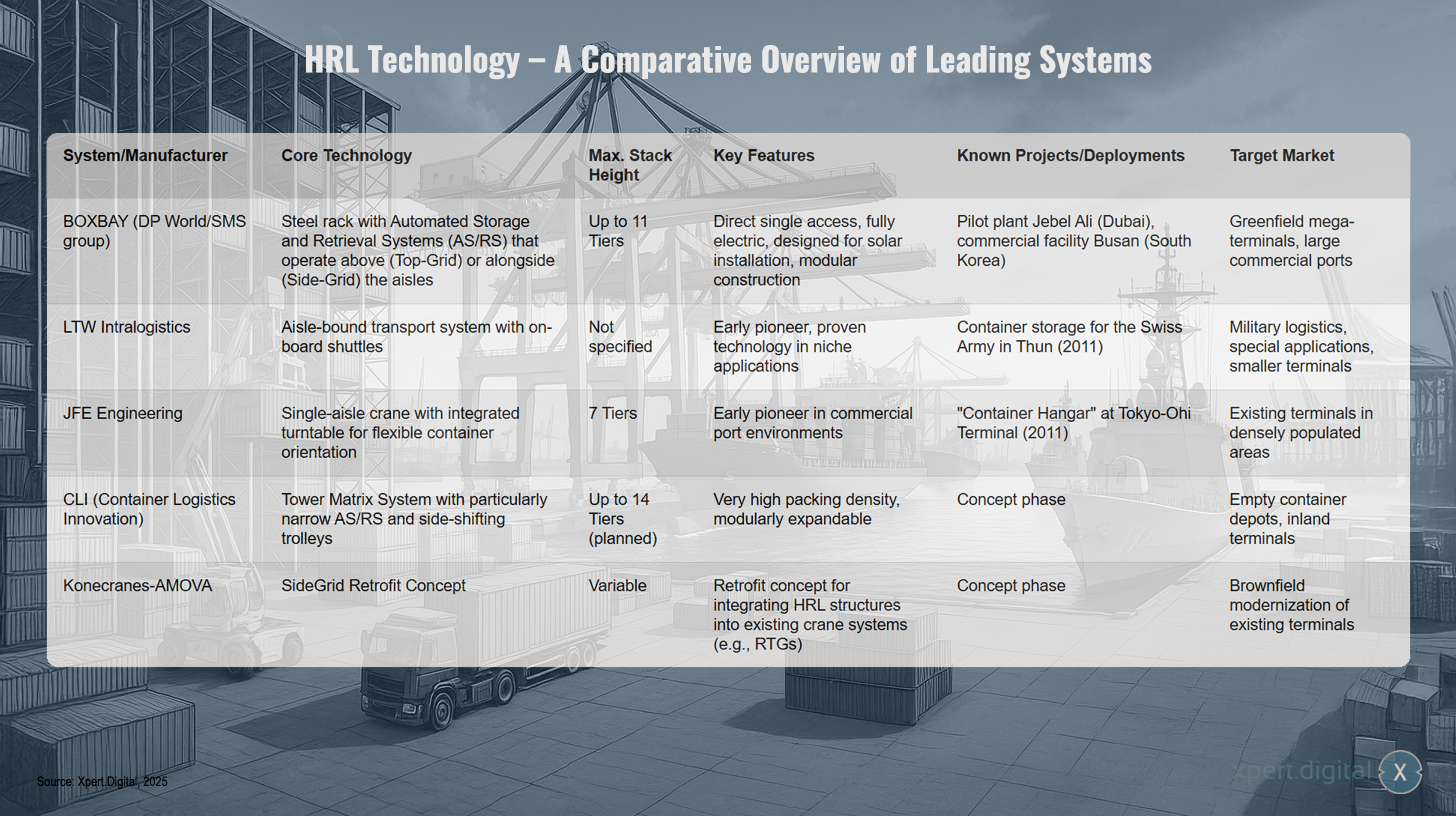
HRL Technology – A Comparative Overview of Leading Systems – Image: Xpert.Digital
HRL Technology offers a comparative overview of leading systems from various manufacturers. The BOXBAY system from DP World and SMS group is based on steel racking with stacker cranes that operate either above (top-grid) or to the side (side-grid) of the aisles. It enables a maximum stacking height of up to 11 layers and features direct individual access, fully electric functionality, and a modular design specifically tailored for solar power plants. Notable projects include the pilot plant in Jebel Ali (Dubai) and a commercial plant in Busan (South Korea), with a focus on greenfield megaterminals and large commercial ports.
LTW Intralogistics uses a track-mounted trolley system with on-board shuttles, although the maximum stacking height is not specified. This system is considered an early pioneer in high-bay warehouse technology and has proven particularly effective in niche applications, such as the Swiss Army's container depot in Thun since 2011. Target markets include military logistics, specialized applications, and smaller terminals.
JFE Engineering utilizes a single-aisle crane with an integrated turntable for flexible container positioning, allowing stacking heights of up to seven layers. This system was an early pioneer in the commercial port environment and has been in use at the Tokyo-Ohi Terminal's container hangar since 2011. The target market is existing terminals in densely populated areas.
The Tower Matrix System from CLI (Container Logistics Innovation) is characterized by particularly narrow storage and retrieval machines and side-mounted transfer cars, and is designed for up to 14 layers (planned). It offers a very high packing density and is modularly expandable. This system is currently in the concept phase and is aimed at empty container depots and inland terminals.
Konecranes-AMOVA's SideGrid Retrofit concept offers a flexible approach to retrofitting existing crane systems, such as RTGs, for the integration of HRL structures. This system is also currently in the concept phase and focuses on the brownfield modernization of existing terminals.
Related to this:
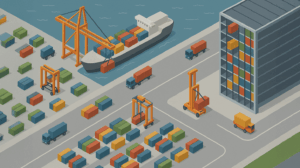
A synergistic model for the future: Integration of high-volume logistics into a trimodal dual-use logistics network
Following the analysis of the strategic imperative and the technological catalyst, this chapter brings the two strands together. An integrated model is developed that demonstrates how HRL-supported terminals can function as high-performance cores of a fully networked, resilient, and secure dual-use logistics system. This model addresses not only the physical but also the digital and security requirements of a modern, future-proof port infrastructure.
The HRL-supported terminal: A high-performance hub for sea, rail and road
A terminal equipped with a high-bay container warehouse (HRL) is far more than just storage space; it is a high-speed hub. Its primary function is to resolve the fundamental bottleneck of modern ports: the friction between maritime and land-based traffic. On one side, huge container loads (ULCS) arrive in bulk; on the other, these must be broken down into smaller, more frequent units for trains and trucks.
Here, the high-bay warehouse (HRL) acts as a massive, intelligent buffer. It can quickly receive and temporarily store the thousands of containers unloaded from a single ship. The system can then release these containers to land-based transport modes in precisely sequenced waves. This enables the optimized assembly of entire block trains and the scheduling of truck pickups every minute, significantly reducing the intermittent strain on the hinterland infrastructure. The HRL's high efficiency, achieved by eliminating the need for restacking, translates directly into faster loading times for trains and shorter turnaround times for trucks, thus increasing the capacity of the entire trimodal system (sea-rail-road).
Design for duality: The accommodation of civilian and military logistics flows
A dual-use HRL terminal must be designed from the ground up to meet the specific requirements of the military without compromising commercial operation. This necessitates concrete design decisions:
Increased load-bearing capacity
The steel racking structure and the storage and retrieval systems must be designed for heavier loads than are typical in standard container transport. This is necessary to safely handle overweight military goods, such as containers with armored vehicles or specialized equipment. The infrastructure must meet the requirements for heavy-load transport as defined for military mobility.
Segregated and secured zones
Within the HRL structure, physically or digitally separated and highly secure areas can be created. Sensitive military goods such as ammunition, weapons, or classified electronics can be stored in these zones. Access to these areas is strictly controlled through specific protocols and authorizations, ensuring a clear separation from the general flow of commercial goods.
Integration of RoRo traffic
Military deployments often involve a large number of wheeled and tracked vehicles transported using roll-on/roll-off (RoRo) methods. The terminal layout must therefore provide efficient ramps and staging areas for these vehicles and intelligently integrate their traffic flows with the containerized lift-on/lift-off (LoLo) operations of the high-lift loading terminal (HRL).
Priority processing
The core of the control system, the Terminal Operating System (TOS), must be configured to give absolute priority to military goods when needed. In a crisis or defense scenario, containers belonging to the German Armed Forces or NATO must be able to be moved to the top of the relocation queue at the push of a button and made available for immediate onward transport.
The digital backbone: Integration of TOS, TMS and IoT for seamless processes
The physical automation of a high-resolution lab (HRL) is only made possible and controlled by a highly developed digital nervous system. This system consists of several integrated layers:
A Terminal Operating System (TOS) is the brain of the terminal. It manages and optimizes all internal processes: the allocation of storage locations, the control of crane and shuttle movements, and the entire yard management.
This TOS must be seamlessly integrated with an intermodal Transport Management System (TMS). The TMS coordinates the handover of containers to downstream rail and truck operators and plans the transport chains to the hinterland.
Communication with external stakeholders such as shipping companies, freight forwarders, customs and veterinary authorities takes place via a Port Community System (PCS). This creates a unified digital platform for data exchange and replaces paper-based processes, thus accelerating and increasing the transparency of clearance.
A comprehensive network of Internet of Things (IoT) sensors on cranes, vehicles, the quayside, and the containers themselves provides a continuous stream of real-time data. This data forms the basis for predictive maintenance, which minimizes unplanned downtime, and for the creation of a digital twin of the port. In this virtual 1:1 representation, complex scenarios—from commercial optimizations to large-scale military deployments—can be simulated, planned, and de-conflicted risk-free before they are implemented in the real world.
Built for resilience: Physical security and defense against cyber threats
While increasing automation and digitalization enhance efficiency and resilience to certain disruptions (e.g., pandemics, labor shortages), it simultaneously creates a new, critical vulnerability: cyberspace. The idea that a modern port can be crippled not only by physical attacks but also by a cyberattack fundamentally alters risk assessment.
NATO's Cooperative Cyber Defence Centre of Excellence (CCDCOE) urgently warns that critical port infrastructure is facing an unprecedented level of threat from state-sponsored actors. Targets include, in particular, access control systems and ship traffic management systems, the failure of which could bring all port operations to a standstill. NATO's current maritime strategy is considered outdated because it lacks a formal framework for cybersecurity cooperation with civilian, commercial port operators.
For a dual-use port, cybersecurity is therefore not an IT task, but an integral component of national defense. The modernization plan must include robust protective measures from the outset, going far beyond standard firewalls. These include:
- Sector-specific networks for exchanging threat information in real time.
- Coordinated response mechanisms for cyberattacks involving port operators, the BSI (Federal Office for Information Security) and the military.
- A resilient and redundant energy supply for the port, protected against attacks.
- Strict physical and digital access controls and continuous monitoring of the networks.
The integration of HRL creates a powerful new synergy between economic efficiency and military effectiveness. The same system that maximizes commercial throughput delivers the speed and precision required for rapid military deployment. This is the ultimate dual-use gain. An investment in HRL for commercial reasons directly buys a proportional increase in military logistics capability. The two objectives are not in conflict but rather mutually reinforcing, made possible by the same core technology.
Dual-use feature matrix for an HRL-supported terminal
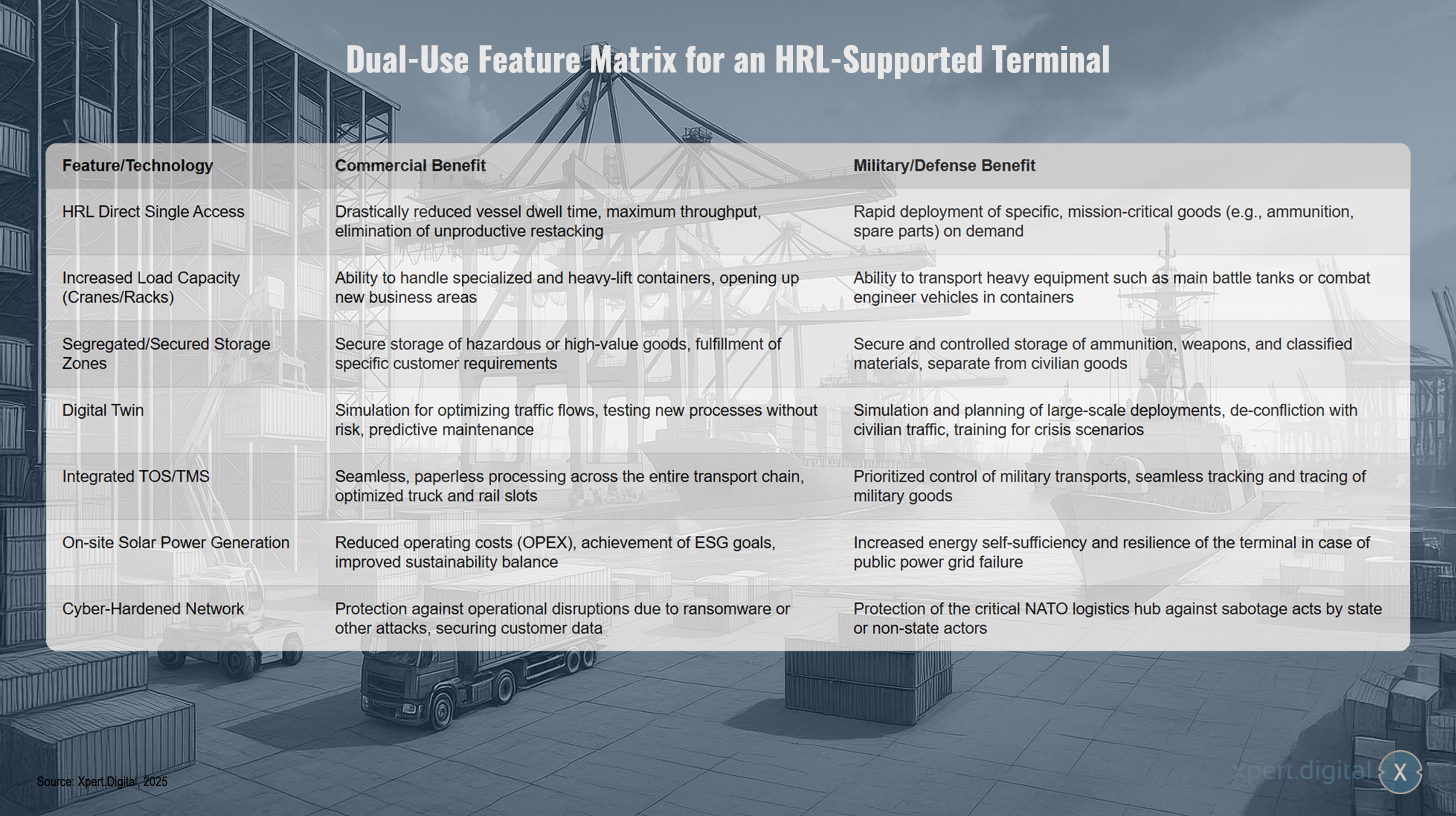
Dual-use feature matrix for an HRL-supported terminal – Image: Xpert.Digital
The dual-use feature matrix for an HRL-based terminal demonstrates how various features and technologies can be used in both commercial and military contexts. In the commercial sector, HRL Direct Individual Access enables drastically reduced ship dwell times, maximum throughput, and the elimination of unproductive restacking, while in the military sector it allows for the rapid, on-demand relocation of specific, mission-critical goods such as ammunition or spare parts. Increased lifting capacities of cranes and racks allow for the handling of special and heavy-lift containers and the development of new business areas; militarily, this enables the transport of heavy equipment such as main battle tanks or engineering vehicles in containers. Segregated and secured storage zones serve the safe storage of hazardous materials or high-value goods and meet specific customer requirements, while militarily they ensure the secure and controlled storage of ammunition, weapons, and classified information separate from civilian goods. The digital twin enables simulation for optimizing traffic flows, risk-free testing of new processes, and predictive maintenance. In the military sector, this enables the planning of large-scale deployments, avoids conflicts with civilian traffic, and facilitates crisis scenario training. An integrated Terminal Operating System (TOS) or Transport Management System (TMS) ensures seamless, paperless processing across the entire transport chain and optimizes truck and rail slots, while prioritizing military transport and enabling the complete tracking of military goods. On-site solar power generation reduces operating costs and contributes to achieving ESG goals and improving the sustainability record, while simultaneously increasing the terminal's energy self-sufficiency and resilience in the event of a public power grid outage in a military context. Finally, a cyber-hardened network protects against operational disruptions caused by ransomware or other attacks and secures customer data, while militarily safeguarding this critical NATO logistics hub from sabotage by state or non-state actors.
Your dual-use logistics experts
Dual-use logistics experts - Image: Xpert.Digital
The global economy is currently undergoing a fundamental transformation, a watershed moment that is shaking the foundations of global logistics. The era of hyper-globalization, characterized by the relentless pursuit of maximum efficiency and the "just-in-time" principle, is giving way to a new reality. This new reality is marked by profound structural breaks, geopolitical power shifts, and increasing fragmentation of economic policy. The once taken-for-granted predictability of international markets and supply chains is dissolving and being replaced by a period of growing uncertainty.
Related to this:
Dual-use ports – Germany as a pioneer: Shaping smart and resilient seaports – Strategic roadmap for the future of German ports
Implementation roadmap: A strategic roadmap for the modernization of German ports
A vision, however compelling, remains a theoretical exercise without a concrete and implementable plan. This chapter outlines a strategic roadmap that shows the way from the current crisis to a resilient, dual-use port of the future. The focus is on the practical challenges of financing, regulation, governance, and human resource management in the specific German context.
A phased investment and implementation strategy
A simultaneous, complete modernization of all German seaports is neither financially nor logistically feasible. A promising approach must therefore be phased and prioritized.
Phase 1 (Short term: 1-3 years): “Pioneers and pilot projects”
This phase focuses on laying the foundations for success. This includes finalizing binding technical and operational standards for dual-use infrastructure. In parallel, a pilot project should be launched at a strategically advantageous location. Ports such as Wilhelmshaven (Germany's only deep-water port) or Rostock (an already established NATO hub) are ideal candidates. Such a pilot project serves as a proof of concept and a learning ground for nationwide rollout. However, the most crucial step in this phase is the reform of planning laws to accelerate subsequent phases.
Phase 2 (Medium-term: 4-8 years): “Scaling and networking”
Building on the experience gained from the pilot project, the full-scale construction of the first HRL-supported dual-use terminal is commencing. Simultaneously, the modernization of critical rail corridors to the hinterland, identified as bottlenecks for military mobility, must be accelerated. The digital networking of the port systems with hinterland stakeholders will be intensified during this phase.
Phase 3 (Long term: 9-12+ years): “Establishment of the national network”
In the final phase, the successful model will be rolled out to other key ports such as Hamburg and Bremerhaven. The focus is on creating an integrated national network of high-performance, dual-use ports. Continuous investment in modernizing digital systems and strengthening cybersecurity defenses is crucial to maintaining technological leadership and adapting the system to emerging threats.
Related to this:
Financing the transformation: Models for mixed financing from public, private and defense funds
Financing the 15 billion euro investment offensive requires a smart, mixed model that taps into various funding sources, as already outlined by ZDS Chairwoman Titzrath.
Federal Transport Budget (BMDV)
For the basic infrastructure, which primarily serves civilian traffic, such as the basic renovation of quay walls, fairway adjustments and the connection to the higher-level road and rail network.
Climate and Transformation Fund (KTF)
For all aspects that directly contribute to decarbonization. This includes the electrification of terminal equipment, the installation of large-scale solar arrays on HRL roofs, the expansion of shore power facilities, and the creation of infrastructure for future green fuels such as hydrogen and its derivatives.
Defense budget / NATO funds
For all specific dual-use requirements that go beyond purely commercial needs. These include upgrading for heavy transport, constructing secure and segregated storage areas, implementing hardened cybersecurity systems, and providing compensation for granting guaranteed access rights to the military.
Private capital
From terminal operators and institutional investors. This capital is mobilized by mitigating the enormous initial risk of HRL investment through public co-financing and, above all, through long-term usage and service contracts (see PPMP model).
EU funds
Targeted use of European funding programs such as the “Connecting Europe Facility” (CEF), which explicitly provides a funding pool for dual-use projects in the context of military mobility.
Political and regulatory enablers: Accelerating planning and approval processes
The biggest non-financial hurdle for infrastructure projects in Germany is the notoriously lengthy and complex planning and approval processes. The National Port Strategy itself calls for their acceleration and simplification. To prevent the modernization initiative from being bogged down in a decade of bureaucracy, legislative reform is essential. Dual-use port projects should be granted the legal status of "overriding public interest." This status, already applied to the expansion of renewable energies and the construction of LNG terminals, allows for a significant reduction in processing times and prioritization over other concerns. Without such "procedural acceleration," even the best-funded plan remains a theoretical exercise.
Promotion of Public-Private-Military Partnerships (PMP)
The complexity of a dual-use project exceeds the scope of traditional public-private partnerships (PPPs). A new cooperation model is needed, which can be described as a public-private military partnership (PMP). In this model, the German Armed Forces or NATO are formally integrated as a third partner with specific requirements and rights into the contractual relationship between the public sector (e.g., port authority, federal government) and the private operator.
This model is not merely theoretical; it is already being promoted by the German Armed Forces' Logistics Command. This command is aiming for long-term framework agreements with durations of five to seven years, in which private companies act as general contractors to provide complex logistics services, including port operations. This represents a fundamental shift in defense procurement: instead of individual "things" (e.g., military trucks), a "capability-as-a-service" is purchased (e.g., "guaranteed handling and onward transport of a brigade"). For the private sector, these long-term contracts create precisely the planning and revenue security necessary to justify the massive investments in high-capacity logistics (HRL) systems and other facilities.
A national initiative to improve the qualifications of port workers
Technological change must be accompanied by a human capital strategy to avoid social disruption and ensure the operational efficiency of the new terminals. Automation will change jobs and require new skills.
Therefore, a national skills development initiative is needed, jointly supported by the federal government, the states, trade unions (such as ver.di), and industry associations. This initiative must ensure the financing and development of large-scale retraining and further education programs. The goal is to show employees clear career paths from traditional port jobs to the new job profiles of the automated port: systems technicians, remote control operators, data analysts, and cybersecurity experts.
Related to this:

Global implications and the German precedent
The proposed modernization strategy for German seaports is more than just a national refurbishment program. It has the potential to position Germany as a global leader and set a new international standard for the design and operation of critical infrastructure in the 21st century. This final chapter places the German plan in a global context, draws lessons from leading port projects worldwide, and outlines the far-reaching implications of a successful German precedent.
Benchmarking with global leaders: Lessons from Singapore, Rotterdam and Shanghai
Germany is not starting its modernization from scratch. It can and must learn from the experiences of the world's leading "smart ports," which are already setting standards in automation, digitalization, and efficiency.
Singapore (Tuas Port)
The Port of Singapore is a masterclass in the greenfield development of a completely new port area. The Tuas Port project, which upon completion will be the world's largest fully automated container terminal, demonstrates a profound integration of sustainability aspects (e.g., reuse of dredged material, relocation of coral reefs) and digital systems (such as Digitalport@SG) from the very first planning stage.
Rotterdam
As a pioneer in brownfield transformation, Rotterdam demonstrates how an existing, historically developed port can be gradually digitized. The use of IoT sensors throughout the port infrastructure and the development of a comprehensive "digital twin" enable the optimization of processes and preparation for future developments such as autonomous shipping.
Shanghai (Yangshan Port)
The Port of Shanghai demonstrates the sheer scale and speed achievable through consistent automation. The use of 5G-guided automated guided vehicles (AGVs) and automated cranes has increased efficiency by 30-40% compared to manual operations, making Shanghai the world's busiest container port.
The key lesson from these international examples is that isolated technological solutions do not lead to success. Leading ports pursue a holistic ecosystem approach that combines automation, digitalization, sustainability, and close collaboration among all stakeholders. This is precisely where Germany's opportunity lies: it can adopt these proven approaches and expand them to include a crucial, previously neglected dimension.
Establishing a new standard for NATO port infrastructure
While ports like Singapore and Shanghai primarily focus on maximizing commercial efficiency, Germany has a unique opportunity to integrate the military dimension into the design of a modern port from the ground up. A successfully implemented German dual-use high-lift logistics terminal would become the de facto benchmark for all critical NATO logistics hubs.
Such a precedent would provide a proven template for:
- The physical and cyber-technical hardening of port infrastructure against the threats of the 21st century.
- Ensuring interoperability between civilian and military logistics and IT systems.
- Meeting the specific requirements of modern armed forces for heavy-duty capability and rapid deployment.
By creating a network of highly resilient and efficient logistics hubs across Europe, Germany would not only sustainably strengthen its own security, but also the deterrence and defense capabilities of the entire alliance.
Germany as the architect of the resilient, dual-use port of the future
The infrastructure crisis of Germany's seaports, however threatening it currently appears, offers an opportunity for a pivotal shift across generations. By resolutely embracing the dual-use imperative and employing transformative technologies such as high-bay container storage, Germany can achieve far more than simply repairing its ports. It can execute a strategic pivot.
This pivot would transform German ports from aging, unprofitable liabilities into highly efficient, resilient, and secure strategic assets. These would simultaneously strengthen economic competitiveness and anchor NATO's logistical power in Europe. By using this crisis as a catalyst for innovation, Germany can restore and solidify its status not only as a trading power but also as a globally leading architect and operator of the port of the future.
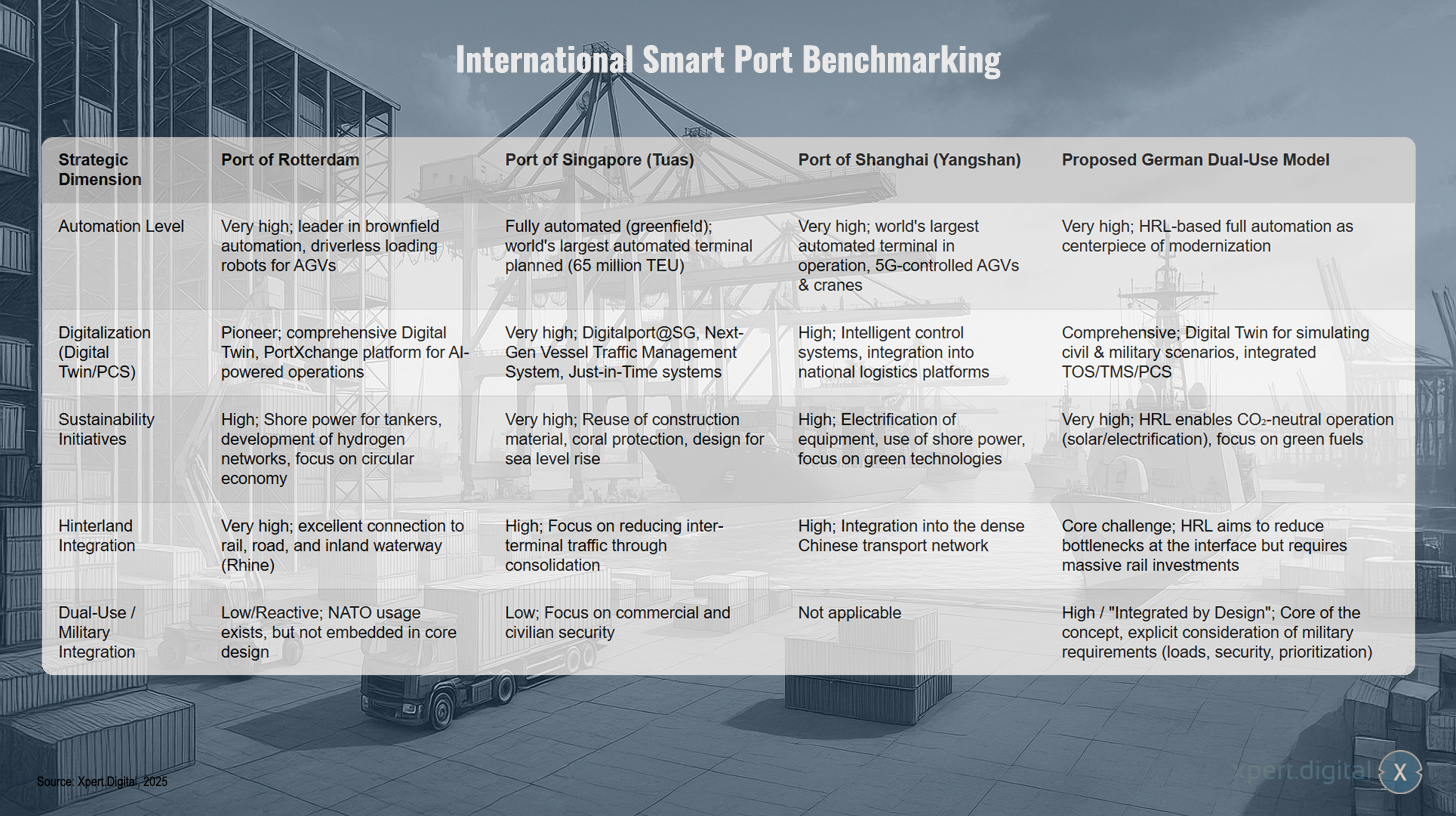
International Smart Port Benchmarking
International Smart Port Benchmarking – Image: Xpert.Digital
International smart port benchmarking shows that the Port of Rotterdam boasts a very high level of automation and is considered a leader in brownfield automation, for example, with driverless loading robots for AGVs. The Port of Singapore, particularly the Tuas Terminal, is fully automated (greenfield) and is planning the world's largest automated terminal with a capacity of 65 million TEU. The Port of Shanghai, Yangshan Terminal, also has a very high level of automation with 5G-controlled AGVs and cranes. The proposed German dual-use model relies on HRL-based full automation as the core of its modernization. In the area of digitalization, Rotterdam impresses with a comprehensive digital twin and the PortXchange platform for AI-supported operations, Singapore with Digitalport@SG and advanced traffic systems, and Shanghai with intelligent control systems and integration into national logistics platforms. The German model aims for a comprehensive digital twin for simulating civil and military scenarios, as well as the integration of TOS, TMS, and PCS. Sustainability initiatives are high across all ports, with Rotterdam developing shore power for tankers and hydrogen networks, Singapore focusing on the reuse of building materials and coral reef protection, Shanghai utilizing electrification and green technologies, and the German model pursuing carbon-neutral operations through solar energy and electrification with a focus on green fuels. Hinterland integration is very high in Rotterdam, with excellent connections to rail, road, and inland waterways, and high in Singapore and Shanghai, while it represents a key challenge in the German model and requires significant investment in rail infrastructure. Regarding dual-use and military integration, Rotterdam and Singapore are low, Shanghai is not applicable, while the German model envisions a high level of integration that explicitly addresses military requirements such as loads, security, and prioritization.
Hub for Security and Defense - Advice and Information

Hub for Security and Defense - Image: Xpert.Digital
The Security and Defence Hub offers expert advice and up-to-date information to effectively support companies and organizations in strengthening their role in European security and defence policy. Working closely with the SME Connect Defence Working Group, it particularly promotes small and medium-sized enterprises (SMEs) that wish to further develop their innovative capacity and competitiveness in the defence sector. As a central point of contact, the Hub thus creates a crucial bridge between SMEs and European defence strategy.
Related to this:
Consulting - Planning - Implementation

Markus Becker
I would be happy to serve as your personal advisor.
Head of Business Development
Chairman SME Connect Defense Working Group
Consulting - Planning - Implementation
Konrad Wolfenstein
I would be happy to serve as your personal advisor.
You can contact me at wolfenstein∂xpert.digital or
Just call me on +49 7348 4088 965 .