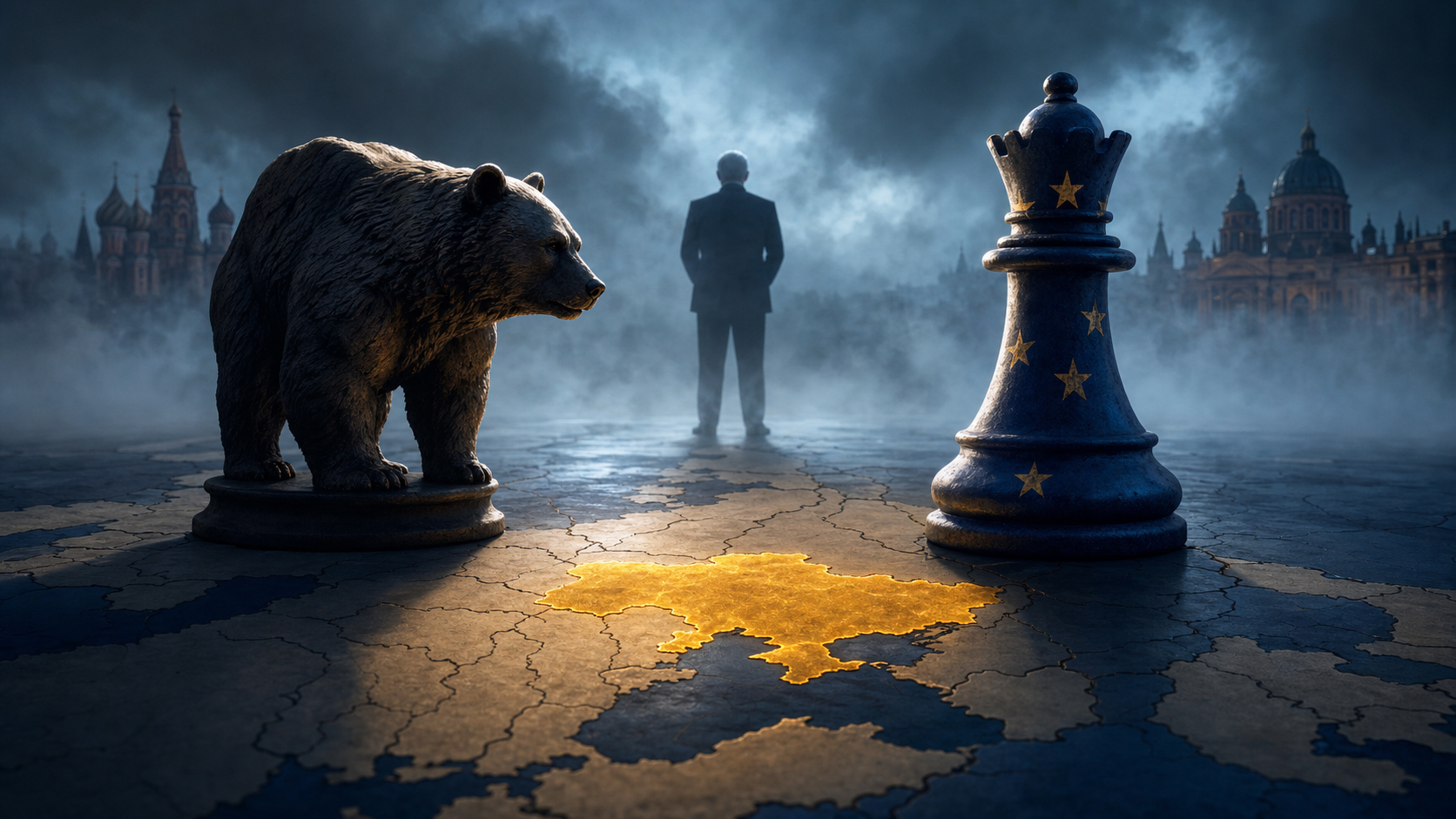
Economy collapses, front stagnates: The real reason for Putin's new peace signal? – Image: Xpert.Digital
A divisive issue for Germany: Putin's dangerous master plan with former Chancellor Schröder
A bombshell on "Victory Day": Putin's surprise mediation proposal divides Berlin
On May 9, 2026, Kremlin chief Vladimir Putin caused a political earthquake in Berlin: Former Chancellor Gerhard Schröder was to act as a European mediator to end the war in Ukraine. But what at first glance appeared to be a long-awaited peace offer and a sign of détente, on closer inspection revealed itself to be a coldly calculated propaganda coup. While the Russian war economy increasingly groaned under Western sanctions, decisive military breakthroughs failed to materialize, and Moscow lost important European allies, Putin sought new ways to divide the West. His strategic target was not Kyiv or Washington, but the German public. By reactivating his old friend Schröder, the Kremlin leader unerringly targeted pacifist sentiments in Germany – and provoked fierce internal power struggles, reaching deep into the SPD (Social Democratic Party). A thorough analysis reveals that the supposed peace offer was in reality a sign of Russian distress and a targeted attack on European unity.
When a Kremlin ruler is in a bind, he sends his old friend ahead – hoping that the Germans will take the bait again.
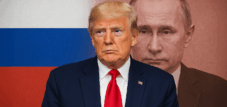
On May 9, 2026, the Kremlin's symbolically charged "Victory Day," Vladimir Putin dropped a bombshell that resonated less in Kyiv than in Berlin: He declared himself ready for negotiations, asserted that the war in Ukraine was nearing its end, and named none other than Gerhard Schröder—the 82-year-old former SPD chancellor who for years had been considered Putin's closest ally in German politics—as his preferred European interlocutor. What followed was a debate less about peace than about whether one must recognize a transparent propaganda coup to avoid being ensnared by it.
The context: A victory parade without brilliance
Vladimir Putin's press conference on the evening of May 9th took place in a remarkably subdued setting. The military parade on Red Square, for years the Kremlin's most important symbol of triumph, presented a different picture in 2026: foreign journalists were barely allowed in, security measures were unusually tight according to observers, and the atmosphere was tense. Moscow, which otherwise basks in its military might, seemed more nervous than in previous years. It was precisely in this context that Putin announced to journalists: "I think it's nearing its end, but it's still a serious matter"—a formulation that remained deliberately vague and left maximum room for interpretation.
At the same time, US President Donald Trump announced a three-day ceasefire between Russia and Ukraine, to last from May 9th to 11th, and linked it to the exchange of 1,000 prisoners of war from each side. The Kremlin claimed to have achieved this ceasefire through two days of "difficult" telephone talks with the American side. This created a backdrop in which Putin's words about a possible end to the war could appear convincing to the media – even if they contained little new information.
The proposal and its contradictions
Putin's recommendation that Gerhard Schröder should act as a European mediator is remarkable at first glance, but on closer inspection, it is clearly calculated. "Of all European politicians, I would prefer talks with Schröder," Putin said at the press conference – reflecting less an assessment of Schröder's diplomatic skills than the simple fact that Schröder has been one of the few German politicians Putin has fully trusted for decades.
Schröder's close ties to Russia are not merely a political conviction, but are institutionalized through financial and personal connections. After the end of his chancellorship in 2005, he assumed key positions in companies linked to Gazprom and chaired the supervisory board of the state-owned oil giant Rosneft until he relinquished this post under intense pressure in the spring of 2022. Even after the Russian attack on Ukraine in February 2022, Schröder did not clearly distance himself from Putin, describing self-criticism as "not his thing" and maintaining some of his Russian connections. For Putin, Schröder is therefore not a neutral mediator, but a figure who, while controversial in German discourse, remains a presence – and one capable of sowing unrest in German domestic politics.
The conditions Russia attaches to serious peace negotiations have not changed. Moscow continues to demand the withdrawal of Ukrainian armed forces from the Donbas – that is, from areas that Ukraine considers its own territory. Kremlin envoy Yuri Ushakov put it bluntly: "They know in Ukraine that they have to do this – and they will do it sooner or later anyway." Ukrainian President Volodymyr Zelenskyy categorically rejected this condition and dismissed the demand to surrender cities like Kramatorsk and Sloviansk without a fight.
Germany's political reaction: Widespread rejection, loud fringe groups
In German politics, Putin's proposal met with a clear majority of rejection, but also with those voices the Kremlin apparently intended to address. The German government described Putin's statements as a "sham offer" and made it clear that the negotiating option lacked credibility because Russia had not changed its basic conditions. Britta Haßelmann, leader of the Green Party parliamentary group, stated that even in the Kremlin it should be common knowledge that Schröder no longer possessed any credibility on the issue of Russia. Marie-Agnes Strack-Zimmermann, a member of the FDP's European Parliament, doubted that Schröder would be accepted as a mediator by Ukraine, since he had never condemned the attack on Ukraine clearly enough.
Within the SPD itself, a power struggle erupted. Adis Ahmetovic, the SPD parliamentary group's foreign policy spokesman, expressed cautious openness, saying the offer had to be seriously considered. Former chairman of the Foreign Affairs Committee, SPD politician Michael Roth, sharply disagreed: Putin's move was "an affront to the US and a transparent maneuver." A mediator in any potential negotiations could not simply be Putin's closest friend – what was crucial was that he be accepted by Ukraine.
Unconditional support for Schröder's proposal, however, came from the AfD and BSW. BSW leader Fabio De Masi rhetorically asked, "What do we have to lose?" and argued that Schröder's mediation would put Putin under pressure. AfD foreign policy expert Markus Frohnmaier welcomed any attempt at mediation that would end the dying on both sides. It is telling that the proposal is supported by precisely those parties that most clearly represent pro-Russian or pro-Russian positions in the German party system. This confirms the assessment of political scientists who see Putin's move as a tactically astute attempt to mobilize certain social currents in Germany.
Putin's strategic calculation: The target group is Germany
Experienced Russia analysts unanimously conclude that Putin's offer of mediation is less a genuine diplomatic initiative than a communicative maneuver. His real audience is not in Kyiv or Washington, but in Germany – more precisely, that segment of the German public associated with the term "pacifism": those who interpret every hint of negotiation from Putin as proof of a genuine willingness to talk and who prefer a swift diplomatic solution to continued military support.
This target group is politically heterogeneous. It ranges from traditional peace activists on the left to economically minded representatives of the middle class and national populist actors on the right. What they have in common is a certain weariness with the war and a susceptibility to narratives that promise a quick solution. Since the beginning of the war, the Kremlin has pursued a strategy of amplifying and exploiting this weariness – through targeted signals that suggest a willingness to negotiate without actually changing its positions.
Schröder's move operates on several levels simultaneously. First, it shifts the debate in Germany from the question of arms deliveries to the question of mediation. Second, by naming a former German chancellor as the preferred negotiating partner, he calls into question the EU as a whole, thereby undermining European unity. Third, he sends a signal to Trump's America: Europe, too, can negotiate without needing the US – which, in turn, puts pressure on transatlantic cohesion.
Russia's economic predicament as the real driver
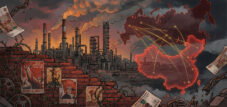
What distinguishes Putin's signals in May 2026 from previous propaganda variations is the economic context in which they occur. The Russian economy is in an increasingly difficult situation. In the first two months of 2026, Russian GDP shrank by 1.8 percent year-on-year—a decline that Putin himself acknowledged at a government meeting. Simultaneously, industry, manufacturing, and the construction sector all experienced declines.
The direct costs of the war since its beginning in 2022 are estimated at around €550 billion, while the indirect costs resulting from the loss of export markets and the effects of sanctions are likely to be significantly higher in the long term. Defense and security expenditures accounted for approximately 40 percent of the total Russian state budget last year – a figure that can never be sustained in peacetime. Russia's military spending in 2025 amounted to around US$190 billion, equivalent to 7.5 percent of GDP, compared to US$65 billion or 3.6 percent of GDP in the pre-war year of 2021.
After 20 rounds, EU sanctions are showing increasing effects. According to EU sanctions chief David O'Sullivan, the Russian economy is feeling "significant repercussions"; he expressed optimism that a point could be reached in 2026 where the system in Russia is at risk of collapse. In March 2026, the German Federal Intelligence Service (BND) published an analysis confirming that the federal budget deficit has risen sharply and that Russia is attempting to conceal this through falsified figures. According to an analysis by the Swedish think tank CREA, oil and gas revenues have plummeted by 27 percent compared to pre-war levels, following significant reductions in Russian oil imports by both India and China.
Russia's central bank chief, Elvira Nabiullina, explicitly warned of a structural labor shortage, which she described as a "new reality"—a historically unprecedented phenomenon in modern Russian history. While the unemployment rate, at around 2.2 percent, is near a record low, this is not a sign of strength, but rather a consequence of the massive brain drain due to military service and emigration. By 2030, Russian authorities anticipate a labor shortage of 3.1 million people. The Kremlin is responding to this development with a new online program designed to attract foreign professionals with "traditional Russian values" to Russia—a sign of desperation, not strength.
Under these conditions, it is rational for Putin to send signals of willingness to negotiate: they are not intended to actually make peace, but rather to ease sanctions pressure, undermine Western unity and buy time while the war economy remains under pressure.
Hub for Security and Defense - Advice and Information

Hub for Security and Defense - Image: Xpert.Digital
The Security and Defence Hub offers expert advice and up-to-date information to effectively support companies and organizations in strengthening their role in European security and defence policy. Working closely with the SME Connect Defence Working Group, it particularly promotes small and medium-sized enterprises (SMEs) that wish to further develop their innovative capacity and competitiveness in the defence sector. As a central point of contact, the Hub thus creates a crucial bridge between SMEs and European defence strategy.
Related to this:
Front line at a standoff: How military stagnation is changing diplomacy
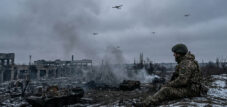
The front situation: No military breakthrough on either side
Putin's negotiating signals can also be explained militarily. According to Finnish analyst Emil Kastehelmi of the Black Bird Group, the first quarter of 2026 was "largely a failure for the Russians." In February 2026, for the first time since 2023, Russia lost more territory than it gained – a striking net loss. Ukraine, on the other hand, was able to consolidate the territory it had recaptured in the first months of the year, intensify its drone attacks on Russian energy infrastructure, and improve its air defense interception rates.
Ukrainian Foreign Minister Andriy Sybiha confidently declared that the military situation was the strongest and most stable in a year, explicitly viewing it as a means of strengthening Ukraine's negotiating position. While Russia was able to advance further, particularly in the Donetsk and Zaporizhzhia regions, it failed to achieve any strategically decisive breakthroughs – and suffered heavy losses. Ukraine, on the other hand, carried out successful drone attacks on the Russian oil industry, wiping out a large portion of Russia's excess profits from rising oil prices.
Militarily, the war is thus in a kind of imposed stalemate: Russia cannot achieve decisive victories, and Ukraine cannot currently launch a large-scale counter-offensive. In this situation, diplomacy gains in importance – but also in potential for propagandistic misuse.
The Orbán vacuum and the reorganization of European foreign policy
A key geopolitical factor that altered Putin's position in the spring of 2026 was the loss of his most important intra-EU ally: Viktor Orbán. The revelation of a compromising phone transcript, in which Orbán offered Putin assistance "in every respect" and compared himself to a mouse helping a captive lion escape, put the Hungarian Prime Minister under immense pressure just days before the parliamentary elections. Orbán's years-long strategy of pursuing pro-Russian policies under the guise of Hungarian sovereignty, using EU veto power on behalf of Russia, and delaying sanctions packages had thus reached its political limit.
Hungary, together with Slovak Prime Minister Robert Fico, had attempted to block the €90 billion aid package for Ukraine. The fact that this blockade was ultimately overcome and that EU member states agreed on a 20th sanctions package against Russia in April 2026 signals strengthened European unity. Brussels approved the long-blocked €90 billion for Ukraine – a sum that prevents a Ukrainian default until 2028.
Putin has thus learned an important lesson: Europe as a bloc is not as easily divided as he had hoped. Neither bilateral deals with individual EU capitals nor playing the Trump card could permanently undermine European unity. The strategic consequence of this is that Putin is now attempting to create a new breach – this time through a former German chancellor who no longer holds an official position but generates buzz in German media discourse.
The transatlantic context: Trump, Witkoff, Kushner
Parallel to the European dimension, the American mediation effort is underway. The Kremlin expected US negotiator Steve Witkoff and Trump's son-in-law Jared Kushner to arrive in Moscow "fairly soon" in mid-May 2026 for renewed talks. The ceasefire announced by Trump, which Witkoff and Kushner, according to the Kremlin, facilitated through intensive telephone conversations with the US side, is considered a preliminary result of this diplomacy.
Trump himself had declared the Ukraine war one of the central campaign promises of his re-election campaign and is under domestic pressure to present results before the congressional elections in November. This creates favorable negotiating conditions for Russia: the greater the American time pressure, the more Moscow can maintain maximum demands and hope for a gradual erosion of Western support.
Putin's Schröder initiative can also be interpreted in this context as a message to Washington: if America withdraws or grows weary, a European mediator sympathetic to the Kremlin will step in. It is an attempt to weaken transatlantic unity wedge by wedge – without ever relinquishing its own maximalist demands.
The question of credibility: Who is allowed to mediate?
The core problem with any mediation offer lies in the question of acceptance by all parties. A mediator must be perceived by both conflicting parties as neutral, or at least as someone who can represent the interests of both sides. Gerhard Schröder does not meet this condition.
He never clearly condemned the Russian attack on Ukraine. Until shortly after the war began, he held lucrative positions in Russian state-owned companies. He publicly referred to Putin as his friend and, in this context, was elected chairman of the supervisory board of the Russian oil giant Rosneft. All of this makes him unacceptable to Kyiv – and to large parts of the European community – as a neutral mediator. Zelenskyy did not name Schröder as a potential negotiating partner, and Ukrainian reactions to the proposal were predictably negative.
Former SPD foreign policy expert Michael Roth summed up the dilemma: "Anyone who seriously wants peace starts with a ceasefire." As long as Russia does not abandon its conditions – complete control over the Donbas, withdrawal of Ukrainian troops from its own territory – any mediation attempt initiated by Moscow remains inherently suspect.
The structural asymmetry of the negotiations
A fundamental insight often overlooked in Western discourse is this: Russia and Ukraine do not act as symmetrical parties in peace talks. Russia is the aggressor, occupying foreign territory. Ukraine is the attacked country, demanding the return of its recognized territory. Peace negotiations led by a pro-Russian mediator and ending with the enshrining of Russian territorial gains would de facto constitute a capitulation by Ukraine—regardless of how it is rhetorically packaged.
Putin himself stipulated that a direct meeting with Zelenskyy required Zelenskyy to travel to Moscow – a formulation that amounts to a dictated peace and demonstratively emphasizes Moscow's position of superiority. For a meeting in a third country, he stipulated that a "reliable peace agreement" must have been reached beforehand – that is, an agreement before the talks even begin. This circular logic shows that Moscow is not interested in a quick agreement, but rather in protracted processes that increase pressure on Ukraine and buy time for further military action.
The conclusion of a sober analysis
The overall assessment of Putin's Schröder initiative must be nuanced. On the one hand, it cannot be ruled out that a component of the offer is genuinely aimed at a negotiated solution – because Russia's economic and military situation presents real challenges that cannot be ignored in the long term. On the other hand, the evidence strongly suggests that the main purpose of the maneuver is propaganda.
Putin sends signals of willingness to negotiate when he is under pressure – not when he is open to compromise. The front is entrenched, the economy is faltering, Orbán is no longer a factor, and Europe is showing unity. In this situation, offers of talks are a tactical means of easing pressure – without making any substantive concessions. Schröder as a proposed mediator is a particularly clever choice because he deliberately activates German domestic politics, drives a wedge between Washington and Brussels, and at the same time hardly damages his own credibility: because if Schröder fails, Moscow can say that the West missed an opportunity.
The real strategic challenge for Europe, therefore, is not to reject Schröder – that is relatively easy. The challenge lies in developing a coherent peace strategy that is not dictated by Moscow's negotiating offers, but rather formulates its own conditions and red lines. The war will not be ended by an 82-year-old former chancellor with ties to Russia, but by a sustained combination of military pressure, the impact of sanctions, and diplomatic unity – until Moscow signals a genuine willingness to compromise, one that is tied to actions, not words.
Consulting - Planning - Implementation

Markus Becker
I would be happy to serve as your personal advisor.
Head of Business Development
Chairman SME Connect Defense Working Group
Consulting - Planning - Implementation
Konrad Wolfenstein
I would be happy to serve as your personal advisor.
You can contact me at wolfenstein∂xpert.digital or
Just call me on +49 7348 4088 965 .