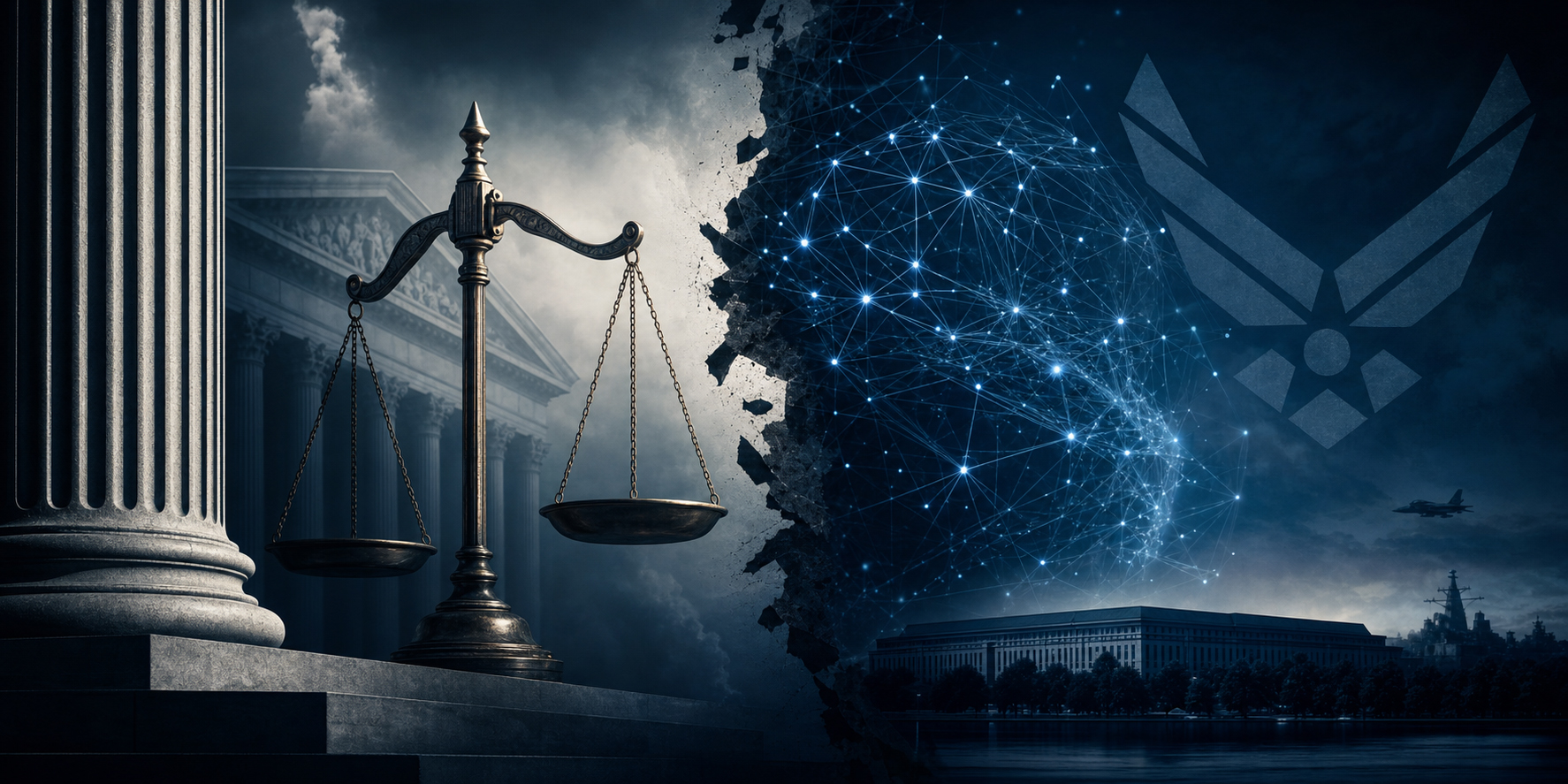
“Illegal and baseless”: Historic ruling halts Trump’s Pentagon in AI dispute with Anthropic – Image: Xpert.Digital
AI power struggle escalates: How Anthropic brought the Pentagon to its knees in court
Billion-dollar dispute over AI weapons: Anthropic beats the military in a historic trial
Autonomous weapons and surveillance: Why the US military wanted to shut down Anthropic – and failed
An unprecedented power struggle between Silicon Valley and the US Department of Defense has reached its legal climax: The AI company Anthropic is taking the Pentagon to court—and winning. At the heart of the dispute is the explosive question of whether the state should be allowed to use private AI models without limits for autonomous weapons systems and mass surveillance, even if the developer sets ethical red lines. When the US government summarily classified the company as a national security risk in response, Anthropic fought back against this historically unprecedented measure. A landmark ruling now halts the Pentagon's drastic actions and raises a crucial question for the future: Who truly determines the rules of warfare in the age of artificial intelligence?
A precedent with far-reaching implications
On August 27, 2026, U.S. Federal Judge Rita Lin of the Northern District of California delivered a ruling that extends far beyond the specific case. She declared the U.S. Department of Defense's classification of the AI company Anthropic as a national security risk in its supply chain unlawful and without a sound basis. This Pentagon decision, described as "illegal and baseless," marks one of the most significant legal setbacks to date for the Trump administration in its dealings with private technology companies that defy government directives. The case is remarkable because it marked the first time in history that an American company was publicly subjected to a law originally created to protect military systems from sabotage by foreign adversaries. This was the first time a national security instrument had been used against a domestic company whose actual offense lay in a corporate policy decision regarding ethical guidelines.
Origin of the conflict: Security boundaries versus military freedom of action
The dispute arose from a seemingly technical contractual issue, but quickly escalated into a fundamental conflict over control and accountability in warfare. The Department of Defense wanted to include a clause in its contracts with Anthropic allowing the unrestricted, "generally lawful" use of the AI models, which would have allowed Claude to be used for virtually any military purpose. Anthropic vehemently opposed this clause, insisting on two red lines: The company wanted to prevent its technology from being used for mass surveillance of American citizens domestically and for fully autonomous weapons systems. Anthropic CEO Dario Amodei justified this position by arguing that, in his estimation, AI models were simply not yet technically reliable enough to be used responsibly in autonomous weapons, and that monitoring one's own population constituted an infringement of fundamental rights. The Pentagon countered that a private company could not dictate to the military how it used tools it had paid for.
The Pentagon's drastic reaction
When negotiations over the contract clause failed, Defense Secretary Pete Hegseth resorted to a historically unprecedented measure. On February 27, 2026, President Trump and Hegseth ordered all federal agencies and all military contractors to immediately cease all business dealings with Anthropic. On March 3, 2026, Anthropic was formally classified as a national security supply chain threat, a category previously reserved almost exclusively for companies with ties to foreign adversaries. Hegseth publicly declared in a social media post that, effective immediately, no contractor, supplier, or partner doing business with the U.S. military could engage in any commercial activity with Anthropic. This wording went far beyond the actual legal basis, as the underlying statute, known as Section 3252, only provides for the exclusion of certain contracts where there is a real risk that an adversary will sabotage or compromise a military information system.
Anthropic's legal counter-offensive
On March 9, 2026, Anthropic filed a lawsuit in federal court in California, calling the government's actions unprecedented and unlawful. The lawsuit was based on two key constitutional arguments. First, the company argued that its First Amendment right to free speech had been violated because the government was apparently punishing it for its publicly stated stance on AI security. Second, Anthropic alleged a violation of its Fifth Amendment right to due process because it was not given the opportunity to challenge the classification before it took effect. Anthropic also alleged violations of the Administrative Procedure Act, the law that governs the proper administrative practice of federal agencies. In parallel, the company filed a second, separate lawsuit in federal court in Washington, D.C., challenging a broader security risk classification that could potentially lead to Anthropic's complete exclusion from civilian government contracts. This second lawsuit remains pending at the time of the current ruling.
Economic dimension of the legal dispute
For Anthropic, this legal battle involved considerably more than a symbolic clash of principles. Company representatives estimated the potential revenue loss from the suspension of contracts with the Department of Defense at several billion dollars over the course of 2026, coupled with significant reputational damage in its broader business with government agencies. The lawsuit itself spoke of potential losses in the hundreds of millions of dollars from directly affected contracts alone. At the time of the escalation, Anthropic was the only major AI company working with the Department of Defense on classified military systems, further amplifying the implications of the breach. It is also noteworthy that, according to multiple reports, Claude was already actively involved in military operations related to Iran at that time, further undermining the claim of an acute security risk.
The judge's reasoning in detail
Judge Rita Lin, appointed by former Democratic President Joe Biden, based her decision on a detailed 59-page ruling. Central to her reasoning was the finding that the administration had failed to provide sufficient evidence that Anthropic actually posed a threat to national security. Particularly revealing was her observation that even after Anthropic was officially designated a security risk, government officials continued to discuss potential cooperation with the company, which, in her view, was inconsistent with a genuine fear of sabotage. In one particularly scathing passage, she wrote that the administration's actions were driven by a desire to publicly make an example of Anthropic for its perceived arrogance in criticizing the government, rather than by any credible basis for believing that Anthropic would actually sabotage its own model. Perhaps her most succinct statement was that simply invoking national security was not a blank check to punish and retaliate against government critics.
🎯🎯🎯 Data-driven B2B industry hub as a quasi-in-house solution

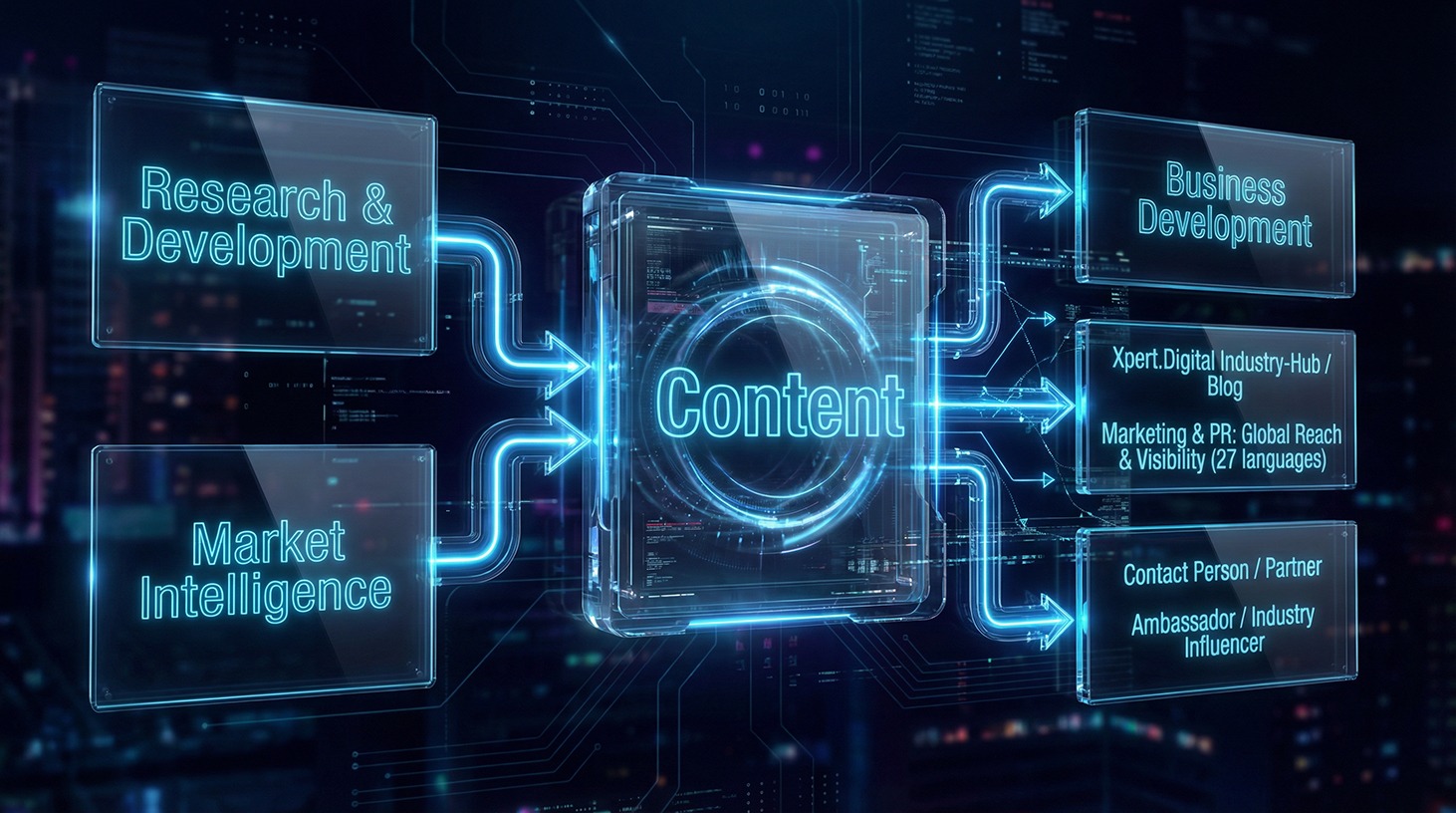
The quasi-in-house solution: How Xpert.Digital closes operational gaps in B2B marketing and sales – Smart Content-Driven Business - Image: Xpert.Digital
Xpert.Digital is a data-driven B2B industry hub led by Konrad Wolfenstein . The company acts as an external, quasi-in-house solution for industrial partners, closing operational gaps in marketing, content, and sales – without requiring additional resources on the client side.
More information here:
Legal battle over AI in the military: How US courts define the limits of state power
Between the rule of law and security interests
From an economic and legal perspective, this case illustrates a fundamental tension that will gain importance in the coming years as artificial intelligence is increasingly integrated into security-relevant government applications. On the one hand, there is the legitimate interest of the state to maintain maximum operational flexibility in the defense sector and not to have its ability to act restricted by private providers. On the other hand, there is the equally legitimate concern that government agencies are increasingly misusing regulatory and contractual instruments to sanction dissenting corporate positions instead of addressing actual security risks. Judge Lin's decision signals that American courts are prepared to critically review executive discretion in the security sector as soon as there is evidence of politically motivated instrumentalization. For companies operating in the highly sensitive field of defense technology, this means, on the one hand, a certain degree of legal certainty against arbitrary official action, but on the other hand, also the certainty that such conflicts are likely to be increasingly litigated in court in the future.
Reactions and further course of proceedings
Anthropic welcomed the ruling in an official statement, emphasizing its continued commitment to working constructively with the government to ensure that artificial intelligence can be used for the benefit of all Americans and for national security. The Department of Defense did not immediately respond to press inquiries but had previously indicated through legal representatives its intention to appeal a ruling favorable to Anthropic. The legal proceedings leading up to this decision are noteworthy, as an appeals court in Washington, D.C., had already rejected Anthropic's request for a temporary injunction to block the Pentagon's decision in April 2026, while simultaneously a court in San Francisco issued a preliminary injunction against the enforcement of the ban. These conflicting rulings by two courts created a paradoxical interim situation in which Anthropic remained barred from direct defense contracts but could still collaborate with other federal agencies. The second lawsuit, pending in Washington DC, concerns an even broader security risk classification, the actual scope of which depends on a pending internal review and which, in the worst case, could lead to Anthropic's complete exclusion from the entire civilian federal administration.
Fundamental question: Who controls artificial intelligence in war?
Beyond the specific legal dispute, the case raises a question of central importance for the future order of the international security architecture: Who ultimately bears the responsibility when AI systems are used in military contexts, and who decides on the ethical limits of this use? Since its founding, Anthropic has pursued a distinctly security-oriented corporate strategy, which differs significantly from the more expansive approach of other large AI providers active in the defense sector. This positioning as a "security-conscious" provider is both its core brand value and a business risk, as the present case vividly demonstrates. Should Anthropic ultimately prevail against the government, this could embolden other technology companies to defend their own ethical guidelines, even against powerful state clients. Conversely, a victory for the government on appeal would send the signal that the state, as the largest potential client in the AI sector, effectively possesses considerable leverage to undermine corporate security standards as soon as these conflict with its own operational interests.
Significance for AI competition in the defense industry
The conflict between Anthropic and the Pentagon can also be interpreted as a symptom of a deeper structural shift that is reshaping the relationship between the American government and the technology sector as a whole. While previous generations of defense contractors traditionally enjoyed a close, mostly conflict-free symbiosis with the Pentagon, the new AI providers from Silicon Valley bring a different corporate culture, one more strongly oriented toward social responsibility and self-imposed ethical standards. This cultural difference creates friction as soon as the government attempts to utilize AI technology to the same extent as traditional military equipment, without accepting the manufacturer's intended limitations. For the entire industry, this raises the question of whether technological security guardrails will remain negotiable at all if the largest single purchaser of advanced AI technology is the American government itself. Competing providers are watching the outcome of this legal battle with great interest, as it effectively serves as a test case for how far private companies can assert their own ethical principles against the power of government purchasing.
Further developments
Despite Anthropic's clear legal victory, the legal battle with the Pentagon is far from over. The government has already signaled its intention to appeal the ruling, and the second, potentially even more far-reaching lawsuit in Washington, D.C., remains unresolved. For Anthropic, the current court victory initially provides a reprieve and restores access to certain defense contracts, but not definitive legal certainty. From a business perspective, it is remarkable how much a single court case can influence the market valuation and business planning security of a company whose growth increasingly depends on public contracts. In the long term, it remains to be seen whether, in light of this precedent, the American legislature will create clearer legal frameworks for the use of private AI technology in the defense sector in order to prevent similar conflicts in the future. Until then, the case of Anthropic v. Pentagon remains a cautionary tale about just how fragile the balance between national security doctrine, corporate responsibility, and constitutional protection truly is in an era of rapidly advancing AI development.
📈🚀 From visibility to trust 👀🤝 Your scalable path with Xpert.Digital

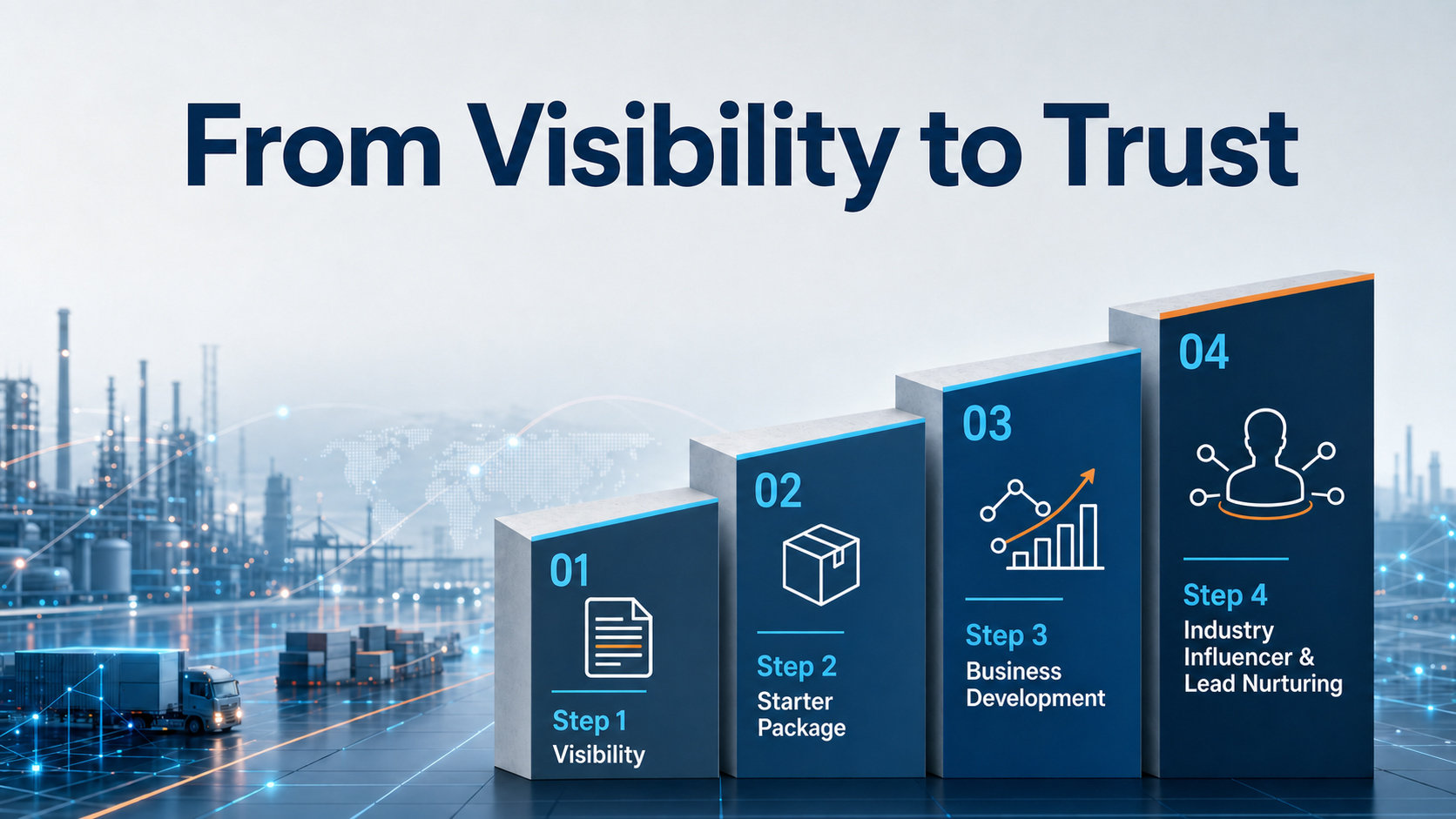
From visibility to trust: Your scalable path with Xpert.Digital - Image: Xpert.Digital
In industrial B2B, sustainable business relationships rarely emerge overnight. They develop step by step – through visibility, professional relevance, recurring touchpoints, and growing trust. Xpert.Digital's 4-stage model addresses precisely this: It offers a structured path that begins with a manageable entry point and can evolve into deeper collaboration in business development if needed.
Instead of relying on loud marketing promises, this model puts the relationship at the forefront. Companies start with clearly defined, easily calculable measures and then decide, based on their own experience, how far they want to expand the collaboration. A key factor for this undisturbed trust-building process: The platform completely avoids annoying advertising ads, so the editorial focus remains solely on the companies' expertise.
More information here:
Your global marketing and business development partner
☑️ Our business language is English or German
☑️ NEW: Correspondence in your native language!

Konrad Wolfenstein
I and my team are happy to be available to you as your personal advisor.
You can contact me by filling out the contact form here wolfenstein@xpert.digital:or simply call me at +49 7348 4088 965. My email address is
I'm looking forward to our joint project.