Paradigm shift in virtual reality optics with Hypervision's Ultraslim 220: Overcoming the 100-degree barrier
Xpert pre-release

Language selection 📢
Published on: December 15, 2025 / Updated on: December 15, 2025 – Author: Konrad Wolfenstein

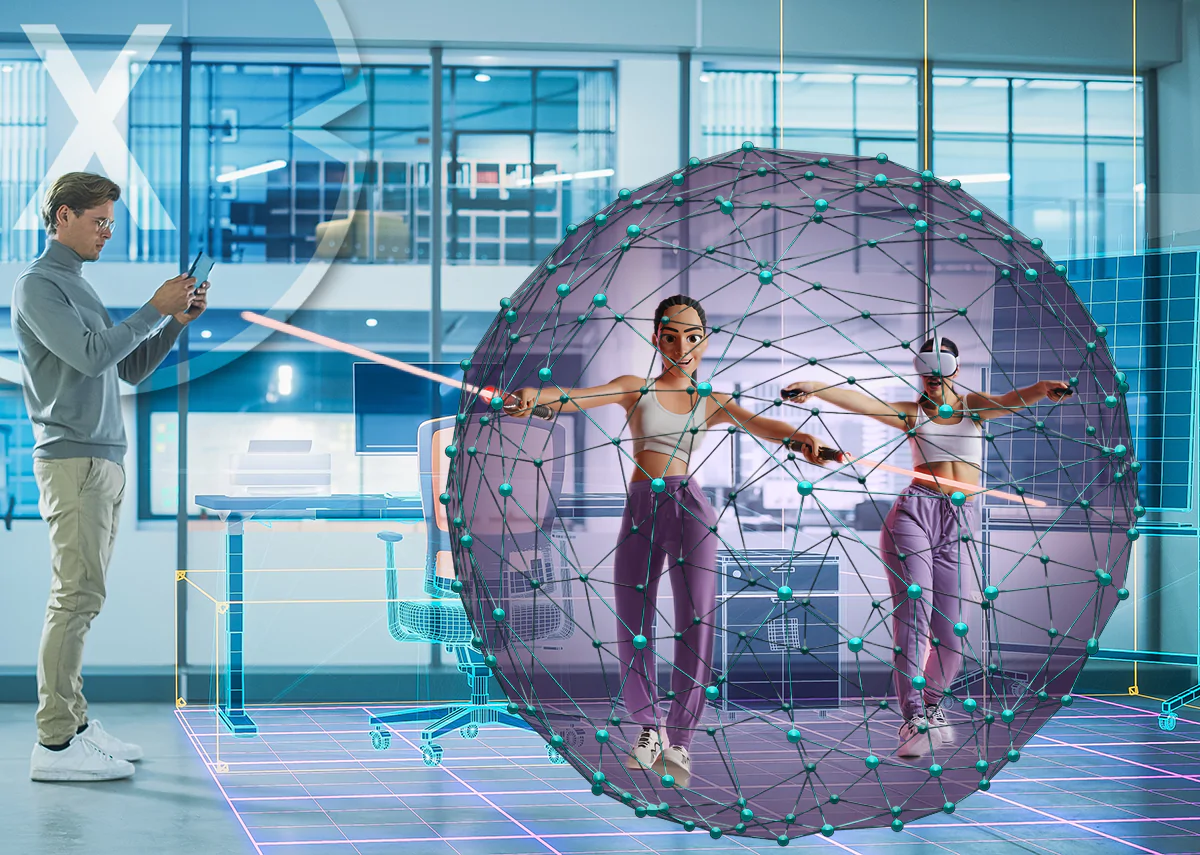
Paradigm shift in virtual reality optics with Hypervision's Ultraslim 220: Overcoming the 100-degree limit – Image: Xpert.Digital
The end of tunnel vision: How 220-degree field of view is revolutionizing the VR world
Hypervision Ultraslim 220: The holy grail of virtual reality is within reach.
The virtual reality industry is caught in a fascinating dilemma: While we now hold displays in our hands whose pixel density challenges even the human eye, in the virtual world we still only see through a digital crack. For over a decade, the field of view of conventional VR headsets has stagnated at around 100 to 110 degrees. The result is the infamous "tunnel vision," which constantly reminds us that we're wearing glasses instead of allowing us to fully immerse ourselves in digital reality.
But the rigid boundaries of optics are beginning to crumble. A technological paradigm shift is emerging, spearheaded by innovative players like the startup Hypervision. With the introduction of new architectures that enable a field of view of up to 220 degrees, the industry's existing dogma – the compromise between compactness and immersion – is being directly challenged.
This leap, however, is far more than just a technological gimmick; it marks a new era of the "immersion economy." For the first time, peripheral vision, essential for human orientation and sense of security, is moving to the forefront of hardware development. But this progress comes at a price: from exploding material costs due to complex multi-display systems to extreme demands on the computing power of mobile chipsets, the industry faces its greatest test of maturity yet. We take a deep dive into overcoming the 100-degree barrier and analyze why the path to the perfect illusion remains both a physical feat and an economic gamble.
Why the field of view represents the next major economic and technical hurdle for the spatial computing industry
The virtual reality industry is in a paradoxical phase of development, characterized by a striking asymmetry in technological evolution. While the last decade has seen an aggressive race for pixel densities and resolutions—from the grainy displays of early Oculus Rift development kits to the photorealistic micro-OLED panels of Apple Vision Pro—an equally critical parameter of immersion has largely stagnated: the field of view (FOV). The industry standard has settled at around 100 to 110 degrees horizontally, a value far below natural human perception of over 200 degrees.
This stagnation is no accident, but rather the result of a complex economic and physical trade-off. Until now, a wider field of view required disproportionately large, heavy, and expensive optics, directly contradicting the trend toward slimmer, lighter headsets. However, the recent unveilings by Meta and, in particular, the startup Hypervision at UnitedXR Europe mark a potential turning point. We are facing a reassessment of the “immersion economy,” where form factor no longer necessarily has to be sacrificed for field of view. Hypervision demonstrates with its VRDom architecture that technological feasibility has been achieved; the real challenge now shifts to scaling manufacturing processes and managing the exponentially increasing computing load.
Economics of Immersion: Cost Structures and Application Areas of Multi-Display Architecture
Hypervision's "Ultraslim 220" reference design represents far more than just a technical feasibility study; it's a radical departure from the conventional single-channel architecture of current VR systems. Technically, the system offers a horizontal field of view of 220 degrees and a vertical field of view of 94 degrees. But the true innovation lies in how this result is achieved and the resulting economic implications for potential hardware partners.
The design utilizes a multi-display architecture, employing two 4K OLED microdisplays per eye. One pair of displays covers the central field of vision (foveal area), where human visual acuity is highest, while the second pair covers the peripheral field of vision. This segmentation is brilliant, but it drives the bill of materials (BOM) to levels currently unaffordable for the consumer market. Micro-OLEDs remain extremely expensive to manufacture. While conventional fast-LCD panels for VR headsets often cost between $20 and $40 each, high-quality micro-OLEDs—like those used by Apple—can quickly cost $200 to $300 each. A headset requiring four such panels therefore starts at a base price of around $1,000 for the displays alone, before considering optics, processor, housing, tracking cameras, or assembly costs.
Hypervision's "stitching" technique for pancake lenses, in which two lenses are optically fused together seamlessly, also presents a significant manufacturing challenge. In optical manufacturing, costs do not increase linearly, but exponentially with the complexity of the geometry and the required tolerances. A seam that is intended to be invisible to the user requires precision manufacturing in the micrometer range. The fact that industry veteran Christian Steiner still noticed a slight blurring at the seam on the prototype indicates the enormous challenges in calibration. In mass production, this would lead to high yield rates, which would further increase the final price.
Nevertheless, the Ultraslim 220 has a clear place, even if not in the average consumer's living room. We see here the blueprint for the next generation of high-fidelity simulators. In fields like pilot training, surgical simulation, or military tactical training, the price of the headset is almost negligible compared to the cost of the actual hardware (e.g., flight hours in a jet). Here, peripheral vision isn't just a "nice-to-have" for atmosphere, but functionally critical. A pilot needs to be able to perceive movement in their peripheral vision; a race car driver needs to sense the opponent next to them without turning their head. For this B2B and B2G (business-to-government) sector, a pixel density of 48 PPD (pixels per degree) with a 220-degree field of view is a game-changer that justifies investments of $10,000 or more per unit. The reduction in form factor through the small micro-OLEDs also allows the construction of simulators that can be used ergonomically for longer periods of time, which directly increases training efficiency.
Strategic compromise: Market maturity through local dimming technologies
While the Ultraslim 220 represents the technological cutting edge, the reference design “PanoVR1” is the economically rational answer to the question of how a wide field of view can reach the mass market within the next 24 months. Hypervision is deliberately taking a technological step back here in favor of affordability and manufacturability, a classic approach in product strategy (“feature-cost optimization”).
Instead of expensive micro-OLEDs, the PanoVR1 uses 2.7K LCD panels from TCL. The crucial factor here is the integration of local dimming. Traditional LCDs suffer from the "gray haze" problem because the backlight is always active and cannot display true black. OLEDs, on the other hand, are self-illuminating (each pixel is a light source) and offer perfect contrast. Local dimming is a bridging technology: A matrix of mini-LEDs behind the LCD panel can be dimmed or switched off zone by zone. This enables contrast levels approaching those of OLEDs, but at a fraction of the cost and with an established, robust supply chain.
From a strategic perspective, this design positions a potential end product in a very interesting market niche. With a 160-degree horizontal and 120-degree vertical field of view, such a headset would significantly outperform the current benchmark in the consumer market, the Meta Quest 3. The Quest 3 offers solid, reliable VR with excellent pancake lenses, but remains stuck in the "tunnel vision" paradigm. A PanoVR1-based headset would immediately offer users a noticeably more immersive VR experience. The extended 120-degree vertical field of view is almost more important than the horizontal width, as it allows users to look "down" at virtual tools or their own body without having to tilt their head unnaturally – a massive improvement for ergonomics in work environments.
While the pixel density of 28 PPD is lower than the 48 PPD of the ultraslim model and also slightly below the theoretical peak performance of current high-end devices, it represents the sweet spot of current GPU performance. A higher resolution would be difficult to drive with mobile chipsets. Hypervision is therefore delivering a reference design precisely tailored to the performance curve of upcoming chip generations (such as the Snapdragon XR2+ Gen 2 or XR2 Gen 3). The fact that Hypervision is working with partners on mass production indicates that we are not talking about pure basic research here, but rather components that we could see in real products in the €800 to €1,500 price range by the end of 2025 or 2026.
🗒️ Xpert.Digital: A pioneer in the field of extended and augmented reality
Find the right Metaverse agency and planning office such as a consulting firm - Image: Xpert.Digital
🗒️ Find the right Metaverse agency and planning office such as a consulting firm - search and search for top ten tips for consulting & planning
More about it here:
Standalone headsets in a dilemma: graphics quality, thermals, and the race for the perfect field of view
The thermal and computational dilemma: Scaling limits of mobile processors
The discussion about wide fields of view is often reduced to optics, but the real Achilles' heel lies in the silicon. A field of view of 220 degrees, or even "only" 160 degrees, places fundamental demands on the rendering pipeline that cannot be met with linear scaling.
Doubling the field of view doesn't simply double the number of pixels that need to be calculated. Because VR displays are viewed through lenses, the image on the display must be pre-distorted to compensate for the optical distortion of the lens. The wider the field of view, the more extreme this distortion becomes at the edges. This means the GPU has to calculate a significantly higher resolution than the panel's physical resolution, just to display a correct image. This "rendering overhead" increases disproportionately with wider fields of view.
The example of the "Boba 3" meta-prototype is instructive here. To power a 180×120-degree field of view, an NVIDIA RTX 5090 was required—a graphics card that alone consumes more power and costs more than three complete Quest 3 headsets combined. This illustrates the immense gap between what is optically possible and what is thermally and energetically feasible in a standalone headset. A mobile chip has a thermal budget of about 5 to 10 watts before the device becomes too hot to wear on the face or the battery is drained in minutes. A desktop GPU consumes 400 watts or more.
For manufacturers of standalone glasses, this means that a wide field of view inevitably requires compromises in graphics quality (shader complexity, lighting, textures). It's a zero-sum game: you can render a photorealistic kitchen in a 100-degree field of view or a simply textured kitchen in 160 degrees. The only technical solution to this dilemma is so-called "foveated rendering" in combination with extremely fast eye tracking. With this technique, only the tiny area that the eye is currently focusing on is calculated at full resolution, while the periphery (i.e., precisely the area that Hypervision covers with its additional lenses) is displayed at an extremely low resolution. Hypervision's approach with two physically separate displays per eye accommodates this logic: theoretically, the peripheral display could be driven at a lower resolution from the outset to save processing power. Nevertheless, the thermal heat generated by the four displays themselves and the driver electronics remains a significant challenge for the housing design.
Integration scenarios in the European market: The role of Lynx and OEM partnerships
The announcement that the French startup Lynx will unveil a successor to its R-1 headset as early as January, based on an optical system that at least resembles Hypervision technology, sends a strong signal for Europe's XR scene. Lynx has positioned itself in a niche neglected by US giants (Meta, Apple) and Chinese corporations (Pico/ByteDance): open, privacy-compliant, and modifiable hardware.
The fact that Lynx, according to CTO Arthur Rabner, doesn't use the exact PanoVR1 system, but rather a variant for Mixed Reality (MR) with open peripherals, is a clever distinction. With an "open peripheral" design, the user sees the real world around the edges of the headset. This reduces motion sickness, as the brain always has a fixed frame of reference, and makes an artificially generated peripheral VR image partially obsolete. It significantly lowers the requirements for display size and processing power, since fewer pixels need to be "drawn."
Nevertheless, the collaboration between Hypervision (Israel) and Lynx (France) demonstrates how an alternative supply chain beyond Asia and Silicon Valley could emerge. For Hypervision, Lynx is an ideal launch customer to validate the technology. For Lynx, the technology is a unique selling proposition (USP) to compete against the dominant Quest series. Lynx cannot compete on price – Meta subsidizes its hardware through advertising revenue and app store fees. Lynx must compete on features that Meta, for reasons of mass appeal, has (yet) not integrated. A significantly wider field of view is precisely such a feature.
Hypervision's business model is also interesting. As a pure technology supplier (OEM) and developer of reference designs, they avoid the enormous risk of building their own end-customer brand, managing supply chains, and providing customer support. They're essentially selling the shovels in the gold rush. In a market where even giants like Google and Samsung are faltering with their XR strategies, this is the more economically stable position. If PanoVR1 is successfully licensed, we could see a wave of headsets from various manufacturers (e.g., Asus, HP, or specialized medical technology companies) in the future, all based on this optical platform—much like many PC manufacturers use the same Intel CPUs.
The inevitability of totality
Looking at long-term developments, Hypervision's work is a harbinger of what could be called "Veridical VR"—a virtual reality that is indistinguishable from reality by the human visual system. The field of vision is the last major barrier that must fall.
The current reluctance of market leaders like Meta or Apple regarding field of view is purely tactical, not ideological. They are waiting for three key developments to converge: more efficient micro-OLEDs (decreasing costs and power consumption), more powerful battery technology, and AI-powered rendering techniques (such as DLSS or Neural Rendering) that decouple the pixel load.
Hypervision, however, demonstrates that the optics themselves – the lens system – are no longer the bottleneck. The demonstration that 220 degrees are possible in a compact form factor refutes the long-held prejudice that high-FOV glasses inevitably have to look like giant "hammerhead sharks" (like the Pimax models). The design moves closer to the face, reducing leverage and increasing wearing comfort.
For consumers, this means we will see a market split in the next three to five years. On the one hand, there will be ultra-mobile, lightweight glasses in a glasses-like format (like Bigscreen Beyond or upcoming Apple products) that focus on sharpness in the center (for work, movies). On the other hand, there will be immersion monsters for gaming and simulation that utilize technologies like Ultraslim 220 to create total isolation and immersion. The "one-size-fits-all" approach currently pursued by Quest will come under increasing pressure, as hardware specialization can better serve specific applications (productivity vs. immersion). Hypervision, with its reference designs, has opened the door wide to this specialized, high-performance future.
Your global marketing and business development partner
☑️ Our business language is English or German
☑️ NEW: Correspondence in your national language!

Konrad Wolfenstein
I would be happy to serve you and my team as a personal advisor.
You can contact me by filling out the contact form or simply call me on +49 89 89 674 804 (Munich) . My email address is: wolfenstein ∂ xpert.digital
I'm looking forward to our joint project.
☑️ SME support in strategy, consulting, planning and implementation
☑️ Creation or realignment of the digital strategy and digitalization
☑️ Expansion and optimization of international sales processes
☑️ Global & Digital B2B trading platforms
☑️ Pioneer Business Development / Marketing / PR / Trade Fairs
🎯🎯🎯 Benefit from Xpert.Digital's extensive, five-fold expertise in a comprehensive service package | BD, R&D, XR, PR & Digital Visibility Optimization

Benefit from Xpert.Digital's extensive, fivefold expertise in a comprehensive service package | R&D, XR, PR & Digital Visibility Optimization - Image: Xpert.Digital
Xpert.Digital has in-depth knowledge of various industries. This allows us to develop tailor-made strategies that are tailored precisely to the requirements and challenges of your specific market segment. By continually analyzing market trends and following industry developments, we can act with foresight and offer innovative solutions. Through the combination of experience and knowledge, we generate added value and give our customers a decisive competitive advantage.
More about it here: