
The IAEA is sounding the alarm – nuclear fears in Europe: How critical is the situation at the Zaporizhzhia nuclear power plant in Ukraine?
Xpert Pre-Release

Available in 27 languages 📢
Prefer Xpert.Digital on GoogleⓘPublished on: October 5, 2025 / Updated on: October 5, 2025 – Author: Konrad Wolfenstein
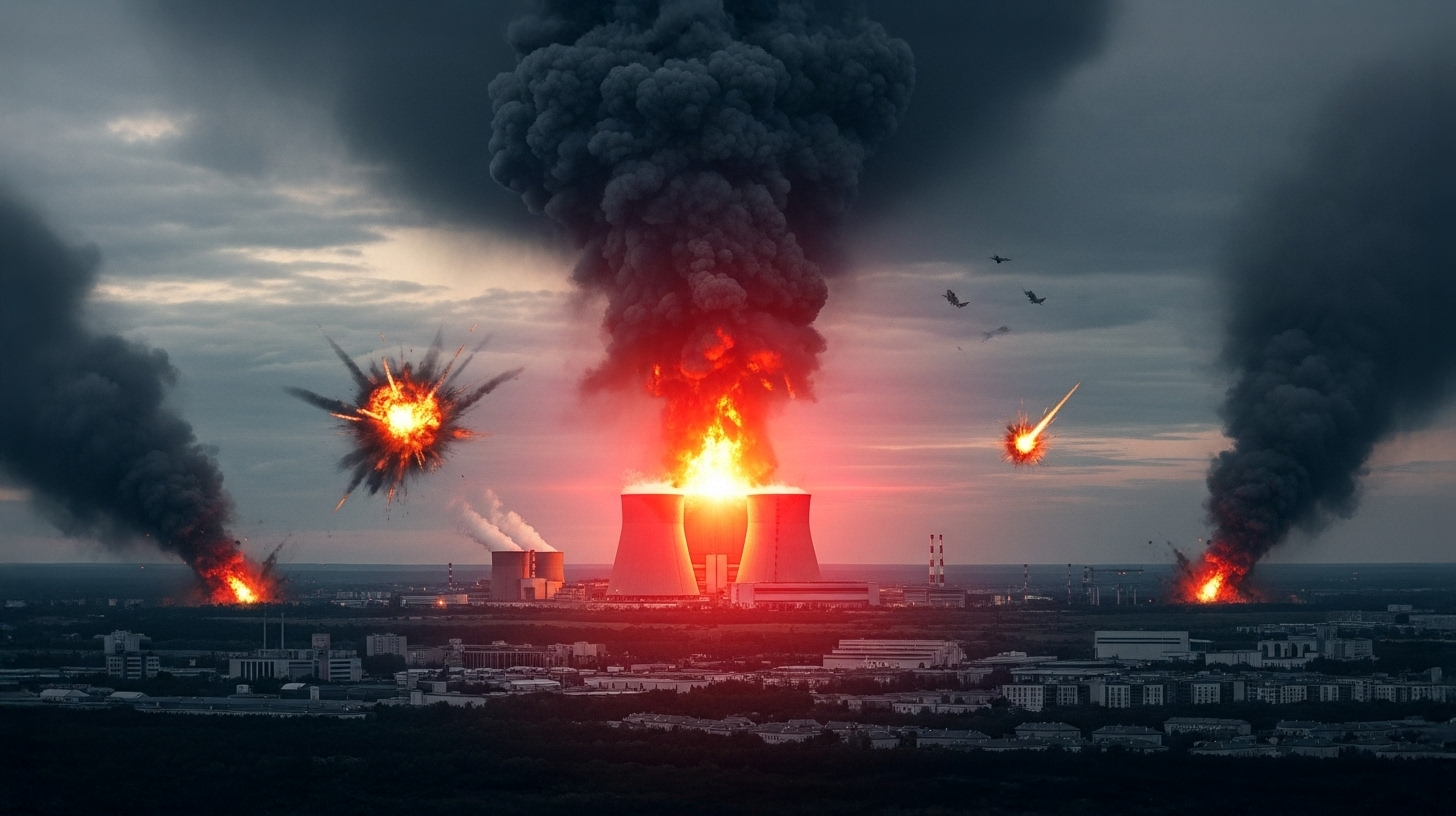
The IAEA is sounding the alarm – nuclear fears in Europe: How critical is the situation at the Zaporizhzhia nuclear power plant really? – Creative image: Xpert.Digital
The Zaporizhzhia nuclear power plant – An analysis of the current safety situation
### Zaporizhzhia on the brink: Only 10 days of diesel left – what will happen if the lights go out? ### No power, no cooling: The horror scenario of a meltdown in Zaporizhzhia ### “Station Blackout”: Why the emergency generators in Zaporizhzhia are becoming a time bomb ###
A second Chernobyl? The 5 biggest dangers for the Zaporizhzhia nuclear power plant
The situation at the Zaporizhzhia nuclear power plant, Europe's largest nuclear facility, has dramatically worsened. For over a week, the plant has been completely cut off from external power – an unprecedented and highly dangerous situation in the plant's history. The safety of all six reactors now hangs by a thread: eight emergency diesel generators are the only remaining source of power to maintain the vital cooling of the fuel rods.
But this emergency solution is a ticking time bomb. According to the power plant management appointed by Moscow, the on-site diesel reserves will only last for about ten more days. The generators, which are not designed for continuous operation, are running at extremely high loads, and some units have already failed. The International Atomic Energy Agency (IAEA) is deeply concerned and describes the generators as the "last line of defense" against a potential catastrophe. If this last bastion falls, a complete power outage—a so-called "station blackout"—is imminent, which could lead to a core meltdown within hours, with an uncontrollable release of radioactivity. This text analyzes the acute threat, explains the technical risks of a prolonged power outage, and examines the catastrophic consequences a nuclear accident would have for Ukraine and all of Europe.
What is the current situation at the Zaporizhzhia nuclear power plant?
Since September 23, 2025, the Zaporizhzhia Nuclear Power Plant, Europe's largest nuclear facility with six reactors, has been in a critical situation. Following ongoing fighting, the plant has been without a regular external power supply for more than a week – an unprecedented situation in the plant's history. This represents the longest power outage during the more than three and a half years of hostilities.
The cooling of the fuel rods currently depends solely on eight diesel emergency generators. The power plant remains under the control of Russian occupation forces and a management team appointed by Moscow. Russian armed forces occupied the facility shortly after the start of the war of aggression in the spring of 2022 and have held it ever since.
How long can the emergency generators supply the power plant?
According to the power plant management appointed by Moscow, the on-site diesel reserves are sufficient for approximately another ten days. This timeframe is being maintained through regular fuel deliveries. However, the generators are not designed for continuous operation and are running at full capacity. This emergency solution poses significant risks, as the generators are not designed for long-term operation.
Several generators have already failed and urgently require repairs. Ukrainian President Volodymyr Zelenskyy warned in his late-night video message that one of the diesel generators is no longer functioning. Any further malfunctions could have fatal consequences.
What does the International Atomic Energy Agency say about the current situation?
The International Atomic Energy Agency (IAEA) has expressed concern about the developments at Zaporizhzhia. IAEA Director General Rafael Mariano Grossi stated on September 30, 2025: “The power plant is currently managing thanks to its emergency diesel generators – the last line of defense – and there is no immediate danger as long as these continue to operate. Nevertheless, this is clearly not a sustainable situation with regard to nuclear safety.”.
Grossi further emphasized: “Neither side would benefit from a nuclear accident.” He strongly encouraged both warring parties to cooperate with the IAEA to enable the necessary repairs. “It is extremely important that external power is restored.”.
The IAEA described the emergency diesel generators as a “last line of defense” that should only be used in extreme situations. The current condition of the reactor units and the spent fuel elements remains stable as long as the emergency diesel generators can supply sufficient power to maintain essential safety functions and cooling.
What technical risks are associated with a prolonged power outage?
At the heart of every nuclear power plant are fuel rods that generate large amounts of heat through nuclear fission – not only during operation, but also after the reactor has been shut down. This is due to decay heat: radioactive elements in the fuel rods continue to decay, releasing energy in the process.
The decay heat decreases only gradually after the reactor is shut down. After one hour, it is still about 1.6 percent of the heat output during normal operation, one day after shutdown it is 0.8 percent, and several months after shutdown it is about 0.1 percent. This heat must be continuously dissipated.
To safely dissipate this dangerous heat, the water in the reactor must be continuously circulated. If cooling fails, the temperature rises rapidly. At around 1200 degrees Celsius, the metal cladding of the fuel rods melts, and there is a risk of releasing radioactive materials. Uninterrupted cooling is therefore the crucial safety feature. Even after shutdown, the fuel elements require cooling for many days.
What happens in the event of a complete power outage?
If the external power supply fails, diesel generators automatically take over powering the cooling pumps. Most nuclear power plant units are designed for emergency power supply for a maximum of ten days – provided that equipment and fuel are available. The generators operate at high load and must be regularly refueled with diesel.
If the entire emergency power supply fails – a so-called “station blackout” – batteries and uninterruptible power supplies (UPS) serve as a last resort for a few hours. Within this critical time window, attempts are made to shut down the reactor as quickly as possible by inserting control rods and connecting mobile generators from outside.
If cooling continues to fail, the temperature in the reactor core and the spent fuel pools will begin to rise rapidly. After a few hours, so-called "dryout" zones will develop: the fuel rods will be partially exposed to the elements, and cracks and material damage will be imminent. If this condition persists, a core meltdown will occur – the radioactive material will melt and can escape unhindered into the environment.
What would be the consequences of a nuclear catastrophe?
An emergency pressure release could release large quantities of radioactive aerosols and gases. The consequences would be regional, and potentially even transboundary, radioactive contamination. There is a risk of death from radiation sickness and long-term effects such as increased cancer rates in the affected area.
The release of radioactive material into the vicinity of the power plant can have dramatic consequences for people and the environment. A short-term radiation exposure of 0.25 sieverts can cause radiation sickness. Symptoms include headaches, nausea, and vomiting. If the exposure rises to a level of four sieverts, the illness can be fatal.
In the long term, people living in contaminated regions have a significantly increased risk of developing cancer. Thyroid cancer, leukemia, and solid tumors, in particular, occur more frequently. The radioactive material can seep through the soil and contaminate many square kilometers of land and vegetation. If no monitoring measures are taken, it can also enter the food chain of humans and animals.
Evacuations and emergency measures would then affect not only the population in the immediate vicinity, but also cities and countries hundreds of kilometers away. As the Max Planck Institute for Chemistry in Mainz determined, half of the radioactive cesium-137 would be transported more than 1,000 kilometers in such a worst-case scenario accident.
Hub for security and defense - advice and information

Hub for security and defense - Image: Xpert.digital
The hub for security and defense offers well-founded advice and current information in order to effectively support companies and organizations in strengthening their role in European security and defense policy. In close connection to the SME Connect working group, he promotes small and medium -sized companies (SMEs) in particular that want to further expand their innovative strength and competitiveness in the field of defense. As a central point of contact, the hub creates a decisive bridge between SME and European defense strategy.
Suitable for:
Nuclear power plants in war zones: How armed conflicts threaten nuclear safety
How comparable would the effects be to Chernobyl or Fukushima?
The reactors in Zaporizhzhia are pressurized water reactors of Western design. The risk of a nuclear explosion is lower with this type of reactor than with others. The reactors have a containment structure – a protective shell around the reactor core, which Chernobyl lacked.
The Chernobyl accident of April 26, 1986, was facilitated by the reactor's design. It was constructed in such a way that, under certain circumstances, the nuclear chain reaction could escalate uncontrollably. Within seconds, the reactor reached several hundred times its intended maximum power output. Furthermore, due to its design, the reactor contained large quantities of graphite, which ignited and burned for several days.
The graphite fire propelled significant amounts of released radioactivity to high altitudes, thus ensuring the widespread distribution of radioactive materials. In Fukushima, however, the reactors involved pressurized water reactors similar to those in Zaporizhzhia. There, too, the failure of the cooling systems was the primary cause of the meltdowns in three reactors.
What preventive measures are common internationally?
The IAEA safety standards represent the international consensus on what constitutes a high level of safety for protecting people and the environment from the harmful effects of ionizing radiation. These standards are divided into three categories:
The Safety Fundamentals define the basic safety objective and the principles of protection and safety. The Safety Requirements establish an integrated and consistent set of requirements that must be met to ensure the protection of people and the environment. The Safety Guides provide recommendations and guidance on complying with the Safety Requirements.
Modern Western nuclear power plants, in principle, also consider the possibility of a core meltdown during their design and incorporate secondary safety systems in such a way that even if the safety measures intended to prevent a core meltdown in the first place fail, a favorable outcome can be ensured. In doing so, there is an increasing shift away from "active" safety and a focus on "passive" safety, which functions even when human intervention is impossible.
Statistically speaking, what is the probability of nuclear accidents?
Scientists at the Max Planck Institute for Chemistry in Mainz have calculated, based on the operating lifetimes of all civilian nuclear reactors worldwide and the number of core meltdowns that have occurred, that such events can occur approximately once every 10 to 20 years in the current fleet of power plants. This is 200 times more frequent than previously estimated.
The researchers also determined that Western Europe – including Germany – will likely be contaminated with more than 40 kilobecquerels of radioactive cesium-137 per square meter approximately once every 50 years. According to the IAEA, an area is considered radioactively contaminated at this level. The findings indicate that Western Europe faces the highest risk worldwide of radioactive contamination from severe reactor accidents.
What special challenges arise during times of war?
The situation in Zaporizhzhia is particularly precarious due to the ongoing war. Because of fighting near the power plant, both Russia and Ukraine claim to be unable to repair the damaged power lines. According to Ukrainian sources, Russian shelling disconnected the plant from the grid, while Moscow blames Ukrainian shelling.
The Ukrainian Energy Ministry called on the country's international partners to put pressure on Russia to bring the plant back under Ukrainian control. Greenpeace accused Moscow of sabotaging the pipeline in order to connect Zaporizhzhia to the Russian grid and restart the reactors.
Before the war, ten external power lines were available. Currently, the power plant relies on a single external line. Furthermore, the water level in the cooling pond has dropped by more than 3.2 meters since the destruction of the downstream Kachowka Dam in June 2023.
What role do international observers play on site?
IAEA observers are on site monitoring security. IAEA Director General Grossi has held several talks with both sides in the conflict to de-escalate the situation at the nuclear power plant. The IAEA team on site regularly reports on the condition of the facility and conducts inspections of various areas.
However, according to the IAEA, the on-site team does not have sufficient access to all areas of the power plant. Observers confirmed that all twelve sprinkler ponds, which receive water from groundwater wells and supply water for cooling the reactors and spent fuel, among other things, are full.
What are the next critical points in time?
The critical phase has already begun. With each day that the external power supply remains unrestored, the risk of a serious disruption increases. Diesel reserves are sufficient for approximately ten more days, but some generators have already failed.
A reliable power supply is essential for the safe operation of the plant, as it maintains cooling and safety systems that prevent a meltdown of the reactor cores and thus a nuclear accident. If a rapid solution is not found to restore the external power supply, or at least to reliably maintain and fuel the emergency generators, the situation could deteriorate dramatically.
The international community is watching the situation with growing concern, as a nuclear incident could affect not only the region but large parts of Europe. The IAEA is in constant contact with both sides in the conflict with the aim of enabling the rapid reconnection of the power plant to the grid.
What are the long-term effects of the crisis on nuclear safety?
The situation in Zaporizhzhia highlights the particular risks of nuclear power plants in war zones. With its attacks on nuclear facilities, Russia has violated the Geneva Protocol and IAEA resolutions, and thus international law. This sets a dangerous precedent for future conflicts.
The ongoing crisis highlights the limitations of the international safety architecture for nuclear facilities. Although IAEA safety standards provide comprehensive safeguards for various incidents, the challenges of an armed conflict are only partially addressed.
The events in Zaporizhzhia will likely lead to a revision of international safety standards to create better safeguards for nuclear facilities during times of conflict. The IAEA is already working on a long-term strategy for the further development of safety standards, which also includes optimizing the interfaces between safety and security.
The crisis also underscores the need for increased international cooperation in protecting critical infrastructure and demonstrates how vulnerable even highly secure technical systems are in times of armed conflict. The lessons learned from Zaporizhzhia will have a lasting impact on the discussion about the future of nuclear energy and the requirements for nuclear safety.
Advice - planning - implementation

Markus Becker
I would be happy to serve as your personal advisor.
Head of Business Development
Chairman SME Connect Defense Working Group
Advice - planning - implementation
Konrad Wolfenstein
I would be happy to serve as your personal advisor.
contact me at wolfenstein ∂ xpert.digital
Just call me on +49 7348 4088 965 (Munich) .
Your dual -use logistics expert

Dual -use logistics expert - Image: Xpert.digital
The global economy is currently experiencing a fundamental change, a broken epoch that shakes the cornerstones of global logistics. The era of hyper-globalization, which was characterized by the unshakable striving for maximum efficiency and the “just-in-time” principle, gives way to a new reality. This is characterized by profound structural breaks, geopolitical shifts and progressive economic political fragmentation. The planning of international markets and supply chains, which was once assumed as a matter of course, dissolves and is replaced by a phase of growing uncertainty.
Suitable for:



