
New tax plans unveiled – the major tax turnaround: Why the middle class in particular could benefit massively
Xpert Pre-Release

Available in 27 languages 📢
Prefer Xpert.Digital on GoogleⓘPublished on: April 24, 2026 / Updated on: April 24, 2026 – Author: Konrad Wolfenstein
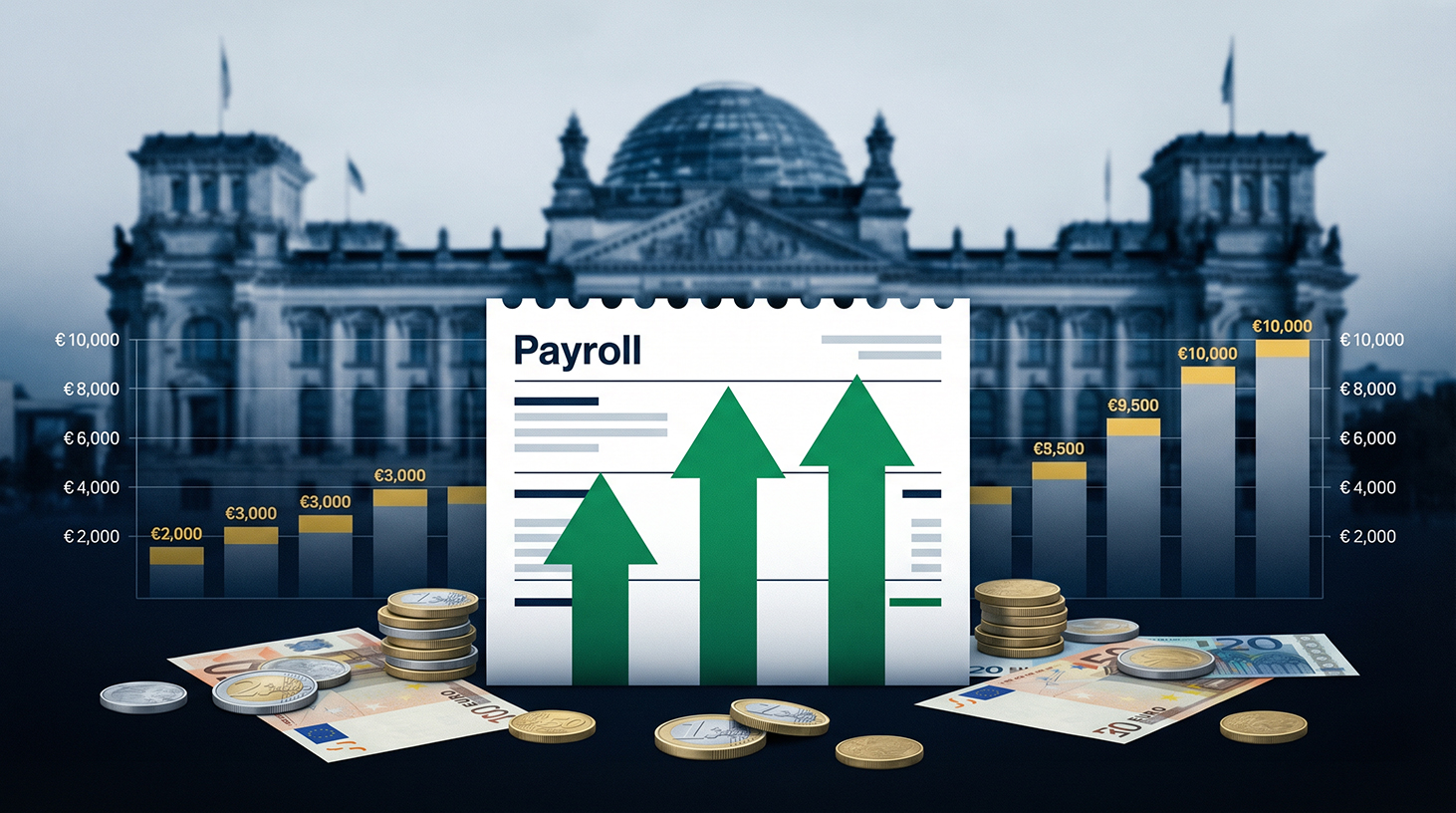
New tax plans revealed – the major tax turnaround: Why the middle class in particular could benefit massively – Image: Xpert.Digital
Up to €3,000 more net: This is how much you can benefit from the new tax plans
Solidarity surcharge abolition and higher tax-free allowance: Here's what's set to change regarding your income tax – These four changes are intended to save our net salary
Top tax rate only applies from €85,000: Is a mega tax break coming?
Germany suffers from one of the highest tax and contribution burdens worldwide – a structural hurdle that not only dampens employee motivation but also increasingly puts pressure on its economic competitiveness. Now, a concrete proposal is on the table that aims to change precisely this: CDU/CSU finance politicians Yannick Bury and Florian Dorn have developed a comprehensive reform concept intended to provide noticeable relief for the working middle class. With a substantial volume of up to €30 billion annually, the plans promise, among other things, a significantly higher basic tax allowance, a later threshold for the top tax rate (starting at €85,000), and the complete abolition of the solidarity surcharge. For individuals, this could mean up to €3,000 more net income per year. However, while calculations by the Federation of German Taxpayers impressively demonstrate the financial benefits for citizens, the financing through a radical reduction of subsidies is highly politically explosive – particularly in negotiations with the SPD. Read here what the reform concept includes in detail, who benefits the most, and why its implementation could still fail due to enormous hurdles.
Tax turnaround in Germany: The reform concept of Bury and Dorn
More net income instead of more government – or: How much tax relief Germany can and wants to afford
Germany has a structural problem that has been simmering for years: The tax and social security burden on earned income is among the highest in the entire OECD. A single employee with an average income in Germany pays 47.9 percent of their gross income to the state – only in Belgium is this so-called tax wedge higher. The practical implications are sobering: More than two-thirds of this total tax burden consists of social security contributions, which are borne by both employees and employers. The effect is not only a financial but also a motivational deterrent – for employees who wonder why working more hardly pays off, and for companies that groan under the weight of these costs in international competition.
Added to this is the systemic phenomenon of bracket creep. This refers to the gradual effect where inflation-adjusted wage increases, due to the progressive income tax system, lead to a real increase in the tax burden, even though the purchasing power of the affected employees has remained virtually unchanged. More than 35 million taxpayers were affected by this effect in 2024; their average additional burden amounted to around €273 per year. While the legislature passed relief measures for 2025 and 2026 at the end of 2024 as part of the Tax Reform Act (SteFeG) – such as a shift in the tax bracket thresholds by 2.6 and 2.0 percent, respectively – this does not yet provide a structural solution to the underlying problem.
It was in this context that the reform concept developed by the two CDU/CSU finance politicians Yannick Bury (CDU) and Florian Dorn (CSU) emerged. It aims to be more than a mere technical adjustment to the tax rates: it is the first concrete proposal within the coalition negotiations between the CDU/CSU and SPD for a comprehensive overhaul of income tax, which is to take effect on January 1, 2027. The total tax relief is estimated at 25 to 30 billion euros annually.
Designing a relief system: The four key elements of the concept
The concept developed by Bury and Dorn essentially operates with four key tax policy instruments that work in combination and, as a whole, are intended to generate net relief for taxpayers.
First, the basic tax allowance should be increased by at least €1,000. The basic tax allowance is the income level up to which no income tax is levied and which represents the tax-free subsistence level. In 2026, it will be €12,348 per person per year. An increase to at least €13,348 would provide noticeable relief, particularly for employees in lower income brackets, because a relatively larger proportion of their gross wages remains tax-free.
Secondly, the top tax rate of 42 percent will only apply to taxable income exceeding €85,000 – instead of the current threshold of around €69,878 (projected for 2026). This increase of approximately €15,000 will have significant consequences: A taxpayer who currently earns €70,000 and is already subject to the top tax rate would pay around €1,400 less in taxes annually after the reform. This is a substantial effect for the middle class, which in Germany traditionally moves into the higher tax brackets at an early stage.
Thirdly, the solidarity surcharge should be completely abolished. Currently, it is still paid by the top ten percent of taxpayers – those for whom the concept is already particularly effective due to the increase in the top tax rate. The complete abolition of the surcharge would thus finalize a correction that has been promised for years but never consistently implemented.
Fourth – and this is the most unusual element of the plan – the so-called wealth tax rate, levied on taxable annual incomes above €277,825, is to be increased from the current 45 percent to 47.5 percent. At the same time, the income threshold at which this wealth tax applies is to be lowered. This element serves as a political signal of balance and is intended to counter criticism that the reform primarily benefits high earners.
What remains in your wallet: The specific relief amounts by income group
The tax relief amounts, developed and calculated in cooperation with the Federation of Taxpayers, make the concept tangible. They show how the net relief scales with increasing gross income – for several reasons: Firstly, the higher the income, the higher the initial tax burden, and secondly, the increase in the top tax rate threshold naturally only takes effect at higher income levels.
For a single employee with a gross monthly income of €2,000, this results in a net monthly tax relief of €18.60. This corresponds to an annual relief of approximately €223. With a gross monthly income of €4,000, the relief amount increases to €37.40 per month – or approximately €449 annually. Someone earning €8,000 gross per month would have €149 more net income per month, amounting to approximately €1,788 per year. With a gross monthly salary of €10,000, the relief amounts to €246 per month, or almost €3,000 annually.
For a family of four – specifically a married couple with two children – the picture is also positive, albeit somewhat more moderate: With a combined gross household income of €12,000 per month, calculations by the Federation of German Taxpayers show a monthly tax relief of up to €135. Families benefit from a different tax curve than singles due to joint taxation and child tax credits, which dampens the relative relief compared to unmarried high earners.
| income group | Gross/month | Relief per month | Relief/year |
|---|---|---|---|
| Single | 2,000 euros | 18.60 euros | approximately 223 euros |
| Single | 4,000 euros | 37.40 euros | approximately 449 euros |
| Single | 8,000 euros | 149.00 euros | approximately 1,788 euros |
| Single | 10,000 euros | 246.00 euros | approximately 2,952 euros |
| Married couple, 2 children | 12,000 euros | up to 135.00 euros | approximately 1,620 euros |
This table reveals a structural peculiarity of the reform: the relative relief – that is, the proportion of the relief to gross income – is particularly pronounced for middle and upper incomes. This is because precisely these income groups are currently most affected by the early top tax rate threshold and the solidarity surcharge.
Our EU and German expertise in business development, sales and marketing

Our EU and German expertise in business development, sales and marketing - Image: Xpert.Digital
Industry focus areas: B2B, digitalization (from AI to XR), mechanical engineering, logistics, renewable energies and industry
More information here:
A thematic hub offering insights and expertise:
- Knowledge platform covering global and regional economies, innovation and industry-specific trends
- A collection of analyses, insights, and background information from our key areas of focus
- A place for expertise and information on current developments in business and technology
- A hub for companies seeking information on markets, digitalization, and industry innovations
Who really benefits from the progressive tax reform – and why the upper middle classes win
The progressive approach and its limits: Who really benefits
A more nuanced analysis reveals that the concept – contrary to the political narrative of primarily providing social relief for low-income earners – has its strongest absolute effect on the upper middle class. This is not surprising, but rather an arithmetic consequence of the progressive tax system: those who pay higher taxes can also save more through tax rate reductions.
The picture is more nuanced when viewed in percentage terms: Analyses by the German Taxpayers' Institute (DSi) show that net wages for people with low and middle incomes would increase by between ten and fourteen percent, while high earners would see increases at the lower end of this range. No household would have to pay more as a result of the reform – at least not in the income brackets examined.
A comparison with the pre-election plans of the CDU, SPD, and FDP from 2025 is revealing. At that time, the Federation of Taxpayers calculated that the CDU's proposed tax rate for a childless single person with a gross annual income of €48,000 would provide relief of €893 per year, while the FDP's proposal suggested €2,090 and the SPD's €428. The current Bury-Dorn concept, with a volume of up to €30 billion, is significantly more ambitious than the CDU's election platform at the time – a sign that the scope for tax policy within the Union has shifted under the pressure of the economic situation in Germany.
The financing puzzle: across-the-board subsidy cuts and administrative reform
The interesting question from a tax policy perspective is not how much relief the concept promises, but where the money for it will come from. The two CDU/CSU politicians explicitly reject new debt and affirm their commitment to the debt brake. Their answer to the financing question is twofold.
First, Bury and Dorn plan to reduce federal financial aid by 15 percent annually over a three-year period, using a so-called "lawnmower" approach. The starting point for this idea is remarkable: federal financial aid has increased more than tenfold, from €5.5 billion in 2015 to over €60 billion today. The gradual reduction is expected to free up €22 billion. Second, the plan aims to save nearly €8 billion annually in federal administrative costs. Together, this would—at least according to their calculations—almost completely offset the relief measures, which amount to up to €30 billion.
However, this financing logic is vulnerable to criticism on several points. The business magazine Wirtschaftswoche has pointed out that around 30 billion euros of state subsidies are allocated to promoting the energy transition through the Heating Act and the EEG surcharge alone – instruments that the current coalition government has just reaffirmed. Even under the previous government, it became clear that subsidies are almost politically impossible to eliminate because organized interest groups are behind every single item. The "across-the-board" approach, which sets no priorities and cuts all subsidies equally, may be easy to communicate politically, but experience has shown it to be extremely cumbersome in practice.
Another area of tension arises from the federal budget itself. Reports indicate that the federal budget for both 2027 and 2028 shows a deficit of approximately €60 billion each year. Against this backdrop, a net tax relief of €30 billion per year seems like a political pipe dream, hardly achievable without far-reaching structural reforms in the expenditure sector. Federal Finance Minister Lars Klingbeil (SPD) is conspicuously keeping quiet and has announced his intention to present his own proposals for a revenue-neutral reform – meaning that higher taxes for top earners would offset the majority of the relief for middle-income earners.
The political geometry of the reform: CDU/CSU and SPD on a collision course
The concept originated within the CDU/CSU parliamentary group – not as an official government document, but as a discussion paper by two finance politicians in a guest article in the Handelsblatt newspaper. This is no coincidence: it is a targeted initiative intended to shape the content of the coalition negotiations on tax reform without compromising the official negotiating strategy.
The reaction from the coalition partner SPD was muted and essentially negative. SPD Deputy Parliamentary Group Leader Esdar criticized the proposal, arguing that it was unfair and missed the mark to provide tax relief specifically for high earners. Federal Labor Minister Bärbel Bas welcomed the element of raising the tax rate for the wealthy, but emphasized that Finance Minister Klingbeil would present his own proposals. The SPD countered the concept with its classic argument: a tax reform that – in absolute terms – benefits high earners more than low earners is not justifiable from a redistributive perspective.
This disagreement reflects a deeper ideological difference. For the CDU/CSU, tax relief is a fundamental principle of sound economic policy: the state should take less so that people can make more decisions for themselves. For the SPD, tax relief without a simultaneous equalization of burdens at the upper income threshold is unacceptable. As the Frankfurter Rundschau comments, the SPD risks breaking an election promise if it blocks a reform that also substantially benefits the middle class – but an agreement without concessions to the social-democratic logic of redistribution seems equally unlikely.
Support within the CDU/CSU alliance comes from prominent figures: Federal Minister of Economics Katherina Reiche and CDU General Secretary Carsten Linnemann have endorsed the concept. This lends Bury and Dorn's initiative political weight beyond its initial contribution to the discussion.
The location argument: Why Germany needs structural tax reform
Beyond the immediate debate about distribution, the concept is driven by an economic policy impetus that must be taken seriously given Germany's current economic situation. The tax wedge – the difference between what labor costs the employer and what the employee receives net – is 47.9 percent in Germany for single individuals with average earnings and no children.





