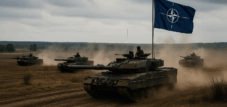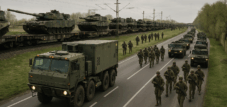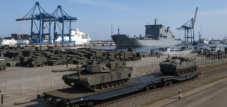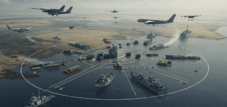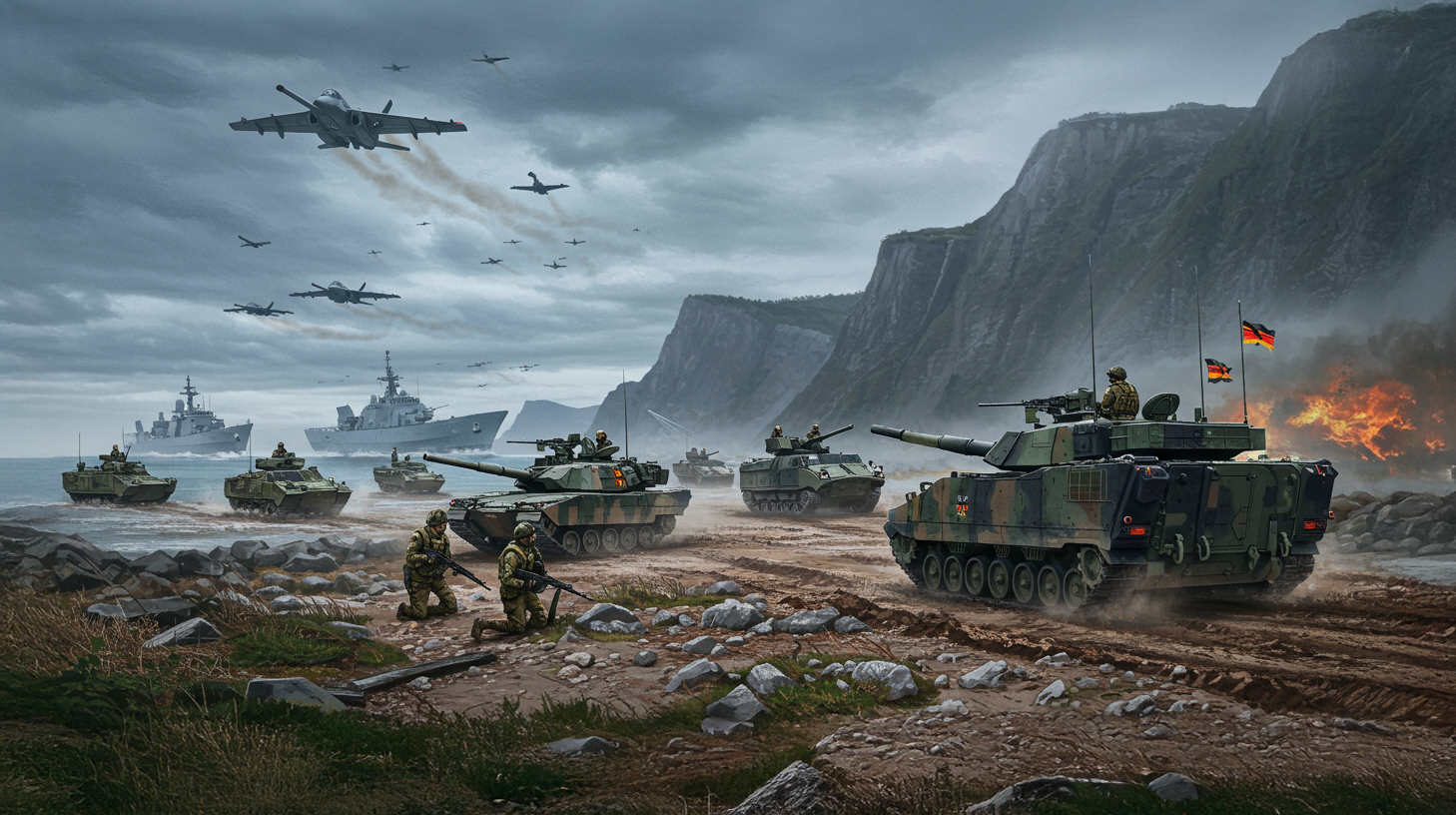
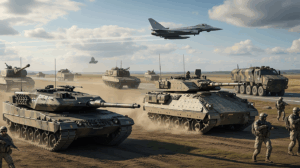
The NATO large-scale exercise Quadriga 2025: Germany's largest military demonstration of alliance solidarity in the Baltic Sea region – Image: Xpert.Digital
Germany's new strength: Why the Bundeswehr is now leading NATO's eastern flank
### 8,000 soldiers on the move: Why you now have to expect military convoys on German roads ### Clear signal to Putin: How Germany is preparing for a worst-case scenario with 13 partners ### Quadriga 2025: Germany's gigantic military exercise explained – these countries are participating ### Baltic Sea in focus: Why this NATO maneuver is crucial for Europe's security ### After Sweden's accession: NATO is rehearsing for a worst-case scenario for the first time in the "NATO inland sea" Baltic Sea ###
Overview of the exercise series
The NATO exercise series Quadriga 2025 represents the most extensive military maneuver of the German Armed Forces and their allies in the Baltic Sea region in years. Approximately 8,000 German soldiers, together with the armed forces of 13 other NATO partner nations, are participating in this complex exercise, which extends over the core period from August to September 2025. The maneuver encompasses various military dimensions and geographical areas, from Germany across the Baltic Sea to Lithuania and Finland.
The Quadriga series has followed a systematic approach to reviewing various military capabilities for several years. While the focus in 2023 was on air defense and in 2024 on land forces, this year's edition concentrates on the maritime dimension. This focus on the sea reflects the growing strategic importance of the Baltic Sea region and the need to protect and maintain maritime links between NATO partners.
The naval command in Rostock bears overall responsibility for the planning and execution of Quadriga 2025, underscoring Germany's central role in the maritime security architecture of the Baltic Sea. This leading role of the German Navy marks a significant shift in German security policy, as Germany has traditionally played a more supporting role in NATO operations.
Related to this:

Participating nations and international cooperation
The series of exercises demonstrates the unity and operational capability of the Western defense alliance through the participation of 14 nations. Besides Germany, Sweden, the USA, the Netherlands, France, Finland, Denmark, Poland, Lithuania, Latvia, Estonia, Belgium, Canada, and the United Kingdom are taking part. This composition is particularly noteworthy as it includes both traditional NATO members and the new Nordic accession candidates Sweden and Finland, which only joined the alliance in 2023 and 2024, respectively.
The inclusion of all NATO Baltic Sea littoral states underscores the alliance's collective claim to control and security of this strategically important strait. The participation of Sweden and Finland, in particular, demonstrates how the security landscape of Northern Europe has fundamentally changed as a result of Russia's war of aggression against Ukraine. These two traditionally neutral states have fundamentally reoriented their foreign policies and joined the Western defense alliance.
The US continues to play a central role, both through its military capabilities and its leadership skills in complex multinational operations. The transatlantic dimension of the exercise is ensured by the participation of American units, particularly the Navy and Air Force, demonstrating the ongoing strategic bond between Europe and North America.
Military sub-exercises and their strategic objectives
Quadriga 2025 is divided into several specialized sub-exercises, each covering different aspects of modern warfare and defense. Exercise Northern Coasts forms the maritime focus and takes place from September 1st to 12th, 2025. This sub-exercise simulates realistic threat scenarios from the air, sea, and land, with a particular emphasis on the tactical planning and execution of maritime operations in coastal areas.
Operational command of Northern Coasts lies with the Inspector of the Navy, Vice Admiral Jan Christian Kaack, supported by an international staff for managing the exercise, the Commander Task Force Baltic headquarters in Rostock. This structure makes it possible to intensify cooperation based on proven NATO procedures and to continuously expand joint capabilities.
Role2Sea, taking place from August 18 to 29, focuses on medical support at sea, including casualty evacuation and cooperation with civilian healthcare providers on land. The aim of this exercise is to ensure a seamless medical evacuation chain under challenging conditions, from sea to shore, which could be crucial in a real conflict.
Grand Eagle, running from August 29 to September 30, is a training exercise simulating the deployment of troops from Panzer Brigade 37 to NATO's eastern flank in Lithuania. This exercise is particularly significant as it simulates the practical implementation of NATO's mutual assistance clause and demonstrates how quickly German armed forces can be mobilized to defend its eastern allies.
Logistical challenges and civil-military cooperation
A key component of Quadriga 2025 is the testing of complex logistical processes that would be crucial for the success of military operations in a real conflict. The Brave Blue and Safety Fuel exercises, taking place from August 29 to September 12, focus on transport via various modes of transport, including road, rail, and sea, as well as the supply of fuel and drinking water in Lithuania.
Even before the transport ships set sail, civilian authorities and police forces are involved, underscoring that the transport of personnel and equipment through Germany can only succeed through a nationwide and societal effort. This civil-military cooperation is a critical aspect of modern defense, as military operations increasingly rely on civilian infrastructure and support.
The deployment by land route will take place through Poland, highlighting the strategic importance of Polish territory as a transit country for NATO troops. During these deployments, traffic restrictions may occur on roads in northern and eastern Germany, directly involving the population in preparations for national defense.
The integration of civilian healthcare facilities into medical exercises demonstrates how modern military medicine relies on cooperation with civilian partners. This cooperation is particularly important for the treatment of wounded personnel whose needs exceed the capabilities of purely military facilities.
Technological innovations and modern threats
Drone defense and the deployment of newly acquired equipment are firmly integrated into all phases of Quadriga 2025. This focus reflects the changing nature of modern warfare, in which unmanned systems play an increasingly important role. Experience from the war in Ukraine has shown that drones can pose a significant threat for both reconnaissance and offensive purposes.
Integrating new technologies into exercises enables the armed forces to keep pace with rapidly evolving threat landscapes. Modern threat scenarios include not only conventional military attacks, but also hybrid warfare, cyberattacks, and the use of precision weapons over long ranges.
The newly established Operational Command of the German Armed Forces, which commenced operations on April 1, 2025, assumes operational command of Quadriga 2025. This new structure is intended to improve the command capabilities of the German Armed Forces in complex, multinational operations and to enable better coordination between the various branches of the armed forces.
Hub for Security and Defense - Advice and Information


Hub for Security and Defense - Image: Xpert.Digital
The Security and Defence Hub offers expert advice and up-to-date information to effectively support companies and organizations in strengthening their role in European security and defence policy. Working closely with the SME Connect Defence Working Group, it particularly promotes small and medium-sized enterprises (SMEs) that wish to further develop their innovative capacity and competitiveness in the defence sector. As a central point of contact, the Hub thus creates a crucial bridge between SMEs and European defence strategy.
Related to this:
NATO exercise Quadriga 2025: The realignment of European defense
Geopolitical context and deterrence strategy
Quadriga 2025 is embedded in a broader NATO geopolitical strategy to deter Russian aggression. According to the German Armed Forces, the exercise makes a visible contribution to deterring Russia's ambitions to challenge the European order. All scenarios in the exercise series are exclusively defensive in nature, reflecting NATO's doctrine of collective defense.
The strategic importance of the Baltic states, and in particular the so-called Suwałki Gap, cannot be overstated. This narrow strip of land, only 65 kilometers wide, between Poland and Lithuania represents the only land connection between the Baltic states and the rest of NATO territory. In the event of a Russian attack, control of this area could isolate the Baltic states from the rest of NATO, a strategic nightmare scenario for the alliance.
The permanent deployment of a German brigade to Lithuania, scheduled for completion by the end of 2027, underscores Germany's long-term commitment to the security of its eastern flank. This brigade will comprise approximately 5,000 soldiers and represents the first permanent overseas deployment of a complete German brigade since the end of World War II.
Related to this:
Historical context and strategic importance
The Quadriga exercise follows in the tradition of large NATO maneuvers that were regularly conducted during the Cold War to demonstrate and improve the alliance's capabilities. However, the current security situation differs significantly from the bipolar confrontation of the past. Today, NATO not only faces a Russian threat but must also deal with new forms of hybrid warfare, cyberattacks, and the instrumentalization of migration.
The Baltic states have undergone a remarkable transformation since gaining independence in 1991. From Soviet satellite states, they have developed into stable democracies and reliable NATO partners. However, their integration into Western structures is hampered by their geographical location between Russia and its ally Belarus. The Russian exclave of Kaliningrad, situated just a few dozen kilometers from Lithuania, has become one of the most heavily militarized regions in Europe.
The exercise is taking place against a backdrop of ongoing tensions between Russia and the West. Russia's war of aggression against Ukraine has fundamentally altered the security situation in Europe and intensified the need for credible deterrence. Western intelligence agencies warn of the possibility that Russia could be capable of launching an attack on NATO territory by the end of this decade at the latest.
Impact on German security policy
Quadriga 2025 marks a further step in Germany's security policy realignment, often described as a "turning point." The willingness to involve 8,000 German soldiers in a large-scale exercise and to permanently station an entire brigade in the Baltic states demonstrates the German government's growing security awareness.
This development stands in stark contrast to German foreign and security policy of recent decades, which was characterized by restraint and attempts to avoid confrontations. However, the new reality demands a more active role for Germany in the European security architecture, which also entails significant financial commitments.
The 2025 NATO summit in The Hague has already decided on a historic increase in defense spending to five percent of gross domestic product. For Germany, this means a significant increase in military expenditures and a fundamental reprioritization of government resources. This decision was made possible by an amendment to the debt brake in the Basic Law (Germany's constitution), which exempts defense spending above one percent of GDP from the debt brake.
Civilian impacts and societal dimension
The implementation of Quadriga 2025 also has significant impacts on the civilian population. The deployment of troops and heavy equipment leads to traffic disruptions on German highways and rural roads, particularly in northern and eastern Germany. These restrictions are a visible sign that Germany must once again consider itself a frontline country in a potential conflict.
The inclusion of civilian authorities and healthcare facilities in the exercises demonstrates that modern defense is no longer solely a matter for the armed forces, but encompasses the entire society. This civil-military cooperation must be continuously practiced and improved to function effectively in a real emergency.
At the same time, increased military activity raises public awareness of security policy issues. The visible presence of military vehicles and exercises reminds people that the security Europe has enjoyed for decades is not a given and must be actively defended.
International reactions and diplomatic implications
The Quadriga exercise sends clear signals not only to potential adversaries but also to international partners. For the Baltic states and Poland, the massive German participation represents an important reassurance that they will not be left alone in a crisis. This alliance solidarity is essential for NATO cohesion and the confidence of the eastern member states in the Western security guarantee.
Russia closely observes these exercises and uses them for its own propaganda. At the same time, Moscow regularly conducts its own military exercises, which are portrayed as a response to NATO activities. This cycle of military demonstration and counter-demonstration shapes the current security situation in Europe.
The exercise also underscores the importance of transatlantic relations. The participation of the US and Canada demonstrates that North America's commitment to European security remains strong despite its growing focus on the Pacific region. At the same time, Germany's leading role in the exercise demonstrates Europe's readiness to assume greater responsibility for its own security.
Long-term strategic implications
Quadriga 2025 is more than just a military exercise – it is a building block in the redesign of the European security architecture. The procedures and structures tested during the exercise will form the basis for future NATO strategy in Northeast Europe. The experience gained from the exercise will inform the further development of the alliance's defense plans and help identify weaknesses and areas for improvement.
The permanent stationing of German troops in the Baltic states marks a historic turning point in German foreign policy. For the first time since the end of the Second World War, Germany is again permanently stationing combat-ready troops abroad with the explicit mandate of territorial defense. This development would have been unthinkable just a few years ago, but it demonstrates the changed threat landscape and Germany's increased willingness to assume international responsibility.
For the German Armed Forces, Quadriga 2025 represents an important step in the transformation from an army primarily focused on foreign deployments back to a force geared towards national and collective defense. This reorientation requires not only new equipment and structures, but also a mental adjustment among leadership and troops.
The exercise ultimately demonstrates that NATO remains functional as a military alliance despite differing national interests and political tensions. In a time of growing international uncertainty, Quadriga 2025 sends the signal that Western democracies are ready and able to defend their values and security together. The successful execution of such complex multinational exercises is therefore crucial, both militarily and politically, for the credibility of collective defense.
Consulting - Planning - Implementation

Markus Becker
I would be happy to serve as your personal advisor.
Head of Business Development
Chairman SME Connect Defense Working Group
Consulting - Planning - Implementation
Konrad Wolfenstein
I would be happy to serve as your personal advisor.
You can contact me at wolfenstein∂xpert.digital or
Just call me on +49 7348 4088 965 .