
More growth in Germany in 2026? Experts debate the economy: Why the Ifo Institute warns against the new IMF euphoria
Xpert Pre-Release

Language selection 📢
Published on: January 19, 2026 / Updated on: January 19, 2026 – Author: Konrad Wolfenstein
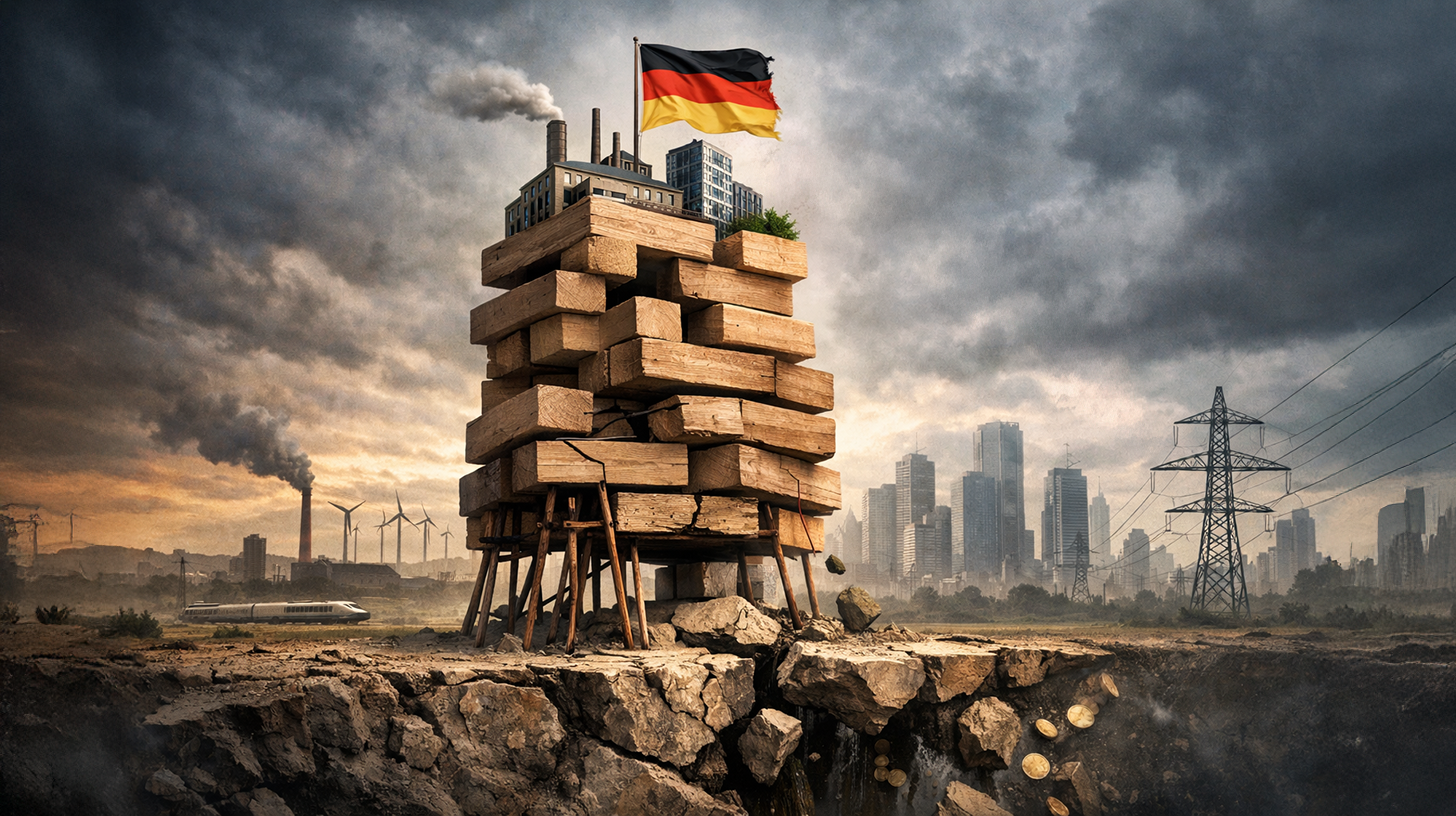
More growth in Germany in 2026? Experts debate the economic outlook: Why the Ifo Institute warns against the new IMF euphoria – Image: Xpert.Digital
IMF surprise for 2026: Will Germany's economy suddenly grow faster than expected?
Silence before growth: Germany's fragile recovery amid global tensions – The accelerated economic recovery without structural solutions
The Trump Trap: Will new US tariffs immediately destroy Germany's fragile recovery?
The International Monetary Fund (IMF) has surprisingly revised its forecast for German economic growth upwards in January 2026, signaling an unexpected turnaround for Europe's largest economy. With a projected growth rate of 1.1 percent for the current year, Germany, after years of stagnation, has returned to the middle of the pack among industrialized nations. This revision of 0.2 percentage points compared to the October forecast may initially seem insignificant, but it reflects a fundamental shift in the perception of economic development. The IMF's announcement not only demonstrates revised models but also reveals a growing hope for a mandated economic recovery through political intervention characterized by unprecedented government investment projects.
For the following year, 2027, the IMF even expects growth of 1.5 percent, indicating a sustainably stabilized economic dynamic. This forecast is primarily supported by the federal government's announced billions in spending on infrastructure and defense, which are intended to stimulate demand in the short term. At the same time, it is expected that the burden of US tariffs will be at least partially offset by government fiscal policy. The European Central Bank has lowered its key interest rates, thereby improving financing conditions for businesses and households. This creates the conditions for a recovery in private investment, which had suffered from uncertainty in previous years.
The IMF projection paints a scenario based on a classic Keynesian mechanism: government spending programs are intended to stabilize demand while the private sector gradually regains confidence. However, this already reveals an initial divergence between the IMF's optimism and that of other renowned research institutions, which arrive at considerably more skeptical assessments. This divergence is increasingly becoming the central analytical challenge, forcing us to look beyond the simple figures to evaluate the economic drivers and their plausibility.
Diverging forecasts: When expert opinions diverge
The IMF's relative euphoria contrasts sharply with the caution of other established economic institutes, particularly the Ifo Institute in Munich, considered one of Germany's most influential research centers. In December 2025, the Ifo Institute significantly revised its growth forecast for Germany in 2026 downwards, now predicting a meager 0.8 percent growth instead of the previously estimated 1.3 percent. This reduction of 0.5 percentage points marks a fundamental reassessment of the economic outlook. The institute attributes this revision primarily to the persistent burden of American tariffs, which not only directly impact exports but also damage overall business confidence.
The German Institute for Economic Research (DIW) and the German Council of Economic Experts follow a similarly critical course, forecasting growth of only 0.9 percent for 2026. This systematic underestimation by German economists compared to the IMF raises the question of which assumptions explain this divergence. The key lies in the assessment of two critical factors: first, the actual speed of implementation of government investment programs, and second, the persistence of tariffs as a structural brake on the export sector.
The Bundesbank, traditionally considered conservative in its forecasts, is considerably more cautious than the IMF, emphasizing the ongoing uncertainties stemming from the trade policy situation. A particularly interesting phenomenon is the divergence between public actors like the German government, which expects growth of 1.3 percent, and private banking associations, which anticipate 1.4 percent. This slightly more optimistic stance of private financial institutions compared to government forecasts could indicate that the banking sector has already shifted to higher investment plans in its lending allocations.
The European Commission has set its forecast for Germany at 1.2 percent, marking the middle ground between the IMF's optimism and the Ifo Institute's pessimism. This figure likely reflects an institutional consensus that neither wants to underestimate tariff risks nor overestimate fiscal stimulus. Simply looking at the figures (0.8 to 1.4 percent) masks the actual uncertainty, as any deviation of just half a percentage point effectively represents the difference between stagnation-like conditions and a genuine economic upswing.
Government spending as an economic stabilizer: The double-edged strategy
The core strategy of the German government's policy for 2026 rests on one pillar: substantial public investment in infrastructure and defense is intended to compensate for the lack of private demand. The financial package of the center-right/center-left coalition amounts to considerable sums in the billions, which are constitutionally buffered by special funds and thus exempt from the usual debt restrictions. This became necessary to create an economic policy instrument during the crisis of 2023 and 2024 that was not bound by regular budgetary constraints.
The Institute for Macroeconomics and Business Cycle Research (IMK) estimates that the planned spending increases and tax relief measures should generate an economic effect of approximately €57 billion in 2026. This corresponds to roughly one percentage point of additional growth, assuming a multiplier effect of about one. However, a critical problem emerges here: the actual disbursement of these funds is proceeding much more slowly than planned. Infrastructure construction projects are subject to extensive approval processes, and defense procurements require complex logistical and procurement processes that cannot be accelerated in the short term.
In fact, several institutions are reporting significant implementation problems. The planned measures are therefore unlikely to take full effect in 2026, but rather will be spread over several years. This means that the multiplier effect could be weaker than hoped, as the funds will not actually stimulate the economy to the extent planned. The Ifo Institute anticipates that the measures will only generate a growth effect of approximately 0.3 percentage points in 2026, which is significantly below expectations. This explains a considerable part of the discrepancy between the IMF forecast and the Ifo assessment.
Another economic policy element is the planned relief for private households and businesses. The increase in flat-rate allowances for advertising expenses and tax breaks are primarily intended to relieve the burden on small and medium-sized enterprises (SMEs), which have been significantly impacted by energy costs and bureaucracy in previous years. However, these measures are also likely to lead to a greater propensity to invest only gradually, as confidence in the long-term sustainability of this relief must first be established, and business decisions do not react spontaneously to tax breaks but rather await a reassessment of profit and investment prospects.
Our EU and Germany expertise in business development, sales and marketing

Our EU and Germany expertise in business development, sales and marketing - Image: Xpert.Digital
Industry focus: B2B, digitalization (from AI to XR), mechanical engineering, logistics, renewable energies and industry
More about it here:
A topic hub with insights and expertise:
- Knowledge platform on the global and regional economy, innovation and industry-specific trends
- Collection of analyses, impulses and background information from our focus areas
- A place for expertise and information on current developments in business and technology
- Topic hub for companies that want to learn about markets, digitalization and industry innovations
Germany's deceptive rise: Why growth is on shaky ground
Tariffs as a source of structural uncertainty: The Trump dimension
The central risk to all optimistic scenarios is the Trump administration's tariff policy in the US. Germany is a classic export nation whose prosperity is historically based on the liberal global trade order. In 2025, the United States accounted for roughly ten percent of total German exports, and this market is of critical importance for capital-intensive industries such as mechanical engineering, pharmaceuticals, and the automotive industry. The tariffs introduced by Trump have a dampening effect in several ways.
First, tariffs make German products exported to the US more expensive, thus reducing their competitiveness. The IMF's forecasts assume an effective tariff rate of 18.5 percent, which already represents a significant cost disadvantage for German exporters. Second, tariff policies have psychological effects that damage business confidence. Companies postpone investment decisions when the future of the trade regime is uncertain. Third, tariffs have an indirect effect by burdening the Chinese economy and thereby reducing demand for German intermediate goods and machinery. Fourth, China diverts export capacity to Europe, increasing competitive pressure on German manufacturers in their domestic market.
The Ifo Institute estimates the dampening effect of US tariffs on growth at approximately 0.6 percentage points for 2026. This is a substantial amount that effectively negates the entire expected growth stimulus from government spending. Under such conditions, the German export industry would not contract, but it would not generate the investment momentum necessary for self-sustaining growth. The fact that the IMF apparently estimates these tariff effects to be lower than the Ifo Institute could be due to differing assumptions about trade elasticities or a slightly higher weighting of the buffering effects of government spending.
Although an agreement was reached between the EU and the US in January 2026 that reduced tariffs for the automotive industry from 27.5 to 15 percent, the underlying uncertainty in trade policy persisted. The risk of asymmetric escalation has not been eliminated, and many observers view the current situation more as a truce than a lasting solution.
Domestic demand as a source of hope: wage increases and private consumption
Where exports are hampered by trade policy, domestic demand is expected to drive the economic recovery. Here, the German economy is in a favorable position: the labor market remains stable, the unemployment rate is below seven percent, and, above all, the wage growth between 2023 and 2025 has resulted in significantly higher incomes for employees. Nominal wage increases were sometimes over five percent, and since inflation has fallen, real incomes have also risen. This creates the basis for a recovery in private consumption, which has been a drag on the economy for many years.
The Bundesbank and other institutions expect private households to gradually lower their savings rate as uncertainty about the future decreases and real disposable incomes rise. The savings rate increased significantly during the crisis years, as households saved preventively for difficult times. With more stable conditions, this rate should normalize again, releasing additional consumer spending. The IMK and the Hans Böckler Institute anticipate that private consumption will play a key role in growth in 2026, as the wage increases of previous years will now translate into higher consumption.
Particularly interesting is the assessment that domestic demand is not driven by any technological or demographic wave, but solely by the redistribution of savings rates. This is relatively fragile: should consumer price expectations rise again, for example, or should labor market shocks occur, this source could quickly dry up. Furthermore, persistent inflation is evident in services and especially in rents, which erodes real incomes, particularly for low-income households. The data show that there is not so much generalized wage growth, but rather that it varies considerably between sectors, with the highest increases in the public sector and services with high job requirements.
Germany in the context of the global economy: From last place to middle of the pack
A statistically remarkable and advantageous finding of the IMF forecast is Germany's relative position in international comparison. After ranking last among the seven major industrialized nations (G7) in 2024, Germany's position improves significantly in 2026. With 1.1 percent growth, Germany would grow faster than Japan (0.7 percent) and Italy (0.7 percent). France, at 1.0 percent, would also fall slightly short of Germany. This is of great symbolic importance from an economic policy perspective, as it demonstrates that the supposedly particularly debilitating "German structural crisis" is not as deep-seated as sometimes claimed.
However, this assessment must be interpreted with caution. The US will grow significantly faster at 2.4 percent, driven by massive investments in artificial intelligence and the aforementioned fiscal stimulus from the Trump administration. China, with a projected 4.5 percent, will also be far ahead, fueled by government stimulus programs and a redirection of exports away from Trump tariffs to other markets. The Eurozone as a whole will grow by 1.3 percent, meaning that while Germany will perform above average, its growth will not be dramatic. Countries like Spain, at 2.3 percent, or Poland, with significantly higher rates, will thus continue to be overtaken by Germany.
The acceleration in southern European countries is particularly striking: Spain benefits from tourism and has fewer structural problems than Germany, while southern European countries in general are benefiting from the normalization following their debt crises. This could mean that Germany will lose weight in the European context in the long term, even if it shows a relative improvement in 2026. The “catch-up process” is therefore more of a normalization from extremely low levels than a genuine acceleration.
The Artificial Intelligence Dilemma: Growth Engine for Others, Risk for All
A major theme in all modern growth forecasts is the impact of investments in artificial intelligence. The IMF and other institutions emphasize that AI investments, particularly in the US, are a significant growth driver. Tech giants like Amazon, Microsoft, Meta, and Alphabet will collectively invest over $400 billion in data centers, semiconductors, and AI infrastructure by 2026. While these investments generate short-term demand and employment in the US, they also carry considerable risks.
For Germany, the dynamics of AI are ambivalent. On the one hand, Germany could benefit from increased demand for specialized machinery, optical components, and semiconductor suppliers. On the other hand, Germany lacks a dynamic AI sector in the sense of large platform companies that would directly profit from this boom. The Eurozone as a whole, according to analysts like Vanguard, also lacks a dynamic AI sector and therefore benefits less from this growth driver than the US or even Asia. This could lead to a widening divergence between US and European growth in the coming years.
A significant risk explicitly mentioned by the IMF is the possibility that AI investments represent a bubble that will burst if profit expectations are not met. Should large AI investments prove less profitable than anticipated, abrupt corrections in financial markets could occur, quickly spreading from the tech sector to the wider economy. This would particularly affect Germany, given its strong economic ties to global financial markets, where financial market volatility can rapidly erode confidence.
Inflationary and labor market stability: The calm anchoring
A positive finding across all forecasts is the relative stability of inflation and the labor market. Consumer price expectations are anchored, and core inflation is gradually declining. This means that the European Central Bank can continue to lower its key interest rates without triggering an inflation explosion. Monetary policy is therefore no longer as restrictive as it was between 2022 and 2024, which is encouraging business and household investment.
The labor market, however, remains robust. The unemployment rate is expected to stabilize at around 6.1 to 6.3 percent in 2026, meaning that no massive layoffs are anticipated. This is noteworthy, as it suggests that the German economy, despite structural challenges, still possesses sufficient momentum to maintain employment. However, significant regional and sectoral differences are evident. The industrial sector is suffering more, while the service sector remains relatively resilient.
Summary of the analytical starting point
The IMF's forecast for Germany in 2026 can thus be classified as moderately optimistic, based on the expectation that government investment and a recovery in private demand will partially absorb the tariff shock and lead to modest but solid growth. This contrasts with the considerably more pessimistic assessment by the Ifo Institute and other German research institutions, which see tariffs and implementation problems with government spending as major obstacles. The truth probably lies somewhere in between: growth of around one percent is likely, but the uncertainty is considerable and the risks outweigh the upside potential.
The key analytical takeaway is that the German economy is not overcoming its structural problems, but is merely being temporarily stabilized by temporary external stimuli (government spending, tariff pauses, increases in real income). A lasting recovery would require improvements in productivity, innovation, and the removal of regulatory hurdles – areas in which Germany is structurally weak.
Your global marketing and business development partner
☑️ Our business language is English or German
☑️ NEW: Correspondence in your national language!

Konrad Wolfenstein
I would be happy to serve you and my team as a personal advisor.
You can contact me by filling out the contact form or simply call me on +49 7348 4088 965 (Munich) . My email address is: wolfenstein ∂ xpert.digital
I'm looking forward to our joint project.
☑️ SME support in strategy, consulting, planning and implementation
☑️ Creation or realignment of the digital strategy and digitalization
☑️ Expansion and optimization of international sales processes
☑️ Global & Digital B2B trading platforms
☑️ Pioneer Business Development / Marketing / PR / Trade Fairs
🎯🎯🎯 Benefit from Xpert.Digital's extensive, five-fold expertise in a comprehensive service package | BD, R&D, XR, PR & Digital Visibility Optimization

Benefit from Xpert.Digital's extensive, fivefold expertise in a comprehensive service package | R&D, XR, PR & Digital Visibility Optimization - Image: Xpert.Digital
Xpert.Digital has in-depth knowledge of various industries. This allows us to develop tailor-made strategies that are tailored precisely to the requirements and challenges of your specific market segment. By continually analyzing market trends and following industry developments, we can act with foresight and offer innovative solutions. Through the combination of experience and knowledge, we generate added value and give our customers a decisive competitive advantage.
More about it here:










