

Modularly designed humanoid robot HMND 01 from the British startup HUMANOID (SKL Robotics LTD)
Xpert Pre-Release

Available in 27 languages 📢
Prefer Xpert.Digital on GoogleⓘPublished on: February 18, 2025 / Updated on: February 18, 2025 – Author: Konrad Wolfenstein
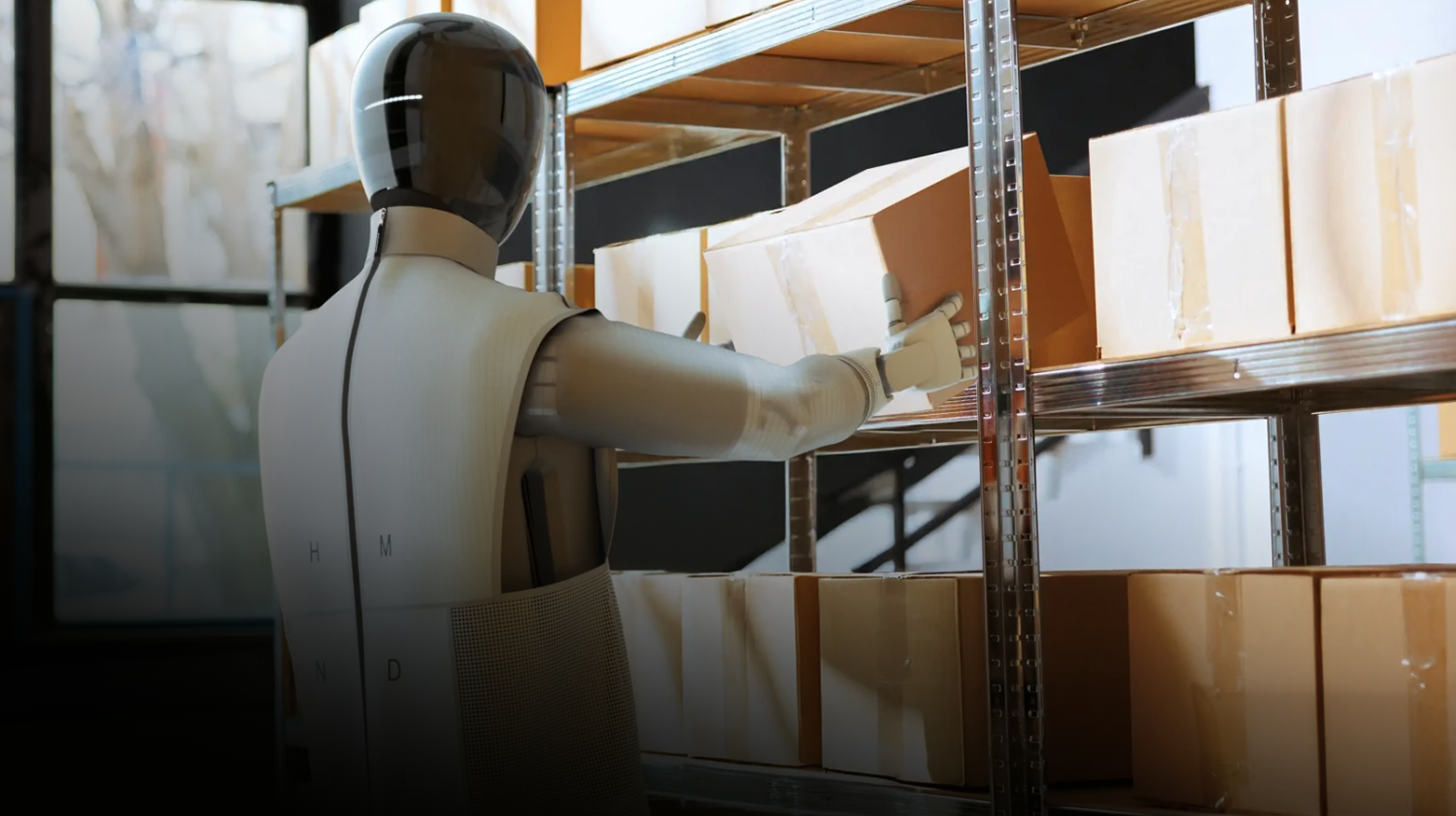
Modular humanoid robot HMND 01 from the British startup HUMANOID (SKL Robotics LTD) – Image: HUMANOID / SKL Robotics LTD
The HMND 01 – Intelligent robotics meets flexible automation
Humanoid robotics in industrial automation: A comprehensive analysis of the HMND 01 and its societal impact
The introduction of the HMND 01 humanoid robot by the British startup Humanoid marks a significant advancement in automation technology. This highly sophisticated, modular robot is specifically designed for industrial applications and offers a combination of artificial intelligence, advanced motion control, and flexible hardware modules. Its aim is to address the growing labor shortage while supporting human-centered work environments.
With a height of 175 cm, a load capacity of 15 kg, and a walking speed of 1.5 m/s, the HMND 01 is capable of productive use in various industries, including logistics, manufacturing, and retail. The company is already planning prototype tests in 2025 and pilot projects for the retail sector.
This article highlights the technical innovations of the HMND 01, its operational capabilities, and the potential social and economic impact of humanoid robotics. Given a projected market volume of US$6.5 billion by 2030, such systems are becoming increasingly important.
Technological architecture and performance
Biomechanical design and mobility
The HMND 01's dimensions are based on human anatomy, allowing it to be integrated into existing work environments without major infrastructural modifications. With 41 degrees of freedom in its joints, the robot achieves a high degree of mobility, enabling it to perform complex manipulation tasks.
Its textile covering serves not only an aesthetic purpose but also provides protection against dust and dirt, while the modular drive system uses a combination of electric motors for the legs and pneumatic gripping mechanisms in the hands. This allows the robot to handle both gross motor lifting tasks and fine motor activities.
Another outstanding feature is the dual battery system with a runtime of four hours. Thanks to the hot-swap mechanism, the batteries can be changed while the robot is running, allowing it to operate with minimal interruptions even in shift work.
locomotion and manipulation skills
The HMND 01 uses a special whole-body control algorithm that enables dynamic stability on uneven surfaces. With the help of inertial sensors and depth cameras, it adapts to different ground conditions in real time. Its walking speed of 1.5 m/s is comparable to that of an average human; however, the robot can maintain constant speeds even under load, making it particularly valuable for material handling tasks.
The modular end effector system allows for quick switching between different tools. Currently, three hand configurations are known:
- A five-part manipulator for precise work,
- A two-finger parallel gripper for gripping and moving boxes,
- A magnetic suction device for handling metallic objects.
Performance tests have shown that the robot can handle pick-and-place tasks with an efficiency of up to 400 cycles per hour, maintaining a remarkable positional accuracy of ±0.1 mm over several hours.
Modular design and adaptability
Hardware configurability
The architecture of the HMND 01 is based on a three-part modular structure:
- Lower body: Optionally available in bipedal or roller-guided versions to adapt to different operating environments,
- Torso: Contains the central power distribution and computing capacity,
- Upper body: Adjustable with various manipulation systems.
This segmentation allows companies to optimize the robot depending on the application. For example, more cost-effective, roller-guided variants can be used for structured environments such as warehouses, while the bipedal version is intended for more demanding work areas.
Software flexibility
The ROS-2-based software stack allows for easy adaptation to different tasks. Operators can program the robot with new workflows via a graphical user interface. Tests have shown that this reduces implementation time by up to 60% compared to conventional industrial robots.
In a pilot project with a bakery chain, the HMND 01 was reprogrammed from palletizing to cleaning tasks within a single day. This was made possible by replacing the grippers with spray nozzles and switching the AI models from object recognition to contamination detection.
Artificial intelligence and sensor technology
Perceptual systems
The HMND 01 combines several sensor technologies:
- RGB-D cameras for high-resolution object recognition,
- LiDAR sensors with a range of 40 m for navigation,
- Tactile sensors with over 1000 pressure points in the hands for precise handling.
This sensor data is aggregated at a frequency of 60 Hz to create a realistic environmental map. Tests in warehouses have shown that the robot can track up to 300 inventory items simultaneously while safely navigating among human employees.
Autonomous decision-making
The integrated planning algorithm breaks down complex tasks into executable steps and adapts to changing conditions. In a retail simulation, the HMND 01 was able to autonomously avoid 83% of unexpected obstacles (e.g., dropped merchandise or blocked aisles). Nevertheless, the system still requires human intervention in approximately 17% of cases, particularly with unstructured problems.
Economic and social impacts
Efficiency improvement in industry
Initial tests in the logistics sector are showing promising results. The use of the HMND 01 in sorting centers has increased efficiency by 24%, particularly through continuous operation during night shifts. This offers companies the opportunity to increase their productivity without relying on additional human labor.
Modular progress: The HMND 01 brings innovation to industry
While humanoid robots like the HMND 01 offer many advantages, they also present societal challenges. The introduction of such systems could lead to a shift in jobs, particularly in simple manual tasks. At the same time, new career paths are opening up in the maintenance and programming of these robots.
Another important issue is employee acceptance. Studies show that employees often perceive humanoid robots as competition. Transparent communication and training programs are therefore essential to ensure successful integration.
Humanoid plans to introduce a wheeled variant by 2025, which will be more cost-effective and better suited to structured environments. At the same time, the bipedal version will be further developed to achieve even greater mobility and autonomy.
The HMND 01 represents a significant step forward in industrial automation. Its modular architecture, AI-powered perception, and flexible customization options make it a promising solution for companies seeking to increase efficiency while collaborating with human workers.
Suitable for:
Our recommendation: 🌍 Limitless reach 🔗 Networked 🌐 Multilingual 💪 Strong sales: 💡 Authentic with strategy 🚀 Innovation meets 🧠 Intuition

From local to global: SMEs conquer the global market with clever strategies - Image: Xpert.Digital
At a time when a company's digital presence determines its success, the challenge is how to make this presence authentic, individual and far-reaching. Xpert.Digital offers an innovative solution that positions itself as an intersection between an industry hub, a blog and a brand ambassador. It combines the advantages of communication and sales channels in a single platform and enables publication in 18 different languages. The cooperation with partner portals and the possibility of publishing articles on Google News and a press distribution list with around 8,000 journalists and readers maximize the reach and visibility of the content. This represents an essential factor in external sales & marketing (SMarketing).
More about it here:
The HMND 01: A modular humanoid robot revolutionizes industrial automation - background analysis
Solving the labor shortage: How the HMND 01 transforms jobs
In the dynamic world of robotics, a London-based startup called HUMANOID (SKL Robotics LTD) has taken a remarkable step forward with the unveiling of its humanoid robot, HMND 01. This robot is not just another innovation in automation; it represents a strategic realignment towards more flexible, humanoid robotic systems specifically designed to address the challenges of modern industry. Standing at an impressive 175 cm tall and boasting a considerable payload capacity of 15 kg, the HMND 01 embodies the latest advancements in humanoid robotics and aims to address the growing labor shortage across various sectors while seamlessly integrating into existing human-centered work environments.
What truly sets the HMND 01 apart is its modular architecture. This approach enables unparalleled adaptability and versatility. Combined with advanced motion control, allowing for a walking speed of 1.5 m/s, and AI-powered manipulation systems, the HMND 01 positions itself as a solution that goes far beyond traditional industrial robots. HUMANOID relies on interchangeable hardware modules and customizable enclosures to tailor the robot for a wide range of applications in logistics, manufacturing, and retail. With plans for alpha prototypes in 2025 and initial pilot programs in the retail sector, the transformative potential of this technology is already evident.
Here we analyze the technological innovations, operational capabilities, and far-reaching socio-economic impact of the HMND 01. We delve into a world where humanoid robots are no longer science fiction, but a realistic and increasingly important component of the global economy. The market for humanoid robots is projected to reach $6.5 billion by 2030, highlighting the immense significance and growth potential of this field. The HMND 01 exemplifies the next generation of robots, which are intended to be not only more efficient, but also more flexible and human-friendly.
Technical architecture and performance characteristics: A look beneath the "skin" of the HMND 01
To fully understand the capabilities of the HMND 01, a detailed look at its technical architecture and performance characteristics is essential. The robot's design is inspired by biomechanical principles and closely follows human anatomy. These anthropomorphic dimensions—175 cm in height and 70 kg in weight—are no accident. They allow the HMND 01 to operate in work environments designed for humans without requiring costly and time-consuming infrastructural modifications. It can pass through standard doorways, climb conventional stairs, and operate in workplaces optimized for human workers.
A key aspect of the HMND 01 is its impressive 41 degrees of freedom (degrees of freedom describe a robot's range of motion at its various joints). This high number enables complex and diverse upper-body manipulations that closely resemble the dexterity and flexibility of a human arm and hand. This is crucial for tasks requiring fine motor skills, precision, and adaptability, as found in many industrial processes. Furthermore, the robot's end effectors—the tools or "hands" at the ends of its arms—are independently configurable. This means companies can integrate specific tools and gripping systems tailored precisely to their particular applications. Whether it's the precise gripping of delicate electronic components, the safe lifting and placement of heavy boxes, or the handling of tools in assembly, the HMND 01 can be adapted for a wide variety of tasks.
Another innovative feature of the HMND 01 is its customizable textile coverings. These are not only for aesthetic reasons or to protect internal components from dust and minor impacts, but also offer the possibility of visual differentiation and personalization. Beneath these coverings lies a sophisticated hybrid drive system. For leg movement, HUMANOID relies on powerful electric motors that enable dynamic and efficient locomotion. In contrast, precise pneumatic grippers are used in the hands. Pneumatics, i.e., the use of compressed air, offers the advantage of fast and sensitive control of gripping force, which is particularly important when handling delicate or irregularly shaped objects. This combination of electric motors for movement and pneumatics for manipulation represents an intelligent compromise between power, speed, and precision.
Kinematic tests analyzing the robot's movement capabilities revealed a maximum horizontal reach of 85 cm from the center of its torso. This reach was intentionally chosen to allow the robot to easily access standardized warehouse racks and production lines. In warehouse environments, it can retrieve or store goods from shelves, while in production lines, it can move workpieces or materials between different stations. The HMND 01 is powered by a dual battery system. This system enables an operating time of up to 4 hours, which is sufficient for many industrial applications. A particularly convenient feature is the hot-swappable battery capability. Batteries can be quickly and easily replaced via a rear compartment without shutting down the robot or interrupting its operation. Although 4 hours of operating time doesn't quite match the traditional 8-hour work cycles in industry, the hot-swap system allows for near-continuous operation through scheduled charging intervals and the use of spare batteries.
Movement and manipulation: Dynamics and precision in action
Locomotion and manipulation are core capabilities of any humanoid robot. The HMND 01 relies on advanced technologies and algorithms to excel in both dynamic and precise tasks. A key component is the "Whole-Body-Control Algorithm" developed by HUMANOID. This algorithm enables the robot to maintain dynamic stability, even on uneven terrain. Industrial environments are often not perfectly level; there may be bumps, small obstacles, or cables on the floor. The HMND 01 is able to adapt to such conditions in real time and remain stable. This is supported by inertial measurement units (IMUs) and depth cameras. IMUs measure the robot's acceleration and rotation rates, helping it to accurately determine its position and orientation in space. Depth cameras provide detailed 3D information about the environment, allowing the robot to recognize the floor and obstacles and plan its movements accordingly.
The current walking speed of the HMND 01 is 1.5 m/s. While this is slightly below the human average of approximately 1.4 m/s, it is still a respectable speed for a humanoid robot of this complexity and payload capacity. More importantly, the robot can maintain this speed consistently, even when carrying a 15 kg payload. This makes it more enduring in material handling tasks than human workers, who can tire and slow down during prolonged carrying. The combination of speed, stability, and endurance makes the HMND 01 a valuable asset in logistics and manufacturing environments.
Another highlight is the modular end effector system. As mentioned earlier, the robot's "hands" can be quickly and easily interchanged to adapt to different tasks. Reportedly, there are at least three basic configurations: a five-finger manipulator, particularly well-suited for gripping and handling small parts, such as those found in electronics manufacturing or small-item warehouses; a two-finger parallel gripper, ideal for handling cartons, boxes, and other larger, cuboid objects, as commonly found in logistics and retail; and a magnetic suction device specifically designed for sheet metal work or handling flat, ferromagnetic materials. This rapid end effector interchangeability allows companies to flexibly deploy the HMND 01 for a wide range of tasks and maximize its productivity.
Independent tests have shown that the HMND 01 achieves speeds in pick-and-place tasks—picking up an object from one location and placing it in another—that are in the 90th percentile of human performance. This means it is faster than 90% of human workers in comparable tests. Specifically, it achieves approximately 400 cycles per hour. Even more impressive, however, is the robot's consistency and precision. It maintains a positional accuracy of ±0.1 mm over an 8-hour period. Human workers often cannot achieve this level of precision and consistency over extended periods due to fatigue and natural variations in performance. This combination of speed, precision, and consistency makes the HMND 01 an attractive option for companies looking to optimize their automation processes and improve product quality.
Modular design and adaptability: Flexibility as the key to success
The modular design of the HMND 01 is a key factor in its versatility and cost-effectiveness. The robot's chassis is divided into three main, interchangeable segments: the lower limbs, responsible for mobility (available in bipedal or roller-guided versions); the torso, housing the power supply and computing components; and the upper limbs, designed for specific manipulation tasks. This segmented architecture offers significant advantages.
One of the most significant advantages is the reduction in total cost of ownership (TCO). Companies can deploy roller-guided versions of the HMND 01 in structured environments, such as factory floors with level surfaces and defined pathways. These roller-guided variants are considerably less expensive to purchase and operate – estimates suggest cost reductions of up to 35% compared to the bipedal version. At the same time, the option remains to upgrade to the full mobility of the bipedal version later, should requirements change or new applications be developed. This flexibility protects companies' investments and enables a phased implementation of robotics.
Furthermore, HUMANOID has established a partnership model that allows third-party developers to create specialized modules for the HMND 01. This opens up a wide range of potential applications and innovations. For example, early adopters in the automotive industry are already testing the integration of a special torque wrench as a module for assembly work. Such specialized modules can further tailor the robot to the specific needs of individual industries and companies, significantly expanding its functionality.
The HMND 01's software is also designed for flexibility and adaptability. The robot is based on the ROS 2 (Robot Operating System 2) software stack, a widely used and established framework in robotics development. ROS 2 offers an open and modular platform that allows developers to create and integrate their own software components. HUMANOID utilizes containerized task modules, enabling operators to configure and customize workflows via a graphical user interface. This graphical interface makes programming and operating the robot accessible even to non-technical personnel.
A pilot project at a bakery chain impressively demonstrates the software flexibility of the HMND 01. During the day, the robot was used for palletizing tasks, i.e., stacking goods onto pallets. At night, it was reprogrammed to perform cleaning tasks. This changeover required only the exchange of the AI vision models (from object recognition to contamination detection) and the end effectors (from grippers to spray nozzles). This quick and easy reprogramming shows how versatile the HMND 01 can be and how companies can maximize their investment.
Another important feature is adaptive motion control. Non-technical staff can teach the robot new movement sequences by physically guiding it and demonstrating the desired movements. The robot learns these movements and can then execute them autonomously. This method, called "teaching by demonstration," reduces the implementation time for new tasks by up to 60% compared to traditional industrial robots. It makes robotics more accessible and easier to use, even for companies without specialized robotics experts.
AI integration and sensor systems: Real-time perception and decision-making
The integration of artificial intelligence (AI) and advanced sensor systems is another cornerstone of the HMND 01. These technologies enable the robot to perceive and understand its environment and make intelligent decisions to perform tasks autonomously and efficiently.
The HMND 01's perception architecture is based on multi-sensor fusion. Various sensor types work together to create a comprehensive and detailed picture of the environment. RGB-D cameras provide color images and depth information, LiDAR (Light Detection and Ranging) enables precise distance measurement and 3D mapping of the environment, and tactile sensors in the robot's hands allow for the tactile detection of objects and the measurement of pressure forces. The data from these sensors is fused in real time into a unified spatial representation, updated at a frequency of 60 Hz. This rapid update rate is crucial for dynamic environments and the robot's ability to react quickly.
In warehouse environments, this multi-sensor fusion has proven particularly effective. The HMND 01 is capable of simultaneously tracking over 300 inventory items and moving collision-free among human workers. Its object recognition software, trained on extensive synthetic datasets of industrial objects, achieves an impressive recognition accuracy of 98.7% in pick-and-place tasks. This surpasses the average recognition accuracy of human workers in controlled studies (95.4%). The AI-powered object recognition enables the robot to reliably identify, locate, and grasp objects, even in complex and cluttered environments.
The HMND 01's decision-making autonomy is achieved through a hierarchical task network (HTN). This network breaks down high-level instructions, such as "restock shelf 3," into detailed, executable subtasks. Simultaneously, it monitors various boundary conditions in real time, such as battery status, the location of obstacles, and task progress. In retail simulations, the HMND 01 successfully navigated around 83% of unexpected obstacles autonomously. These included, for example, fallen objects or blocked aisles. By comparison, leading collaborative robots achieved a success rate of 67% in the same tests. Although the HMND 01 already exhibits a high degree of autonomy, it is not yet completely independent. Human intervention was required in approximately 17% of situations to resolve complex exceptions. This demonstrates that human-robot collaboration continues to play a vital role and that humanoid robots are intended to complement, not completely replace, human workers.
Industrial applications and economic impacts: potentials and perspectives
The HMND 01 has already proven its potential in various industrial applications and demonstrated significant economic impact. In a collaboration with a European logistics provider, implementations of the HMND 01 increased throughput in sorting centers by 24%. This productivity gain was primarily achieved through the robot's continuous use during night shifts, where it supplemented the human day shifts. The robot was able to take over tasks that are often unattractive or tiring for humans on the night shift, thus improving the overall efficiency of the operation.
HUMANOID plans to further expand its product portfolio. A roller-guided version of the HMND 01 (HMND 01-W) is planned for 2025, specifically optimized for structured environments such as production lines and expected to be 30% cheaper. Simultaneously, the bipedal version (HMND 01-B) for uneven terrain is being further developed. The goal is to improve the robot's obstacle-crossing ability so that it can also be used in more challenging environments, such as construction sites or difficult-to-access warehouse areas. The development targets include an obstacle-crossing rate of 85% for barriers up to 20 cm high.
Human-robot collaboration as the key to Industry 4.0
The HMND 01 represents a significant advancement in industrial automation. It combines human adaptability and versatility with the efficiency and cost-effectiveness of robotic systems. Its modular design and AI-powered perception make it a flexible and future-proof solution for a wide range of industries. However, the success of the HMND 01 depends not only on further technological progress. Equally important is addressing the socio-ethical challenges that accompany the increasing prevalence of humanoid robots. Issues of workplace design, employee training for collaboration with robots, and ethical aspects of human-robot interaction must be addressed to ensure the successful and sustainable integration of humanoid robotics into the workplace. The HMND 01 thus exemplifies the path to a future of industry where humans and machines work hand in hand to improve efficiency, productivity, and working conditions alike.
Suitable for:
We are there for you - advice - planning - implementation - project management
☑️ SME support in strategy, consulting, planning and implementation
☑️ Creation or realignment of the digital strategy and digitalization
☑️ Expansion and optimization of international sales processes
☑️ Global & Digital B2B trading platforms
☑️ Pioneer Business Development

Konrad Wolfenstein
I would be happy to serve as your personal advisor.
You can contact me by filling out the contact form below or simply call me on +49 7348 4088 965 (Munich) .
I'm looking forward to our joint project.
Write to me

Xpert.Digital - Konrad Wolfenstein
Xpert.Digital is a hub for industry with a focus on digitalization, mechanical engineering, logistics/intralogistics and photovoltaics.
With our 360° business development solution, we support well-known companies from new business to after sales.
Market intelligence, smarketing, marketing automation, content development, PR, mail campaigns, personalized social media and lead nurturing are part of our digital tools.
You can find out more at: www.xpert.digital - www.xpert.solar - www.xpert.plus
Keep in touch










