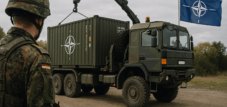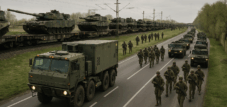
NATO logistics disaster? Rail under pressure: Military mobility as a strategic system issue – Creative image: Xpert.Digital
Dual-use billions: How military buildup could end the rail chaos
Alarming vulnerability: How the German rail network is becoming a strategic threat
Military Schengen has failed? Why tanks are stuck in German bureaucratic traffic jams
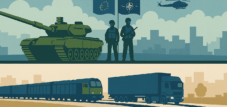
Russia's war of aggression against Ukraine has fundamentally shaken Europe's security architecture and triggered a strategic turning point. But while public debates mostly revolve around defense budgets, troop strengths, and modern weapons systems, a crucial factor for collective defense often remains overlooked: military mobility. In a crisis, hundreds of thousands of NATO soldiers and heavy equipment must be deployed quickly and smoothly to the eastern flank. Rail is the only viable means of transport for this massive logistical undertaking. But when 62-ton battle tanks encounter Germany's chronically overburdened, dilapidated, and underfunded rail network, an operational requirement quickly becomes a massive security risk. A lack of flatcars, absurd bureaucratic hurdles in cross-border traffic, and decades of underinvestment jeopardize the alliance's credible deterrence. This analysis shows why Germany, as Europe's logistical hub, is at the center of defense strategy, what lessons must be learned from the recent NATO large-scale exercises, and why investments in a robust "dual-use" infrastructure are not only militarily essential but also highly profitable from an economic perspective.
Europe's blind spot — When tanks encounter dilapidated tracks
The new security policy reality and its consequences for the railways
Russia's war of aggression against Ukraine has triggered a strategic turning point that extends far beyond the mere debate about defense spending. The full implications of this new security situation for Europe's transport infrastructure have still barely registered in the public discourse: Rail has become the critical backbone of NATO's collective defense—and in its current state, it is largely inadequate to meet this demand. Decades of neglect, commercial optimization at the expense of strategic resilience, and a virtually negligent underestimation of the fundamental logistical requirements for credible deterrence have created a structural gap that will require considerable time, resources, and political will to close.
The scale of the task becomes clear when one considers the Operations Plan Germany (OPLAN DEU), the now publicly known document outlining Germany's military-logistical commitments. In the event of an alliance conflict, up to 800,000 NATO troops and 200,000 vehicles would have to be deployed through Germany and supplied within six months as part of "Host Nation Support." This figure is not an abstract planning parameter. It represents a concrete operational requirement that the infrastructure must support—and against which it will be measured. Roads, railways, bridges, ports, and waterways all play their part, but rail occupies the decisive position among all modes of transport when it comes to moving heavy equipment safely and rapidly on a large scale.
Why rail in particular — and not another mode of transport
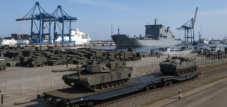
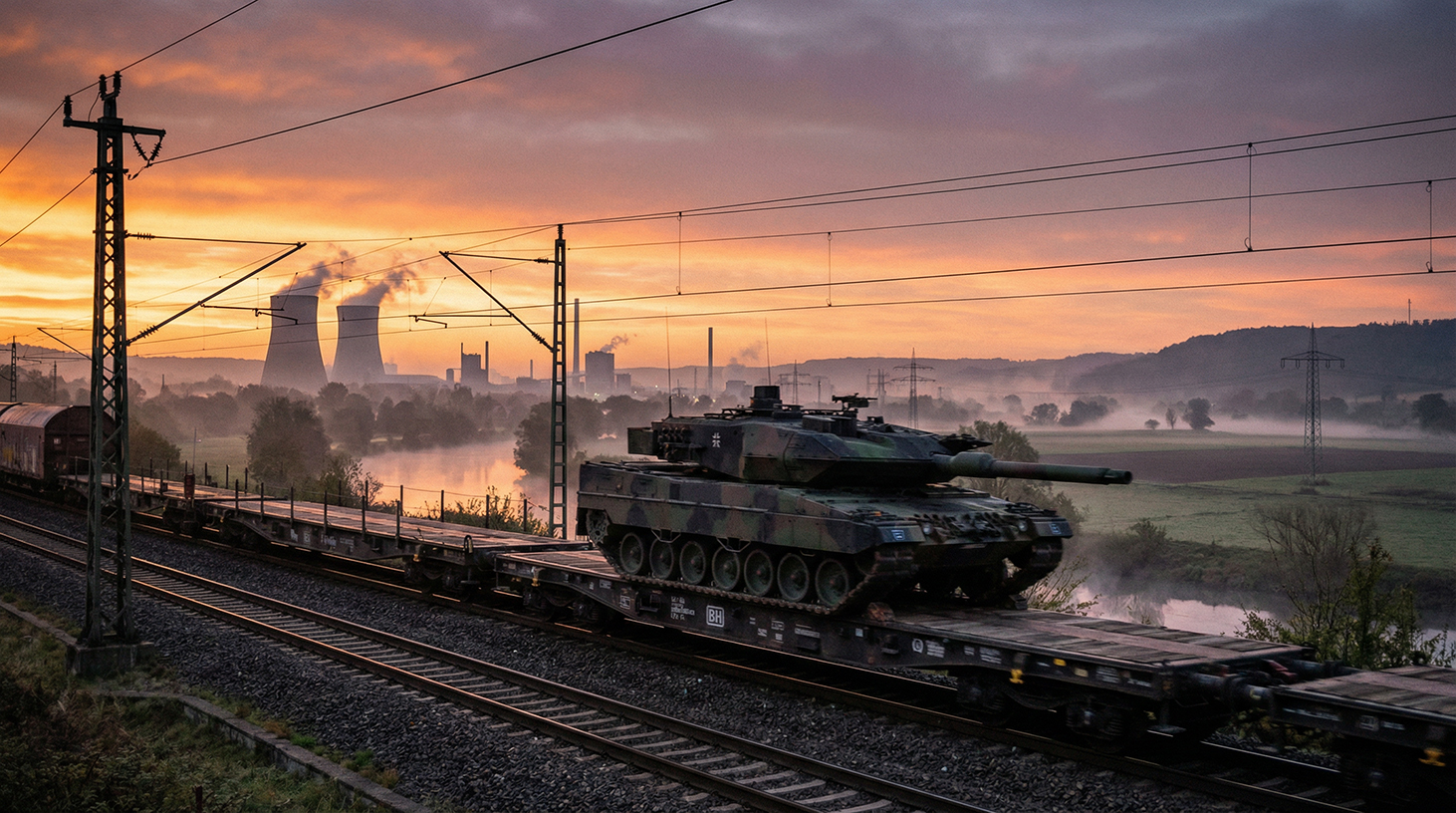
The strategic preference for rail is not an ideological decision, but the result of sober operational logic. Tracked tanks like the Leopard 2, with a combat weight of around 62 tons, are simply unsuitable for long-distance road transport. Asphalt surfaces cause massive damage, the breakdown rate increases considerably, and road defects or dilapidated bridges can cause even well-planned convoys to become stuck for hours—paralyzing not only troop supplies but also all civilian traffic. Rail transport, on the other hand, can handle heavy loads in large quantities, is significantly more fuel-efficient, and relieves the burden on the road network.
The German Armed Forces' Operational Command has clearly assessed the advantages and disadvantages of the various modes of transport: Rail offers medium to large capacities at medium to high speeds and is particularly well-suited from a military perspective for transporting heavy equipment. Sea transport is unsuitable for domestic transport, airlift is limited in capacity and extremely expensive, and inland waterway transport is slow and weather-dependent. Rail thus remains the only viable mass transit mode for the rapid and sufficiently large-scale redevelopment requirements between the Western European deployment areas and NATO's eastern flank.
For the German Armed Forces, the preference for rail transport is declared doctrine. As the Territorial Command has formulated it internally: Rail transport is preferred over road transport because tracked vehicles are poorly suited for long-distance road use, and road transport automatically results in more vehicle breakdowns. This assessment is not new—it reflects operational experience dating back to the Cold War, which had simply been forgotten in recent decades.
Distances, time windows and the actual core problem
The operational requirements for rail logistics within the alliance context are concretely measurable. Distances of 1,500 to 1,800 kilometers must be covered from Western European deployment locations to NATO's eastern flank—for example, from German barracks to the Baltic states. During Exercise Quadriga 2024, Jägerbataillon 292 alone covered 749 kilometers from Donaueschingen to the Oberlausitz training area—and this within an exercise conducted under peacetime conditions, without the escalation dynamics expected in a real-world scenario.
The real problem, however, is not the distance, but the time. The NATO New Force Model (NFM), which has been in effect since the Madrid Summit in 2022, requires Germany to be able to deploy 30,000 troops, as well as 85 ships and combat aircraft, within the first 30 days of an Article 5 invocation, starting in 2025. At the same time, Germany plans to permanently station a brigade of approximately 4,800 troops in Lithuania—a plan whose implementation depends directly on the quality of transport links between Germany and the Baltic states. Any logistical weakness in the Germany-Poland-Lithuania transport corridor translates directly into a reduced deterrent effect.
Time, as the German Armed Forces' Operational Command explicitly emphasized in a public presentation, is the greatest challenge. This statement has direct consequences for all planning parameters: A transport that requires approximately one month's lead time under peacetime conditions is no longer a tool for rapid response in a crisis. Currently, military transports must be registered with DB Cargo about a month in advance—a planning lead time that is operationally worthless in a rapidly deteriorating security environment. While express priority is contractually enshrined in the event of the activation of NATO's Very High Readiness Joint Task Force (VJTF), the structural capacity bottlenecks remain unresolved.
The problem of oversized loads — an underestimated technical challenge
One of the most underestimated operational problems in military rail operations is the overwhelming proportion of oversized shipments. Large military equipment—battle tanks, self-propelled howitzers, infantry fighting vehicles, recovery vehicles, but also specialized technical vehicles and ground-based air defense systems—generally exceeds the standard dimensions for regular rail freight. According to available data, the proportion of such oversized shipments in military transport is around 85 percent.
What does this mean in concrete terms? Under German law, a shipment exceeding the loading gauge is considered an "extraordinary shipment" (aS), requiring special authorization for regular operations. This authorization—referred to in Germany as Bza (Betrieb Zugförderung außergewöhnlich – Operation of Train Operations Extraordinary)—must be applied for separately in each country involved and takes into account factors such as critical track sections, grounding issues when approaching overhead lines, and safety distances to tunnel walls, platform edges, and other infrastructure elements. For international transport across multiple countries, the bureaucratic effort increases accordingly.
For railway undertakings (RUs) that carry out or are to undertake military transport, this results in a highly complex set of requirements. They need not only suitable rolling stock—i.e., flatcars, low loaders where necessary, heavy-duty wagons, and specialized escort wagons—but also the operational know-how for multi-stage permitting logistics, appropriately trained personnel, knowledge of route restrictions in all transit countries, and the technical capability to plan and execute exceptional shipments under time pressure. This combination of requirements is far more demanding than the public discussion about military rail transport usually suggests.
Germany as a logistics hub: Strengths and structural weaknesses
Germany's geographical location in the heart of Europe inevitably makes it a transit country and logistical hub for all conceivable scenarios of collective defense. With 13,000 kilometers of autobahn and a 38,400-kilometer rail network—one of the most extensive in the world—Germany possesses an impressive infrastructure base. In addition, there are waterways such as the Rhine and Danube rivers, as well as the North Sea and Baltic Sea ports, through which transatlantic reinforcements must arrive and be deployed. According to the German Council on Foreign Relations (DGAP) and the German Armed Forces themselves, all of this makes Germany the "center of gravity" for the alliance's military logistics.
However, the strength of the infrastructure base should not obscure its significant shortcomings. DB Netz (now DB InfraGO) conducted an internal assessment of the German rail network and determined that 23 percent of the tracks are in extremely poor condition, as are 48 percent of all signal control centers, 42 percent of level crossings, over 25 percent of all switches, and 22 percent of all overhead lines. These figures are not abstract. They translate into speed restrictions, unplanned line closures, and an unreliability that is already noticeable daily in civilian operations: In 2022, one in three trains was delayed.
In a military context, this dilapidated infrastructure takes on a qualitatively different dimension: If a route on a military corridor is blocked by construction, a bridge closure, or a signal malfunction, there is no readily available alternative route. The German Federal Ministry of Transport already counted around 250 speed restriction zones on the German rail network in the summer of 2023. Since the end of the Cold War, 5,400 kilometers of track—around 16 percent of the entire network—have been decommissioned because they were not commercially viable. These undoubtedly include strategically important sections that now need to be reactivated. In addition, 4,500 of Germany's 40,000 bridges are in inadequate or defective condition and unsuitable for heavy transport—forcing detours of hundreds of kilometers.
The capacity gap in rolling stock
Besides the structural condition of the infrastructure, the availability of suitable rolling stock is a distinct strategic problem. Flatcars for transporting tanks and other heavy vehicles have become dramatically scarce in Germany compared to the Cold War era. The number of available flatcars has fallen from over 1,000 in 1990 to several hundred, as hundreds were decommissioned in the decades following reunification.
The existing framework freight contract between the German Armed Forces and DB Cargo, which originated from an agreement concluded in 2018 and has been continuously updated since then, provides for the provision of 343 flatcars and two daily time slots on specific route sections. The contract value for 2023 was €68.7 million. For 2024, only around €50 million was allocated—a reduction considered strategically difficult to justify given the increased operational requirements of the "New Force Model." The DGAP study from 2024 calls for a minimum reserve capacity of 1,000 flatcars that can be made available at short notice for military transport.
Since the vast majority of equipment and time slots at DB Cargo are reserved for commercial transport, providing additional capacity at short notice in a crisis is extremely difficult. DB Cargo CEO Sigrid Nikutta has now publicly confirmed that DB Cargo plays a central role in military transport—transporting heavy equipment, including tanks and heavy weapons systems, daily. However, even this acknowledgment of the company's role does not change the structural bottleneck: capacities that are fully utilized for commercial purposes under normal operating conditions cannot be released instantly in a crisis.
Hub for Security and Defense - Advice and Information


Hub for Security and Defense - Image: Xpert.Digital
The Security and Defence Hub offers expert advice and up-to-date information to effectively support companies and organizations in strengthening their role in European security and defence policy. Working closely with the SME Connect Defence Working Group, it particularly promotes small and medium-sized enterprises (SMEs) that wish to further develop their innovative capacity and competitiveness in the defence sector. As a central point of contact, the Hub thus creates a crucial bridge between SMEs and European defence strategy.
Related to this:
Dual-use as an opportunity: Combining climate and safety goals with rail investments
Bureaucratic hurdles as a security policy risk
An often overlooked but crucial factor in a crisis is the regulatory framework for military transport. Within Germany, the transport of military goods across state borders—for example, from Thuringia to Bavaria—requires separate permits. Military transports are often only allowed at night, noise protection zones can lead to detours, and "fast" is defined as the ability to transport heavy military equipment from northern to southern Germany within 30 days—a timeframe that would be unacceptable in a real crisis.
At the European level, the situation is even more complex. Military personnel and equipment do not enjoy the same freedom of movement within Europe as people and goods in the Schengen Area. Each country has its own licensing regulations, which are neither standardized nor harmonized. The average processing time for cross-border permits is up to five working days—but NATO requires a maximum of 72 hours for its operational planning. To make matters worse, a separate national operating permit must be obtained in each transit country for international transport involving oversized loads.
A positive step in this direction is the agreement signed in early 2024 between Germany, Poland, and the Netherlands to establish a model corridor for military deployments. This corridor is intended to facilitate the faster transport of military equipment and personnel from West to East by reducing bureaucratic hurdles and making targeted infrastructure investments. Ben Hodges, former commander of the U.S. Army in Europe, described this as a good start, but emphasized that a true "military Schengen" is still a long way off.
The requirements for railway undertakings
The structural changes in the security situation have concrete consequences for the requirements profiles of railway undertakings (RUs) that undertake or wish to be qualified for military transport. The German Armed Forces' Operational Command has defined three key areas of action for rail transport: firstly, the elimination of bottlenecks in the infrastructure and the accelerated advance planning of routes; secondly, the creation of the conditions to ensure that transport capacities are available in sufficient quantities and at short notice; and thirdly, the protection of defense-relevant elements on the rail network from sabotage and other attacks.
For railway undertakings (RUs), this translates in practice into an expanded competence profile compared to traditional freight transport. This includes technical expertise for planning and handling exceptional shipments with oversized load dimensions, knowledge of the specific approval procedures (Bza) at the national and international levels, the availability of suitable rolling stock (especially flatcars, low-loader wagons, escort wagons) on demand, the ability to flexibly allocate track access and plan for time buffers in sensitive transports, and the willingness to cooperate closely with military and civilian authorities.
Another aspect that receives little attention in public discourse is the resilience of communication and control systems. The sabotage of Deutsche Bahn's GSM-R radio network in October 2022, in which two cables were cut at different locations and train traffic in northern Germany came to a standstill for hours, highlighted the vulnerability of critical railway infrastructure. For railway undertakings (RUs) handling military transport, the ability to operate and communicate under degraded conditions—that is, in the event of a failure of central control elements—is therefore an increasingly important requirement.
Investment needs and the dilemma of dual-use infrastructure
The investment backlog in Germany's transport infrastructure is enormous. The Scientific Advisory Board of the Federal Ministry for Economic Affairs and Climate Action estimated the investment required for the most urgent infrastructure projects at €165 billion as early as 2022—double the amount that would have been necessary in 2009. According to the Federal Government, investments of €88 billion will be needed for the rail network alone by 2027, of which €43 billion are already earmarked, leaving a gap of €45 billion.
From a military and security policy perspective, the German Council on Foreign Relations (DGAP) recommends a short-term special fund of at least €30 billion for upgrading military infrastructure corridors. The DGAP's Berlin-based government advisors describe this sum as the absolute minimum for the most urgent measures. The European Commission has initially allocated €807 million through the Connecting Europe Facility (CEF) for military mobility projects, and the CEF transport program for the period 2021–2027 has a total budget of €25.8 billion. However, the funds allocated to military mobility are still insufficient compared to the overall need. According to calculations by the Berliner Zeitung, the total requirement for CEF military mobility alone could amount to as much as €70 billion.
However, this presents a strategically significant opportunity: the concept of dual-use infrastructure. Roads, railways, bridges, and terminals upgraded for military purposes are generally also valuable for civilian freight and passenger transport. A rail corridor capable of carrying a 120-ton load (tank) can, of course, also accommodate heavy civilian cargo. A bridge reinforced for military convoys is also more robust for civilian heavy transport. This principle of dual use is now enshrined in the EU's new TEN-T guidelines, which have been in force since July 2024 and explicitly incorporate military requirements into transport planning.
Rail Baltica: Closing the strategic gap in the north
By far the most important single infrastructure project for military mobility in Europe is Rail Baltica—a new electrified standard-gauge railway through Estonia, Latvia, and Lithuania with a total length of approximately 870 kilometers between Tallinn and the Lithuanian-Polish border. Rail Baltica closes the physical gap in the northern corridor: The existing rail networks in the three Baltic states still use the old Russian broad gauge, which is incompatible with the Western European standard. In practice, this means that military equipment currently has to be transshipped at transition points from standard gauge to broad gauge or transferred to road transport—a massive operational bottleneck.
The military significance of Rail Baltica can hardly be overstated. According to those responsible for the project, in peacetime, the line can replace a 7-kilometer-long military convoy with a single 40-car train. For the planned, permanently stationed German Armed Forces brigade in Lithuania—approximately 4,800 soldiers and their equipment—Rail Baltica is the only viable land supply route that is not dependent on the fragile road connection through the Suwałki Gap. According to current plans, the line should be fully operational by 2030; an earlier completion date was originally planned but proved unrealistic.
Lessons learned from Steadfast Defender 2024
The NATO major exercise "Steadfast Defender 2024," involving around 90,000 soldiers, was the largest such exercise in decades. The German contribution—Quadriga 2024—comprised approximately 12,000 Bundeswehr personnel and nearly 3,000 vehicles, which were deployed in four sub-exercises between February and May 2024. The exercise was explicitly designed to train the mobilization and deployment of land forces in the context of a simulated aggression against NATO's eastern flank.
The findings from Steadfast Defender underscore the operational analyses: Even under training conditions, considerable planning and coordination efforts are evident when using rail for troop movements over long distances. In a real-world scenario, it would be essential that the express priority procedure for military transports, triggered within an activated NATO scenario, not only exists in theory but is operationally implemented and practiced. This includes the ability to activate additional capacity at short notice, free up time slots, and overcome bureaucratic hurdles within hours—not weeks.
Sabotage and resilience — the underestimated vulnerability
The vulnerability of the rail network to sabotage is a strategic risk that has been systematically underestimated in the past. The incident in October 2022, when two GSM-R cables were cut at different locations, paralyzing train traffic in northern Germany for hours, was not an isolated case. In August 2023, Poland registered attacks on its train radio communication system that led to emergency braking. The significance of these events lies not only in the immediate disruptions to service, but also in what they reveal about the strategic vulnerability of a system essential for collective defense.
In addition, there is a specific technical risk resulting from the civilian operational optimization thinking of recent decades: parts of Deutsche Bahn's digital infrastructure contain components from the Chinese state-owned company Huawei, which has been installed in the German rail network since 2015. According to Deutsche Bahn, replacing these components could cost up to €400 million and delay other construction projects by five to six years. For a system that must guarantee secure communication between train drivers, control centers, and monitoring stations in the event of an attack, the dependence on components from a potentially hostile state-owned company is a serious conceptual problem.
Recommendations for action from an economic and strategic perspective
The preceding analysis makes it clear that substantially improving military mobility by rail is not an isolated problem that can be solved with a specific package of measures. It is a systemic challenge that must be addressed simultaneously on several levels.
First, significantly more investment in physical infrastructure is needed, with a clear prioritization of militarily relevant corridors. The planned comprehensive modernization of 40 high-performance rail corridors operated by Deutsche Bahn by 2030 should be prioritized to give precedence to routes usable for military purposes. Routes between North Sea/Baltic Sea ports and the Polish border—as well as from there to the Baltic states—should have absolute priority. The special fund of €30 billion for military corridors recommended by the German Council on Foreign Relations (DGAP) would provide an appropriate starting point.
Secondly, rolling stock capacity must be substantially expanded. The target of 1,000 flat wagons available at short notice as a reserve is, from a strategic perspective, the absolute minimum. Reducing the contract volume with DB Cargo at a time of increased mobilization requirements is unacceptable from a security policy standpoint and should be reversed.
Thirdly, the bureaucratic burden must be substantially reduced—at the national level by abolishing the requirement for permits to cross German state borders, and at the EU level by harmonizing permit procedures and introducing a maximum response time of 72 hours for cross-border transport. The model corridor Germany–Poland–Netherlands is a good first step, but it must be extended to other corridors.
Fourth, NATO should consider allowing expenditure on projects to improve military mobility to count towards the two percent defense spending target. This would create a significant additional incentive for investment, as the civilian and military benefits of dual-use infrastructure are inextricably linked and the public directly benefits from it.
Overall economic assessment: Security return on infrastructure investment
It would be a conceptual error to view the necessary investments in a militarily resilient rail infrastructure solely as a security expenditure. The economic added value of a high-performance, robust rail infrastructure for the national economy is quantifiable and substantial. Every euro invested in rail reduces the external damage caused by outdated networks—in the form of delays, diverted road traffic, increased CO₂ emissions, and economic friction losses in the supply chain. The aforementioned Scientific Advisory Board of the Federal Ministry for Climate Action, Environment, Energy, Mobility, Innovation and Technology (BMK) has estimated the cumulative investment backlog at €165 billion—this backlog is not only a security risk but also a major economic obstacle.
At a time when Germany must simultaneously advance the transformation of its industrial base, pursue climate targets in the transport sector, and fulfill its alliance obligations, dual-use investments in rail infrastructure are the most economically rational form of resource allocation. These are not parallel investments made alongside civilian needs, but rather investments that serve both purposes equally—and should therefore be financed jointly, across defense budgets, infrastructure programs, and EU funding instruments.
The basic strategic message is simple: A NATO eastern flank that is to be credibly defended needs trains that arrive on time — and tracks that can bear the weight of history.
Consulting - Planning - Implementation

Markus Becker
I would be happy to serve as your personal advisor.
Head of Business Development
Chairman SME Connect Defense Working Group
Consulting - Planning - Implementation
Konrad Wolfenstein
I would be happy to serve as your personal advisor.
You can contact me at wolfenstein∂xpert.digital or
Just call me on +49 7348 4088 965 .