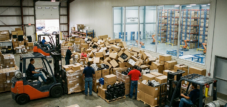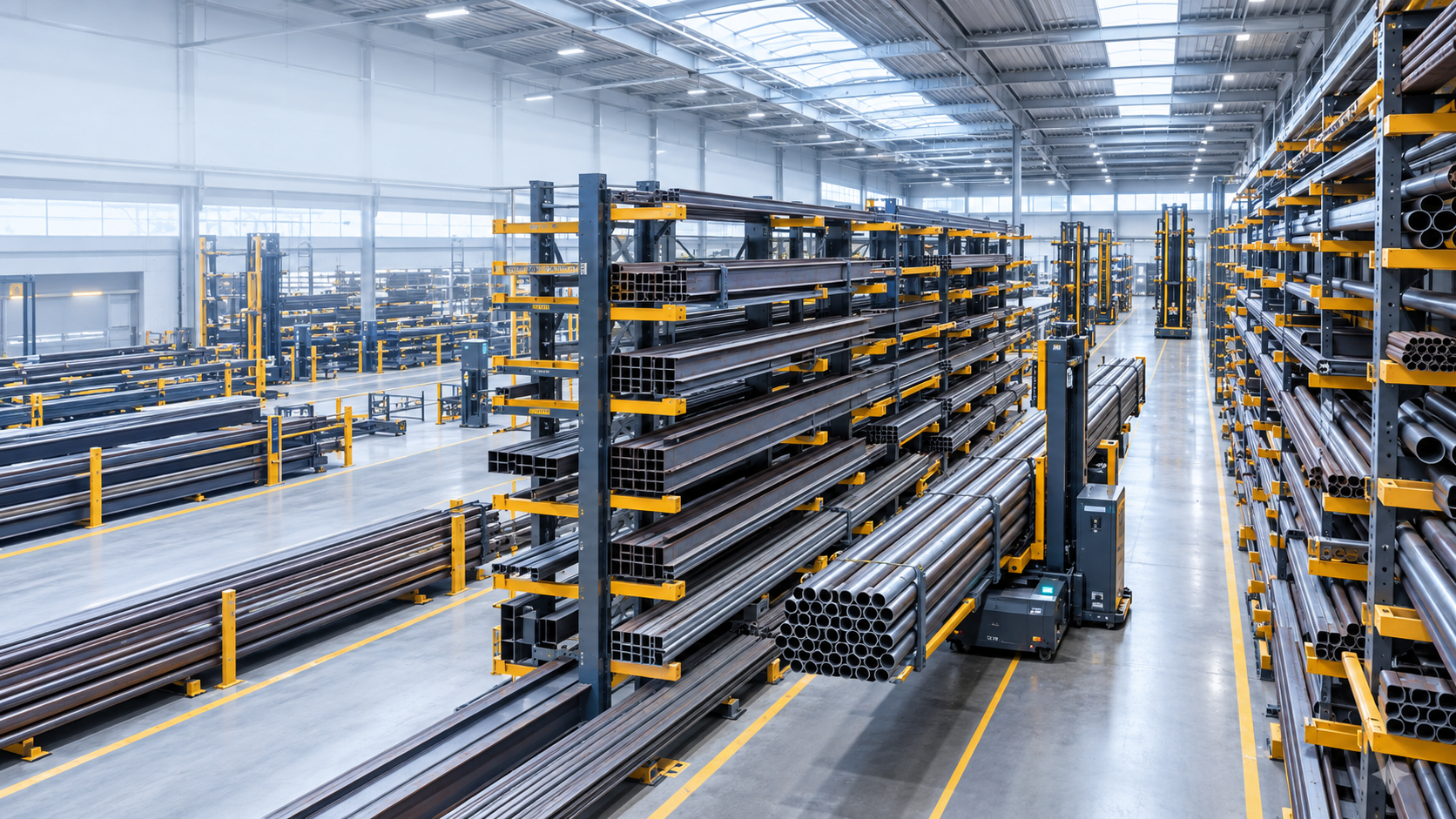
Long goods storage in the USA: An underestimated bottleneck for industry – America's industrial offensive could fail due to the wrong storage – Creative image on the topic, with AI: Xpert.Digital
Strategic Inventory Problems: Why America's Industry Relies on Long Goods Warehouses
The invisible challenge: Long goods storage and its role in the American economy
USA in transition: How long goods warehouses are changing the industrial landscape
The demand for long goods storage in the US has increased significantly in recent years and should not be viewed as an isolated trend. Rather, it is the result of a profound transformation in the American industrial, energy, and logistics landscape. Materials such as steel pipes, profiles, beams, bars, and aluminum extrusions are essential not only for production in factories but also for the construction of infrastructure such as power grids, pipelines, and bridges. Where these extra-long materials cannot be stored efficiently and safely, high indirect costs arise, reflected in delays, unmanageable inventory, and increased risks for workers.
The central thesis of this analysis is that while there is no widespread shortage of storage space in the USA, there is a growing need for suitable storage and conveying technology for heavy, long, and diverse goods. American warehouses are often designed for palletized goods or e-commerce logistics, while long goods place specific demands on storage geometry, load capacities, and safety concepts. This discrepancy has far-reaching implications for industry and necessitates a rethinking of the planning and implementation of storage solutions. This comprehensive analysis illuminates the current trends, challenges, and opportunities in the long goods storage market in the USA and demonstrates why this sector is crucial for the future development of American industry.
Not a lack of space, but a lack of technology: Why America's industrial boom is failing due to standardized warehouses
The need for long-goods storage in the US is growing not as an isolated trend, but as a consequence of a profound shift in the American industrial, energy, and logistics landscape. Steel pipes, profiles, beams, bars, rails, aluminum extrusions, wood products, and other extra-long materials are at the beginning of numerous value chains. They are needed for factories, data centers, power grids, pipelines, bridges, warehouses, transportation infrastructure, machinery, vehicles, and residential buildings. Where these goods cannot be stored safely, compactly, and with quick access, high indirect costs arise: space is blocked, materials are handled multiple times, inventories remain unmanageable, orders are delayed, and employees work in an unnecessarily risky environment.
The central economic thesis is therefore this: While there is no widespread shortage of any kind of storage space in the USA, there is a growing shortage of suitable storage and handling technology for heavy, long, and diverse goods. This distinction is crucial. The American market has a very large inventory of warehouse space, but a significant portion of this was designed for palletized goods, consumer goods, or high-volume e-commerce logistics. Long goods, on the other hand, require different building geometries, higher point and area loads, larger doors, precisely defined traffic routes, special racking systems, side loaders, multi-directional forklifts, cranes, or automated material handling equipment. An empty standard warehouse is therefore not automatically a usable long goods warehouse.
Demand is expected to increase in the coming years, particularly where industrial investment, energy infrastructure, and regional supply chains converge. This includes the southern and southwestern United States, the industrial Midwest, the Gulf Coast, parts of the Atlantic region, and select locations along the Mexican border. At the same time, the market remains cyclical. High interest rates, weak housing demand, volatile steel prices, trade policy interventions, and postponed construction projects can all dampen investment decisions. Therefore, the most compelling outlook is neither a general boom nor an impending collapse, but rather structurally increasing demand with significant variations depending on the material group, region, and level of automation.
A large market without its own statistics
The market for long goods storage systems cannot be quantified with a single, reliable indicator. In official statistics, investments typically appear under racking systems, industrial trucks, cranes, warehouse automation, industrial properties, or general material handling technology. Furthermore, long goods storage systems are used in very different industries. A steel service center, a pipe supplier, a timber wholesaler, an aluminum processor, and a manufacturer of wind turbine components all solve similar geometric storage problems, yet are statistically assigned to different industries.
A sound market analysis must therefore work with demand indicators. These include steel production and shipments, investments in production facilities, pipeline and power grid projects, infrastructure programs, data center construction, activity in non-residential construction, residential construction and renovation, the development of industrial real estate, and the willingness to invest in automation. These indicators show whether more long goods need to be produced, imported, processed, stored, and distributed regionally. However, they do not automatically indicate which storage system is the most economically suitable.
American steel mills delivered approximately 91 million net tons in 2025, about five percent more than the previous year. At the same time, total steel imports declined significantly, while finished steel imports fell even more sharply, covering only about 18 percent of visible consumption. This does not necessarily imply a proportionally growing sales volume for storage technology. However, it does show that more material was moved and stored within a value chain increasingly focused on domestic production. Of particular relevance is the fact that the construction and automotive industries remained among the most important end markets. Furthermore, pipe products, heavy profiles, bar stock, reinforcing steel, and mechanical tubes are crucial for long-goods storage.
Short-term monthly data, on the other hand, often sends conflicting signals. American steel service centers reported slight increases, stagnation, or declines in 2025, depending on the month. Such fluctuations are important for investors because warehouse technology is rarely purchased solely for the current order intake. It is designed for a service life of many years. A company that reacts exclusively to a weak month risks underinvestment; conversely, a company that interprets every long-term growth trend as an immediate boom can tie up too much capital too soon.
Long goods break the logic of pallet storage
Handling long goods is logistically challenging because length, weight, and shape must all be considered simultaneously. Pipes can roll, profiles can become entangled, bundles can sag, and individual rods can break if handled improperly. Different materials and surface finishes also require separate storage or gentle support points. With stainless steel, aluminum, or coated products, scratches and contact corrosion can reduce the value of the goods. With wood, moisture, warping, and quality grades are additional factors.
The economic problem isn't just the storage itself. The crucial factor is the entire process, from goods receipt through quality control, storage, order picking, processing, packaging, and shipping. Long loads require large turning areas when transported with conventional front-loading forklifts, significantly reducing space efficiency. Side-loading forklifts, multi-directional forklifts, narrow-aisle technology, or crane-operated systems can reduce the required traffic areas, but these require suitable flooring, racking, safety concepts, and processes.
Cantilever racking is the standard solution in many applications because the load remains accessible from the front and no front supports obstruct storage. It is suitable for pipes, beams, bars, timber, profiles, and other long or bulky goods. However, even within this system class, there are significant differences. A manually operated outdoor warehouse with forklifts follows a different cost and performance logic than an automated high-bay warehouse with cassettes, lifting mechanisms, and digital inventory management. Key factors include throughput, product range, unit weights, material lengths, desired access, building costs, and the accepted investment risk.
In practice, therefore, the highest possible storage density is not the sole objective. An extremely dense warehouse can be economically disadvantageous if frequently needed items are slow to access or if each retrieval requires multiple transfers. Conversely, a spacious floor storage area may appear inexpensive but lead to long search times, damage, safety risks, and excessive space consumption. The optimal solution combines sufficient density with direct access and a material flow that aligns with the actual order structure.
Reindustrialization creates lasting basic demand
Investments in American manufacturing facilities have roughly doubled in real terms since the end of 2021. By the end of 2025, private construction spending on manufacturing plants reached an annualized total of approximately $220 billion. A large portion of this growth was attributable to semiconductors, electronics, batteries, electrical equipment, and other strategically supported industries. Following this exceptional surge, a slowdown occurred over several months in 2025. Nevertheless, the level remained historically high.
The steel demand for new factory buildings is not the only relevant factor for the long goods market. Every new production facility generates ongoing material flows after its completion. Machine manufacturers require bars, shaft material, and profiles. Plant manufacturers process pipes and beams. Suppliers stock raw materials in various alloys, dimensions, and grades. Maintenance and repair companies need readily available spare parts. The more regionalized supply chains become, the more important local stockpiling becomes.
Reshoring and nearshoring do not automatically increase inventory requirements in every region. If production is simply shifted from a foreign plant to a highly integrated American facility, inventory levels can even decrease through improved planning. In reality, however, the reorganization often initially leads to additional safety stocks. Companies protect themselves against tariff changes, transportation disruptions, political risks, and long lead times. This resilience strategy favors regional service centers and distribution centers where many variations in smaller quantities are readily available.
The connection between the US and Mexico is particularly interesting. Industrial integration along North American supply chains is strengthening corridors in Texas, Arizona, and adjacent domestic markets. Materials are not only distributed from coastal ports inland but also moved north-south between factories, suppliers, and processors. Opportunities for long-goods storage arise at locations that combine rail access, interstate access, sufficient industrial space, and proximity to metal processing or construction industries.
Data centers are changing the logic of steel and energy
Data center construction is one of the most dynamic sectors of the American construction industry. Spending on data centers increased by more than 30 percent in 2025, while overall construction spending declined slightly. Investment levels have multiplied since the beginning of 2021. Data centers are often categorized as office buildings in statistics, although their material, energy, and infrastructure requirements have little in common with those of traditional office buildings.
The direct demand for long goods arises from steel structures, roof trusses, pipelines, cable protection systems, cooling technology, emergency power systems, substations, and grid connections. Even more significant is the indirect effect. Data centers increase electricity demand and trigger investments in transmission and distribution networks, power plants, storage facilities, substations, and, in some cases, new gas infrastructure. This, in turn, increases the demand for pipes, pylons, profiles, line components, and mechanical parts.
The boom is geographically concentrated, however. Northern Virginia remains a significant core market, but network bottlenecks, long connection times, and local resistance are shifting projects to other regions. Texas, the Midwest, parts of the Southeast, and locations with available energy and land are gaining importance. For providers of long-goods storage, therefore, the number of planned data centers is not the only relevant factor. What matters is whether a cluster of construction companies, steel processors, electrical equipment suppliers, pipe suppliers, and infrastructure service providers develops in their vicinity.
Data center construction can also place high demands on adherence to deadlines and documentation. Materials must be bundled according to project requirements, clearly identified, and delivered in a defined sequence. This transforms a long-goods warehouse from a passive inventory buffer into an active component of construction site logistics. Systems with digital location management, batch tracking, and pre-picked cassettes can achieve greater economic benefits than simply increasing floor space.
Energy infrastructure is becoming the strongest driver of pipe pipes
Pipes and tubular products are one of the most important drivers for specialized long-item storage. The American market benefits from natural gas production, LNG exports, pipeline projects, the petrochemical industry, water infrastructure, and power plant modernization. In 2025, approximately 6.3 billion cubic feet per day of additional natural gas pipeline capacity was completed. Significantly larger capacity expansions were planned for 2026 and 2027, a substantial portion of which was already under construction.
Such projects generate demand not only for large pipelines. They also require smaller diameter pipes, valve components, support structures, flanges, pipe brackets, and numerous special grades. This storage demand is distributed among manufacturers, importers, service centers, project warehouses, and construction site depots. Particularly along the Gulf Coast, complex material flows are generated around LNG, refineries, petrochemical plants, and export terminals.
Municipal water and wastewater infrastructure is also relevant. Aging pipe networks create a need for replacements that is less dependent on individual new construction cycles. Federal and state programs provide substantial funding for drinking water and wastewater systems. This market is more fragmented than the construction of large energy pipelines, but can be more stable for regional traders and warehouse operators. The required products differ in material, diameter, coating, and municipal specifications, which increases the number of variants that need to be kept in stock.
The energy transition is expanding the range of applications. Wind power, solar parks, battery storage, and new power lines all require steel profiles, pylons, pipes, beams, and fasteners. At the same time, fluctuating permits, funding conditions, and grid connections are leading to project delays. Suppliers should therefore not rely on a single energy technology. Robust long-material concepts can accommodate different product groups and thus remain usable even when the project mix changes.
The construction industry delivers volume, but not consistent momentum
Non-residential construction is of central importance to the American steel market. Industrial plants, bridges, transportation projects, hospitals, educational institutions, warehouses, and power plants require large quantities of profiles, tubes, and beams. Public infrastructure investments stabilize demand, while private projects are more sensitive to financing costs and economic forecasts. This dichotomy was evident in 2025: Public and strategic projects remained relatively robust, while some private projects experienced delays.
Structural steel construction benefits in the long term from reindustrialization, data centers, and infrastructure. In the short term, however, high material prices and tariffs can dampen order placements. Steel producers and distributors reported stable inquiries and, in some cases, healthy order backlogs in 2025, but also projects that were stuck in the planning phase. This creates a contradictory effect for warehouse operators. Expected projects suggest capacity expansion, but unclear start dates increase the risk that the new facility will initially remain underutilized.
The picture is more subdued in the housing and lumber markets. Around 70 to 80 percent of North American demand for lumber products is directly or indirectly tied to housing construction and renovations. High financing costs and limited affordability weighed on the market in 2025 and 2026. Depending on the forecast, a stronger recovery is not expected until 2027. Nevertheless, the long-term housing shortage remains a significant fundamental factor. Lumber merchants, building material suppliers, and manufacturers of prefabricated components continue to require airtight, weatherproof, and easily accessible storage solutions for long goods.
For suppliers, this means that steel and pipe storage often represent more attractive growth areas in the short term than focusing exclusively on construction timber. However, timber remains a large market with a high demand for replacement and modernization. Older, space-intensive storage areas, in particular, can be made more productive through covered cantilever racking, multi-route technology, and improved inventory management, without requiring a fully automated high-bay warehouse.
Service centers are becoming the crucial sales channel
Metal service centers are the natural hub for long-goods storage needs. They purchase large quantities from mills or importers, stock a wide range of dimensions and grades, process the material, and deliver customer-specific quantities. Their business model relies on availability, speed, product range depth, and value-added services. This combination results in numerous storage locations and frequent access to smaller subsets.
The profitability of a service center depends heavily on how many tons can be processed with a given area and workforce. A poorly organized warehouse ties up capital in hard-to-find leftover lengths, increases crane and forklift movements, and lengthens order processing times. Digitally recording material locations, batches, weights, and leftover pieces allows for more precise inventory utilization. This can reduce write-offs and unnecessary reordering.
A prime example of this new development direction is a large metal center near Chicago that has been operating with 20 autonomous sideloaders since 2024. In very narrow aisles, these vehicles move loads up to 24 feet long and weighing over 7,000 pounds. The system comprises approximately 18,000 storage locations for roughly 6,000 different items. The aisles are only about 58 inches wide. This example demonstrates the potential for increased efficiency when racking, vehicles, transfer stations, and software are planned as a unified system from the outset.
However, such large-scale projects are not the norm. Many American service centers are mid-sized businesses, use existing buildings, and cannot afford to interrupt operations for a complete renovation. For them, modular solutions are more economically attractive: phased implementation of cantilever racking, replacement of conventional forklifts with multi-directional vehicles, digital warehouse management, defined transfer zones, and subsequent partial automation. Therefore, the largest market is likely to consist not only of spectacular new buildings, but also of hundreds of modernizations with limited investment.
LTW Intralogistics Solutions

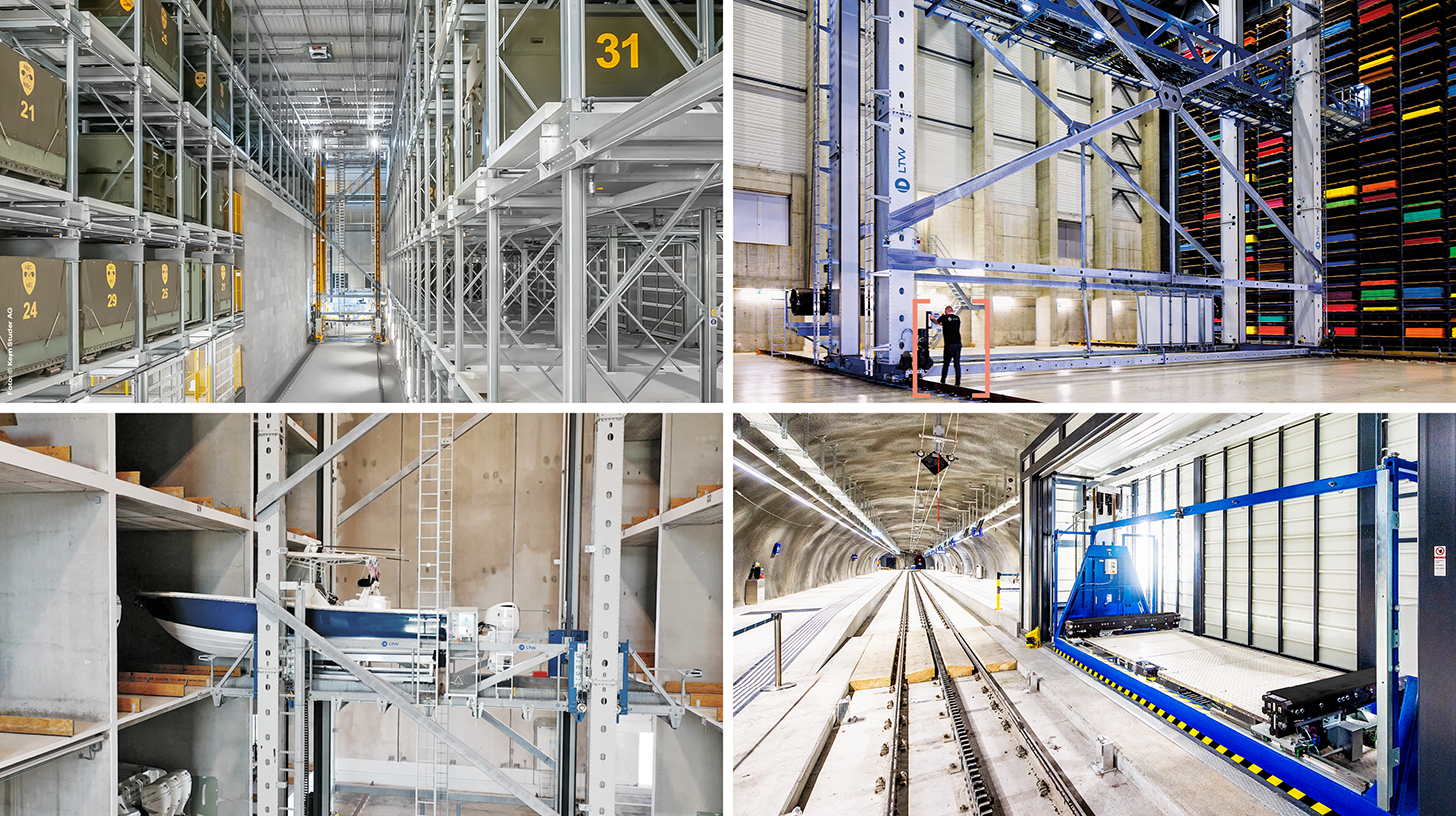
LTW Intralogistics – Engineers of Flow - Image: LTW Intralogistics GmbH
LTW offers its customers not individual components, but integrated complete solutions. Consulting, planning, mechanical and electrotechnical components, control and automation technology, as well as software and service – everything is networked and precisely coordinated.
In-house production of key components is particularly advantageous. This allows for optimal control of quality, supply chains, and interfaces.
LTW stands for reliability, transparency, and collaborative partnership. Loyalty and honesty are firmly anchored in the company's philosophy – a handshake still means something here.
Related to this:
Regional differences in the need for long goods storage
The South and Midwest are leading the location competition
Demand is unevenly distributed regionally. Texas and the Gulf Coast combine energy, petrochemicals, LNG, port logistics, construction, and a rapidly growing population. Houston is particularly relevant for pipe products and energy services. Dallas-Fort Worth offers a large logistics market, industrial development, and good transportation connections. San Antonio and other locations along the north-south corridors benefit from their interconnectedness with Mexico.
The Midwest remains the industrial heart of many metal value chains. Illinois, Indiana, Ohio, Michigan, Wisconsin, and Pennsylvania boast steel production, metal processing, mechanical engineering, automotive manufacturing, and dense rail and road networks. The need to replace older warehouse equipment is particularly significant there. Many locations have strong customer relationships and experienced employees, but operate in buildings whose layouts were not designed for automated or high-density long-goods logistics.
In the Southeast, demand is driven by automotive plants, battery projects, aviation, ports, and population growth. Georgia, Tennessee, Alabama, North Carolina, and South Carolina are gaining importance as manufacturing locations. The advantage of this region lies in the relatively available land and investment-friendly locations. The disadvantage can be a less dense supplier base for highly specialized maintenance and system integration, meaning service concepts need to be clarified early on.
Arizona, Nevada, and other southwestern markets benefit from semiconductor and electronics investments but face particular challenges regarding water, energy, heat, and long delivery distances. On the West Coast, ports and large consumer markets remain important, but land costs, permits, and construction costs hinder new warehouse projects. There, particularly space-efficient systems can create significant value, provided the additional capital requirement is justified by high land prices.
High vacancy rates do not solve the long goods problem
The American industrial real estate market showed increased vacancy rates in 2025. Depending on the survey, the national rate at the end of the year was approximately between 7.1 and 7.6 percent. Large logistics facilities were more severely affected; rates for big-box properties approached ten percent. At the same time, smaller industrial spaces remained significantly scarcer, with rates around five percent. The figures suggest a tenant's market in parts of the segment, but not an oversupply at every suitable location.
The current market situation presents opportunities for users of long goods. Landlords are more willing to negotiate renovations, extended rent-free periods, or investment subsidies. Companies can choose newer buildings with improved flooring, doors, lighting, and fire protection systems. However, load-bearing capacity, column grid, ceiling height, exterior areas, and traffic routes must be carefully examined. A warehouse with low rent can become expensive if extensive reinforcements or unproductive layout compromises are required.
The trend toward so-called "flight to quality" is particularly relevant. Modern buildings are attracting tenants, while older properties are experiencing vacancies. For standard logistics, quality usually means high ceilings, numerous loading bays, and good highway access. For long goods, additional criteria come into play: side loading and unloading, sufficient depth, safe crane tracks, ample maneuvering areas, and the ability to securely anchor racking. Real estate developers who consider these requirements can differentiate themselves from interchangeable, standard warehouses.
The decline in new construction activity is likely to lead to renewed shortages in the medium term. Completions fell significantly in 2025, and many developers scaled back speculative projects. At the same time, demand picked up again in the second half of the year. If production and infrastructure investments continue, the currently favorable negotiating position for users in certain markets could quickly disappear. Therefore, for long-term projects, not only current rents but also the strategic securing of suitable sites is crucial.
Labor shortages make automation economically viable
The labor shortage remains one of the strongest drivers for warehouse automation. In a large industry survey, 83 percent of production and supply chain professionals and managers cited the lack of skilled workers as a challenge. More than half increased their investments in supply chain technology and innovation. A significant proportion planned expenditures of more than one million US dollars, while almost one-fifth anticipated investments exceeding ten million US dollars.
The pressure to automate is particularly high when handling long goods because the work is demanding and safety-critical. Drivers must move long loads precisely, accurately judge distances, and avoid collisions with racks, buildings, or other vehicles. Experienced crane and forklift operators are not readily available at every location. Automated vehicles can take over repeatable storage and retrieval processes, while employees handle quality control, exceptions, and customer-related tasks.
Automation, however, is not an end in itself. It is particularly worthwhile with sufficiently high and predictable throughput, recurring load carriers, standardized transfer points, and reliable master data. A company with highly irregular loads, widely fluctuating dimensions, and numerous unplanned rush orders can be more productive with flexible manual techniques. Often, a hybrid model is the best approach: automated transport between defined zones, manual processing of complex orders, and digital control of the overall flow.
Software quality becomes the bottleneck. An automated vehicle can only retrieve the correct item if the storage location, dimensions, weight, batch number, and release status are correctly recorded. Incorrect master data not only leads to search times but can also create safety risks. Investments in sensors, labeling, warehouse management systems, and interfaces to the ERP system are therefore just as important as the racking and vehicles themselves.
Security is evolving from a cost factor to an investment argument
American workplace safety regulations require that stored materials be secured against slipping, falling, spreading, or collapsing. Pipes, rods, structural steel, and other cylindrical or long goods must be placed in appropriate racks or stacked and blocked so that they cannot tip over or roll apart. Traffic routes and escape routes must remain clear, load-bearing capacities must not be exceeded, and storage areas must be regularly inspected.
For operators, safety is not just a matter of regulatory compliance. Collisions, falling loads, and damaged racking can injure employees, destroy materials, and disrupt operations. With long loads, the potential danger zone is larger than with a compact pallet. Therefore, traffic routes, picking zones, personnel areas, and transfer stations must be clearly separated.
A professional system includes load specifications, impact protection, regular inspections, documented repairs, and trained personnel. Modifications to shelving must not be improvised, as additional drilling, repositioned arms, or untested components can alter the load-bearing capacity. Fire protection and sprinkler spacing must also be considered. Especially with densely stored goods, subsequent adjustments can be costly if fire protection planning was not integrated from the outset.
Safety simultaneously improves efficiency. Fewer damages reduce insurance and repair costs, clear pathways minimize disruptions, and more ergonomic processes facilitate recruitment. Companies should therefore not only calculate the benefits in terms of saved square meters or working hours. Prevented accidents, reduced material losses, and increased operational availability are real components of the return on investment.
The return on investment arises across the entire material flow
The economic efficiency of a long goods warehouse cannot be measured solely by the price per storage space. What matters is the change in total costs per ton, order, or item delivered. This includes space costs, personnel, energy, maintenance, financing, insurance, material damage, search times, inventory discrepancies, and production downtime. A more expensive system can be more cost-effective if it increases throughput and simultaneously reduces several hidden costs.
The greatest leverage often lies in space utilization. Replacing wide forklift aisles with narrow-aisle or multi-way technology allows for more material to be stored on the same footprint. Alternatively, a planned warehouse expansion can be avoided or postponed. This effect is particularly valuable in regions with high land and construction costs. In more affordable rural markets, however, simple, robust outdoor storage may remain more economical.
The second lever is productivity. Shorter travel distances, direct access, and system-driven orders reduce the time per movement. When a company processes more orders with the same number of employees, it generates lasting benefits. Average throughput shouldn't be the only factor considered. Many customers evaluate suppliers based on their ability to reliably fulfill urgent, short-notice orders. A warehouse that better manages peak periods can secure revenue and enable higher service quality.
The third lever is tied-up capital. Transparent inventory levels reduce safety margins, duplicate orders, and unsaleable residual quantities. Especially with high-quality alloys or large pipe dimensions, even a few avoided stockouts can free up significant sums. Digital inventory management also increases the ability to sell leftover lengths or incorporate them into new orders.
A sound investment calculation should include several scenarios. The baseline scenario assumes realistic volumes, moderate wage increases, and normal capacity utilization. A stress scenario considers project delays, weaker sales, and higher financing costs. A growth scenario examines whether the system can handle additional volumes without further modifications. Ramp-up is particularly important: An automated warehouse rarely achieves its full potential on the first day of operation. Training, data cleansing, and process stabilization take time.
Not every system needs full automation
The appropriate system choice depends on the business model. Floor storage and simple outdoor storage areas are low-capital and flexible, but consume a lot of space and make direct access difficult. Conventional cantilever racks improve organization and safety, but remain dependent on forklifts and operators. Multi-directional forklifts allow for narrower aisles without requiring complete system automation. This combination is a sensible starting point for many medium-sized businesses.
Crane-operated systems make good use of the hall's height and can safely move heavy loads. They are particularly suitable when material is already being transferred to sawing or processing equipment. Cassette storage systems separate individual material types and enable a high assortment density. Fully automated high-bay warehouses offer maximum density, traceability, and reproducible processes, but require standardized load carriers and high technical availability.
Outdoor storage remains important. Hot-dip galvanized racking, covered areas, and robust vehicles can be a cost-effective solution for weather-resistant products. However, corrosion, drainage, snow, wind, lighting, and soil quality must be considered. In southern states, heat and heavy rain are more significant factors; in the north, frost, snow, and road salt are key considerations.
The best solution is often zoning. Fast-moving items are located close to processing and shipping, while less frequently needed dimensions are placed in denser or more distant areas. High-quality and delicate materials are stored safely indoors, while robust products are stored outdoors. Automation focuses on repeatable movements, while special loads are handled flexibly. This allows a significant portion of the benefits to be achieved without subjecting the entire operation to a single technical concept.
Suppliers need to sell more than just shelves
The American market offers opportunities for manufacturers of racking, automated storage systems, side-loading and multi-directional forklifts, cranes, software, and safety equipment. However, competition is not solely determined by product features. Customers expect planning, permitting support, assembly, commissioning, training, maintenance, and rapid spare parts supply. For automated systems, the ability to integrate vehicles, controls, and enterprise software is also crucial.
For European suppliers, the growing demand can be attractive, but market entry is challenging. American standards, local building codes, seismic requirements, fire safety, liability issues, and union or regional installation regulations must all be considered. A technically excellent system loses credibility if service personnel and spare parts are only available after long waiting times.
Local partnerships are therefore often more sensible than a purely export-oriented approach. System integrators, racking manufacturers, material handling equipment dealers, and construction companies have customer access and regional experience. The foreign supplier can contribute specialized technology, software, or engineering. In the long term, local assembly or manufacturing can shorten delivery times and reduce trade policy risks.
Standardized yet modularly adaptable solutions are particularly promising. American customers often prefer clear performance and price options to lengthy custom designs. At the same time, loads, lengths, and processes vary so much that a completely rigid product is insufficient. Successful providers combine recurring modules with robust project planning and transparent assumptions regarding load-bearing capacity, performance, and expandability.
Tariffs both encourage and hinder warehouse investment
American trade policy works in both directions. Higher tariffs on steel and aluminum strengthen domestic producers and alter supply chains. Increased local production and larger safety stocks can increase the need for storage capacity. At the same time, the costs of racking, warehouses, vehicles, and other capital goods, which themselves contain a high proportion of metal, rise. Construction projects can also be postponed if budgets are strained by more expensive materials.
This contradictory effect explains why increased inquiries don't always immediately translate into orders. Companies see a long-term need but wait for clearer pricing, financing terms, and project timelines. Suppliers should therefore work with phased approaches. A first phase can improve security and organization, a second can increase space utilization, and a third can introduce automation. This reduces the risk of a single, large-scale decision.
Exchange rates and supply chain risks are also relevant. Imported technology can become more expensive at unfavorable exchange rates, while locally manufactured components may offer less technical specialization. A sound procurement strategy therefore separates critical core technology from interchangeable components. Control systems, sensors, or specialized vehicles can be sourced internationally, while steel construction, assembly, and standard parts are produced locally.
Political uncertainty will not disappear. Investments should therefore remain economically viable even if individual funding programs are changed or certain projects are delayed. Systems that can serve multiple material types and customer segments are more resilient than highly specialized plants whose utilization depends on a single market.
The market is growing selectively rather than explosively
Until 2030, there are many indications of increasing structural demand for long goods storage, but not a continuous boom. In the baseline scenario, data centers, power grids, energy infrastructure, municipal renewal, and selected production investments will remain the most important drivers. Demand for modern storage technology is growing faster than the physical volume of all long goods because labor shortages, security requirements, and space costs are triggering further modernization.
In the growth scenario, reindustrialization, housing construction, and network modernization will accelerate from 2027 onward. At that point, higher material volumes will coincide with previously reduced new construction activity in industrial real estate. Suitable sites and qualified personnel will become scarcer, making automated and highly compact systems more attractive. Particularly in Texas, the Southeast, and the industrial Midwest, several waves of demand could occur simultaneously.
In the risk scenario, interest rates remain high, private construction projects continue to be postponed, and housing demand recovers only slowly. Energy prices and trade policies could further burden investments. In this case, large, fully automated new builds would become less common, while cost-effective modernizations, used technology, and modular expansions would gain in importance. Demand would not disappear, but would shift from capacity expansion to productivity and safety projects.
For investors and suppliers, the quality of the target customer selection is therefore more important than a general market forecast. Attractive customers have high inventory values, many product variations, regular handling of long goods, expensive premises, or an acute shortage of personnel. Less attractive are companies with very low turnover rates, cheap outdoor space, and highly fluctuating individual projects. The best market opportunity lies where several economic problems are solved simultaneously.
Warehouse space is being transformed into industrial infrastructure
The American need for long-goods storage is real, but it's manifesting less as a spectacular new industry and more as a modernization wave within existing sectors. Steel service centers, pipe traders, metal fabricators, lumber and building material dealers, and industrial suppliers must adapt their storage to a world where rapid availability, skilled labor shortages, increased security requirements, and digital transparency are becoming increasingly important.
The strongest demand is not expected to stem solely from increased material volume. It arises from the need to handle the same or a moderately growing quantity in a smaller footprint, with fewer manual movements, and with higher delivery reliability. This shifts the economic value from individual shelving units to integrated solutions comprising buildings, warehouse technology, vehicles, software, and processes.
For operators, the strategic challenge is to avoid investing in the most expensive technology too early, but also to avoid clinging to space-intensive and risky processes for too long. Modularity, scalability, and reliable data are more important than maximum automation on paper. For suppliers, the key lies in local service capability, industry-specific engineering, and an investment analysis that captures the entire material flow.
Long-goods warehouses are thus becoming an inconspicuous but critical part of American industrial policy. Factories, data centers, pipelines, and power grids can only be built and operated as quickly as their material supply chains function. Those who view warehouses merely as storage space underestimate their influence. Those who plan them as productive infrastructure can utilize space, capital, and labor more effectively—and therein lies the true market potential of the USA.
Consulting - Planning - Implementation

Konrad Wolfenstein
I would be happy to serve as your personal advisor.
You can contact me at wolfenstein∂xpert.digital or
Just call me on +49 7348 4088 965 .
Your intralogistics experts
Consulting, planning and implementation of complete solutions for high-bay warehouses and automated storage systems - Image: Xpert.Digital
More information here: