GS1 DataMatrix: Logistik-Turbo für das Militär – Weniger Ausfallzeiten dank optimierter Instandhaltungslogistik – Bild: Xpert.Digital
Telemaintenance: Verbesserung, Beschleunigung und Flexibilisierung der Verteidigungslogistik mit der GS1 DataMatrix (Lesezeit: 35 min / Keine Werbung / Keine Paywall)
Smarte Instandhaltung im Militär: GS1 DataMatrix optimiert die Logistik des Militärs
Die moderne Verteidigungslogistik steht vor der Herausforderung, komplexe Waffensysteme in global verteilten und potenziell gefährdeten Einsatzgebieten einsatzbereit zu halten. Telemaintenance (Fernwartung) hat sich als entscheidender Faktor zur Steigerung der Einsatzbereitschaft erwiesen, indem sie die Ferndiagnose und -unterstützung durch Experten ermöglicht. Der GS1 DataMatrix, ein standardisierter 2D-Barcode mit hoher Datenkapazität und Fehlertoleranz, bietet eine robuste Methode zur eindeutigen Identifizierung von Komponenten und zur Verknüpfung mit digitalen Daten. Die Integration des GS1 DataMatrix in Telemaintenance-Prozesse verbessert die Datenqualität signifikant, beschleunigt Diagnose- und Reparaturvorgänge und erhöht die operative Flexibilität der Instandhaltung. Trotz Herausforderungen wie Datensicherheit und Systeminteroperabilität überwiegen die Vorteile durch verbesserte logistische Intelligenz, reduzierte Ausfallzeiten und potenziell geringere Kosten. Dieser Bericht analysiert die Synergien zwischen Telemaintenance und GS1 DataMatrix, beleuchtet Anwendungsbeispiele, Herausforderungen und zukünftige Trends und gibt Empfehlungen für die Implementierung dieser leistungsstarken Kombination in der Verteidigungslogistik.
Passend dazu:

Die strategische Notwendigkeit fortschrittlicher Verteidigungslogistik und Instandhaltung
Die Komplexität moderner militärischer Ausrüstung nimmt stetig zu, während Operationen zunehmend in geografisch weit verteilten und potenziell umkämpften Umgebungen stattfinden. Dies stellt enorme Anforderungen an die Verteidigungslogistik und Instandhaltung. Eine effiziente Logistik und Instandhaltung sind untrennbar mit der Einsatzbereitschaft, der Durchsetzungsfähigkeit („Lethality“) und dem operativen Tempo der Streitkräfte verbunden. Gleichzeitig zwingen schrumpfende Verteidigungsbudgets zu Effizienzsteigerungen in allen Bereichen. Die Fähigkeit, Ausrüstung schnell und zuverlässig zu warten und zu reparieren, oft unter schwierigen Bedingungen, ist ein strategischer Vorteil.
Telemaintenance: Ein Schlüsselfaktor für globale Einsatzfähigkeit und Bereitschaft
Als Antwort auf die logistischen Hürden traditioneller Instandhaltungsmethoden – wie begrenzte Zugänglichkeit zu defektem Gerät, lange Transportwege für Ersatzteile oder die Notwendigkeit hochspezialisierten Personals vor Ort – etabliert sich die Telemaintenance. Sie fungiert als „Combat Multiplier“, der die Unterstützung für vorausschauend eingesetzte Einheiten verbessert und die Einsatzbereitschaft erhöht. Im Kern ermöglicht Telemaintenance die Nutzung von Fachexpertise und Technologie aus der Ferne, um Instandhaltungsaufgaben durchzuführen, ohne dass der Experte physisch anwesend sein muss.
Modernisierung der Wartung: GS1 DataMatrix in der Verteidigungslogistik
Automatische Identifikation und Datenerfassung (AIDC) bzw. Automatic Identification Technology (AIT) sind grundlegende Technologien für die moderne Logistik. Sie ermöglichen die schnelle und fehlerfreie Erfassung von Daten über Objekte im logistischen Prozess. Der GS1 DataMatrix ist ein spezifischer, leistungsfähiger 2D-Barcode-Standard innerhalb dieser Technologiefamilie. Seine Robustheit, hohe Datenkapazität und Kompaktheit haben zu seiner Adaption in anspruchsvollen Sektoren wie Verteidigung, Luft- und Raumfahrt sowie im Gesundheitswesen geführt. GS1-Standards im Allgemeinen schaffen eine „gemeinsame Sprache“ für die Lieferkette, was die Interoperabilität und Effizienz fördert.
Optimierte Verteidigungslogistik: Synergien durch GS1 DataMatrix und Telemaintenance
Ziel dieses Artikels ist es, das synergetische Potenzial der Integration des GS1 DataMatrix-Standards in Telemaintenance-Prozesse innerhalb der Verteidigungslogistik umfassend zu analysieren. Es wird untersucht, wie diese Kombination zur Verbesserung, Beschleunigung und Flexibilisierung der Instandhaltungslogistik beitragen kann. Der Bericht gliedert sich wie folgt: Zunächst wird Telemaintenance im Kontext der Verteidigungslogistik definiert. Anschließend wird der GS1 DataMatrix-Standard detailliert erklärt. Darauf folgt die Analyse der Integration des Codes in Telemaintenance-Prozesse. Die spezifischen Vorteile werden hinsichtlich Verbesserung, Beschleunigung und Flexibilisierung untersucht. Anwendungsbeispiele aus der Verteidigung und verwandten Industrien werden vorgestellt, gefolgt von einer Diskussion potenzieller Herausforderungen. Ein Vergleich mit traditionellen Methoden und ein Ausblick auf zukünftige Trends runden die Analyse ab.
Telemaintenance im Kontext der Verteidigungslogistik
Definition und Funktionsprinzipien
Telemaintenance, auch als Fernwartung oder Ferndiagnose bezeichnet, ist definiert als die Durchführung von Instandhaltungsaufgaben an Ausrüstung aus der Ferne mittels Telekommunikations- und Digitaltechnologien. Es handelt sich primär um ein Kommunikationswerkzeug, das es Technikern ermöglicht, Informationen über Ausrüstung, visuelle Daten (z. B. Live-Bilder), Fehlersuchtechniken auszutauschen und in manchen Fällen sogar Software-Updates remote zu übertragen, um Probleme in Echtzeit zu lösen. Das Kernkonzept besteht darin, Diagnose, Fehlersuche und Reparaturanleitungen durch Experten zu ermöglichen, ohne dass diese physisch vor Ort sein müssen. Man kann es sich als „Fernreparatur für Panzer und Kampfflugzeuge“ vorstellen.
Diese Fähigkeit zur Fernunterstützung ist nicht monolithisch, sondern umfasst ein Spektrum an Möglichkeiten. Es reicht von einfachen telefonischen Konsultationen und dem Austausch von Nachrichten zur Diagnoseunterstützung bis hin zu komplexen, datenintensiven Ferndiagnosen unter Einbeziehung von Echtzeit-Systemdaten, Videoübertragungen und detaillierter, schrittweiser Anleitung bei Reparaturen, möglicherweise sogar unter Nutzung ferngesteuerter Werkzeuge. Die eingesetzten Methoden und Technologien werden dabei an die Komplexität des Problems, die Art der Ausrüstung und die verfügbare Infrastruktur am Einsatzort angepasst. Diese Anpassungsfähigkeit macht Telemaintenance zu einem flexiblen Werkzeug für diverse Instandhaltungsszenarien.
Ermöglichende Technologien und Infrastruktur
Die erfolgreiche Implementierung von Telemaintenance erfordert eine robuste technologische Basis. Dazu gehören insbesondere:
- Hochgeschwindigkeits-Telekommunikationsnetzwerke: Zuverlässige und bandbreitenstarke Verbindungen sind essentiell für die Übertragung von Daten, Sprache und Video in Echtzeit.
- Sichere Datenübertragungsprotokolle: Der Schutz sensibler technischer und operativer Daten ist von höchster Bedeutung. Sichere Telefonie- und Nachrichtenkanäle, wie sie von der US Army genutzt werden, sind Beispiele hierfür. Verschlüsselung und Authentifizierung sind unerlässlich.
- Videokonferenzsysteme: Sie ermöglichen die visuelle Inspektion von Geräten und die direkte Kommunikation zwischen dem Techniker vor Ort und dem Remote-Experten.
- Ferndiagnosewerkzeuge: Software und Hardware, die es ermöglichen, Systemparameter und Fehlercodes aus der Ferne auszulesen und zu analysieren.
- (Optional) Ferngesteuerte Robotik: Für Inspektionen oder Manipulationen in gefährlichen oder unzugänglichen Bereichen.
- Digitale Instandhaltungswerkzeuge: Mobile Endgeräte, spezialisierte Messgeräte und Software, die sowohl vom Personal vor Ort als auch von den Remote-Experten genutzt werden.
Eine nahtlose Integration dieser Telemaintenance-Systeme in bestehende Instandhaltungs-Informationssysteme (Maintenance Information Systems – MIS) oder allgemeine Automatisierte Informationssysteme (AIS) der Streitkräfte ist entscheidend für die Effizienz und die durchgängige Dokumentation.
Operative Szenarien in der Verteidigung
Telemaintenance findet in verschiedenen militärischen Szenarien Anwendung:
- Unterstützung von weit entfernten oder isolierten Einheiten: Besonders wertvoll in ausgedehnten Einsatzgebieten wie Wüstenregionen oder bei Friedenssicherungseinsätzen mit begrenzten Ressourcen und Personal.
- Instandhaltung komplexer Spezialausrüstung: Bei Systemen wie medizinischen Geräten (z. B. Computertomographen, Labor- oder Lungendiagnostikgeräte), für die oft nur wenige Spezialisten verfügbar sind, kann Remote-Expertise entscheidend sein. Oft verfügen nur zentrale Depots oder spezialisierte Einheiten wie die Medical Maintenance Operations Divisions (MMODs) der USAMMA über das nötige Tiefenwissen.
- Reduzierung von Ausfallzeiten kritischer Systeme: Wenn die schnelle Wiederherstellung der Einsatzbereitschaft von Schlüsseltechnologien Priorität hat, kann Telemaintenance den Reparaturprozess erheblich beschleunigen. Ein Beispiel ist ein CT-Scanner, der möglicherweise das einzige verfügbare Gerät in einem großen Radius ist.
- Wissensmultiplikation: Telemaintenance ermöglicht es, das Expertenwissen von erfahrenen Technikern in rückwärtigen Bereichen oder zentralen Depots (Sustainment-Level) direkt an die Techniker im Feld (z. B. 68A Biomedical Equipment Specialists) weiterzugeben und diese bei komplexen Aufgaben anzuleiten.
Der GS1 DataMatrix-Standard erklärt
Technische Spezifikationen und Struktur
Der GS1 DataMatrix ist ein zweidimensionaler (2D) Matrix-Barcode, der als quadratisches oder rechteckiges Symbol aus einzelnen dunklen und hellen Modulen (oft als Punkte oder Quadrate realisiert) gedruckt wird. Seine Struktur besteht aus mehreren Schlüsselelementen:
- Finder Pattern (Suchmuster): Ein markantes „L“-förmiges Muster aus durchgehenden Linien an zwei aneinandergrenzenden Seiten (meist links und unten). Dieses Muster dient dem Lesegerät zur Lokalisierung, Ausrichtung und zur Erkennung der Symbolgröße und möglicher Verzerrungen.
- Timing Pattern (Taktmuster / „Clock Track“): Ein Muster aus abwechselnd dunklen und hellen Modulen an den beiden gegenüberliegenden Rändern des Finder Patterns. Es definiert die Grundstruktur (Rastergröße) des Symbols und hilft ebenfalls bei der Größen- und Verzerrungserkennung.
- Datenbereich: Die Matrix aus dunklen und hellen Modulen innerhalb der Muster, die die eigentliche Information kodieren.
- Fehlerkorrektur (Error Correction Code – ECC): Der GS1 DataMatrix verwendet zwingend den ECC 200-Standard, der auf dem Reed-Solomon-Algorithmus basiert. Dieser ermöglicht eine hohe Fehlertoleranz; das Symbol kann oft selbst dann noch gelesen werden, wenn Teile davon beschädigt oder unleserlich sind (bis zu 20-30% oder sogar 50% Beschädigung werden in Quellen genannt).
- Hohe Datendichte: Er kann eine große Menge an Informationen auf sehr kleiner Fläche speichern – bis zu 2.335 alphanumerische oder 3.116 numerische Zeichen in den größten quadratischen Varianten. Selbst für eine reine Produktidentifikation (GTIN) kann der Platzbedarf unter 5 x 5 mm liegen.
- Quiet Zone (Ruhezone): Ein obligatorischer heller Bereich um das gesamte Symbol, der frei von störenden grafischen Elementen sein muss, um das Lesen nicht zu beeinträchtigen.
Datenkodierung mit GS1 Application Identifiers (AIs)
Ein entscheidendes Merkmal, das den GS1 DataMatrix von einem generischen Data Matrix unterscheidet, ist die Verwendung einer spezifischen Datenstruktur gemäß den GS1-Standards. Dies wird durch das spezielle Funktionszeichen FNC1 signalisiert, das an der ersten Codewortposition im Datenfeld steht. Dieses Zeichen teilt dem Scanner mit, dass die folgenden Daten gemäß der GS1-Syntax strukturiert sind.
Innerhalb dieser Struktur werden GS1 Application Identifier (AIs) verwendet. AIs sind zwei- oder mehrstellige numerische Präfixe, die die Bedeutung, das Format und die (feste oder variable) Länge des unmittelbar folgenden Datenfeldes definieren. Sie ermöglichen die eindeutige Interpretation der kodierten Daten durch jedes System, das die GS1-Standards kennt.
Relevante AIs für die Verteidigungslogistik und Instandhaltung umfassen beispielsweise:
- (01) Global Trade Item Number (GTIN) – Produktidentifikation
- (10) Batch/Lot Number – Chargennummer
- (17) Expiration Date – Verfallsdatum
- (21) Serial Number – Seriennummer
- (00) Serial Shipping Container Code (SSCC) – Identifikation von Logistikeinheiten
- (414) Global Location Number (GLN) – Identifikation von Standorten/Parteien
- (8003) Global Returnable Asset Identifier (GRAI) – Identifikation von wiederverwendbaren Assets (z.B. Container)
- (8004) Global Individual Asset Identifier (GIAI) – Identifikation von individuellen Assets
- (7001) NATO Stock Number (NSN) – Spezifischer AI für die NATO-Versorgungsnummer
- (241) NATO Commercial and Government Entity (NCAGE) Code / Part Number
Mehrere AI-Datenfeld-Paare können in einem einzigen GS1 DataMatrix-Symbol konkateniert (verkettet) werden, um umfassende Informationen zu kodieren. Bei Datenfeldern mit variabler Länge wird das FNC1-Zeichen auch als Trennzeichen verwendet, um das Ende eines Feldes und den Beginn des nächsten AIs zu signalisieren, falls dies nicht durch eine vordefinierte maximale Länge impliziert ist.
Diese Standardisierung ist fundamental. Während ein generischer Data Matrix nur eine Ansammlung von Daten darstellt, die proprietär interpretiert werden muss, liefert der GS1 DataMatrix durch die FNC1-Kennung und die AIs eine klar definierte Struktur. Ein System erkennt beispielsweise, dass nach dem AI (21) immer die Seriennummer folgt und nach (10) die Chargennummer. Dies ermöglicht den nahtlosen Datenaustausch und die Interoperabilität zwischen unterschiedlichen logistischen und technischen Systemen im gesamten Verteidigungsökosystem – von der Herstellung über die Lagerung und den Transport bis hin zur Instandhaltung im Feld und im Depot. Diese systemübergreifende Verständlichkeit ist die Basis für effiziente, skalierbare und datengesteuerte Telemaintenance-Operationen.
Relevanz für Logistik- und Instandhaltungsdaten
Die technischen Eigenschaften des GS1 DataMatrix machen ihn besonders geeignet für die Anforderungen der modernen Verteidigungslogistik und -instandhaltung:
- Umfassende Datenkodierung: Die hohe Datenkapazität erlaubt es, alle relevanten Identifikations- und Attributdaten (Teilenummer, Seriennummer, Charge, Hersteller, Datum etc.) in einem einzigen Symbol zu bündeln.
- Direkte Teilemarkierung (Direct Part Marking – DPM): Aufgrund seiner geringen Größe und der Möglichkeit, ihn mittels Laserätzung oder Nadelprägung direkt aufzubringen, kann der Code auch auf kleinen Einzelkomponenten dauerhaft markiert werden, wo Etiketten unpraktikabel oder nicht haltbar wären.
- Robustheit und Lesbarkeit: Die hohe Fehlertoleranz durch ECC 200 gewährleistet eine zuverlässige Lesbarkeit auch unter rauen Einsatzbedingungen (Verschmutzung, Abrieb, Beschädigung).
- Standardisierung und Interoperabilität: Die Verwendung der GS1-Struktur mit AIs stellt sicher, dass die kodierten Daten von verschiedenen Systemen und Organisationen (z. B. innerhalb des DoD, der NATO, zwischen Herstellern und Streitkräften, potenziell auch zwischen Alliierten) eindeutig und konsistent interpretiert werden können.
Passend dazu:

Integration des GS1 DataMatrix in die Telemaintenance der Verteidigung
Die Rolle von AIDC bei der Verknüpfung von physischen Assets und digitalen Daten
Automatische Identifikationstechnologien (AIDC/AIT) wie Barcodes und RFID bilden die entscheidende Brücke zwischen physischen Objekten (Ausrüstung, Komponenten, Ersatzteilen) und ihren digitalen Repräsentationen oder „digitalen Zwillingen“ in Informationssystemen. Das Scannen des GS1 DataMatrix auf einer Komponente dient als Auslöser und primärer Dateninput für den Telemaintenance-Workflow. Es liefert den eindeutigen Identifikator des Assets und potenziell weitere direkt kodierte Attribute (wie Charge oder Seriennummer).
Prozessintegration: Vom Scannen zur Remote-Aktion
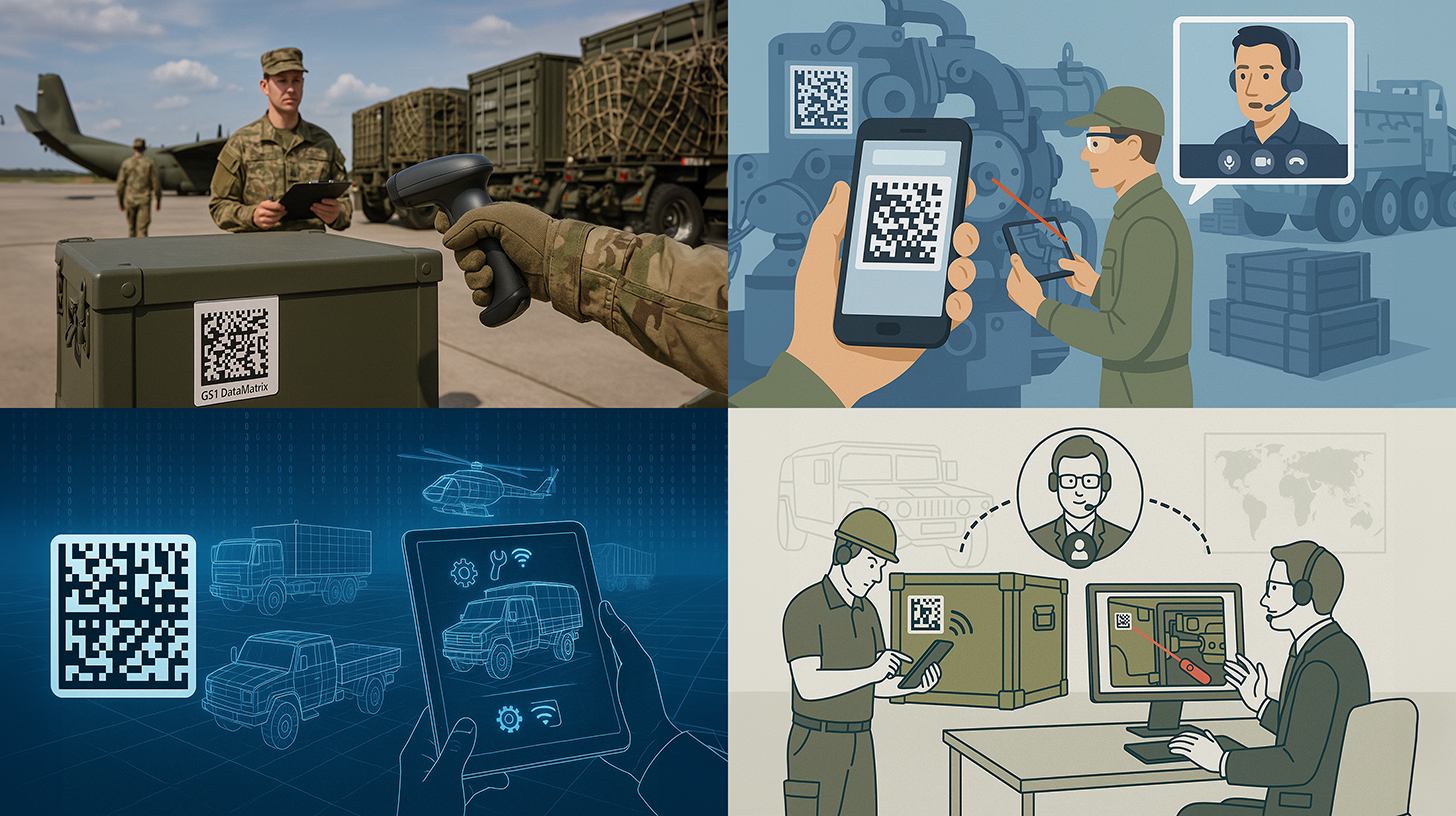
Die Integration des GS1 DataMatrix in den Telemaintenance-Prozess lässt sich idealtypisch in folgenden Schritten beschreiben:
- Schritt 1: Identifikation: Ein Techniker im Feld stellt eine Fehlfunktion an einer Komponente fest. Mittels eines geeigneten 2D-Imagers (Handscanner, robustes Mobilgerät, in Werkzeug integrierter Scanner) scannt er den GS1 DataMatrix-Code, der auf dem Teil angebracht ist (z. B. per Etikett oder DPM).
- Schritt 2: Datenübertragung: Die aus dem Code gelesenen Daten, strukturiert durch GS1 AIs (z. B. GIAI (8004), Seriennummer (21), Charge (10)), werden über ein gesichertes Netzwerk (z. B. verschlüsseltes WLAN, Satellitenverbindung) an die zentrale Telemaintenance-Plattform oder direkt an das System des unterstützenden Experten übertragen.
- Schritt 3: Informationsabruf: Das empfangende System nutzt den eindeutigen Identifikator (z. B. die GIAI oder die Kombination aus Hersteller/Teilenummer und Seriennummer), um automatisch alle relevanten Informationen aus angebundenen Datenbanken abzurufen. Dies umfasst typischerweise die vollständige Wartungshistorie, die aktuelle Konfiguration des Teils, technische Handbücher, Schaltpläne, spezifische Diagnoseprozeduren, ggf. Echtzeit-Sensordaten (falls das Asset vernetzt ist) und bekannte Probleme oder Modifikationen für diese spezielle Charge oder Serie.
- Schritt 4: Ferndiagnose: Der Remote-Experte erhält die gesammelten Informationen übersichtlich dargestellt. Ergänzt durch Live-Videoübertragung, Audio-Kommunikation und ggf. weitere vom Feldtechniker geteilte Daten (z. B. Messergebnisse), analysiert der Experte die Situation und diagnostiziert die Fehlerursache.
- Schritt 5: Geführte Aktion: Basierend auf der Diagnose leitet der Experte den Techniker vor Ort schrittweise durch die notwendigen Prüf- und Reparaturmaßnahmen. Dies kann durch verbale Anweisungen, das Einblenden von Markierungen oder Anleitungen in das Videobild oder sogar durch die Fernsteuerung von Diagnosewerkzeugen geschehen. Benötigte Ersatzteile, die ebenfalls per Scan ihres GS1 DataMatrix identifiziert werden, können direkt angefordert werden.
- Schritt 6: Dokumentation: Alle durchgeführten Aktionen, verwendete Ersatzteile (identifiziert durch ihre eindeutigen IDs) und der abschließende Status des Assets werden automatisch oder teilautomatisch im zentralen Wartungssystem (z. B. DPAS oder einem anderen AIS) unter Bezugnahme auf die eindeutige ID des bearbeiteten Assets revisionssicher dokumentiert.
Diese Prozessintegration macht den GS1 DataMatrix zu mehr als nur einem statischen Etikett. Er wird zu einem aktiven Schlüssel, der einen automatisierten und reichhaltigen Informationsfluss auslöst. Anstatt dass der Techniker vor Ort das Teil umständlich beschreiben oder eine Nummer manuell ablesen und übermitteln muss, weiß das System durch den Scan sofort, um welches exakte Bauteil es sich handelt, welche Historie es hat und welche technischen Daten relevant sind. Diese Informationen stehen dem Remote-Experten unmittelbar zur Verfügung, was die Notwendigkeit manueller Recherchen reduziert und es ihm ermöglicht, sich direkt auf die Problemlösung zu konzentrieren. Dies reduziert die kognitive Belastung auf beiden Seiten, minimiert Fehler durch Falschidentifikation und standardisiert den Beginn jedes Telemaintenance-Vorgangs erheblich.
Datenflussarchitektur und Systemanforderungen
Eine solche Integration stellt spezifische Anforderungen an die IT-Infrastruktur und Systemarchitektur:
- Lesegeräte: Es werden 2D-Barcode-Scanner oder Imager benötigt, die GS1 DataMatrix lesen können und idealerweise für den robusten Feldeinsatz geeignet sind. Mobile Endgeräte (Tablets, Smartphones) mit integrierten Kameras und entsprechender Software können ebenfalls eingesetzt werden.
- Netzwerkkonnektivität: Eine sichere und zuverlässige Netzwerkverbindung (kabelgebunden oder drahtlos, ggf. über Satellit) zwischen dem Einsatzort und dem Unterstützungszentrum ist unabdingbar.
- Datenbanksysteme: Eine zentrale oder föderierte Datenbankinfrastruktur muss vorhanden sein, um Asset-Informationen (Stammdaten, Historie, Konfiguration) zu speichern und über die GS1-Identifikatoren (GIAI, GTIN+Serial, etc.) abrufen zu können. Die Integration mit bestehenden DoD-Logistik- und Instandhaltungssystemen (AIS), wie z.B. über die Defense Logistics Management Standards (DLMS), ist kritisch.
- Telemaintenance-Plattform: Eine Softwareplattform wird benötigt, die Funktionen für Datendarstellung, sichere Echtzeitkommunikation (Video, Audio, Chat, Whiteboarding/Annotation) und potenziell Fernsteuerung von Werkzeugen bietet.
- GS1 Parsing-Fähigkeit: Die Software muss in der Lage sein, die Datenstruktur eines gescannten GS1 DataMatrix korrekt zu interpretieren, d.h. die AIs zu erkennen und die zugehörigen Datenfelder zu extrahieren und zu verarbeiten.
Relevante GS1-Identifikatoren und Application Identifier (AIs) für die Telemaintenance in der Verteidigung
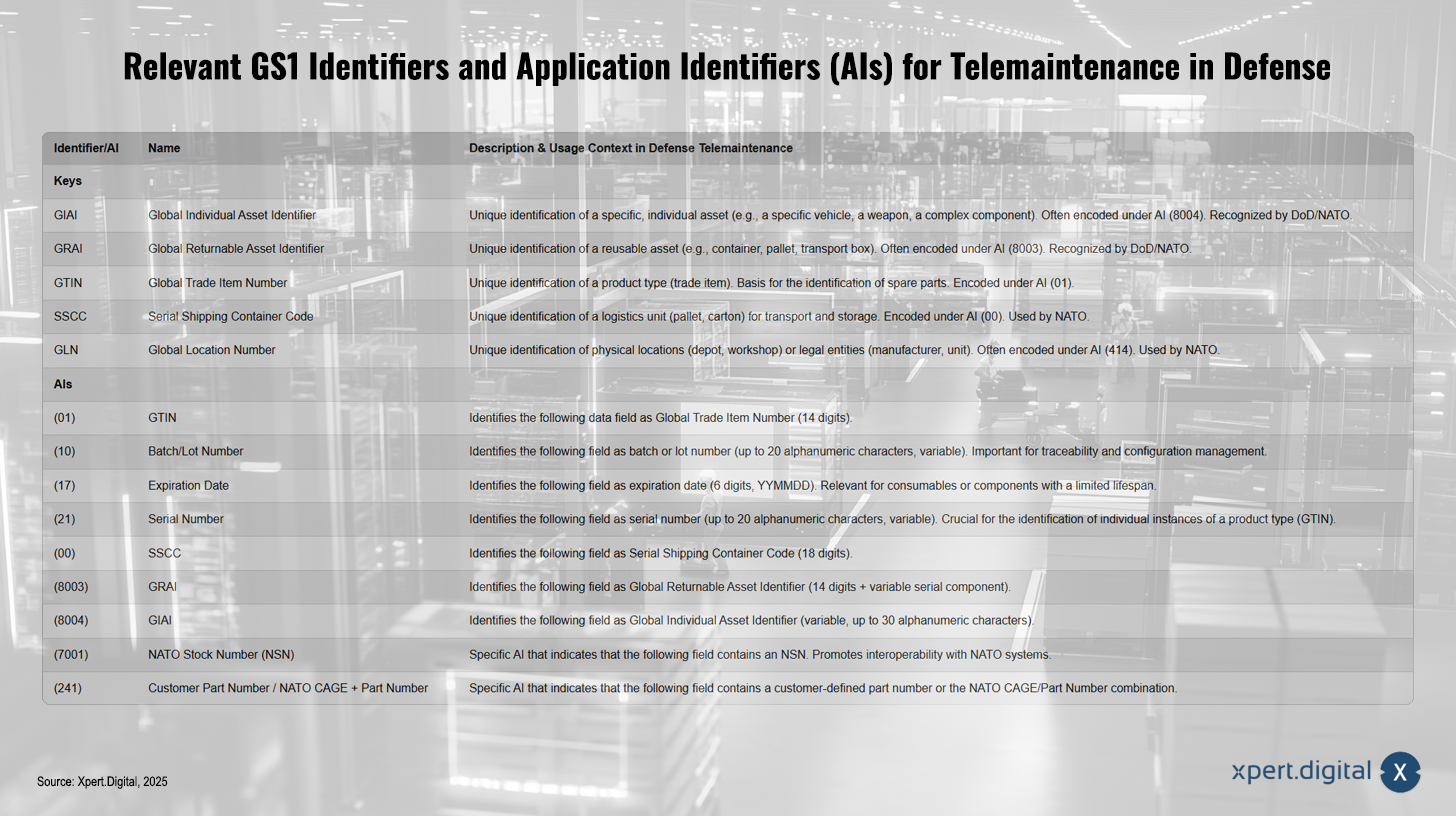
Relevante GS1-Identifikatoren und Application Identifier (AIs) für die Telemaintenance in der Verteidigung – Bild: Xpert.Digital
Für die Telemaintenance in der Verteidigung spielen GS1-Identifikatoren und Application Identifier (AIs) eine zentrale Rolle, um Assets eindeutig zu identifizieren und deren Nachverfolgbarkeit sicherzustellen. Zu den relevanten Schlüsseln gehören der Global Individual Asset Identifier (GIAI), der spezifische, individuelle Assets wie Fahrzeuge, Waffen oder Bauteile eindeutig kennzeichnet. Dieser wird oft unter AI (8004) kodiert und ist sowohl von DoD als auch von NATO anerkannt. Ebenso wichtig ist der Global Returnable Asset Identifier (GRAI), der wiederverwendbare Assets wie Container oder Paletten kennzeichnet und unter AI (8003) kodiert wird. Der Global Trade Item Number (GTIN), kodiert unter AI (01), dient der eindeutigen Identifikation von Produkttypen, insbesondere Ersatzteilen. Für die Logistik ist der Serial Shipping Container Code (SSCC), kodiert unter AI (00), entscheidend, da er Logistikeinheiten wie Paletten oder Kartons kennzeichnet. Der Global Location Number (GLN), kodiert unter AI (414), identifiziert physische Standorte wie Depots oder Werkstätten sowie juristische Entitäten wie Hersteller oder Einheiten.
Bei den Application Identifiern bietet der GTIN unter AI (01) eine einheitliche Kennzeichnung von Handelsartikeln, während die Batch/Lot Number unter AI (10) für Chargen- oder Losnummern genutzt wird, was essenziell für Rückverfolgbarkeit und Konfigurationsmanagement ist. Das Verfallsdatum wird unter AI (17) kodiert und ist spezifisch für Materialien mit begrenzter Lebensdauer relevant. Seriennummern einzelner Instanzen eines Produkttyps werden durch AI (21) ausgezeichnet. Der SSCC unter AI (00) dient der Kennzeichnung von Logistikeinheiten, während der GRAI unter AI (8003) wiederverwendbare Assets und der GIAI unter AI (8004) spezifische Assets identifiziert. Der NATO Stock Number (NSN) ist unter AI (7001) kodiert und fördert die Interoperabilität mit NATO-Systemen. Schließlich unterstützt der AI (241) die Angabe von kundenspezifischen Teilenummern sowie NATO CAGE-Nummern und deren Kombinationen.
🎯📊 Integration einer unabhängigen und Datenquellen-übergreifenden KI-Plattform 🤖🌐 für alle Unternehmensbelange


Integration einer unabhängigen und Datenquellen-übergreifenden KI-Plattform für alle Unternehmensbelange - Bild: Xpert.Digital
KI-Gamechanger: Die flexibelste KI-Plattform - Maßgeschneiderte Lösungen, die Kosten senken, Ihre Entscheidungen verbessern und die Effizienz steigern
Unabhängige KI-Plattform: Integriert alle relevanten Unternehmensdatenquellen
- Diese KI-Plattform interagiert mit allen spezifischen Datenquellen
- Von SAP, Microsoft, Jira, Confluence, Salesforce, Zoom, Dropbox und vielen andere Daten-Management-Systmen
- Schnelle KI-Integration: Maßgeschneiderte KI-Lösungen für Unternehmen in Stunden oder Tagen, anstatt Monaten
- Flexible Infrastruktur: Cloud-basiert oder Hosting im eigenen Rechenzentrum (Deutschland, Europa, freie Standortwahl)
- Höchste Datensicherheit: Einsatz in Anwaltskanzleien ist der sichere Beweis
- Einsatz über die unterschiedlichsten Unternehmensdatenquellen hinweg
- Wahl der eigenen bzw. verschiedenen KI-Modelle (DE,EU,USA,CN)
Herausforderungen, die unsere KI-Plattform löst
- Mangelnde Passgenauigkeit herkömmlicher KI-Lösungen
- Datenschutz und sichere Verwaltung sensibler Daten
- Hohe Kosten und Komplexität individueller KI-Entwicklung
- Mangel an qualifizierten KI-Fachkräften
- Integration von KI in bestehende IT-Systeme
Mehr dazu hier:

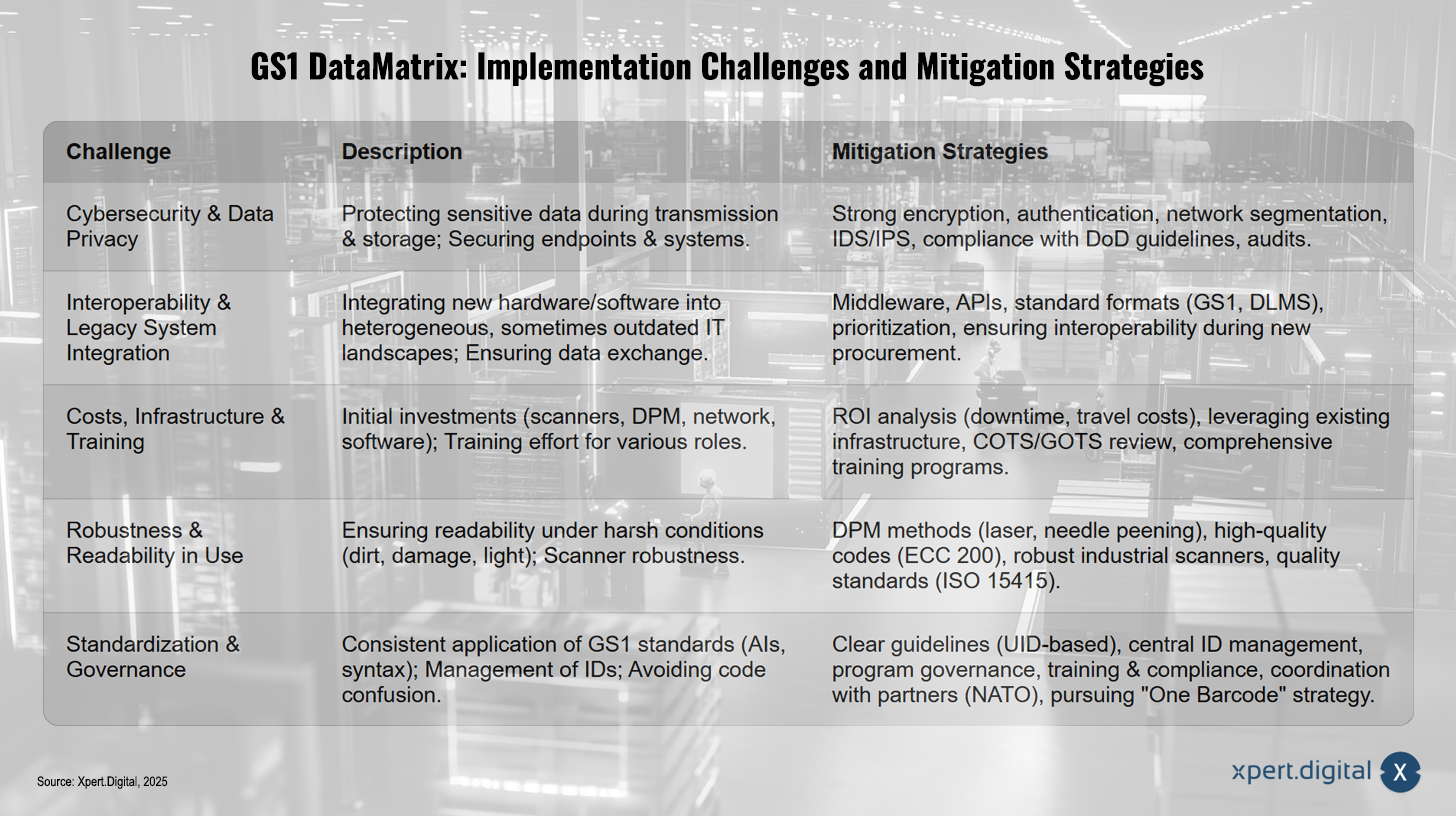
Rückverfolgbarkeit neu gedacht: Vorteile von GS1 DataMatrix in der Instandhaltung – Bild: Xpert.Digital Die Integration von GS1 DataMatrix in Telemaintenance-Prozesse bietet signifikante Vorteile, die sich in den Kategorien Verbesserung, Beschleunigung und Flexibilisierung zusammenfassen lassen. Die Integration des GS1 DataMatrix in Telemaintenance-Prozesse führt zu einer signifikanten Verbesserung: Die Integration des GS1 DataMatrix in Telemaintenance-Prozesse führt zu einer signifikanten Beschleunigung: Die Integration des GS1 DataMatrix in Telemaintenance-Prozesse führt zu einer signifikanten Flexibilisierung: Die Kombination aus standardisierter, eindeutiger Identifikation durch den GS1 DataMatrix und der Fähigkeit zur Fernkommunikation und -unterstützung durch Telemaintenance entkoppelt somit die Instandhaltungsexpertise vom physischen Ort des Bedarfs. Traditionell mussten der Experte, das defekte Teil und die benötigten Werkzeuge am selben Ort zusammenkommen. Telemaintenance hebt die Notwendigkeit der physischen Anwesenheit des Experten auf. Der GS1 DataMatrix stellt sicher, dass der Remote-Experte genau weiß, mit welchem physischen Teil er es zu tun hat, was eine effektive Ferndiagnose und -anleitung erst ermöglicht. Diese Entkopplung schafft eine agilere, reaktionsfähigere und datengesteuerte Instandhaltungsorganisation. Sie ermöglicht Flexibilität in der Dislozierung von Personal und Ressourcen und unterstützt fortschrittliche Instandhaltungskonzepte wie CBM+, indem sie die zuverlässige Verknüpfung von Datenströmen mit spezifischen Assets sicherstellt. Dies kann potenziell den logistischen Fußabdruck für die Instandhaltung reduzieren, da weniger Spezialisten und umfangreiche Ersatzteillager an vorderen Standorten benötigt werden und stattdessen auf zentralisierte Expertise und schnellen Datenzugriff gesetzt wird. Passend dazu: Obwohl umfassende, öffentlich dokumentierte Fallstudien zur spezifischen Kombination von GS1 DataMatrix und Telemaintenance im Verteidigungssektor noch rar sind, belegen zahlreiche Beispiele die erfolgreiche Anwendung der einzelnen Komponenten und verwandter Technologien in der Verteidigung und angrenzenden Industrien. Die breite, oft regulatorisch vorgeschriebene Anwendung des GS1 DataMatrix in diesen hochzuverlässigen und sicherheitskritischen Sektoren liefert eine starke Validierung seiner technischen Eignung für anspruchsvolle Umgebungen. Sie zeigt, dass eine großflächige Implementierung zwar herausfordernd ist, aber machbar und mit signifikanten Vorteilen in Bezug auf Rückverfolgbarkeit, Effizienz und Sicherheit verbunden ist – Vorteile, die direkt auf die Ziele der militärischen Instandhaltung und Telemaintenance übertragbar sind. Verteidigungsorganisationen müssen daher Lösungen nicht neu erfinden, sondern können auf bewährte Ansätze und Technologien aus diesen Branchen zurückgreifen und diese adaptieren, was Implementierungsrisiken und -kosten potenziell reduziert. Trotz der überzeugenden Vorteile ist die Einführung einer GS1 DataMatrix-gestützten Telemaintenance-Lösung im Verteidigungsumfeld mit spezifischen Herausforderungen verbunden, die proaktiv adressiert werden müssen. Herausforderung: Die Übertragung sensibler technischer Daten (Konfigurationen, Schwachstellen, Wartungshistorien) über Netzwerke birgt Risiken. Endpunkte wie Scanner und mobile Geräte im Feld sowie die zentralen Systeme müssen gegen unbefugten Zugriff, Manipulation und Ausspähung geschützt werden. Die Integrität der Wartungsdatenbanken ist kritisch. Minderungsstrategie: Einsatz starker Verschlüsselung für Datenübertragung und -speicherung, robuste Authentifizierungsmechanismen (z. B. Multi-Faktor-Authentifizierung), Netzwerksegmentierung, Einsatz von Intrusion Detection/Prevention Systemen, strikte Einhaltung der geltenden militärischen Cybersicherheitsrichtlinien und -standards, regelmäßige Sicherheitsüberprüfungen und Penetrationstests. Herausforderung: Die Integration neuer AIDC-Hardware (2D-Scanner) und Telemaintenance-Softwareplattformen in die oft heterogene und teilweise veraltete IT-Landschaft des Militärs (diverse AIS, teils noch auf MILS-basierende Systeme, spezifische Wartungsdatenbanken wie DPAS) ist komplex. Die Gewährleistung eines nahtlosen und standardkonformen Datenaustauschs (z. B. über DLMS) zwischen alten und neuen Systemen ist entscheidend. Minderungsstrategie: Nutzung von Middleware, standardisierten Schnittstellen (APIs) und Datenformaten (GS1, DLMS/EDI); Priorisierung der Integration mit Systemen, die bereits moderne Schnittstellen bieten; schrittweise Einführung (phased rollout); Festlegung von Interoperabilitätsanforderungen als Kernbestandteil bei der Beschaffung neuer Systeme; Sicherstellung, dass Systeme die GS1-Datenstrukturen korrekt verarbeiten können. Herausforderung: Die Einführung erfordert initiale Investitionen in Hardware (2D-Scanner, ggf. DPM-Ausrüstung, robuste Endgeräte, Server), Softwarelizenzen, potenzielle Netzwerk-Upgrades (insbesondere für Bandbreite und Zuverlässigkeit im Feld) und die Entwicklung oder Anpassung von Software. Hinzu kommen die Kosten für die Schulung des Personals – Techniker im Feld, Remote-Experten, IT-Administratoren und Logistiker. Minderungsstrategie: Durchführung detaillierter Kosten-Nutzen-Analysen, die den Return on Investment durch reduzierte Ausfallzeiten, vermiedene Reisekosten und erhöhte Effizienz quantifizieren; Nutzung vorhandener Netzwerkinfrastruktur, wo möglich; Entwicklung umfassender, rollenspezifischer Trainingsprogramme; Prüfung von Commercial-off-the-Shelf (COTS) oder Government-off-the-Shelf (GOTS) Lösungen zur Kostenreduktion; ggf. Leasing-Modelle für Hardware. Herausforderung: Die Lesbarkeit der DataMatrix-Codes muss auch unter widrigen Bedingungen im Feld gewährleistet sein (Verschmutzung durch Öl/Staub, mechanische Beschädigung, schlechte Lichtverhältnisse, extreme Temperaturen). Die eingesetzten Scanner müssen entsprechend robust sein. Minderungsstrategie: Einsatz widerstandsfähiger DPM-Verfahren (Laserätzung, Nadelprägung) anstelle von Etiketten für exponierte oder langlebige Teile; Auswahl hochwertiger Materialien und Druck-/Markierverfahren für Codes mit maximaler Fehlertoleranz (ECC 200); Verwendung von industrietauglichen oder militärisch spezifizierten Scannern mit fortschrittlicher Bildverarbeitungstechnologie; Festlegung und Überwachung klarer Qualitätsstandards für die Code-Markierung (z. B. gemäß ISO/IEC 15415). Herausforderung: Die konsistente Anwendung der GS1-Standards (korrekte AIs, Datenformate, Syntax) über verschiedene Teilstreitkräfte, Einheiten, Waffensysteme und potenziell auch zwischen Bündnispartnern hinweg muss sichergestellt werden. Die Verwaltung von GS1-Präfixen und die Vergabe eindeutiger Identifikatoren erfordert Koordination. Die Koexistenz verschiedener Barcodes auf einem Produkt kann zu Verwirrung und Fehlscans führen. Minderungsstrategie: Etablierung klarer, ressortweiter Richtlinien und Implementierungsleitfäden (aufbauend auf bestehenden UID-Mandaten); zentrale oder koordinierte Verwaltung der GS1-Identifikatoren; Etablierung einer starken Programm-Governance-Struktur; Förderung der Standardkonformität durch Schulungen und Audits; enge Abstimmung mit NATO-Partnern zur Harmonisierung; Strategien zur Reduzierung der Anzahl von Barcodes pro Packstück/Bauteil („One Barcode“-Ziel). GS1 DataMatrix: Implementierungsherausforderungen und Minderungsstrategien – Bild: Xpert.Digital Die Implementierung des GS1 DataMatrix bringt verschiedene Herausforderungen mit sich, die sowohl strategische als auch technische Maßnahmen erfordern, um effizient bewältigt zu werden. Im Bereich Cybersicherheit und Datenschutz müssen sensible Daten bei der Übertragung und Speicherung geschützt sowie Endpunkte und Systeme gesichert werden. Strategien wie starke Verschlüsselung, Authentifizierung, Netzwerksegmentierung, IDS/IPS und die Einhaltung von DoD-Richtlinien durch regelmäßige Audits sind essenziell. Die Interoperabilität und Altsystemintegration stellt eine weitere Hürde dar, insbesondere bei der Integration neuer Hard- und Software in heterogene, teils veraltete IT-Landschaften. Middleware, APIs, Standardformate wie GS1 oder DLMS sowie die Priorisierung der Interoperabilität bei Neubeschaffungen helfen, Datenaustausch sicherzustellen. Kosten, Infrastruktur und notwendige Schulungen sind ebenfalls zu berücksichtigen, da initiale Investitionen für Scanner, DPM, Netzwerke und Software sowie Trainingsaufwand für verschiedene Rollen anfallen. Mit ROI-Analysen, der Nutzung bestehender Infrastruktur, einer Prüfung von COTS/GOTS und umfassenden Trainingsprogrammen lassen sich diese Kosten effizienter gestalten. Besonders wichtig ist die Robustheit und Lesbarkeit im Einsatz, so dass Codes unter rauen Bedingungen wie Schmutz, Schäden oder ungünstigem Licht lesbar bleiben. DPM-Verfahren wie Laser oder Nadelprägung, hochwertige und robuste Codes mit Fehlerkorrektur (ECC 200), Industriescanner sowie Qualitätsstandards wie ISO 15415 tragen zur Lösung bei. Um die Standardisierung und Governance sicherzustellen, ist eine konsistente Anwendung von GS1-Standards (z. B. AIs und Syntax) sowie die zentrale Verwaltung von IDs kritisch. Klare Richtlinien, eine zentralisierte ID-Verwaltung, Programm-Governance, Trainingsprogramme und die Einhaltung von Compliance-Vorgaben, abgestimmt mit Partnern wie der NATO, unterstützen dies. Eine umfassende „One Barcode“-Strategie bringt zusätzlich Klarheit und Effizienz. Die erfolgreiche operative Einführung dieser Technologie erfordert somit nicht nur die Beschaffung von Technik, sondern vor allem sorgfältige Planung, signifikante Investitionen und eine starke Führung, um die erheblichen Hürden in den Bereichen Integration, Sicherheit, Kosten und Standardisierung zu überwinden, die im komplexen Verteidigungsumfeld bestehen. Eine ressortübergreifende Zusammenarbeit zwischen Logistik, IT, Cyberabwehr und Finanzplanung sowie ein möglicherweise gestuftes Vorgehen sind wahrscheinlich erfolgsentscheidend.
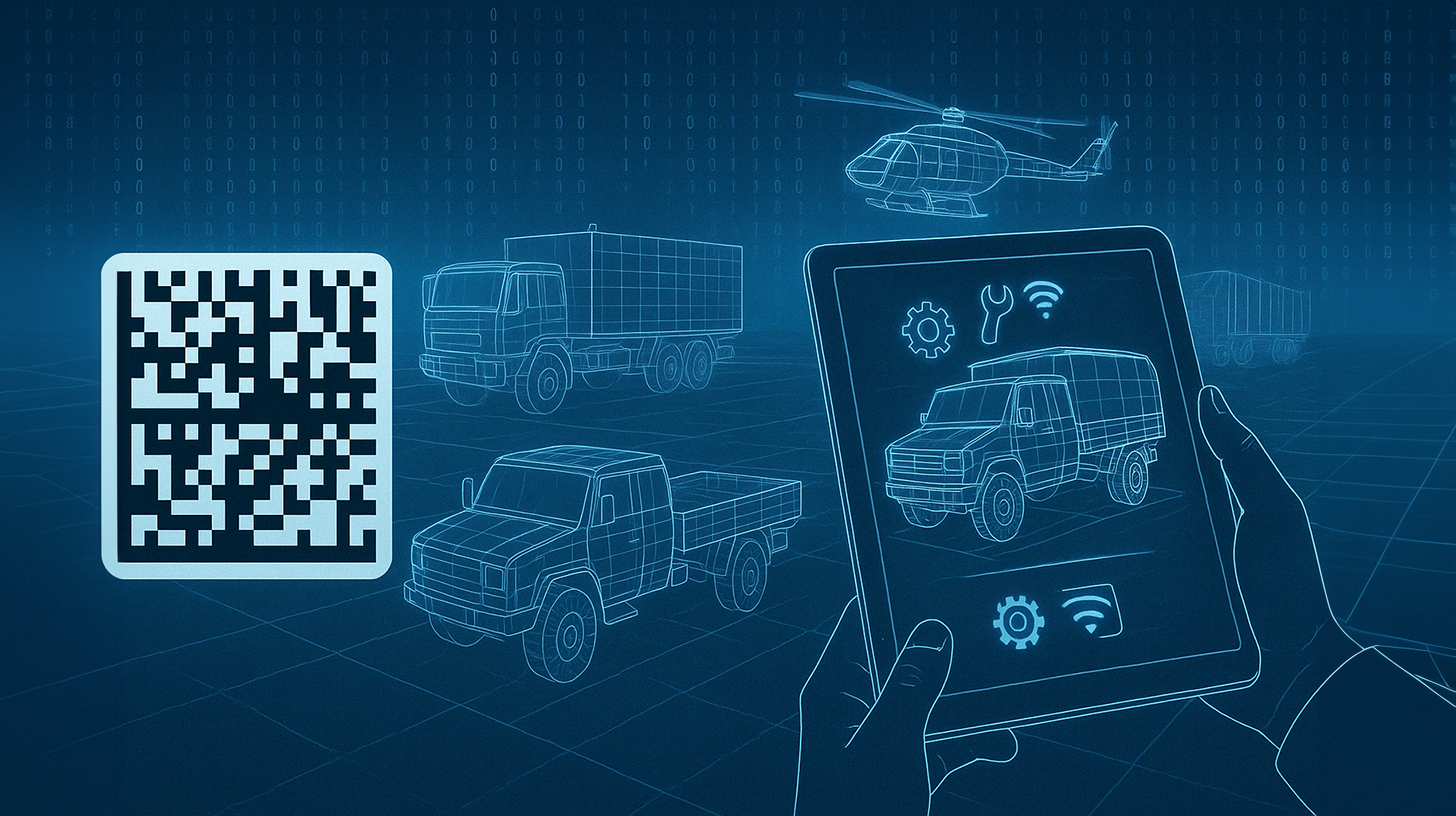
Rückverfolgbarkeit neu gedacht: Vorteile von GS1 DataMatrix in der Instandhaltung
Analyse der Vorteile
Verbesserung (Verbesserung): Datenqualität, Rückverfolgbarkeit und Instandhaltungsintelligenz
Beschleunigung (Beschleunigung): Straffung von Identifikation, Diagnose und Reparatur
Flexibilisierung (Flexibilisierung): Ermöglichung von Fernunterstützung und adaptiver Instandhaltung
Anwendungsbeispiele und Fallstudien
Implementierungen im Verteidigungsbereich
Erkenntnisse aus Luft- und Raumfahrt sowie Gesundheitswesen
Herausforderungen bei der Implementierung und Minderungsstrategien
Cybersicherheit und Datenschutz
Interoperabilität und Integration von Altsystemen
Kosten, Infrastruktur und Training
Robustheit und Lesbarkeit unter Einsatzbedingungen
Standardisierung und Governance
GS1 DataMatrix: Implementierungsherausforderungen und Minderungsstrategien


🎯🎯🎯 Profitieren Sie von der umfangreichen, fünffachen Expertise von Xpert.Digital in einem umfassenden Servicepaket | BD, R&D, XR, PR & Digitale Sichtbarkeitsoptimierung

Profitieren Sie von der umfangreichen, fünffachen Expertise von Xpert.Digital in einem umfassenden Servicepaket | R&D, XR, PR & Digitale Sichtbarkeitsoptimierung - Bild: Xpert.Digital
Xpert.Digital verfügt über tiefgehendes Wissen in verschiedenen Branchen. Dies erlaubt es uns, maßgeschneiderte Strategien zu entwickeln, die exakt auf die Anforderungen und Herausforderungen Ihres spezifischen Marktsegments zugeschnitten sind. Indem wir kontinuierlich Markttrends analysieren und Branchenentwicklungen verfolgen, können wir vorausschauend agieren und innovative Lösungen anbieten. Durch die Kombination aus Erfahrung und Wissen generieren wir einen Mehrwert und verschaffen unseren Kunden einen entscheidenden Wettbewerbsvorteil.
Mehr dazu hier:
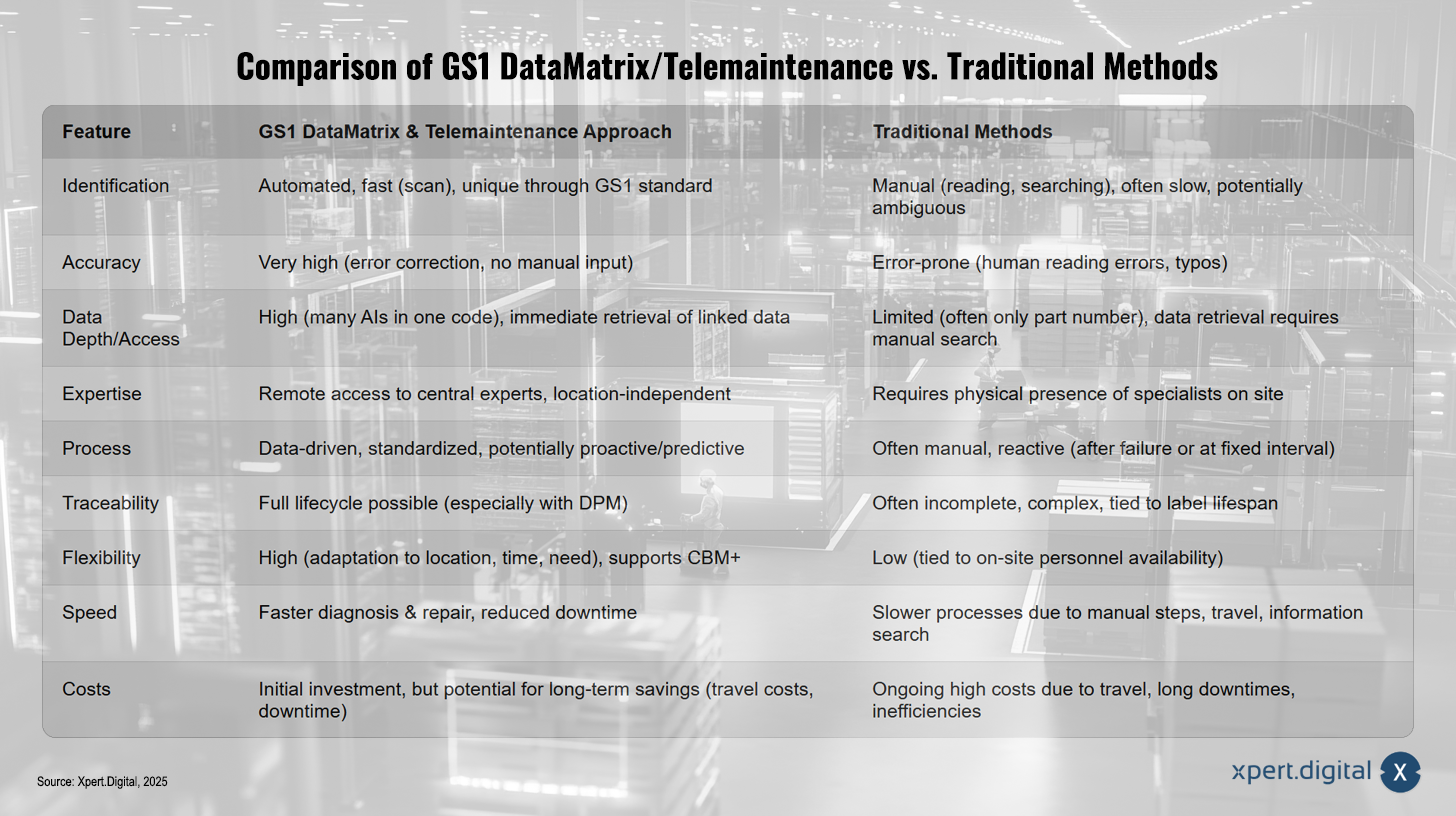
Der Ansatz, Telemaintenance durch die Nutzung von GS1 DataMatrix zu unterstützen, stellt einen Paradigmenwechsel gegenüber traditionellen Instandhaltungspraktiken dar. Traditionelle Methoden der Instandhaltung und Logistikverfolgung im Verteidigungswesen leiden oft unter folgenden Einschränkungen: Der GS1 DataMatrix-gestützte Telemaintenance-Ansatz unterscheidet sich in wesentlichen Punkten: Vergleich von GS1 DataMatrix/Telemaintenance vs. Traditionelle Methoden – Bild: Xpert.Digital Der Vergleich zwischen GS1 DataMatrix/Telemaintenance und traditionellen Methoden zeigt deutliche Unterschiede in verschiedenen Aspekten. Im Bereich der Identifikation bietet GS1 DataMatrix eine automatisierte, schnelle und eindeutige Erkennung durch den GS1-Standard, während traditionelle Methoden von manuellen, oft langsamen und potenziell mehrdeutigen Prozessen geprägt sind. In Bezug auf die Genauigkeit punktet GS1 DataMatrix durch die Nutzung von Fehlerkorrekturen und den Verzicht auf manuelle Eingaben, was die Fehlerquote erheblich reduziert. Traditionelle Methoden sind hingegen anfälliger für menschliche Lesefehler und Tippfehler. Auch die Datentiefe und der Datenzugriff sind bei GS1 DataMatrix durch die Speicherung umfangreicher Informationen in einem Code und die Möglichkeit eines sofortigen Datenabrufs besonders hoch, während herkömmliche Ansätze oft auf wenige Datenpunkte begrenzt sind und eine manuelle Suche erfordern. Im Bereich der Expertise ermöglicht GS1 DataMatrix den ortsunabhängigen Remote-Zugriff auf zentrale Experten, wohingegen traditionelle Methoden die physische Anwesenheit von Spezialisten vor Ort verlangen. Prozesse werden durch GS1 DataMatrix datengetrieben und standardisiert, mit Potenzial für proaktive und prädiktive Ansätze. Traditionelle Methoden sind häufiger manuell und reaktiv, meist als Antwort auf Ausfälle oder geplante Intervalle. Die Rückverfolgbarkeit ist mit GS1 DataMatrix vollständig realisierbar, insbesondere bei Verwendung des Direct Part Marking (DPM), was bei traditionellen Methoden oft nur eingeschränkt möglich ist und mit hohem Aufwand verbunden sein kann. Auch bei der Flexibilität überzeugt GS1 DataMatrix durch Anpassungsfähigkeit an Ort, Zeit und Bedarf sowie durch die Unterstützung von Condition-Based Maintenance Plus (CBM+). Im Gegensatz dazu sind traditionelle Methoden stark von der Verfügbarkeit von Personal vor Ort abhängig. Hinsichtlich der Geschwindigkeit ermöglicht GS1 DataMatrix schnellere Diagnosen und Reparaturen und trägt so zur Reduzierung von Ausfallzeiten bei, während herkömmliche Ansätze durch manuelle Arbeitsschritte, Reisen und zeitaufwendige Informationssuche erheblich langsamer sind. Die Kosten für GS1 DataMatrix liegen zunächst höher, bieten jedoch langfristig Einsparungspotenziale durch geringere Reisekosten und kürzere Ausfallzeiten. Im Gegensatz dazu verursachen traditionelle Methoden laufend hohe Kosten, bedingt durch Reisen, langwierige Ausfallzeiten und Ineffizienzen. Dieser Vergleich verdeutlicht, dass der GS1 DataMatrix-gestützte Telemaintenance-Ansatz nicht nur eine inkrementelle Verbesserung darstellt, sondern eine grundlegende Transformation hin zu einem effizienteren, genaueren und flexibleren Instandhaltungsparadigma ermöglicht. Er adressiert viele der inhärenten Schwächen traditioneller Methoden. Die erfolgreiche Adaption erfordert jedoch nicht nur neue Werkzeuge, sondern potenziell auch signifikante Anpassungen der Arbeitsabläufe, der Rollenverteilung und der Ausbildung des Personals. Die Kombination von GS1 DataMatrix und Telemaintenance ist nicht als Endpunkt zu sehen, sondern als wichtiger Baustein für zukünftige Entwicklungen in der Verteidigungslogistik und -instandhaltung. Der GS1 DataMatrix liefert den zuverlässigen, eindeutigen Identifikator, der benötigt wird, um physische Assets mit ihren digitalen Zwillingen und den damit verbundenen Datenströmen (Sensordaten, Betriebsdaten, Umweltdaten) zu verknüpfen. Diese solide Datengrundlage ist die Voraussetzung für fortgeschrittene Analysen im Rahmen von CBM+ und Predictive Maintenance. Algorithmen können auf Basis dieser Daten Muster erkennen, den zukünftigen Zustand von Komponenten vorhersagen und proaktive Instandhaltungsmaßnahmen empfehlen, die dann über Telemaintenance ausgelöst und angeleitet werden können. KI kann zudem Remote-Experten bei der Diagnose unterstützen, indem sie Muster in den übermittelten Daten erkennt und Hypothesen generiert. Ein wichtiger Trend ist die zunehmende Fähigkeit, nicht nur Identifikatoren und Attribute, sondern auch Web-Adressen (URIs) in Barcodes zu kodieren. Der GS1 Digital Link Standard definiert eine Syntax, um GS1-Identifikatoren in eine Web-URI-Struktur zu übersetzen, die dann in einem Datenträger wie dem DataMatrix (oder QR-Code) kodiert werden kann. Ein einziger Scan könnte den Techniker oder Experten dann direkt zu einer dynamischen Bandbreite an Online-Ressourcen führen: interaktive, kontextsensitive Handbücher, Diagnose-Assistenten, Video-Tutorials, direkte Verbindung zu Live-Support-Kanälen oder Echtzeit-Daten-Dashboards. Dies würde den Informationszugriff im Feld revolutionieren. Die Integration mit mobilen Endgeräten (Smartphones, Tablets) und spezialisierten Apps für das Scannen und die Interaktion mit diesen Daten wird weiter zunehmen. Telemaintenance wird sich voraussichtlich von einer Nischenlösung zu einem Standardmodell der Instandhaltungsunterstützung entwickeln, was potenziell den Bedarf an Personal und Material an vorderen Standorten reduziert („weniger Mechaniker, mehr Datenströme“). Die Integration mit autonomen Systemen wie Drohnen oder Bodenrobotern für die schnelle Lieferung von Ersatzteilen an den Bedarfsort oder sogar für ferngesteuerte Manipulationen unter Anleitung via Telepräsenz ist ein vielversprechendes Zukunftsfeld. Der Austausch logistischer Daten und die Zusammenarbeit zwischen Teilstreitkräften, Bündnispartnern und der Industrie werden durch die Nutzung gemeinsamer Standards wie GS1 weiter intensiviert werden, um eine nahtlose, interoperable Logistikkette zu schaffen. „Logistikinformation“ selbst wird zunehmend als kritische Ressource für operative Entscheidungen erkannt und genutzt. Diese Trends deuten darauf hin, dass GS1 DataMatrix und Telemaintenance grundlegende Wegbereiter für eine Zukunftsvision der Verteidigungslogistik sind, die hochgradig automatisiert, intelligent, vernetzt und prädiktiv agiert. Strategische Investitionen in diese Basistechnologien sind daher entscheidend, um die zukünftige Einsatzbereitschaft sicherzustellen und einen technologischen Vorsprung in der Logistik und Instandhaltung zu wahren. Passend dazu: Die Integration des GS1 DataMatrix-Standards in Telemaintenance-Prozesse bietet einen erheblichen strategischen Mehrwert für die Verteidigungslogistik. Die Kernvorteile liegen in der signifikanten Verbesserung der Datenqualität und -genauigkeit, der lückenlosen Rückverfolgbarkeit von Komponenten, der Beschleunigung von Diagnose- und Reparaturzyklen, was zu reduzierten Ausfallzeiten führt, und einer deutlich erhöhten Flexibilität bei der Bereitstellung von Instandhaltungsunterstützung. Langfristig besteht zudem Potenzial für Kosteneinsparungen durch reduzierte Reiseaufwände und optimierte Ressourcennutzung. Die Synergie ist klar: Der GS1 DataMatrix liefert den standardisierten, maschinenlesbaren Schlüssel zu den Daten eines Assets, während Telemaintenance den Kommunikationskanal bereitstellt, um diese Daten und das daraus abgeleitete Expertenwissen effektiv und ortsunabhängig zu nutzen. Dieser kombinierte Ansatz ist ein kritischer Faktor für die Modernisierung der Verteidigungslogistik und die Sicherstellung der Einsatzbereitschaft in komplexen und dynamischen globalen Operationsumgebungen. Um das volle Potenzial dieser Technologie zu heben, werden folgende strategische Empfehlungen abgeleitet: Die konsequente Umsetzung dieser Empfehlungen kann dazu beitragen, die Herausforderungen der Implementierung zu meistern und die transformative Kraft von GS1 DataMatrix und Telemaintenance für eine leistungsfähigere, agilere und kosteneffizientere Verteidigungslogistik zu entfalten. Markus Becker Gerne stehe ich Ihnen als persönlicher Berater zur Verfügung. Head of Business Development Chairman SME Connect Defence Working Group Konrad Wolfenstein Gerne stehe ich Ihnen als persönlicher Berater zur Verfügung. Sie können mit mir Kontakt aufnehmen, indem Sie unten das Kontaktformular ausfüllen oder rufen Sie mich einfach unter +49 7348 4088 965 an. Ich freue mich auf unser gemeinsames Projekt. Xpert.Digital ist ein Hub für die Industrie mit den Schwerpunkten, Digitalisierung, Maschinenbau, Logistik/Intralogistik und Photovoltaik. Mit unserer 360° Business Development Lösung unterstützen wir namhafte Unternehmen vom New Business bis After Sales. Market Intelligence, Smarketing, Marketing Automation, Content Development, PR, Mail Campaigns, Personalized Social Media und Lead Nurturing sind ein Teil unserer digitalen Werkzeuge. Mehr finden Sie unter: www.xpert.digital - www.xpert.solar - www.xpert.plusVon manuellen Prozessen zu maschineller Präzision: Fortschritt mit GS1 DataMatrix
Vergleichsanalyse: GS1 DataMatrix-Ansatz vs. traditionelle Methoden
Limitationen konventioneller Praktiken
Schlüsseldifferenzierungsmerkmale: Geschwindigkeit, Genauigkeit, Datentiefe, Flexibilität
Vergleich von GS1 DataMatrix/Telemaintenance vs. Traditionelle Methoden
Zukunftsaussichten und technologische Trends
Synergie mit Künstlicher Intelligenz (KI), Predictive Analytics und Digitalen Zwillingen
Evolution von Datenträgern und Konnektivität (GS1 Digital Link)
Die Entwicklung der logistischen Fernunterstützung in der Verteidigung
Strategischer Vorsprung: Optimierung der Verteidigungslogistik durch GS1 DataMatrix
Ausfallzeiten minimieren, Einsatzbereitschaft maximieren: Die Synergie von GS1 DataMatrix und Telemaintenance
Schlüsselempfehlungen für Einführung und Optimierung
Glossar
Beratung - Planung - Umsetzung

Wir sind für Sie da - Beratung - Planung - Umsetzung - Projektmanagement
☑️ KMU Support in der Strategie, Beratung, Planung und Umsetzung
☑️ Erstellung oder Neuausrichtung der Digitalstrategie und Digitalisierung
☑️ Ausbau und Optimierung der internationalen Vertriebsprozesse
☑️ Globale & Digitale B2B-Handelsplattformen
☑️ Pioneer Business Development
Schreiben Sie mir
Xpert.Digital - Konrad Wolfenstein
In Kontakt bleiben
Weitere Themen