
Why AI “tokens” are the new oil of the global economy: How China is breaking America’s tech dominance with AI tokens
Xpert Pre-Release

Available in 27 languages 📢
Prefer Xpert.Digital on GoogleⓘPublished on: April 18, 2026 / Updated on: April 18, 2026 – Author: Konrad Wolfenstein
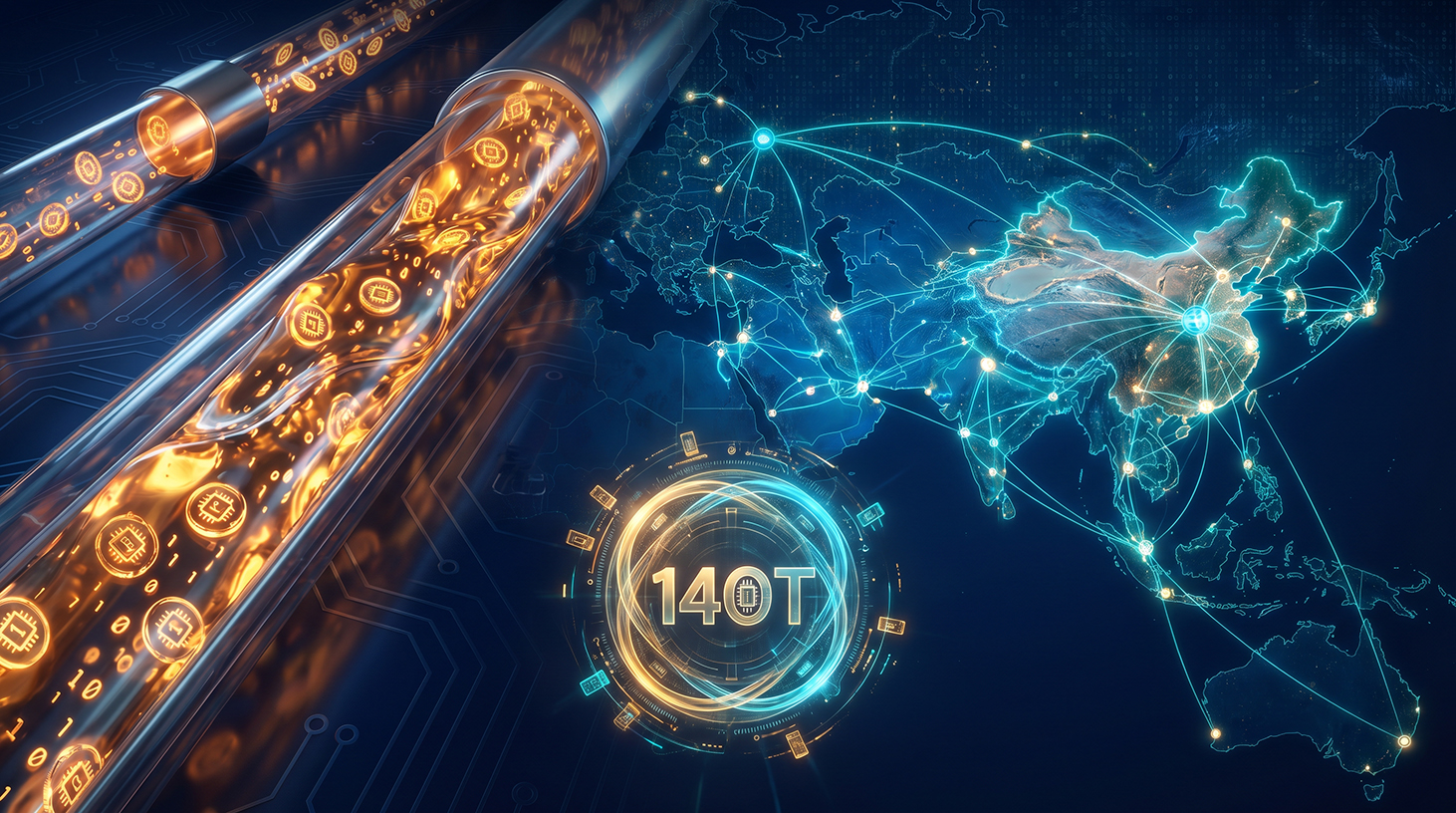
Why AI “tokens” are the new oil of the global economy: How China is breaking America’s tech dominance with AI tokens – Image: Xpert.Digital
AI tokens as China's new export commodity: The digital oil strategy of the 21st century
When mathematical calculations become a commodity – and the West has not yet grasped the extent of it
40 times cheaper than ChatGPT: How China is flooding the global AI market with radically low prices
Artificial intelligence is no longer conceived and controlled solely in Western data centers – it has become the most powerful geopolitical weapon of the 21st century. While the US relies on rigid export controls for high-performance chips and Europe debates data protection regulations, China is quietly implementing a global paradigm shift: The People's Republic is establishing so-called AI "tokens" – the fundamental building blocks of language models – as a mass-market export commodity and thus as a strategic resource of the future. With price advantages that undercut American competitors like OpenAI or Google by a factor of forty, Chinese models such as DeepSeek and Alibaba's Qwen are flooding the global market. This is leading to a fundamental shift, particularly in the Global South, but increasingly also in the West. While those who utilize Chinese computing power save massive costs, they also enter into a new technological dependency structure and simultaneously provide the training data for Beijing's future tech hegemony. This is an analysis of gigantic multi-billion-dollar investments, the limits of American sanctions, and the emergence of an entirely new class of raw materials.
What a token actually is and why this matters now
Tokens are the atomic building blocks of every modern AI interaction. A language model like DeepSeek or Qwen breaks down any incoming text into so-called tokens—fragments that roughly correspond to three-quarters of a word—and processes these units sequentially to generate a response. Those using an AI interface via an API typically pay according to the number of tokens processed, both for the input and the generated output. Tokens are therefore not only a technical metric but also the unit of account for AI services worldwide—and this is precisely where the strategic implications of the Chinese approach lie.
Until now, the token market has been implicitly an American-dominated arena. OpenAI, Anthropic, and Google set the prices, determined the architecture, and kept the infrastructure in US hands. With the rise of Chinese models—most notably DeepSeek and Alibaba's Qwen family—this structure is beginning to shift fundamentally. What was once a purely technical infrastructure decision is becoming a geopolitical one: Whose data center, whose chips, whose electricity will process the world's requests?
Alibaba Token Hub: More than a corporate restructuring
On March 16, 2026, Alibaba CEO Eddie Wu announced the creation of the new business unit Alibaba Token Hub in a company-wide memo. This new unit consolidates five previously separate business units under one roof: Tongyi Laboratory as a basic research unit, the MaaS (Model-as-a-Service) platform as a distribution infrastructure, the Qwen product line for end consumers, the Wukong enterprise AI offering, and an AI innovation unit. The stated mission, in Wu's own words, is: create tokens, deliver tokens, and use tokens.
The underlying structural logic is revealing. Wu himself describes the new architecture using the image of an electrical grid: Tongyi Lab as the power plant, the MaaS platform as the transmission network, and the end products as the connected consumer devices. This is not merely a metaphor, but a strategic commitment: Alibaba no longer wants to be a conglomerate with an AI division, but rather an AI infrastructure provider that also considers e-commerce and cloud computing as application layers.
Also noteworthy is the capital commitment underpinning this strategic realignment. Alibaba announced investments of approximately $53 billion over three years in AI and cloud infrastructure – a sum that, according to the company, exceeds the group's total capital expenditure of the past decade. The scale of this figure is also remarkable by international standards: Global AI investments are projected to exceed $200 billion by 2026, with Alibaba alone accounting for roughly a quarter of this total. At the time of the announcement, Wu indicated that even this already extraordinary sum would be increased further to meet exploding demand.
The price gap: How Chinese models are rewriting the market
The economic foundation of China's token export strategy is a massive price difference compared to American competitors. Analysts at the investment bank Bernstein have thoroughly examined DeepSeek's models and found that the Chinese competitor undercuts US models by a factor of 20 to 40. Independent technical analyses confirm this finding: DeepSeek's Reasoner model estimates around $0.55 for one million input tokens, while OpenAI's GPT-4.5 and o1 are among the most expensive offerings worldwide. In practice, this means that what costs $50 per million tokens on OpenAI infrastructure is available on DeepSeek for $1 to $2.
This price difference is not a dumping maneuver in the classic sense, but rather the result of a structural efficiency advantage resting on several pillars. DeepSeek trained its R1 reasoner for just $294,000, while comparable US models have cost tens of millions of dollars to develop. This was achieved through the consistent application of a mixture-of-experts architecture, which does not activate all model parameters for every query, but only the most relevant expert paths. In addition, government subsidies for AI infrastructure, lower engineering salaries—50 to 60 percent lower in China than in Silicon Valley—and tax incentives for research and development all contribute to this advantage.
The result is a price difference that is rationally impossible for enterprise customers worldwide to ignore. Startups building AI applications in Singapore, Nairobi, or Istanbul must factor in computing costs. With a twenty-fold price difference, choosing a provider is not an ideological decision, but a purely business one. And it is precisely this reality that China's token export strategy capitalizes on.
The growth of the token economy: figures that show the extent of the disruption
The growth dynamics of China's token economy are virtually unparalleled in their scale by any known industrial expansion. At the beginning of 2024, the average daily token consumption in China was 100 billion. By the end of 2025, this figure had risen to 100 trillion. In March 2026, the Chinese National Bureau of Statistics reported a further jump to over 140 trillion daily – a more than thousandfold increase in just two years. Mao Shengyong, deputy director of the Chinese Bureau of Statistics, interpreted these figures as evidence of phased breakthroughs in the widespread adoption of AI applications in industry.
Even more significant is the international dimension. On OpenRouter, the world's largest aggregation platform for AI model APIs, Chinese models reached a weekly token volume of 7.36 trillion tokens in the week of March 15, 2026 – surpassing US models for the third consecutive week. Four of the five most used models worldwide by token volume were of Chinese origin. The global weekly token volume on OpenRouter reached 20.4 trillion tokens during this period, with a growth rate of over 20 percent per week.
JPMorgan has attempted to translate this development into a long-term forecast. The bank predicts that China's AI inference token consumption will increase from around 10 quadrillion (10,000 trillion) in 2025 to approximately 3,900 quadrillion in 2030 – a 370-fold increase in just five years. This figure underscores that the token economy is not a short-term fad, but rather a structurally growing market with industrial depth.
The geopolitical calculation behind the token export
China's approach to the token export business follows a logic that extends far beyond commercial profit maximization. The basic model is remarkably clear: A user abroad—in Nairobi, Dubai, or Jakarta—calls up a Chinese AI model. The request travels to a Chinese data center, where Chinese chips, powered by Chinese electricity, perform the calculation. The result flows back to the user as tokens, for which they are billed. What emerges is not just revenue, but a comprehensive structure of dependency—technical, economic, and strategic.
This approach reflects the broader concept of the Digital Silk Road, which China has been systematically rolling out for years. The People's Republic is positioning itself as an alternative to the Silicon Valley model and framing its AI offerings as a public good that transcends proprietary profit motives. Through investments in digital infrastructure, educational initiatives, and smart governance solutions, Beijing is building bilateral partnerships that combine development narratives with economic penetration. The World Data Organisation, founded in 2026 and already boasting 200 members from more than 40 countries, is another institutional building block aimed at setting international standards in data matters.
The open-source strategy is a key tool in this process. By making their models openly accessible, DeepSeek and Alibaba's Qwen are radically lowering the adoption threshold worldwide. DeepSeek's market share in the global chatbot market now stands at 4 percent; the Qwen model family had been downloaded over 700 million times by January 2026, making it the most widely used open-source AI system in the world. Chinese AI models reached a total global market share of around 15 percent in November 2025 – up from almost zero percent a year earlier. In certain markets, the figures are even more dramatic: DeepSeek's market share in China is 89 percent, in Belarus 56 percent, in Cuba 49 percent, and in Russia around 43 percent.
Our global industry and economic expertise in business development, sales and marketing

Our global industry and economic expertise in business development, sales and marketing - Image: Xpert.Digital
Industry focus areas: B2B, digitalization (from AI to XR), mechanical engineering, logistics, renewable energies and industry
More information here:
A thematic hub offering insights and expertise:
- Knowledge platform covering global and regional economies, innovation and industry-specific trends
- A collection of analyses, insights, and background information from our key areas of focus
- A place for expertise and information on current developments in business and technology
- A hub for companies seeking information on markets, digitalization, and industry innovations
European SMEs caught between costs, comfort and geopolitical dependence
The chip question: China's structural vulnerability and the strategic way out
Perhaps the most critical weakness in China's token export strategy lies in the semiconductor issue. Since October 2022, US export controls have prohibited the sale of AI chips with a performance level comparable to the Nvidia A100 to China. These restrictions have since been gradually expanded and their enforcement tightened. In May 2025, the US Department of Commerce warned that the use of Huawei's Ascend chips—China's leading AI processors—might violate US export control regulations, as their development and production are based on US processes and equipment.
Huawei has announced plans to produce around 600,000 units of the Ascend 910C in 2026. Alibaba, ByteDance, and Tencent have placed large orders totaling several hundred thousand units, and DeepSeek is reportedly developing its upcoming V4 model entirely on Huawei hardware—considered the first highly visible proof of concept for the performance of Chinese frontier-model AI chips. At the same time, the limitation is real: According to the Council on Foreign Relations, even with optimistic estimates for 2027, Huawei will produce only about 4 percent of the aggregate AI computing power generated by Nvidia.
Nevertheless, US export controls have not produced the desired braking effect, but rather the opposite. A CSIS analysis concludes that the restrictions have coordinated domestic chip demand in China with Chinese producers in a way that decades of industrial policy could not achieve. Chinese semiconductor manufacturers now hold 41 percent of the domestic market. The export controls have partially broken the digital dependency loop—the reliance on Western chip hardware—without affecting the physical manufacturing loop, which is based on China's production infrastructure and generates proprietary real-world data from industrial applications.
The Global South as a strategic target area for token exports
China's token export strategy is not a blanket market penetration approach, but rather follows a geographical prioritization. Emerging economies and countries of the Global South – with weaker digital infrastructure, price-sensitive companies, and less politically oriented towards distancing themselves from Beijing – are the primary target areas. For price-sensitive regions, the low token prices of Chinese models are not a negotiable advantage, but rather the crucial prerequisite for accessing the AI age.
Southeast Asia exemplifies this dynamic. In this region, whose 700 million inhabitants are situated between the spheres of influence and investment of the US and China, Chinese AI infrastructure is growing rapidly. In 2026, Malaysia became the first country outside of China to activate a fully sovereign AI ecosystem based on Huawei Ascend chips. This decision has both technological and geopolitical implications: the infrastructure choice simultaneously determines data sovereignty, norm-setting, and long-term technological dependence.
Africa is another key continent in this strategy. Although DeepSeek's market share there is still in the single digits—between 11 and 14 percent in countries like Ethiopia and Uganda—the direction of growth is significant. In an environment where affordable AI tools are scarce, free, open access to powerful language models can dramatically eliminate existing barriers to adoption. China is positioning itself as a counterweight to what Beijing's official communications describe as an exclusively Western-centric, profit-driven technology offering.
Data as a strategic by-product: The invisible value creation
Beyond the immediate token revenue lies another, less visible layer of value creation: the generation of training data. Every external request to a Chinese AI model generates usage data, interaction patterns, and speech samples that remain in the data center. This data is the raw material for future model generations. Furthermore, in an industrial ecosystem that simultaneously operates the world's largest manufacturing base, specialized, real-time production data is generated that Western competitors cannot structurally replicate.
A USCC (US-China Economic and Security Review Commission) analysis describes two mutually reinforcing feedback loops: a digital one, in which open models drive global adoption and stimulate further development, and a physical one, in which industrial applications generate proprietary real-world data via China's manufacturing base, accumulating a competitive advantage independent of access to high-performance chips. US export controls affect the digital loop but leave the physical one untouched.
This dual structure explains why China's AI strategy is more robust than simple price competition. Even if Western models develop technically superior capabilities, China simultaneously builds a data advantage that grows with every external API request. Those who buy cheap tokens are, in effect, paying for the improvement of the model they are using with their requests.
The Western response: Between export controls and competition paranoia
The Western response to China's token offensive has so far been fragmented and partly contradictory. On the one hand, the US is systematically tightening its export control regimes for AI chips. On the other hand, in December 2025, the Trump administration approved the sale of Nvidia H200 chips to China—the most powerful chip ever approved for export to China. At the same time, the US Congress is working on the MATCH Act, which would restrict the sale of older ASML immersion lithography equipment to China. Three parallel US policies are thus running in opposite directions, without any discernible strategic coherence.
Europe is largely an observer in this picture. While Chinese AI infrastructure is permeating the Global South and American companies are investing hundreds of billions of dollars in AI infrastructure, a standalone European position in the token market is almost entirely absent. European regulation focuses on data protection and AI security standards – legitimate concerns, but these do not answer the question of whose computing infrastructure will ultimately support European AI services.
Medium-sized companies operating in Ulm, Frankfurt, or Munich that use AI APIs for automated document processing, customer service, or production optimization are now making economic decisions with geopolitical implications. Choosing DeepSeek or Qwen means choosing Chinese data centers, Chinese chips, and—indirectly—a data infrastructure subject to Chinese law and potentially state access to data. This decision is rarely made with the level of awareness it deserves, given its implications.
Limits and risks of the Chinese token strategy
As coherent as China's token export strategy appears, its structural limitations are very real. Chip dependency remains the most serious problem: despite all the progress made with Huawei Ascend, the Chinese AI industry still relies on technologies derived from or originating from Western semiconductor manufacturing to achieve peak performance. The CFR estimates that Huawei's best chips could decline in performance because the next generation of chips is likely to underperform the current flagship—an indication that SMIC, China's leading chipmaker, is not yet structurally capable of pushing the technological boundaries on its own.
Added to this is the issue of data sovereignty from the perspective of foreign users. Governments and companies in the Global South may use inexpensive Chinese tokens, but are increasingly aware that their data is processed in Chinese data centers and is subject to Chinese law. Building an alternative, sovereign AI infrastructure—as observed in Malaysia—is a response to precisely this dilemma, but it remains costly and technically demanding. In the long term, this tension could limit some of the market's potential.
Finally, the profitability of the token business itself has not yet been conclusively proven. The current low prices of Chinese models also reflect intense domestic price competition, which is putting pressure on margins. Whether the model is internationally scalable and generates sufficient returns to amortize the colossal infrastructure investments remains an open question – even though JPMorgan's forecast of a 370-fold growth in token consumption by 2030 implies a market large enough to enable this amortization.
A new class of raw materials is emerging
The comparison between tokens and oil, drawn by both Chinese analysts and Western commentators, is not perfect, but it is illuminating. Like crude oil, tokens are an undifferentiated commodity whose value lies less in the individual computation than in the overall infrastructure that produces and trades them: extraction facility, pipeline, refinery, gas station. China's strategy is to consolidate the entire infrastructure layer—data centers, chips, models, distribution platforms—in-house and orient it toward export.
The difference to oil lies in one crucial point: tokens are infinitely reproducible, inexhaustible, and their value increases with the quality of the model that produces them. China's investment strategy therefore aims not only at quantitative leadership but at a cumulative qualitative advantage through data feedback and model optimization. With every terabyte of external usage data flowing into Chinese data centers, the future competitive advantage grows – quietly, invisibly, and with extraordinary economic efficiency.
China's daily token consumption of 140 trillion, the 15 percent global market share of Chinese models, and Alibaba's $53 billion investment—these figures don't describe a short-term marketing ploy, but rather a long-term industrial policy strategy consistently aiming for export leadership in the next key industry. Whether this strategy succeeds won't be decided in Beijing, but in the API integrations of software developers in Lagos, Jakarta, and Warsaw—a choice currently being made quietly and discreetly.
Your global marketing and business development partner
☑️ Our business language is English or German
☑️ NEW: Correspondence in your native language!

Konrad Wolfenstein
I and my team are happy to be available to you as your personal advisor.
You can contact me by filling out the contact form here or simply call me at +49 7348 4088 965. My email address is : [email protected]
I'm looking forward to our joint project.
☑️ SME support in strategy, consulting, planning and implementation
☑️ Creation or realignment of the digital strategy and digitization
☑️ Expansion and optimization of international sales processes
☑️ Global & Digital B2B trading platforms
☑️ Pioneer Business Development / Marketing / PR / Trade Fairs
🎯🎯🎯 Data-driven B2B industry hub as a quasi-in-house solution

The quasi-in-house solution: How Xpert.Digital closes operational gaps in B2B marketing and sales – Smart Content-Driven Business - Image: Xpert.Digital
Xpert.Digital is a data-driven B2B industry hub led by Konrad Wolfenstein . The company acts as an external, quasi-in-house solution for industrial partners, closing operational gaps in marketing, content, and sales – without requiring additional resources on the client side.
More information here:









