
Japan and Sanae Takaichi after the election: A historic upheaval in times of polycrisis and stagnant economy
Xpert Pre-Release

Available in 27 languages 📢
Prefer Xpert.Digital on GoogleⓘPublished on: February 8, 2026 / Updated on: February 8, 2026 – Author: Konrad Wolfenstein
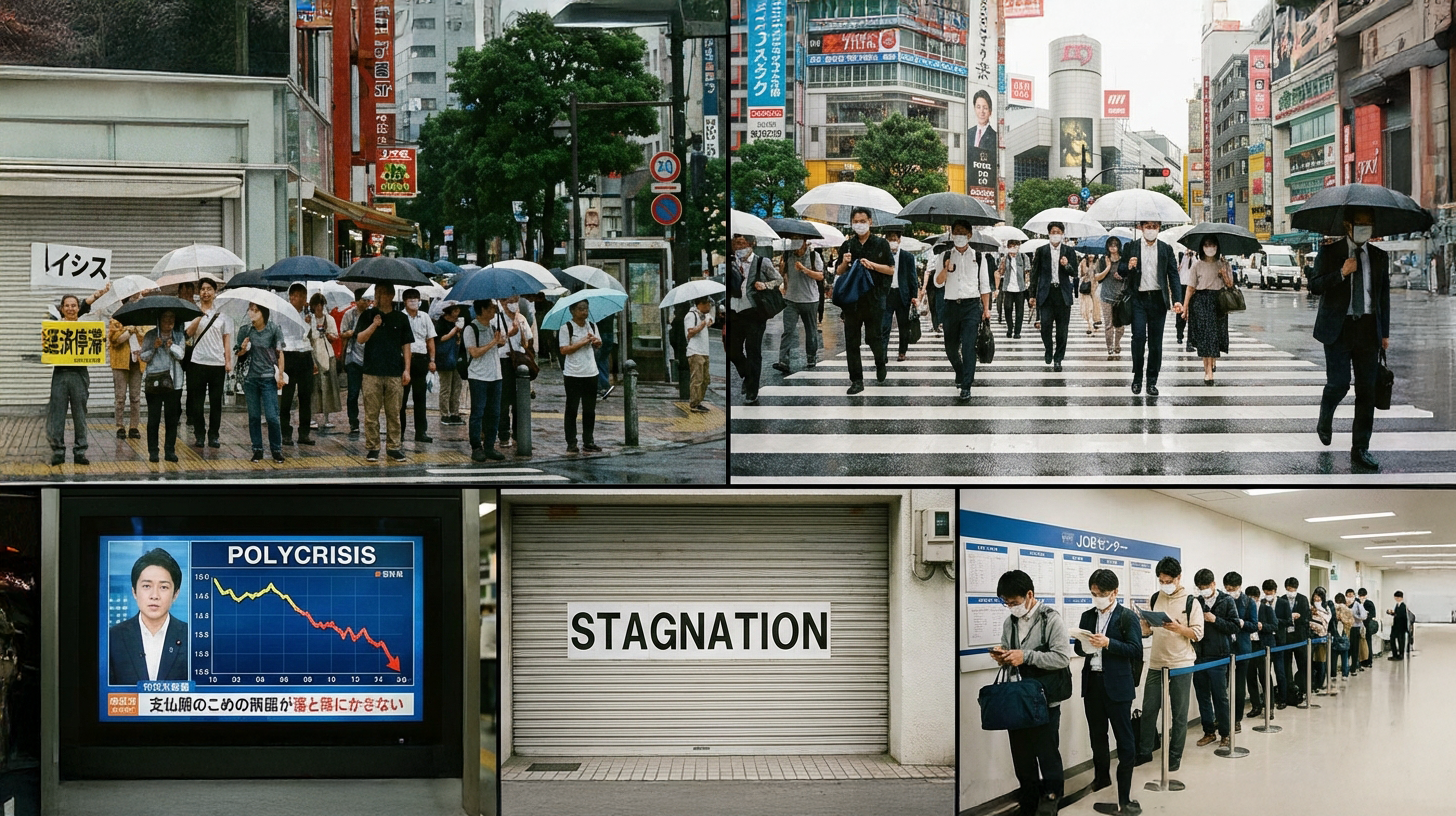
Japan and Sanae Takaichi after the election: A historic upheaval in times of polycrisis and stagnant economy – Creative image: Xpert.Digital
Japan is entering a new era: For the first time, the country will be ruled by a woman
Historic change of power: Japan is ruled by a woman for the first time
A beacon of hope with conservative toughness: Why Japan's first female prime minister polarizes opinion
With the election of Sanae Takaichi as its first female prime minister, Japan is entering uncharted political territory. In a nation whose centers of power have been dominated almost exclusively by a male elite for decades, her rise to the top of the Liberal Democratic Party (LDP) and thus to the office of prime minister marks a historic turning point. But this milestone is more than just a symbolic triumph of equality: it is a strategic calculation by the ruling party in a time of great uncertainty.
Here we analyze the complex background of this decision, which was made during a politically and climatically harsh winter. While Takaichi scores points with her charisma and the aura of "newness," massive structural problems are looming in the background: A stagnant economy, a rapidly aging society, and geopolitical tensions in East Asia cannot be solved by symbolic politics alone.
This documentary examines why the snap elections were a risky gamble and to what extent Takaichi's popularity risks merely overshadowing pressing realities instead of addressing them. A tension arises between voters' hopes for a more modern, inclusive policy and Takaichi's traditionally conservative agenda. Can a single individual break down Japan's entrenched political culture, or does he merely serve to stabilize the status quo? Delve into an analysis of a government navigating between historical awakening and the constraints of tradition.
Why is Sanae Takaichi's election to the government so significant?
The elections in Japan, in which Sanae Takaichi became the first woman in the country's history to come to power as "Head of Government"—that is, in the role of Prime Minister—mark a historic turning point. For decades, Japan's political culture has been characterized by a strongly patriarchal leadership elite: the leadership of the Liberal Democratic Party (LDP) was almost exclusively male, and the presence of women in positions of power in ministries and at the highest levels of government was the exception rather than the rule.
The fact that a woman is taking over the post of prime minister – in the midst of a year of political crisis, marked by a harsh winter and economic uncertainty – amplifies the symbolic significance of her rise. Sanae Takaichi thus embodies not only a departure from tradition, but also an attempt to change the self-image of Japanese society: away from a purely male-dominated leadership model and towards a more inclusive, modern form of office distribution.
Takaichi's political career is anything but a sudden rise to power. She was long considered one of the most prominent conservatives in the LDP, held several ministerial posts, and consistently advocated clearly conservative positions on social, defense, and economic policy. Her nomination as prime minister is therefore also the result of a prolonged internal power struggle within the party, in which the LDP grapples with how to regain support under changing societal conditions. The election of a woman to the top position is thus part of a political calculation – she is meant to symbolize modern reform while simultaneously conveying the LDP's traditional values.
For voters, therefore, it is not only a new person at the top, but also a new question: Can a woman in Japan actually change the political culture – or will she have to adapt to the existing structures?
Why is the election taking place in the middle of winter?
The timing of the snap parliamentary elections, held in the middle of winter, is by no means accidental. In Japan, such timing decisions are always part of a strategic political calculation. Winter elections are challenging for logistical and organizational reasons: snow, cold, limited mobility, and generally adverse weather conditions can all affect voter turnout. Older citizens, in particular, who traditionally represent one of the LDP's strongest voter groups, tend to stay home in bad weather.
Despite these drawbacks, the ruling coalition often opts for early elections during times of political crisis. The underlying calculation is usually the same: those who choose early elections in a moment of uncertainty want to redefine the political debate. They want to surprise their political opponents, set their own agenda, and present voters with a clear choice as quickly as possible. Long-term debates about reforms, financial problems, or foreign policy can thus be condensed into a short, focused campaign.
This is problematic for the opposition: it has less time to develop alternative programs, build advertising campaigns, and clearly communicate why it would be better than the previous government. Takaichi is counting on this dynamic – she not only appears as a new face but also presents herself as a "fresh solution" to the existing problems. She wants to suggest that the country doesn't need further discussions but rather strong leadership and swift decisions.
At the same time, the winter election date also carries a risk. If public sentiment is negative – due to the economy, everyday life, or climate – the LDP could lose the election. The early election is therefore a classic political gamble: relying on popularity, a clear message, and the element of surprise to stabilize its position.
What political problems are currently dominating Japan?
The question of Japan's political problems is fundamental to understanding Takaichi's government formation. The statement "Takaichi's charisma overshadows Japan's problems" implies that a single individual is perceptive and charismatic enough to draw public attention to himself—while the country's existing problems do not simply disappear.
A key problem is economic development. Japan has been struggling for decades with a stagnant economy, low growth, and structural weaknesses. Despite past successes of Japanese industry and exports, the momentum has long since faded. Productivity is increasing only slowly, the population is aging rapidly, and many young people face precarious employment and an uncertain future. The government has repeatedly launched economic stimulus programs in the past, but the effects have often been short-lived.
Another critical issue is demographic development. Japan is one of the oldest countries in the world. The proportion of people over 65 in the total population is steadily increasing, while the birth rate is declining. This means fewer workers, fewer taxpayers, and greater strain on social security systems. The pension and healthcare systems are under enormous pressure. At the same time, society in many regions is suffering from population decline: small towns are becoming deserted, infrastructure is becoming more expensive, and demand in local markets is dwindling.
Added to this are political problems at the governmental level. The LDP has dominated for decades, which on the one hand means stability, but on the other hand also stagnation. Corruption scandals, internal power struggles, and a perception of "closed circles" have weakened public trust in politics. Many voters feel they are not being taken seriously and see politics as controlled by elites who do not care about the real concerns of the people.
Furthermore, foreign policy plays a major role. Japan is closely allied with the US and has a complex relationship with China and Korea. The security situation in the region is tense: North Korea continues to test missiles, China claims parts of Japanese waters, and tensions between the major powers create insecurity. The government must make decisions regarding the extent of Japan's military buildup, the degree to which alliances are strengthened, and how to manage its economic dependencies.
In this context, Sanae Takaichi is attempting to use her charisma to launch a new political wave. She presents herself as a strong, determined leader capable of guiding the country through the crisis. However, whether she can actually solve the existing problems or whether her impact remains merely at the level of perception is an open question.
What exactly does "charisma" mean in this context?
The term "charisma" is frequently used in politics to describe a person who exerts a special attraction on others. Charismatic politicians appear confident, clear, and persuasive. They manage to evoke emotions, mobilize people, and gain trust—often regardless of their policy positions.
In the case of Sanae Takaichi, it is suggested that her charisma is so strong that it draws public attention to herself and overshadows the country's political problems. This does not mean that the problems do not exist, but rather that they become less visible at the moment of election because all eyes are on the new head of government.
Takaichi's charisma manifests itself in several dimensions. Firstly, there is her ability to express herself clearly and decisively. She comes across as competent, knowledgeable, and determined. Secondly, she has a clear profile: she stands for conservative values, aspired to leadership positions within the LDP in previous years, and takes a firm stance on many issues. This ensures that her messages are easily understood and emotionally impactful.
In addition, her personal history and her role as the first woman at the top play a part. She embodies a kind of "new beginning"—not only for the party, but also for Japan's political culture. Her mere presence generates curiosity, hope, and sometimes resistance. This is typical of charismatic politicians: they polarize, mobilize, and draw attention to themselves.
However, charisma is not a stable quality. It depends on the situation, on public perception, and on the successes or failures of one's policies. If the country's problems persist or worsen, charisma can quickly fade. The question, therefore, is not only whether Takaichi is charismatic, but whether she can also use her abilities to shape concrete policies.
What specific problems does her charisma overshadow?
When people say that "Takaichi's charisma overshadows Japan's problems," they are referring to several specific areas of conflict. These problems did not arise with her election—they existed long before—but the media attention focused on the new prime minister has currently diverted them from the public debate.
One of the most pressing problems is the economic crisis. Japan is struggling with low economic growth, low wages, and stagnant productivity. The younger generation often has poor prospects for stable employment, and many people live in precarious circumstances. At the same time, the cost of living is rising, and purchasing power is declining. These problems are eroding social stability and political satisfaction.
Another problem is the aging population. Japan has one of the oldest populations in the world. The pension and healthcare systems are under pressure because they are financed by a shrinking population while demands are rising. Policymakers must decide how to secure these systems in the long term – through tax increases, pension reforms, or other measures. But such decisions are unpopular and provoke resistance.
Added to this are regional imbalances. While Tokyo and some other major cities are prospering, many rural regions are suffering from population decline, depopulation, and poor infrastructure. The government must decide how to support the development of these regions—through investments in transportation, education, or the economy. But financial resources are limited, and every decision has repercussions in other areas.
Another problem is the political culture. The LDP has dominated politics for decades, leading to a certain inertia. Corruption scandals, internal power struggles, and a perception of elite rule have eroded public trust. Many people feel they are not taken seriously and see politics as controlled by small groups who do not care about the real concerns of the people.
Finally, there is foreign policy. Japan finds itself in a complex situation: relations with the US are close, but not always easy. Tensions with China and North Korea are high, and the security situation is strained. The government must decide how much Japan will arm itself, how closely to strengthen alliances, and how to manage its economic dependencies. These questions are important, but they are not always popular.
Takaichi's charisma overshadows all these problems because it draws attention to herself. People discuss more about what she has said, how she presents herself, and the reactions she evokes—and less about the concrete actions she will take. This is a risk: if the problems aren't resolved, mistrust can quickly return.
What hopes are associated with a female head of government?
The election of a woman to head the government has sparked hopes for change in Japan and internationally. Many people hope that a woman in power will bring a new perspective to politics—one that is more empathetic, inclusive, and open. They expect social issues to be given greater priority, the living conditions of citizens to improve, and the political culture to gradually transform.
Especially regarding gender issues, many Japanese people expect a woman in leadership to do more for equality. They hope that family policies, parental leave, childcare, and flexible work arrangements will be given greater consideration. They want women to finally be represented equally in politics, business, and administration. A female head of government could have great symbolic value—not only for her own party, but for society as a whole.
At the same time, there are also hopes that a woman in power will cultivate a different style of communication. Many people desire a political system less characterized by power struggles and internal disputes, and instead focused more on cooperation, dialogue, and consensus. They expect issues such as education, health, the environment, and social security to receive greater attention.
However, the reality is more complex. Takaichi is known as a conservative who upholds traditional values. She stands for a strong defense policy, a close relationship with the US, and a firm stance toward China. This means that she will not automatically adopt a "softer" policy. Public expectations must be reconciled with political realities and the internal structures of the LDP.
The question, therefore, is whether Takaichi can truly act as a bridge between tradition and modernity – and whether it can fulfill the hopes of the population or whether it will adapt to the existing structures.
Our Japan expertise in business development, sales and marketing

Our Japan expertise in business development, sales and marketing - Image: Xpert.Digital
Industry focus areas: B2B, digitalization (from AI to XR), mechanical engineering, logistics, renewable energies and industry
More information here:
A thematic hub offering insights and expertise:
- Knowledge platform covering global and regional economies, innovation and industry-specific trends
- A collection of analyses, insights, and background information from our key areas of focus
- A place for expertise and information on current developments in business and technology
- A hub for companies seeking information on markets, digitalization, and industry innovations
Between the superpowers: Japan's new government faces a critical test
What risks does their government pose?
Despite their charisma and symbolic importance, new governments always carry risks. The first danger is that political expectations may not align with reality. Many people hope that Takaichi can "make everything better"—but politics is complex and unpredictable. It takes time for the effects of their decisions to become apparent. If the population is disappointed after just a few months, this can lead to a rapid loss of support.
Another risk is that their personal popularity will decline if the country's problems persist. If the economy stagnates, the cost of living rises, and the political culture remains unchanged, trust can quickly erode. The public might then feel that the change at the top was merely cosmetic and brought about no real change. In this case, their previously powerful charisma could suddenly be perceived as an empty facade.
A third risk lies in the internal tensions within the LDP. The party is not a homogeneous bloc, but rather an alliance of different factions with varying political priorities. Takaichi represents a more conservative, reform-oriented course, but there are also strong factions within the party that favor the status quo and traditional power structures. If the party attempts to implement truly far-reaching reforms—whether in economic policy, social policy, or democracy—this could lead to conflict.
In Japanese politics, it is traditionally difficult to take a clear stand against one's own party members within the LDP. Anyone who deviates too much from established positions risks losing support. Takaichi could therefore be caught in a dilemma: she must present herself as a strong leader while simultaneously respecting internal power structures. If she compromises too often, her charisma could be perceived as opportunistic; if she remains too rigid, she could lose support within her own party.
Another risk is external pressure. The international community is watching Japan closely – not only because of its economic importance, but also because of its role in the region. The US expects Japan to assume a stronger role in security policy, while China and other countries view developments with suspicion. If Takaichi attempts to pursue an independent foreign policy, there is a risk that it will be caught in the crossfire of these competing interests.
Overall, her government carries the risk of failing either due to internal party tensions or external challenges. At the same time, however, there is also the chance that, through astute policies and diplomatic skill, she will meet expectations and fulfill the hopes of the population.
What role do the media play in Takaichi's government?
The media plays a central role in political communication in Japan. They determine which topics gain prominence, which politicians are noticed, and how public debate is conducted. In this context, the perception of Takaichi is particularly important. The media have celebrated her as the "first woman at the top," which has amplified her charisma. In interviews, she presents herself as competent, decisive, and clear. Images of her in suits, on podiums, or in conversation with other politicians spread rapidly on social media.
However, the media also have the power to damage Takaichi's image. If the economic crisis continues, if the aging population poses a threat to the country's future, and if the political culture remains unchanged, the media could begin to criticize her. They might portray her as "no better than her predecessors" or as a "symbol without substance." The reporting would then shift away from the individual and toward the country's problems.
The media must therefore weigh whether to continue following the story of the first woman at the top or to focus on substantive issues. In Japan, there is a long tradition of politicians being perceived more as individuals than as decision-makers. The media often spend more time reporting on a politician's personality, private life, or statements than on her political programs.
Takaichi could use this pattern: She could present herself through clear, emotionally engaging messages and thus draw attention to herself. At the same time, however, she must ensure that her communication is not only visually appealing but also convincing in terms of content. If she only displays charisma but offers no clear political solutions, this could lead the media to question her more closely.
Another risk lies in the fact that the media are often influenced by the government's political interests. Japan has a long history of media outlets maintaining close ties to the government. Takaichi might try to exploit these relationships to advance her own agenda. At the same time, however, she could also face criticism for attempting to steer or control the media.
In summary, the media play a central role in the perception of Takaichi's government. They can amplify its charisma, but also expose its weaknesses. The question is whether she can use the media as a tool or whether she will be driven by it.
What role do voters play?
The population is the true heart of any democracy. In Japan, voter turnout has stagnated or even declined in recent years. Many people feel they are not taken seriously and see politics as controlled by elites. They are skeptical of promises and reforms that are often not kept.
The election of Takaichi as the first woman to lead the country could change this skepticism. Many people, especially young women and girls, might feel motivated to become politically active. They see her as a role model and a symbol of new possibilities. They might become more interested in political issues and participate more actively in democracy.
However, there is also the risk of public disappointment. If Takaichi promises to strengthen the economy, lower the cost of living, or change the political culture, but fails to deliver on these promises, distrust could increase even further. People might then get the feeling that even a woman at the top can't bring about any real change.
Voters therefore play a central role: They can support Takaichi by actively participating in democracy and urging him to keep his promises. But they can also punish him if they feel that their interests are not being taken seriously.
Japan's population is heterogeneous. There are people who are particularly hard hit by the economic crisis, people who benefit from the aging population, and people who are less affected by political changes. The government must therefore try to take all groups into account – a difficult task in a country with complex social structures.
What role do international partners play?
Japan's international relations are crucial for its political future. The United States is an important ally and economic partner. Relations with China and North Korea are strained, while relations with other countries such as Korea, Australia, and European states vary. Within this context, the government must decide how to conduct its foreign policy.
Takaichi could attempt to pursue an independent foreign policy. It could work towards strengthening relations with the US while simultaneously developing its own independent security policy. It could try to reduce tensions with China and North Korea without neglecting its own security interests.
However, there is a risk that Japan will be caught in the crossfire of these competing interests. The US expects Japan to assume a stronger role in security policy, while China and other countries are watching developments with suspicion. Takaichi must therefore try to find a balance – a difficult task in a complex geopolitical situation.
The international community could also see Takaichi as a symbol of modernization and change. It could interpret her election as a sign that Japan is ready to transform itself. At the same time, however, it could also face criticism if it does not implement the expected reforms.
Overall, international partners play a crucial role in shaping the perception of Takaichi's government. They can support it by approving its policies, or weaken it if it fails to meet expectations.
What role do NGOs and social actors play?
Non-governmental organizations and civil society actors play a vital role in Japanese democracy. They promote human rights, environmental protection, equality, and other issues. They advocate for the interests of the population and ensure that the government responds to problems.
Takaichi could receive support from these organizations if she advocates for equality, social policy, or environmental protection. She could try to form partnerships with NGOs to achieve her political goals. At the same time, however, she could also be criticized if she neglects the interests of these actors.
The role of these actors is particularly important because they mobilize the population and shape the public debate. They can urge Takaichi to keep its promises and criticize it if they feel their concerns are not being taken seriously.
Consequently, NGOs and civil society actors occupy a key position in the evaluation of Takaichi's government. They can act as amplifiers by welcoming its policies, or as correctives when expectations are disappointed.
What role does symbolism play?
Symbolism is a central element of politics. It determines how the public perceives a politician. The election of Takaichi as the first woman to lead the country is a powerful symbol. It embodies the hope for change and modernization. It signals that Japan is ready to change.
However, symbolism can also be problematic. If it is overemphasized, it can lead to the neglect of substantive issues. The public might then focus more on the individual than on the policies. This can lead to disappointment if the political programs are not implemented.
Takaichi must therefore try to use symbolism without overdoing it. She must try to reconcile political reality with the symbolic power of her office. She can use symbolism to mobilize the population, but at the same time, she must take the substantive issues seriously and answer them.
Ultimately, symbolism is a crucial tool in political communication. It can help motivate the population to become politically active, or – lacking substance – it can lead to a loss of credibility.
What role does history play?
Japan's history is marked by conflict, change, and constant transformation. The election of Takaichi as the first woman to lead the country is another chapter in this history. It demonstrates that the country is evolving and that its political culture is slowly changing.
History can be both a source of inspiration and a source of conflict. Takaichi might try to connect with the positive elements of history—the development of democracy and social progress. At the same time, she might be confronted with the difficult aspects of history—past mistakes and injustices that still have repercussions.
The public might interpret Takaichi's election as a sign that Japan is ready to learn from history. They might see this historic moment as an opportunity to rethink the future. At the same time, the government could face criticism if it does not take the lessons of history seriously.
Thus, historical awareness plays an important role in understanding Takaichi's government. It can help legitimize the change, or it can serve as a benchmark against which the government is judged.
What role does the future play?
The future is naturally the central theme of all politics. Takaichi must strive to create a vision that is attractive and worth living in for the population. It must aim to solve the country's problems, improve living conditions, and sustainably modernize its political culture.
The future, however, is uncertain. Takaichi cannot guarantee the success of her policies. She can only strive to make the best decisions for the country. The people, in turn, place their hope in her that this path will be successful.
In conclusion, a future-oriented approach is crucial for the perception of Takaichi's government. It can motivate the population to follow the path taken, or it can lead to widespread disappointment if success is lacking.
Your global marketing and business development partner
☑️ Our business language is English or German
☑️ NEW: Correspondence in your native language!

Konrad Wolfenstein
I and my team are happy to be available to you as your personal advisor.
You can contact me by filling out the contact form here or simply call me at +49 7348 4088 965. My email address is: [email protected]
I'm looking forward to our joint project.
☑️ SME support in strategy, consulting, planning and implementation
☑️ Creation or realignment of the digital strategy and digitization
☑️ Expansion and optimization of international sales processes
☑️ Global & Digital B2B trading platforms
☑️ Pioneer Business Development / Marketing / PR / Trade Fairs
🎯🎯🎯 Benefit from Xpert.Digital's extensive, five-fold expertise in one comprehensive service package | BD, R&D, XR, PR & Digital Visibility Optimization

Benefit from Xpert.Digital's extensive, five-fold expertise in a comprehensive service package | R&D, XR, PR & Digital Visibility Optimization - Image: Xpert.Digital
Xpert.Digital possesses in-depth knowledge across various industries. This allows us to develop tailored strategies precisely aligned with the requirements and challenges of your specific market segment. By continuously analyzing market trends and monitoring industry developments, we can act proactively and offer innovative solutions. The combination of experience and expertise generates added value and provides our clients with a decisive competitive advantage.
More information here:









