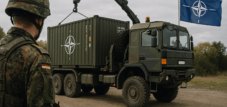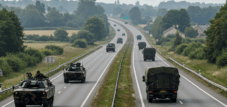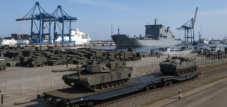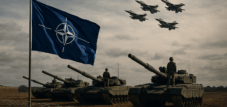
Italy's military logistics and Giorgia Meloni's military turnaround: Is Italy truly ready for a NATO emergency? – Creative image: Xpert.Digital
NATO's southern flank: Can Italy fill the gap? Meloni's plan for Europe's security
Why am I, as an observer, concerned with the question of Italy's military readiness?
As someone who follows current geopolitical developments, I constantly ask myself: Is Italy truly prepared for a NATO emergency? This question is particularly important to me because Italy, as NATO's southern anchor country, has a different perception of threat than the states on its eastern flank. While Germany and Poland primarily focus on the Russian threat from the east, Italy's strategic focus is primarily on the Mediterranean and North Africa.
The Meloni government faces a complex dilemma: On the one hand, it must fulfill its NATO obligations and demonstrate solidarity with its eastern allies. On the other hand, the country is struggling with structural military weaknesses, particularly in the army, and a strained budget situation that makes drastic increases in defense spending difficult.
How does Italy perceive the current threat situation?
A closer look at Italian security policy reveals that Rome assesses the threat posed by Russia differently than many other NATO partners. Italy does not primarily see itself threatened by a direct Russian invasion, but rather by the destabilizing effects of Russian activities in the Mediterranean.
The Italian leadership is particularly concerned about the Russian military presence in Libya. General Vincenzo Camporini, former Italian Chief of the General Staff, issued a stark warning: "The opening of a Russian military base in Benghazi would pose a serious strategic threat to the security of the Mediterranean." This assessment reflects how Italy perceives the threat differently, both geographically and strategically.
At the same time, Italy emphasizes its role as a "strong point on NATO's southern flank." The Italian armed forces are focused on "contributing to stability along the alliance's southern flank," which underscores their strategic priorities. This focus on the south, however, does not mean that Italy is completely neglecting its eastern flank – the country is indeed contributing to NATO's reinforcement in the Baltic states and providing troops for airspace surveillance.
What specific military contributions is Italy making to support Ukraine?
Looking at Italy's arms deliveries to Ukraine, a picture emerges of modest but certainly significant support. Italy has supplied Ukraine with up to 60 M109 self-propelled howitzers, several Sidam-25 anti-aircraft vehicles, and Puma 6x6 armored personnel carriers. According to open-source intelligence, four Puma wheeled armored vehicles and five Sidam armored vehicles were destroyed in combat, confirming the actual use of these systems.
Furthermore, Italy is planning a "massive arms shipment" of 400 M113 armored personnel carriers to Ukraine. These vehicles, although older, are, according to Defense Minister Crosetto, "very well able to traverse forests and rough terrain" and are therefore quite suitable for Ukrainian conditions.
What gives me pause, however, is the reluctance regarding deliveries. One reason for the limited arms aid is that "the Italian army lacks equipment." This points to structural problems that go beyond a mere willingness to support Ukraine.
What is the financial situation and defense spending of Italy?
The figures speak for themselves: In 2024, Italy spent only 1.49 percent of its GDP on defense, significantly below the NATO target of two percent. At €38 billion, Italy lags far behind other major European NATO partners.
The situation is particularly problematic in light of the new NATO targets. NATO member states have committed to spending five percent of their GDP on defense and security by 2035. For Italy, which is already struggling to meet the two percent target, this is a formidable challenge.
Italy's creative approach to this challenge is interesting: Rome plans to declare civilian infrastructure projects as defense spending, including the planned €13.5 billion bridge across the Strait of Messina. This "dual-use" argument demonstrates how Italy is attempting to meet NATO requirements without unduly burdening the national budget.
What modernization plans does Italy have for its armed forces?
Despite financial constraints, Italy has launched ambitious modernization plans. The government intends to invest 25 billion euros in modernizing its armed forces, a considerable undertaking.
Air Force: F-35 as backbone
Italy plans to purchase 115 F-35 fighter jets, which would make it the largest F-35 fleet in Europe. The latest order comprises 25 additional F-35s (15 F-35As and 10 F-35Bs) worth US$7 billion. By comparison, Germany plans to acquire only 35 F-35 jets.
In addition, 24 new Eurofighters of Tranche 4 will be procured to replace the older aircraft. These investments demonstrate Italy's ambitious modernization efforts for its air force.
Navy: Strength in the Mediterranean
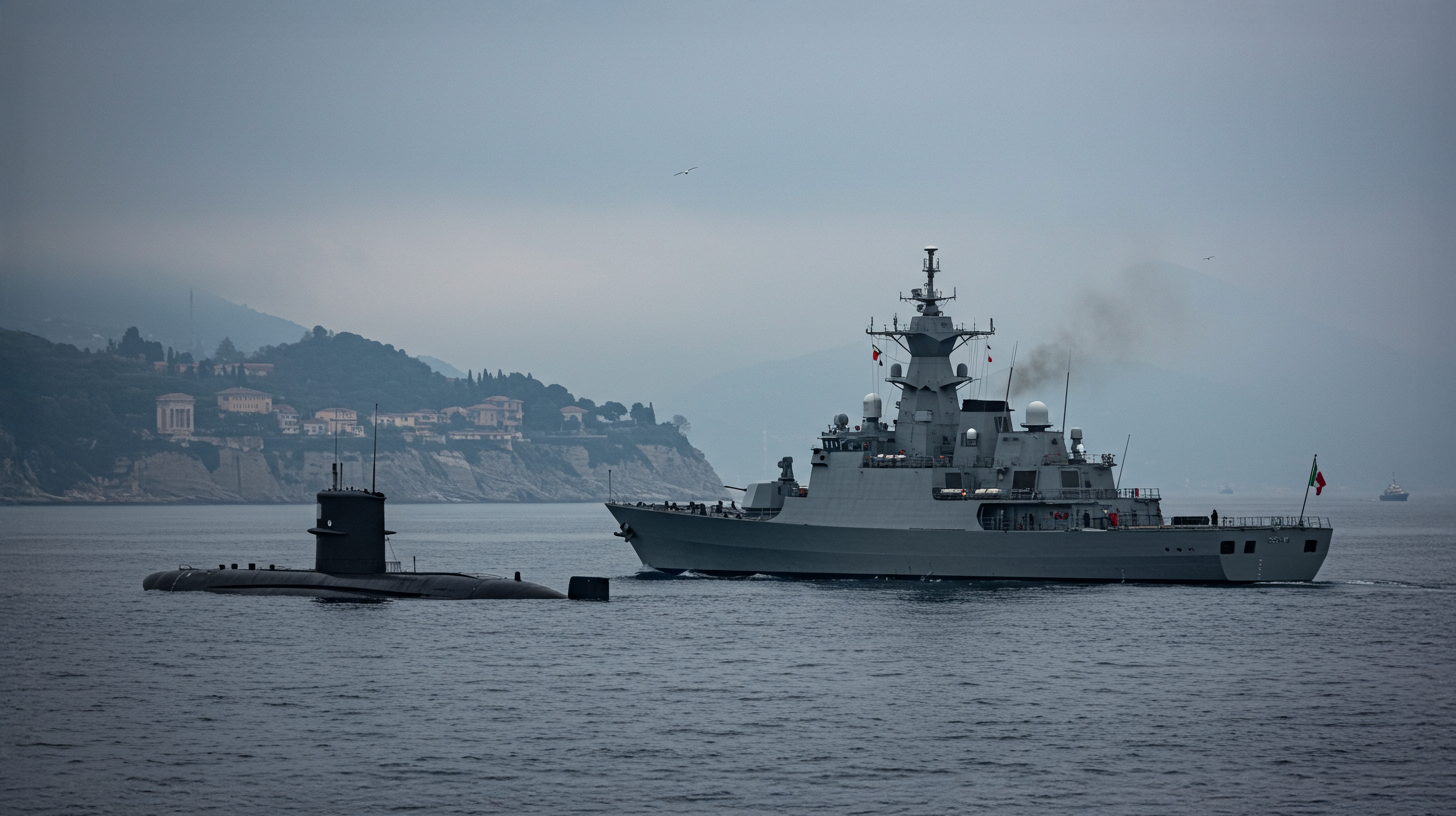
The Italian Navy is already an impressive force. Italy "possesses one of the largest and most powerful navies in the Mediterranean" and "has comprehensively modernized it in recent years." The acquisition of two new FREMM EVO frigates for €1.5 billion underscores these modernization efforts.
Army: The biggest weakness
Herein lies the main problem: "The army is the branch of the armed forces that is lagging furthest behind. The land forces remain the biggest Achilles' heel." Only about 50 of the 200 Italian Ariete main battle tanks are operational, which illustrates the material weakness.
However, Italy is planning a comprehensive renewal
380 new KF51 Panther main battle tanks are intended to replace the outdated Ariete tanks, in addition to 1,050 Lynx KF41 infantry fighting vehicles. This procurement is being carried out through a joint venture between Rheinmetall and Leonardo with a total volume of approximately 30 billion euros.
How does Italy plan to expand its workforce?
Another important aspect is the planned increase in personnel. Italy intends to increase its army by 40,000 soldiers to approximately 135,000. This plan is to be implemented between 2030 and 2033 and will be partially financed by EU funds.
Even today, Italy possesses a considerable total strength: 340,000 men and women under arms – theoretically. This number includes the Carabinieri (110,000), the Guardia di Finanza (over 60,000), and the Coast Guard (over 10,000), all of which have combatant status.
Hub for Security and Defense - Advice and Information

Hub for Security and Defense - Image: Xpert.Digital
The Security and Defence Hub offers expert advice and up-to-date information to effectively support companies and organizations in strengthening their role in European security and defence policy. Working closely with the SME Connect Defence Working Group, it particularly promotes small and medium-sized enterprises (SMEs) that wish to further develop their innovative capacity and competitiveness in the defence sector. As a central point of contact, the Hub thus creates a crucial bridge between SMEs and European defence strategy.
Related to this:
Strategic realignment: Italy's path to European defense strength
What role does Italy play in NATO missions worldwide?
Italy's contribution to NATO goes far beyond mere material strength. Italy is "a leader in NATO in terms of the quality and quantity" of its measures and "the main contributor to the missions of the Atlantic Alliance".
Italy is particularly active in Kosovo: with around 1,000 troops stationed there, Italy is the main contributor to the KFOR mission. This underscores Italy's historical responsibility for the Balkan region, which is considered "of crucial importance".
Italy contributes 7,500 soldiers to NATO, EU, and UN missions, significantly more than Germany with 3,500. This demonstrates that despite limited resources, Italy makes a disproportionately large contribution to international missions.
How do other NATO partners deal with similar challenges?
To better understand Italy's situation, it is helpful to compare it with other NATO partners. Germany and France invested similar sums in their armed forces over 30 years (1993-2022): Germany 1,408.8 billion USD, France 1,401.39 billion USD.
Interestingly, "Germany and France invest their military spending more efficiently overall than the United Kingdom." This suggests that it's not just about the amount of spending, but about its effective use.
“In the past, France maintained a military budget comparable to Germany’s, but used it to build a more combat-ready army.” This finding shows that Italy certainly has the potential to achieve more with limited resources.
Why is Italy hesitating to fully implement NATO requirements?
Italy's reticence has several causes. "In Italy, the war in Ukraine is not perceived as an immediate threat," because the country is "geographically and culturally further removed from Ukraine.".
The political situation is complex: "There are very strong pacifist movements within the Italian opposition and among the population, and little support for increasing military spending." This domestic political reality makes drastic rearmament measures considerably more difficult.
Meloni has therefore chosen a cautious communication strategy: "'Armament is not the right word,' she said after the summit." Instead, she emphasizes that it is also about "raw materials, cybersecurity and critical infrastructure.".
What practical problems arise during implementation?
The biggest challenges lie in the details. Italy has already announced its intention to reach the two percent target by 2025, but reality paints a different picture. According to current estimates, Italy will not reach this target even in 2025.
One major problem lies in the high national debt: "Italy can hardly take on more debt," while Germany can upgrade its armed forces through additional debt.
The shortcomings are particularly evident in the army: "The army, in particular, has a significant need for modernization and funding." The equipment for 340,000 soldiers is simply not available, which puts the theoretical personnel strength into perspective.
How does Italy assess its strategic priorities?
Italy is deliberately setting different priorities than its Eastern European NATO partners. "Just as Germany is under pressure to assume a leading role on the eastern flank, Italy bears responsibility for the southern flank.".
This strategic orientation is entirely justified: "The Mediterranean is an important transport and supply route for Europe, and the North African countries are important energy suppliers." In addition, there are "issues in the region that can pose a threat to NATO countries, such as terrorism, arms trafficking, and illegal migration.".
What progress is already visible?
Despite all the problems, some positive developments are evident. Italy has officially committed to achieving the NATO target of five percent of GDP by 2035, even though it insists on "a period of at least ten years".
The modernization programs are underway: The first Lynx KF41 infantry fighting vehicle arrived at the Italian test center on December 31, 2024, and F-35 deliveries are in progress.
"Italy is the only southern NATO state capable of building a credible military force," according to various expert analyses. The combination of a strong navy, a modernized air force, and planned army upgrades could indeed make Italy one of Europe's leading military powers.
What does this mean for Italy's NATO alliance capability?
The answer to the original question is complex. Italy is currently only partially prepared for a NATO emergency, but has initiated ambitious plans to improve its capabilities.
Italy's strengths clearly lie in the air and naval sectors. With 115 F-35s, Italy will possess the largest fleet of modern fighter jets in Europe, and its navy is already a formidable force in the Mediterranean. The Italian defense industry, with companies like Leonardo and its collaborations with Rheinmetall, demonstrates the country's considerable technological competitiveness.
The weaknesses are concentrated in the army and its financing. The planned 30 billion euros for new tanks is ambitious, but the funding is not yet fully secured. NATO's five percent spending target will pose an enormous challenge for Italy, one that can only be met through creative accounting and EU support.
In a serious NATO crisis, Italy would likely function more as a specialized partner than an all-round military power. Its strengths lie in controlling the Mediterranean, providing air support with modern F-35s, and stabilizing its southern flank. Italy is currently only partially equipped for traditional national defense or large-scale ground operations, but is working intensively to improve these capabilities.
The strategic partnership with Germany (Rheinmetall-Leonardo) and the EU integration of defense planning point the way to a European defense architecture in which Italy contributes its specific strengths instead of attempting to build up all military capabilities on its own. In this context, Italy is certainly a reliable and increasingly capable NATO partner – just with a different regional focus than the eastern flank states.
Consulting - Planning - Implementation

Markus Becker
I would be happy to serve as your personal advisor.
Head of Business Development
Chairman SME Connect Defense Working Group
Consulting - Planning - Implementation
Konrad Wolfenstein
I would be happy to serve as your personal advisor.
You can contact me at wolfenstein∂xpert.digital or
Just call me on +49 7348 4088 965 .