
Picking errors are a money pit: Why mixed case palletizing is the most important profit lever in modern warehousing.
Xpert pre-release

Available in 27 languages 📢
Prefer Xpert.Digital on GoogleⓘPublished on: December 4, 2025 / Updated on: December 4, 2025 – Author: Konrad Wolfenstein
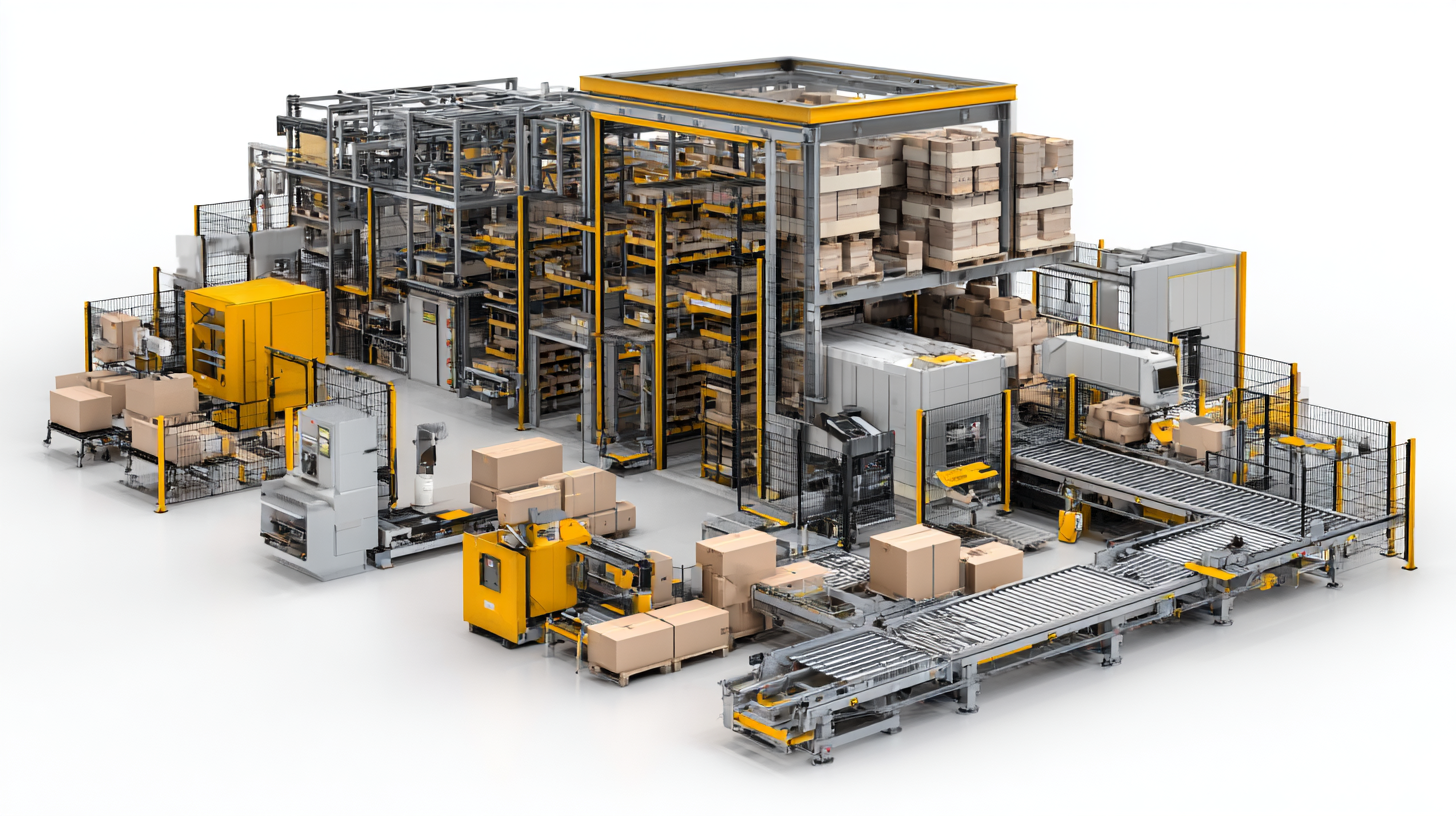
Picking errors are a money pit: Why mixed case palletizing is the most important profit lever in the modern warehouse – Creative image: Xpert.Digital
Intelligent palletizing systems for modern retail: How mixed case palletizing is transforming the logistics of fast-paced retail.
The end of "warehouse Tetris" – The silent transformation in the warehouse: Why mixed case palletizing will determine the future of retail
While the world focuses on last-mile delivery and drone shipments, the true economic success of modern retail is often determined much earlier in the chain: deep in the aisles of distribution centers, where thousands of heterogeneous items must be assembled daily into stable, store-specific units. The demands on logistics have changed dramatically. An average supermarket now carries over 30,000 different items, and the tolerance for errors is approaching zero. In this high-pressure environment, traditional, purely manual order picking is no longer just inefficient—it's becoming an existential risk.
This article highlights one of the most critical technological and strategic responses to this challenge: Mixed Case Palletizing.
This goes far beyond simply installing a robotic arm. It involves a fundamental redesign of material flow, combining intelligent sequencing, ergonomic workplace design, and state-of-the-art automation. Given a massive labor shortage, with the market facing a shortfall of millions of workers by 2030, and the cost of errors, which can quickly exceed one million euros per year, the transition to intelligent palletizing systems is no longer a mere technological luxury.
This article provides an in-depth analysis of the economic foundations of this technology. From the drastic reduction of travel and search times through shuttle systems to the amortization calculations of automated systems, which often reach break-even in under two years, we examine how the perfect orchestration of software and hardware not only reduces the error rate to below 0.5 percent but also significantly optimizes truck utilization. Learn why mixed-case palletizing is now the indispensable step for decision-makers in supply chain management to secure profitability and guarantee competitiveness in a cutthroat market.
The last mile of warehouse complexity – Why a redesign of the palletizing process is inevitable
Order fulfillment in modern retail is at a critical turning point. While last-mile logistics in e-commerce is receiving increasing attention, the core challenge—the efficient and precise provision of mixed product assortments on pallets—often remains under-researched, even though it forms the economic backbone of a functioning distribution chain. Mixed-case palletizing, the automated or semi-automated assembly of pallets containing heterogeneous products of varying shapes, sizes, and weights, is no longer a technological gimmick but has become a necessity for remaining competitive in 21st-century retail.
The complexity begins with the basic numbers. According to recent surveys, the average American supermarket carries nearly 31,795 items, while British convenience stores have to manage an average of 4,600 items, including food, beverages, drugstore items, and household goods in a seemingly endless variety. This product complexity differs fundamentally from the traditional manufacturing industry, where pallets are typically stocked with a single SKU (Single Product Unit). Modern retail, on the other hand, demands so-called mixed pallets – customized assortments tailored to the individual requirements of each store. This means that a distribution center must not only store, retrieve, and pack thousands of items, but also assemble them with accuracy and speed into precisely calibrated mixes.
This requirement seems deceptively simple at first glance, yet is operationally highly complex. The problem is exacerbated by the economic arithmetic of fulfillment errors. Industry benchmarks show that average picking error rates range between one and three percent – a rate that initially appears acceptable. However, the true economic impact only becomes apparent at scale. A distribution center processing 500,000 orders annually with a three percent error rate will produce 15,000 incorrect picks. The cost per error averages between €47 and €93 in direct expenses – shipping costs for the incorrect shipment, return shipping, repicking, and repackaging – but the indirect costs are significantly higher. Lost customer lifetime accounts of €500 to €2,000 per error, reputational and conversion losses due to negative reviews, and the opportunity costs of capital tied up in incorrect merchandise add up to a total loss of €705,000 to €1.4 million annually. Optimizing this rate to a best-in-class level of 99.5 percent would reduce the cost of errors to €125,000 to €232,500 – a saving of over €1 million per year through improved accuracy alone.
These figures illustrate why mixed-case palletizing is not merely an operational detail, but a strategic lever for profitability. The implementation of well-designed palletizing processes, supported by intelligent sequencing systems and whether manual or automated, addresses three fundamental economic problems simultaneously: it reduces errors, optimizes capacity, and buffers against the chronic labor shortage.
From strategic imperative to operational reality: The economic fundamentals of mixed case palletizing
Mixed-case palletizing is not just an efficiency issue, but a strategic necessity in light of two converging forces squeezing profitability: the ongoing labor shortage and declining consumer tolerance for non-performance. The warehousing and logistics labor market is undergoing worrying structural changes. The labor force participation rate in the United States has fallen from 67.3 percent in 2000 to 62.5 percent in 2024, meaning millions fewer people are participating in the labor market. At the same time, the retirement of the baby boomer generation is resulting in approximately 10,000 workers leaving the workforce every day—taking with them their deep, practical knowledge of processes and systems.
In the manufacturing sector alone, 600,000 positions remained unfilled in the first half of 2024, with a projection of 2.1 million vacancies by 2030. This pattern extends to the logistics sector, exacerbated by the physically demanding and repetitive requirements of warehouse work. Picking operations in traditional warehouses often require employees to walk 10 kilometers or more daily to locate ordered items. The resulting turnover rates are dramatic—some facilities experience up to 40 percent turnover within the first year of employment. This leads to additional training costs, as the average picker needs two to three months to become productive, and the average cost to replace a picker ranges from €18,000 to €30,000—equivalent to 30 to 50 percent of their annual salary.
The economic implications of this structural change are immediate. A classic operational restructuring – the simple redistribution of labor – no longer works when there is a fundamental lack of available workforce. Distribution centers must therefore choose: either they accept declining throughput and thus falling operating results, or they invest in automation to achieve the same capacity with fewer employees.
Mixed-case palletizing addresses this dilemma by strategically deploying automation where it offers the greatest operational and economic leverage. Without optimized sequencing and palletizing, an average distribution center typically wastes 60 to 65 percent of its pickers' working time walking and searching for parts within the warehouse. Automated small parts systems, particularly shuttle-based mini-load systems, can drastically reduce this by bringing goods directly to the worker—the so-called "goods-to-person" concept. Such a configuration can allow a single operator to handle the picking orders of multiple manual operators, thereby reassigning up to two-thirds of the warehouse workforce to other, more value-added tasks. In quantitative terms, this translates to a 200 to 600 percent increase in labor productivity—without a proportional increase in personnel costs, or even with an absolute reduction in these costs.
This is not theoretical extrapolation, but proven operational results. Case studies show that a configuration with vertically integrated warehouse systems and intelligent palletizing enables the processing of an average of 4,500 order lines per day, while saving 21 percent on labor costs by eliminating the need for temporary workers. Another case documents a reduction in warehouse staff from 22 to 10 pickers—a reduction of 54 percent—while productivity increased by 600 percent, from 40 to 240 order lines per hour.
The direct cost savings quickly translate into a return on investment for these automation investments. A typical mini-load AS/RS installation with shuttle systems can replace traditional racking systems, achieving up to four times higher storage density. While traditional AS/RS solutions cost between €50,000 and €80,000 per storage location and typically require 30 months for capital amortization, modern Autonomous Mobile Robots (AMRs) offer amortization in under 24 months, with a return on investment exceeding 250 percent.
Furthermore, automation enhances secondary revenue opportunities. Automated systems enable 24/7 operation without additional personnel costs. This results in a fourfold acceleration of capital amortization compared to single-shift operations. For a distribution center processing approximately 100,000 orders per month, this translates to an almost year faster return on investment, directly impacting the return on the investment.
The sequencing architecture: The hidden foundation of mixed case palletizing
The success of mixed-case palletizing rests not solely on the final palletizing action – whether manual by skilled employees or automated by robotic systems – but on an upstream sequencing architecture that optimally prepares and organizes goods. This is an often overlooked element, but it is the foundation upon which both manual and automated palletizing are built.
In traditional warehouse systems, sequencing often occurs implicitly – employees select items from inventory, check them, and then attempt to stack them stably on the spot. This is inefficient and prone to errors. Intelligent mixed-case palletizing solutions reverse this process. An integrated warehouse management system analyzes incoming orders, taking into account the size, weight, and physical characteristics of each item, as well as its specific target store layout (the so-called planogram – a harmonious representation of how products should be presented in the store), and then calculates an optimal stacking pattern even before physical picking begins.
Automated small parts systems, especially mini-load systems with shuttle technology such as the Daifuku Shuttle Rack M or equivalent systems, are central to this function. These systems use multiple autonomous shuttles operating simultaneously in different areas or levels of the storage system. Each shuttle picks items from its assigned area and delivers them to the palletizing station in a pre-optimized sequence. This eliminates a critical source of inefficiency: the search for and selection of items by human operators. Instead, the item is virtually pre-calibrated and made available at the right time and place.
Shuttle-based mini-load systems offer specific economic advantages over traditional stacker cranes. While the latter operate with a long reach – typically up to 20 meters high – and deliver medium throughput with sequencing, shuttle systems are designed for high throughput. By parallelizing retrievals, these systems can achieve higher call-per-hour rates, which is critical for palletizing orders with high volume requirements. At full capacity, shuttle systems can achieve cycle times of less than 10 seconds per item – impossible for manual or traditional stacker crane systems.
The economic implications are significant. A distribution center that needs to stock, for example, 2,000 mixed-case pallets per day, with an average of 15 different items per pallet, requires 30,000 item picks per day. With a conventional storage and retrieval system that allows approximately 300 to 400 picks per hour, this would require about 75 to 100 operating hours per day – a multi-shift operation. With a shuttle system that achieves 800 to 1,000 picks per hour, this is reduced to 30 to 38 hours – effectively a standard shift. The savings in operating costs, overtime, and staffing are directly measurable.
Added to this is the accuracy component. A shuttle system operates with constant, machine-like precision – there's no "fatigue" on late shifts, no mispicks due to lapses in attention. Error rates for automated sequencing using shuttle systems are typically below 0.1 percent, compared to 1 to 3 percent for manual systems. This, in turn, leads to significant secondary savings in returns, customer service costs, and warehouse management.

Xpert partner in warehouse planning and construction
Mixed-case palletizing: How hybrid palletizing reduces costs and ensures flexibility
Manual palletizing: Intelligent compromises between flexibility and cost
Not every application justifies full automation. An important aspect of a mixed-case palletizing strategy is the recognition that manual or semi-automated palletizing remains economically optimal under certain conditions. This pragmatism is essential for realistic implementation in medium-sized businesses.
The advocacy for manual palletizing is not based on nostalgia or technological pessimism, but on rational economic calculations. For operations with lower volumes or high product variation, the capital expenditure for full robotization can significantly extend the amortization period or even render it unprofitable. A properly organized manual palletizing station, supported by digital guidance, can nevertheless achieve considerable efficiencies, especially if sequencing is already automated.
Modern manual palletizing workstations use display guidance systems that show the operator in real time where the next item should be placed, what stability is required, and how the stacking sequence should be optimized. This is also ergonomically superior – the operator works at a fixed station where goods are already sequenced and positioned at the correct height, instead of walking in traditional warehouse aisles. This reduces physical strain and the risk of injury, contributing to higher employee satisfaction and a lower turnover rate.
The economic profile of such a hybrid configuration is attractive. Under ideal conditions, an operator at a guided palletizing station can assemble approximately 12 to 15 pallets per hour – a throughput sufficient for many medium-sized operations. The investment costs for such a station range from about €50,000 to €80,000, which pays for itself within two to three years when considering the reduction in errors, the avoidance of returns, and the productivity gains compared to unsystematic basic palletizing.
At the same time, this configuration retains important flexibility. If product mixes change drastically or new assortments with unusual shapes and sizes are added, a human operator can react more adaptively than a rigidly programmed robotic system. For many retailers that vary their product mix seasonally or operate in less stable markets, this flexibility factor is not negligible.
Automated palletizing: Robot systems and their economic supremacy in scaling
Where volumes justify it, full automation of palletizing reveals a convincingly different economic profile. Automated mixed-case palletizing solutions, such as the IK PAL system from ULMA Handling or the ACPaQ systems from Swisslog, use articulated robots or gantry systems, combined with advanced image processing systems, to automatically detect, grip, and place items in optimal stacking patterns.
The technical architecture of these systems is elegant. An item arrives from the sequencing line, a camera captures its position and dimensions, an algorithm determines the optimal stacking pattern in real time based on weight distribution, product fragility, and transport stability, and a robotic arm performs the placement. The entire process typically takes 5 to 8 seconds per item, a throughput that is approximately three times that of manual operation.
The economic advantages of this automation are numerous. First, 24/7 operation. An automated system operates around the clock, meaning that the same palletizing capacity with low operating load is distributed across multiple shifts without requiring additional hardware. This results in a fourfold reduction in the payback period.
Secondly: consistency and quality. The automated palletizing process produces every pallet with identical quality – optimal weight distribution, maximum space utilization, and perfect stability. This has a direct impact on transport damage rates. A poorly loaded pallet can lead to product losses during transport, resulting in further costs and potentially store out-of-stock situations. Well-loaded automated pallets drastically reduce this rate.
Thirdly: Labor costs. A fully automated palletizing system requires one or two monitoring operators – to monitor the system, handle exceptions, and perform quality control – compared to 8 to 12 manual palletizers for the same capacity. This represents a cost reduction of 85 to 90 percent in operating labor costs for this specific function.
Fourth: Error rate. Automated systems produce virtually no mispicks during the palletizing process – the sequencing has already been pre-programmed with high accuracy, and the robot performs the placement with consistent precision. This eliminates a large proportion of the costly returns and complaints that arise from incorrectly loaded pallets.
The investment costs for a fully automated palletizing system are substantial – typically €1.5 to €3 million for a complete installation, including robots, vision systems, sequencing lines, and warehouse management software integration. However, with sufficient volume, this investment pays for itself quickly. A distribution center handling 3,000 to 5,000 mixed-case pallets per day can recoup the investment in two to three years through labor cost savings, error reduction, and improved capacity. With 24/7 operation, the payback period can be reduced to approximately 12 to 18 months.
The capacity aspects are also remarkable. An automated palletizing system can typically load 30 to 40 pallets per hour, compared to 12 to 15 with manual stations and 6 to 8 with traditional palletizers without digital support. This means that a single automated system delivers the same capacity as 3 to 5 manual stations – with greater consistency and fewer errors.
Holistic space optimization and the truck utilization imperative
An often overlooked economic element of mixed-case palletizing is the space optimization component and its direct impact on shipping costs. Modern mixed-case palletizing systems are designed not only to stack items but also to optimally utilize the available space on the pallet.
This may sound trivial, but its practical relevance is enormous. A well-stacked mixed-case pallet typically utilizes 85 to 95 percent of the available space, while a manually loaded pallet often only uses 60 to 75 percent – due to suboptimal arrangement patterns and unnecessary gaps. A truck, which typically has a capacity of 26 cubic meters, can transport a significantly larger quantity of goods with optimally stacked pallets.
Assuming an average van can hold 20 optimized or 16 sub-optimal mixed-case pallets, delivering 100 pallets to various retail locations would require 5 trips with optimized pallets but 6 to 7 with poorly stacked ones. With average transport costs of approximately €1,200 to €1,500 per trip, this translates to a difference of €1,200 to €3,000 per 100-pallet run. For a medium-sized operation handling 500 to 1,000 mixed-case pallets daily, this amounts to annual transport cost savings of €600,000 to €1.5 million.
This logic also motivates investment in stronger and better palletizing control systems. An intelligent warehouse management system that optimizes palletizing patterns based on weight distribution, transport route, and end-destination business can achieve an additional 10 to 15 percent in space efficiency gains. That's not marginal—it's the difference between a 7-van operation and a 6-van operation.
Furthermore, optimized palletizing also enhances the sustainability dimension of operations. Fewer transports mean fewer CO2 emissions per ton of goods. For large distribution centers handling thousands of pallets daily, this could translate into a 10 to 15 percent reduction in transport emissions – a figure that is becoming increasingly relevant for environmentally conscious retailers, especially given growing regulatory requirements surrounding sustainability.
The strategic integration mechanism: How mixed-case palletizing fits into existing systems
A frequently overestimated aspect of automation investments is the assumption that new systems operate in isolation. In reality, the integration of mixed-case palletizing solutions into existing warehouse management, picking, and shipping infrastructures is critical for economic viability.
Modern implementations use an orchestrated system model. Essentially, the picking line (whether manual or automated) generates sequenced goods containers (typically boxes or trays). These are directed onto a conveyor belt that transports them to the palletizing station. At manual stations, a display shows the operator the exact arrangement. At automated stations, image processing and stacking are performed robotically. The completed pallet is then automatically packed, wrapped in film, labeled, and transported to the shipping staging area.
This integrated process is essential because it eliminates buffer effects. In poorly designed systems, queues form between picking and palletizing, leading to delays and wasted space. In well-integrated systems, goods flow almost continuously through the pipeline.
The software component is more than just a side note – it's central. Modern systems like Swisslog's SynQ orchestration system or equivalent Warehouse Execution Systems (WES) integrate data from various physical systems (storage and retrieval machines, shuttles, robots, conveyor systems) and optimize material flow in real time. Specifically, this means that if a picking line operates faster than palletizing, the system slightly slows down picking to avoid bottlenecks. Conversely, if palletizing is faster, picking is accelerated to maximize throughput.
This real-time optimization is not trivial to implement – it requires a deep understanding of process flows and a robust IT architecture. However, the efficiency gains are substantial. A well-orchestrated system can increase overall throughput by 15 to 25 percent compared to a non-orchestrated system, without adding any additional physical resources.
At the same time, this integration function is also the biggest implementation risk factor. Approximately 61 percent of companies undertaking automation upgrades report that change management—not hardware—is the biggest obstacle. Employee training, process adjustments, and integration with legacy IT systems—these soft factors can delay implementations by months and significantly increase costs.
An intelligent implementation strategy therefore begins with a realistic assessment of the existing IT infrastructure. If a distribution center is operating an outdated warehouse management system (WMS) with weak real-time data capabilities, the cost of a complete IT modernization could exceed the hardware costs. This is a key factor when weighing full automation against hybrid approaches.
The competitive dynamics: Why mixed-case palletizing is increasingly becoming the standard
A final economic factor is the competitive dynamic. Retail is a very low-margin business – average operating margins range from 3 to 5 percent. This means that even small operational improvements have a significant impact on profitability.
This has triggered a classic ratchet effect: First-mover companies that make mixed-case palletizing investments early gain efficiency advantages and lower costs per pallet. This allows them to either offer lower prices or achieve higher margins. This forces competitors to catch up. Those that don't are gradually condemned to cost disadvantages that erode their competitive position.
Industry surveys show that approximately 40 to 50 percent of large European distribution centers have already implemented some form of automated mixed-case palletizing, with a growth rate of about 15 to 20 percent annually. This means that the question is no longer whether a distribution center should adopt this technology, but when and to what extent.
The market size for warehouse automation is projected to grow from an estimated volume of approximately €35-40 billion in 2024 to around €55 billion by 2030, with an average annual growth rate of about 15 percent. Mixed-case palletizing represents a significant segment of this market, driven by the need for cost optimization and labor shortages.
Mixed-case palletizing as a strategic investment imperative
Mixed-case palletizing is no longer an optional efficiency improvement in retail fulfillment, but a strategic imperative. The economic fundamentals are unequivocal: By combining intelligent sequencing, automated or semi-automated storage systems, and flexible palletizing – whether manual, robot-assisted, or hybrid – distribution centers can increase their speed by 30 to 40 percent, reduce their error rate from 1 to 3 percent to below 0.5 percent, and cut their labor costs by 30 to 50 percent.
The investment calculations are conclusive. A mid-market implementation with automated sequencing and hybrid-manual palletizing has typical payback periods of 24 to 36 months, with return-on-investment rates of 150 to 250 percent over a 5-year period. Fully automated solutions at sufficient volume achieve payback periods of 12 to 24 months.
For leading retailers and their logistics partners, the only relevant question is no longer whether to invest in these technologies, but how to do so intelligently – focusing on modular approaches, phased implementation, and clear measurement of efficiency gains. Companies that don't follow this path will increasingly struggle for market share and profitability, trapped in a classic lab-intensive cost trap that is no longer sustainable in today's economy with labor shortages and price pressures.

Xpert.Plus warehouse optimization - high-bay warehouses such as pallet warehouses consulting and planning
We are there for you - advice - planning - implementation - project management
☑️ Our business language is English or German
☑️ NEW: Correspondence in your national language!

Konrad Wolfenstein
I would be happy to serve you and my team as a personal advisor.
You can contact me by filling out the contact form or simply call me on +49 7348 4088 965 (Munich) . My email address is: wolfenstein ∂ xpert.digital
I'm looking forward to our joint project.










