Automotive, chemicals, mechanical engineering: This toxic mix is driving traditional German companies abroad – Image: Xpert.Digital
Energy, bureaucracy, competition from China: Why the German economy is in free fall
The creeping exodus: Why the foundation of the German economy is crumbling massively
1.4 trillion euros needed: German industry faces the ultimate stress test
Germany is currently experiencing an unprecedented economic upheaval: The once unstoppable engine of European industry is not only sputtering, it is losing massive substance. What was long dismissed in political debates as a mere cyclical dip is revealing itself, upon closer examination of the raw figures, as a profound structural crisis. Industrial production is declining continuously, while a toxic mix of extreme energy costs, crushing bureaucracy, and a chronic shortage of skilled workers is manifesting itself as a devastating competitive disadvantage. When traditional corporations from Volkswagen to Miele to Thyssenkrupp are cutting tens of thousands of jobs and increasingly relocating their production abroad, it is about far more than just poor quarterly results. It is about the very foundation of German prosperity. This article analyzes in detail why the much-discussed deindustrialization has long since become a harsh reality, which geopolitical shocks are further exacerbating the situation – and whether the looming economic decline can still be averted through a radical change of course.
When prosperity loses its foundation – Why Europe's industrial locomotive has begun to sputter
The bare facts: A decade in retreat
Industrial production in Germany is experiencing a sustained, structurally driven downward trend that extends far beyond cyclical fluctuations. The production index for the manufacturing sector, which peaked at over 110 index points in 2018 (base year 2021 = 100), has declined almost continuously since then. In March 2026, the overall index for industry stood at just 91.2 points; energy-intensive industries even recorded a value of only 83.8 points. This represents a decline of approximately 17 to 24 percent compared to the 2018 peak – depending on the industry segment. The extent of the crisis becomes even clearer when one considers that even the dramatic pandemic-related slump in April 2020, when the overall index plummeted to 73.5 points, was largely recovered within about two years – but the subsequent structural downward trend could not.
Economists at the Kiel Institute for the World Economy described 2024 as a year to forget for German industry: Industrial production fell by around five percent compared to the previous year. For the entire year of 2024, production in the manufacturing sector declined by 4.5 percent after adjusting for calendar effects, with pure industrial production excluding energy and construction falling even more sharply at 4.9 percent. While 2025 brought a slight improvement, industrial production still fell by a further 1.6 percent compared to the previous year – the fourth consecutive decline. This trend continued in March 2026: Production in the manufacturing sector fell again by 0.7 percent compared to the previous month and, after adjusting for calendar effects, was 2.8 percent below the level of the same month of the previous year. Analysts had expected an average increase of 0.4 percent for this month – reality once again proved disappointing.
A notable trend is the growing discrepancy between pure production volume and the actual value added. While the production index in the manufacturing sector was a good 13 percent below the 2018 level in 2024, the price-adjusted production value in the national accounts still managed a slight increase until 2023. Although German industrial companies are producing fewer units, they are generating higher added value with each of these products through digital services, service components, and licensing revenues. This mitigates the overall economic impact, but it does not disguise the fact that the physical manufacturing base is shrinking.
Foundation of the economy: What's at stake
The importance of industry to the German economy can hardly be overstated. The manufacturing sector contributes approximately €767 billion directly to German value added, representing over 22 percent of the gross domestic product. Including the indirect effects of upstream and downstream sectors, industry, together with its suppliers and service partners, generates roughly 40 percent of total value added in Germany. The industry's share of value added in Germany remained virtually constant at over 22 percent for many decades – a figure that distinguishes Germany from many other Western economies that have shifted more towards service-based economies.
This structural strength is now at risk. A joint study by the Federation of German Industries (BDI), the Boston Consulting Group, and the German Economic Institute concludes that around 20 percent of Germany's industrial value creation is threatened. To remain internationally competitive, additional private and public investments of €1.4 trillion will be needed by 2030 – a figure that underscores the seriousness of the situation. While overall gross domestic product grew slightly again in 2025 by 0.2 percent after two years of recession, this growth was primarily attributable to increased consumer spending by private households and the government – not to industry. Exports declined again, and investment in equipment and construction remained weak.
Energy as the Achilles' heel: The global cost disadvantage
Perhaps the most significant structural competitive disadvantage for German industry is energy costs. Compared internationally, companies in Germany pay top prices for electricity and gas. According to recent surveys, the average industrial electricity price in Germany in 2024 was 14 cents per kilowatt-hour, significantly higher than the European average of 12 cents. This difference is even more pronounced in a global comparison: Chinese industrial companies pay only 8.2 cents, and American competitors even just 7.5 cents per kilowatt-hour. This structural cost disadvantage of up to 47 percent compared to the USA and around 42 percent compared to China makes a considerable difference in cost calculations for energy-intensive production processes.
The situation on the gas market is similarly critical. In the first half of 2025, the average European gas price of €41 per megawatt-hour was still roughly twice as high as during the years 2010 to 2019. The price gap with North America remains enormous: In the US, only the equivalent of €11.50 per megawatt-hour was paid in the first half of 2025 – less than a third of the European level. Long-term forecasts indicate that energy prices for industry in Germany will remain above the level of other countries in the long term, resulting in a persistent structural competitive disadvantage. Competitive gas prices compared to the US appear unlikely in Germany in the future.
This reality hits energy-intensive industries particularly hard. These include the chemical industry, metal production and processing, the paper industry, the manufacture of glass, glassware and ceramics, and petroleum refining. These five most energy-intensive sectors account for 77 percent of total industrial energy consumption – yet they generate only 15 percent of industrial employment and 21 percent of industrial gross value added. The cost-benefit ratio of these sectors has fundamentally worsened due to the energy crisis.
Those most affected: Energy-intensive industries on the brink
The decline in the production index for energy-intensive industries is even steeper than that of the overall index. While these sectors had fallen to 86.1 index points at the low point of the COVID-19 crisis in 2020, their index, at 83.8 points in March 2026, is even below this pandemic-related low. This fact alone illustrates the scale of the problem: energy-intensive industries are producing less today than at the height of the COVID-19 crisis.
The chemical industry, Germany's third-largest industrial sector, has been in a deep structural crisis for years. As early as 2023, chemical production plummeted by eleven percent, and sales fell by twelve percent due to parallel price reductions. In 2024, production facilities operated at an average of only 75 percent capacity – the fourth consecutive year in which capacity utilization fell below the threshold necessary for profitable operation. According to a member survey conducted by the industry association VCI, almost half of the companies in the sector expected a further deterioration in their earnings situation. Industry giants such as BASF and Evonik have implemented drastic cost-cutting programs and eliminated thousands of jobs. Nearly half of the companies are unable to pass on the increased energy and raw material costs to their customers – and 34 percent of executives consider their company to be at serious or very serious risk.
Metal production and processing, as well as the steel sector, face similar challenges. Thyssenkrupp, once a symbol of German heavy industry, is cutting thousands of jobs and restructuring its entire group. Faced with Chinese overcapacity and European decarbonization obligations, the steel sector is under a double burden that fundamentally calls its existing business model into question. The increasing outflow of foreign direct investment from Germany is a clear warning sign: exceptionally high net outflows have been recorded since 2018, indicating ongoing deindustrialization and the relocation of production capacity.
The automotive industry: Transformation pressure meets structural crisis
The automotive industry is the beating heart of German industry and, at the same time, the sector that most dramatically embodies structural change. With 770,000 employees, it is Germany's highest-revenue industry. But it is fighting on several fronts simultaneously: weak demand, the difficult transition to electromobility, increasing competition from China, and US trade tariffs under President Trump.
The shift from combustion engines to electromobility is proving to be a profound transformation affecting the entire industrial ecosystem. The boom in government purchase incentives ended abruptly with their unexpected abolition at the end of 2023, whereupon the market for battery-electric vehicles collapsed. Only substantial discounts and new leasing models stabilized demand again – a clear indication of consumers' high price sensitivity. In Volkswagen's passenger car division, profits plummeted by 85 percent in the first quarter of 2025, due to CO₂ provisions, market losses in China, and structural software weaknesses. According to a study by the German Association of the Automotive Industry (VDA), the German automotive sector could lose up to 190,000 jobs by 2035.
At the same time, Chinese companies like BYD and Geely are aggressively advancing in the global market. They are scaling quickly, operating more digitally, and competing much more aggressively on price than the established German players. Germany's export share in the global market is shrinking as its export profile becomes increasingly similar to China's – particularly in the automotive and mechanical engineering sectors. Chinese competitors have gained market share and put more pressure on the competitiveness of European suppliers in Germany than in France, Italy, or Spain. Nevertheless, the industry has begun to rethink its approach: A Fraunhofer ISI survey from the end of 2025 shows that over 20 percent of German automotive companies are already fully focused on electromobility, and another almost 40 percent are in an advanced stage of transformation.
Our EU and German expertise in business development, sales and marketing

Our EU and German expertise in business development, sales and marketing - Image: Xpert.Digital
Industry focus areas: B2B, digitalization (from AI to XR), mechanical engineering, logistics, renewable energies and industry
More information here:
A thematic hub offering insights and expertise:
- Knowledge platform covering global and regional economies, innovation and industry-specific trends
- A collection of analyses, insights, and background information from our key areas of focus
- A place for expertise and information on current developments in business and technology
- A hub for companies seeking information on markets, digitalization, and industry innovations
Mechanical engineering in crisis: Why investors are staying away and factories are relocating
Mechanical engineering in a stranglehold: Capital goods without investors
Besides the automotive and chemical industries, mechanical engineering, one of Germany's traditionally strongest sectors, is also suffering from the ongoing decline in demand. In March 2026, the production of capital goods fell by 1.6 percent compared to the previous month, while consumer goods production even plummeted by 1.9 percent. Mechanical engineering is particularly exposed to the slump in demand in key sales markets: Companies are investing cautiously both in China and within the Eurozone itself. The weakness of global supply chains, increased financing costs as a result of the interest rate turnaround, and geopolitical uncertainties are dampening investment activity worldwide.
Particularly concerning: While orders in the manufacturing sector did indeed rise by five percent in March 2026 compared to the previous month, production simultaneously declined. This discrepancy between growing order backlogs and falling production points to structural capacity problems: A shortage of skilled workers, virtually non-existent buffers in supply chains, and the necessary time lag between order intake and production mean that a rapid recovery cannot be expected, even with improving demand.
The three burdens: costs, bureaucracy, skilled workers
Besides the disadvantage of high energy costs, the same structural burdens are repeatedly cited as investment barriers in business surveys. A BDI (Federation of German Industries) flash survey of around 400 medium-sized industrial companies clearly identifies the three biggest challenges: 76 percent of the companies cite labor costs and the shortage of skilled workers as the biggest challenge, 62 percent complain about high energy and raw material prices, and 37 percent point to bureaucracy, including cumbersome permitting processes. This combination of structural cost disadvantages and bureaucratic paralysis has led to Germany ranking last in international competitiveness for energy-intensive industries – far behind the USA, China, the Middle East, and the rest of Europe.
Skills shortages and bureaucracy are particularly hindering innovation. According to a survey by the German Chamber of Industry and Commerce (DIHK), almost three-quarters of the companies surveyed complain about a lack of personnel, and 68 percent cite high bureaucratic hurdles such as complex approval and licensing procedures. The investment climate has also deteriorated noticeably, as the ifo Institute notes: High financing costs, weak demand, and economic policy uncertainty are dampening the willingness to invest in research and development. Only 55 percent of energy-intensive SMEs consider Germany a viable business location for the future, while 30 percent of companies indicate that they plan to focus their investments outside of Germany in the next five years.
The ifo Institute in Munich reports a new historic low for the end of 2025 in the self-assessment of industrial competitiveness: German industry rates its competitiveness lower than ever before. More than half of the companies in the chemical industry are experiencing losses, and manufacturers of electronic devices and mechanical engineering companies are also struggling with declining competitiveness in international comparison.
The creeping exodus: Deindustrialization as a real process
What was long discussed as a scare tactic is now a measurable reality: German industrial companies are relocating production abroad, and this process is accelerating. An analysis of foreign direct investment flows shows exceptionally high net outflows from Germany since 2018, which are seen as evidence of ongoing deindustrialization and production relocation. The preferred investment destination for many German companies is currently abroad, particularly Eastern Europe and the USA. German companies recently invested $15.7 billion in the USA – almost twice as much as in the previous year.
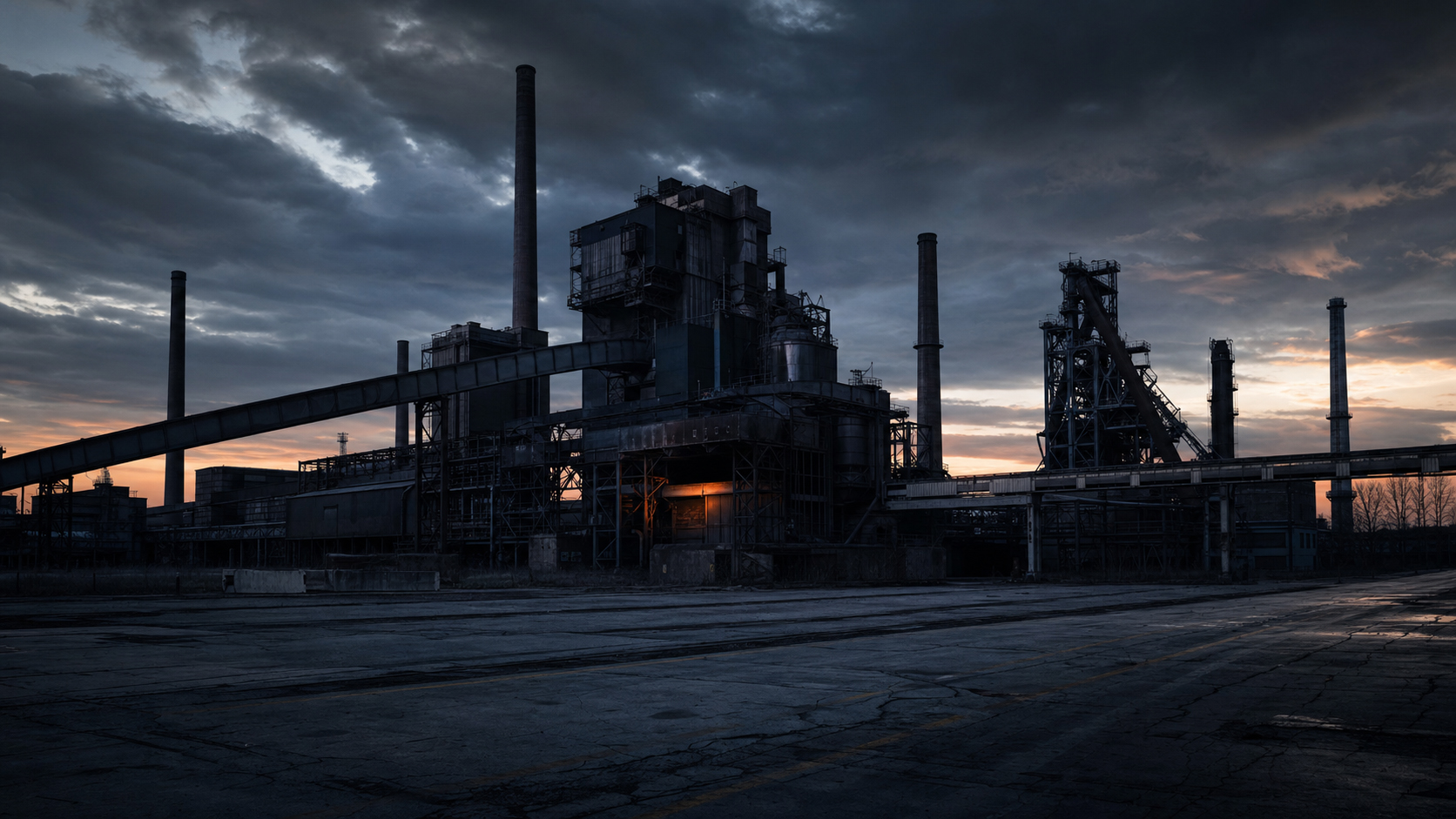
Concrete examples of this trend are becoming increasingly common: The long-established company Miele is cutting jobs in Gütersloh while simultaneously expanding its plant in Poland; Porsche will likely not be building a new production facility in Germany; Continental, Viessmann, Bosch, Stihl, and ZF Friedrichshafen are relocating parts of their manufacturing to Eastern Europe. BWA Managing Director Harald Müller, after discussions with numerous board members and managing directors, observes that the question of production relocation is no longer whether it will happen, but only how and how quickly. Once someone has left, they usually don't come back – this bitter realization aptly describes the irreversibility of industrial migration.
This process is accompanied by job cuts on an unprecedented scale. In 2024, nearly 70,000 industrial jobs were lost in Germany. In 2025, the job losses accelerated: the industrial sector eliminated more than 120,000 jobs – almost twice as many as in 2024. The automotive industry was hit hardest, losing around 50,000 jobs alone. The list of affected major companies is impressive: Volkswagen put up to 35,000 jobs at risk, Deutsche Bahn announced the elimination of 30,000 positions, ZF Friedrichshafen plans to cut up to 14,000 jobs, Thyssenkrupp 11,000, Audi 7,500, and Bosch around 5,000 jobs in Germany.
Geopolitical shocks: External factors exacerbate internal weakness
In addition to internal structural problems, there are also significant external geopolitical shocks. Three profound disruptions at the global level have weakened the competitiveness of key German industries: China's rise as an industrial nation, the energy crisis resulting from Russia's war of aggression against Ukraine, and US tariff policy since 2025. According to an analysis, three-quarters of the recent market share losses of the German export sector can be attributed to supply-side factors: increased energy prices, supply chain problems, rising unit labor costs, and high bureaucratic costs.
The conflict situation in the Middle East is also leaving its mark. The war with Iran is placing additional strain on global supply chains and energy markets – a factor explicitly cited as a cause of the strain in the current production data for March 2026. The export sector is facing strong headwinds due to higher US tariffs, a strengthening euro, and increased competition from China, as Destatis President Ruth Brand noted at the GDP press conference for 2025. At the same time, trade tensions between the EU and China are escalating, as European tariffs on Chinese electric vehicles also affect European joint ventures in China and could lead to retaliatory measures there.
Between structural break and structural change: Are industry and value creation decoupled?
The analysis would be incomplete if it did not also consider opposing trends and nuances. An increasingly clear finding is emerging: the declining production index does not fully reflect the development of value creation. German industrial companies are deliberately relocating parts of the value chain abroad while simultaneously expanding their service business domestically. Hybrid business models, in which physical products are supplemented by digital services, maintenance contracts, and platform services, are rapidly gaining importance.
In the automotive industry, a discrepancy of 50 percentage points developed between the rate of change in production value and the production index between 2013 and 2022 – a clear indication that car manufacturers are increasingly generating revenue from non-industrial activities such as digital services or mobility concepts. The share of employees in research and development in the manufacturing sector rose from 5.5 percent in 2013 to 6.2 percent in 2022. Value added is declining less sharply than production – suggesting a qualitative improvement in the remaining industrial activity. Producers of high-quality technology goods contributed approximately ten percent to value added in Germany in 2024.
Nevertheless, this structural change must not be misinterpreted as justification for political stagnation. The shrinking of the physical manufacturing base has real consequences: for employment across the board, for regional economic structures in industrialized areas, for the training capacities of skilled trades, and for national technological sovereignty. Historically, a purely service-based economy without a strong manufacturing base has not been proven to be sustainably competitive, either in Germany or worldwide.
Trend reversal or low point: What gives hope for recovery?
March 2026 was another disappointment, but there are some tentative positive signs. New orders in the manufacturing sector rose by five percent in March 2026 – even excluding large orders, this represents an increase of 5.1 percent. In April 2026, industrial production rose by 0.4 percent compared to the previous month, thus meeting market expectations. In November 2025, industrial production had even increased by 0.8 percent compared to the same month of the previous year – a psychologically significant signal after years of continuous decline.
The political framework is showing some improvement: Following the end of the traffic light coalition, the new federal government has announced economic policy reforms aimed at reducing bureaucracy, cutting taxes, and stabilizing the energy supply. Whether these measures will be sufficient and implemented quickly enough to halt the structural downward spiral remains to be seen. One thing is clear: A short-term economic recovery would not resolve the structural deficiencies. Only when energy costs fall, permitting processes are accelerated, and the transformation to climate-neutral production is perceived as a competitive opportunity rather than a cost burden can we speak of a genuine turnaround.
Political consequences: What needs to be done now
The sobering conclusion is this: Germany has a fundamental location problem that has developed over years and cannot be solved by short-term economic stimulus programs. The structural challenges – persistently high energy prices, a shortage of skilled workers, excessive bureaucracy, insufficient investment, and high taxes – combine to create a toxic mix for an export-dependent industrialized nation. The €1.4 trillion in additional investments by 2030 that the BDI, BCG, and IW consider necessary is not a political wish list, but a realistic minimum.
For energy-intensive industries, this means specifically: Access to competitive, green energy must become a priority in industrial and climate policy. Without hydrogen infrastructure, without sufficient renewable electricity at internationally competitive prices, and without reliable political frameworks, the chemical, steel, and glass industries will continue to reduce their German production sites. The threat of progressive deindustrialization is no longer a theoretical scenario—it is a measurable reality on a daily basis. A sputtering engine needs more than just cooling: It needs a fundamental overhaul.