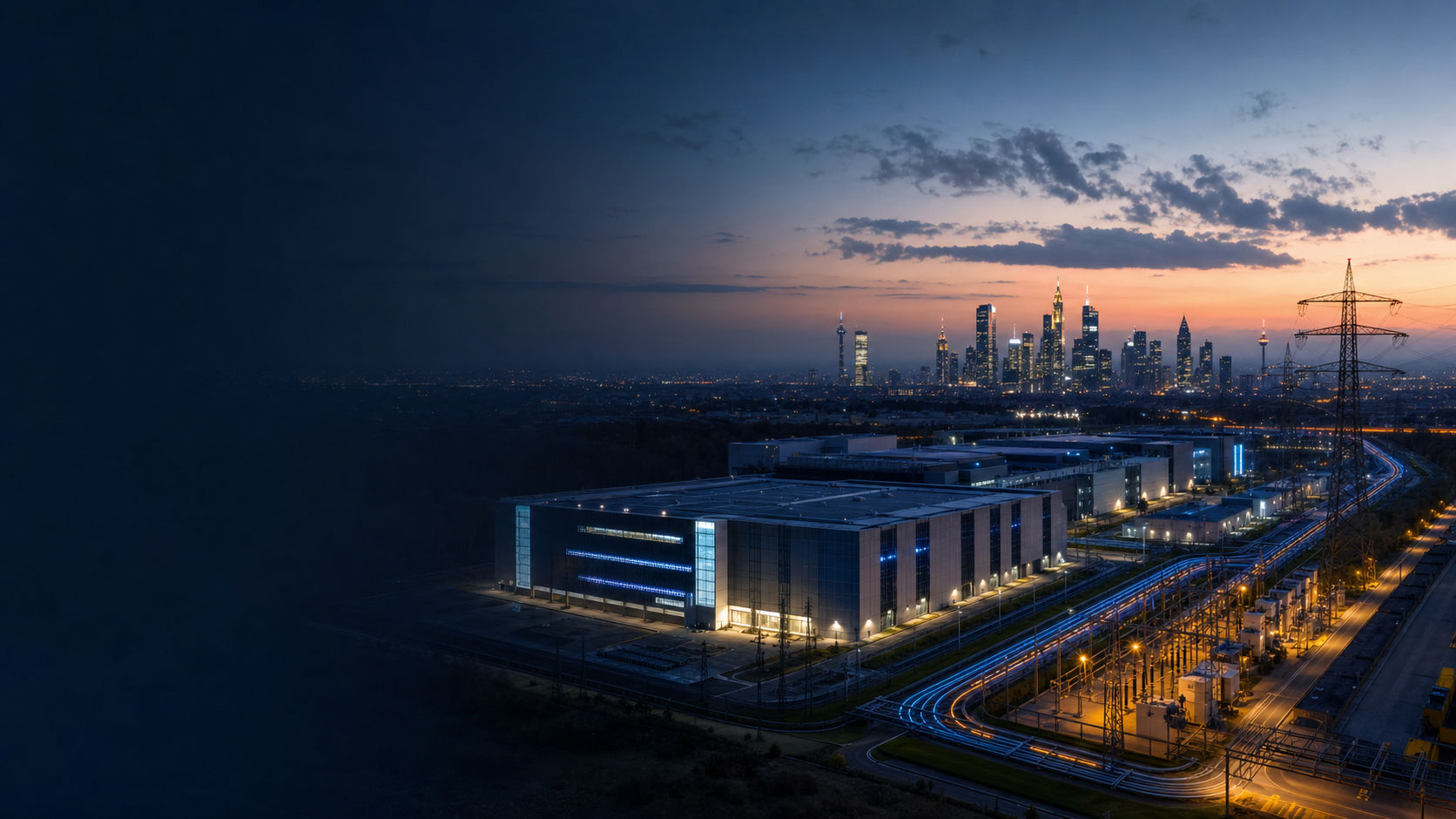
Second place worldwide? The wrong measure: Why Germany's huge data centers are still not enough for the AI boom – creative image on the topic, with AI: Xpert.Digital
Europe's digital engine room: Why we now need to completely rethink AI data centers – How Frankfurt is to become the heart of the future AI economy
Power grid at its limit: Why Germany's biggest digital advantage is at stake
Simply copying America's AI centers? Why Germany's greatest opportunity lies elsewhere
Germany is often considered a laggard in global digitalization rankings – but a look at the hard infrastructure of its data centers paints a completely different picture. With the second-highest density of facilities worldwide, right behind the USA, Germany possesses a massive digital foundation. The Frankfurt am Main hub, in particular, acts as the beating heart of European data traffic. However, this long-standing and historical lead should not obscure the impending test: the rapid rise of artificial intelligence (AI) is fundamentally changing the rules of the game.
Traditional server farms are reaching their physical and energy limits, as the new AI economy demands gigantic amounts of electricity, highly complex liquid cooling systems, and entirely new standards for connection capacity. In global competition, megawatts are replacing square meters as the decisive currency. This article provides an in-depth analysis of where Germany's true strengths lie in the AI age, why its focus on industrial applications is a crucial competitive advantage, and why, ultimately, it is not political strategy papers but rapid building permits and high-performance power connections that will determine Europe's digital sovereignty.
Related to this:

Germany as a data center location: Europe's digital substance in the AI age
Germany has the infrastructure – but is the pace sufficient for the AI economy?
Germany boasts one of the densest, most powerful, and most economically significant data center landscapes in Europe. Based on the number of listed data centers, Germany ranks second internationally, behind the USA and ahead of the United Kingdom. This finding sends a strong signal: Germany is by no means a secondary digital hub. It possesses a large number of data centers, a dense carrier and fiber optic network, one of the world's most important internet exchange points, a large industrial demand base, and a high concentration of international cloud and colocation providers.
However, this strength should not be misinterpreted. The number of existing data centers primarily measures digital site density and established infrastructure. It does not automatically measure the ability to keep pace in the global competition for artificial intelligence, high-performance computing, and sovereign cloud infrastructure. The decisive benchmark in the coming years will no longer be solely the number of data center buildings in a country. What matters is how much capacity can be made available at short notice, how quickly network connections can be established, whether high-performance cooling is feasible, how reliably energy is available, and whether the economic and regulatory framework enables investments in the billions.
Germany is thus starting from a comfortable, but by no means risk-free, position. The country has a strong digital past and present. Whether this will translate into a leading digital future depends on whether the existing infrastructure can be further developed into a scalable AI infrastructure.
The world map of digital location density
The international ranking of data centers is dominated by the USA. With 5,427 listed locations, the United States is far ahead of all other countries. Germany follows in second place with 529 locations, just ahead of the United Kingdom with 523 facilities. Next come China, Canada, France, Australia, the Netherlands, Russia, and Japan.
These figures do not measure the same technical performance at each location. Nor do they reflect an identical international definition of what constitutes a data center. Nevertheless, they clearly demonstrate where digital infrastructure, operator expertise, connectivity, cloud access, and economic demand have concentrated over the years.
| Rank | country | Listed data centers |
|---|---|---|
| 1 | USA | 5.427 |
| 2 | Germany | 529 |
| 3 | United Kingdom | 523 |
| 4 | China | 449 |
| 5 | Canada | 337 |
| 6 | France | 322 |
| 7 | Australia | 314 |
| 8 | Netherlands | 298 |
| 9 | Russia | 251 |
| 10 | Japan | 222 |
Germany occupies a special position in this analysis. It is neither a classic hyperscaler home market like the USA nor a centrally controlled infrastructure model like China. Germany's strength is broader and more decentralized. It is based on enterprise data centers, colocation providers, hosting service providers, cloud regions, telecommunications networks, public IT infrastructures, and specialized data centers for finance, industry, logistics, research, and critical infrastructure.
This broad portfolio is economically significant. Data centers are not just buildings with servers. They are production facilities of the digital economy. They run ERP systems, e-commerce platforms, machine and sensor data, cloud applications, financial transactions, communication services, logistics networks, digital media, research projects, and increasingly, AI models.
The denser this ecosystem is, the easier it is for companies to develop, scale, and market digital services internationally. Germany therefore has a decisive advantage over many other European locations: it doesn't have to start from scratch. The data center industry can build on a large market with existing customers, networks, skilled workers, software companies, industrial groups, medium-sized businesses, mechanical engineering firms, automotive companies, research institutions, and international service providers.
China appears smaller than its computing power actually is
China appears significantly behind Germany and the United Kingdom in international location lists, with approximately 449 listed data centers. However, this number should not be interpreted as evidence that China has a weaker digital infrastructure. It primarily reflects those locations that are individually recorded and publicly visible in international, often Western-oriented, data center directories. Chinese corporate, telecommunications, government, research, and specialized cloud data centers are frequently only partially or not at all represented in these directories.
Furthermore, there is a different infrastructure economics at play. Germany and other European countries have many visible colocation, hosting, and enterprise locations spread across numerous metropolitan areas. In contrast, China is increasingly consolidating computing capacity in very large campuses, national cloud platforms, and strategically planned computing hubs. A single campus can handle a load equivalent to the capacity of numerous smaller, traditional data centers. Therefore, the number of locations alone underestimates the true scale.
With its national program "East Data, West Computing," China is strategically relocating energy-intensive computing loads from its economically strong, densely populated coastal regions to more energy-rich and geographically extensive provinces in the west of the country. The program is based on eight national computing hubs and ten large data center clusters. It integrates digital infrastructure policy with energy policy, regional development, national cloud architecture, and AI strategy.
For a realistic comparison, available IT capacity is therefore more important in China than the number of listed buildings. Market analyses estimate the installed data center capacity in China at around 7.05 GW for 2025 and expect approximately 9.37 GW by 2030. At the same time, the stock is estimated at more than 12.5 million standard server racks. Such figures should be interpreted with caution due to differing definitions and sometimes limited transparency. However, they clearly demonstrate that China has a data center market of global proportions.
The situation regarding AI capacity is also complex. China is building large GPU and accelerator clusters, but suffers in some areas from limited access to the most powerful Western chips and regional underutilization of newly created capacity. Therefore, the country does not automatically possess the most efficient or highest-quality AI infrastructure in the world. Nevertheless, its ability to strategically pool infrastructure, mobilize energy and land resources, and coordinate national cloud and telecommunications companies is a significant competitive advantage.
The correct conclusion is therefore: Germany is very strong in terms of internationally visible digital location density and is a leader in Europe. China is significantly stronger in national computing capacity, large-scale infrastructure planning, and the development of strategic AI clusters than the number of internationally listed data centers would suggest. A comparison of the two countries must therefore differentiate between the number of locations, installed capacity, AI-compatible capacity, energy availability, and economic viability.
Digital site density is more than server space
A large number of data centers is only economically valuable if they are interconnected through networks, providers, customers, and expertise. Digital density, therefore, describes not just the number of buildings or server racks. It describes a high-performance ecosystem of data centers, colocation space, carriers, cloud platforms, fiber optic connections, internet exchange points, enterprise customers, and specialized service providers.
Germany has a particularly strong starting position in Europe. The large number of locations is accompanied by high demand from industry, services, trade, finance, logistics, and public administration. It is precisely this economic breadth that distinguishes Germany from smaller, highly specialized digital hubs.
The key strength lies in the connection between infrastructure and real value creation. A data center is not an end in itself. It becomes economically relevant when it can process data, applications, and business processes close to customers, production sites, markets, and network nodes. For a logistics provider, an automotive supplier, a mechanical engineering company, or a digital B2B portal, the theoretical availability of cloud capacity is not the only factor. Crucially important are low latency, secure data connections, good redundancy, legal compliance, sufficient scalability, and the ability to use multiple providers.
Germany offers a strong foundation in these areas. The interplay of industrial demand, colocation offerings, and international networking gives the location substantial strength. This existing density of digital locations is a competitive advantage that cannot be copied in the short term.
Frankfurt is Europe's digital hub
The heart of the German data center industry lies in the Rhine-Main region. Frankfurt am Main is not only Germany's most important data center location, but also one of Europe's most important digital transportation hubs. There, the financial sector, international telecommunications, cloud providers, content networks, colocation campuses, and enterprise customers converge in close proximity.
The decisive factor is connectivity. Thousands of networks converge at the DE-CIX internet exchange point. Carriers, cloud providers, content platforms, internet service providers, companies, and public sector entities can exchange data directly, instead of routing it through long and expensive detours via external networks. This results in shorter data paths, lower latency, high redundancy, and intense competition between network and infrastructure partners.
Frankfurt is therefore not just a location for server capacity. It is a digital marketplace. Much like a large port consists not only of quays and warehouses, but also of shipping companies, freight forwarders, customs, trade, financial services and transport routes, the economic significance of a data center location arises from the interplay of many specialized players.
For traditional cloud services, digital trading platforms, industrial applications, and enterprise IT, this advantage is significant. It becomes even more important for real-time applications such as production control, logistics optimization, digital twins, video analytics, autonomous systems, and AI inference. A company that processes its data near major network nodes and cloud regions can make its processes faster, more robust, and more cost-effective.
The backbone of the economy remains traditional
The public debate is increasingly focused on AI data centers, GPU clusters, and multi-billion-dollar hyperscale campuses. This is understandable, as the computing power behind large language models, image generators, scientific simulations, and automated decision support is growing rapidly. Nevertheless, it would be a mistake to consider traditional data centers obsolete.
Traditional data centers continue to carry the lion's share of digital value creation. They operate databases, web servers, enterprise software, backup systems, email services, payment processing, cloud storage, virtual workspaces, ERP systems, production systems, and industry platforms. These functions remain indispensable, especially for German SMEs.
A mechanical engineering company, a logistics provider, a medical technology company, or an automotive supplier doesn't primarily need a gigantic training cluster. They need secure, available, and well-integrated IT infrastructure for their daily business processes. The high number of German data centers is therefore not a historical coincidence, but rather an expression of the country's economic structure.
Germany has a large number of medium-sized and industrial companies with high demands regarding data protection, availability, compliance, data integration, and local service quality. Many of these companies operate their own IT infrastructures, utilize regional colocation services, or combine their own systems with public cloud services.
This diversity has an advantage. It reduces dependence on a few central platforms, facilitates multi-cloud strategies, and strengthens resilience against outages, geopolitical risks, and supply bottlenecks. It also creates a market for specialized providers who can develop industry-specific solutions.
The difference between traditional IT and AI infrastructure
An AI data center is not simply a traditional data center with more servers. It differs in the technical and economic structure of its workloads. While conventional enterprise IT relies on CPU-based servers, databases, virtual machines, and distributed applications, large AI models require massively parallelized accelerator hardware.
GPUs, TPUs, and specialized accelerator systems process large amounts of data simultaneously. This creates performance densities that can push conventional data center architectures to their limits. The differences affect not only the hardware, but also power supply, cooling, network technology, investment volume, and site planning.
| category | Classic data center | AI data center or AI factory |
|---|---|---|
| Primary purpose | Enterprise IT, web hosting, storage, databases, standard cloud, virtualization and transaction loads | Training, fine-tuning and inference of large AI models as well as HPC-like data processing |
| Computing architecture | Primarily CPU-oriented general-purpose servers | Large GPU, TPU, or accelerator clusters with high parallelism |
| Rack power density | Typically about 3 to 12 kW per rack | Up to approximately 100 kW per rack, and potentially even more with the most modern designs |
| network | Conventional Ethernet and IP networks for enterprise and cloud workloads | High-bandwidth, extremely low-latency network fabrics between accelerators |
| cooling | Predominantly air cooling or established water-assisted systems | Direct liquid cooling or immersion cooling as a key requirement for high-density racks |
| Electricity and building planning | Designed for lower and relatively uniform power densities | Cluster- and campus-oriented, often with power requirements in the high double-digit to triple-digit MW range |
| Key bottlenecks | Area, connectivity, redundancy, costs and availability | Additional requirements include power grid connection, transformers, cooling, GPU availability, permits, and access to capital |
| Typical operators | Companies, public authorities, hosting providers and colocation operators | Hyperscalers, GPU clouds, national AI factories, research consortia and industrial platforms |
The economic consequences are significant. AI infrastructure shifts the focus from pure server space to energy and cooling capacity. An operator can procure modern chips and construct a building. However, without sufficient grid connection, high-performance transformers, redundancy concepts, and liquid cooling, a large AI cluster cannot be operated economically.
The technical dividing line is therefore not the sign at the building entrance. A hyperscale site can simultaneously operate traditional cloud services, data storage, video processing, AI inference, and AI training. The better analytical distinction is therefore: traditional IT capacity, AI-ready high-density capacity, and mixed cloud or hyperscale capacity.
A new dimension of digital transformation with 'Managed AI' (Artificial Intelligence) - Platform & B2B solution | Xpert Consulting

A new dimension of digital transformation with 'Managed AI' (Artificial Intelligence) – Platform & B2B solution | Xpert Consulting - Image: Xpert.Digital
Here you will learn how your company can implement customized AI solutions quickly, securely and without high entry barriers.
A managed AI platform is your all-inclusive, worry-free solution for artificial intelligence. Instead of dealing with complex technology, expensive infrastructure, and lengthy development processes, you receive a ready-made solution tailored to your needs from a specialized partner – often within just a few days.
The key advantages at a glance:
⚡ Rapid implementation: From idea to ready-to-use application in days, not months. We deliver practical solutions that create immediate added value.
🔒 Maximum data security: Your sensitive data stays with you. We guarantee secure and compliant processing without sharing data with third parties.
💸 No financial risk: You only pay for results. High upfront investments in hardware, software, or personnel are completely eliminated.
🎯 Focus on your core business: Concentrate on what you do best. We take care of the entire technical implementation, operation, and maintenance of your AI solution.
📈 Future-proof & scalable: Your AI grows with you. We ensure continuous optimization and scalability, and flexibly adapt the models to new requirements.
More information here:
Germany's AI infrastructure: Why megawatts are more important than the number of buildings
The ranking reflects the current state, not AI power
The international ranking by number of locations shows the breadth of existing digital infrastructure. However, it is not a ranking of AI computing power. A single AI campus with several hundred megawatts of connected load can be more strategically important than a large number of smaller, traditional data centers.
This is especially true for the USA. The United States not only leads in the number of listed data centers, but also boasts the highest concentration of global hyperscalers, leading AI platforms, large cloud regions, chip companies, and private capital markets. Germany is strong in terms of existing infrastructure, but is still significantly more dependent on expansion, partnerships, and European scaling for high-performance AI capabilities.
| country | Traditional data centers | AI data centers and AI capacity | Economic classification |
|---|---|---|---|
| USA | Very large portfolio of enterprise, colocation, cloud and hyperscale locations | World-leading AI capacity with very large hyperscaler and GPU clusters | AI development is primarily taking place in large existing and new hyperscale campuses |
| Germany | Extensive, established colocation and enterprise data center portfolio, especially in the Rhine-Main area | Smaller compared to the USA, but growing rapidly | High connectivity and industrial demand are strengths, but electricity and grid connections are becoming the bottleneck |
| United Kingdom | Large cloud and colocation portfolio with a strong focus on London | Significant European AI market | Financial center, cloud regions and international connectivity facilitate expansion |
| China | Large national cloud, telecom and enterprise portfolio | Very large state-owned and privately-owned AI clusters | The line between traditional cloud, HPC and AI is difficult to separate in public data |
| Canada | Relevant cloud and colocation inventory | Growing AI capabilities through research, energy availability, and proximity to the US market | Energy, climate and international networking are key location factors |
| France | Strong European cloud, colocation and public IT infrastructure | Expansion of national and European AI capacities | Paris is a key European market; energy policy and digital sovereignty play a major role |
| Australia | Mature, geographically distributed cloud and colocation market | Growing AI development | Regional data storage and large distances to other world regions promote local capacities |
| Netherlands | High density of colocation and international data transit | AI expansion with increasing power and space restrictions | Amsterdam remains a connectivity hub, but its expansion policy limits growth |
| Russia | Nationally focused corporate, telecommunications and cloud portfolio | Less transparent and internationally restricted | Comparability is made more difficult by limited data availability and hardware access |
| Japan | Large portfolio of enterprise, telecommunications and cloud solutions | Growing AI and HPC expansion | Strong industrial and research base, but high demands on energy and land-use planning |
For Germany, this leads to a clear but nuanced conclusion. The country is a leader in Europe in terms of digital location density and existing data center infrastructure. However, it is not automatically a leader in available AI computing power. This second position must first be achieved through new power connections, accelerated permitting processes, AI-compatible cooling, investments in high-performance networks, and access to accelerator hardware.
Related to this:


Megawatts instead of counting buildings
The key metric for AI infrastructure is not the number of buildings, but the available connected load in megawatts and gigawatts. This capacity indicates how much electrical energy a site can provide for IT load, cooling, and supporting infrastructure. Particularly in the context of AI, it determines how many high-performance accelerator clusters can realistically be installed and operated.
The classification is methodologically challenging because many locations serve mixed workloads. A hyperscaler can simultaneously operate traditional cloud services, storage, databases, video services, inference, and model training on a single campus. Therefore, a blanket categorization of locations as "traditional" and "AI" is problematic. It would create a false impression of precision that cannot currently be reliably derived from the available international data.
For Germany, however, the development can be better described in terms of power capacities than in terms of the number of individual buildings.
| Germany, starting point 2025 | Connection capacity | share of total capacity |
|---|---|---|
| AI data centers | 530 MW | Approximately 15% |
| Traditional data centers | 1,290 MW | Approximately 37% |
| Other or mixed cloud and hyperscale capacities | Approximately 1,700 MW | Approximately 48% |
| Total capacity | Approximately 3,520 MW | 100 % |
This breakdown reveals two things. First, Germany already has a large data center base. Second, while AI is growing, it is not yet the dominant component of capacity. The category of mixed cloud and hyperscale capacity is particularly important because modern sites rarely serve a single purpose.
According to political expansion targets, Germany's AI computing power is to at least quadruple by 2030. At the same time, the country's total data center capacity is to be at least doubled. The economic significance of this project is considerable. It's not just about additional servers, but about the ability to efficiently operate industrial AI, research, digital administration, cloud services, and data-intensive business models both domestically and across Europe.
Industry makes Germany a special case
Germany is often compared to the US and China in the AI race. This comparison is unavoidable, but only of limited value. The US boasts leading hyperscalers, chip companies, venture capital markets, and global digital platforms. China combines enormous infrastructure investments with a large domestic market and strong state control.
Germany cannot simply copy these models. The German advantage lies in industrial application. Germany has strong sectors where AI is not primarily a consumer product, but a productivity tool. These include mechanical engineering, the automotive industry, chemicals, pharmaceuticals, medical technology, energy, logistics, retail, insurance, finance, and industrial services.
In these areas, value is not created solely by the largest possible language model. Value arises from the connection of AI with real-world processes, proprietary data, expertise, facilities, supply chains, and quality requirements. An AI that identifies maintenance needs in a production plant, optimizes energy consumption, manages inventory, identifies quality defects, or assesses supply chain risks requires a different infrastructure than a global consumer model.
Here, Germany can translate its high density of data centers into a concrete advantage. Regional colocation sites, cloud connections, edge infrastructure, and robust network nodes enable data processing closer to companies and production facilities. This reduces latency, facilitates hybrid architectures, and better meets requirements for data protection, availability, and integration capabilities.
The combination of AI data centers with industrial XR, robotics, and automated logistics is particularly interesting. In these application areas, data often needs to be processed very quickly. Cameras, sensors, autonomous vehicles, digital twins, and assistance systems generate continuous data streams. Not every task can be outsourced to a remote data center.
Germany can therefore benefit from a multi-tiered infrastructure. Large AI campuses can handle training and central platforms. Regional data centers can provide inference, data integration, and local cloud services. Edge systems can operate directly in factories, warehouses, ports, transportation networks, and retail locations.
The electricity connection is becoming a crucial production factor
The expansion of AI data centers is inextricably linked to energy policy. Data centers require consistently high electrical power. AI workloads significantly increase this demand. The problem is not just annual electricity consumption. Crucially, it is the ability to provide large amounts of power at individual locations in a timely, reliable, and cost-effective manner.
Germany faces contradictory starting conditions. On the one hand, the electricity supply is reliable, the industrial energy system is highly developed, and the expansion of renewable energies is progressing. On the other hand, high electricity prices, lengthy approval processes, limited grid connection capacity, and regional bottlenecks are considered burdensome factors.
Especially in high-demand metropolitan areas, data centers compete with industry, housing construction, transportation, and other large-scale consumers for space and network infrastructure. The danger is that while Germany has the demand, expertise, and digital hubs, it cannot get new projects online quickly enough.
For international investors, time is a crucial factor. A project that can be realized in another country within two or three years loses its appeal if the grid connection at the German site is only available much later. Therefore, the decisive location question is increasingly not: Where is land available? It is: Where can 50, 100, or 300 MW of capacity be reliably, economically, and on schedule connected?
The German government's national data center strategy acknowledges this problem. Its goal is to at least double capacity by 2030 and significantly accelerate the expansion of AI computing power. However, its effectiveness will depend on whether project developers, network operators, municipalities, cloud providers, and industrial companies can act more quickly.
Sustainability is not an additional issue
The energy demands of data centers inevitably lead to a debate about climate protection, resource consumption, and local acceptance. This debate should not be misinterpreted as an argument against digital infrastructure. Rather, it should serve to improve the quality of the infrastructure.
An inefficient data center with an unfavorable location, poor cooling, and unused waste heat is more difficult to justify economically than a modern campus that uses energy efficiently, integrates renewable energy sources, and supports local heating networks. Germany has the opportunity here to set quality standards.
Modern data centers can feed waste heat into district heating networks, industrial parks, greenhouses, or municipal heating systems. They can operate more efficiently with liquid cooling, shift loads over time, and better manage fluctuating renewable energy sources through intelligent control. These potentials are real, but not automatically realized.
They require cooperation between operators, municipalities, network companies, heat suppliers, and real estate developers. Site planning must therefore consider energy, heat, transport, land, fiber optics, and industrial development together earlier than before.
Sustainability can become a competitive advantage if it reduces costs, simplifies permitting, and provides investors with planning certainty. For international clients, it is becoming increasingly important whether digital services are provided with verifiable CO₂ data, renewable energy, and credible efficiency standards.
At the same time, the debate must remain honest. Even with high efficiency, data centers will consume a lot of electricity. Waste heat recovery is not feasible at every location or at every time of year. Building new networks costs money and time. The viable perspective, therefore, is this: data centers are major energy consumers, but they can be planned, operated, and integrated into local energy systems more efficiently than many other loads.
Digital sovereignty requires real choices
The debate about digital sovereignty is often too ideologically driven. Some see any use of an international hyperscaler as a dangerous dependency. Others consider national or European infrastructure to be inherently economically inefficient. Both views are too simplistic.
Digital sovereignty does not mean autarky. An economically open country like Germany will always remain integrated into global technology and data flows. International cloud providers, semiconductor manufacturers, and software platforms are part of the digital reality.
The crucial question, therefore, is not whether dependencies can be completely avoided. The question is whether they remain manageable. Manageable dependencies arise from alternatives. Companies need the ability to shift workloads between providers. Public authorities require legally compliant and efficient operating models. Critical infrastructures must be protected against outages, political conflicts, and supply disruptions.
Germany can build on its existing infrastructure for this. The high density of data centers, strong connectivity, and the broad market of providers are already an important part of the solution. However, the infrastructure must remain technologically up-to-date. Without modern GPU capacity, open cloud architectures, access to high-performance networks, and competitive energy prices, sovereignty will remain limited.
The best strategy is therefore not isolation, but a high-performing, open, and interconnected European ecosystem. This includes international providers, European cloud companies, regional data center operators, industrial platforms, research infrastructure, and public procurement. Competition is not an obstacle to sovereignty, but rather one of its prerequisites.
The future depends on implementation
Germany possesses almost all the prerequisites to remain a leading European location for data centers and AI infrastructure: a large economy, demanding industrial customers, strong research landscapes, very good connectivity, a high stock of data centers, a central location in Europe, qualified specialists and growing political attention.
What's missing isn't an understanding of the importance of infrastructure. That understanding is now widespread. What's often lacking is the speed of implementation. Data centers don't emerge from mere declarations of intent. They emerge from available space, approved construction projects, ordered transformers, installed lines, completed fiber optic routes, secured power supply contracts, affordable investments, and readily available skilled personnel.
The national data center strategy marks an important shift in perspective. Data centers are no longer viewed solely as part of the IT industry, but as strategic infrastructure for competitiveness, artificial intelligence, and digital sovereignty.
This also presents an industrial policy opportunity for Germany. The expansion of modern data centers generates demand for construction services, electrical engineering, switchgear, cooling technology, network equipment, software, security solutions, energy management, heating networks, and specialized services. German and European companies can create added value in many of these areas.
Particularly in energy-efficient cooling, waste heat recovery, building automation, industrial integration, and network technology, there are areas of technological expertise. The real question, therefore, is not whether Germany needs data centers. It is whether Germany recognizes the opportunities of a new infrastructure industry in time and translates them into scalable business models.
The existing stock is strong, expansion will be decisive
Germany is a European leader in the state of its digital infrastructure. The high density of data centers, strong connectivity, and industrial demand form a foundation that few other European countries possess to a comparable extent.
This strength, however, is not guaranteed. The next phase of development follows different rules. AI data centers require larger amounts of electricity, higher power densities, new cooling technologies, accelerated permitting processes, and significantly more capital. The number of traditional data centers remains relevant, but is insufficient to assess competitiveness in the AI age.
Crucial will be the ability to build new AI capacity in megawatts and gigawatts and to make this capacity available economically, sustainably, and legally. Germany has a plausible starting position for this. It possesses the industrial demand, the digital infrastructure, the customer base, and the technical expertise.
It can play a significant role, particularly in industrial AI, sovereign cloud models, hybrid architectures, edge applications, and energy-efficient infrastructure. However, it needs to become faster.
The objective conclusion is this: Germany is a European leader in its existing digital infrastructure. Whether it will also be among the winners in building AI infrastructure depends not on the number of political strategy papers, but on power connections, construction times, network capacities, and investment decisions. Whoever masters these fundamentals controls a growing share of the digital value chain. Whoever delays them will, despite an excellent starting position, become a user of someone else's infrastructure.
📈🚀 From visibility to trust 👀🤝 Your scalable path with Xpert.Digital

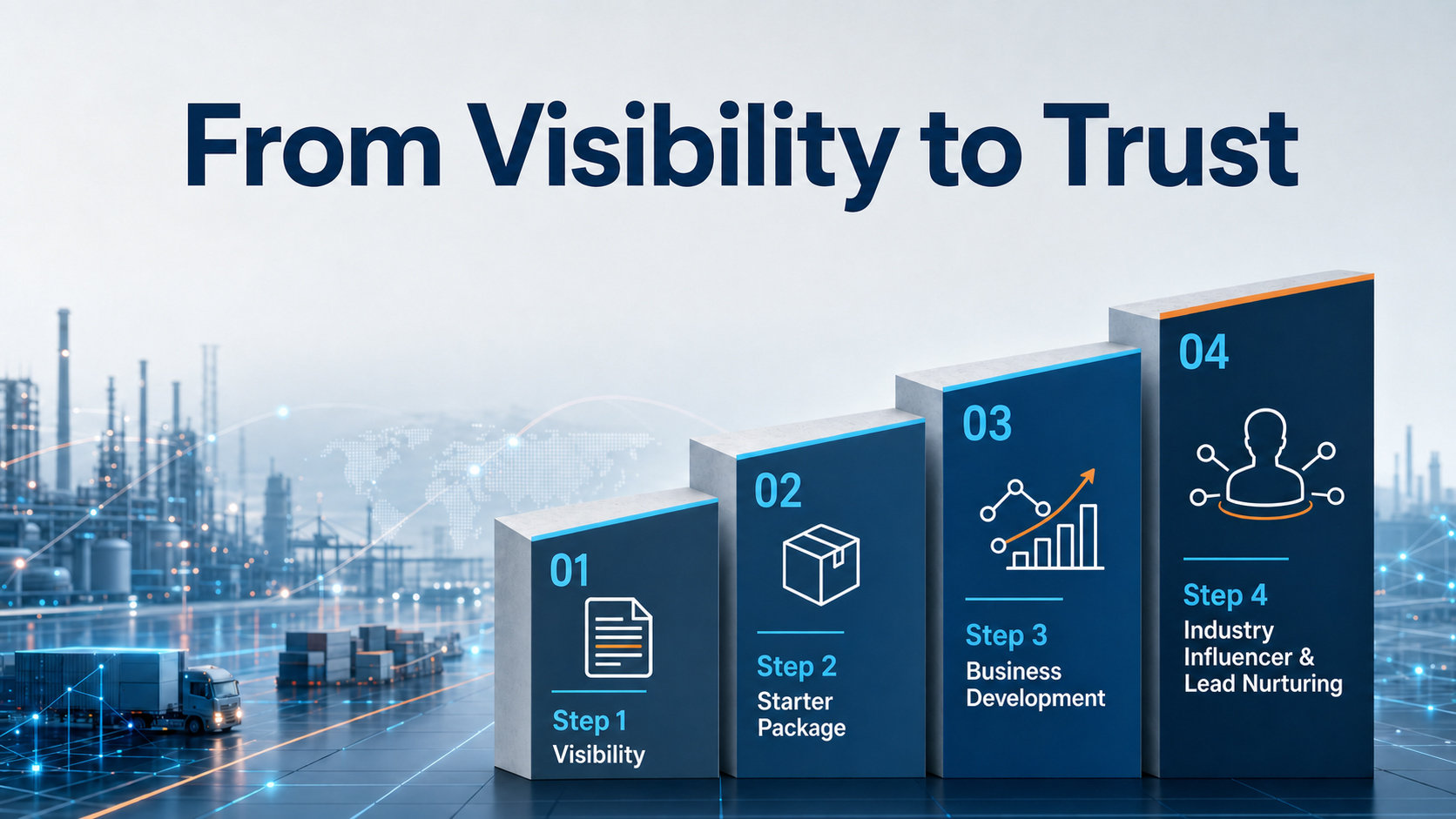
From visibility to trust: Your scalable path with Xpert.Digital - Image: Xpert.Digital
In industrial B2B, sustainable business relationships rarely emerge overnight. They develop step by step – through visibility, professional relevance, recurring touchpoints, and growing trust. Xpert.Digital's 4-stage model addresses precisely this: It offers a structured path that begins with a manageable entry point and can evolve into deeper collaboration in business development if needed.
Instead of relying on loud marketing promises, this model puts the relationship at the forefront. Companies start with clearly defined, easily calculable measures and then decide, based on their own experience, how far they want to expand the collaboration. A key factor for this undisturbed trust-building process: The platform completely avoids annoying advertising ads, so the editorial focus remains solely on the companies' expertise.
More information here:
Your global marketing and business development partner
☑️ Our business language is English or German
☑️ NEW: Correspondence in your native language!

Konrad Wolfenstein
I and my team are happy to be available to you as your personal advisor.
You can contact me by filling out the contact form here wolfenstein@xpert.digital:or simply call me at +49 7348 4088 965. My email address is
I'm looking forward to our joint project.