
Higher US tariffs in international trade: How the AI-based procurement management accusers accommodates accio stability
Xpert pre-release

Available in 27 languages 📢
Prefer Xpert.Digital on GoogleⓘPublished on: July 12, 2025 / update from: July 12, 2025 - Author: Konrad Wolfenstein
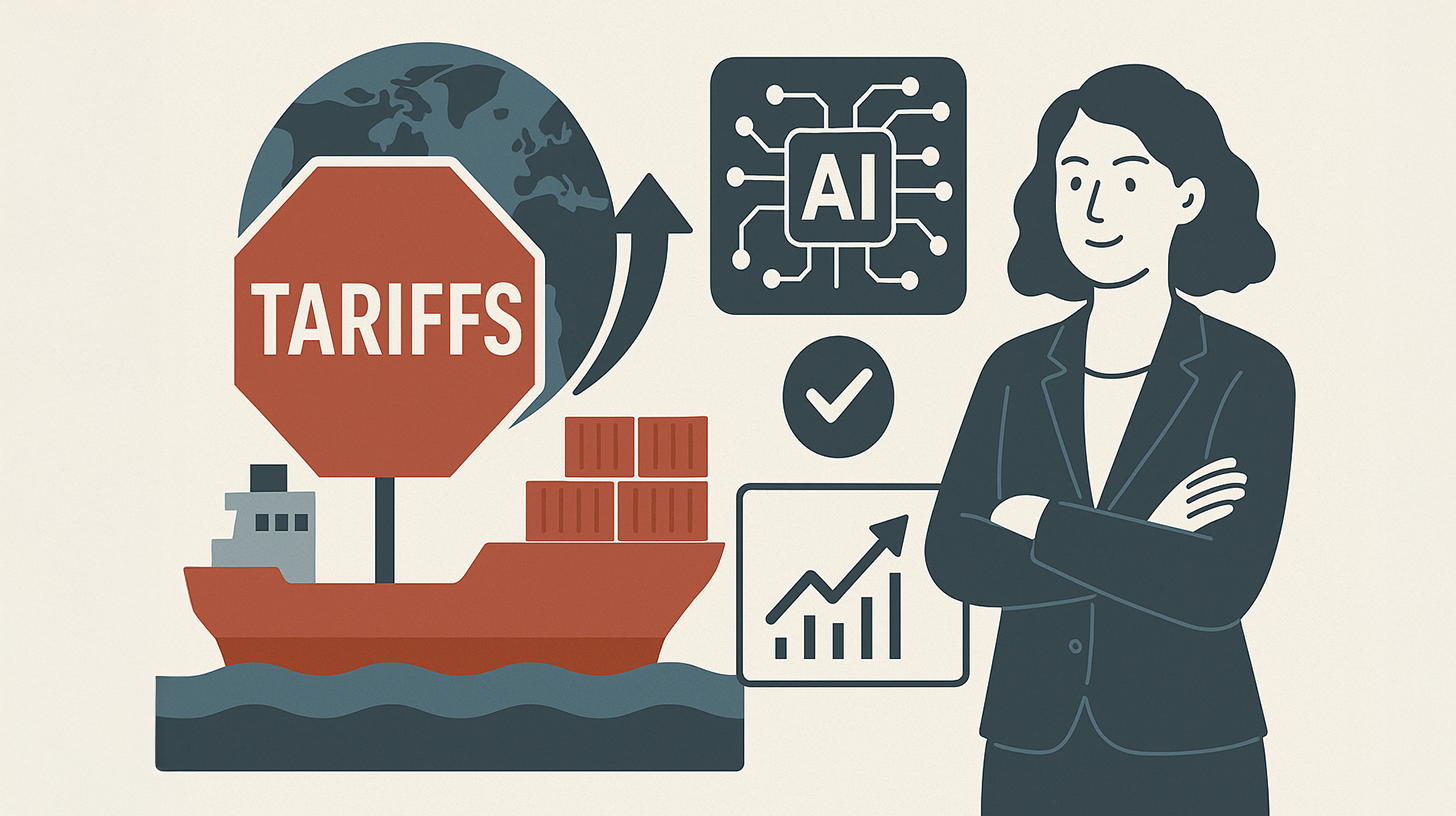
Higher US tariffs in international trade: How the AI-based procurement management accusers accommodates accio stability-picture: xpert.digital
Does the AI revolution in procurement management save European companies from US criminal duel?
From the crisis to an opportunity: How smart procurement systems can strengthen Europe
The global commercial landscape is in a profound change. From August 1, 2025, European companies will face extensive punitive tariffs to their exports to the United States. This development not only puts the competitiveness of German and European companies on the test, but also shakes the entire architecture of international procurement and supply chains. In this critical phase, however, there is also a promising solution: Artificial intelligence in procurement management, such as that is embodied, for example, by Alibabas Innovative Platform Accio, can not only help to survive these turbulent times, but also to result.
The new reality of trade policy
The current situation marks a turning point in international trade policy. The announced US criminal offenses on goods from the European Union are not an isolated measure, but part of a comprehensive realignment of the American trade strategy. With a base custom of ten percent on all EU imports and the impending increase to twenty percent from August 2025, companies will face unprecedented challenges.
The specific tariffs on certain product categories are particularly serious. Steel and aluminum products are already occupied by additional tariffs of fifty percent, while motor vehicles and motor vehicle parts are taxed at twenty-five percent. These measures take the heart of the German and European export industry and force companies to make their business models fundamentally realigned.
The volatility and unpredictability of trade policy is a special challenge. While in the past customs changes were announced with sufficient lead time and companies had time for adjustments, political decisions are often made at short notice and without warning. This new dynamic makes traditional planning methods obsolete and requires innovative approaches in procurement management.
The domino effect on purchasing and logistics
The effects of punitive tariffs are not limited to simple cost increases. They trigger a chain reaction that affects all areas of corporate management. Proven basics of calculation lose their validity in purchasing. Price models that have been stable for years must suddenly be recalculated. The uncertainty about future customs sets makes medium -term planning almost impossible.
For shopping departments, this means a permanent state of emergency. Cost calculations must be continuously updated, often several times a month. Price negotiations with American customers become a wire rope act in which both sides try to use the uncertainty for their advantage. Contractual framework conditions that previously existed for several years must now be renegotiated regularly. Flexibility clauses and price adjustment mechanisms become standard in international contracts.
The logistics page shows the effects particularly clearly. The phenomenon of the so -called Tariff Rushes - the attempt by many companies to ship as many goods as possible before the entry into force comes into force - leads to massive overloads in ports and freight networks. Containers are stowing in the large envelope areas, ship capacities are scarce, and freight prices explode. After the initial rush, the volume often stabilizes again, but the shipping companies adhere to the increased prices, which leads to permanently higher logistics costs.
These effects are not limited to transatlantic trade. The global networking of shipping routes means that capacity bottlenecks on a route lead to shifts in the entire system. Ships are removed from Asian, South American or Mediterranean routes to operate the lucrative Atlantic route. This leads to bottlenecks on alternative trade routes and drives up the prices worldwide.
AI as a game change in procurement management
In this complex and volatile environment, artificial intelligence proves to be a crucial success factor. Modern AI systems can capture the complexity of global trade currents and analyze them in real time. You recognize patterns in apparently chaotic data and can predict developments that would overlook human analysts.
Alibaba's Accio platform is exemplary for this new generation of AI-based procurement solutions. The name Accio, derived from the Latin word for recall, is the program: The platform calls exactly the information, suppliers and solutions that companies need in the current situation. With over one million users worldwide and the processing of more than two hundred million trade-specific parameters, Accio has established itself as a leading solution in the B2B area.
The functionality of accio is based on a profound understanding of the challenges in international trade. Instead of only delivering search results, the AI understands the intention behind an inquiry. A company that is looking for alternative suppliers to avoid tariffs not only receives a list of providers, but a curated selection that takes into account factors such as reliability, product quality, delivery times and - particularly important - the customs situation.
Accio's Business Research function goes one step further. It analyzes market trends, identifies emerging risks and suggests proactive strategies. For example, if new tariffs threaten certain product categories, the system recognizes this early and recommends alternative procurement strategies. These can range from the relocation to suppliers in more convenient countries to the adaptation of the product portfolio.
Practical applications in the customs crisis
The practical advantages of AI-supported procurement management are particularly clear in the current customs crisis. A medium -sized German company that exports electronic components to the United States can analyze Accio within minutes on how different customs scenarios would affect profitability. The AI not only calculates the direct cost increases, but also takes into account secondary effects such as changed competitive positions and possible shifts in demand.
The platform also makes it possible to play through complex water-wenning scenarios. What happens if the tariffs are not twenty percent as announced, but increase to thirty or forty percent? What effects would a relocation of production to Mexico or Vietnam? How would long delivery times affect customer satisfaction? All of these questions can be answered in real time based on current market data and historical trends.
The ability of the AI to recognize hidden relationships is particularly valuable. For example, the system can identify that certain raw materials that are not directly affected by tariffs could still become more expensive because they are used in the production of removed goods. This type of second -round effects is often overlooked in traditional analyzes, but can have a significant impact on the cost calculation.
🎯🎯🎯 Benefit from Xpert.Digital's extensive, fivefold expertise in a comprehensive service package | R&D, XR, PR & SEM

AI & XR 3D Rendering Machine: Fivefold expertise from Xpert.Digital in a comprehensive service package, R&D XR, PR & SEM - Image: Xpert.Digital
Xpert.Digital has in-depth knowledge of various industries. This allows us to develop tailor-made strategies that are tailored precisely to the requirements and challenges of your specific market segment. By continually analyzing market trends and following industry developments, we can act with foresight and offer innovative solutions. Through the combination of experience and knowledge, we generate added value and give our customers a decisive competitive advantage.
More about it here:
From efficiency to resilience: how AI-based systems redesign supply chains
Automation as a key to efficiency
Another decisive advantage of AI systems such as ACCIO is the automation of routine tasks. In the current situation, companies have to check thousands of customs tariffs every day, manage original evidence and create compliance documents. These tasks bind considerable resources and are prone to errors.
AI-based systems can largely automate these processes. They automatically classify products according to the correct customs tariff numbers, check the original evidence of plausibility and create the necessary documents for customs clearance. The system learns continuously and becomes more precise with every transaction.
Automation also extends to communication with suppliers and customers. Price adjustments due to customs changes can be automatically calculated and communicated. Delivery dates are adapted based on current logistics data. Even contract negotiations can be supported by AI by proposing optimal negotiation positions and evaluating risks.
Risk management in real time
In today's volatile trade environment, proactive risk management is vital for survival. AI systems like Accio offer crucial advantages here. They continuously monitor a variety of data sources-from official government announcements to news media to social media channels-to identify references to upcoming trade restrictions at an early stage.
For example, the system can recognize if political tensions increase between trading partners and the likelihood of new tariffs increases. It analyzes historical patterns and can predict which product categories will most likely be affected. These early warning systems give companies valuable time to prepare for changes.
In addition, the AI helps to diversify supplier risks. It identifies dependencies in the supply chain and proposes alternative sources of supply. For example, if a company depends too much on suppliers from a certain country, the system recommends geographical diversification to minimize customs risks.
The transformation of the supply chains
The current customs crisis accelerates a transformation that has been emerging for a long time: the transition from efficiency -optimized to resilience -oriented supply chains. While the past-in-time deliveries and minimal inventory were considered ideal, companies today realize that these strategies are being vulnerable.
AI-based systems help to find the right balance between efficiency and resilience. They calculate optimal inventory taking into account customs risks and delivery uncertainties. They identify critical components in which a higher stock makes sense and distinguish them from standard parts in which just-in-time principles can be used.
The nearshoring movement-the shift of production and procurement to geographically closer regions-is supported by AI analyzes. The systems can precisely calculate from which customs level a relocation is worth, which locations offer the best conditions and how this affects the total costs.
Integration and networking
A crucial success factor for AI in procurement management is integration with existing company systems. Accio and similar platforms are designed to communicate seamlessly with ERP systems, warehouse management software and financial systems. This enables continuous data flow and prevents information silos.
Networking goes beyond corporate borders. Modern AI platforms create digital ecosystems in which suppliers, customers and logistics service providers are connected. Information about delivery delays, quality problems or price changes is shared in real time and processed by the AI.
This transparency creates trust and enables better cooperation. For example, if a supplier has production bottlenecks, the AI can automatically activate alternative sources of supply or inform customers about possible delays. This reduces uncertainty and enables proactive action instead of reactive crisis coping.
The human factor
Despite all the technological progress, the human factor remains crucial. AI systems are tools that support human decisions but do not replace. The interpretation of AI generated recommendations, the evaluation of non-quantifiable factors and the maintenance of business relationships remain human domains.
Successful companies use AI to enable their employees not to replace them. Buyers are freed from routine tasks and can concentrate on strategic tasks. They use the insights provided by AI to lead better negotiations and develop more innovative solutions.
The introduction of AI systems also requires a change in culture in the company. Employees must be trained, not only in the operation of the systems, but also in understanding their possibilities and limits. Data competence becomes a key qualification, and the willingness to make data -based decisions must be anchored in corporate culture.
Future prospects and strategic recommendations
The current customs crisis is probably only the beginning of a longer phase of geopolitical and trade policy uncertainty. Companies that now invest in AI-based procurement management create a sustainable competitive advantage. Not only are they better prepared for the current challenges, but are also more flexible for future developments.
The evolution of AI systems will continue. Future versions will make even more precise predictions, model more complex scenarios and be integrated even more seamlessly into corporate processes. The connection between AI with other technologies such as blockchain for transparent supply chains or IoT for real -time monitoring will open up new possibilities.
Companies should act now and consider the following steps:
First, a comprehensive analysis of your own Zolle exposure should be carried out. Which products are affected? Which markets are critical? Where do dependencies exist? This analysis forms the basis for all further measures.
Second, the investment in AI-supported procurement systems must be checked. Platforms like Accio not only offer short -term solutions for customs problems, but also create long -term competitive advantages through more efficient and more transparent processes.
Third, companies should rethink their supplier relationships. Long -term partnerships are important, but flexibility is vital in uncertain times. A diversified supplier network, supported by AI-based evaluation and surveillance, offers the necessary agility.
Fourth, the training of employees is essential. The best technology is of no use if it is not used properly. Investments in further training pay themselves through better decisions and higher efficiency.
Fifth communication with customers should be intensified. Transparency about cost increases and joint search for solutions strengthen business relationships. AI can help to play through different scenarios and find win-win solutions.
B2B procurement: supply chains, trade, marketplaces & AI-supported sourcing

B2B procurement: supply chains, trading, marketplaces & AI-supported sourcing with accio.com-Image: xpert.digital
More about it here:
The end of stable trade relationships: new strategies for volatile markets
Designing the new normality - why agility decides on company success
The trade world, as we knew it, no longer exists. The era of stable, long -term trade relationships and predictable customs regime is over. There is a dynamic, often chaotic environment, in which agility and adaptability decide on success or failure.
In this new normality, AI-based systems such as Accio are no longer luxury tools, but essential instruments for survival and success in international trade. They enable companies to master complexity, reduce uncertainty and to recognize opportunities where others only see risks.
The companies that successfully master this transformation will not only survive the current crisis, but will also be strengthened. You will have more flexible supply chains, maintain better customer relationships and develop more innovative business models. The investment in AI-based procurement management is therefore not only an answer to the current customs problem, but a strategic course for the future.
The coming months will show which companies have recognized the signs of the times and which hold on outdated structures. The technology is ready, the tools are available. It is now up to the decision -makers in the companies to take advantage of these opportunities and to equip their organizations for the challenges of the new trading world. At a time when uncertainty is the only constant, AI-based procurement management offers the compass, which is certainly navigating through stormy waters.
We are there for you - advice - planning - implementation - project management
☑️ SME support in strategy, consulting, planning and implementation
☑️ Creation or realignment of the AI strategy
☑️ Pioneer Business Development

Konrad Wolfenstein
I would be happy to serve as your personal advisor.
You can contact me by filling out the contact form below or simply call me on +49 7348 4088 965 (Munich) .
I'm looking forward to our joint project.
Write to me

Xpert.Digital - Konrad Wolfenstein
Xpert.Digital is a hub for industry with a focus on digitalization, mechanical engineering, logistics/intralogistics and photovoltaics.
With our 360° business development solution, we support well-known companies from new business to after sales.
Market intelligence, smarketing, marketing automation, content development, PR, mail campaigns, personalized social media and lead nurturing are part of our digital tools.
You can find out more at: www.xpert.digital - www.xpert.solar - www.xpert.plus
Keep in touch








