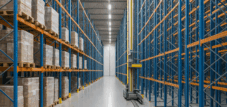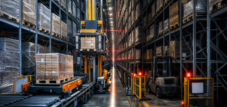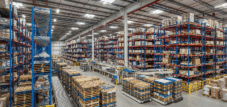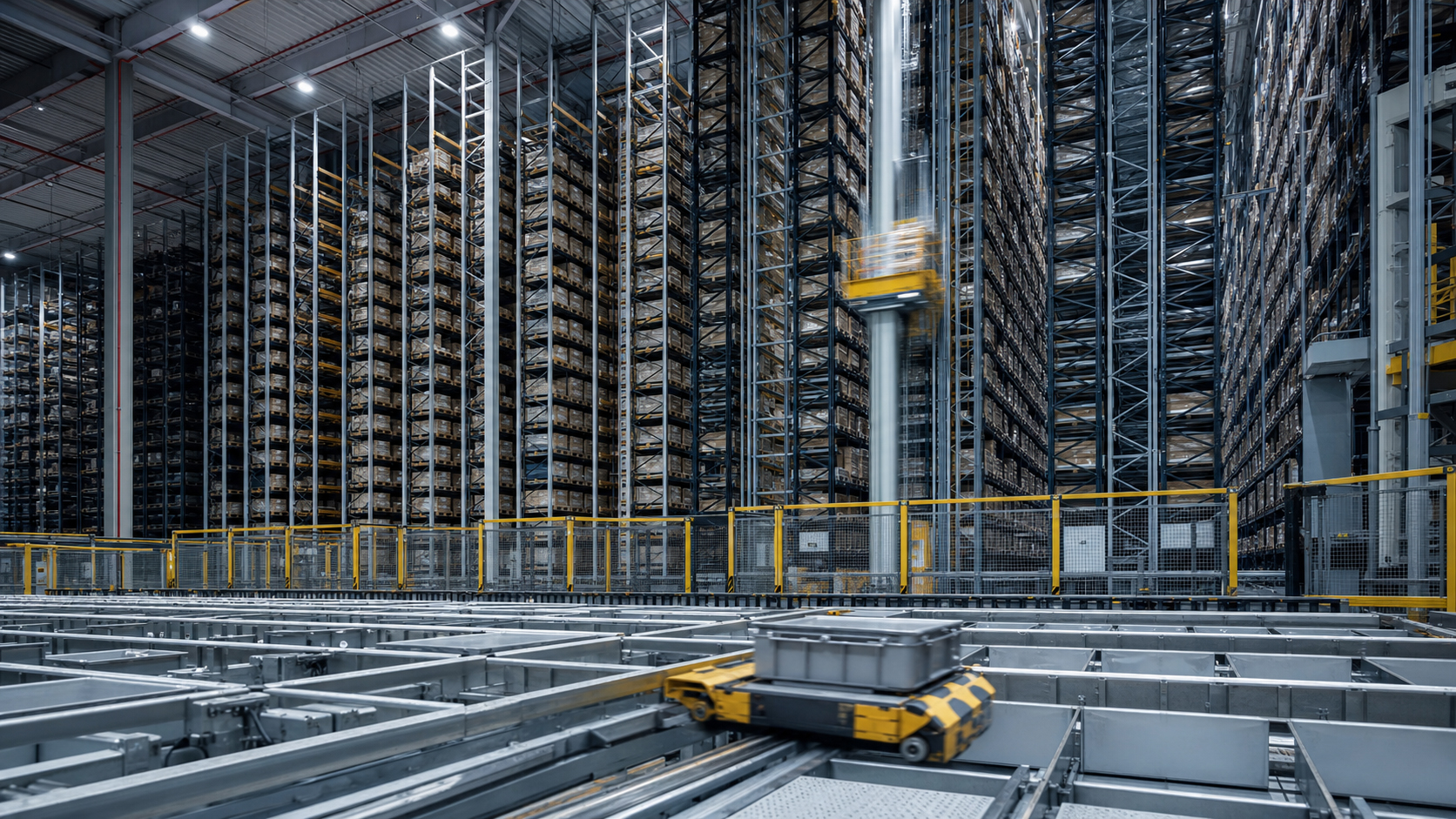
High-bay warehouses in Germany: Henkel, Kärcher & Co. – Why corporations are currently pumping millions into automated warehouses despite the crisis – Creative image on the topic, with AI: Xpert.Digital
Space shortage forces action: Automation boom in secret – How robots and shuttles are saving German logistics
Electricity instead of location: The unresolved energy problem of German logistics giants
Claustrophobia in the south, vacancy in the east: The divided world of German logistics real estate
Germany's warehouse logistics sector is facing a massive transformation: While the intralogistics industry officially laments stagnant order volumes, industrial giants are secretly pumping hundreds of millions of euros into gigantic, fully automated high-bay warehouses. The reason for this is a volatile mix of acute labor shortages and rapidly dwindling building space in economically strong metropolitan areas. But those who build upwards encounter entirely new hurdles: The power connection for the robot fleets suddenly becomes more important than highway access, months-long permitting processes jeopardize entire sites, and even the quality of a simple wooden pallet suddenly determines the shutdown of high-tech systems. Contrary to the subdued mood among machine manufacturers, a massive backlog of investment is currently building up. This detailed analysis, based on specific major projects, reveals the hidden drivers that are truly shaping the transformation of the German logistics landscape – and why we are on the verge of an unprecedented catch-up wave.
Germany's warehouse logistics is undergoing transformation: Between the pressure to automate and an investment backlog
Germany is facing a structural shift in warehouse logistics that cannot be described as a classic capacity shortage, but rather as a confluence of several mutually reinforcing pressure factors. Personnel shortages in warehousing coincide with a scarcity of space in economically strong regions, while at the same time the energy supply for highly automated systems has become a location decision in its own right. Added to this is a seemingly minor, but increasingly relevant operational problem: the availability of high-quality pallets that are actually compatible with automated systems. These four factors have varying degrees of impact on the three main types of warehouses – high-bay warehouses in general, automated pallet high-bay warehouses, and small parts warehouses – thus creating a highly inconsistent picture of the actual investment situation.
Anyone who looks at specific projects over the past twelve months quickly realizes that the big headlines rarely come from the real estate sector itself, but rather from individual industrial companies fundamentally restructuring their warehouse operations. Henkel, Rockwool, Kärcher, Haberkorn, toom Baumarkt, and Beckhoff Automation have all announced investment decisions in the tens or hundreds of millions of euros within just a few months. These cases are not statistically representative, but they currently provide the most reliable evidence for understanding where construction is actually taking place in Germany and why.
Mechanical engineers are holding back, while the demand for automation is actually growing
Paradoxically, the manufacturing side of the intralogistics industry presents a weaker picture than the actual structural demand would suggest. The Materials Handling and Intralogistics Association within the VDMA (German Engineering Federation) reported a seven percent decline in production volume in Germany to €25.8 billion for 2025; industry representatives anticipate only stagnation for 2026. This weakness is primarily due to the strained situation in the automotive industry, general mechanical engineering, and retail, leading many companies to postpone their planned automation projects without abandoning them altogether. The association also emphasizes that structural demand for automated warehouses remains consistently high, indicating that this is more of a cyclical delay than a permanent slump in demand.
This discrepancy between short-term weakness in the manufacturing sector and continued strong long-term demand can be interpreted as a classic sign of pent-up investment needs. In times of economic uncertainty, companies are hesitant to commit significant capital, while the underlying pressure from labor shortages and efficiency requirements continues to increase. Once the economic situation stabilizes, this pent-up demand is likely to manifest itself in a surge of investment, as has been observed historically in similar cycles.
Southern Germany is becoming crowded, the east still has room: One country, two real estate realities
The logistics real estate market in 2025 and the first months of 2026 showed a stable but regionally diverse state. The take-up of logistics and warehouse space in 2025 was approximately 5.78 to 5.9 million square meters, while the nationwide vacancy rate for large-scale warehouses remained between 4.3 and 5.0 percent. However, this nationwide average masks significant regional differences that are crucial for the site selection of new high-bay warehouses. In the economic regions of Munich and Stuttgart, the vacancy rate, at under 1.5 percent, is at a level that can effectively be considered a shortage of space, while in Berlin and especially in the Leipzig and Halle areas, significantly higher vacancy rates of sometimes over eight and nearly 16 percent were reported.
The pipeline of speculative new buildings – constructed without a concrete tenant – remains thin, meaning that companies wishing to expand in southern or parts of western Germany are increasingly dependent on custom-designed new buildings with long lead times. This scarcity in the strongest economic regions explains a significant portion of the pressure to utilize vertical space and density through high-bay racking technology. When horizontal expansion is not possible or economically viable, vertical expansion becomes the only remaining way to create capacity.
Five locations, one pattern: How industrial groups are reorganizing their warehouse landscape
A number of concrete projects from recent months provide a vivid picture of actual investment practices. In June 2026, Henkel opened an expanded pallet high-bay warehouse in Düsseldorf, valued at €45 million. This facility connects to an automated warehouse built in 2014 and together provides over 200,000 pallet spaces across 24,000 square meters. With this expansion, Henkel consolidates five previously separate warehouse locations in Germany and the Benelux countries for its consumer goods production in the laundry, cleaning, and hair care sectors. Company representatives explicitly communicated the project as a commitment to the Düsseldorf location.
Insulation manufacturer Rockwool commissioned system integrator Swisslog to build a fully automated high-bay pallet warehouse at its Neuburg an der Donau site, featuring 35,000 pallet positions and a capacity of 53,000 Euro pallets. Eight double-deep Vectura S40 stacker cranes will be used, along with ProMove conveyor technology and SynQ warehouse management software. Construction began in February 2026. The project is driven by a new production line, the replacement of existing external storage facilities, reduced reliance on forklifts, and shorter truck loading times.
The Haberkorn Group is investing €55 million in its Recklinghausen site in the technical wholesale sector, an investment that has been announced as the largest single investment in the company's history. The first phase involves the construction of a small parts warehouse based on AutoStore technology with up to 178,800 storage locations. A second phase, planned to begin in April 2027, will see the construction of an automated high-bay pallet warehouse with 5,388 storage locations, equipped with four Kardex M single systems and connected to SAP EWM. Cleaning equipment manufacturer Kärcher had previously built a fully automated high-bay pallet warehouse at its Bühlertal site for €16 million. This warehouse, with storage capacity for approximately 29,000 pallets across 15 levels and five double-deep aisles, was intended to supply its own high-pressure cleaner production and to eliminate existing external warehouses, with CO2 savings also cited as a key factor in the decision.
From shelf to robot: How the technology behind the scenes is currently changing
Beyond the sheer investment volumes, an interesting shift is emerging in technology selection. On August 25, 2026, Jungheinrich and the Belgian provider Movu Robotics announced a strategic partnership for automated pallet warehouses, utilizing four-way shuttle vehicles with multi-deep, high-density storage, with Jungheinrich acting as the preferred integrator. Reference projects in Europe and North America, including one for the cake manufacturer Coppenrath & Wiese, indicate that shuttle systems are increasingly being taken seriously as an alternative or complement to traditional stacker cranes.
At the same time, it should be noted that conventional storage and retrieval machines remain the dominant technology for very large silo structures, in refrigerated and frozen storage facilities, and in continuous operation under extreme loads, as the examples of Henkel and Rockwool demonstrate. Reliable market share data on which technology is actually installed more frequently in Germany is not currently publicly available, so statements about a general displacement of storage and retrieval machines by shuttle systems must be considered premature.
Containers instead of pallets: Why online retail needs its own rules
In March 2026, the DIY store operator toom commissioned a small parts warehouse in Rodgau based on AutoStore technology, featuring approximately 23,000 bins, to meet the growing demands of e-commerce fulfillment in the DIY sector. Such systems, based on the goods-to-person picking principle, are gaining importance where a very high number of different items with highly fluctuating demand need to be picked efficiently and ergonomically, for example, in the spare parts trade, the cosmetics industry, or by contract logistics providers with changing clients. One advantage of these systems is their ability to be retrofitted into existing buildings with limited ceiling height, making them particularly attractive for medium-sized businesses with existing properties.
When the approval process becomes a location risk
Not every project runs smoothly, as the example of the food company Bauerngut, a subsidiary of the Edeka Group, demonstrates at its Bückeburg location. There, the company is planning a logistics center with a high-bay warehouse measuring approximately 150 x 89 x 27 meters for the supply of fresh meat, sausage, and cheese products. However, the planned location on Federal Highway 83 is politically and environmentally controversial. The company has already indicated that, should the permit be denied, it may close the site, resulting in the loss of around 800 jobs. This illustrates that, in addition to technology and capital, permitting processes and local acceptance are increasingly becoming independent, and sometimes existential, investment risks.
Another locally reported project involves the automation specialist Beckhoff in Rheda-Wiedenbrück, which is using 25,000 square meters of a high-bay warehouse for its central shipping operations within a 70,000-square-meter hall built by project developer Dietz. The precise timeline for this project remains inconsistent in the available local reports, highlighting the general problem of differing timeliness in reporting on such large-scale projects.
LTW Intralogistics Solutions

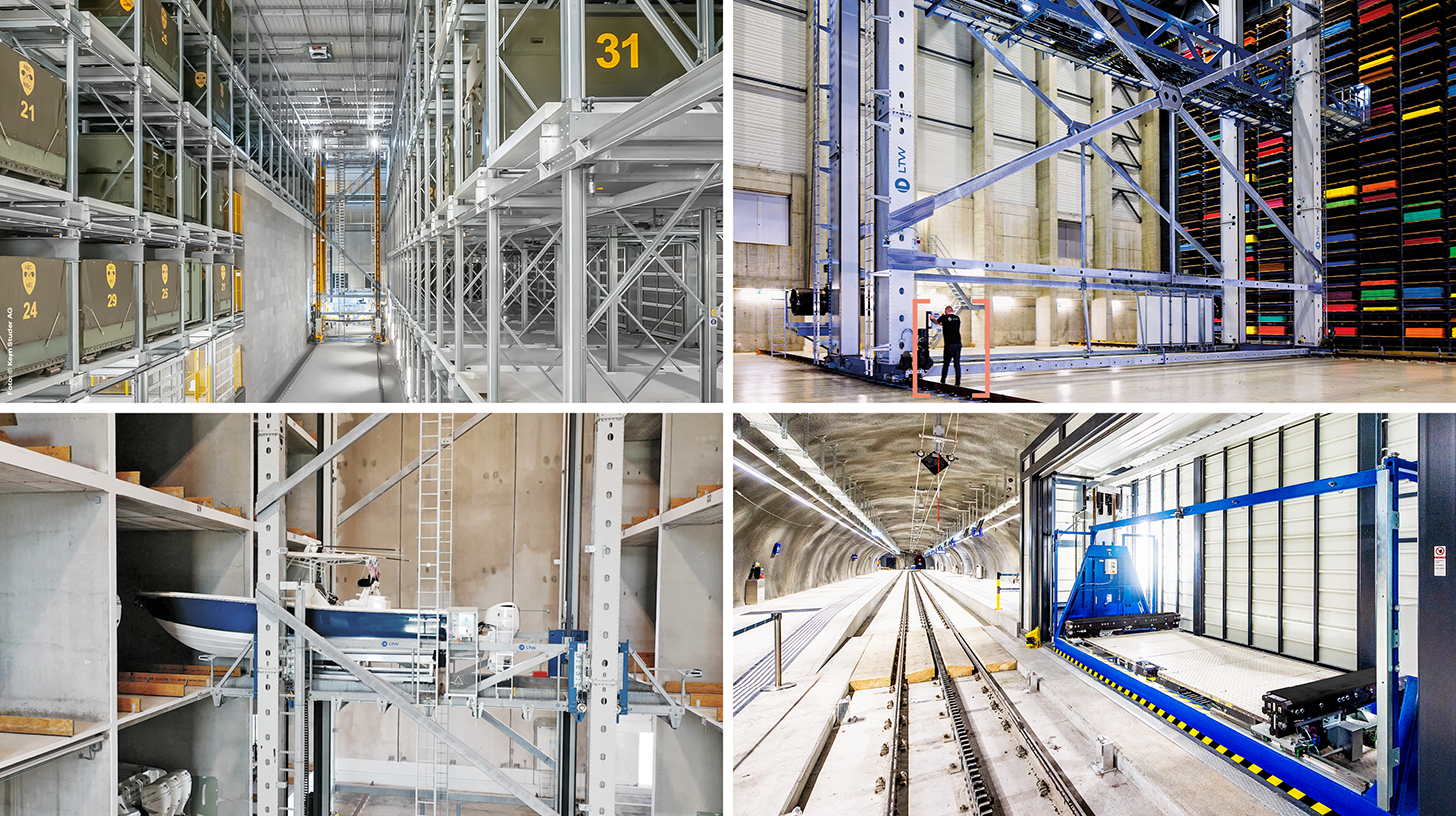
LTW Intralogistics – Engineers of Flow - Image: LTW Intralogistics GmbH
LTW offers its customers not individual components, but integrated complete solutions. Consulting, planning, mechanical and electrotechnical components, control and automation technology, as well as software and service – everything is networked and precisely coordinated.
In-house production of key components is particularly advantageous. This allows for optimal control of quality, supply chains, and interfaces.
LTW stands for reliability, transparency, and collaborative partnership. Loyalty and honesty are firmly anchored in the company's philosophy – a handshake still means something here.
Related to this:
Automation in warehouse logistics: Between consolidation and technological maturity
The underestimated Achilles' heel: When the pallet itself becomes the bottleneck
A seemingly minor, but increasingly relevant operational problem concerns the availability of high-quality pallets for automated systems. The retail price of a new EPAL pallet in 2026 is roughly between €15 and €17, with smaller order quantities being significantly more expensive. Pallets of quality class A, which are essential for the smooth operation of automated high-bay warehouses and conveyor systems, are particularly scarce, as dark, dirty, or damaged pallets regularly cause malfunctions in optical sensor systems and automated gripping processes. Besides general fluctuations in timber prices and the specific characteristics of the pallet exchange system, a persistent shortage of truck drivers and a trade embargo against Belarus are cited as reasons for this scarcity. However, these explanations originate from trade circles and have not been officially confirmed. This detail exemplifies how small, often overlooked supply chain factors can effectively hamper a company's large-scale automation strategy.
Electricity is becoming the new location currency for warehouses
An increasingly crucial factor in location decisions is the energy supply of future warehouse properties. A joint study by the German Freight Forwarding and Logistics Association (DSLV) and the Institute for Automotive Engineering at RWTH Aachen University, dated June 23, 2026, models an increase in electricity demand in the logistics sector to 186 terawatt-hours by 2045, which would be eight times the current demand. According to this model, 22.3 terawatt-hours, or twelve percent, of this would be attributable to the building cluster, which also includes high-bay warehouses. In light of this forecast, the association representatives are calling for accelerated grid expansion and faster connection procedures for new logistics sites.
It is noteworthy that a photovoltaic system on a warehouse roof does not automatically cover the growing energy demand, as some real estate marketing suggests. The real challenge lies in the peak loads generated by conveyor technology, refrigeration systems, and, in the future, by charging truck fleets, as well as the often inadequate grid connection at the respective location. This effectively makes a property's grid connection capability just as important a location criterion as the available floor space or building height.
New laws, new obligations: Regulation as an underestimated cost factor
Parallel to the energy-related challenges, the regulatory framework for new commercial properties is also changing. Following the implementation of the European Energy Performance of Buildings Directive and a national solar panel mandate for non-residential buildings, a tiered requirement for the installation of photovoltaic systems will come into effect on January 1, 2027, for new non-residential buildings with a floor area exceeding 250 square meters. The exact legal provisions are still subject to confirmation by the final Federal Law Gazette. Additionally, in 2026, regulations concerning racking safety were updated, particularly through the technical standard DIN EN 15635 in conjunction with the revised German Social Accident Insurance (DGUV) Information 208-061, which introduces a traffic light system for classifying racking damage. According to the German Ordinance on Industrial Safety and Health (Betriebssicherheitsverordnung), racking systems must continue to be inspected regularly by a qualified person, which represents an ongoing organizational effort for operators of automated high-bay warehouses.
The leading trade fair confirms: Maturity instead of revolution
The LogiMAT trade fair, held in Stuttgart from March 24 to 26, 2026, focused on automation, scalability, artificial intelligence, robotics, shuttle systems, AI-supported pallet inspection, and goods-to-person systems. Unlike previous years, where individual technological breakthroughs dominated the discussion, the 2026 fair, under the motto of meticulous attention to detail, presented a picture of the maturity and integration of existing technologies rather than a single disruptive demand shock. This aligns with the general observation that the current situation is one of consolidation rather than radical reinvention.
Where the numbers contradict each other: Five controversial claims fact-checked
A closer look at the publicly circulating statements on German warehouse logistics reveals several contentious points that require a differentiated assessment.
Firstly, it is often claimed that the shortage of skilled workers in warehouse logistics is easing noticeably, based on an ifo survey showing that the percentage of transport and logistics companies reporting difficulties fell from 42.7 percent in 2025 to 30.6 percent in February 2026. However, this decline is likely primarily cyclical, as lower order volumes automatically lead to reduced reported staffing needs, while structural problems such as high employee turnover, widespread use of temporary workers, and particular bottlenecks in refrigerated logistics remain unchanged. Furthermore, the available statistics do not clearly distinguish between warehouse occupations and the separate problem of the driver shortage in road freight transport.
Secondly, suppliers often suggest that fully automated high-bay warehouses almost always pay off for medium-sized businesses, with amortization periods of five to eight years and productivity gains of 50 to 80 percent. Independent expert reports significantly temper this picture, pointing out that full automation is usually only economically viable from a scale of 5,000 to 10,000 pallet spaces and a correspondingly high order throughput, while smaller companies are often better served by a combination of warehouse management software and autonomous mobile robots.
Thirdly, the claim is being circulated that shuttle systems will fundamentally replace the classic stacker crane in pallet high-bay warehouses. This assertion is supported by suppliers such as Movu and, to some extent, Swisslog, who cite higher storage density and greater flexibility in existing buildings. However, the large-scale projects described by Rockwool and Henkel demonstrate that classic stacker cranes remain the standard for extreme loads and very tall silo structures. Reliable market share figures for Germany that would clearly demonstrate the superiority of one of the two technologies are not yet available.
Fourth, the widespread claim that logistics space is scarce nationwide in Germany is demonstrably true only for specific regions such as Munich, Stuttgart, and parts of North Rhine-Westphalia, while Berlin and especially the Leipzig-Halle area have significantly higher vacancy rates. A differentiated analysis based on warehouse height, automation potential, and the energy efficiency standard of the respective property is largely lacking in the available market reports.
Fifthly, real estate marketing often claims that a photovoltaic system on the warehouse roof makes a high-bay warehouse largely energy self-sufficient. However, as the previously described study by the freight forwarding association and RWTH Aachen University shows, a rooftop system by no means covers the sector's growing energy demand, since peak loads from conveyor technology and cooling, as well as the limited grid connection, represent the real bottlenecks.
Industry logic: Who is really building upwards and why
Looking at the demand situation by industry reveals a more nuanced picture. In the consumer goods and chemical industries, as seen with Henkel, the consolidation of European pallet inventories and the need for stable volume flows are the primary drivers of investment in high-bay pallet warehouses. In the building materials and insulation sector, as with Rockwool, the focus is on connecting new production lines and handling bulky palletized goods. Mechanical engineering and electrical automation, represented by Kärcher, Beckhoff, and, to some extent, Haberkorn, often combine the supply of spare parts and the delivery of finished goods via centralized shipping structures, frequently utilizing both high-bay warehouses and small parts warehouses in parallel.
The technical wholesale sector is characterized by a particularly high product variety and a mixed operation of container and pallet logistics, as the example of Haberkorn demonstrates. Do-it-yourself retailers and general online retailers primarily require small parts warehouses for fluctuating product ranges, returns, and seasonal peaks, as seen at toom. In the fresh produce sector, for example with meat and cheese products, order picking close to the production line is driving demand, but this comes with considerable risks due to permitting processes and local acceptance issues, as the example of Bauerngut in Bückeburg illustrates. Contract logistics providers, while representing the largest segment in terms of warehouse space utilization, often require greater flexibility in warehouse height than proprietary, fixed-installation automated systems, as their customer contracts frequently prohibit specific technical constraints.
What remains unclear: The gaps in the current picture
Despite the abundance of individual cases, significant data gaps remain, making a conclusive, statistically sound assessment of the actual market size difficult. No official statistics exist that record the number of pallet high-bay warehouses and small parts warehouses by federal state and degree of automation for the years 2025 and 2026. The total investment volume in automated warehouses for Germany can currently only be estimated approximately based on individual cases and commercial market studies, the methodologies of which often remain opaque, and the market sizes reported vary considerably between different studies.
The grid connection waiting times specifically for high-bay warehouses, unlike those for general logistics facilities such as truck depots, have not yet been quantified separately. The costs for insurance and fire protection, as a potential investment brake, are rarely specified in public reports, nor is the availability of service technicians for maintaining existing storage and retrieval machines and shuttle systems compared to installing new equipment. Finally, the issue of working conditions in highly automated warehouse environments, such as employee participation and necessary training, remains significantly underrepresented in the public debate compared to technical reporting.
Between postponement and catch-up: An assessment of the overall situation
Taken together, these factors paint a picture best described as one of pent-up, yet unabated, investment demand. The weak manufacturing climate in the intralogistics sector in 2025 and the anticipated stagnation in 2026 mask the fact that individual, financially strong industrial companies continue to invest significant sums in new high-bay and small parts storage projects as soon as there is an immediate operational need, for example, due to new production lines or the closure of expensive external warehouses. The real obstacle lies less in a lack of demand than in the combination of economic uncertainty, limited land availability in growth regions, unreliable energy supply at many locations, and increasingly complex permitting processes.
In the coming years, there are many indications that this pent-up demand will transform into a more visible surge in demand once the economic situation in German industry stabilizes. At the same time, the question of energy supply, particularly the availability of sufficient grid connection capacity, is likely to become just as crucial a location factor as the traditional question of available space and building height. Companies that invest early in energy-efficient, well-connected sites and have flexible access to both traditional storage and retrieval machines and newer shuttle technologies are likely to gain a strategic advantage during this transition phase over competitors who continue to focus on short-term cost optimization in existing, less automated structures.
Consulting - Planning - Implementation

Konrad Wolfenstein
I would be happy to serve as your personal advisor.
You can contact me at wolfenstein∂xpert.digital or
Just call me on +49 7348 4088 965 .
Your intralogistics experts
Consulting, planning and implementation of complete solutions for high-bay warehouses and automated storage systems - Image: Xpert.Digital
More information here: