
High-bay warehouses for heavy goods and pallets: Reshoring transformation in warehouse logistics – a 13 billion euro market in flux.
Xpert pre-release

Language selection 📢
Published on: December 1, 2025 / Updated on: December 1, 2025 – Author: Konrad Wolfenstein

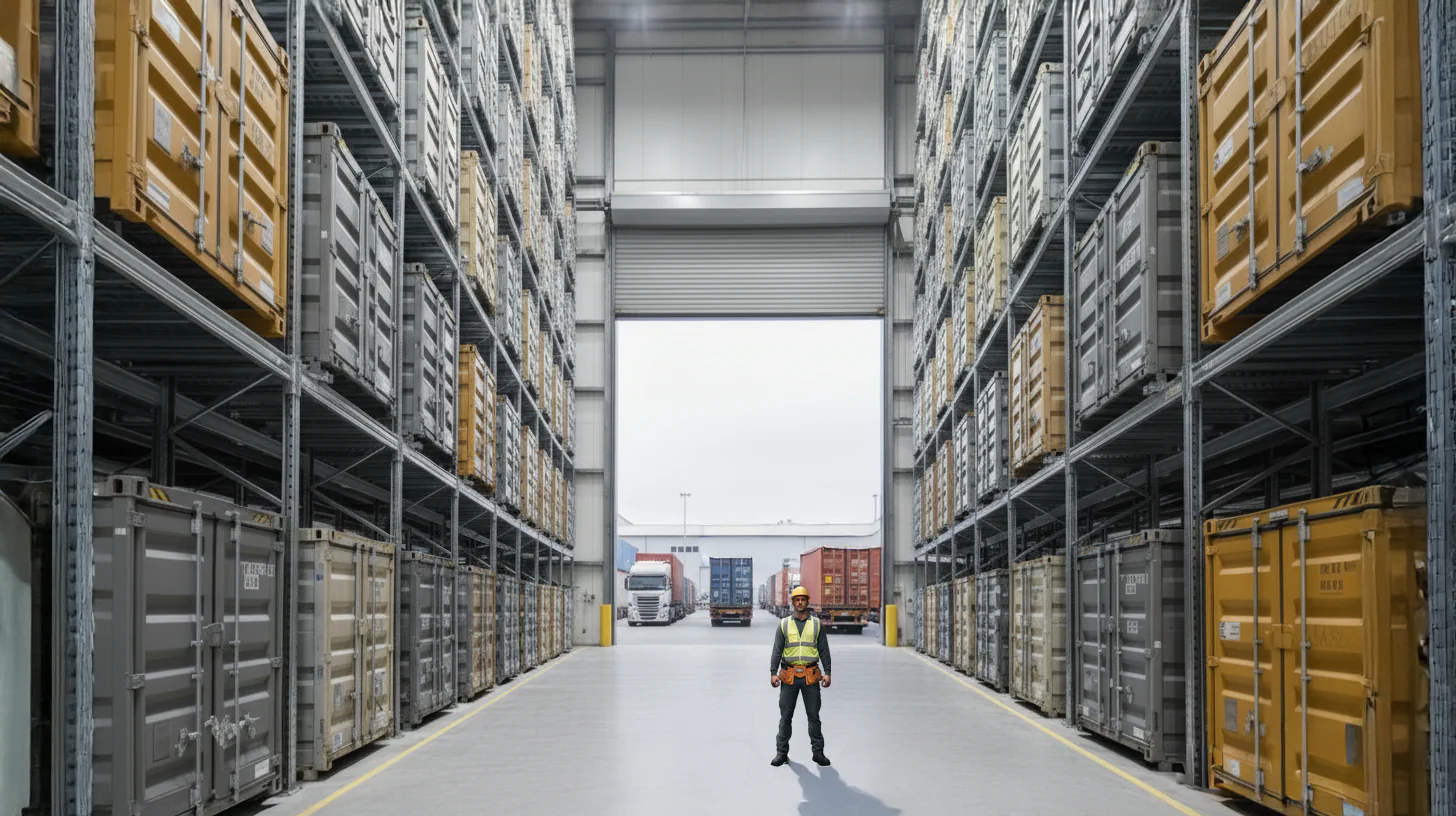
High-bay warehouses for heavy goods and pallets: Reshoring transformation in warehouse logistics – a 13 billion euro market in flux – Image: Xpert.Digital
More than just shelves: Why high-bay warehouses are suddenly becoming a strategic competitive advantage
German engineering prowess vs. hesitancy: Is industry squandering its logistical advantage?
For a long time, high-bay warehouses were considered unremarkable shells of steel and concrete – necessary but passive places for storing goods. But this image is a thing of the past. In an era where global supply chains are being reshaped and geopolitical tensions dictate trade, these gigantic structures have evolved into the strategic nerve centers of the modern global economy.
The figures speak for themselves: The market for high-bay racking systems and automation is exploding and is expected to reach a volume of almost 29 billion US dollars by 2033. But behind these billions in investments lies far more than just the desire for efficiency. It is a global race for technological sovereignty and economic resilience. While the US, under pressure from the reshoring movement, is positioning warehouses as weapons in the e-commerce war and as a bulwark against Asia, China is pursuing an aggressive expansion policy with its Belt and Road Initiative and AI-driven state logistics.
Europe – and Germany in particular – stands at a critical crossroads in this complex situation. Squeezed between demographic change, an acute shortage of skilled workers, and stringent sustainability regulations, Germany, the "logistics world champion," must redefine its role. While German engineering continues to supply the world with cutting-edge technology, a dangerous mix of skepticism and a lack of investment at home threatens to cost Germany its competitive edge.
This analysis looks behind the facades of the 50-meter-high steel cathedrals. It illuminates how national economic philosophies shape the architecture of warehousing, why the forklift driver is being replaced by the algorithm, and why the question of who builds the best warehouses could determine who dominates the global economy in the future.
Suitable for:

When steel and software reshape the global economy
While high-bay warehouses were once considered mere steel structures for storing goods, they have evolved into strategic nerve centers of the modern economy. The global market for high-bay racking systems reached $13.2 billion in 2024 and is projected to grow to $28.7 billion by 2033, driven by a compound annual growth rate of 8.9 percent. In parallel, the market for automated storage and retrieval systems is expanding from $9.86 billion in 2025 to a projected $14.80 billion by 2030. These figures reveal a fundamental transformation of global supply chains that extends far beyond technological modernization and has profound geopolitical, economic, and cultural dimensions.
The pallet racking market itself was valued at US$13.54 billion in 2024 and is projected to grow to US$23.78 billion by 2032. Heavy-duty racking systems with load capacities ranging from 500 kilograms to 30 tons per bay form the backbone of modern distribution centers. These monumental structures, which can reach heights of 12 to over 50 meters, are no longer purely engineering projects, but rather reflections of respective national economic philosophies and strategic priorities.
The regional perception of these technologies diverges considerably. What is seen in the US as a competitive advantage in the e-commerce war is interpreted in Europe as an answer to demographic challenges, while Asian economies view them as the key to industrial dominance. This analysis examines the fundamental differences in the economic evaluation and strategic orientation of the leading economic regions.
Suitable for:
The American Perspective and the Triumph of the Platform Economy
The United States dominates the global warehouse automation market with a share of over 20 percent and a market volume that reached $6.7 billion in 2022 and is projected to grow to $16.5 billion by 2030. This leading position is inextricably linked to the hegemony of the American e-commerce giants. Amazon now operates more than 750,000 autonomous mobile robots in its fulfillment centers, a 25-fold increase since 2015. Walmart, the second-largest retailer in the US, has already automated over 50 percent of its fulfillment volume and plans to invest $14 billion in warehouse automation and related business areas.
The American perception of high-bay warehouse technology is fundamentally shaped by a paradigm of scalability and speed. Twin-mast stacker cranes for high-bay warehouses up to 45 meters tall are considered particularly desirable due to their higher load-bearing capacity and stability. Integrating these systems with sophisticated warehouse management software is not an option, but an industry standard. Amazon set another milestone with its Vulcan robot, unveiled in May 2025. This first tactile robotic system from the company can handle 75 percent of all warehouse items, including fragile and irregularly shaped products, and can operate for up to twenty hours continuously.
The strategic motivation behind these investments, however, extends far beyond efficiency gains. The US is experiencing a historic reshoring movement. Announcements for the relocation of manufacturing capacity surged from $933 billion in 2023 to $1.7 trillion by the end of 2024. Approximately 88 percent of all announced jobs in 2024 were in high- and medium-technology industries critical to national and economic security. This reshoring wave is directly driving demand for modern warehousing systems, as new manufacturing facilities require highly automated logistics infrastructure.
The industrial logistics real estate sector is entering a consolidation phase following pandemic-induced overheating. Vacancy rates for warehouse space rose to 7.5 percent by November 2024, which is interpreted as a healthy market correction. Analysts predict that reshoring activity alone could increase total warehouse demand in the US by approximately 35 percent over the next five years. Locations near ports and production facilities, which benefit from the increasing regionalization of supply chains, are particularly sought after.
The protectionist trade policies under the Trump administration are exacerbating this trend. With tariffs of 20 percent on Chinese imports and threats of up to 46 percent on Vietnamese goods, the landscape of global supply chains is fundamentally shifting. Former Commerce Secretary Wilbur Ross predicts that these policies will lead to a massive transfer of wealth from Asia to Latin America, as companies relocate their production facilities to nearshoring, particularly to Mexico. This geopolitical realignment transforms American warehousing systems into not just economic, but strategic assets.
Europe and the balance between excellence and transformation
The European perspective on high-bay warehouses and pallet systems differs fundamentally from the American one. While scalability and speed dominate in the US, quality, sustainability, and addressing demographic challenges shape the strategic direction in Europe. The European e-commerce warehouse market is projected to reach US$15.70 billion in 2025 and grow to US$19.77 billion by 2030, representing an annual growth rate of 4.71 percent. Investments in logistics real estate in Europe reached €37.9 billion in 2024, an increase of 14 percent compared to the previous year.
Demand for extra-large warehouses exceeding 40,000 square meters remains strong in Europe. In 2023, this segment accounted for 25 percent of total activity, with 16 projects completed. The trend toward multi-story, state-of-the-art warehouses is gaining momentum in both the US and Europe, with industry experts predicting that logistics will become the most automated sector.
The European regulatory landscape is driving this development in a specific direction. The EU's Corporate Sustainability Reporting Directive requires companies to measure and report their environmental, social, and governance (ESG) impacts. In 2024, 75 percent of demand for space in France, Germany, Italy, Spain, and the UK was for new buildings, while 65 percent of surveyed tenants were willing to pay a premium for net-zero facilities. EU climate legislation from 2021 mandates a 55 percent reduction in net greenhouse gas emissions by 2030, placing significant pressure on logistics real estate to transform.
The labor shortage poses an existential challenge in Europe. Germany currently lacks approximately 70,000 to 100,000 truck drivers, with an additional need of 20,000 annually. More than a third of truck drivers in the EU are over 55 years old, while only 6 percent of passenger transport drivers are under 25. An estimated 4.7 million current workers will leave the German labor market between 2024 and 2028. This demographic time bomb makes automation not an option, but an economic necessity.
Labor costs are exacerbating this pressure. In 2024, average hourly labor costs in Germany were €43.40, making it the seventh most expensive country in the EU. In the manufacturing sector, costs reached €48.30 per hour, 43 percent above the EU average. By comparison, an hour of labor cost only €17.30 in Poland and just €10.60 in Bulgaria. These cost disparities are driving the relocation of logistics activities to Eastern Europe, with Poland, the Czech Republic, and Romania increasingly acting as extended workbenches for Western European distribution centers.
Germany's special role between technological leadership and structural skepticism
Germany occupies an ambivalent position within Europe. The German intralogistics sector achieved an estimated production volume of €27.7 billion in 2024, an increase of 3 percent. However, total export volume declined by 5 percent to €19.8 billion, with the USA remaining the largest customer at €2.5 billion, albeit with a decrease of 9 percent. The VDMA forecasts a further decline in production volume of 2 percent to €27.2 billion for 2025.
German industry faces a paradox. On the one hand, the Würth industrial park in Bad Mergentheim is considered one of the most modern logistics centers for industrial supplies in all of Europe, with over 65,000 square meters of floor space and a capacity of 235,000 pallet spaces. The new high-bay warehouse, measuring 50 meters high, 34 meters wide, and 121 meters long, demonstrates German engineering at its finest. Henkel is investing 44 million euros in a new high-bay warehouse in Düsseldorf, scheduled for completion at the end of 2025. This new facility will be connected to the existing fully automated high-bay warehouse for detergents and cleaning products, which already offers space for over 200,000 pallets on up to 16 levels.
On the other hand, a study by TMG Consultants reveals a significant need for improvement. 63 percent of the surveyed companies have not automated their intralogistics at all or only to a limited extent. A further 22 percent have semi-automated processes, while highly automated processes with integrated systems are found in only 11 percent of the companies. Only 4 percent have reached the highest level of autonomous intralogistics. Particular shortcomings exist in automated truck unloading at the loading dock, which remains a largely unresolved challenge.
An ABB survey on the state of automation in German SMEs shows that robotics and automation will see particularly strong growth in the logistics sector, with 62.5 percent approval. However, significant reservations exist. 45.5 percent cite cost as an obstacle, 20.3 percent report high levels of skepticism among employees, and 20.2 percent lament the lack of automation concepts. The shortage of skilled workers is seen as the biggest challenge by almost half of the 426 companies surveyed, followed by competitive and digitalization pressures, as well as bureaucratic burdens.
PwC analysts estimate the revenue losses for the German economy due to the skilled worker shortage at around €65 billion. This figure illustrates that the reluctance to automate is causing not only competitive disadvantages but also tangible economic losses. Industry experts warn that German industry is thus squandering its competitive edge through outdated intralogistics structures.
The strengths of the German logistics sector lie in its quality and precision. Germany is considered a world leader in logistics, not least because of its central geographic location in Europe, but also because of its highly qualified logistics services. With approximately 25 percent of total revenue across Europe and around €279 billion in revenue generated in 2019, the German logistics market carries considerable weight. The sector employs around 3 million people, making it the largest economic sector in Germany.
LTW Solutions

LTW Intralogistics – Engineers of Flow - Image: LTW Intralogistics GmbH
LTW offers its customers not individual components, but integrated complete solutions. Consulting, planning, mechanical and electrotechnical components, control and automation technology, as well as software and service – everything is networked and precisely coordinated.
In-house production of key components is particularly advantageous. This allows for optimal control of quality, supply chains, and interfaces.
LTW stands for reliability, transparency, and collaborative partnership. Loyalty and honesty are firmly anchored in the company's philosophy – a handshake still means something here.
Suitable for:
Power factor high-bay warehouses: Why Chinese automation is putting pressure on Western suppliers
Chinese expansion and the algorithm as a matter of state interest
China has rapidly become the dominant force in global warehouse automation. The Chinese logistics automation market was valued at US$25.5 billion in 2024 and is projected to reach US$80.7 billion by 2032, driven by a compound annual growth rate of 15.5 percent. China controlled 48.9 percent of the Asia-Pacific warehouse automation market in 2024. With more than 30,000 smart factories, including approximately 1,200 at an advanced level and 230 with a top rating, China has built the world's largest smart manufacturing infrastructure.
The Chinese perception of high-bay warehouses is inextricably linked to state industrial policy. The 14th Five-Year Plan massively increased investment in modern logistics infrastructure, with 181 national logistics hubs and 105 major cold chain logistics bases across all 31 provinces. China now boasts more than 2,700 logistics parks with an annual turnover of at least 20 million yuan, with nearly 25 percent having their own rail connections. Investment in transportation infrastructure reached a total of 15.2 trillion yuan between 2021 and 2024, a 23.3 percent increase over the previous cycle.
Cainiao, the logistics arm of Alibaba, represents the Chinese vision of intelligent warehousing. In a warehouse in Bremen, more than 100 automated guided vehicles (AGVs) sort goods across an area of over 40,000 square meters. Cainiao operates overseas warehouses with a total area of more than 800,000 square meters in 18 countries and regions across Europe, Asia, and North America. The rapid establishment of overseas warehouses and global logistics networks is crucial for increasing delivery efficiency, reducing costs, and improving the customer experience.
Technological leadership manifests itself in concrete key performance indicators. In China's top-rated smart factories, development cycles have shortened by almost 30 percent, production efficiency has increased by over 22 percent, error rates have halved, and carbon emissions have decreased by approximately 20 percent. JD Logistics has implemented similar systems and achieved over a 60 percent reduction in order processing time with an order accuracy of 99.9 percent.
The Belt and Road Initiative is accelerating this expansion on a global scale. In 2024, Chinese BRI commitments reached a record high with US$70.7 billion in construction contracts and approximately US$51 billion in investments. The mega-port of Chancay in Peru, inaugurated in November 2024 with an investment of approximately US$3.5 billion, symbolizes China's ambition to shape global supply chains according to its own vision. China-Europe freight trains have already completed over 110,000 journeys, and nearly 10,000 sea-rail intermodal trains operate annually along the new Western Land-Sea Corridor.
Chinese automation manufacturers are increasingly pushing into international markets, driven by slowing economic growth and intensified domestic competition. Companies like Hai Robotics, Geek Plus, and Hikrobot have already successfully established themselves outside of China, followed by fixed automation providers such as Wayzim, KENGIC, and BlueSword. At MODEX 2024, over 100 Chinese vendors exhibited, representing more than 9 percent of all exhibitors. This expansion presents both opportunities for cost-conscious buyers and challenges for established Western vendors, who increasingly need to differentiate themselves through non-price factors.
Suitable for:

The Asia-Pacific kaleidoscope and the differentiated development paths
The Asia-Pacific region beyond China exhibits a remarkable diversity of development models. The regional warehouse automation market is projected to experience a growth rate of 18.9 percent during the forecast period of 2024 to 2031. Japan generated $1.28 billion in warehouse automation revenue in 2024 and is expected to reach $3.88 billion by 2030, representing an impressive annual growth rate of 21.6 percent. The South Korean market is estimated at $4.14 billion in 2024 and is expected to grow to $14.02 billion by 2033.
Japan and South Korea are pursuing different strategies. In Japan, rising labor costs and an acute labor shortage are driving automation, while the export-driven economy relies on automation to meet global supply chain standards. South Korea's e-commerce sector has grown by 48 percent, massively increasing demand for automation solutions for efficient order processing.
The so-called Tiger Cub economies, which include Indonesia, Malaysia, Thailand, the Philippines, and Vietnam, represent the next wave of growth. Vietnam has established itself as the biggest beneficiary of the China Plus One strategy, rising from the lowest-ranked to the second-largest exporter within ASEAN over the past 15 years. Samsung manufactures about 50 percent of its tablets and phones in the country, employing approximately 200,000 people, while Nvidia recently announced a $200 million investment in Vietnam. Vietnam's GDP growth reached 7.09 percent in 2024, up from 5.05 percent in 2023.
However, logistics costs pose a critical challenge. In Vietnam, logistics costs are approximately 25 percent higher than in China, primarily due to inadequate infrastructure and a fragmented logistics sector. In Indonesia, logistics costs represent 24 percent of GDP, compared to 14 percent in Thailand. These costs, driven by fragmented geography and infrastructure gaps, hinder the efficient scaling of businesses across the nation.
India is projected to have the highest growth rate in the Asia-Pacific warehouse automation market, at 19.6 percent annually. The Make in India initiative promotes domestic manufacturing, including electronics, which is driving demand for automated warehouses to efficiently manage increased production volumes. India's electronics manufacturing is expected to reach US$300 billion by fiscal year 2026. Amazon plans to invest US$5 billion in India, focusing on automated warehouses across the country.
With a projected annual growth rate of 7 percent and a market volume of approximately US$600 million by 2028, Australia is developing into the fastest-growing market in the region. Increasing demand from the e-commerce, mining, and manufacturing sectors is driving market growth, while the focus is on energy-efficient and scalable systems suitable for high-volume operations.
Technological convergence and the remeasurement of industrial power structures
The global landscape of high-bay warehouses and pallet systems is dominated by a small number of leading technology companies. Daifuku from Japan, the KION Group from Germany, and SSI Schaefer, also from Germany, top the list of the largest suppliers of automated material handling equipment. These companies offer comprehensive portfolios that include automated guided vehicles (AGVs), automated storage and retrieval systems, conveyors, cranes, and industrial robots.
The Asia-Pacific region holds the largest market share in automated material handling equipment, at 39 percent. In April 2024, Daifuku expanded its Shiga Works facility in Japan to increase production capacity and optimize logistics, including a cleanroom for semiconductor and LCD production systems and the manufacturing of automated guided vehicles (AGVs). This expansion underscores the strategic importance that established manufacturers place on capacity expansion.
Technology trends are converging globally, though regional differences persist. In China, digital twins enable the virtual testing of warehouse layouts, the evaluation of product pathways, and the assessment of picking speeds. AI-powered algorithms continuously optimize product placement, increase picking efficiency, and maximize warehouse space utilization, sometimes by over 60 percent. AI-based predictive maintenance systems can detect potential equipment failures before they occur.
In Europe and the US, the focus is more strongly on integrating sustainability and resilience. Energy-efficient automation reduces costs, while predictive energy analytics minimizes waste. Digital dashboards enable managers to monitor carbon impact and energy intensity across entire networks. The most successful smart warehouse transformations follow a phased strategy: starting with process automation, then progressively integrating data analytics, AI, and IoT.
The shift in the balance of power between Western and Chinese suppliers is undeniable. While Western companies differentiate themselves through quality, reliability, and integrated services, Chinese competitors offer aggressive pricing with increasingly competitive technology. The growing presence of Chinese suppliers in international markets has sparked a debate about how Western companies can differentiate themselves beyond price.
Strategic implications and the reorganization of global value chains
The differing regional perspectives on high-bay warehouses and pallet systems reflect deeper geopolitical and economic upheavals. The US is pursuing reshoring and technological self-sufficiency, with a focus on critical sectors such as semiconductors, electric vehicles, and pharmaceuticals. Buy American requirements for government contracts are expected to expand, coupled with incentives for bringing domestic production back to the US.
Europe is navigating between competitiveness and sustainability. The EU Commission is attempting to strengthen the competitiveness of European industry through deregulation measures, which could have positive effects on the intralogistics sector. At the same time, "Fit for 55" retrofit mandates are forcing companies to modernize their warehouse infrastructure. The German market benefits from its technological leadership but suffers from a shortage of available space, which pushed take-up in the first half of 2024 to its lowest level since 2012.
China is pursuing an aggressive expansion strategy that extends beyond mere technology exports. The establishment of overseas warehouses and global logistics networks creates dependencies that reach far beyond commercial relationships. The integration of this infrastructure into the Belt and Road Initiative gives logistics a geopolitical dimension that Western policymakers are watching with growing concern.
Emerging markets in Asia, Africa, and the Middle East face the challenge of closing technological gaps while simultaneously seeking to benefit from lower labor costs. The logistics and transportation market in the Middle East and Africa is projected to reach US$173.27 billion by 2025 and is expected to grow at an annualized rate of 6.36 percent through 2030. Saudi Arabia plans to develop its logistics market to an impressive US$15.31 billion by 2030, establishing 59 logistics zones.
The convergence of automation, artificial intelligence, and sustainability defines the future competitive landscape. Companies that can integrate these three dimensions will be the winners of the next decade. Regional perceptions of these technologies will continue to diverge, shaped by differing economic priorities, demographic realities, and geopolitical strategies. The high-bay warehouses of the future will not only store goods but will also serve as tangible manifestations of respective national economic philosophies, embodying fundamental decisions about resilience, efficiency, and strategic autonomy.

Xpert.Plus warehouse optimization - high-bay warehouses such as pallet warehouses consulting and planning
We are there for you - advice - planning - implementation - project management
☑️ Our business language is English or German
☑️ NEW: Correspondence in your national language!

Konrad Wolfenstein
I would be happy to serve you and my team as a personal advisor.
You can contact me by filling out the contact form or simply call me on +49 7348 4088 965 (Munich) . My email address is: wolfenstein ∂ xpert.digital
I'm looking forward to our joint project.










