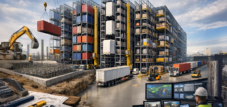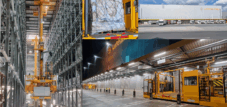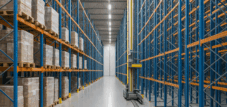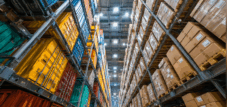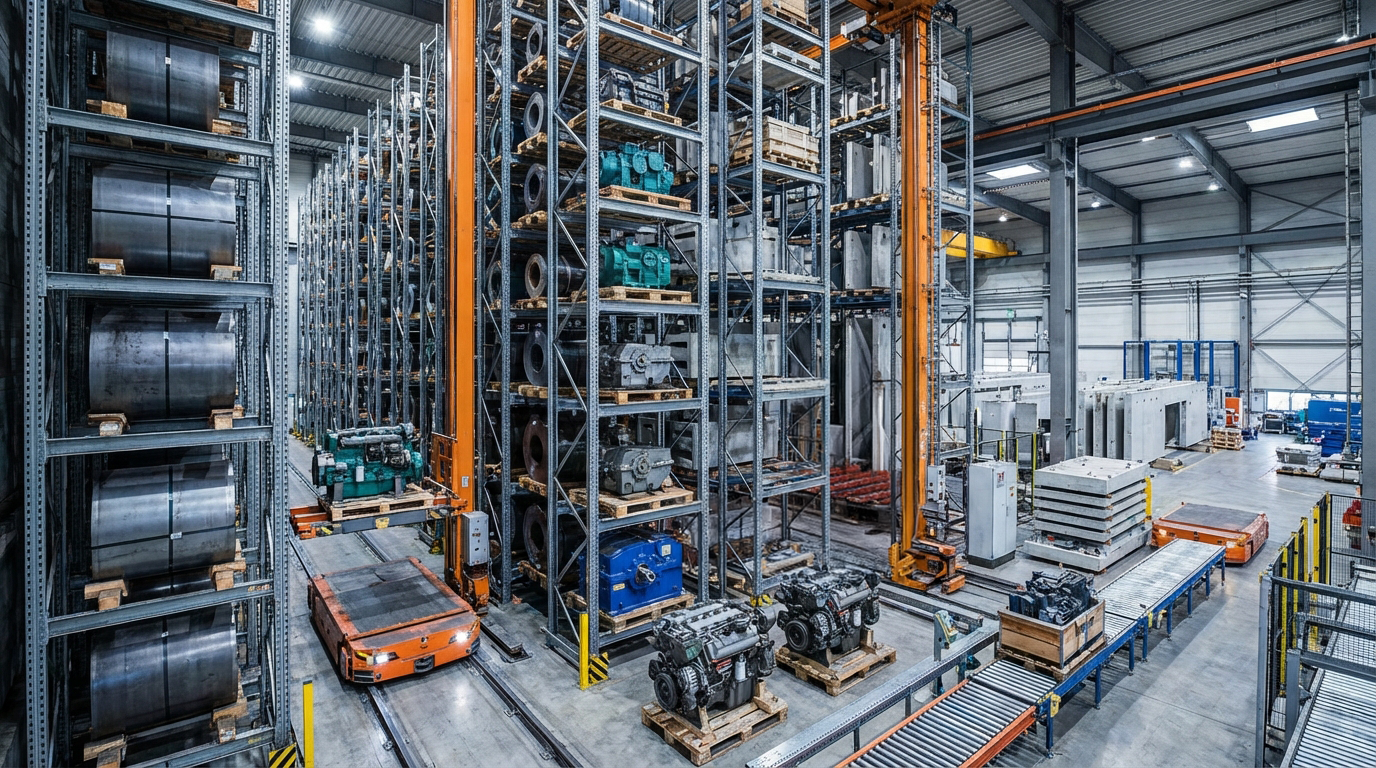
70% less floor space: How heavy-duty high-bay racking is transforming factory planning for production and manufacturing halls – Creative image: Xpert.Digital
Efficient machines, chaotic halls: The solved paradox of industry
The buffer paradox: How intelligent heavy-load logistics unlocks hidden efficiency reserves
The ultramodern production halls of German industry present a contradictory picture: While production facilities are optimized for maximum efficiency and precision through multi-million-euro investments, costly chaos often reigns between process steps. Particularly in the heavy-lift industry, where multi-ton car bodies, steel coils, or concrete elements are moved, valuable space is blocked by unplanned floor storage. These bottlenecks are often considered an unavoidable evil to compensate for varying cycle times. But the price of this view is high: Expensive industrial space is wasted, capital is tied up in unmanageable inventories, and employees lose valuable working time searching for and transporting materials.
The good news: What was previously considered a mere cost factor is being transformed into a strategic competitive advantage through technological innovation. The key lies in the third dimension. Automated heavy-duty high-bay warehouses are replacing space-intensive floor storage and transforming passive buffer zones into dynamic, vertical powerhouses.
Here we describe how companies can reduce their space requirements by up to 70 percent while simultaneously and massively increasing process reliability by switching to intelligent buffer systems. We analyze why the high initial investments often pay for themselves in less than two years, how Industry 4.0 concepts ensure transparent material flows, and why moving away from manual forklift traffic not only increases efficiency but also counteracts the shortage of skilled workers. Learn why intelligent buffering is becoming the decisive lever for the factory of the future.
Why intelligent buffer solutions are becoming a competitive factor – and why old concepts are failing
The German manufacturing industry faces a paradox. While production facilities are being optimized for maximum efficiency with multi-million-euro investments, uncontrolled bottlenecks are emerging between process steps, tying up capital and blocking space. This problem is particularly evident in the heavy-lift industry, where multi-ton semi-finished products must be moved between production stages. Large vehicle components, steel coils, body assemblies, or precast concrete elements require considerable buffer space, which is often accepted as a necessary evil. However, this seemingly unavoidable waste can be transformed into a strategic advantage through modern heavy-lift technology.
The starting point in many production facilities is clear. Differing process times across linked manufacturing steps lead to unbalanced space requirements. While a paint shop in the automotive industry, for example, has significantly longer cycle times than the upstream body shop, queues of car bodies inevitably arise, requiring temporary storage. In practice, this often results in the disorganized use of valuable production space, a lack of transparency regarding inventory, and suboptimal material flows. Buffers between process stages are by no means avoidable; rather, they are technically necessary to absorb fluctuations in processing times and disruptions. The central question, therefore, is not whether buffers are needed, but how they can be designed economically and in a space-efficient manner.
Capital on the warehouse floor: The underestimated costs of unplanned buffer zones
The costs of unstructured production buffers are systematically underestimated in German manufacturing facilities. An examination of the relevant cost drivers reveals the extent of the economic burden. Land costs represent a significant factor in industrial conurbations. In port areas, land prices range between two thousand and three thousand euros per square meter. Even in less prominent industrial areas, the costs for warehouse space range between one hundred and fifty and four hundred euros per square meter per year. If a production line requires, for example, five hundred square meters of unstructured buffer space, the annual costs for this space alone amount to seventy-five thousand to two hundred thousand euros.
Capital tied up in high inventories further increases the financial burden. In the automotive industry, where up to sixty percent of vehicle costs are attributable to purchased parts, excessive buffer inventories lead to significant capital commitment. With an average cost of capital of six to eight percent, a buffer inventory of one million euros in semi-finished products incurs annual interest costs of sixty to eighty thousand euros. In addition, there are opportunity costs, as tied-up capital is not available for value-adding investments.
The operational inefficiency of unstructured buffers manifests itself in longer search times, increased transportation costs, and quality risks. Studies on production efficiency show that employees in poorly organized production environments spend up to 40 percent of their working time on non-value-adding activities such as searching and transporting. In the automotive industry, it has been documented that production workers cover up to 14 kilometers daily within factory facilities, which, at an average speed of one meter per second, equates to almost four hours of pure walking time. For a skilled technician with a full cost rate of 60 euros per hour, this translates to a daily loss of 240 euros in value due to unnecessary movement alone.
Lean management identifies excessive inventory as one of eight fundamental types of waste. High buffer stocks also mask structural problems in production. Poor production planning, unreliable deliveries from suppliers, high scrap rates, or long setup times are compensated for by generous buffers instead of addressing the root causes. The Toyota Production System, which set global standards with its just-in-time principle, is based on the consistent minimization of buffers to expose weaknesses in the production system and systematically eliminate them.
Intelligent heavy-duty technology: From space hog to vertical efficiency marvel
The technological answer to the buffer problem lies in specialized heavy-duty storage systems that enable three-dimensional utilization of available space. Modern automated high-bay warehouses for heavy loads represent a paradigm shift compared to conventional floor storage. The core idea is to systematically utilize the vertical dimension, thereby reducing the footprint to a minimum. While a conventional floor storage system for large vehicle parts quickly requires several thousand square meters, a high-bay system can provide the same capacity in a fraction of the area.
Concrete implementations illustrate the potential of this technology. In the automotive industry, a 20-meter-high high-bay warehouse for car bodies with 420 storage locations was built, acting as a capacity buffer between body shop and paint shop. The system enables an even distribution of different car body types across three storage aisles and minimizes the travel distances of the storage and retrieval machines through intelligent space allocation. Another example from spare parts logistics shows that an automated high-bay warehouse can store over 70,000 wire mesh containers on approximately 7,300 square meters. Compared to a conventional floor warehouse, the same capacity would require more than 20,000 square meters of space, representing a space saving of over 70 percent.
The technical components of modern heavy-duty systems are designed for extreme loads. Storage and retrieval machines can handle loads of up to 2,500 kilograms in standard systems. Specialized solutions even achieve payload capacities of up to 18,000 kilograms, as demonstrated by a container depot of the Swiss Army. The storage and retrieval machines operate with telescopic load-handling devices, frequency-controlled drives, and energy recuperation, enabling high speeds with low energy consumption. High-resolution linear encoders guarantee positioning accuracies in the millimeter range, while integrated weight sensors automatically prevent overloads.
The Austrian company LTW Intralogistics, part of the Doppelmayr Group, embodies technological expertise in this segment. With over forty years of experience and more than two thousand completed storage and retrieval systems, the company possesses comprehensive competence in heavy-duty technology. Manufacturing components according to cableway standards guarantees exceptional robustness and durability. LTW produces storage and retrieval systems for goods up to thirty-one meters long or containers with payloads of up to eighteen tons. The modular design enables customized solutions for a wide range of industries, from the automotive sector and pharmaceutical logistics to refrigerated and deep-freeze warehouses.
Are vertical buffer systems cost-effective? A cost-benefit analysis
The investment decision for automated heavy-lift systems requires a differentiated economic analysis. While the initial investment costs are significantly higher than those of conventional floor-mounted warehouses, the total cost of ownership over the life cycle almost always clearly favors the automated solution. The investment costs for a fully automated high-bay warehouse with heavy-lift technology typically range between five and fifteen million euros, depending on capacity, height, and technical features. A comparable floor-mounted warehouse with manual operation and forklift logistics would incur lower construction costs of one to three million euros, but requires three times the floor space.
Ongoing operating costs significantly impact the profitability calculation. Automated systems considerably reduce staffing requirements. While a manual floor warehouse with forklift operation in three shifts requires ten to fifteen employees for storage and retrieval, an automated system manages with just two to three employees for monitoring and maintenance. With an average total cost of seventy thousand euros per employee per year, this results in annual personnel cost savings of five hundred thousand to eight hundred thousand euros. Despite electric drives, the energy costs of automated systems are significantly lower than those of diesel forklifts. Modern storage and retrieval machines with energy recovery consume approximately forty percent less energy than a forklift fleet for the same throughput.
In many cases, space savings represent the decisive economic factor. In port areas, where buildable land costs between two and three thousand euros per square meter, saving three hectares for three thousand TEU of storage capacity results in a cost advantage of sixty to ninety million euros. Even in less exposed industrial locations, the higher investment is recouped within a few years through space savings. Return-on-investment calculations for warehouse automation show that sensible automation projects typically pay for themselves within three to five years. In many documented cases, amortization has even been achieved within one and a half to two years.
The productivity gains of automated systems enhance their economic appeal. While a manual floor warehouse with forklift operation typically achieves 20 to 40 storage movements per hour, automated high-bay racking systems with modern storage and retrieval machines achieve 100 to 200 movements per hour. This corresponds to a three- to five-fold increase in throughput capacity, while simultaneously increasing inventory accuracy to over 99 percent. The elimination of 350,000 unproductive forklift movements per year, as documented in a case study, frees up considerable capacity for value-added activities.
LTW Intralogistics Solutions

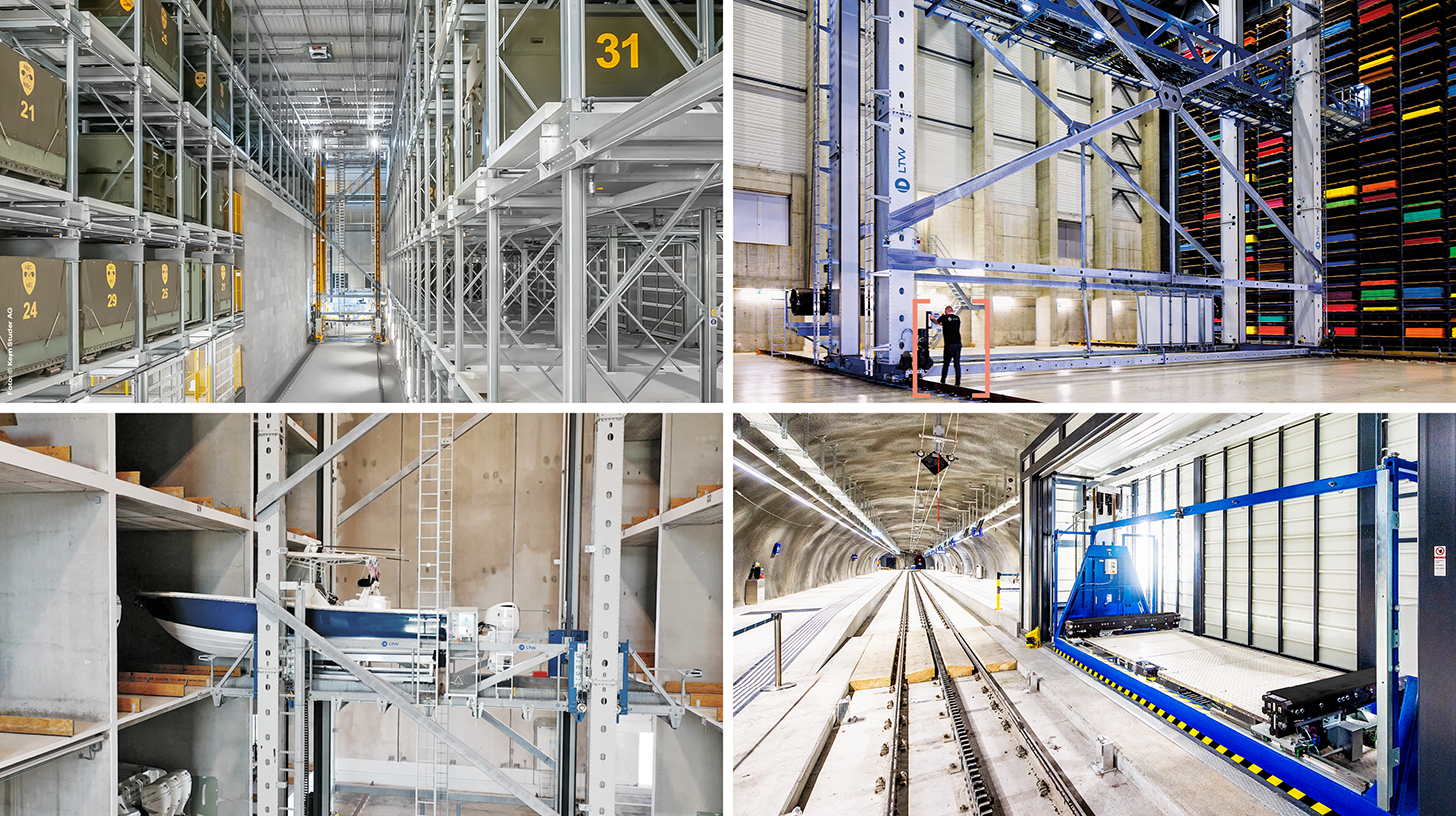
LTW Intralogistics – Engineers of Flow - Image: LTW Intralogistics GmbH
LTW offers its customers not individual components, but integrated complete solutions. Consulting, planning, mechanical and electrotechnical components, control and automation technology, as well as software and service – everything is networked and precisely coordinated.
In-house production of key components is particularly advantageous. This allows for optimal control of quality, supply chains, and interfaces.
LTW stands for reliability, transparency, and collaborative partnership. Loyalty and honesty are firmly anchored in the company's philosophy – a handshake still means something here.
Related to this:
Smart Factory | From Cost Factor to Profit Generator: The Transformation of Intelligent Buffer Systems
The buffer dilemma: Between lean philosophy and operational reality
The strategic design of production buffers exists within the tension between the lean philosophy of minimal inventory and the operational necessity of process decoupling. The Toyota Production System advocates the radical minimization of buffers to eliminate waste and make problems immediately visible. However, this philosophy encounters complex realities in the European manufacturing industry, requiring differentiated solutions. A fundamental insight of production theory states that buffers between linked production stations are technically unavoidable when fluctuations in processing times or disruptions occur. Without any buffers, in certain situations, half of the maximum possible production rate can be lost.
Buffer optimization therefore requires a balanced approach that considers both the costs of excessive buffers and the risks of insufficient buffers. Large buffers result in increased space requirements, higher investments in conveyor technology, and increased inventory of semi-finished products. Conversely, buffers that are too small lead to productivity losses due to blockages and downtime at downstream stations. Losses of twenty percent or more are not uncommon with inadequate buffer design. In a documented case study in the automotive industry, systematic cycle time and buffer optimization reduced the investment costs for a body-in-white production line by seven percent, equivalent to six million euros.
The optimal buffer size depends on several factors. The coefficient of variation in processing times significantly determines the buffer requirement. The greater the fluctuation in processing times, the larger the buffers needed. The failure rate and average repair time of equipment also influence the necessary buffer size. The cost of the buffers themselves also plays a role. Minimizing buffers is particularly relevant for expensive goods or limited space. Modern simulation tools enable the detailed analysis of linked assembly systems and their decoupling buffers with regard to performance and cost-effectiveness.
The automotive industry, a pioneer in buffer optimization, has amassed extensive experience. In a Dutch automotive plant, a 20-meter-high high-bay warehouse for car bodies with 420 storage locations was implemented as a capacity buffer between body shop and paint shop. The production control system distributes different car body types evenly across three storage aisles and minimizes travel distances through intelligent space allocation. This solution enables the decoupling of processes while simultaneously minimizing the required floor space and capital commitment. A German automotive supplier implemented a fully automated high-bay warehouse for over 70,000 wire mesh containers, which went into operation after just one year of construction and handles both complete units and replenishment functions fully automatically.
Industry 4.0 and intelligent buffer systems: Transparency creates efficiency
Digitalization is transforming production buffers from passive intermediate storage areas into actively controlled elements of intelligent manufacturing networks. Industry 4.0 concepts enable real-time transparency regarding buffer stocks, material flows, and production status, opening up fundamentally new optimization potential. Modern warehouse management systems record every storage location, every stock movement, and every inventory change in real time. This data foundation enables predictive analytics that identify bottlenecks early and trigger countermeasures before production downtimes occur.
Integrating buffer systems into overarching manufacturing execution systems (MES) creates end-to-end transparency across the entire value chain. The production control system can automatically shift priorities, activate alternative material flows, or optimize production sequences in the event of impending bottlenecks. Digital twins simulate various scenarios and enable the optimization of buffer sizes and material flows before physical changes are implemented. This significantly reduces investment risks and accelerates optimization.
Cloud-based logistics platforms enable the real-time integration of suppliers into production planning. Suppliers report their inventory and capacity in real time, allowing manufacturers to immediately identify potential bottlenecks and take countermeasures. Standardized interfaces and cloud portals eliminate manual communication errors and accelerate decision-making processes. This networked planning reduces the need for large safety buffers, as information uncertainty, a major driver of buffer stocks, is eliminated.
Artificial intelligence unlocks further optimization potential. Machine learning algorithms analyze historical production data, recognize patterns, and predict future demand with high accuracy. This enables more demand-oriented buffer sizing and reduces both overstocking and shortage risks. Autonomous, driverless transport systems communicate directly with automated high-bay warehouses and optimize material flow without human intervention. The integration of image recognition systems and sensor technology enables automated quality control directly in the buffer warehouse, allowing defective parts to be sorted out early.
Market dynamics and strategic implications: A growth market with potential
The market for intralogistics and heavy-lift technology is experiencing dynamic growth, supported by structural drivers. In 2023, the German intralogistics market reached a production volume of 27 billion euros, representing a 9 percent increase compared to the previous year. Forecasts predict continued growth at an average rate of 10 to 11 percent until 2033, suggesting a market volume of over 11 billion euros.
The drivers of this growth are diverse and structurally embedded. The e-commerce boom, with a global growth rate of fourteen percent annually, is generating massive demand for efficient, flexible, and automated warehousing and order picking systems. The demands for fast delivery times and a high degree of product variety require intelligent buffer systems that can absorb fluctuations in demand. The automotive industry is facing fundamental transformations due to electromobility and new production technologies, which necessitates significant investments in flexible production and buffer systems.
The shortage of skilled workers is further intensifying the pressure for automation. Companies are finding it increasingly difficult to fill vacancies, which is establishing automation not only as an efficiency tool but also as a necessity for maintaining operational capability. Demographic trends, with an aging workforce, demand ergonomic solutions that eliminate physically demanding tasks such as the manual handling of heavy loads. Automated heavy-lift systems reduce physical strain and create ergonomic workplaces, thereby increasing job attractiveness.
Sustainability requirements are driving investment in energy-efficient solutions. Modern automated systems with energy recovery and intelligent control consume significantly less energy than conventional forklift fleets and substantially reduce emissions. Regulatory requirements are constantly tightening, forcing companies to invest in modern, environmentally friendly technologies. Funding programs for energy-efficient warehouse technology and sustainable production concepts further improve the profitability of such investments.
The competitive landscape in the intralogistics market is characterized by a few large system providers and numerous specialized niche suppliers. The KION Group, with brands such as Linde, STILL, and Dematic, achieves a turnover of approximately nine billion euros and offers a broad portfolio ranging from industrial trucks to fully automated high-bay warehouses. Jungheinrich, a leading German supplier, combines industrial trucks with warehouse technology and automation solutions. Specialized suppliers such as SSI Schäfer, Dematic, Vanderlande, and LTW Intralogistics focus on automated material flow systems and highly specialized heavy-duty solutions.
The strategic implications for manufacturing companies are clear. Companies investing in intelligent buffer systems and heavy-duty technology today create sustainable competitive advantages through increased productivity, lower costs, and greater flexibility. Payback periods of three to five years, and even as short as one and a half years in documented cases, make these investments attractive even under conservative economic assumptions. The pent-up investment needs from the crisis years will lead to increased demand in the coming years, allowing companies that act early to secure capacity with system providers.
The digitalization and integration of production systems is progressing relentlessly. Companies implementing isolated, standalone solutions today will face integration problems in the medium term. Investing in open, standardized systems with high-performance interfaces ensures future viability and enables gradual expansion without fundamental system changes. The modular design of modern intralogistics systems allows for a start with manageable investments and expansion of the system in line with business growth.
Production buffers in the heavy-lift industry are evolving from unpopular stopgap solutions to strategically planned efficiency tools. Modern heavy-lift technology makes it possible to reconcile the operational necessity of buffers with the economic requirements of minimal capital commitment and space utilization. The three-dimensional use of space through automated high-bay racking systems reduces the footprint by seventy percent or more, while simultaneously increasing handling capacity by a factor of three to five. Integration into Industry 4.0 concepts creates transparency and enables predictive optimization, preventing bottlenecks before they arise.
In most cases, the cost-benefit analysis clearly favors intelligent buffer systems. Space savings, reduced personnel costs, and increased productivity typically amortize the higher investment costs within three to five years. In prime locations with high land prices, the amortization period is reduced to two years or less. The dynamically growing intralogistics market, with growth rates of ten percent and more, underscores the strategic relevance of these technologies. Companies that invest in intelligent heavy-duty technology today secure crucial competitive advantages for decades to come. Production downtime is more expensive than any investment in modern buffer systems.
Consulting - Planning - Implementation

Konrad Wolfenstein
I would be happy to serve as your personal advisor.
You can contact me at wolfenstein∂xpert.digital or
Just call me on +49 7348 4088 965 .
Your intralogistics experts

Consulting, planning and implementation of complete solutions for high-bay warehouses and automated storage systems - Image: Xpert.Digital
More information here: