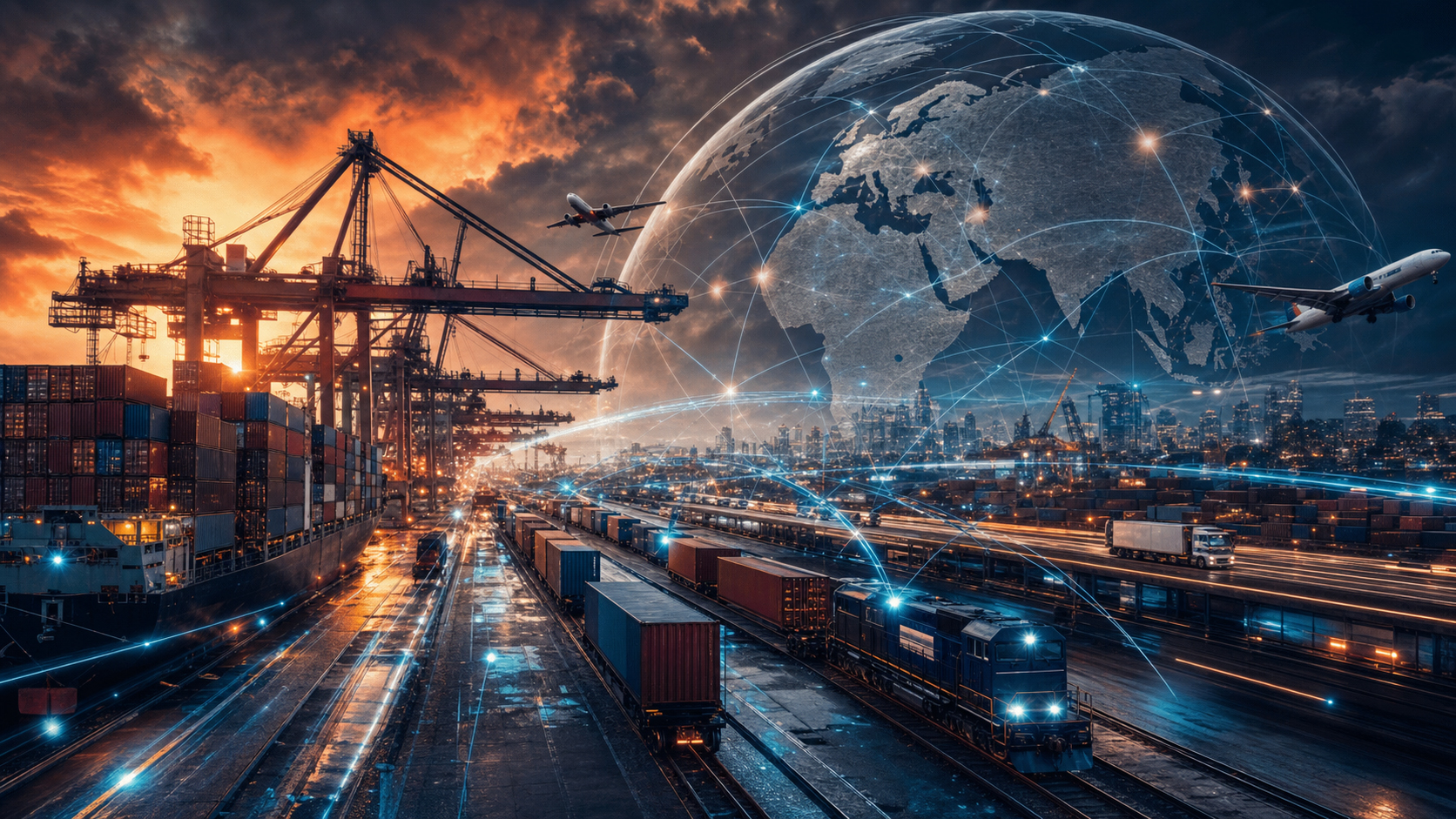
Global supply chains under stress: Why the real crisis is yet to come – Image: Xpert.Digital
Panama, Suez & Co.: How maritime bottlenecks threaten our global trade
Climate, AI & bottlenecks: How the global supply chain is being completely reinvented right now
Semiconductors, raw materials, shortages: The silent stress test of the global economy
Our globalized world rests on an invisible yet highly sensitive nervous system: the global supply chain. But this complex network, honed over decades for maximum cost efficiency and seamless just-in-time deliveries, is showing alarming cracks. Geopolitical tensions, advancing climate change, critical bottlenecks on the world's oceans, and a dramatic shortage of skilled workers in the logistics sector are putting unprecedented pressure on global trade. At the same time, new technologies, the massive deployment of artificial intelligence, and groundbreaking intralogistics concepts are transforming how we will transport and store goods in the future.
Are we facing a permanent collapse of global supply chains – or the beginning of a completely new, more resilient logistics era? This comprehensive analysis uncovers the biggest structural weaknesses, compares international solutions, and shows why the next economic disruption can no longer come as a surprise – and how companies must prepare now.
The world holds its breath – and nobody has a plan B
Supply chains are the nervous system of the global economy. When this nervous system fails, it's not just corporations that feel the effects, but also hospitals, supermarkets, and car factories. The past few years have shown just how vulnerable the supposedly stable global trading system actually is: pandemics, geopolitical conflicts, climate events, and tectonic shifts in power have triggered a chain of disruptions that fundamentally challenge the existing paradigm of the seamless, just-in-time supply chain. The global supply chain is not facing a temporary crisis, but a structural paradigm shift – and those who fail to recognize this will experience the next disruption with the same empty hands as the last.
The critical weaknesses: Where the world is stalling today
Maritime bottlenecks – the underestimated safety risk
Maritime trade moves more than 80 percent of all goods traded worldwide, and the vast majority of this traffic passes through a handful of geographically narrow sea corridors whose strategic importance can hardly be overstated. The Strait of Hormuz, that 20-nautical-mile narrow passage between Iran and Oman, channels around 20 million barrels of crude oil daily, equivalent to about a quarter of global daily oil consumption. In addition, it carries around 20 percent of global liquefied natural gas (LNG) trade, largely from Qatar. Even the limited threat of a closure by Iran would, according to Oxford Economics forecasts, drive the price of oil to over $130 per barrel, raise inflation in the US to almost 6 percent, and double the ECB's target in the EU.
The Strait of Malacca between Malaysia and Indonesia is the world's busiest shipping lane, with nearly 94,000 ships passing through annually, and forms the main bottleneck for Asian-European trade. The Suez Canal handles around 30 percent of global container traffic – with a single interface that can be crippled at a stroke by an incident like the Ever Given disaster in 2021 or by geopolitical tensions such as the Houthi attacks in the Red Sea, which have destabilized the Bab al-Mandab Sea route since 2023. By mid-2024, shipping traffic through the Suez and Panama Canals had fallen by over 50 percent compared to their respective peak levels. The consequence: massive bottlenecks in global logistics, skyrocketing freight rates, and enormous delays for industries from Europe to East Asia.
The Panama Canal also suffers from a structural climate problem. Prolonged droughts resulting from climate change have repeatedly lowered the water level of Gatun Lake, which feeds the canal. This has forced a significant temporary reduction in the canal's capacity, triggering a global rerouting of cargo ships and massively increasing insurance and freight costs. This problem will become structurally worse in the coming decades due to ongoing global warming.
The semiconductor complex: Taiwan's strategic centrality
Few sectors illustrate the structural fragility of global supply chains as starkly as the semiconductor industry. By 2029, Taiwan is projected to control approximately 61 percent of global manufacturing capacity for the most advanced chip processes (2 to 6 nanometers). Market leader TSMC alone holds 85 percent of the capacity for 4- to 6-nanometer chips and 69 percent of 3-nanometer production. This means that global production of key semiconductors for smartphones, data centers, electric vehicles, and defense applications is concentrated in a single geographical and politically fraught area.
Scientific analyses show that Taiwan's supply chain would be particularly vulnerable to a geopolitical blockade, especially if one were to occur before 2027. Hypothetical complete self-sufficiency in semiconductors for every region of the world would require at least one trillion US dollars in upfront investment, according to estimates by the Semiconductor Industry Association and the Boston Consulting Group, and would increase chip prices by 35 to 65 percent. The consequences for consumer electronics, the automotive industry, and defense technology would be dramatic. Although the US is taking countermeasures with the CHIPS Act and the EU with the European Chips Act, new fab capacities outside Asia will not be ready for production until later this decade – the gap between demand and available capacity remains open for the time being.
Furthermore, the semiconductor sector is also under pressure due to the DRAM crisis: In the fourth quarter of 2025, DRAM prices rose by 40 to 50 percent, and further increases of 70 to 100 percent are being discussed for 2026. AI data centers are literally draining the memory market dry. Automotive OEMs, who already install over $150 worth of DRAM per premium vehicle, are thus facing brutal margin pressure, with the familiar chain reaction of panic buying, feature downgrades, and, in the worst case, production stoppages.
Raw materials and rare earths: The new geopolitical weapon
China controls over 90 percent of the world's rare earth processing capacity and over 85 percent of the production of high-performance magnets. These 17 elements are essential for electric motors, wind turbines, military technology, smartphones, and radar systems. In April 2025, China imposed export controls on seven types of rare earths as part of escalating trade tensions with the US—a geopolitical bombshell with far-reaching consequences for Western high-tech industries.
Tungsten, a heavy metal essential for semiconductor production, is also a focal point: China controls approximately 79 percent of global tungsten production. Following the inclusion of tungsten on China's export control lists, tungsten prices rose by 557 percent by 2026 compared to the previous year. Without practical, short-term substitutes, the semiconductor industry faces a structural material shortage, for which Western countermeasures will only be able to build significant capacity in years' time.
The demographic time bomb: Europe's driver shortage
While public debate focuses on technological and geopolitical risks, a silent crisis is brewing at the heart of European logistics. In Germany, 45 percent of all truck drivers are over 55 years old. The Federal Statistical Office has determined that 39 percent of professional drivers are already nearing retirement. By 2029, forecasts predict that more than 17 percent of all European truck drivers will retire. At the same time, only 2.6 percent of drivers in Germany are under 25 years old.
The German Federal Association of Road Haulage, Logistics and Waste Disposal (BGL) warns that up to 120,000 professional truck drivers will soon be needed. In Poland, the proportion of young drivers under 25 is only 3 percent, in Italy 2.2 percent, and in Spain 3 percent. Worldwide, the current driver shortage is estimated by the IRU at 3.6 million truck drivers. This demographic reality is not a speculative future scenario, but a mathematical certainty: The physical transport of goods in Europe is facing a massive capacity problem.
Financial fragility of supply chain partners
Another often overlooked bottleneck lies in the financial health of the suppliers themselves. According to the Sphera Supply Chain Risk Report 2025, leading indicators of financial risk rose by 11 percent, the number of insolvency filings increased by 48 percent, and force majeure events by 61 percent. When suppliers experience financial difficulties, they can neither deliver on time nor invest in necessary quality assurance and capacity expansion. Overall, quality risks increased by 22 percent, leading to product recalls, factory closures, and supply disruptions. This financial fragility particularly affects small and medium-sized suppliers in the automotive industry, who are already struggling with weak order volumes and high energy costs.
Medium-term risks: What needs to be planned today
Climate change as a systematic disruption to supply chains
The intensification of extreme weather events will become one of the most significant structural challenges for global supply chains in the coming years. Floods, heat waves, droughts, and hurricanes not only disrupt transportation but also damage production facilities, ports, and storage infrastructure. The Panama Canal, as described, is a foretaste of what is to come. The Mississippi River, India's monsoon regions, and European inland waterways such as the Rhine and the Danube are increasingly navigable only to a limited extent due to low water levels resulting from droughts—with direct consequences for industrial supply chains.
At the same time, climate regulations are reforming the trade landscape from within. The EU Carbon Border Adjustment Mechanism (CBAM), which has been phased in since 2025, requires importers of carbon-intensive goods such as steel, aluminum, and building materials to pay levies. This is changing trade flows, increasing compliance costs for suppliers from countries without carbon pricing, and favoring more climate-friendly alternatives—a forced, but ultimately necessary, reshaping of global procurement strategies.
The concentration trap: When diversification becomes monoculture
The OECD Supply Chain Resilience Review 2025 analyzes a particularly worrying trend: the number of products sourced from a limited circle of suppliers was 50 percent higher in the early 2020s than in the late 1990s. This trend is driven almost entirely by non-OECD countries, while OECD countries have managed to maintain stable import concentrations. China's share of other countries' significant import concentrations rose from 5 percent to 30 percent within 25 years, while the combined share of the US, Germany, and Japan fell from 30 percent to 15 percent over the same period. This shift makes economies heavily reliant on Chinese intermediate goods structurally more vulnerable—not only to geopolitical shocks but also to sectoral dominance strategies.
The response of many companies to this realization—relocating production back to their home country (reshoring) or to neighboring countries (nearshoring)—in turn carries risks. The OECD explicitly warns that complete reshoring of all supply chains would reduce global trade by over 18 percent and lower global real GDP by more than 5 percent. In more than half of the economies analyzed, GDP stability would even decline—a clear argument against isolationist protectionism as a resilience strategy.
Cyber risks: The invisible target of attack
With increasing digitalization, the supply chain is also becoming a target for cyberattacks. Ransomware attacks on logistics IT systems, ports, and freight forwarders have increased exponentially in recent years. If a single central IT service provider at a major port is attacked, it can affect hundreds of shipping companies and thousands of businesses simultaneously. The growing reliance on a limited number of global cloud service providers exacerbates this concentration risk. The OECD report explicitly emphasizes that while digital transformation increases transparency and responsiveness, it also creates new vulnerabilities through dependencies on a few global platforms.
LTW Intralogistics Solutions – Intermodal Transport

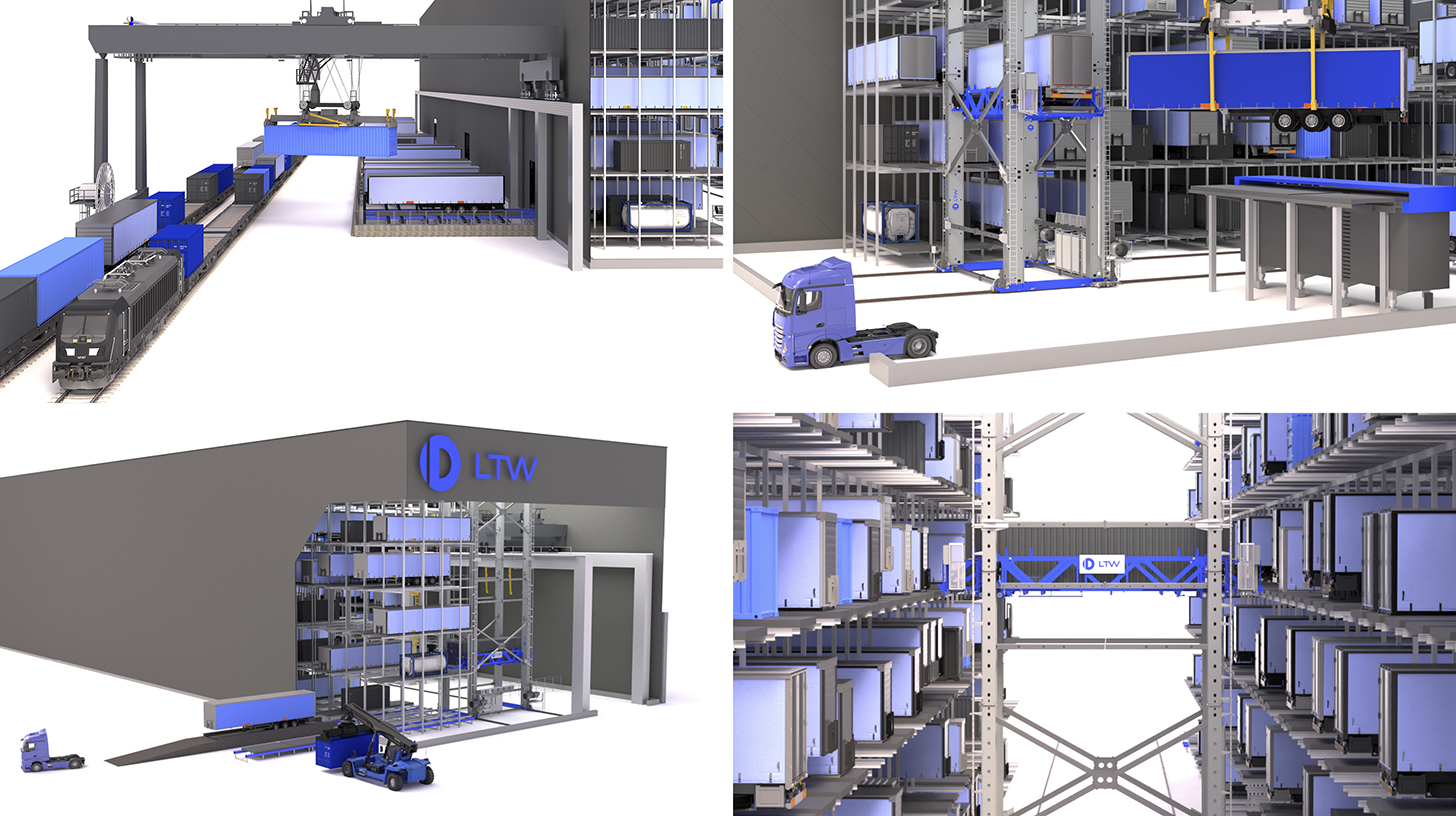
LTW Intralogistics Solutions – Intermodal Transport – Image: LTW Intralogistics GmbH
LTW offers its customers not individual components, but integrated complete solutions. Consulting, planning, mechanical and electrotechnical components, control and automation technology, as well as software and service – everything is networked and precisely coordinated.
In-house production of key components is particularly advantageous. This allows for optimal control of quality, supply chains, and interfaces.
LTW stands for reliability, transparency, and collaborative partnership. Loyalty and honesty are firmly anchored in the company's philosophy – a handshake still means something here.
Related to this:
Intermodality, AI and nearshoring: How states secure their supply
Country comparison: Who is prepared, who is lagging behind?
The pioneers: Singapore, Germany and Northern Europe
In the World Bank's 2023 Logistics Performance Index (LPI), Singapore overtook Germany for the first time as the world's best logistics nation. Singapore combines excellent port infrastructure, digitized customs procedures, and a strategic location at the crossroads of major Asian trade routes with consistent economic policies and a deeply rooted openness to trade. As the only Asian country in the top five of the resilience ranking, Singapore ranks fifth globally in the 2025 FM Resilience Index. In the 2025 IMD World Competitiveness Ranking, Singapore ranks second, just behind Switzerland.
Germany ranks 7th globally in the FM Resilience Index 2025 and 5th in the IMD Competitiveness Ranking, reflecting a strong industrial base, highly developed logistics infrastructure, and increasing progress in digitalization. As the backbone of the EU single market, Germany plays a key role in European supply chains. Nevertheless, the country is grappling with structural problems: there is an acute shortage of truck drivers, the bureaucracy involved in the digitalization of customs processes is progressing too slowly, and energy costs following the end of Russian gas imports are significantly impacting the competitiveness of the manufacturing industry.
Denmark leads the FM Resilience Index 2025 for the second year running, thanks in particular to high productivity, excellent education systems, and strong cybersecurity. Luxembourg, Norway, and Sweden occupy second, third, and sixth place, respectively. Northern Europe boasts the most sophisticated ESG compliance structures, the fastest digital customs processes, and the most resilient supplier networks in Europe. These countries also benefit from relative geographical isolation from geopolitical hotspots.
The European Union as a whole acts strategically on supply chain resilience: The Critical Raw Materials Act, the European Chips Act, the Net-Zero Industry Act and the CBAM regulation together form a coherent regulatory framework for the structural reduction of strategic dependencies.
The middle of the pack: USA, China and South Korea
The US is operationally powerful but strategically fragmented. The imposition of tariffs of up to 145 percent on Chinese goods led to a 64 percent drop in container bookings from China to the US in the first quarter of 2025 and a 0.3 percent contraction in US GDP. Companies built up inventories before the tariffs took effect, distorting the statistics and significantly reducing planning certainty for industry and trade. The domestic manufacturing program under development—the CHIPS Act, the Inflation Reduction Act—has long-term potential but is being implemented more slowly than expected, as regulatory hurdles and a shortage of skilled workers are delaying construction projects.
China is pursuing a long-term, state-orchestrated strategy of supply chain transformation. As the world's largest exporting nation and the dominant processing hub for critical raw materials, China has a systemic importance that cannot be compensated for by any short-term measures in the Western Hemisphere. The targeted use of export controls on rare earths and tungsten demonstrates a willingness to leverage economic dependencies as geopolitical leverage. At the same time, China itself is actively diversifying its trade relations with Asia, Africa, and Latin America to reduce its reliance on the Western market.
South Korea occupies a particularly exposed position: As the home of Samsung and SK Hynix, which together control around 70 percent of the global DRAM market and 80 percent of HBM production, the country is simultaneously a leader in semiconductor manufacturing and extremely dependent on energy imports from the Middle East. An estimated 70 percent of South Korea's crude oil imports come from the Gulf region and must be transported through the Strait of Hormuz. Tensions in the region directly impact the production costs and security of supply for the South Korean chip industry.
The laggards: Africa and Latin America
Africa faces the most pressing infrastructure deficit worldwide. The investment gap between necessary and actual spending amounts to 2 percentage points of GDP – higher than in any other region. The annual investment requirement of US$155 billion significantly exceeds actual spending of approximately US$83 billion. As a result, Africa's intracontinental trade, which has enormous potential thanks to the AfCFTA free trade agreement, is structurally hampered by a lack of roads, rail connections, and inefficient ports. More than 600 million people in sub-Saharan Africa lack access to reliable electricity, fundamentally hindering integration into global supply chains.
Latin America invests 2.2 percent of its economic output annually in infrastructure, although 3.5 percent would be necessary. This $90 billion annual investment gap has accumulated over decades of neglect and is evident in congestion at Brazilian export ports, outdated rail networks, and inefficient customs processes. The region also suffers from political instability and a lack of legal certainty, which deters private infrastructure investors. Mexico's growing role as a nearshoring location for US industrial clients is a positive trend, but its structural sustainability depends on the political framework.
Intermodality as a system response: More than a transport concept
The principle and its strategic relevance
Intermodal transport – the combination of different modes of transport such as rail, road, ship, and air, using standardized loading units like ISO containers and swap bodies – is not a passing fad but a structural necessity. The basic principle: goods remain in the same loading unit throughout the entire transport route, eliminating costly and time-consuming transshipment. Long distances are covered by rail or sea freight, while short pre- and post-carriage legs are transported by road – an approach that combines cost efficiency, environmental benefits, and network flexibility.
In Europe, where distances between countries are short and rail infrastructure is well-developed, intermodal transport is already a key element of modern logistics chains. European governments are actively promoting the shift of freight from road to rail and inland waterway to reduce CO₂ emissions and relieve pressure on road infrastructure. Terminal solutions like the Baltic Rail Gate in Lübeck recorded growth rates of 37 percent in the first half of the year compared to the previous year – a clear indication of the increasing acceptance of intermodal concepts.
Fraunhofer IML takes this concept a step further, describing the principle of synchromodality: the deep integration of information and goods flow with maximum flexibility during ongoing transport. In line with Industry 4.0, transport chains are no longer rigidly planned in advance, but adapted in real time – depending on current conditions such as traffic jams, weather events, capacity availability, or customs delays. This requires integrated software infrastructures and new cooperation models between transport companies, shippers, and infrastructure operators.
Solutions to the driver shortage through automation
The demographic-driven shortage of truck drivers is one of the most powerful drivers for the automation of intermodal transport. If, by the end of this decade, large numbers of drivers retire and there are hardly any new recruits, physical gaps can only be filled by smart system architecture. Automated freight terminals, self-driving vehicles on clearly defined route segments, and intelligent control systems that autonomously navigate freight flows through multimodal networks are not just visions, but are already being used in practice to some extent.
LTW Intralogistics from Wolfurt: Precision within the supply chain
From high-bay warehouse to networked material flow system
While external supply chains are under pressure from geopolitical risks, climate events, and demographic shifts, an underestimated lever for resilience lies within companies themselves: in intralogistics, i.e., the organization of internal goods and material flow. LTW Intralogistics GmbH from Wolfurt, Vorarlberg, positions itself as a pioneer in this field. Founded in 1981 and part of the Doppelmayr Group for several decades, the company has established itself worldwide as a specialist for fully automated intralogistics systems, with more than 1,600 completed projects.
LTW develops, builds, and manages turnkey systems from a single source – from classic high-bay warehouses and automated heavy-duty and special-purpose warehouses to deep-freeze storage solutions and modern terminal warehouse concepts. The portfolio includes stacker cranes, conveyor systems, control technology, and the modular LIOS software family, which integrates control, visualization, and reporting into a single system. With the CAPDRIVE stacker crane, the company presents solutions that demonstrably reduce energy consumption and energy costs significantly – an argument that is directly relevant in times of high energy costs and stringent ESG requirements.
Multimodal material flow solutions as a strategic unique selling proposition
At its trade fair appearance at LogiMAT 2026, under the motto "Flow. In every detail.", LTW Wolfurt presented an approach that goes beyond classic intralogistics: multimodal material flow solutions that intelligently link various internal transport routes and systems. This concept means that warehouse systems are no longer viewed as isolated boxes, but as integrated nodes in a larger logistics chain – from goods receipt through automated storage and intelligent order picking to the ready-to-ship dispatch.
This approach directly addresses the structural challenges of the global supply chain crisis: Companies struggling with external uncertainty must compensate internally with maximum efficiency and transparency. Automated high-bay warehouses react faster than manual warehousing processes to short-term changes in demand, reduce error rates, and can minimize unplanned downtime through predictive maintenance concepts. LTW offers retrofit programs that bring existing systems up to the latest technological standards – a crucial advantage in times when not every company can or wants to invest in new construction.
Being part of the Doppelmayr Group, with a presence in over 50 countries, enables a global service with local know-how – a network that, in the context of global supply chain disruptions, can mean the difference between a standstill in the warehouse and a smoothly running flow of materials.
Intralogistics as a buffer against external volatility
In the overall context of supply chain issues, intralogistics plays a structurally important buffering role. When external supply chains are delayed by disruptions, internal warehousing and inventory control determine whether a company remains operational. Intelligent warehouse management software can dynamically prioritize inventory, make critical materials more readily available, and implement buffer strategies through precise inventory management that are vital for survival in volatile times.
The increasing importance of strategic warehousing as a buffer against volatility is a direct reflection of the experiences of recent crisis years. Companies that had well-managed and rapidly responsive intralogistics systems during the years of global supply chain disruptions were able to minimize production losses, while other companies facing delivery delays lost customers.
The solution architecture: Resilience through system, not by chance
Digitalization and AI as the system backbone
Perhaps the most significant structural shift in supply chain resilience is the transition from reactive to predictive management through artificial intelligence. In 2026, 97 percent of manufacturing and supply chain executives reported having already integrated AI into core processes. Ninety-five percent consider AI implementation crucial for future business success. AI maturity in this sector increased from 87 to 93 percent within a single year. AI implementation in supply chain management alone increased by 18 percentage points in the past year.
According to the Sphera Supply Chain Risk Report 2026, 94.5 percent of companies already use AI in supplier or risk management. Of these, 50.5 percent have fully integrated AI with automated risk detection, while 44 percent use AI partially for alerts and analysis. Nevertheless, experts warn that technological penetration alone cannot replace organizational maturity. Data quality, clear governance models, and consistent integration into decision-making processes are the real bottlenecks, not the lack of AI tools.
According to the Alpega Trend Report 2026, 79 percent of manufacturers already use real-time dashboards for supply chain transparency, and 76 percent have implemented advanced planning systems. Highly digitized supply chains are twice as transparent as analog ones and around 30 percent more punctual – a clear economic argument for investing in digitization.
Nearshoring and regional diversification: Not a panacea, but an effective tool
Half of the companies had already increased their local and regional sourcing by 2024. 47 percent of EU buyers increased their nearshoring in the last twelve months, 22 percent increased reshoring, and 31 percent combined both approaches. The Balkans, particularly Bosnia and Herzegovina, Poland, and Romania, are gaining in attractiveness as a nearshoring location for Western European companies. Mexico is positioning itself as the preferred nearshoring location for US companies, despite existing tariffs.
Nearshoring, however, is not a panacea. While it reduces transportation risks and improves responsiveness, it typically increases production costs and can lead to quality issues if new supplier relationships are not adequately audited. The OECD emphasizes the need for a differentiated approach: targeted diversification with a strategic resilience logic, rather than complete reshoring, is the sustainable path. Five independent sources for critical components from politically stable regions are more robust than three sources from the same geopolitical risk zone.
ESG and regulation: Compliance as a resilience investment
The tightening of ESG requirements for supply chains represents a regulatory burden on the one hand, but on the other hand, it is also a necessary investment in long-term resilience. ESG-related risk indicators rose by 6 percent year-on-year, with human rights issues alone increasing by 29 percent. The EU Supply Chain Due Diligence Directive (CSDD) and the German Supply Chain Due Diligence Act (LkSG) require companies to be deeply transparent about their entire supplier networks. What may appear to be bureaucracy in the short term creates, in the medium term, the data basis for identifying risks early and proactively managing supplier failures.
65.6 percent of medium-sized companies have already firmly integrated ESG criteria into their procurement strategy. 81.5 percent rely on real-time communication and platform solutions to strengthen resilience, and 88.9 percent see the rapid integration of new suppliers as a growth driver. These figures demonstrate that the field has moved beyond mere compliance obligations: resilience has become a strategic competitive factor.
The next disruption will not be a surprise – anyone planning today
Global supply chains will not become more stable. Geopolitical fragmentation, climate change, technological dependencies, and demographic shifts are creating a new normal of permanent volatility. The crucial crossroads lies not in whether the next crisis will come, but in who is prepared for it.
Singapore and Northern Europe demonstrate what is possible when infrastructure, digitalization, political stability, and strategic openness work together. Germany has the potential to further expand this leading role but must simultaneously address skills shortages, reduce bureaucracy, and manage the energy transition. Africa and Latin America will be the critical variables in the coming decade: If these regions can be structurally integrated into global supply chains, genuine diversification gains will be achieved; if this fails, dependence on a few dominant supplier nations will increase.
Intermodal transport solutions are not a niche answer, but a systemic building block for more robust supply chain networks. Companies like LTW Intralogistics from Wolfurt demonstrate that resilience also arises within the logistics chain itself – in the precision of material flow, in the intelligence of control systems, and in the ability to operate with maximum internal efficiency even under external pressure. At the same time, global supply chain stress is a powerful driver of innovation. Those who invest now in the right systems, partnerships, and expertise will not only weather the next crisis better – they will emerge from it stronger.
Consulting - Planning - Implementation

Konrad Wolfenstein
I would be happy to serve as your personal advisor.
You can contact me at wolfenstein∂xpert.digital or
Just call me on +49 7348 4088 965 .
Your container high-bay warehouse and container terminal experts
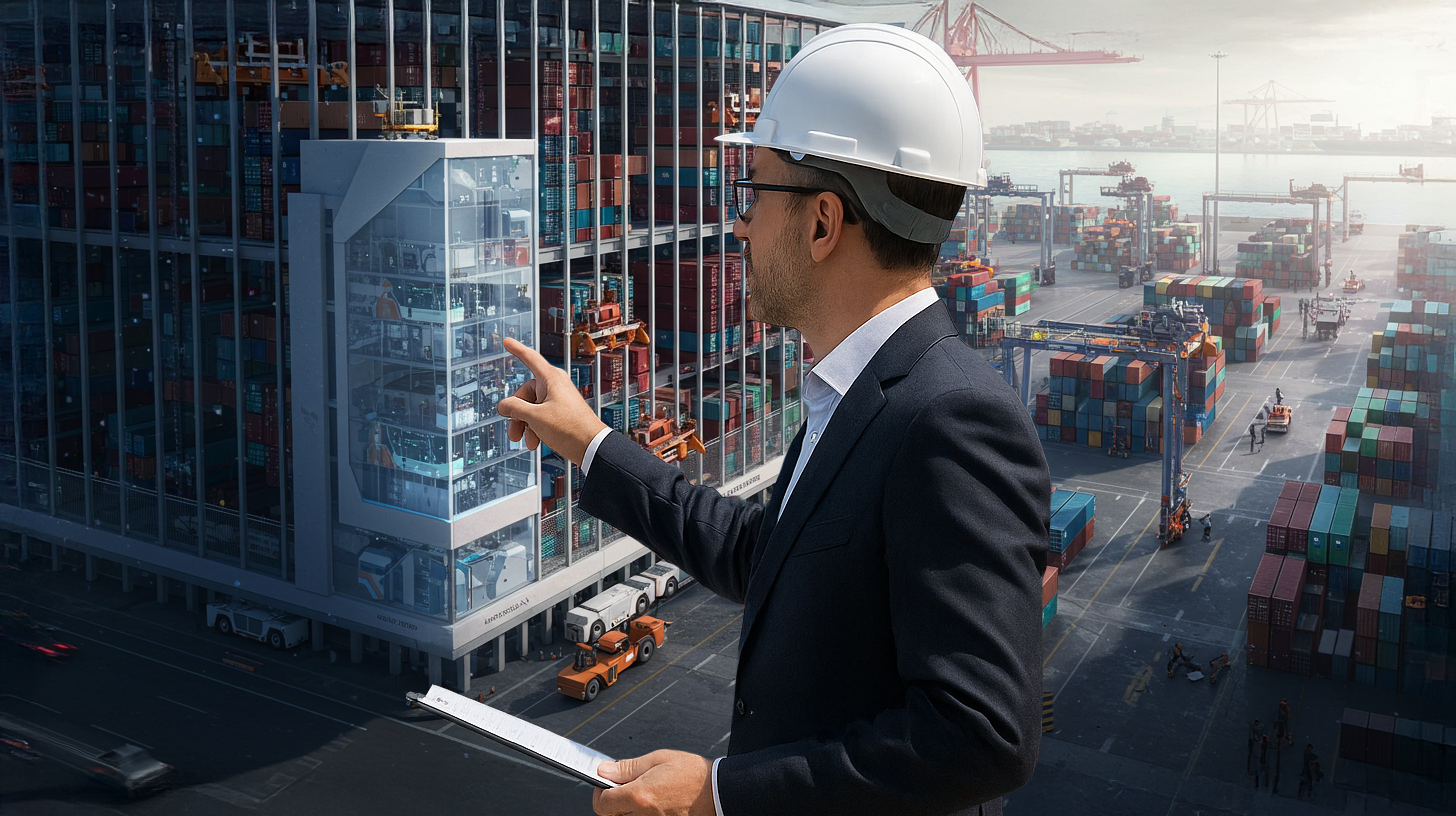
Container high-bay warehouses and container terminals: The logistical interplay – expert advice and solutions - Creative image: Xpert.Digital
This innovative technology promises to fundamentally change container logistics. Instead of stacking containers horizontally as before, they will be stored vertically in multi-story steel racking structures. This not only allows for a drastic increase in storage capacity within the same area, but also revolutionizes all processes at the container terminal.
More information here: