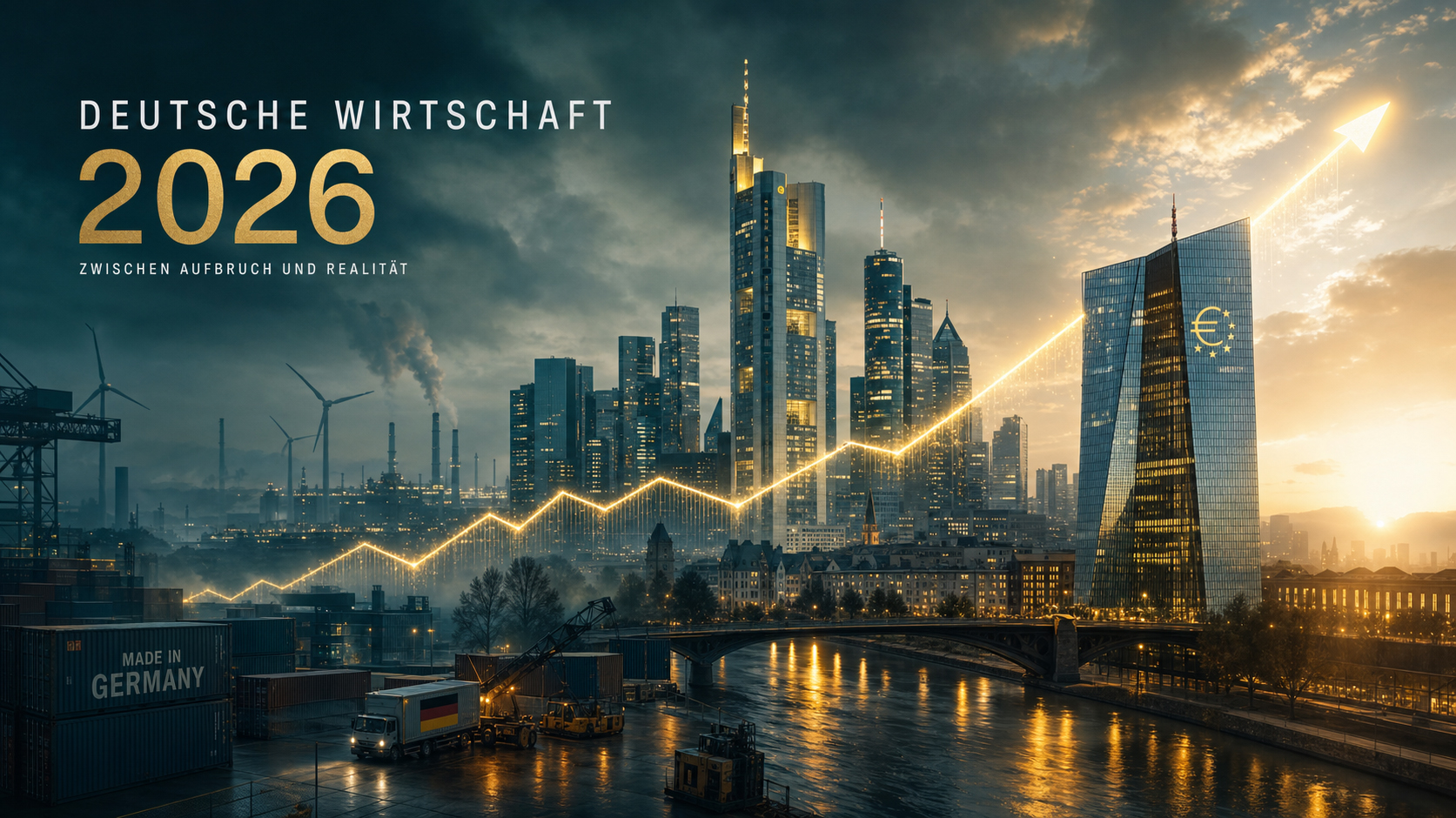
Germany's secret comeback? Why the economy will be in much better shape in 2026 than its reputation suggests – Image: Xpert.Digital
Despite the persistent crisis atmosphere: These surprising figures reveal the true face of the German economy
The great deception: Why Germany's economy feels so bad – but is actually growing again
Germany is talking itself down. Anyone following current public debates inevitably gets the impression of an economy in free fall – crushed by bureaucracy, battered by deindustrialization, and left behind by international competition. But the raw figures for 2026 tell a completely different story. Neither the geopolitical shock of the Iran conflict nor the rapidly rising oil prices could bring the German economy to its knees. On the contrary: The economy is growing moderately, key leading indicators are pointing sharply upwards, and the international financial markets are demonstrating massive confidence in Germany as a business location. But why is there such a drastic gap between gut feeling and economic reality? The following analysis gets to the bottom of the puzzle of an economy that has long since passed its trough – but whose noticeable upswing is in danger of being buried in the deep-seated pessimism of the past crisis years. Learn why a new, historic investment cycle is imminent, what this means for investors and companies, and why the greatest danger for Germany as a business location is currently not the data, but the negative sentiment itself.
When the numbers lie – but not in the way you think
Few topics are currently being discussed in Germany with such contradictory arguments as the state of the country's economy. Talk shows, newspaper commentaries, and political discourse are dominated by a narrative of perpetual crisis: deindustrialization, oppressive bureaucracy, lost competitiveness, and a declining economy. However, a look at the sober economic indicators for 2026 paints a considerably more positive picture. The German economy grew in the first half of 2026, weathered a geopolitical shock in the form of the Iran conflict and the resulting surge in oil prices remarkably unscathed, and numerous leading indicators have been pointing upwards for months. This analysis explores why perception and economic reality in Germany currently diverge so drastically, what data supports a cautiously optimistic assessment, where the limits of this optimism lie, and what this means for businesses, investors, and the political debate as a whole.
The central thesis is that Germany is in a phase where the economic trough has already been passed, while the collective consciousness is still deeply rooted in the experiences of the crisis years. This is not a trivial footnote, but an economically relevant phenomenon, because expectations and sentiments influence actual investment and consumption decisions. An economy that feels worse off than it actually is risks generating precisely the kind of reluctance that delays a genuine recovery. All the more important, then, is a sober, data-driven assessment.
The stress test that nobody expected
In the spring of 2026, the Iran conflict caused a sharp rise in oil prices, reviving memories of the 2022-2023 energy crisis in the financial markets. Concerns about classic stagflation—the unpleasant combination of weaker growth and rising inflation—increased noticeably. In the bond market, this uncertainty initially manifested itself in rising inflation expectations and falling real yields. Many market observers assumed that the European, and especially the German, economy would be ill-equipped to withstand this external shock, given the deep scars left by the energy crisis just a few years earlier.
This expectation, however, did not materialize. There was neither an economic downturn nor a lasting deterioration of the economic outlook. In the second quarter of 2026, German gross domestic product grew by 0.2 percent compared to the previous quarter, following an increase of 0.4 percent in the first quarter. This resulted in an overall increase of 0.6 percent for the first half of the year, which translates to approximately 1.2 percent for the year as a whole. For an economy that has been considered the problem child of Europe for years, this is a remarkable result, especially given that it was achieved under the pressure of a genuine geopolitical stress test.
Even in international comparison, Germany's performance appears more robust than public debate suggests. The Eurozone as a whole, adjusted for statistical distortions caused by Ireland, also grew by around 1.2 percent on an annualized basis. While the United States was slightly higher at approximately 1.5 percent, it recently benefited from a strong surge in investment in artificial intelligence and positive wealth effects from rising stock markets. Given these circumstances, both Germany and the Eurozone as a whole have held up remarkably well, without possessing the structural advantages currently benefiting the US.
Between numbers and gut feeling: a growing gap
Another indicator of improved economic momentum is the so-called Economic Surprise Indicator, which measures how much actual economic data deviates from analysts' forecasts. For the Eurozone, this indicator has risen from a low of minus 80 points in May 2026 to a peak of plus 66 points, and is now even higher than the corresponding value for the US. Such a strong increase signals that economic developments in recent months have repeatedly been more positive than analysts and investors had expected. Experience shows that such a level often marks the beginning of a phase in which economic and profit forecasts are revised upwards because market participants' expectations initially lag behind actual developments.
This data suggests, overall, that the German economy is in recovery rather than in crisis, demonstrating remarkable resilience to external shocks. This does not mean, however, that all structural location-related problems have been solved. Bureaucratic hurdles, high energy costs compared internationally, a demographically driven shortage of skilled workers, and a partially aging infrastructure remain real challenges. Nevertheless, there is considerable evidence to suggest that the current economic reality is significantly less negative than public debate suggests. This very discrepancy between perception and reality is likely to be one of the most striking characteristics of the German economy in 2026.
The silent harbingers of a trend reversal
Public discourse about the German economy often focuses on those sectors that still appear weak. Industrial production, in particular, despite some stabilization, remains significantly below the peak levels of previous years. However, anyone focusing solely on this lagging indicator risks overlooking an important development, as many classic leading indicators have been trending upwards for quite some time.
This is particularly evident in industrial orders. While actual production has been suffering from structural and cyclical headwinds for years, order intake has been picking up again since the fourth quarter of 2025. Adjusted for the exceptional disruptions of the pandemic years, it is now showing the strongest growth since 2016 and 2017. Current data shows that order intake is around six percent higher than the previous year, and this increase is not solely due to individual large orders, while industrial production itself remains largely at the previous year's level. This is creating an increasingly comfortable order backlog, which is likely to translate into higher production figures only after a certain time lag. Anyone who considers the gap between order intake and actual production will realize that the real production boost for German industry may still be ahead of them.
This pattern aligns with the trends in business surveys. The Purchasing Managers' Index (PMI) for the manufacturing sector in Germany has fully recovered from its temporary weakness during the Iran conflict and is now once again above the expansion threshold of 50 points. Particularly noteworthy is the improvement in the order intake component, which is considered by experts to be one of the most reliable leading indicators for future industrial activity. The Ifo Business Climate Index has also stabilized in recent months, with companies' expectations being more positive than a year ago.
The major transformation: When investments become the engine of growth
But even with this stabilization, the story is not yet complete. Behind the current figures lies a longer-term, structural investment cycle that is likely to shape the German economy in the coming years. Germany faces substantial expenditures on infrastructure, defense, energy supply, and the modernization of its industrial capital stock. The Bundesbank anticipates a significant increase in the government budget deficit in 2026 compared to the previous year, which could correspond to a fiscal stimulus of approximately 1.5 percent of gross domestic product. For Germany, which is traditionally characterized by fiscal restraint, this would represent an extraordinary shift in policy.
This development is fundamentally changing the growth architecture of the German economy. Economic momentum will no longer be driven solely by private consumption, but increasingly by investment. Investment-driven growth typically has a longer lead time, but in return often has a more sustainable and broader impact on productivity and competitiveness. This additional tailwind does not originate solely from Germany itself. Investments in infrastructure, energy supply, digitalization, and defense are also rising noticeably at the European level. This is particularly relevant for German industry because it has traditionally been closely intertwined with the investment cycles of its European neighbors. Unlike in previous years, the economic impetus no longer comes solely from abroad or from individual export markets, but increasingly from the European single market itself.
This explicitly does not mean that Germany is on the verge of a new economic boom. Not every additional investment automatically leads to higher growth, and numerous reform tasks, from the digitalization of public administration to the acceleration of approval processes, remain unresolved. Nevertheless, there is currently much to suggest that the economic momentum is being underestimated rather than overestimated. The combination of rising order intake, improved business indicators, and increasing investment momentum suggests that the current stabilization has not yet reached its end.
🎯🎯🎯 Data-driven B2B industry hub as a quasi-in-house solution

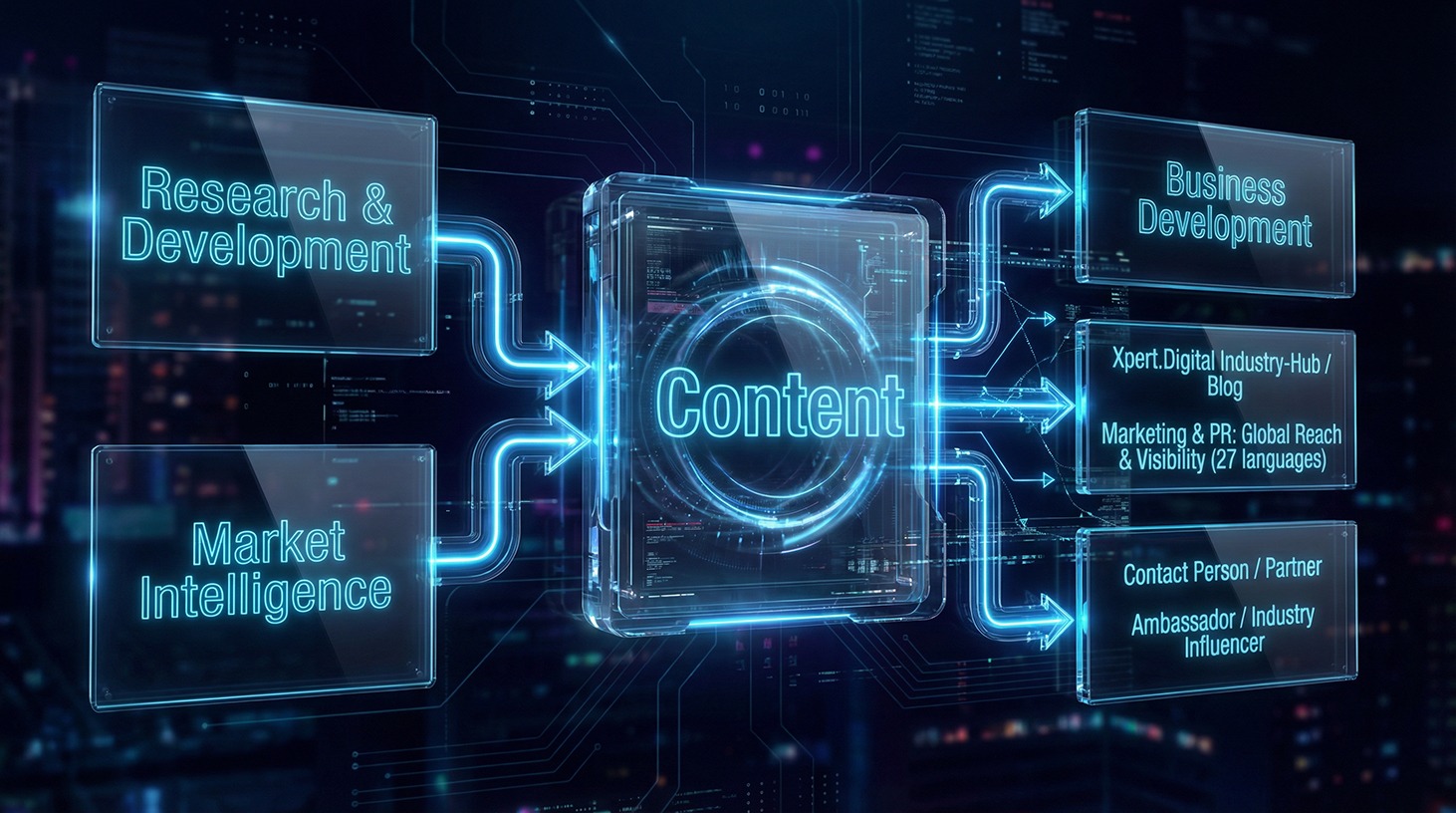
The quasi-in-house solution: How Xpert.Digital closes operational gaps in B2B marketing and sales – Smart Content-Driven Business - Image: Xpert.Digital
Xpert.Digital is a data-driven B2B industry hub led by Konrad Wolfenstein . The company acts as an external, quasi-in-house solution for industrial partners, closing operational gaps in marketing, content, and sales – without requiring additional resources on the client side.
More information here:
Germany in crisis mode: Between structural tasks and misperception
Why the country feels worse than it is
The negative mood in the country is not without reason. The energy crisis, the inflation shock, geopolitical tensions, and a prolonged period of weakness in industry have severely damaged the confidence of many businesses and consumers for years. Unlike previous, short economic downturns, this was not a temporary period of weakness, but rather a multi-year, sometimes painful, adjustment process. Against this backdrop, it is quite understandable that public sentiment is only improving slowly, even though the underlying data has already shown significant improvement.
Perhaps the real puzzle of the German economy currently lies less in the figures themselves than in their public perception. While new economic indicators regularly point to stabilization, public opinion is often still heavily influenced by the experiences of past crisis years. The public debate continues to focus on the problems of those years, while numerous current indicators have long since pointed to improvement. Added to this is a methodological problem: commentators often prematurely interpret cyclical, i.e., temporary, weaknesses as permanent structural deficiencies. A clear conceptual distinction between an economy's long-term growth path and the short-term cyclical fluctuations around that path is all too often neglected in the public debate.
What the financial markets really believe
This discrepancy between sentiment and reality is particularly revealing in the international financial markets. There, investors assess a country's economic prospects in real time, regardless of political rhetoric or media sensationalism. If Germany were truly headed for a deep economic crisis, this would inevitably have to be reflected sooner or later in higher financing costs or a lower credit rating. However, this has not yet been observed.
The cost of hedging German government bonds against default, measured by credit default swaps, remains among the lowest in the world. At around nine basis points, it is significantly below comparable figures for many other major industrialized nations. International financial markets thus continue to rate Germany's credit quality as exceptionally high, a clear signal that professional investors do not see an increased risk of default for the German economy.
Developments in the bond market also argue against a crisis scenario. Following the temporary stagflation concerns in the wake of the Iran conflict, market participants' expectations have improved significantly. Since the beginning of July 2026, both inflation expectations and the real yields on German government bonds have been rising simultaneously. Real yields recently even reached their highest level since 2011. In financial market analysis, such a pattern is not usually associated with a shrinking or stagnant economy, but rather with the expectation of more stable and robust growth in the future.
More than just a perception problem
Another factor, often underestimated in public discourse, is that Germany is facing an unusually long, multi-year investment cycle. Infrastructure, defense capabilities, energy networks, digitalization, and industrial modernization will require substantial financial resources in the coming years. A large portion of these investments is currently only in its early stages and therefore only partially reflected in official growth figures. At the same time, investment programs already announced and those in the planning stages are contributing to companies' more optimistic assessments of their own investment and employment plans compared to one or two years ago.
All of this explicitly does not mean that Germany's fundamental structural problems have already disappeared. The country continues to face considerable challenges, be it the demographic aging of its society, the international competitiveness of its industrial base, or the long-overdue modernization of its physical and digital infrastructure. However, there is a crucial, often overlooked difference between the sober assessment of existing structural challenges and the blanket diagnosis of an acute economic crisis. Current data increasingly point to the former—structural issues that require patient attention—and less and less to the latter—an acute crisis requiring immediate action.
The most surprising discovery of the year
Germany is not currently experiencing an economic boom. The economy is growing moderately, many of the well-known structural challenges remain, and some of these problems will likely continue to plague the country for many years to come. At the same time, however, there is growing evidence that the economic reality is considerably better than current public perception suggests. The latest growth figures, the positive development of leading indicators, the robust economic response to the Iran conflict, and the reassuring signals from international financial markets all combine to paint a picture of an economy that is proving more resilient and adaptable than its public image would indicate.
In addition, the reform agenda presented by the German Federal Government in July 2026, although not yet fully adopted, demonstrates that Germany is more politically capable of reform than many observers, both internationally and especially domestically, have previously attributed to the German people. Should this reform agenda actually be fully implemented, the already initiated economic upswing could further benefit from a broader shift in public sentiment and from long-term improvements in the economic framework. These two effects would reinforce each other, as experience shows that an improved public mood also facilitates the political implementation of unpopular but necessary reforms.
Perhaps this is the most surprising economic insight of 2026: It is not the actual economic situation that has proven to be overly optimistic, but rather public sentiment that has been significantly overly pessimistic. For companies, this means that strategic investment decisions, which are currently often still being held back under the shadow of the crisis years, may be calculated too cautiously. For investors, this perception gap potentially opens up attractive valuation opportunities, particularly for those German companies whose business models are closely linked to the domestic and European investment climate. Finally, for the political debate, the challenge lies in making the progress achieved visible without downplaying the hidden structural challenges, because only honest, nuanced communication can contribute in the long term to sustainably closing the gap between economic reality and public perception.
Without euphoria, but with justified optimism
Anyone seeking an objective assessment of the German economy in the summer of 2026 cannot avoid a nuanced evaluation. The era of purely crisis-driven narratives is over, though this does not yet signal the beginning of a new phase of unbridled growth. Instead, Germany finds itself in a transitional stage characterized by rising order intake, the beginning of an investment cycle of historic proportions, and stable financial market signals, while structural reform issues persist. This simultaneous occurrence of real improvement and lingering skepticism is economically unusual, but by no means inexplicable. It follows the classic pattern whereby collective sentiments regularly lag behind economic trend reversals with a considerable delay. Those who recognize and correctly interpret this time lag gain an analytical advantage over those who continue to focus solely on the headlines of past crisis years.
📈🚀 From visibility to trust 👀🤝 Your scalable path with Xpert.Digital


From visibility to trust: Your scalable path with Xpert.Digital - Image: Xpert.Digital
In industrial B2B, sustainable business relationships rarely emerge overnight. They develop step by step – through visibility, professional relevance, recurring touchpoints, and growing trust. Xpert.Digital's 4-stage model addresses precisely this: It offers a structured path that begins with a manageable entry point and can evolve into deeper collaboration in business development if needed.
Instead of relying on loud marketing promises, this model puts the relationship at the forefront. Companies start with clearly defined, easily calculable measures and then decide, based on their own experience, how far they want to expand the collaboration. A key factor for this undisturbed trust-building process: The platform completely avoids annoying advertising ads, so the editorial focus remains solely on the companies' expertise.
More information here:
Your global marketing and business development partner
☑️ Our business language is English or German
☑️ NEW: Correspondence in your native language!

Konrad Wolfenstein
I and my team are happy to be available to you as your personal advisor.
You can contact me by filling out the contact form here wolfenstein@xpert.digital:or simply call me at +49 7348 4088 965. My email address is
I'm looking forward to our joint project.