Germany's new gas debate: What Jan Fleischhauer (Focus / Der schwarze Kanal) overlooks – Image: Xpert.Digital
Gas as a safety net, the heat transition as reality, and storage as displaced competition
Those who only talk about new gas-fired power plants today may be defending not so much security of supply as old path dependencies
From culture war to systemic question
The debate surrounding Katherina Reiche, Robert Habeck, and the polemical figure of "Gas-Kathi" is often framed as if it were primarily about political hypocrisy. This accusation is not entirely unfounded, as the development of controllable, hydrogen-capable gas-fired power plant capacity was indeed already envisioned as part of the power plant strategy under Habeck's leadership. The volume discussed at that time was just under 25 gigawatts, or roughly 50 power plant units. Later, the power plant strategy specified a significantly smaller scope of up to ten gigawatts of hydrogen-capable gas-fired power plants.
This makes part of Jan Fleischhauer's argument quite valid: It is true that the previous government also acknowledged that an electricity system with a high proportion of fluctuating renewable energies requires additional controllable capacity. It is equally true that the political narrative that only one CDU minister suddenly wants gas-fired power plants is an oversimplification. However, it is precisely at this point that the analytical validity of Fleischhauer's interpretation largely ends. For the observation that Habeck also planned for gas-fired power plants does not imply that every current gas-fired power plant strategy is equally economically sound, equally realistic in terms of timing, or equally technologically indispensable.
Related to this:
The crucial flaw in many pointed commentaries is that they derive an energy-economic conclusion from a debate about moral inconsistency. Whether the Greens argue inconsistently in some respects is politically interesting. However, for assessing the economic rationality of new gas-fired power plants, a different question is central: Under current cost, time, risk, and climate conditions, what form of dispatchable capacity is actually most sensible for Germany? Only when this question is answered openly and through a comparative analysis of technologies can a serious analysis begin.
Related to this:


What is correct about Fleischhauer's diagnosis
Fleischhauer is correct insofar as German energy policy had long since reached a point where security of supply could no longer be defined solely by the expansion of renewable energy. The federal economic policy of the coalition government itself assumed that the phase-out of coal, electrification, and volatile generation necessitated additional backup capacities. In this respect, the current debate is not an abrupt departure, but rather an expression of continuity in system planning.
The suggestion of selective political perception is not entirely unfounded. Under Habeck, many proponents of the energy transition presented hydrogen-capable gas-fired power plants as a pragmatic interim measure. Under Reiche, a similar topic is more readily interpreted as a fossil fuel rollback. This difference can be explained partly by partisan polarization, but also partly by genuine differences in the design of the projects.
However, this polemical rhetoric conveniently ignores these very differences. The current criticism isn't simply about the construction of flexible power plants at all. It also targets their scale, the tendering criteria, the question of mandatory hydrogen production, the financing, the potential preferential treatment of fossil fuel technologies, and the risk of new lock-in effects. Anyone who ignores all of this and portrays the conflict solely as a hypocrisy reduces a highly complex systemic decision to a partisan political spectacle.
What Fleischhauer doesn't say
The first major blind spot is the difference between acknowledging a problem and finding the most economically viable solution. The fact that Germany needs dispatchable capacity does not automatically mean that building a large number of new conventional or predominantly fossil-fueled gas-fired power plants is the best answer. There is now evidence that long-term battery storage, in particular, can not only contribute technically to certain segments of the power plant strategy but can also be more cost-effective.
The second blind spot is the time factor. New gas-fired power plants are not an immediate solution. Even optimistic estimates assume several years of construction and permitting time. If plants only come online in 2030 or 2031, they will solve neither short-term price problems nor the current political communication conflict. This makes the question all the more pressing: which technologies can be scaled up more cheaply, quickly, and in a way that better serves the grid by then?.
The third blind spot concerns the cost structure. Gas-fired power plants are often described in public debate as a neutral safety net. In reality, they generate not only investment costs, but also fuel price risks, import dependencies, capacity payments, grid costs, and potentially later conversion costs. If these factors are not weighed against storage, load management, grid expansion, and other flexibility options, the debate remains incomplete.
The fourth blind spot is the energy transition in the heating sector. Fleischhauer's focus on gas-fired power plants says practically nothing about how heavily Germany remains dependent on fossil gas in the building sector, how costly this dependence can become economically, and how much a structural shift away from gas is already taking place in new construction. This last point is economically crucial because the gas debate is not just about electricity, but also about future demand, grid utilization, and path dependency in the heating sector.
The actual situation in the electricity system
Germany generated approximately 431.7 terawatt-hours of electricity in 2024. Of this, 59 percent came from renewable energy sources, while natural gas accounted for 56.9 terawatt-hours, or 13.2 percent of electricity generation. At the same time, the share of coal-fired power generation declined significantly, and Germany imported more electricity overall than in the previous year. These figures demonstrate two things simultaneously: the renewable energy system has made considerable progress, but the role of dispatchable power has by no means disappeared.
Periods of low wind and solar production are not just a buzzword. These phases can put a significant strain on the system. In December 2024, renewable energy generation temporarily fell below 6,000 megawatts, leading to supply gaps of up to 30 percent of electricity demand. However, this does not automatically mean that only newly built gas-fired power plants can help. It simply means that a robust system of secure power, storage, grids, flexibility, and European electricity exchange must be organized.
The last point is particularly important: security of supply is not a one-size-fits-all technology. Anyone who describes the problem solely in terms of gas-fired power plants underestimates the system architecture of a modern energy market. Germany is embedded in a European network, capable of adjusting demand, building storage facilities, expanding grids, and managing cross-sectoral loads. Gas-fired power plants may be one component of this, but they are not necessarily the dominant one or the most economically viable option in the long run.
Related to this:
Gas-fired power plants as a reserve: sensible, but only under certain conditions
From an economic perspective, gas-fired power plants have three clear advantages. First, they are dispatchable and can be ramped up flexibly. Second, modern plants can be converted to hydrogen in the future, provided the necessary infrastructure and economic viability are established. Third, they are generally better suited to long-term energy shortages than short-term storage solutions. Therefore, it is analytically flawed to assume that every discussion about new gas-fired power plants is automatically irrational or ideologically driven.
But these advantages only apply under certain conditions. The first condition is that only the capacity that is truly necessary for the system is built. Over-dimensioning would create expensive reserve capacities that are rarely used but incur high fixed costs. The second condition is technological neutrality. If tenders are designed in such a way that storage or other flexible solutions are practically excluded, the state distorts competition in favor of a fossil fuel option. The third condition is the clear definition of the decarbonization pathway. Without a robust hydrogen or defossilization strategy, a bridging technology quickly becomes a new dead end.
It is precisely these conditions that fuel a significant portion of the criticism. The more recent political proposals have been perceived, in some cases, as more extensive, less precise, or less binding regarding the eventual fuel transition than earlier concepts. Therefore, simply referring to Habeck is no excuse. Anyone defending Reiche's approach must not only acknowledge that Habeck also advocated for gas-fired power plants, but also explain precisely why this particular design is currently considered the best solution.
The displaced competition: battery storage
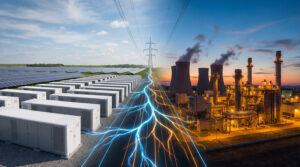
The most intriguing gap in Fleischhauer's argument is the role of large-scale storage. Analyses are increasingly suggesting that at least a portion of the planned guaranteed capacity could be provided more economically by long-term battery storage. A model by LCP Delta concludes that, within the framework of Germany's power plant strategy, 10-hour battery storage could replace two gigawatts of planned gas-fired power plant capacity, maintaining the same level of security of supply and incurring significantly lower subsidy costs. The average annual subsidy requirement was calculated at €31 per kilowatt for long-term storage, compared to €102 per kilowatt for a comparable combined cycle gas turbine (CCGT) power plant. According to this model, savings of up to €166 million per year would result for two gigawatts.
Of course, these results must be interpreted objectively. They do not prove that storage facilities can replace all gas-fired power plants. The authors explicitly do not argue for a complete abandonment of gas. But therein lies the relevance: The question is not gas or no gas, but how much gas, for what operating period, with which tendering rules, and at what price compared to competing technologies.
Added to this is a global cost trend that is changing the political context. According to BloombergNEF, the global levelized cost of electricity (LCOE) for new combined cycle gas turbine (CCGT) power plants reached a record high of $102 per megawatt-hour in 2025, while four-hour battery storage systems were expected to fall to $78 per megawatt-hour. Drivers of this trend include sharply increased gas turbine prices and international competition for related components. Even if global benchmarks cannot be directly applied to Germany, this clearly shifts the economic frame of reference to the detriment of new gas investments.
In other words, even if Fleischhauer is politically correct that some criticism of the Reich is selective, he says nothing about whether the material cost situation has changed so much since the early planning stages that a larger storage capacity would be more rational today. This is precisely the question that would be central to any serious economic commentary.
Related to this:
The time trap of gas-fired power plants
Another point that Fleischhauer practically ignores is the temporal inconsistency of the gas-fired power plant narrative. Politically, new plants are often marketed as the answer to acute concerns about security of supply, electricity prices, or system stability. However, in the real economy, their impact only becomes apparent years later. Reports on Reiche's plans indicate that new capacity would not be connected to the grid until 2030 or 2031 at the earliest. At the same time, observers speak of tight markets for gas turbines and construction times that can be at least four years.
This means that anyone calling for the rapid construction of gas-fired power plants today is primarily making a structural decision for the 2030s. This decision must be measured against the likely market conditions of the 2030s, not just against the current debates about capacity bottlenecks. And this is precisely where things get tricky. Because by then, storage prices, grid digitalization, industrial load shifting, electrolysis flexibility, and cross-sectoral system control are likely to have progressed further. The longer the lead time, the greater the risk that expensive fossil or quasi-fossil reserve power plants will be built into a system that can now provide other flexibility options more economically.
This time trap is a classic investment risk. In industry terms, it would be described as high, irreversible initial investments in an uncertain future market and regulatory environment. Anyone taking on such risks needs particularly strong evidence that the planned technology will remain the best option even under changed circumstances. Fleischhauer fails to provide this evidence; he replaces it with references to political hypocrisy.
Our EU and German expertise in business development, sales and marketing

Our EU and German expertise in business development, sales and marketing - Image: Xpert.Digital
Industry focus areas: B2B, digitalization (from AI to XR), mechanical engineering, logistics, renewable energies and industry
More information here:
A thematic hub offering insights and expertise:
- Knowledge platform covering global and regional economies, innovation and industry-specific trends
- A collection of analyses, insights, and background information from our key areas of focus
- A place for expertise and information on current developments in business and technology
- A hub for companies seeking information on markets, digitalization, and industry innovations
Rethinking energy security: Technology mix instead of fossil fuel romanticism
The energy transition is happening faster than many critics admit
The building sector is particularly revealing. There, a dual reality truly exists. On the one hand, Germany remains heavily dependent on gas for its existing buildings. On the other hand, new construction is already showing a clear structural shift. Both aspects together are crucial, and this simultaneity is underestimated in many pro-gas commentaries.
In 2024, 69.4 percent of newly constructed residential buildings in Germany were primarily heated with heat pumps. Compared to 2014, with 31.8 percent, this figure has more than doubled. In single-family and two-family homes, the share of heat pumps was even higher, at 74.1 percent. Even more importantly, 81 percent of the residential buildings approved in 2024 are expected to be primarily heated with heat pumps. This is not a fringe phenomenon, but rather the new standard for new construction.
This leads to a highly relevant insight from an energy economics perspective: The question is no longer whether heat pumps work in new buildings, but rather how quickly existing buildings will catch up and which infrastructure decisions will facilitate or hinder this transition. Anyone who continues to primarily rely on narratives about gas in this situation is arguing outside the realm of actual investment in new construction.
Related to this:


But in terms of existing conditions, Germany remains trapped in the gas industry
However, this is precisely where the limits of any optimism about progress lie. Germany's building stock remains heavily reliant on fossil fuels, posing significant problems for climate, distribution, and supply policies. According to the 2025 Building Report, 79 percent of the nearly 20 million residential buildings are still heated with oil and gas. Gas heating systems account for over 50 percent of both residential buildings and apartments; heat pumps are installed in only 4.2 percent of existing residential buildings and 2.7 percent of residential units.
This is the crux of the real gas trap. It consists not only of the potential for electricity generation with gas, but also of the massive existing dependence of the heating sector on an imported fossil fuel. This dependence has several cost layers: price volatility, geopolitical vulnerability, CO2 costs, a backlog of renovations, and social burdens for households with inefficient older buildings. As long as the existing infrastructure remains so heavily reliant on fossil fuels, Germany is vulnerable, regardless of whether or not a few new power plant units are built.
That's precisely why Fleischhauer's polemic falls short. Anyone who takes security of supply seriously can't just focus on backup power plants for periods of low wind and solar output. They must also ask how overall gas demand is decreasing. Every amount of gas no longer needed in the heating market reduces long-term import requirements, price risks, and infrastructure constraints.
Why heat pumps are more than just climate policy
In political debates, heat pumps are often either exaggerated in a culture-war-like manner or reflexively portrayed as an imposition. From an economic perspective, however, they are primarily a tool for substituting fuel imports with capital investments and electricity use. The crucial point here is not symbolism, but the cost structure over the entire life cycle.
While initial investment costs are often higher and retrofitting existing systems is not a simple task, rising or volatile gas prices and higher CO2 costs shift the economic viability. The 2025 Heating Cost Index from co2online shows that households with gas heating will pay an average of 15 percent more in heating costs in 2025 than in the previous year, and that heat pumps have been consistently cheaper than fossil fuel heating systems since 2022. For an unrenovated single-family home with gas heating, heating costs over 20 years are estimated at around €120,000, while energy-efficient modernization and a heat pump could reduce costs to approximately €16,000. Such model figures are highly dependent on the specific property, but they indicate the general trend: fossil fuel heating can become a long-term cost trap.
Shifts are also evident in the market. According to industry statistics, sales of gas-fired boilers plummeted in the first quarter of 2025, while heat pumps gained ground, temporarily reaching a market share of 42 percent. For the full year 2025, industry reports indicate that heat pump sales continued to rise significantly. While this data doesn't prove a linear success story, it does demonstrate that the energy transition in the heating sector is far from dead, despite political uncertainty.
Why new construction figures are politically underestimated
The figure of 69.4 percent in new construction is often treated as a welcome piece of progress. In reality, it is of strategic economic importance. New construction is the sector where investors, households, and developers have relatively free choice between technologies. If heat pumps prevail in this sector, with a share of nearly seven out of ten buildings and even eight out of ten in building permits, then this represents a market judgment under real cost, regulatory, and expectation conditions.
This market assessment doesn't mean all problems are solved. However, it does mean that the narrative that heat pumps are a politically imposed niche technology that defies economic sense is hardly tenable empirically. On the contrary, gas has long since become a defensive option in new construction. Anyone who ignores this reality shifts the debate away from the genuinely difficult issues surrounding existing buildings and into a sham battle over a technology that has already become widely established in a key market segment.
This is important for analyzing Fleischhauer's contribution because his argument implicitly pretends that one must defend the harsh reality of gas against green symbolic politics. However, the harsh reality in the heating market is twofold: Yes, gas still dominates in existing buildings. But in new construction, the investment landscape already clearly favors electricity-based, renewable heating systems.
The actual distribution conflict
Behind the gas debate lies a social conflict that is rarely clearly addressed in polemical commentary. Fossil fuel infrastructures often appear familiar and politically convenient in the short term because their conversion requires high initial investments. In the long term, however, they distribute price risks, CO2 costs, and geopolitical shocks across millions of households and businesses. The question, therefore, is not only which technology works technically, but who bears which risks and when.
With gas, many risks lie in the future or are socialized: through energy prices, network charges, capacity mechanisms, levies, or government bailouts. With heat pumps and building renovations, the costs are more visible and arise earlier, but fuel risks are structurally reduced. Politically, it is easier to mobilize against high initial investments than against creeping system costs. This is precisely why simplistic narratives so readily gain traction.
A sober economic perspective would have to say: The problem isn't that citizens are deterred by investment costs. That's rational. The problem is that policymakers often make the long-term costs of fossil fuel-based pathways less transparent than the short-term costs of the transition. Those who obscure this distinction encourage poor decisions.
Security of supply requires a technology mix
The more serious counter-argument to this oversimplification is not that new gas-fired power plants are fundamentally unnecessary. It is more likely that Germany will indeed need a mix of different flexibility options for the 2030s. These include grid-supporting storage facilities, dispatchable power plants, demand-side management, European interconnectors, sectoral coupling, and a smart expansion of the grid.
The central point of contention is therefore not whether, but in what order and with what weighting. If tenders were sufficiently technology-neutral, those solutions that guarantee security of supply at the lowest societal cost could prevail. If, on the other hand, certain criteria effectively exclude storage, the outcome is politically predetermined. Then it is not the market that is technology-neutral, but rather the technology that is politically pre-selected.
This is precisely where serious criticism of both the Greens and Reiche needs to begin. The Greens do indeed have some difficulty defending their earlier pragmatic stance on gas-fired power plants in a politically consistent manner. But Reiche must also address the question of whether her strategy is truly technology-neutral, cost-minimalist, and transformative, or whether it institutionally secures a new path dependency on fossil fuels. Criticizing only one side is too simplistic.
The continuity between Habeck and Reiche is real, but not identical
A particularly important point is the distinction between political continuity and substantive identity. It is true that Reiche's power plant strategy builds in part on lines already pursued under Habeck. Several reports indicate that there are clear parallels and that the subsequent agreement was essentially based on a direction already coordinated with Brussels under Habeck.
But this doesn't mean that all criticism of Reiche is necessarily disingenuous. Differences in volume, timeline, funding regime, hydrogen commitments, and tender design can be economically significant. Even minor changes in regulatory criteria can determine whether a power plant proves to be a transitional solution or a lock-in investment. Those who rhetorically gloss over these differences are engaging in political interpretation rather than energy economics.
A mature analysis would therefore say both: Yes, the Greens cannot credibly pretend that the principle of controllable reserve capacities is inherently taboo. But no, this does not create a blank check for every large-scale gas-fired power plant plan. The economic evaluation only begins after the acknowledgment of continuity.
Germany needs less ideology, but also less romanticizing fossil fuels
In public energy policy, two negative reflexes often clash. On the one hand, there is the tendency to downplay physical and systemic constraints and to interpret any debate about backup capacities as a betrayal of the energy transition. On the other hand, there is the temptation to glorify fossil fuel technologies as sober realpolitik, even though cost structures, climate regulations, and technological alternatives have already changed significantly.
Fleischhauer's text rightly responds to the first distortion, but falls into the second. He aims to expose ideology, yet his own pointedness implicitly romanticizes gas as a sign of political honesty. This is analytically unconvincing. Political honesty wouldn't consist of defending gas against green hypocrisy, but rather of openly naming where gas might be temporarily necessary, where storage is becoming more economical, where heat pumps have long been the market standard in new construction, and where existing buildings are still deeply trapped in the fossil fuel cycle.
Related to this:


A sober judgment
From an economic perspective, the current gas debate is not adequately addressed by either moral outrage or sneering double standards. Germany needs security of supply, and dispatchable power plants can contribute to that. However, the questions of the appropriate scale, the right technology, the right financing, and the right timeframe remain open and must be answered based on data.
The empirical evidence suggests that Fleischhauer's interpretation only tells half the story. He has a point when he points to political inconsistencies and reminds us that Habeck's policies also included gas-fired power plants. However, he overlooks the fact that the economic evaluation of new gas-fired power plants cannot be derived from this political comparison. More crucial today are the growing importance of storage, the time and cost risks associated with new gas-fired power plants, the danger of fossil fuel lock-in, and the fact that the energy transition in new buildings is already much further advanced than the gas-centric debate suggests.
If one wants to critically observe what Fleischhauer doesn't say, it's this: He confuses the demonstration of green contradictions with the demonstration of an economically superior gas strategy. The former may be effective in terms of publicity. The latter is far from proven.
Related to this: