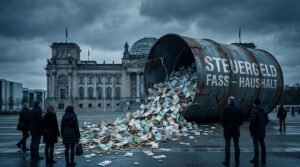
Germany's most expensive scam: Up to 95 percent of the "special fund" has been spent on other purposes so far – Image: Xpert.Digital
500 billion euros in debt — and hardly a meter of road left
The largest debt package in the history of the Federal Republic of Germany turns out to be a fiscal deception
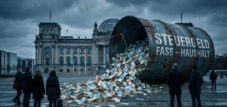
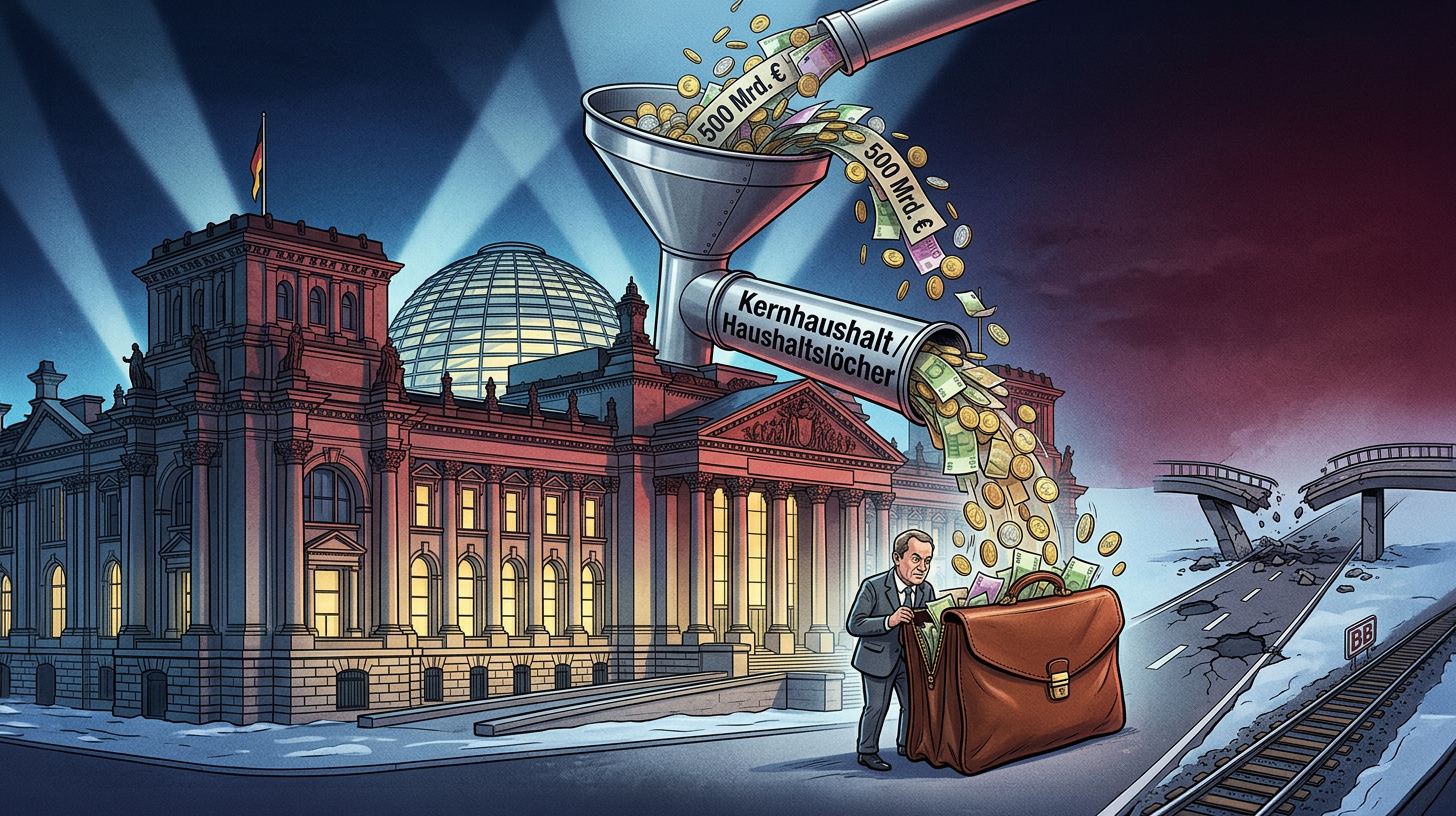
Exactly one year ago, in March 2025, the German Bundestag made a constitutional breakthrough: With a two-thirds majority, the CDU, CSU, SPD, and Greens amended the Basic Law to create a special fund for infrastructure and climate neutrality amounting to 500 billion euros. It was the largest instance of government borrowing in the history of the Federal Republic, repurposed through the rhetorical device of renaming debt as a special fund. One year later, the first systematic assessments are available—and they are devastating. According to an analysis by the ifo Institute, up to 95 percent of the borrowed funds were used for purposes other than the promised investments. The Cologne Institute for Economic Research (IW Köln) reports 86 percent misappropriation. Both figures are not political polemics, but the result of sober financial analysis.
Related to this:

What was promised — and why it caused such a stir
The promise associated with the special fund could hardly have been clearer. The 500 billion euros were to be used for additional investments in infrastructure and to achieve climate neutrality by 2045. The word "additional" was not merely rhetorical flourish, but rather the constitutive condition for the constitutional exemption from the debt brake. Only if the funds actually triggered new investments exceeding the regular budget volume was the constitutional amendment substantively justified.
Structure of the special fund: €300 billion are earmarked over twelve years for federal investments in railways, digitalization, energy infrastructure, hospitals, and other areas. €100 billion will go to the states and municipalities, distributed according to the Königstein Key. The remaining €100 billion will flow into the Climate and Transformation Fund, which is intended to finance support programs for energy efficiency and industrial transformation. A project on the scale of a national repair shop—a politically understandable ambition given decades of inactivity in investing in bridges, railways, schools, and digital infrastructure.
Friedrich Merz, the Chancellor and then-CDU leader, who had helped negotiate the package during the transition period before the formation of the government, declared after the decision that citizens would soon realize they once again had a capable state at their side. During the election campaign, Merz had regularly emphasized the importance of sound public finances and the debt brake—a contradiction that critics had already noted at the time. Criticism of the potential misappropriation of funds was loud from the outset: Reiner Holznagel, President of the Federation of German Taxpayers, demanded complete documentation of how the funds were used and warned that without clear criteria, the money would be wasted on small-scale, isolated projects with no overall economic impact.
The Bundesbank's calculations show: 93 percent misuse
The first systematic interim assessment for 2025 came not from a critical think tank or an opposition party, but from the German Bundesbank itself—an institution whose analytical expertise is considered undisputed in public discourse. The result was devastating: While around €37 billion in new debt was incurred for infrastructure in 2025, investments increased by only around €2.5 billion. This means that 93 percent of the funds were not used for additional investments, but for other purposes.
Ifo Institute President Clemens Fuest publicly analyzed this finding, identifying the underlying mechanism: When previously planned investment expenditures in the core budget are reduced and transferred to debt-financed special funds, this constitutes misappropriation. The political motivation is transparent: If funds are freed up in the core budget, they can be used differently—to plug budget gaps, for consumption expenditures, or for transfers. In this way, the government avoids the uncomfortable review and reduction of existing expenditures.
Specific examples: German Rail, highways, broadband, hospitals
The IW analysis, published by Tobias Hentze at the end of 2025, illustrates the mechanisms of misappropriation using concrete case studies. In 2026, Deutsche Bahn received a total of €18.8 billion from the special fund. At the same time, investments in the rail network in the regular federal budget decreased by €13.7 billion. Adjusted for the equity increase, €8.2 billion of budgetary volume remained freed up—funds that were not spent on the railway but were available for other purposes.
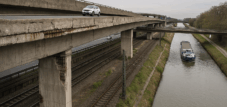
In road construction: €2.5 billion from the special fund is earmarked for the renovation of motorway bridges. At the same time, investments in federal highways in the regular budget are reduced by €1.7 billion. Net effect: Approximately €1.7 billion in budgetary leeway is freed up. Regarding broadband expansion, this was fully financed from the special fund in 2026 with €2.3 billion – whereas in 2024 it was still paid for with €1.8 billion from the regular budget, and the corresponding budget item has now simply been eliminated.
The case of hospital financing is particularly far-reaching: Originally, the federal states and health insurance funds were each supposed to contribute half of the planned six billion euros for hospital reform. In the 2026 budget, the special fund now covers the entire sum—a de facto relief for health insurance funds and federal states without any real additional investment. And the ifo Institute pointed out that subsidies for the mothers' pension and other discretionary transfers were also financed from the special fund—expenditures that have absolutely nothing to do with infrastructure or climate neutrality.
Our EU and German expertise in business development, sales and marketing

Our EU and German expertise in business development, sales and marketing - Image: Xpert.Digital
Industry focus areas: B2B, digitalization (from AI to XR), mechanical engineering, logistics, renewable energies and industry
More information here:
A thematic hub offering insights and expertise:
- Knowledge platform covering global and regional economies, innovation and industry-specific trends
- A collection of analyses, insights, and background information from our key areas of focus
- A place for expertise and information on current developments in business and technology
- A hub for companies seeking information on markets, digitalization, and industry innovations
How the state merely shifts money around instead of truly investing: A shuffling yard instead of progress – The truth about the special fund
The systemic gap: No effective control mechanisms
Why was this even possible? The answer lies in a structural weakness in the special fund's design. The conditions for using the funds, as stipulated in the Basic Law—investment expenditures must exceed 10 percent of the core budget, and only the portion exceeding this amount can be financed from the special fund—were already met before the special fund was established. This means that the condition intended to prevent misuse of funds already existed in practice. It offers no real protection against investments being transferred from the regular budget to the special fund without any net increase in investment.
Added to this is the problem of complexity: The shifts between the core budget, special funds, and the climate and transformation fund are difficult for parliamentarians, journalists, and even financial experts to understand. Where it's unclear what is what, effective oversight is nearly impossible. IW economist Tobias Hentze aptly described it as a shunting yard with many tracks—a system in which funds move back and forth between different pots without ultimately resulting in more construction, renovation, or investment.
Related to this:


The economic consequence: Growth forecasts are in the basement
The macroeconomic consequences of this misguided investment policy are measurable. The ifo Institute has revised its growth forecasts for Germany downwards: For 2025, it expects only 0.1 percent GDP growth, and for 2026, only 0.8 percent. These are corrections of 0.1 and 0.5 percentage points, respectively, compared to the autumn forecast—and the connection to the lack of investment impact from the special fund is explicit: A debt package that is used 93 to 95 percent for budget consolidation and transfers instead of for productive infrastructure investments cannot generate any significant growth impetus.
The German Council of Economic Experts also pointed to such shifts in its annual report. Council Chair Monika Schnitzer cited rail investments as an example: nine billion euros from the special fund were earmarked for this purpose, but not actually additional funding, since the regular budget allocation was simultaneously reduced by almost six billion euros. In the end, only around three billion euros net remain – a fraction of the announced amount.
North Rhine-Westphalia as a microcosm
The problem is not limited to the federal level. The €100 billion earmarked for states and municipalities from the special fund is subject to similar redistribution mechanisms at the subordinate budget levels. North Rhine-Westphalia, the most populous state, receives approximately €21.1 billion from the state fund—of which around €12.7 billion is to be passed on to municipalities. Which projects will be financed with this money and to what extent they are truly additional remains largely unclear. While the federal government has declared transparency a goal for Finance Minister Lars Klingbeil (SPD)—every member of parliament should know what is happening in their constituency—the institutional control mechanisms that could ensure the additionality requirement is also met at the municipal level are largely lacking.
Investment backlog persists — infrastructure continues to wait
What remains is the real problem that the special fund was intended to solve: Germany's infrastructure deficit. For decades, the public investment rate was too low, bridges were dilapidated, railways outdated, school buildings crumbling, and digital infrastructure lagging behind by international standards. This investment backlog didn't develop overnight and won't disappear in a single year—even if the funds were used fully and appropriately. The German Economic Institute (IW) and the ifo Institute both point out that the real challenge lies not only in providing the necessary funding, but also in addressing the structural capacity bottlenecks in the construction industry, public administration, and planning and permitting infrastructure.
When funds are available but cannot be accessed due to a lack of planning capacity, lengthy approval processes, and the inability of companies to expand their capacities quickly, investment money is generated through other channels without any actual investment effect. Policymakers have recognized this problem: Federal Finance Minister Klingbeil announced the creation of an investment and innovation advisory board to identify and eliminate bureaucratic hurdles. Whether this board can act quickly enough to transform this stalled system into a genuine investment program will become clear in the coming quarters.
Political responsibility and the credibility problem
What remains is a massive loss of credibility. Friedrich Merz campaigned on a platform of sound public finances and the debt brake—and just a few months later, he helped negotiate the largest debt package in the history of the Federal Republic. This would be politically justifiable if the money were actually used for the promised purposes. However, when independent economic institutes and the Bundesbank itself document that 93 to 95 percent of the funds are being used for other purposes, the question of political responsibility arises with utmost urgency.
CDU economic expert Christoph Ploß had already warned when the special fund was established: The fund was intended to secure urgently needed additional investments, and there must be no shifting of funds at the expense of infrastructure investments – that was the agreement within the coalition. The documentary now shows that this shifting of funds has become a reality. This is a major problem – not only for infrastructure, not only for Germany's economic development, but for trust in the reliability of political promises in general.