
Germany's record-breaking arms buildup: Europe's new military power – From austerity champion to Europe's largest arms budget
Xpert Pre-Release

Available in 27 languages 📢
Prefer Xpert.Digital on GoogleⓘPublished on: April 27, 2026 / Updated on: April 27, 2026 – Author: Konrad Wolfenstein
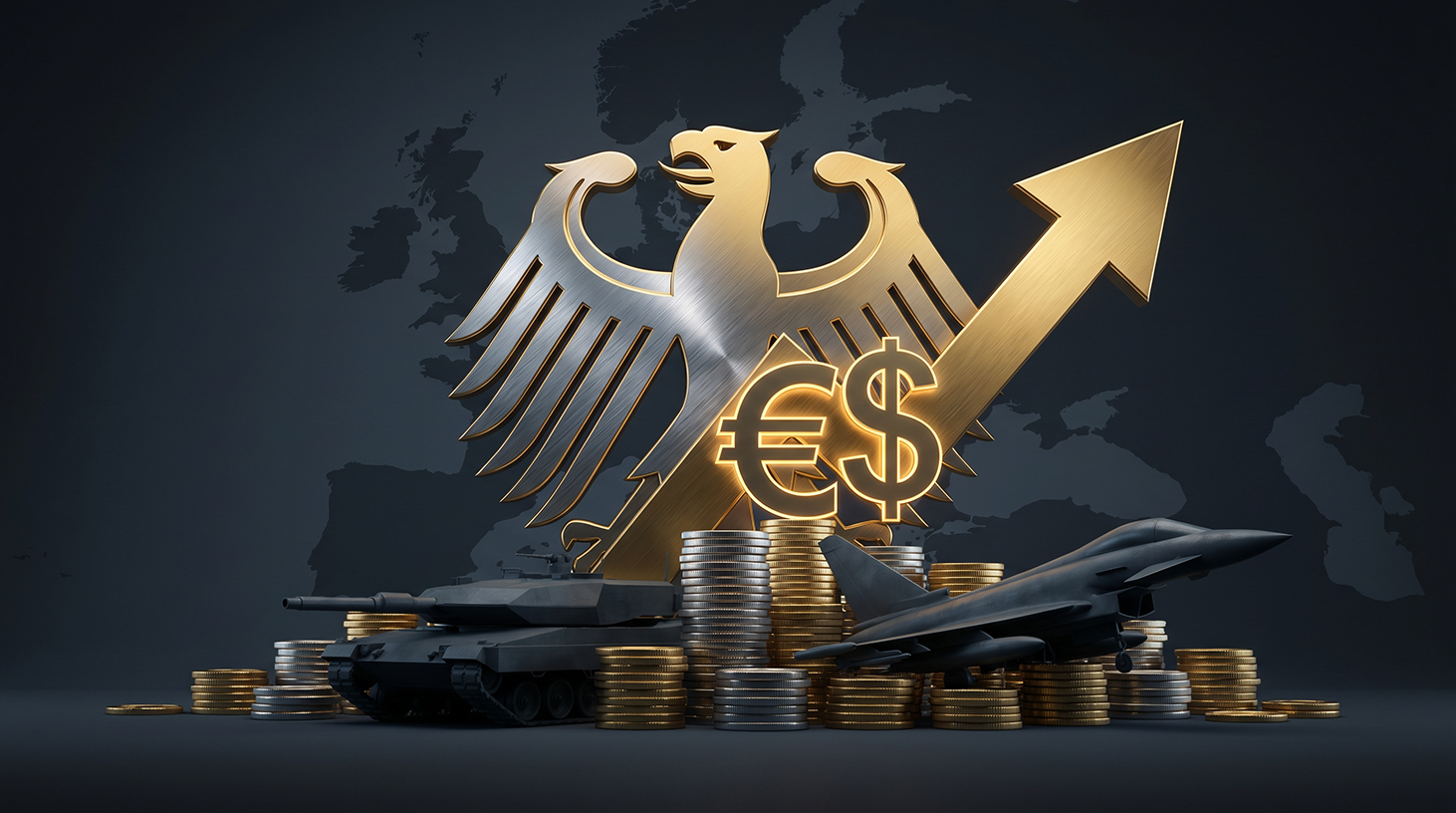
Germany's record arms budget: Europe's new military power – From austerity champion to Europe's largest defense budget – Image: Xpert.Digital
Historic SIPRI report: Germany overtakes Great Britain in military spending
From cost-cutting champion to military power: What the gigantic arms boom means for our everyday lives
Germany is rearming – on a historic scale. With a defense budget of approximately €97 billion for 2025, the Federal Republic is catapulting itself into fourth place in global military spending for the first time since reunification, finally leaving decades of austerity behind. Driven by the Russian threat, massive pressure from Washington, and ambitious new NATO targets, unprecedented sums are flowing into the Bundeswehr (German Armed Forces). Defense companies like Rheinmetall are celebrating spectacular record profits on the stock market, while politicians are touting these billions in investments as a gigantic economic stimulus program for the domestic economy.
But behind the scenes of this so-called turning point in history, a structural dilemma is brewing: The gigantic rearmament, financed by constitutionally enshrined off-budget funds and new debt, harbors immense economic and social risks. Leading economists warn of a dissipated economic effect, exploding prices, and a dramatic shortage of skilled workers in the arms industry. At the same time, a fatal cutthroat competition looms: Every euro spent today on loans for tanks and ammunition may be missing tomorrow for education, healthcare, infrastructure, or climate protection. A deep dive into the raw figures, the true beneficiaries, and the hidden cost of Germany's rise to Europe's new military power.
A turning point in numbers: The historical turning point
Germany's security policy transformation over the past three years is unprecedented in its speed and scope in postwar history. According to the latest annual report from the Stockholm International Peace Research Institute (SIPRI), German defense spending reached US$114 billion – approximately €97 billion – in 2025. This represents a 24 percent increase compared to the previous year and a rise of around 89 percent compared to 2015. As a result, Germany has overtaken Great Britain for the top spot in Europe and now occupies fourth place in the global ranking of military spending for the first time since reunification in 1990 – behind the USA, China, and Russia.
At the same time, in 2025, Germany exceeded the NATO target of spending two percent of its gross domestic product (GDP) on defense for the first time in 35 years. This milestone had been considered unattainable for decades and had been the subject of persistent criticism from the American presidency. The fact that it has now not only been reached but already surpassed marks a fundamental reassessment of German security policy. SIPRI researcher Lorenzo Scarazzato described this shift as historically significant: for the first time since reunification, Germany is once again the largest military spender in Western and Central Europe.
The global context underscores the scale of this shift. Worldwide military spending reached a new record high for the eleventh consecutive year in 2025, at approximately US$2.89 trillion. Europe was a major contributor to this increase: European states' military spending grew by 14 percent to US$864 billion, the strongest increase on the continent since the end of the Cold War. Twenty-two of NATO's European partners exceeded the two percent mark in 2025.
Geopolitical fire accelerant: Why the switch was flipped so abruptly
The Russian war of aggression against Ukraine, which began on February 24, 2022, acted as a catalyst for a fundamental shift in German security policy. In his landmark speech on February 27, 2022, Chancellor Olaf Scholz described the event as the "most far-reaching turning point in German security policy since the founding of the Bundeswehr." The Federal Government immediately approved a special fund of €100 billion for the Bundeswehr, which was enshrined in the Basic Law (Germany's constitution) and thus exempt from the regular debt brake. This decision was constitutionally groundbreaking: The Bundestag amended Article 87a of the Basic Law to allow for a debt-financed shadow budget, which the Federal Statistical Office categorizes as an "extra-budget.".
The pressure to further increase defense spending grew in the following years due to several factors simultaneously. First, Russia made it clear that it was massively ramping up its arms production: According to the German Federal Intelligence Service (BND), Russia produces more armaments in three months than all NATO states combined in a year. Second, starting in January 2025, the Trump administration formulated the demand for five percent of GDP to be spent on defense – a figure considered by many experts to be politically motivated and hardly justifiable economically, but which nevertheless put Germany and other NATO partners under considerable pressure. Third, the NATO summit in The Hague in June 2025 adopted the new target of 3.5 percent of GDP for defense plus an additional 1.5 percent for defense-related infrastructure.
The German government under Chancellor Friedrich Merz responded to this complex situation with a far-reaching budgetary framework. On March 18, 2025, the Bundestag approved a constitutional amendment by a two-thirds majority, completely exempting defense spending exceeding one percent of GDP from the restrictions of the debt brake. In addition, a €500 billion special fund for infrastructure and climate protection was established, the funds of which are also not counted towards the debt rule. The Federal Court of Auditors has already warned of the long-term risks of this arrangement and criticized the further weakening of fiscal discipline.
The roadmap for the upgrade: figures, timetable and ambitions
The budget figures for the coming years reveal the fiscal dimensions that German rearmament will reach. A defense budget of €86.37 billion has been approved for 2025 – the highest level since the founding of the Federal Republic. This amount comprises a regular defense budget of €62.31 billion and funds from the special Bundeswehr fund of €24.06 billion. The draft budget for 2026 projects €108.2 billion, of which €82.69 billion is allocated to the regular budget.
The medium-term financial plan shows an even steeper curve. According to the cabinet decision of June 2025, the total amount spent on defense is to increase to €151.7 billion by 2029 and to €167.8 billion by 2030. This would raise the defense share of GDP from 2.4 percent in 2025 to 2.6 percent in 2026, 3.0 percent in 2027, and 3.3 percent in 2028, in order to reach the targeted 3.5 percent goal by 2029. For comparison, the USA still holds the world's largest military budget with approximately US$916 billion, followed by China with US$314 billion and Russia with an estimated US$149 billion.
The controversy in German domestic politics surrounding the so-called "Unword of the Year 2025"—the term "special fund" was chosen by the jury because it obscures the fact that it involves new debt—illustrates just how politically charged the financing issue is. Indeed, the Federal Statistical Office refers to these constructs as "extra-budgets," which makes their true nature as debt-financed parallel budgets transparent. The first €100 billion fund for the Bundeswehr, approved in 2022, expires in 2027; the new mechanisms for exemptions from the debt brake are intended to permanently replace it.
Economic engine or flash in the pan? Economic impact put to the test
The political rhetoric surrounding increased defense spending often promises more than economic reality delivers. The CEO of the arms manufacturer Hensoldt described military spending in March 2025 as a "gigantic economic stimulus package." Economists Tom Krebs and Patrick Kaczmarczyk from the University of Mannheim have thoroughly examined this claim in an empirically grounded analysis and arrived at a sobering conclusion: The short-term fiscal multiplier for military spending in Germany is at most 0.5. In concrete terms, this means that every additional euro invested in defense generates, at best, only 50 cents of additional overall economic output – and under certain conditions, might not even trigger any measurable economic activity.
For comparison: According to the same study, public investments in education and early childhood care achieve a multiplier of up to three times the euro invested, while infrastructure investments achieve a multiplier of at least twice the value. The EY/Deka analysis from November 2025 offers a more optimistic perspective, calculating that every euro generated in the European defense industry triggers approximately 2.70 euros of economic activity along the entire value chain. However, this multiplier refers to the overall economy within the sector, not to government spending, and is therefore not directly comparable to the fiscal multiplier in the Mannheim study. These differences illustrate how strongly the methodological perspective influences the results.
A key problem: German and European arms companies are already operating at capacity. Rheinmetall – Germany's largest arms manufacturer and the symbolic winner of this paradigm shift – increased its revenue by 36 percent to €9.75 billion in fiscal year 2024 and achieved a record operating profit of €1.48 billion. Its order backlog reached a record high of €55 billion. For 2025, the company planned a further revenue jump to €9.9 billion, representing an increase of 29 percent, and revenue of around €14 billion is expected for 2026. However, if the arms industry's capacity is already fully utilized and procurement processes lack transparency, then, according to economists from Mannheim, additional government demand primarily drives up prices – a large portion of public funds simply vanishes into the pockets of the corporations and their owners.
Hub for Security and Defense - Advice and Information

Hub for Security and Defense - Image: Xpert.Digital
The Security and Defence Hub offers expert advice and up-to-date information to effectively support companies and organizations in strengthening their role in European security and defence policy. Working closely with the SME Connect Defence Working Group, it particularly promotes small and medium-sized enterprises (SMEs) that wish to further develop their innovative capacity and competitiveness in the defence sector. As a central point of contact, the Hub thus creates a crucial bridge between SMEs and European defence strategy.
Related to this:
Who really benefits from the arms race? Winners, losers, and the hidden costs
Where real value is created: Winners and losers of the arms race
The stock market anticipated the arms boom with spectacular precision. Rheinmetall's share price was around €59 in 2020; by June 2025, it was fluctuating between €1,700 and €1,800 – an almost thirtyfold increase. At that time, the Swiss investment bank UBS predicted a target price of €2,200. Rheinmetall's order backlog of €23.2 billion at the end of the third quarter of 2025 also illustrates the robustness of its business model. The company is even considering taking over capacity from the struggling automotive industry – according to reports, Rheinmetall could use a VW plant for tank production. This marks the beginning of a symbolic industrial policy paradigm shift: where cars were once built, combat vehicles may soon be manufactured.
For the broader economy, the picture is more nuanced. The EY/Deka analysis concludes that European defense investments could generate around €149 billion in added value annually over the next ten years, both directly and indirectly. This would benefit not only defense companies but also suppliers in the electronics, metal processing, logistics, and software development sectors. Nevertheless, there is a serious risk of displacement effects: In an economy already suffering from a structural shortage of skilled workers, the expanding defense industry competes directly with mechanical engineering and the automotive industry for the same engineers, skilled workers, and technicians. Suppliers who previously supplied automotive OEMs risk losing these customer relationships if they shift their production capacities to defense contracts.
The shortage of skilled workers is not just a theoretical risk. According to a Kearney study from March 2025, only 13,000 people currently work in weapons and ammunition production in Germany. If defense spending were to increase to the new NATO target of 3.5 percent of GDP, the need at the European level would rise to approximately 760,000 additional skilled workers. These shortages don't just affect traditional defense professions: AI experts for autonomous weapon systems, CNC specialists with security certifications, data scientists, electronic warfare specialists, and mechatronics engineers are all in demand. An arms industry that cannot find enough qualified personnel can only expand its capacity to a very limited extent – instead, wages and costs rise, further diminishing the benefits for the overall economy.
The fiscal foundation: debt brake, special funds and long-term sustainability
The financing of Germany's rearmament is based on a structure that is fiscally innovative but also risky. The original €100 billion special fund from 2022 was a debt-financed extra-budgetary fund directly backed by the Basic Law (Germany's constitution). The constitutional amendment of March 2025 goes considerably further: it permanently exempts all defense spending above one percent of GDP – currently around €44 billion per year – from the restrictions of the debt brake. Theoretically, this means that Germany can invest unlimited amounts of money in defense, civil protection, intelligence services, and cybersecurity in the future.
Running concurrently is the €500 billion special fund for infrastructure and climate protection. It is intended to operate for twelve years and is also exempt from the debt brake. Together with the special fund for the German Armed Forces, this will structurally raise Germany's national debt to a significantly higher level. The International Monetary Fund estimated as early as April 2025 – even before the complete budget plans were published – that Germany's debt level would increase considerably. The Federal Court of Auditors explicitly warned of the long-term interest burden of this arrangement and criticized the fact that the federal government is thus assuming responsibilities that actually lie with the states and municipalities.
The interest rate problem is insidious: Although the special fund allows for additional borrowing for Bundeswehr investments, this results in interest payments that count as Maastricht-relevant debt and thus put pressure on EU budget rules. This indirect pressure to cut spending elsewhere—particularly on social spending and climate investments—could lead to significant political conflicts over distribution. Those who take on debt today for military spending will pay the price tomorrow with less room for maneuver in education, healthcare, or the ecological transformation of the economy.
The European context: Stronger together or fragmented nationally?
Germany is not an exception in the European arms race, but rather a particularly striking example of a continent-wide trend. Poland spent around 31 percent more on defense in 2024 and, at 4.2 percent of its GDP, invests the highest percentage of all European NATO members. Sweden increased its spending by 34 percent and has also been massively expanding its military capabilities since joining NATO in 2023. The collective military spending of European NATO members rose faster in 2025 than at any other time since 1953. This European convergence reflects not only a similar perception of threat, but also the shared pressure from US President Trump, who has been urging Europeans to engage in comprehensive burden-sharing since January 2025.
One critical question remains unanswered: Does the parallel national rearmament of many European states lead to genuine strategic strength, or is the money being fragmented and used inefficiently? The European defense landscape has historically been characterized by national procurement silos, redundant systems, and a lack of economies of scale. Each country buys its own tanks, its own fighter jets, its own ships – often with limited interoperability. An EY analysis of European defense capabilities emphasizes the need for a strategically coordinated European procurement and innovation ecosystem that strengthens scalability, technological excellence, and resilient supply chains. Without this systemic coordination, a significant portion of the massive investments will be wasted.
Germany, with its sheer size and industrial base, could play a coordinating role. Chancellor Friedrich Merz has explicitly stated the goal of making the Bundeswehr the strongest conventional army in Europe. This requires not only a larger budget, but also more efficient procurement processes, an expanded industrial base, and close integration of European partners. Currently, arms procurement in Germany is considered bureaucratic and sluggish – a structural weakness that cannot be remedied simply by increasing funding. The establishment of the German brigade in Lithuania as a permanent stationing element is a visible sign that operational credibility is also to be enhanced.
Opportunity costs and societal considerations: What gets lost in the shuffle?
Every euro of public spending that goes toward armaments is no longer available for other societal purposes. These opportunity costs are not an abstract, theoretical concept, but become visible in concrete political debates. The question is: What does rearmament crowd out? Several studies demonstrate that higher military spending is accompanied by a crowding-out effect on social and healthcare spending. In an aging society like Germany—with growing care needs, education investments, and infrastructure development backlogs—this crowding-out effect is particularly critical.
Nevertheless, it is important to differentiate the perspective. Investments in security policy are not a mere waste, but rather form the basis for economic prosperity. An unstable geopolitical situation, in which Russia, according to the BND's assessment, could be capable of militarily attacking NATO territory within four to seven years, creates real risks for trade, supply chains, and the attractiveness of a business location. The costs of inadequate defense can far exceed the costs of rearmament. In this view, security is not an expenditure, but an investment in the stability of the social and economic system.
Added to this is the innovation potential of military research and development. Historically, military technology has generated civilian spin-offs that have had a significant economic impact – from the internet and GPS to the miniaturization of semiconductors. However, as the Mannheim economists emphasize, the empirical evidence for Germany in this area is thin. Germany imports a larger share of its armaments than, for example, the USA, where this transmission channel from military research to civilian innovations has historically been particularly strong. The conditions for comparable spillover effects in Germany would first have to be specifically created – through targeted promotion of dual-use technologies, more transparent procurement procedures, and closer networking between defense research and the civilian economy.
The structural dilemma: Transformation of a peacetime economy
What Germany is currently experiencing is not a temporary spending boost, but the beginning of a structural transformation of its economy. An economy that for decades has relied on export strength, industrial automation, and global value chains must now rapidly build a high-performing defense industry – with all the friction that such a structural change generates. German defense budgets have increased by double digits for three consecutive years: by around 28 percent in 2024, 24 percent in 2025, with further massive increases projected until 2029. This is a scale at which even a well-established defense industry needs time to adjust its capacities.
This conflict between speed and absorption capacity is perhaps the most central economic problem of German rearmament. When capacity is scarce and skilled workers are lacking, resources are used inefficiently: prices rise, delivery times lengthen, and procurement processes become prone to errors. The Federal Ministry of Defense has been struggling for years with a reputation for delaying procurement projects—a cultural and structural problem that cannot be solved by budget increases alone. The crucial reform approach therefore lies not only in the quantity of spending, but also in the quality of institutional governance: transparent procurement processes, efficient bureaucratic structures, and European cooperation formats.
In the long term, Germany will have to grapple with a fundamental strategic question: What level of defense spending is sustainable without undermining the economic foundation upon which this spending ultimately depends? The budget plans up to 2029 foresee an increase to €151.7 billion. This corresponds to a NATO spending quota of 3.5 percent of GDP – a figure Germany last approached during the height of the Cold War, and one that entails considerable structural costs. At the same time, the German economy is facing a challenging economic environment, grappling with high energy prices, stagnating industrial production, and demographic burdens. Finding the balance between security policy necessity and economic sustainability is the real challenge – and one that no SIPRI report can answer.
A rational bet on stability with a built-in price tag
The overall economic assessment of Germany's arms buildup is nuanced. On the positive side: Germany is sending a clear geopolitical signal, fulfilling its alliance obligations for the first time in decades, strengthening the industrial base of selected arms companies, and contributing to collective deterrence in Europe. This investment in security stability has a real, albeit difficult to quantify, economic value. On the negative side: The macroeconomic multiplier of defense spending is low, industrial capacity is already fully utilized, the shortage of skilled workers is a structural obstacle to growth, and the debt-financed special funds increase the state's long-term interest burden. The promises of a "gigantic economic stimulus program" are, according to current research, untenable. What Germany is getting is primarily greater security – but not a free pass for economic growth.
Consulting - Planning - Implementation

Markus Becker
I would be happy to serve as your personal advisor.
Head of Business Development
Chairman SME Connect Defense Working Group
Consulting - Planning - Implementation
Konrad Wolfenstein
I would be happy to serve as your personal advisor.
contact me at wolfenstein ∂ xpert.digital
Just call me on +49 7348 4088 965 .





