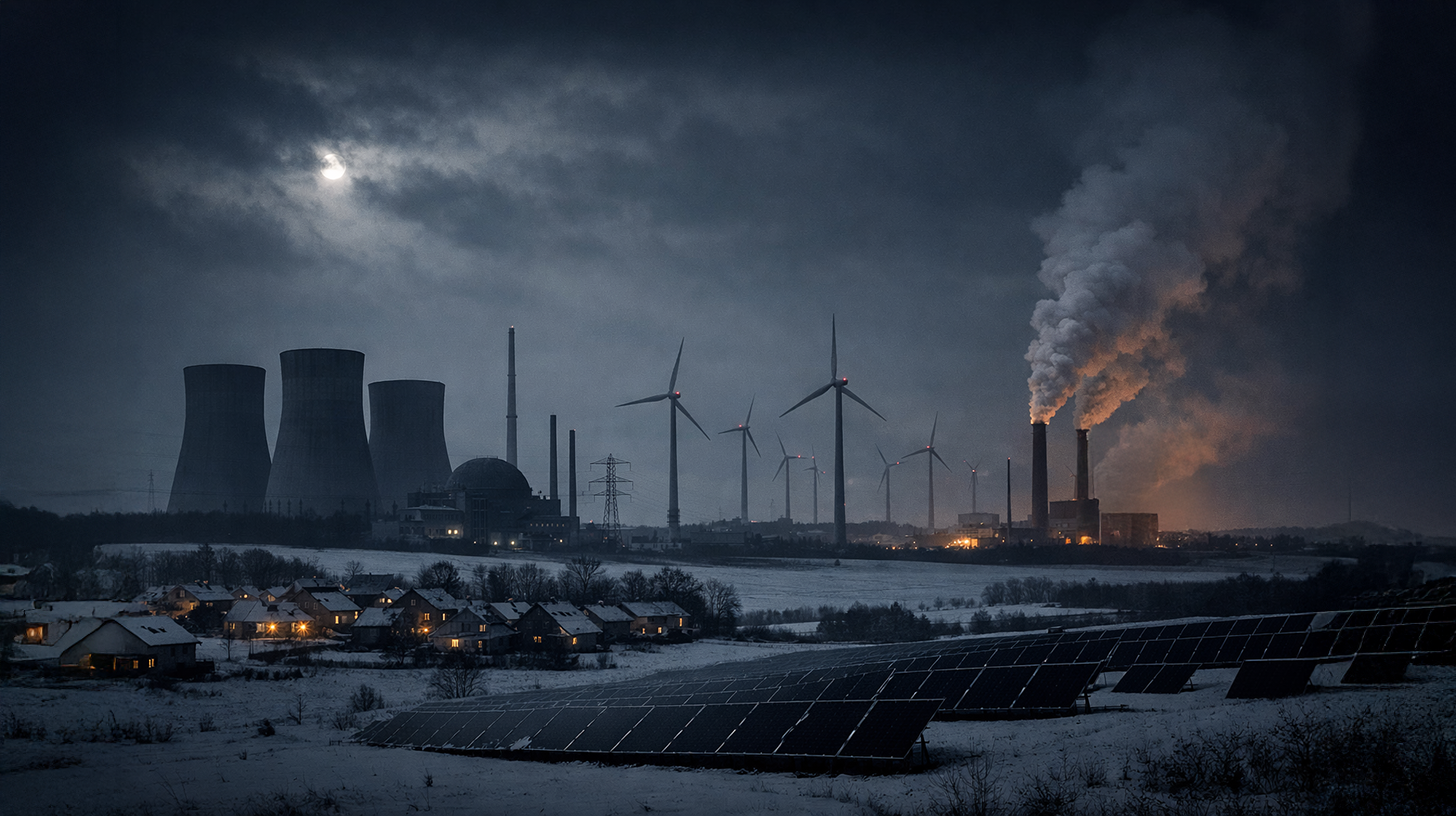
Germany's electricity supply during periods of low wind and solar power generation: Why the nuclear power debate is out of touch with reality – Creative image: Xpert.Digital
A bottomless pit of money instead of salvation: The bitter truth about new nuclear power plants
Anyone demanding new nuclear power plants today hasn't consulted either the calendar or a calculator
Few topics stir emotions as much as nuclear power. But while political battles are often fought over ideologically, the numbers tell a different, sobering story. Why the call for new reactors is failing due to physical and economic realities.
The fear of the "dark doldrums"—those days of the year when neither wind blows nor the sun shines—fuels a recurring debate: Does Germany need new nuclear power plants to guarantee security of supply? At first glance, the answer seems simple to many, but anyone who consults a calculator and a calendar encounters insurmountable obstacles.
The analysis of the facts ruthlessly demonstrates that the demand for a nuclear revival does not solve the pressing problems of the energy transition, but rather misunderstands them. From construction times that exceed any relevant deadlines for climate targets, to cost explosions among neighboring European countries, to the lack of technical flexibility for a modern power grid: the arguments against new construction are not political, but purely mathematical and physical in nature.
This article takes a sober look behind the scenes of nuclear rhetoric. Learn why new nuclear power plants would simply come too late to fill the gap from 2030 onwards, why they are technically unsuitable as partners for renewable energies, and which alternatives – from gas-fired power plants to battery storage – are actually capable of making Germany's electricity supply secure and affordable. A debunking of myths and a plea for realism in energy policy.
Related to this:

The question "nuclear power or not?" is, viewed purely on a fact-based basis, not a question of ideology, but of arithmetic and physics
Thank the political decision-makers who caused the nuclear power plant shutdown, but:
- New nuclear power plants are coming too late: 15–20 years construction time vs. gap from 2030 onwards
- Nuclear power is too expensive: 3–10 times more expensive than renewables, with incalculable follow-up costs
- Nuclear power doesn't fit into the system: periods of low wind and solar output require flexible, quickly adjustable power – the opposite of baseload nuclear power plants
- Alternatives exist and are cheaper: gas-fired power plants (3–6 years construction time), battery storage (months), grid expansion and demand-side management
The crucial political task is not the choice of technology, but the speed of implementation for gas-fired power plants, storage facilities and grid expansion – because that is where the real risk of a supply gap lies.
Germany is at a crossroads in its energy policy. The phase-out of coal is progressing, the last nuclear power plants were shut down in April 2023, and electricity demand will continue to rise due to electromobility, heat pumps, and industrial electrification. At the same time, electricity generation from wind and solar power is inherently volatile. During periods of low wind and solar radiation, known as "dark doldrums," the feed-in from renewable sources almost completely collapses. How to close this gap is the most pressing question in German energy policy. In the public debate, nuclear power is regularly invoked as a supposed solution. The following analysis objectively examines this option based on European experience, macroeconomic data, and system-related facts, and compares it to the available alternatives.
Related to this:
Politics in the simulator: ➡️ Conflict as an end in itself ⬅️
But if the economic and physical facts supposedly speak so clearly for and against nuclear power, why does the debate keep flaring up? Here, one abandons the realm of facts and enters the arena of political tactics.
The arguments for and against nuclear power plants are mostly based on ideology rather than facts. Two political camps opportunistically vie for the authority to interpret expert opinions. It's emotionally charged, complex, and ideal for pointless disputes. Therefore, on this basis, the issue risks not being resolved substantively and factually, but rather being exploited as a perpetually emotional point of contention by political opponents to gain political capital and, conveniently, avoid taking responsibility. Ideally, they can always blame the other side.
The best example of this pattern is the long-overdue tax reform, pension policy, and youth policy, which have been repeatedly brought up shortly before elections for decades, only to be abandoned. This leads to them being labeled as "lying politics," reflecting the current anger coupled with a loss of trust in politics. The nuclear power debate, therefore, often serves less to ensure energy security than to engage in political posturing in a proxy war. Want to bet that nothing will happen politically in the coming years? Absolutely nothing, except for sham debates that lead nowhere and fizzle out?
The Achilles heel of the energy transition: What happens when neither wind nor sun delivers?
The maximum peak load on the German electricity grid on cold winter days is around 78 to 90 gigawatts. During periods of low wind and solar output, the combined feed-in from renewable energy sources can drop to just a few gigawatts, which is less than one percent of the installed capacity of approximately 190 gigawatts of renewable energy. The resulting power gap is not a theoretical construct, but a quantified risk that has been assessed by several independent analyses.
A study by the consulting firm PwC, published in 2025 and not yet fully released, concludes that at least 40 gigawatts of additional flexible generation capacity must be created by 2035 at the latest to guarantee security of supply. Analyst Nathalie Gerl of LSEG estimates the potential shortfall on cold winter days at up to 24 gigawatts if no new gas-fired power plants are connected to the grid in time. Energy Aspects anticipates a supply gap of up to ten gigawatts in very rare cases of high demand and low wind or solar production. As part of its security of supply monitoring, the Federal Network Agency has calculated the need for additional dispatchable capacity at 22.4 gigawatts in the target scenario and up to 35.5 gigawatts in the scenario of a delayed energy transition. It described legislative measures for the expansion of new dispatchable capacity as urgently needed.
How often and for how long the lights might stay out
Dark doldrums are not a permanent condition, but a limited, periodically recurring phenomenon. According to a study by the Institute for Meteorology and Climate Research – Tropospheric Research (IMKTRO), they occur on average twice a year in Germany and last between two and eight days, with a particular clustering in the late autumn months and winter. The longest dark doldrums in 2023 lasted around 168 hours, while in 2024 they lasted approximately 2.24 days. Clear patterns emerge during the day: dark doldrums occur primarily in the evening and night hours, especially between 6 p.m. and 11 p.m. Most of these periods last less than 16 hours, often only about three hours.
This temporal structure is crucial for the choice of technology: Securing against periods of low wind and solar output does not require baseload power plants that run continuously for months, but rather flexible, rapidly adjustable capacities that can react to peak loads within minutes or even milliseconds. This is precisely where the fundamental misunderstanding of the nuclear power debate becomes apparent.
The hypothetical calculation of how many nuclear power plants Germany would need: up to 31 nuclear power plants
Taking the average estimate of the power gap at 20 to 40 gigawatts and assuming a typical EPR reactor with a gross output of 1.4 to 1.6 gigawatts, like those being built in Flamanville or Hinkley Point C, the following picture emerges: A minimum of ten gigawatts would theoretically require about seven to eight nuclear power plants. The 20 gigawatts originally targeted by the Department for Economic Affairs would require 13 to 15 plants. And the PwC maximum of 40 gigawatts would mean 27 to 31 nuclear power plants.
However, this calculation ignores technical reality. Nuclear power plants are designed for baseload operation and cannot react quickly enough to the rapid load changes required for backup power during periods of low wind and solar output. The Fraunhofer Institute for Solar Energy Systems (ISE), in its study on the levelized cost of electricity (LCOE), explicitly pointed out that while the technical controllability of nuclear power would be highly relevant, it is only feasible to a limited extent from a technical and economic perspective. A nuclear power plant needs hours to significantly change its output. Battery storage systems react in milliseconds, gas-fired power plants in minutes. Therefore, due to its design, nuclear power is the wrong tool for the specific problem of backup power during periods of low wind and solar output.
Our EU and German expertise in business development, sales and marketing
Our EU and German expertise in business development, sales and marketing - Image: Xpert.Digital
Industry focus areas: B2B, digitalization (from AI to XR), mechanical engineering, logistics, renewable energies and industry
More information here:
A thematic hub offering insights and expertise:
- Knowledge platform covering global and regional economies, innovation and industry-specific trends
- A collection of analyses, insights, and background information from our key areas of focus
- A place for expertise and information on current developments in business and technology
- A hub for companies seeking information on markets, digitalization, and industry innovations
Germany's nuclear comeback? 17 years of construction, costs increased sevenfold: The bitter reality of new nuclear power plants
Europe's billion-dollar boondoggles: What the construction of new nuclear power plants really costs
The empirical evidence from the last two decades in Europe leaves no room for optimism regarding the construction times and costs of nuclear power plants. Every single new construction project has suffered massive cost and time overruns, not as an exception, but as a systematic pattern.
Construction of the EPR reactor in Flamanville began in 2007, with a planned construction period of five years and estimated costs of €3.3 billion. The reactor was only connected to the grid in December 2024, after 17 years of construction. The French Court of Auditors put the total costs at €23.7 billion at the beginning of 2025, more than seven times the original estimate. The electricity generated there is sold at an estimated cost of €110 to €120 per megawatt-hour, well above the target price of €70 that the French government had agreed upon with EDF for deliveries after 2025.
Related to this:
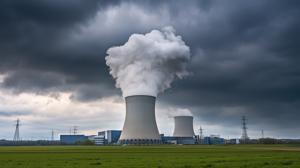
In Finland, the construction of the Olkiluoto 3 EPR reactor experienced a similar chronicle of failure. Construction began in 2005, with planned completion in 2009. In reality, commissioning took until 2023. Construction costs quadrupled from around three billion to an estimated twelve billion euros.
In the UK, the Hinkley Point C project is set to become the most expensive power plant in history. Construction of two EPR reactors with a combined capacity of 3.2 gigawatts began in 2018. Completion of the first unit is now expected between 2029 and 2031, six to ten years later than originally planned. Costs have ballooned from an initial estimate of €21 billion to an estimated £46 billion, equivalent to around €53 billion. To illustrate the complexity of the project: British regulations necessitated 7,000 significant design changes, resulting in 35 percent more steel and 25 percent more concrete being used than initially planned. The project is only feasible because the British government has guaranteed a feed-in tariff of 10.5 euro cents per kilowatt-hour for 35 years, significantly higher than the compensation for offshore wind power.
Related to this:
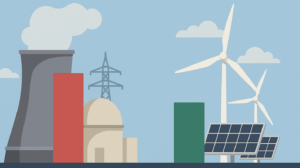
What these experiences mean for Germany
For Germany, the hurdles would be considerably higher than for France, Finland, or Great Britain. Germany has not approved a new nuclear power plant for over 40 years and lacks the regulatory infrastructure for new nuclear construction projects. There is no licensing procedure, no specialized authorities of the necessary size, and no technical expertise to manage such a project. In Great Britain, despite an existing nuclear industry, it took years to rebuild the supply chain and train suppliers to manufacture nuclear components.
Realistically, for Germany, at least 15 to 20 years would have to be allowed from the start of planning to commissioning, meaning the earliest possible commissioning would be between 2041 and 2046. Based on European experience, the costs for each 1.5-gigawatt nuclear power plant would be estimated at 15 to 25 billion euros. A capacity of 20 gigawatts from approximately 13 nuclear power plants would therefore cost between 195 and 325 billion euros. The decommissioned German nuclear power plants are already being dismantled; turbines and cooling systems have been removed. Reactivation is technically almost impossible for several plants and would take four to eight years even in the best-case scenario.
The mirage of small reactors
Small Modular Reactors, or SMRs, are often touted as a faster and cheaper alternative to conventional nuclear power plants. Reality doesn't support this narrative. Not a single commercial SMR is currently operating in a Western country. The most internationally recognized project, NuScale's Carbon-Free Power Project in the US state of Idaho, was shut down in November 2023 because costs had ballooned from an initial $5.3 billion to $9.3 billion and there weren't enough customers. The electricity price rose from a planned $58 to $89 per megawatt-hour, and even this price was only achievable through billions of dollars in government subsidies. Without these tax breaks, the price would have been nearly $120 per megawatt-hour.
The price of a kilowatt hour: Why nuclear power is the most expensive option
The Fraunhofer ISE study on levelized cost of electricity (LCOE) from 2024 provides the most up-to-date and comprehensive basis for comparison for Germany. Ground-mounted photovoltaic systems generate electricity for 4.1 to 9.2 euro cents per kilowatt-hour, as does onshore wind power, which costs between 4.3 and 9.2 euro cents. Offshore wind power costs between 5.5 and 10.3 euro cents. Combined cycle gas turbine (CCGT) power plants cost between 10.9 and 18.1 euro cents, and flexible gas turbines cost between 15.4 and 32.6 euro cents. Fraunhofer ISE estimates the LCOE for the construction of new nuclear power plants at 13.6 to 49.0 euro cents per kilowatt-hour. This wide range is explained by the full-load hours and investment costs used as a basis and takes into account that in a system with a high share of renewable energies, the utilization of nuclear power plants is expected to decrease in the future, thus further increasing the LCOE.
Crucially, the Fraunhofer figures for nuclear power do not include the costs of final storage or decommissioning. The actual total costs are therefore even higher than the already substantial range.
Related to this:

The invisible bill: Subsidies and the follow-up costs of nuclear power
The historical record of nuclear energy in Germany is one of massive government subsidies. According to a study commissioned by Greenpeace and conducted by the Forum for Ecological and Social Market Economy, government subsidies for nuclear power amounted to at least €204 billion between 1950 and 2010. This means that every kilowatt-hour of nuclear power was subsidized by at least 4.3 euro cents through taxpayers' money. Projected follow-up costs of an additional €100 billion bring the total burden on taxpayers to at least €304 billion.
A particularly revealing aspect of the true cost of nuclear power concerns insurance. The legally mandated coverage for a German nuclear power plant was limited to a mere 2.5 billion euros. A study by the Leipzig Insurance Forums, which estimates the maximum damage from a catastrophic nuclear accident at over 6.09 trillion euros, concludes that adequate liability insurance would cost approximately 72 billion euros annually per nuclear power plant. Nuclear power would thus become virtually unaffordable.
Gas-fired power plants and battery storage: The bridge to the future
The German government's power plant strategy focuses on flexible capacities. Construction time for gas-fired power plants ranges from three to six years, with costs for a 500-megawatt combined cycle gas turbine (CCGT) plant at approximately €0.5 to €0.9 billion. The market for battery storage is developing even more dynamically. These systems react to load changes in milliseconds, making them the technically ideal solution for short- to medium-term supply bottlenecks. By 2031, storage containers could cost around €75 per kilowatt-hour. For the same amount (€195–€325 billion) that 13 nuclear power plants would cost, 40 GW of hydrogen-capable gas-fired power plants, 100 GW of battery storage, 50 GW of additional renewable energy, and a comprehensive grid expansion could be financed – a significantly more robust overall solution.
The arithmetic of the energy transition leaves no doubt
It's all for nothing. The opportunistic political infighting surrounding nuclear power only pleases the dueling experts – and, of course, the media. We should focus on the current facts and roll up our sleeves to do what's achievable.
The question of whether nuclear power is the answer to Germany's problem of periods of low wind and solar output can be answered purely based on facts, without political judgment. Nuclear power is coming too late: 15 to 20 years of construction time will be needed to address a gap that will become critical from 2030 onwards. Nuclear power is too expensive and doesn't fit into the system: periods of low wind and solar output require flexible power, the functional opposite of a baseload nuclear power plant.
Anyone who politically demands the construction of new nuclear power plants today is ignoring not only European experience but also the physical requirements of the problem itself. What is lacking is not the right technology, but the political will to implement the already identified solutions with the necessary speed. The real danger to Germany's electricity supply lies not in a lack of nuclear power plants, but in a debate that gets bogged down in phantom projects instead of taking responsibility for feasible measures.
Your global marketing and business development partner
☑️ Our business language is English or German
☑️ NEW: Correspondence in your native language!

Konrad Wolfenstein
I and my team are happy to be available to you as your personal advisor.
You can contact me by filling out the contact form here wolfenstein@xpert.digital:or simply call me at +49 7348 4088 965. My email address is
I'm looking forward to our joint project.
☑️ SME support in strategy, consulting, planning and implementation
☑️ Creation or realignment of the digital strategy and digitization
☑️ Expansion and optimization of international sales processes
☑️ Global & Digital B2B trading platforms
☑️ Pioneer Business Development / Marketing / PR / Trade Fairs
🎯🎯🎯 Benefit from Xpert.Digital's extensive, five-fold expertise in one comprehensive service package | BD, R&D, XR, PR & Digital Visibility Optimization
Benefit from Xpert.Digital's extensive, five-fold expertise in a comprehensive service package | R&D, XR, PR & Digital Visibility Optimization - Image: Xpert.Digital
Xpert.Digital possesses in-depth knowledge across various industries. This allows us to develop tailored strategies precisely aligned with the requirements and challenges of your specific market segment. By continuously analyzing market trends and monitoring industry developments, we can act proactively and offer innovative solutions. The combination of experience and expertise generates added value and provides our clients with a decisive competitive advantage.
More information here: