
Is Germany now a leading technology nation or not? An attempt at explanation, primarily using the example of artificial intelligence (AI)

Available in 27 languages 📢
Prefer Xpert.Digital on GoogleⓘPublished on: September 22, 2024 / Updated on: September 24, 2024 – Author: Konrad Wolfenstein
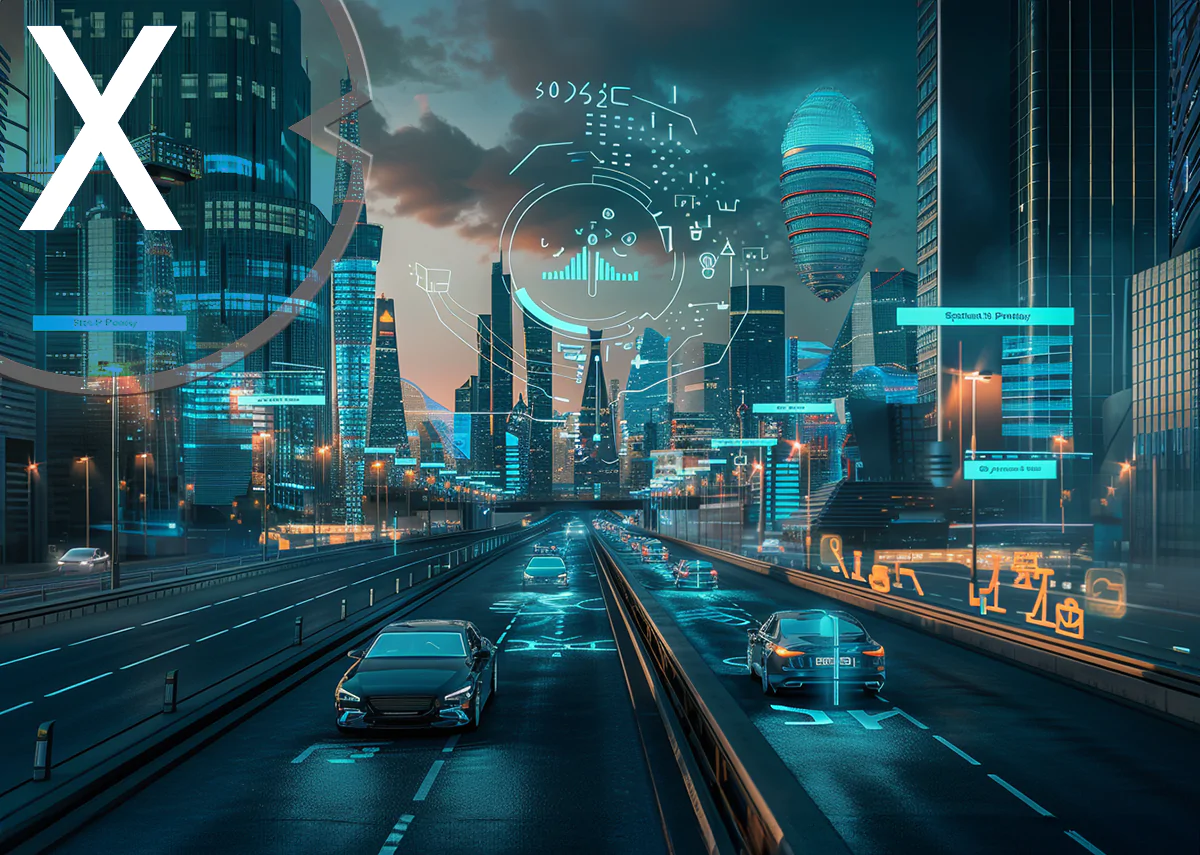
Is Germany now a leading technology nation or not? An attempt at explanation, primarily using the example of artificial intelligence (AI) – Image: Xpert.Digital
🌐🇩🇪 Life in the tech sector: Leading development or applying?
🔬🇩🇪⚙️ Technological leadership or application expertise?
The question of whether it is better to live in a country that is a leader in developing new technologies or in one that primarily adopts leading technologies from other countries touches upon a central issue in modern economics and society. Both approaches have their advantages and disadvantages, and the answer depends on many factors, including the economic framework, a country's capacity for innovation, and its social and cultural environment. Let's examine this question more closely and explore the different perspectives.
🌟 The advantages of a leading technology developing country
Countries at the forefront of technological innovation benefit from numerous advantages. A key aspect is competitive advantage. Such countries are often pioneers in research and development (R&D), giving them a head start when it comes to entering new markets and influencing the global market with their innovations. Examples include the USA, Japan, and, more recently, China. These nations have structured their economic models around the continuous development, patenting, and global sale of new technologies.
Another advantage is the creation of highly skilled jobs. Research and development of new technologies requires specialized professionals, which increases the demand for qualified workers. This not only helps reduce unemployment but also raises the general level of education and promotes the growth of sectors such as engineering, science, and computer science. "The more a country invests in the development of new technologies, the greater its potential to create jobs in future-oriented industries."
Furthermore, technological progress in innovative countries often leads to long-term economic growth. These countries can improve their trade balances and generate prosperity through the export of technology products and services. Countries that are leaders in technological development also have the opportunity to set international standards and play a pioneering role in global discussions on technology regulation and ethics.
However, leading in technological development also presents significant challenges. Investments in research and development are immense, and not every innovation is successful. The risk of billions being poured into projects that later prove unprofitable is ever-present. Furthermore, there is the danger that technological progress will advance faster than society can absorb it, potentially exacerbating social inequalities.
🌍 The advantages of being a technology user country
On the other hand, there are countries that focus less on developing new technologies and more on importing and applying the best available technologies from other countries. A prime example of this is Germany, which, while innovative in certain sectors such as the automotive industry, relies on technological advancements from other countries in many areas to increase efficiency and competitiveness.
One of the biggest advantages of this approach is cost savings. Developing new technologies is extremely expensive and time-consuming. Countries that focus on importing technologies don't need to invest heavily in R&D; instead, they can simply adopt proven technologies and adapt them to their own needs. This often leads to faster implementation and less risk, since the technologies have already proven successful in other markets.
Furthermore, focusing on the application of technologies enables a more efficient use of resources. Instead of investing billions in developing new technologies, countries can direct these funds to other areas, such as education or infrastructure improvements. A country that utilizes the best technologies can thus increase its efficiency and productivity without incurring the risks associated with developing new innovations.
Another advantage is the possibility of specialization. Countries that do not play a leading role in technology development can concentrate on specific niche areas and apply technologies particularly well in these areas. A good example is Singapore, which has become a leading country in the implementation and application of digital technologies, even though it is not itself considered a pioneer in technology development.
"Applying already proven technologies can often lead to a faster and more efficient transformation than developing new innovations."
However, dependence on foreign technologies also presents several challenges. A country that relies heavily on technology imports risks becoming technologically dependent. Should access to these technologies suddenly be restricted, for example due to political tensions or trade barriers, this could severely impact the economy. Furthermore, there is a risk that such countries will play a subordinate role in global technological standards and regulations and have less influence on international technological developments.
🌱 Technology development or application: Which path is more sustainable?
A crucial factor in choosing between technological development and application is the question of sustainability. Countries investing in the development of new technologies must ensure that their innovations are viable in the long term. One example is the increasing focus on green technologies and sustainable energy sources. Countries that pioneer these areas can not only benefit from economic growth but also make a significant contribution to combating climate change. These innovations have the potential to be adopted globally and set global standards.
On the other hand, countries that rely on the application of technologies can pursue more sustainable development by adopting only the best and most efficient technologies. These countries have the opportunity to learn from the experiences of others and implement only those technologies that have proven successful and environmentally friendly.
"The application of already proven, sustainable technologies can be an effective way to ensure resource-efficient development."
Suitable for:
📚 The importance of education and research
Regardless of whether a country is a leader in developing new technologies or focuses on their application, education plays a crucial role. Countries that build a strong educational infrastructure in science, technology, engineering, and mathematics (STEM) are better able to develop new technologies or adapt quickly to technological advancements. A well-educated population is the foundation of any successful technology policy.
At the same time, the promotion of research institutions is also of great importance. Even countries that are not necessarily leaders in technological development can play a significant role in the global technology ecosystem through investments in research networks and innovation hubs. Cooperation between science, industry, and politics not only promotes knowledge transfer but also helps to implement new technologies more quickly in practice.
📈 Benefit from efficiency and cost advantages
Whether it is better to live in a country that leads in the development of new technologies or in one that focuses on the application of these technologies depends on individual preferences and specific circumstances. Countries that drive technological innovation have the opportunity to exert global influence, while those that focus on application can benefit from efficiency and cost advantages. Both approaches have their strengths and weaknesses, and in an increasingly interconnected world, it is often hybrid approaches that promise the greatest success. The crucial question is not necessarily which approach is better, but rather how well a country utilizes its resources and capabilities to either create or optimally leverage technological innovation.
📣 Similar topics
- 🌟 Technology development vs. application: A modern dilemma
- 🚀 Leading in innovation or mastering applications?
- 🌐 Advantages and challenges in innovation nations 📊
- 💡 Competitive factor: Technology development or use?
- 💼 Jobs through technology: Development vs. Application
- 💰 Cost savings through technology transfer: An advantage?
- 🌍 Sustainability in the tech world: Development or use?
- 📚 Education and research: The key to tech development
- 🔍 Set or follow international standards?
- ⚙️ Efficiency through technology transfer: Advantages and risks
#️⃣ Hashtags: #TechnologyDevelopment #TechApplication #Innovation #Sustainability #EducationAndResearch
📌 Other suitable topics


🌍💡🚀 Is Germany a leading technology nation? An analysis using artificial intelligence (AI) as an example
🚗⚙️📊 Germany has a worldwide reputation as a land of innovation and engineering prowess. German mechanical engineering, the automotive industry, and the chemical sector are among the strongest industries globally. However, in the age of digitalization, and especially in the development of artificial intelligence (AI), the question arises: Can Germany keep pace with leading technology nations like the USA or China? The answer is complex and cannot be answered with a simple "yes" or "no," but depends on various factors.
📈📊 Technological developments in Germany: A mixed picture
On the one hand, Germany has produced numerous innovations in recent decades and is well-positioned in areas such as automation, Industry 4.0, and machine learning. Particularly in the industrial sector, the country has taken on a pioneering role through the integration of technologies into production processes. With the introduction of Industry 4.0, Germany was one of the first players to drive the digital transformation in industrial manufacturing. This has led to German industry becoming more efficient and competitive in many areas.
Suitable for:
However, Germany often lags behind in areas concerning purely digital technologies. There is a particular need to catch up in the development and implementation of artificial intelligence (AI). While countries like the USA and China invest billions in AI research and development, and leading global companies like Google, Alibaba, and Baidu dominate this field, German companies and the government have only begun to seriously engage with this key technology in recent years.
🧠🤖 Artificial intelligence in Germany: Where do we stand?
Artificial intelligence is considered one of the defining technologies of the 21st century. AI has the potential to fundamentally transform numerous industries, from automotive manufacturing and healthcare to finance. This is not just about automating technical processes, but also about enabling machines to perform human-like intelligence tasks, such as pattern recognition, language understanding, and even decision-making.
Germany has already made initial progress in this area. The German government has recognized AI as a key technology and adopted a national AI strategy in 2018. This strategy aims to promote research and development in artificial intelligence, support the application of AI in industry, and intensify the training and professional development of specialists. Furthermore, billions of euros in government funding have been made available to strengthen the AI sector in Germany.
Germany also plays a key role in research. Universities and research institutions such as the German Research Center for Artificial Intelligence (DFKI) and the Max Planck Institute for Informatics are internationally recognized and have made significant contributions to the development of AI technologies. Numerous studies and patents in the field of machine learning and neural networks originate in Germany, underscoring the country's strong research landscape.
⚠️🚧 Challenges and obstacles
Despite these positive developments, significant challenges remain. One of the biggest hurdles is the shortage of skilled workers. While the global demand for AI experts is growing rapidly, Germany has too few highly qualified professionals working in this field. As a result, companies often struggle to implement AI projects due to a lack of the necessary personnel resources.
Another problem is the low risk appetite and reluctance to found and finance startups. Compared to the US or China, the German startup culture is less dynamic. Many potential founders shy away from the risk of starting their own company, and investors are often hesitant to finance young technology companies. As a result, promising innovations in Germany frequently fail to receive the support they need to grow and become internationally competitive.
🚀💡 Can Germany catch up by promoting start-ups?
Supporting startups could be key to strengthening Germany's innovative capacity in the field of artificial intelligence. Indeed, the German government has recognized this and launched numerous initiatives in recent years to support the founding and growth of AI startups. These include, for example, the "AI Innovation Competition," which provides funding to innovative companies in the field of artificial intelligence. The aim is to promote the development of new technologies and business models, thereby strengthening Germany's position in international competition.
Furthermore, there are now numerous incubators and accelerator programs specifically geared towards AI startups. These programs offer young companies not only financial support but also access to a network of experts, mentors, and potential investors. This makes it easier for founders to realize their ideas and successfully launch them on the market.
Despite these positive developments, much remains to be done. In particular, there is a significant need for improvement in the area of financing. While large amounts of venture capital are being invested in AI startups in the US and China, the volume in Germany remains comparatively low. This results in many German startups struggling to raise sufficient capital to be internationally competitive. To close this gap, both government funding programs and private investors must increase their investments in AI innovations.
Suitable for:
⚙️🏭 Opportunities through the integration of AI into industry
Despite the existing challenges, artificial intelligence offers enormous opportunities for the German economy. In particular, the country's strong industrial base could benefit from the increased integration of AI technologies into production processes. The automotive industry, one of Germany's most important economic sectors, is already working intensively on the development of autonomous vehicles and intelligent production facilities. Here, Germany could assume a leading role thanks to its technological expertise in automation and robotics.
The healthcare sector also offers numerous opportunities for the use of AI. From diagnosing rare diseases and developing personalized therapies to optimizing hospital processes – the application of AI can contribute to making healthcare more efficient and precise. This presents a great opportunity for German companies and research institutions that are already working on innovative solutions.
🌐🔧 Germany as a technology nation in transition
While Germany is a leader in many technological fields, it still has some catching up to do in the area of artificial intelligence. German industry is strong and well-positioned, but obstacles remain, particularly in the development of purely digital technologies and the promotion of startups. If Germany succeeds in overcoming these challenges and investing more heavily in the development and application of AI, the country could also assume a leading role in this future-oriented field.
Promoting start-ups, improving the training of skilled workers and creating a more dynamic innovation climate are crucial factors for securing Germany's technological competitiveness in the long term.
📣 Similar topics
- 🚀 Germany as a tech leader: An AI analysis
- 🔍 Innovation in Germany: An overview
- 🏗️ Industry 4.0 and Automation in Germany
- 🤖 What is the state of artificial intelligence in Germany?
- 🎓 AI research and education in Germany
- 🚧 Challenges on the road to becoming an AI leader
- 📊 Start-ups and AI funding in Germany
- 💡 Opportunities of AI integration in industry
- ⚙️ The future of the German technology industry
- 🌍 Germany as a global technology player
#️⃣ Hashtags: #Digitalization #ArtificialIntelligence #Industry40 #Startups #Technology
We are there for you - advice - planning - implementation - project management
☑️ Industry expert, here with his own Xpert.Digital industry hub with over 2,500 specialist articles

Konrad Wolfenstein
I would be happy to serve as your personal advisor.
You can contact me by filling out the contact form below or simply call me on +49 7348 4088 965 (Munich) .
I'm looking forward to our joint project.
Write to me

Xpert.Digital - Konrad Wolfenstein
Xpert.Digital is a hub for industry with a focus on digitalization, mechanical engineering, logistics/intralogistics and photovoltaics.
With our 360° business development solution, we support well-known companies from new business to after sales.
Market intelligence, smarketing, marketing automation, content development, PR, mail campaigns, personalized social media and lead nurturing are part of our digital tools.
You can find out more at: www.xpert.digital - www.xpert.solar - www.xpert.plus
Keep in touch









