
GEO between hype and hubris: The economic anatomy of a buzzword
Xpert Pre-Release

Available in 27 languages 📢
Prefer Xpert.Digital on GoogleⓘPublished on: April 20, 2026 / Updated on: August 21, 2026 – Author: Konrad Wolfenstein
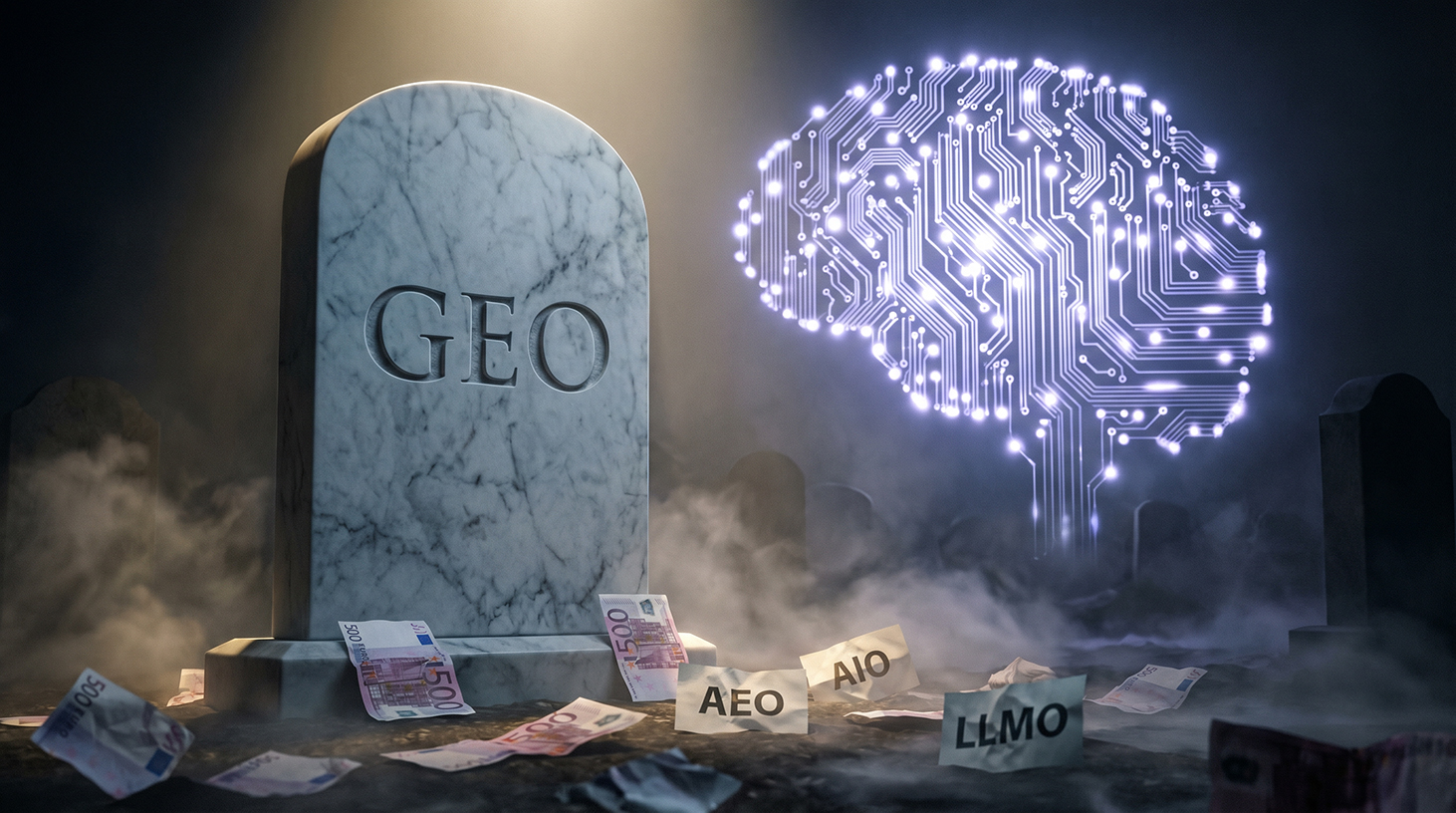
GEO between hype and hubris: The economic anatomy of a buzzword – Image: Xpert.Digital
The business model of uncertainty: The unvarnished truth about GEO
SEO, GEO, AIO? Which AI strategies in marketing truly deliver measurable revenue?
AI search as a budget drain? Why GEO is often just classic SEO in a new guise
The marketing world has a new favorite acronym: GEO (Generative Engine Optimization). Accompanied by a host of other abbreviations like AIO, AEO, and LLMO, agencies and consultants are currently stoking a massive fear of missing out (FOMO). The narrative is dramatic: classic Google rankings are dying, chatbots like ChatGPT, Perplexity, and Google AI Overviews are taking over traffic, and anyone who doesn't immediately reallocate their budgets will disappear into obscurity. But what's the real story behind this hype?
The following text takes a sober, data-driven look behind the scenes of a buzzword that is dividing the industry. It debunks the sensationalist rhetoric and shows that most of the expensively marketed GEO measures are, in reality, simply good, classic SEO. At the same time, it warns against turning a blind eye to reality: The proportion of zero-click searches is rising rapidly, and generative search engines definitely require new, specific levers – from targeted entity management to atomic content structures.
For CMOs, marketing decision-makers, and SEO managers, this comprehensive analysis provides much-needed clarity: Which studies are truly reliable? Where are the budget drains of vanity metrics lurking? And what concrete strategies will you use to generate actual revenue in the age of AI search, instead of just funding expensive consultants?
Related to this:

Why the debate surrounding Generative Engine Optimization reflects the agency industry and not the reality of AI
The provocation and its true core
The polemic, now widely shared on social media, that GEO, AIO, and AEO projects are essentially nothing more than disguised search engine marketing with a fresh coat of paint, strikes a nerve in the industry. It succinctly expresses what many experienced practitioners between Munich, Hamburg, and Berlin have been saying privately for months: a significant portion of what is currently being sold under the label of Generative Engine Optimization simply borrows from the toolboxes of classic content, tech, and off-page SEO and slaps on an AI label. However, anyone who takes a dispassionate look at the research will also recognize that reality is more nuanced than the rhetoric about the demise of marketing budgets suggests. GEO is neither the promised revolution nor a mere deception, but rather an economically explainable, sometimes useful, sometimes overhyped extension of existing disciplines.
The truly interesting question, therefore, is not whether GEO exists, but rather what proportion of the phenomenon consists of genuine, measurable incremental effects and what proportion is simply a rebranding of disciplines that have been known for years. Anyone who fails to make this distinction clearly risks sinking budgets into a grave called buzzword marketing without seizing the opportunities presented by a changing information landscape.
The mechanics of AI search and why it is becoming economically relevant
Generative engines like ChatGPT, Google's AI Overviews, Gemini, Perplexity, Bing Copilot, or Mistral don't work like traditional indexing engines, but rather synthesize answers from multiple sources simultaneously. They combine retrieval-augmented generation—real-time searching of indexed content—with the generative language capabilities of large language models, producing a single, self-contained answer. The classic list of ten blue links is replaced by a direct, often unquestioned formulation, in which sources appear only as footnotes, if at all.
This technological shift has tangible economic consequences. By the end of 2025, roughly one in three search queries would be answered without an external click. Reliable data shows that the rate of zero-click interactions in ChatGPT sessions is around 99 percent, and in Google AI Mode, it's around 95 percent. Gartner predicted a decline in organic search traffic of around 25 percent for 2026, and this estimate appears more conservative than pessimistic in light of current data. Anyone building a brand today can no longer rely solely on users clicking through to their domain via a search results page. Decisions are increasingly being made within the AI interface before a single click even occurs.
The state of research: between Princeton euphoria and field reality
The scientific basis for GEO is thinner than the agency's literature suggests. The most cited study comes from researchers at Princeton University, who demonstrated in 2024 that certain interventions can increase visibility in generative responses by up to 40 percent, and in specific situations even by 115 percent to position 5 in organic search results. However, the specific measures that demonstrably worked in the study were not revolutionary new techniques, but rather the embedding of quotes from trusted sources, the inclusion of quantitative statistics, the improvement of linguistic fluency, and the demonstration of thematic authority.
Anyone reading this list without the label will immediately recognize that it's a variation of the EEAT principles that Google has been promoting for years. The Princeton study thus legitimizes the idea that high-quality, data-driven, authoritative content is a principle that works across all search paradigms, rather than the idea that GEO needs its own set of methods separate from SEO. This doesn't diminish the practical value of the finding; it simply puts it into the correct context.
In parallel, the ifh Cologne, together with authors Kaiser and Schulze, published the largest empirical study to date on the topic in 2026, analyzing 973 e-commerce sites with a combined annual revenue of approximately $20 billion and around 50,000 ChatGPT-induced transactions over twelve months. Their findings significantly put industry rhetoric into perspective, as both the conversion rate and revenue per session from ChatGPT traffic were lower than those of traditional channels such as organic Google search, email marketing, or affiliate marketing. This study directly contradicts the frequently cited benchmarks claiming that LLM traffic converts two to 23 times better than organic search. The truth, it seems, lies not in the average, but in the individual case and the measurement methodology.
More information here:
The traffic reality in numbers
A clear interpretation of the quantitative data reveals a sobering picture. Similarweb documented that ChatGPT generated approximately 1.1 billion referral visits globally in June 2025, representing a year-on-year increase of 357 percent, but in absolute terms, this still remains below one percent of total traffic for most websites. Gemini grew even more rapidly during the same period, by 388 percent, and is catching up in percentage terms, while ChatGPT continues to account for around 78 percent of all AI referrals. For typical SME sites, ChatGPT's share of total organic traffic was around 1.24 percent at the beginning of 2025, compared to 0.54 percent six months earlier.
| Key figure | Value | source |
|---|---|---|
| ChatGPT Referrals June 2025 | 1.1 billion visits, 357% YoY | Vertu |
| Gemini referrals YoY growth | 388% | Vertu |
| Share of AI traffic in total traffic | usually less than 1% | Vertu, Rankstudio (PDF) |
| ChatGPT share with AI referrals | approximately 78% | Sunny Patel |
| Conversion Rate AI Traffic (Similarweb) | approximately 7% | ALM Corp, Similarweb |
| Conversion rate Google referrals | approximately 5% | ALM Corp, Similarweb |
| ChatGPT referral dwell time | 15 min vs. 8 min Google | ALM Corp, Similarweb |
| Zero-click percentage of ChatGPT sessions | approximately 99% | Wise Relations |
In June 2025, ChatGPT generated approximately 1.1 billion referrals, a 357 percent increase year-over-year, while Gemini grew by about 388 percent during the same period. AI traffic typically accounts for less than one percent of total traffic, with ChatGPT representing roughly 78 percent of all AI referrals. According to Similarweb, the conversion rate for AI traffic is around 7 percent, compared to about 5 percent for Google referrals. Visitors from ChatGPT sessions spend an average of about 15 minutes on a page, compared to about 8 minutes for Google referrals, with a zero-click rate of approximately 99 percent for ChatGPT sessions.
The key economic observation is therefore: the volume is marginal, but the quality is measurably higher. Visitors from ChatGPT sessions spend an average of fifteen minutes on a page, generate twelve pageviews, and convert at a rate of seven percent on transactional sites, compared to five percent from Google referrals. Comparing this data with the opposing study from ifh Cologne reveals that the difference stems primarily from industry and attribution differences: AI traffic has a different impact in typical B2B scenarios with lengthy decision-making processes than in transactional B2C shops with impulse purchases.
Where the accusation of disguised SEO applies
The criticism that GEO in practice is largely just classic SEO in a new guise is empirically well-supported. The leading GEO checklists almost without exception contain measures that have been standard practice in the industry for a decade. Clean H1-H2-H3 structure, FAQ schema markup, structured data, sub-one-second loading times, semantic keyword work, topical authority, backlink profiles, and EEAT signals are not inventions of the AI age, but rather proven fundamentals.
An analysis of Landwehr's content study shows that pages cited by ChatGPT are roughly three times more likely to have a semantically correct heading structure and twice as likely to use FAQ schemas, that a First Contentful Paint time of under 0.4 seconds triples the citation rate, and that 90 percent of ChatGPT citations originate from pages outside Google's top 20. These findings read like a classic technical SEO audit, supplemented by the insight that LLMs are not necessarily tied to Google rankings, but also choose freely based on relevance, even beyond the top 20.
This exposes one of the most common promises of Google SEO: Anyone currently ranking 50th on Google and being ignored by ChatGPT won't escape this situation with Google SEO consulting alone if the fundamentals aren't sound. The recommendations for good citability in LLMs are 80 to 90 percent identical to what any reputable SEO service provider has been selling since 2015.
Where GEO actually offers incremental leverage
Nevertheless, it would be intellectually dishonest to reduce the discipline entirely to classic SEO. There are three distinct areas where GEO measures can make an incremental contribution not covered by SEO. The first lever lies in the mention architecture beyond one's own domain. Generative models give disproportionate weight to sources like Wikipedia, industry portals, comparison platforms, and trade publications because they are considered structured, consistent, and verifiable. Those who are present there with complete, up-to-date, and consistent entries appear significantly more often in AI responses than competitors with only their own domain presence. While this is an off-page approach, it breaks with the classic link-building logic by adding an explicit entity and brand mention component.
The second lever lies in the content format. Focusing on extractable, concise statements with clear figures, study references, and definitions differs from the classic long-form SEO article, which diffuses keywords across thousands of words. Princeton was able to demonstrate that quotations, statistics, and source citations within the text increase the likelihood of AI citation by up to 40 percent. This is not the same as featured snippet optimization, because generative engines synthesize multiple passages from different sources and therefore reward different phrasing patterns than the monolithic snippet box in Google.
The third lever lies in measurement and orchestration. Traditional rankings are losing their relevance because AI overviews no longer overlap with the top ten results in over 89 percent of cases. New metrics such as share of voice in AI responses, citation frequency via prompt sets, brand mentions in AI output, and sentiment in generated texts require dedicated measurement and analysis tools that go beyond traditional rank tracking. Those who build this infrastructure can identify earlier which content adjustments are effective and iterate more quickly.
🎯🎯🎯 Data-driven B2B industry hub as a quasi-in-house solution

The quasi-in-house solution: How Xpert.Digital closes operational gaps in B2B marketing and sales – Smart Content-Driven Business - Image: Xpert.Digital
Xpert.Digital is a data-driven B2B industry hub led by Konrad Wolfenstein . The company acts as an external, quasi-in-house solution for industrial partners, closing operational gaps in marketing, content, and sales – without requiring additional resources on the client side.
More information here:
Ten percent innovation, ninety percent fundamentals: GEO's sober assessment
The fundamental economic question of measurable results
The core demand formulated in the original polemic—to see concrete projects where GEO, beyond SEO effects, led to measurable results—can now be partially addressed, albeit with considerable reservations. A documented case study from the B2B SaaS sector shows an increase in the AI citation rate from eight to 24 percent in 90 days, coupled with 47 qualified leads, a conversion rate of 18.7 percent compared to 6.7 percent from traditional organic traffic, and a ROI of 288 percent with an investment of €16,485. Another documented case at a global ERP provider demonstrates an increase in LLM sessions, reaching a dominance of 78 percent ChatGPT and 13 percent Perplexity, with significantly higher conversion quality. Kiteworks, in collaboration with Quattr, was able to increase AI citations by 79 percent, indexed pages by 30 percent, and top-three rankings by 22 percent.
However, these case studies come exclusively from agencies that were responsible for the respective projects themselves, and they almost never specify a clear control group. Without a robust A/B design, it remains unclear what proportion of the increase is attributable to the specific GEO measure and what proportion to foundational work that was already being carried out as part of the project. The ifh Cologne study even showed declining quality indicators compared to established channels, despite simultaneous volume growth, which significantly limits the generalizability of the individual success stories.
Therefore, the intellectually honest conclusion is that GEO can generate measurable incremental effects in controlled, methodologically sound setups, but that the blanket promise that every company will see significant ROI increases through GEO is not empirically supported. The majority of publicly circulated success figures fall into the category of vanity metrics, such as citation rates, share of voice, and mention counts, whose correlation to actual revenue is not clearly established.
Related to this:

The business model of uncertainty
The economic dynamics of the current GEO wave are, in themselves, a case study in agency psychology. German-language studies show that 72 percent of companies acknowledge the clear benefits of AI, while at the same time 40 percent complain about a lack of know-how and only 35 percent have allocated concrete budgets. This mix of high perceived urgency and low level of knowledge is the ideal breeding ground for consulting services with high margins and little accountability for results. The Botify survey of three hundred US marketing executives concludes that only a minority feel truly well-prepared and, at the same time, consider the measurability of their own activities to be highly uncertain.
The polemic of the text quoted at the beginning thus touches on a real mechanism: Some of the consultants presenting themselves as GEO experts are drawn from the pool of content SEOs, whose traditional business model is already eroding under the pressure of declining organic traffic. Anyone who wants to survive in a shrinking market needs a new narrative, and GEO provides this narrative with a fitting urgency story. That the same techniques are being sold under a new label is economically rational and communicatively successful, but technically misleading in some respects.
At the same time, there is a smaller but substantial group of providers who are actually developing new methods. Prompt audits with several hundred queries per client, systematic brand monitoring in AI responses, entity engineering via Wikipedia, Wikidata, Schema.org, and specialized directories, as well as working with structured data for AI crawlers, are disciplines that go beyond classic SEO and involve real skill requirements. The difficulty for buyers lies in distinguishing between these two groups, and the industry is doing surprisingly little to facilitate this distinction.
The logic behind acronym inflation
The observation that the proliferation of terms like GEO, AIO, AEO, LLMO, SGEO, and other abbreviations creates a sense of uncertainty deserves economic analysis. Each new acronym artificially creates a scarcity of consulting expertise because it gives the impression that a separate discipline with its own set of methods requires specialists. In reality, most of these terms describe largely overlapping activities that differ only in their target platform. AEO, or Answer Engine Optimization, focuses on voice assistants and FAQ-like answer formats and has existed conceptually since the widespread adoption of Alexa and Siri. AIO, or AI Optimization, is a vaguely defined umbrella category. LLMO specifically targets language models but largely overlaps with GEO. This proliferation of terms serves less to precisely define disciplines than to differentiate products in a consulting market that needs to reinvent its business model.
The real strategic task beyond the buzzword
The combination of declining organic traffic, higher quality remaining referrals, and changing user behavior demands a strategic response that remains valid regardless of whether it's labeled "geometry" or not. Companies that want to be found via search in five years need, firstly, a consistent, data-driven presence on the sources that LLMs (Limited Libraries) prefer to consult: Wikipedia, trade publications, industry portals, comparison platforms, and their own domain with robust content. Secondly, they need content formats that contain concise, quotable statements, integrate data and sources, and are structured effectively. Thirdly, they need a measurement infrastructure that goes beyond traditional rankings and systematically evaluates visibility in AI-driven responses.
All these tasks can be accurately described without ever using the word GEO. Conversely, no one who seriously tackles these tasks will be disadvantaged by foregoing the label. The intersection of classic content SEO, technical SEO, PR, brand building, and entity management covers 90 percent of what is currently marketed under the GEO umbrella. The remaining ten percent, namely prompt-based monitoring and targeted work on AI-specific content extraction patterns, represent genuine innovations, but they don't justify a completely separate product line with a premium price tag.
An economically objective assessment for decision-makers
From the perspective of a CMO or marketing manager, the situation can be summarized in three practical recommendations. First, be suspicious of any offer that claims a fundamental methodological break between SEO and GEO and demands disproportionately high fees. The fundamentals are largely identical, and anyone claiming otherwise must provide very concrete, measurable evidence. Second, existing SEO expertise should be consolidated before investing in specialized GEO services, as the groundwork laid in technology, structure, content quality, and authority contributes to both goals simultaneously. Third, dedicated GEO investments should only be made in areas where measurable differences are being made, such as prompt audits, AI visibility monitoring, entity building on external platforms, and adapting content structure to generate actionable answers.
The question of whether GEO is justified as a discipline thus loses its polarizing edge. It becomes a pragmatic question of marginal utility. Those working with a solid SEO setup today should take the ten to fifteen percent of genuine innovations in AI-specific visibility seriously, but shouldn't overhaul their marketing budget structure. Conversely, those who have neglected their SEO for years won't experience miracles with GEO consulting alone, because the foundation is lacking.
The grave of budgets and the grave of reputations
The drastic imagery of the grave quoted at the beginning is apt insofar as money is wasted when GEO measures are sold without control groups, without clear KPI definitions, and without being linked to actual revenue targets. Vanity metrics like citation frequency or share of voice in AI spending are not worthless, but they do not replace pipeline metrics. A 280 percent increase in citation rate, as reported in some case studies, remains meaningless from a business perspective unless it correlates with demonstrable leads, revenue, or brand impact.
Conversely, it's wrong to frame the entire development as a mere deception. The shift in search behavior is real, the economic consequences are significant, and the methodological responses to it lie, to a considerable extent, outside the classic SEO canon, even if they are based on it. The honest answer to the provocative question is therefore: there are documented projects with measurable effects that go beyond pure SEO, and at the same time, there is a considerable market breadth where GEO is indeed just a new label for old work. Holding both findings together is challenging, but necessary.
The role of uncertainty as a market driver
A key economic driver of the GEO wave is the collective FOMO (fear of missing out) among decision-makers. The BVDW agency survey shows that over 80 percent of German agencies are already using generative AI, while the KPMG study demonstrates that many companies, despite recognizing its benefits, lack sufficient resources. This asymmetry between pressure and expertise creates a market where trust and narrative are more important than demonstrable results. In such markets, there is a tendency to allocate too much capital too early, and some of this capital flows into projects that are retrospectively classified as failures.
Simultaneously, a second asymmetry emerges between providers with genuine methodological expertise and those merely adept at using terminology. Because buyers struggle to distinguish between the two groups, and the industry lacks reliable certifications or standards, an Akerlof scenario arises, in which the quality of average providers tends to be driven down. Reputable providers suffer as well, forced to compete against the price-driven rhetoric of the charlatans. This explains why experienced practitioners react to the label with a mixture of frustration and polemic: not because the discipline itself is worthless, but because the signal-to-noise ratio in the market is abysmal.
A balanced perspective instead of polarization
Anyone wishing to take a dispassionate stance after months of debate will arrive at the following assessment. GEO, AIO, and AEO are neither mere buzzwords nor independent revolutions, but rather a necessary, yet vaguely communicated, expansion of existing marketing disciplines. The vast majority of the recommended measures are classic SEO, supplemented by specific steps for the altered functionality of generative engines. The economic effects are marginal across the board and significant in selected individual cases, with the methodological quality of the available evidence varying considerably.
The provocation of asking about specific projects that led to measurable success beyond SEO is legitimate and should be a mandatory part of every consultation with GEO providers. Those who can't answer this question are usually just selling old SEO under a new name. Those who can should disclose not only citation rates but also pipeline metrics, control group logic, and attribution methodology. Decision-makers who consistently enforce these two requirements will find that the field quickly narrows down and becomes more reputable.
The image of marketing budgets as a graveyard is therefore not wrong, but incomplete. It's more like a cemetery with a clear geography: in one corner lie projects that never stood a chance because they were built on empty methodological promises; in another corner lie genuine innovations suffering from the poor reputation of the entire category. The task for the coming years will be to more clearly separate these two zones so that both clients and reputable providers don't disappear into the collective fog of ruins. This demands greater methodological rigor and less acronym-driven fantasy from everyone involved, and it requires, in particular, that decision-makers are willing to stop using their own FOMO (fear of missing out) as justification for budget allocations.
Those who adopt this stance will ultimately invest less money in supposed AI voodoo and simultaneously make more consistent use of the truly relevant levers. This is neither a resounding triumph for GEO skeptics nor proof for GEO apostles, but simply the unspectacular truth of professional marketing in a changing search ecosystem.
Your global marketing and business development partner
☑️ Our business language is English or German
☑️ NEW: Correspondence in your native language!

Konrad Wolfenstein
I and my team are happy to be available to you as your personal advisor.
You can contact me by filling out the contact form here [email protected]:or simply call me at +49 7348 4088 965. My email address is
I'm looking forward to our joint project.
☑️ SME support in strategy, consulting, planning and implementation
☑️ Creation or realignment of the digital strategy and digitization
☑️ Expansion and optimization of international sales processes
☑️ Global & Digital B2B trading platforms
☑️ Pioneer Business Development / Marketing / PR / Trade Fairs
B2B support and SaaS for SEO and GEO (AI search) combined: The all-in-one solution for B2B companies

B2B support and SaaS for SEO and GEO (AI search) combined: The all-in-one solution for B2B companies - Image: Xpert.Digital
AI search changes everything: How this SaaS solution will revolutionize your B2B ranking forever.
The digital landscape for B2B companies is undergoing rapid change. Driven by artificial intelligence, the rules of online visibility are being rewritten. For companies, it has always been a challenge not only to be visible in the digital mass, but also to be relevant to the right decision-makers. Traditional SEO strategies and managing local presence (geo-marketing) are complex, time-consuming, and often a battle against constantly changing algorithms and intense competition.
But what if there were a solution that not only simplified this process but also made it smarter, more predictive, and far more effective? This is where the combination of specialized B2B support with a powerful SaaS (Software as a Service) platform comes into play, specifically designed for the demands of SEO and GEO in the age of AI search.
This new generation of tools no longer relies solely on manual keyword analysis and backlink strategies. Instead, it leverages artificial intelligence to more accurately understand search intent, automatically optimize local ranking factors, and conduct real-time competitive analysis. The result is a proactive, data-driven strategy that gives B2B companies a decisive advantage: they are not only found, but perceived as the leading authority in their niche and location.
Here's the symbiosis of B2B support and AI-powered SaaS technology that transforms SEO and GEO marketing, and how your company can benefit from it to grow sustainably in the digital space.
More information here:










