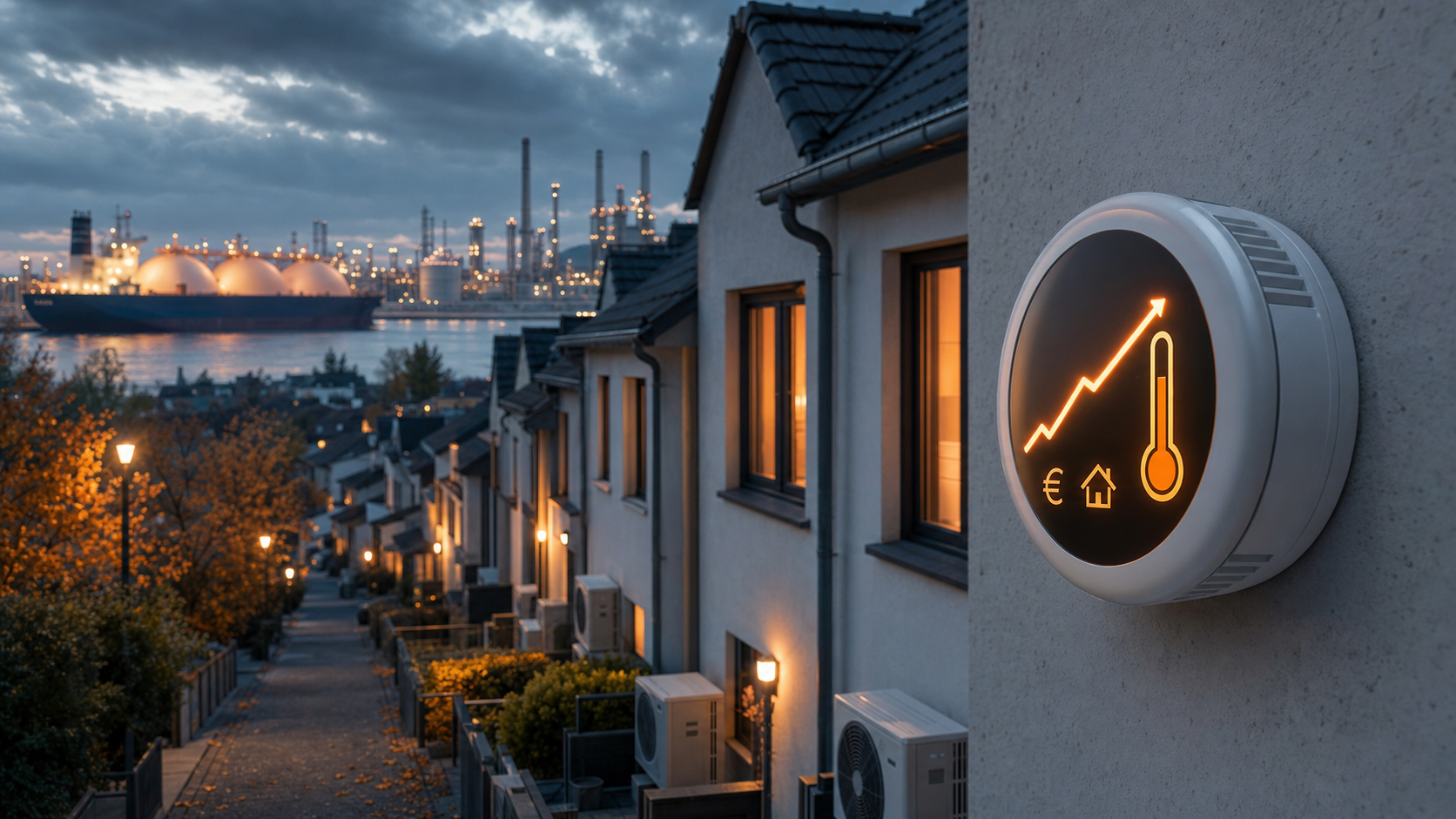
Gas Price Shock 2026: Alarming Storage Data – Is Germany Facing Another Gas Crisis This Winter? – Creative image on the topic, created with AI: Xpert.Digital
Middle East escalation drives up heating costs: What gas customers urgently need to do now
Up to 70 percent more expensive: How the new global supply shock is causing our energy costs to explode
Blockade in the Persian Gulf: The return of gas fears in German households
In late summer 2026, Germany is looking ahead to the upcoming heating season with growing concern. A dramatic military escalation in the Persian Gulf and the de facto blockade of the Strait of Hormuz have thrown global energy markets into turmoil. While official bodies like the Federal Network Agency are still urging calm, the market data speaks volumes: German natural gas storage facilities are alarmingly empty for this time of year, and tariffs for new customers are already rising noticeably. Unlike the Russian supply disruption in 2022, gas is still flowing to Europe, but the global supply shock is inevitably driving up costs. Millions of households are now faced with the pressing question: Is now the right time to secure their energy bills by switching tariffs, or is it worth waiting for a diplomatic easing of tensions? This article examines the background of the new energy crisis, analyzes parallels to the past, and shows which strategies consumers can use to avoid the looming cost trap.
Related to this:


The return of gas anxiety: Germany's energy economy on the brink of a new winter crisis
When geopolitical constraints become a private cost trap
Germany's energy supply will again be under considerable pressure in late summer 2026, and this time the cause is not a supply disruption from Russia, but a military and political escalation in the Persian Gulf. The de facto blockade of the Strait of Hormuz, triggered by joint military strikes by the United States and Israel against Iran and Iranian retaliatory attacks on the Gulf's energy infrastructure, has paralyzed global commodity markets. An estimated quarter to a third of global oil shipments and around a fifth of global liquefied natural gas (LNG) trade pass through this strait, making its closure one of the most severe supply shocks of recent years. The European Commission estimates that gas prices have risen by around 70 percent and oil prices by about 50 percent as a result of the crisis, incurring additional costs of €13 billion for fossil fuel imports alone.
Why consumers are now being asked to pay up
For private households in Germany, this global disruption manifests itself in very concrete figures. The cheapest gas offers for new customers have increased in price from around eight to ten cents per kilowatt-hour since the beginning of March 2026, as documented by the comparison portal Verivox. For a single-family home with a typical annual consumption of 20,000 kilowatt-hours, this already translates to an additional cost of approximately 400 euros per year for a contract signed today compared to one signed in March. The wholesale price for natural gas is currently around 66 euros per megawatt-hour, a level quite comparable to the price at the beginning of January 2023, when wholesale gas cost around 64 euros per megawatt-hour. The crucial difference to the situation then, however, lies in the supply structure: While the physical flow of gas to Germany via the Nord Stream pipelines came to a complete standstill in 2022, Germany continues to receive gas today, albeit at significantly higher prices in a structurally strained global market.
The telltale storage data as an early warning system
A look at the fill levels of German natural gas storage facilities reveals the real structural risk of this heating season. As of August 11, 2026, according to data from Gas Infrastructure Europe, German storage facilities were only 48.72 percent full, around 16 percentage points less than on the same date the previous year, when the figure was 64.7 percent. By the end of August, the fill level had climbed slightly to about 51.6 percent, but remained significantly below the European average of around 63.8 percent. The German Association of Gas and Water Industries (BDEW) considers a fill level of only around 60 percent realistic by the legally mandated deadline of November 1st, given the current rate of injection. This is far from the legal target of 80 percent, although reduced requirements of 45 percent apply to six facilities, including Rehden and Bad Lauchstädt. The situation is also remarkable in historical comparison: The current fill level is about 27 percentage points below the average for the years 2017 to 2021, marking the lowest mid-August level since at least 2018.
Official reassurances clash with economic reality
The Federal Network Agency is clearly trying to avoid alarmism and declared in mid-July 2026 that the gas supply in Germany was stable and security of supply guaranteed, while the risk of a strained gas supply was currently considered low. This assessment may be accurate from the perspective of physical security of supply, but it does not answer the truly relevant question of price developments. The German Federation of Housing and Real Estate Companies (GdW) has already called on the Federal Government, the Federal Network Agency, and the Bundestag to take action now, given the historically low storage levels, before the situation becomes critical in winter. The Federal Ministry for Economic Affairs and Energy is also relying on the gas traders' own responsibility and has publicly urged them to fulfill their responsibility to customers for the winter, after storage levels reached the 50 percent mark approximately 50 days later than in the previous year.
The window of opportunity for smart contract decisions
Consumers are thus faced with a classic decision under uncertainty, where the timing and contract duration can determine the cost of several hundred euros per year. Those who need to sign a new contract anyway, for reasons such as switching providers, moving house, or the expiration of an existing price guarantee, can secure the currently still relatively moderate price level by making a quick decision. Should the Strait of Hormuz remain blocked and the crisis worsen, an early contract would have been financially advantageous. Conversely, should a diplomatic solution between the US and Iran unexpectedly emerge and the strait be reopened, gas prices are likely to fall rapidly, making a currently signed contract seem too expensive in retrospect. Energy market experts, however, do not currently anticipate a rapid price drop, as demand is already rising with the end of summer and the start of the heating season, further increasing pressure on the markets, as Jannik Schall, co-founder of the energy company 1KOMMA5°, emphasizes.
Existing customers are only temporarily protected
A key difference in the immediate impact of price increases exists between new customers who are currently signing a contract and existing customers whose suppliers purchased gas at more favorable rates. This protection, however, is not a permanent safeguard, but merely a delayed transmission mechanism. Energy market expert Thorsten Storck from Verivox explicitly warns that if wholesale prices remain high for an extended period, price increases of between ten and twenty percent can be expected sooner or later, even for existing customers. This delay stems from the lead time of energy suppliers' procurement strategies, which typically involve staggered futures contracts. These contracts mitigate price fluctuations but cannot completely eliminate them. For consumers, this means that a seemingly secure contractual situation can change within a few months once the underlying procurement contracts expire.
Price guarantees are a tool, but not a panacea
Given this uncertainty, contract terms with price guarantees of twelve or 24 months seem like an obvious instrument for risk mitigation, but they warrant a more nuanced examination. Generally speaking, shorter guarantee periods usually offer more favorable rates, while 24-month contracts are on average somewhat more expensive because the provider has to hedge the price risk over a longer period, in return for which consumers receive greater planning security. However, the precise composition of the price guarantee is crucial for its actual protective effect. It consists of three components: procurement and distribution costs, network charges, and government-mandated components such as taxes, levies, and surcharges. With tariffs offering a limited price guarantee, only procurement, distribution, and network charges are fixed, while changes to government-mandated components can be passed on to customers. This means that, despite the apparent security, such tariffs do not fully protect against price increases.
🎯🎯🎯 Data-driven B2B industry hub as a quasi-in-house solution


The quasi-in-house solution: How Xpert.Digital closes operational gaps in B2B marketing and sales – Smart Content-Driven Business - Image: Xpert.Digital
Xpert.Digital is a data-driven B2B industry hub led by Konrad Wolfenstein . The company acts as an external, quasi-in-house solution for industrial partners, closing operational gaps in marketing, content, and sales – without requiring additional resources on the client side.
More information here:
Gas storage at critical levels: Why Germany is falling behind in European comparison
The limits of even complete price guarantees
Even contracts with a so-called full price guarantee are not always unassailable, as the legislator has created an exception for exceptional crisis situations that allows energy suppliers to adjust even guaranteed prices. It is noteworthy, however, that according to Verivox, this special right to adjust prices was not invoked even during the severe energy crisis of 2022, which justifies a certain degree of confidence in the reliability of such guarantees. This historical experience suggests that energy suppliers are highly reluctant to use this clause for reputational reasons and because of the regulatory hurdles involved, even if the legal possibility theoretically exists. In practice, this means that for consumers, a full price guarantee, despite the existing legal exception, represents a comparatively reliable safeguard.
Related to this:

Structural causes of empty storage
The exceptionally low storage levels are not solely a consequence of the current Hormuz crisis, but also a result of delayed injections that began as early as the beginning of summer 2026. The start of injections in the summer of 2026 was already lower than in any year since the 2021/22 energy crisis, raising structural questions about the competitiveness and investment readiness of storage operators under current market conditions. As of August 1, 2026, the fill level was only 46.67 percent, having been as low as 41.51 percent on July 1 and a mere 25.43 percent on May 1, indicating a reluctance to inject gas since the spring. This development can be partially explained by the increased wholesale prices, as storage operators and traders have less economic incentive to purchase and inject gas early when prices are high, hoping for potential later price declines. However, this increases the risk of supply shortages in winter.
The European context exacerbates Germany's special role
In a European comparison, Germany lags significantly behind. While German storage facilities were only around 48 to 49 percent full in mid-August 2026, the EU-wide average was approximately 59 to 60 percent, roughly eleven percentage points higher. This discrepancy is economically significant because it puts Germany in a structurally weaker negotiating position on the European gas market. In the event of a worsening situation, the Federal Republic could be more reliant on expensive spot market purchases than countries with more comfortable reserves. Furthermore, the comparison shows that the German situation is not a Europe-wide phenomenon, but rather stems, at least in part, from specific structural or market-related factors within Germany, such as the configuration of storage capacities, price formation on German trading platforms, or the investment decisions of the market participants involved. The total capacity of German gas storage facilities is around 246.5 terawatt-hours, or approximately 23 billion cubic meters, of which only slightly more than half was filled at the end of August 2026.
Parallels and differences to the 2022 crisis
Comparing the current situation with the 2022 energy crisis provides valuable insights but also reveals crucial differences in the risk structure. Back then, the cause was a bilateral supply disruption from Russia, exacerbated by the sabotage of the Nord Stream pipelines, which effectively cut Germany off from its most important gas source and forced it to quickly develop alternative sources such as liquefied natural gas (LNG). In contrast, today's crisis is a global supply shock that, while also affecting Germany, is not due to a specific dependence on a single supplier country, but rather to a worldwide shortage caused by the blockage of a key transport corridor. This distinction is economically significant because it means that a solution to the current crisis depends less on German or European diversification efforts than on geopolitical developments in the Persian Gulf, over which Germany and the EU have only limited influence.
Oil market dynamics as a harbinger of gas prices
The interplay between oil and gas markets further illustrates the scale of the disruption, as the Iranian attacks of March 18, 2026, reportedly damaged between 30 and 40 percent of the Gulf's refining capacity, resulting in an estimated loss of 11 million barrels per day from global supply. Consequently, the price of Brent crude rose to approximately US$119 per barrel, up from around US$70 before the conflict began, and analysts were already drawing parallels to the oil crisis of the 1970s. On March 11, 2026, the International Energy Agency coordinated the release of 400 million barrels of oil from strategic reserves to stabilize the markets, but this measure has so far proven insufficient to sustainably reduce prices. Analysts also estimate that restarting shut-down refinery facilities could take several months, while the complete reconstruction of damaged infrastructure could take up to three years, suggesting a structurally longer period of elevated energy prices than many market participants initially expected.
Options for private and institutional consumers
From an economic perspective, consumers have several rational options, which should be based on their individual risk tolerance and existing contractual situation. Those who prioritize high planning security and value predictable household expenses should consider a tariff with a full price guarantee over a term of 12 to 24 months, even if this tends to be somewhat more expensive than shorter-term offers. Conversely, those who anticipate a possible easing of the geopolitical situation and are willing to accept a certain price risk could opt for shorter contract terms or variable tariffs to quickly benefit from any price decrease. In any case, it is advisable to carefully examine the exact terms of the price guarantee before signing a contract in order to distinguish between limited and full coverage and to realistically assess the actual level of protection.
A crisis with an uncertain outcome
The current gas market situation in Germany is the result of a chain of events: geopolitical escalation in the Persian Gulf, structurally delayed storage replenishment within the country, and below-average precautionary measures compared to other European countries. Unlike in 2022, this is not a physical supply crisis in the strictest sense, but rather a pronounced price crisis that is imposing noticeable additional costs on private households and businesses, and whose duration and intensity depend significantly on the further development of the Middle East conflict. As long as the Strait of Hormuz remains closed to trade, the pressure on gas prices is likely to increase rather than decrease with the start of the heating season, while a diplomatic solution could bring relief as quickly as the crisis itself arose. For consumers, the situation thus remains a balancing act between the desire for planning security and the hope for a rapid de-escalation, which ultimately neither side can predict with certainty.
📈🚀 From visibility to trust 👀🤝 Your scalable path with Xpert.Digital


From visibility to trust: Your scalable path with Xpert.Digital - Image: Xpert.Digital
In industrial B2B, sustainable business relationships rarely emerge overnight. They develop step by step – through visibility, professional relevance, recurring touchpoints, and growing trust. Xpert.Digital's 4-stage model addresses precisely this: It offers a structured path that begins with a manageable entry point and can evolve into deeper collaboration in business development if needed.
Instead of relying on loud marketing promises, this model puts the relationship at the forefront. Companies start with clearly defined, easily calculable measures and then decide, based on their own experience, how far they want to expand the collaboration. A key factor for this undisturbed trust-building process: The platform completely avoids annoying advertising ads, so the editorial focus remains solely on the companies' expertise.
More information here:
Your global marketing and business development partner
☑️ Our business language is English or German
☑️ NEW: Correspondence in your native language!

Konrad Wolfenstein
I and my team are happy to be available to you as your personal advisor.
You can contact me by filling out the contact form here wolfenstein@xpert.digital:or simply call me at +49 7348 4088 965. My email address is
I'm looking forward to our joint project.