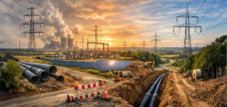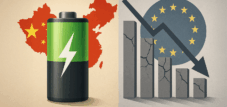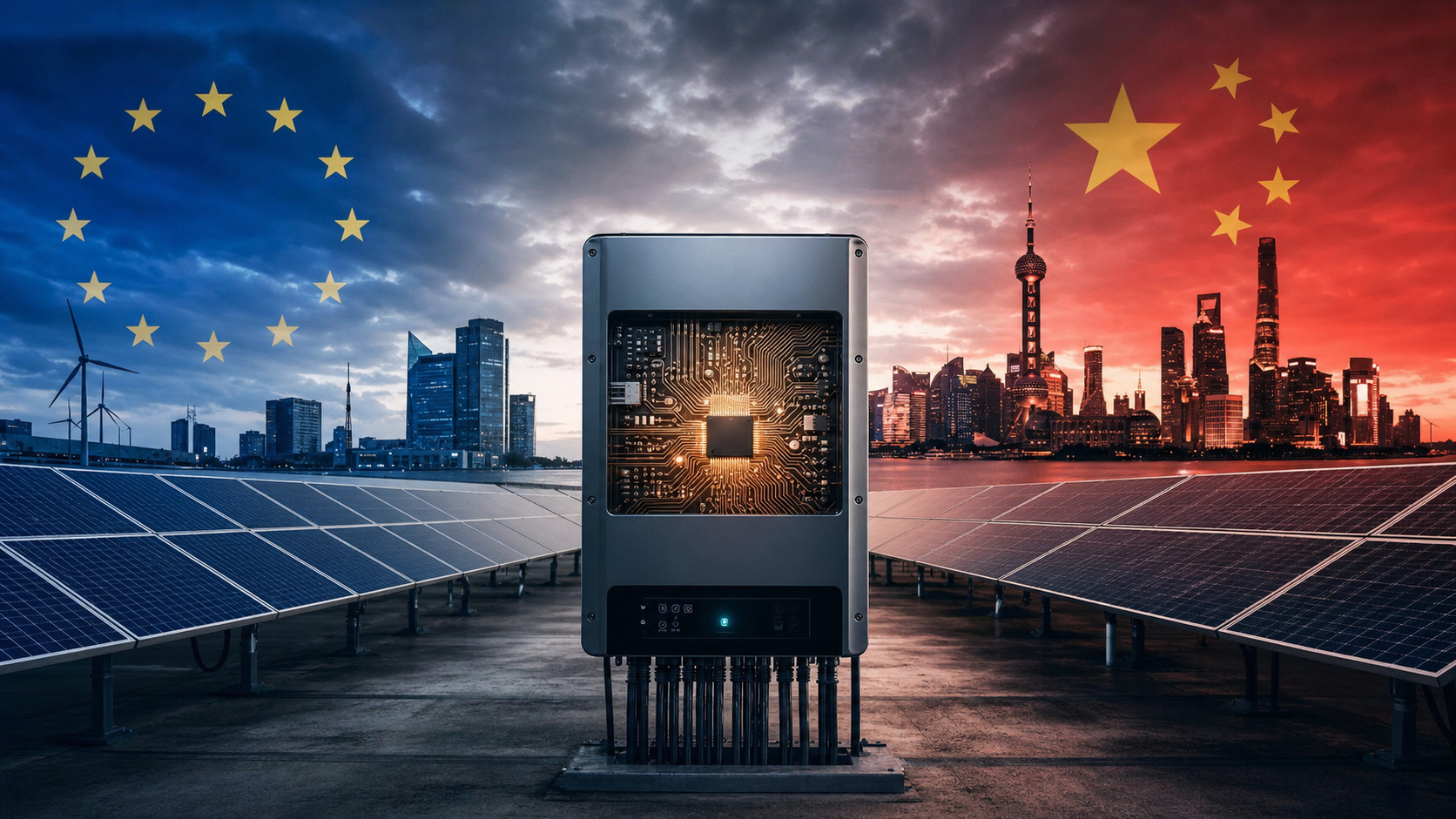
No EU import ban but a halt to subsidies for Chinese inverters: When security policy slows down the energy transition – Image: Xpert.Digital
Espionage via solar panels? That's why Brussels is cutting off funding to Chinese manufacturers
Power struggle over our electricity grids: Brussels' radical plan against Chinese technology
In April 2026, the European Union took a drastic step that sent shockwaves through the global solar industry: a sweeping ban on subsidies for inverters from China. What Brussels declared as a necessary measure to protect critical energy infrastructure from cyberattacks and targeted blackouts has ignited an unprecedented geopolitical conflict with Beijing. For Europe, this presents a fatal dilemma: the legitimate desire for technological sovereignty and secure power grids clashes head-on with the EU's ambitious climate goals. Without the affordable and widely available technology from the Far East, the energy transition is in danger of stalling significantly. Are we prepared to accept a massive setback in decarbonization for the sake of greater security? An in-depth analysis of the "brain" of our solar power systems, a simmering trade war, and the high price of our independence.
Brussels' solar revolution against Beijing – decarbonization as collateral damage?
In April 2026, the European Union made a decision that, at first glance, appears to be a purely technical safety measure, but on closer inspection shakes the entire geopolitical architecture of the global energy transition: The EU Commission immediately removed subsidies for all solar and battery inverters from so-called high-risk countries from the European institutions' funding catalog. In effect, this measure targets almost exclusively China – the country that supplies around 80 percent of all inverters installed in Europe. Beijing's reaction was swift: The Chinese Ministry of Commerce condemned the move as "unfair and discriminatory" and threatened countermeasures. What seems like a bilateral trade dispute is, in reality, a symptom of a deeper strategic realignment – and a tension that will occupy Europe for a long time to come.
The anatomy of the ban: What was decided and why?
The European Commission's decision from April 2026 is more precisely worded than the initial public debate suggested. It is not an import ban on Chinese inverters, but rather a funding freeze: projects using inverters from the so-called high-risk countries of China, Russia, Iran, and North Korea will no longer receive EU funding. While this may sound like a subtle distinction, in practice it has enormous implications. In 2025, the European Investment Bank (EIB) financed around one-fifth of all solar installations across the EU. In addition, the European Bank for Reconstruction and Development (EBRD) and national development banks such as Germany's KfW, which also manage EU funds, are now subject to the ban. This funding freeze applies not only within the EU's borders but also to projects in neighboring regions such as North Africa and the Western Balkans, provided they are connected to the European electricity grid.
The affected financial institutions were required to report their ongoing project pipelines by the beginning of May 2026 and, wherever possible, replace Chinese inverters. For projects at an advanced stage, the regulation provides for staggered transition periods: final permits can still be issued until November 1, 2026, while projects outside the EU without direct grid connection will have an expiration date of April 2027. Already installed systems – such as those on private rooftops – are not affected by the ban, and feed-in tariffs under the German Renewable Energy Sources Act (EEG) remain unaffected. The measure explicitly targets large-scale commercial and publicly funded projects.
The European Commission's technical justification focuses on the cybersecurity risk. Modern inverters – the devices that convert the direct current from solar panels into grid-compatible alternating current – are typically connected to the internet. While this connectivity serves for remote maintenance and software updates, it also opens up potential attack vectors. An EU Commission spokesperson specifically warned that external actors could gain access to sensitive operational data or even manipulate energy networks via these devices. In an extreme scenario, Brussels fears, tens of thousands of devices could be remotely shut down simultaneously, triggering widespread power outages.
The nerve center of the solar power system: Why inverters are so critical
To fully understand the implications of this decision, one must grasp the technical role of the inverter. It is not merely an electrical converter, but the actual control center of a modern photovoltaic system. Industry representatives therefore rightly refer to it as the "brain" of the system. It determines when and how much electricity is fed into the public grid, it communicates with the grid operator, it processes weather data, and it optimizes energy yield in real time. In a decentralized energy system based on millions of interconnected small-scale producers, the inverter becomes the interface between private producers and public infrastructure.
Security authorities in several EU member states had already raised the alarm before Brussels halted subsidies. The German Federal Office for Information Security (BSI) explicitly warned of the potential "manipulation of energy infrastructure by manufacturers or third parties"—specifically mentioning solar power systems. Lithuanian, Czech, and German security authorities had either banned Chinese inverters or classified them as a risk. In an open letter leaked in autumn 2025, more than 30 members of the European Parliament demanded "immediate and binding measures" against high-risk suppliers from China. This parliamentary pressure was ultimately one of the triggers for the Commission's decision.
A study by SolarPower Europe, published in 2025, substantiated these fears with concrete figures: Theoretically, just 3 gigawatts of manipulated inverter capacity would be enough to destabilize the European power grid. Market leader Huawei alone is estimated to have installed more than 114 gigawatts of inverter capacity in Europe. Six Chinese manufacturers each control over 5 gigawatts across Europe – each of them thus exceeds the critical threshold at which a coordinated attack could endanger the grid. These figures provide a rational basis for European security considerations that cannot be dismissed lightly.
The Iberian power outage of April 28, 2025, which affected around 60 million people in Spain and Portugal for hours, provided the political catalyst for Brussels' accelerated action. Even though the official Spanish government investigation report did not identify a cyberattack as the cause—a cascade of technical malfunctions and inadequate voltage regulation were responsible—the incident vividly demonstrated how vulnerable a power grid heavily reliant on renewable energy sources can be. The issue of grid stability and inverter technology thus moved to the forefront of the European security debate.
A growing dependency: China's dominance in the inverter market
Chinese dominance in the global inverter market is no accident, but the result of decades of state-driven industrial policy, massive economies of scale, and aggressive pricing. In 2022, the world's five largest inverter manufacturers—all Chinese companies—combinedly controlled 71 percent of the global market. Huawei and Sungrow alone accounted for over 50 percent of global shipments. These two companies have now maintained their market leadership for eight consecutive years. In 2023, global inverter shipments grew to 536 gigawatts—a 56 percent increase year-over-year—with China accounting for more than half of that volume.
In Europe, the picture is even more concentrated. The market share of Chinese manufacturers – predominantly Huawei and Sungrow – rose from 45 to 61 percent between 2018 and 2024. In Germany, which was the world market leader in the inverter segment a decade ago, eight out of ten inverters now come from China. According to the EU Commission, in 2024 alone, around 80 percent of all newly installed inverter capacity in Europe was supplied by Chinese vendors. These are not abstract market shares, but physically installed devices in millions of solar power systems across the continent.
This dependence has an economic dimension that shouldn't be ignored. Chinese inverters aren't so widespread because European installers and project developers have been negligent. They are cheaper, often technically advanced, and reliably available thanks to China's enormous manufacturing capacity. The EU Commission estimates that foregoing Chinese inverters would increase the overall cost of a solar power system by less than two percent – inverters making up only a small portion of the total cost. However, this estimate only applies to scenarios where sufficient alternative capacity is immediately available. Whether this is actually the case is one of the most contentious issues in the current debate.
Beijing's anger: The Chinese counter-argument
The Chinese reaction was sharp and unequivocal. The Ministry of Commerce (MOFCOM) issued an official statement that was unusually direct in its diplomatic tone. The EU had, for the first time, classified China as a so-called high-risk country without any factual evidence and, under this pretext, had prohibited financial support for projects using Chinese inverters. This classification, China asserted, stigmatized China and subjected Chinese products to unfair and discriminatory treatment. Beijing pointed to potential WTO violations and accused Brussels of pursuing protectionism under the guise of security policy.
The Chinese counter-argument is understandable in its basic structure, even if it dismisses the EU's security concerns unilaterally. Indeed, Brussels has not presented any publicly accessible legal basis or transparent evidence for the high-risk classification. An EU official merely confirmed that the Commission's assessment was based on both classified and publicly available information from several member states. This lack of a transparent justification gives Beijing ammunition and hinders an objective international debate. At the same time, it must be acknowledged that security authorities are necessarily cautious about disclosing threat situations when operational information is at stake.
The Chinese Ministry of Commerce also warned that excluding Chinese products could harm the EU itself and jeopardize its energy transition and energy security. There is a kernel of truth in this argument. If the rapid expansion of solar energy in Europe is slowed by higher costs and supply bottlenecks, it will cost time – and time is a scarce resource in decarbonization. Furthermore, Beijing indicated that it would closely monitor the situation and take the necessary measures to protect the legitimate rights and interests of Chinese companies. The Ministry of Commerce did not specify what these measures might entail – a stance that is likely to increase rather than reduce diplomatic tensions.
However, the Chinese argument loses its persuasiveness when placed in a broader context. China itself considered an export ban on key technologies for solar cell production in 2025 and announced export restrictions on solar manufacturing equipment – a move that would significantly set back Western efforts to establish their own solar manufacturing capacity. A country that aggressively expands its own strategic control over supply chains can hardly credibly portray itself as a victim of European protectionist policies.
The European inverter industry: Rebirth or wishful thinking?
Theoretically, European manufacturers will benefit most from the EU subsidy freeze. SMA Solar Technology from Kassel, Germany, and Fronius International from Pettenbach, Austria, are considered the best-known remaining major European inverter brands. SMA achieved a total inverter capacity of 19.9 gigawatts in 2025 – a solid figure, but modest in global comparison given the Chinese dominance. Fronius has maintained a niche in the premium segment through innovation and quality.
The crucial question is whether these companies can actually fill the demand gap created by the ban on subsidies. EU Commission officials pointed out that sufficient alternative capacities exist among manufacturers from Japan, South Korea, Switzerland, and the USA. However, this assessment is more optimistic than reality suggests. The sheer scale of Chinese manufacturers – Huawei and Sungrow together supply hundreds of gigawatts per year – cannot be compensated for in the short term by the current capacities of European and other Western suppliers. While the EU's Net Zero Industry Act has set the goal of covering at least 40 percent of the EU's annual demand for strategic technologies with domestic production by 2030, a structural gap remains until this target is reached, which could lead to noticeable bottlenecks in the coming years.
In addition, there is a price aspect, which the EU Commission downplays, but which is relevant for large project developers. Inverters from SMA or Fronius are high-quality, but more expensive than Chinese alternatives. In a market environment where the profitability of large-scale solar projects already depends on interest rate developments and electricity prices, even marginal cost increases can determine a project's profitability. For project developers who have been calculating with Chinese inverters for years and now have to realign their supply chains, this results in considerable planning effort – in addition to the financial burden.
The EIB has already signaled its intention to work with the Commission and market participants to build a resilient and competitive European inverter industry. This is a political declaration of intent that must be backed up by concrete investment programs. Without targeted government start-up funding and long-term demand guarantees for European manufacturers, they will hardly be willing to undertake the multi-billion-euro capacity expansions that would be necessary to truly challenge China's market position.
New: Patent from the USA – install solar parks up to 30% cheaper and 40% faster and easier – with explanatory videos!

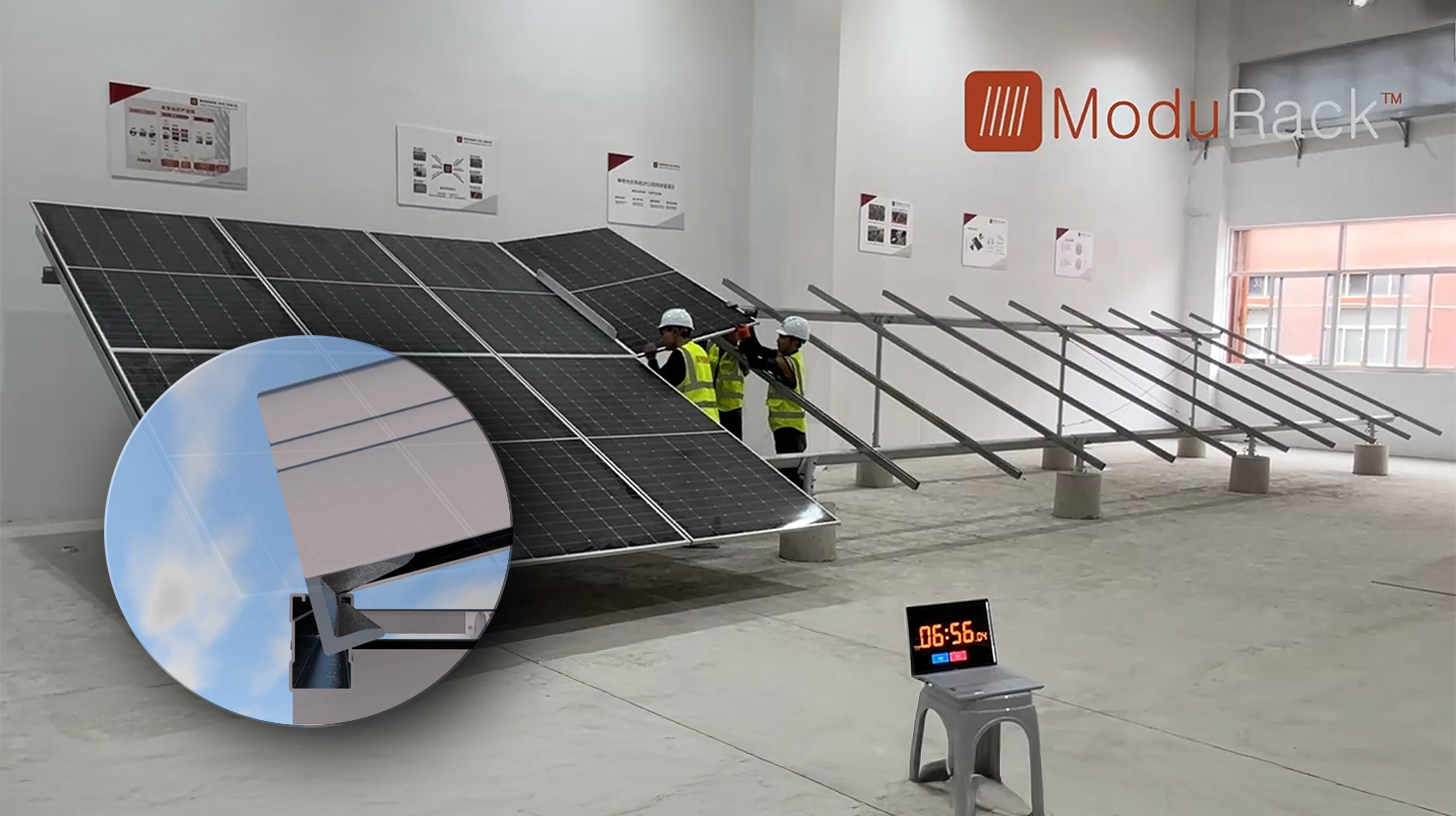
New: Patent from the USA – Install solar parks up to 30% cheaper and 40% faster and easier – with explanatory videos! - Image: Xpert.Digital
The core of this technological advancement is the deliberate departure from conventional clamp mounting, which has been the standard for decades. The new, more time- and cost-effective mounting system addresses this with a fundamentally different, more intelligent concept. Instead of clamping the modules at specific points, they are inserted into a continuous, specially shaped support rail and held securely in place. This design ensures that all forces – whether static loads from snow or dynamic loads from wind – are distributed evenly across the entire length of the module frame.
More information here:
Between derisking and decoupling: What the EU funding freeze for energy projects means
Security policy versus climate policy: A structural conflict of objectives
The EU funding freeze exposes a fundamental contradiction that has been largely ignored in European energy and industrial policy: the fastest and most cost-effective route to decarbonization runs through Chinese supply chains – and that is precisely what is unacceptable from a security policy perspective. For years, Europe defended its climate ambitions with the argument that renewable energies were cheaper, faster, and more efficient than alternatives. This price argument rested to a considerable extent on the availability of inexpensive Chinese technology.
Now, a different argument takes precedence: technological sovereignty and the protection of critical infrastructure. This is not an unfounded shift in priorities. An energy supply that can be remotely shut down by external actors in a crisis is not true energy sovereignty. The lessons learned from Russia's gas dependency, which Europe had to relearn with massive economic pain after the invasion of Ukraine, serve as a formative pattern of experience. Those who became dependent on a geopolitical rival too late regarding gas will not want to repeat the same mistake with solar technology.
However, this tension cannot be resolved simply by pointing to past mistakes. Russian gas was a commodity that Europe was able to replace through diversification. Chinese inverters are highly complex technological products that cannot be substituted overnight by European products – at least not in the required quantities and at the same price. The expansion of renewable energies in Europe, which is essential for achieving the climate targets for 2030 and 2050, is threatened by the emerging capacity bottleneck. This is not a hypothetical scenario, but a sober assessment of the market situation.
A particularly pressing question in this context is whether the cyber risk is actually of the magnitude implied by the European Commission. No European inverter cyberattack with proven state involvement has yet been publicly documented. The threat is largely theoretical – real as an abstract possibility, but not yet as an actual event. This does not mean it should not be taken seriously. Security policy must act preventively. However, it also means that the costs of this prevention – delays in the energy transition, rising project costs, geopolitical tensions – must be carefully weighed against the actual level of risk.
Scope of the measure: Inverters in wind, storage and heat pumps
One aspect of the EU funding freeze that has received too little attention in the public debate so far is its enormous technological reach. The measure is not limited to photovoltaic inverters. It explicitly includes inverters in battery storage systems, converters in wind turbines, as well as the power electronics in heat pumps, charging stations for electric vehicles, and other inverter applications in the power grid. In all these areas, Chinese manufacturers hold similarly dominant market shares as in photovoltaics.
This means that the funding freeze potentially extends far beyond the solar industry, affecting the entire renewable energy and electrification sector. Wind farms slated for EU funding that use Chinese inverters are affected, as are large-scale storage projects and commercial charging infrastructure for electric vehicles. An internal Commission memo, cited by Euractiv, also explicitly states that a future extension to other solar power components is possible. This suggests that the inverter ban is just the beginning of a gradual unbundling of Chinese technology from European energy infrastructure.
This perspective is crucial for the analysis. Anyone who sees today's measure as an isolated halt to subsidies for a specific category of equipment underestimates the industrial policy ambitions of the European Commission. The leadership in Brussels thinks in terms of technological sovereignty and understands the halt to inverter subsidies as the first concrete instrument of a long-term strategy to free Europe from its dependence on Chinese key technologies for critical infrastructure. This is no small undertaking – it is a structural transformation that will take decades and require substantial public investment.
The geopolitical context: Between derisking and decoupling
In recent years, the European Commission has deliberately distinguished between "derisking" and "decoupling." A complete decoupling from China is neither possible nor desirable, according to the official line – but dependencies in security-relevant areas must be reduced. The halt to inverter subsidies is the first concrete implementation of this derisking approach in energy infrastructure. It follows a logic that can also be observed in other areas: the exclusion of Huawei from European 5G networks, the stricter investment screening for Chinese acquisitions, and the anti-subsidy tariffs on Chinese electric vehicles.
What is remarkable here is the timing of this development, coinciding with the general deterioration of the transatlantic and geopolitical climate. While the US, under the Trump administration, is waging a comprehensive trade war with China, the EU is attempting to maintain an independent position – cooperative where economically justifiable, but tough where critical infrastructure and technological sovereignty are at stake. The halt to inverter subsidies fits this pattern: it is justified on security policy grounds, but has a clear industrial policy component intended to benefit European manufacturers.
China, for its part, has placed the EU decision within the context of a broader Western strategy to curb Chinese technology exports. Beijing recognizes that Western countries' structural dependence on Chinese solar technologies constitutes economic leverage – and has not hesitated to use such leverage in trade disputes in the past. The announcement of Chinese export restrictions on solar manufacturing equipment can be interpreted as a signal: those who block our products risk losing access to our manufacturing technology as well.
This is an uncomfortable reality for the EU. It wants to become more independent from China, but at the same time relies on Chinese technology to build the energy infrastructure necessary for this independence. This Gordian knot cannot be cut quickly – it requires a long, arduous, and expensive process of building its own capacity.
Open questions and structural challenges
Despite the determination with which the European Commission communicated the funding freeze, the measure raises a number of fundamental questions that remain unanswered. First, what is the legal and evidentiary basis for China's high-risk classification? The European Commission has not presented any publicly accessible legal basis or transparent evidence. This is not only a diplomatic problem with Beijing, but also a potential weakness in court should China file a WTO complaint.
Secondly, how realistic is the assumption of sufficient alternative capacities? The EU Commission names Japan, South Korea, Switzerland, and the USA as alternative sources, but the aggregate manufacturing capacity of these countries in the inverter sector is negligible compared to China's 80 percent dominance of the European market. In the short term, the suspension of subsidies is therefore likely to lead to supply bottlenecks and price increases that will slow down the expansion of solar power.
Thirdly: What will happen to the vast stock of already installed Chinese inverters? Even if there is no obligation to replace existing systems, these devices pose the most immediate security risk. A cyberattack wouldn't need to target a single new system to destabilize the grid – the millions of devices already installed are sufficient. As long as there is no comprehensive strategy for retrofitting or security monitoring of the existing infrastructure, the real risk remains largely unaddressed.
Fourth: How does the EU deal with the tension between climate goals and security objectives? The slowdown in solar expansion has direct CO₂ implications. Every gigawatt of solar capacity that is not installed on time due to supply bottlenecks or higher costs increases dependence on fossil fuels. This is not only a climate policy setback, but also a geopolitical paradox: Trying to reduce dependence on one rival could prolong dependence on another – fossil fuels from politically unstable regions.
A strategic decision with a long-term perspective
The EU's decision to exclude Chinese inverters from the funding framework is not a hasty protectionist reaction – it is the long overdue consequence of a structural vulnerability that Europe has knowingly built into itself over many years. That such a decision causes pain and creates diplomatic friction is the inevitable price of a resilience policy that has been neglected for so long.
However, it would be shortsighted to see the suspension of subsidies as a sufficient answer to the security problem. It is a signal, a first step – but not a comprehensive security concept. What is missing is a coherent strategy that addresses three dimensions simultaneously: the development of a competitive European inverter industry through targeted investments and technology policy; the regulatory safeguarding of the existing Chinese inverter stock through mandatory certifications and access restrictions; and the diplomatic integration of these measures into a comprehensive EU-China trade architecture that systematically incorporates confrontation where necessary and cooperation where possible.
With the Net-Zero Industry Act and the Cybersecurity Strategy, the EU has the regulatory instruments to shape these three dimensions. What is needed now is the political will to implement these instruments with the necessary consistency and the required financial backing. Because one thing is clear: the energy transition that Europe urgently needs to achieve its climate goals and its independence from fossil fuels can only succeed if security and speed are not permanently at odds – but rather merge into a strategic whole. That is the real challenge facing Brussels. And it is greater than simply halting subsidies.
Your partner for business development in the fields of photovoltaics and construction
From industrial rooftop PV to solar parks and larger solar parking lots
☑️ Our business language is English or German
☑️ NEW: Correspondence in your native language!

Konrad Wolfenstein
I and my team are happy to be available to you as your personal advisor.
You can contact me by filling out the contact form here wolfenstein@xpert.digital:or simply call me at +49 7348 4088 965. My email address is
I'm looking forward to our joint project.
☑️ EPC services (Engineering, Procurement and Construction)
☑️ Turnkey project development: Development of solar energy projects from start to finish
☑️ Site analysis, system design, installation, commissioning, maintenance and support
☑️ Project financier or intermediary of capital providers
Our EU and German expertise in business development, sales and marketing
Our EU and German expertise in business development, sales and marketing - Image: Xpert.Digital
Industry focus areas: B2B, digitalization (from AI to XR), mechanical engineering, logistics, renewable energies and industry
More information here:
A thematic hub offering insights and expertise:
- Knowledge platform covering global and regional economies, innovation and industry-specific trends
- A collection of analyses, insights, and background information from our key areas of focus
- A place for expertise and information on current developments in business and technology
- A hub for companies seeking information on markets, digitalization, and industry innovations