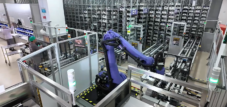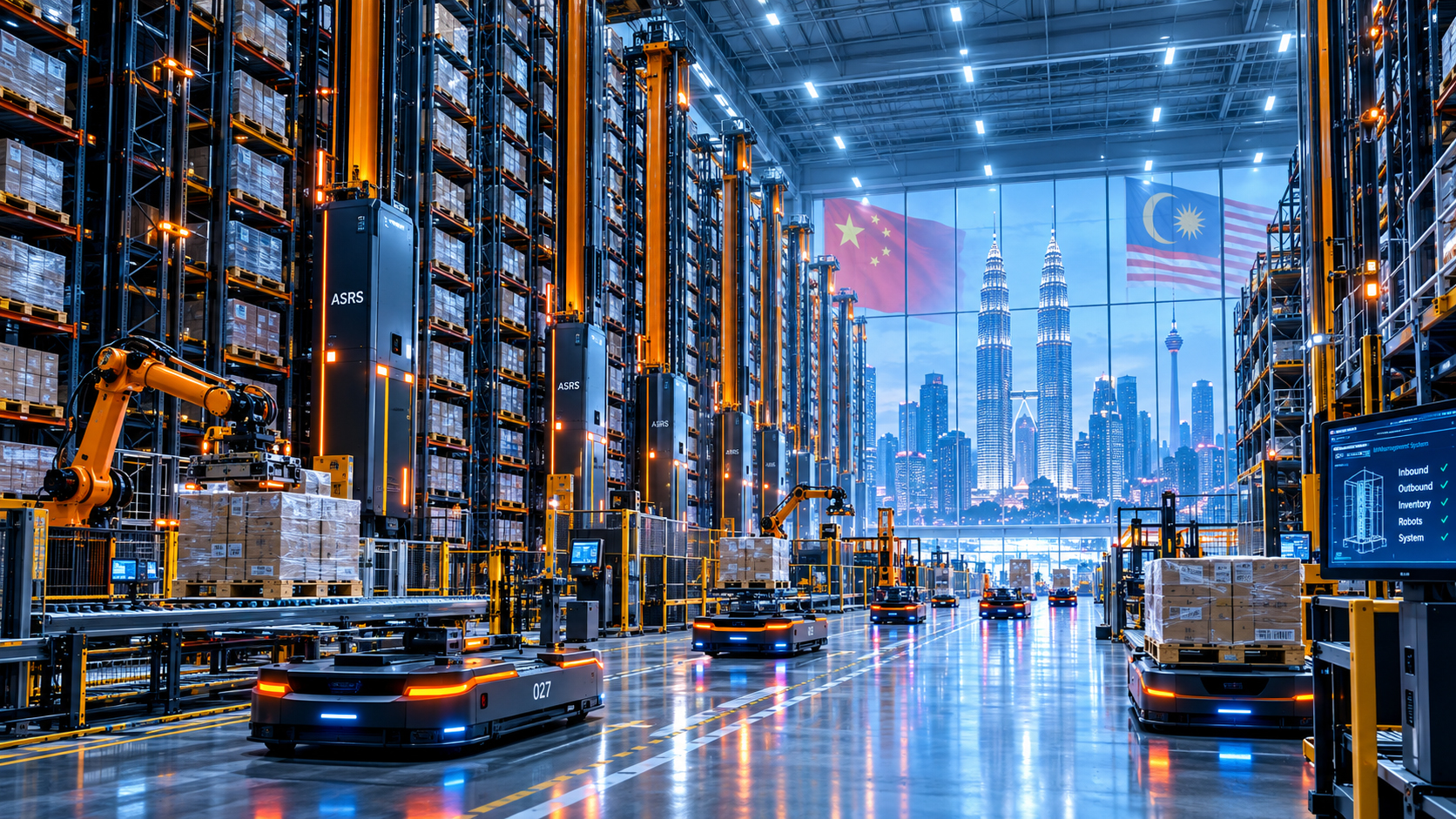
A 2-billion-dollar deal in Malaysia: How a construction company is revolutionizing logistics with Chinese robots – Image: Xpert.Digital
From construction company to tech giant? Malaysia's spectacular bet on fully automated mega-warehouses
"China Plus One" boom: Is Southeast Asia's largest robot logistics center currently being built here?
When concrete meets AI: This mega-deal brings China's high-tech robots to Malaysia
The global supply chain is reshaping, and Southeast Asia is the undisputed epicenter of this movement. Driven by the so-called "China Plus One" strategy, international corporations are increasingly relocating their production facilities to countries like Malaysia to minimize geopolitical risks and strengthen their resilience. This relocation is triggering an unprecedented boom in industrial and logistics real estate. Here, rapidly growing space requirements meet the pressing desire for maximum efficiency and automation – the perfect opportunity for investment in new, smart, high-tech warehouses.
Amidst this industrial gold rush, one company is coming into focus that has long been primarily known for traditional trades such as earthworks and building construction: the Malaysian PTT Synergy Group Berhad. With the sensational announcement that it is examining the feasibility of a mega-warehouse project worth around two billion ringgit, in partnership with Chinese technology giants like OMH Science Group and robotics specialist AUBO, the corporation is making a radical leap from a low-margin construction service provider to a profitable high-tech infrastructure provider. It is a paradigm shift that could not only fundamentally transform its own business model but also serve as a blueprint for regional reindustrialization.
But as with any visionary megaproject, enormous opportunities and significant risks lie close together. While the prospect of artificial intelligence, collaborative robots (cobots), and vast automated storage and retrieval systems ignites investors' imaginations, a sober look behind the scenes is worthwhile. Is this ambitious framework agreement the starting signal for a new era of Asian intralogistics, or will it ultimately prove to be a capital-intensive pipe dream? The following analysis examines the company's strategic realignment, assesses the technological capabilities of its Chinese partners, and questions the true resilience of this bet on a fully automated supply chain.
The fact that the media and company announcements often talk about "two billion" has several reasons – and shows how important it is to put such figures into the right context:
1. The psychological “billion-dollar effect”:
A headline like “Two-billion-dollar deal” attracts far more attention on the stock market and in the media than a “420-million-euro project.” Companies in emerging markets almost always use the local currency in their announcements if it appears larger. This sparks investors' imaginations and signals scale.2. Local Purchasing Power: In Malaysia, this is a gigantic project.
What sounds like "only" a mid-three-figure million-euro sum for an infrastructure project in Europe or the USA has a completely different impact in Malaysia. Land, construction, and labor costs are significantly lower there. With the equivalent of 420 million euros, one can actually build one of the largest logistics centers in the region (with the aforementioned two million pallet positions) in Southeast Asia. In Germany, the same money would buy considerably less built space and technology.3. The scale for the company itself
: For a global giant like Amazon or DHL, 420 million euros for a new network of warehouses would be routine. For the PTT Synergy Group, which comes from the traditional, low-margin construction business, however, this is an absolute "all-in" bet. Given the company's size and its existing balance sheet structure, this is a massive financial undertaking.
Chinese robotics conquers Malaysia's warehouses: A construction company reinvents itself as a logistics tech group
What began as a traditional Malaysian earthmoving and building construction company is now positioning itself as a pioneer of industrial automation in Southeast Asia. PTT Synergy Group Berhad, a company listed on Bursa Malaysia, signed a framework agreement on September 22 with two Chinese companies to explore the feasibility of an automated warehouse with a total investment of approximately two billion ringgit. The planned facility is expected to offer a storage capacity of two million pallet positions, making it one of the largest automated logistics properties in the region. The deal marks the current milestone in a transformation that aims to turn PTT Synergy from a low-margin construction services provider into a supplier of high-tech intralogistics solutions.
The two Chinese partners are well-known in the automation industry. OMH Science Group, a company listed on the Shenzhen Stock Exchange and headquartered in Taiyuan, is one of China's largest domestic manufacturers and system integrators of intelligent logistics equipment, offering automated warehousing, sorting, and conveying systems. AUBO, a collaborative robot manufacturer founded in 2015 and headquartered in Beijing, has become China's leading supplier of cobots, with over 35,000 units sold worldwide and ranks second globally behind the Danish market leader, Universal Robots. According to PTT Synergy, the combination of local construction expertise, Chinese system integration, and robotics is expected to unlock new revenue streams in the field of logistics automation.
From a low-margin construction business to a rental machine with automation aspirations
PTT Synergy's strategic realignment follows a clear economic logic. Construction projects typically yield only a 15 to 20 percent gross margin and generate no recurring revenue, while automated warehouse properties generate stable cash flows through long-term leases and leasing models. In August of this year, CEO Teo Swee Phin stated the investment budget for the next two years at 2.3 billion ringgit, distributed across four new automated warehouses, with a total of 15 additional automation projects in the pipeline. The robotics division, which consists of leasing automated storage space, is expected to reach a profitability level within three years comparable to that of the traditional construction business, which currently generates around 24 million ringgit annually.
The company is thus moving away from a one-off revenue model towards a real estate and infrastructure model with added technological value. The first facility, PTT Logistics Hub 1 in the Elmina Business Park near Shah Alam, was realized with a gross development value of 180 million ringgit and achieved an occupancy rate of around 70 percent within just a few months. The company currently has a storage capacity of 600,000 pallet positions, corresponding to approximately six million square feet, and aims to triple this volume to two million pallet positions within three to five years. Additional contracts, such as a 260 million ringgit warehousing agreement with Sekatarakyat, as well as collaborations with Sime Darby, Mydin, and the semiconductor company Jabil in Penang, demonstrate that demand comes from various industrial sectors and is not concentrated on a single customer.
🎯🎯🎯 Data-driven B2B industry hub as a quasi-in-house solution


The quasi-in-house solution: How Xpert.Digital closes operational gaps in B2B marketing and sales – Smart Content-Driven Business - Image: Xpert.Digital
Xpert.Digital is a data-driven B2B industry hub led by Konrad Wolfenstein . The company acts as an external, quasi-in-house solution for industrial partners, closing operational gaps in marketing, content, and sales – without requiring additional resources on the client side.
More information here:
Between vision and risk: Is the billion-dollar bet on fully automated warehouses sustainable?
China as a technology supplier for Southeast Asia's factory halls of the future
Behind the deal lies a larger geopolitical and industrial trend known as "China Plus One," which describes the relocation of production capacity from China to neighboring countries like Malaysia, Vietnam, and Thailand. This relocation is creating an enormous demand for modern warehousing infrastructure, particularly in sectors such as electronics, semiconductors, pharmaceuticals, cold chain logistics, and automotive supply. Malaysia benefits in two ways: it attracts foreign manufacturing investment and simultaneously becomes a testing ground for Chinese automation technology, which is already mature in its domestic market but still underrepresented abroad.
OMH Science Group achieved sales of approximately 1.07 billion renminbi last year, of which 910 million renminbi alone came from its intelligent storage systems division, which has grown steadily in recent years. AUBO, for its part, invests almost 100 million yuan annually in research and development, representing about one-sixth of its group sales, and has reached a domestic vertical integration rate of 95 percent this year. Both companies therefore possess the technological resources to technically manage a project of this scale, even though implementation in a foreign legal system presents its own regulatory and infrastructural challenges.
Between gold mine and pipe dream: How reliable is the figure of two billion ringgit?
Despite the euphoria surrounding automated warehouses, a sober look at the contractual nature of the announcement is worthwhile. It is explicitly a framework agreement with a term of five years, establishing the basis for potential cooperation, but it does not constitute a binding investment commitment of two billion ringgit. Such letters of intent are common in the construction and plant engineering sectors, but often also serve to generate capital market interest without concrete locations, financing structures, or offtake agreements being in place at the time of publication. PTT Synergy's stock had already shown significant price movements prior to similar announcements, such as a jump of 77 percent within a single month in 2024, indicating a high market sensitivity to news from the automation sector.
At the same time, the company's balance sheet structure shows that the expansion is not financed without risk. At the end of March this year, net debt amounted to approximately 320 million ringgit, with a debt-to-equity ratio of 1.76 – a level that could quickly reach its limits with further aggressive capacity expansion. While an analyst from NewParadigm issued a buy recommendation in July of this year with a potential upside of 33 percent, arguing that the market is still underestimating progress in warehouse automation, it remains unclear how robust the earnings forecasts are should the implementation speed of the announced projects be delayed. Historical comments from previous investors regarding the company, which operated under the name Grand Hoover before its 2020 acquisition and was repeatedly questioned by the Securities and Exchange Commission due to unusual share price movements, also caution against interpreting short-term share price rallies.
Automated storage and retrieval systems as the backbone of the new warehouse logic
Technically, PTT Synergy's business model is based on Automated Storage and Retrieval Systems (ASRS), i.e., computer-controlled storage and retrieval machines that store and retrieve goods without human intervention. These systems enable significantly denser storage than conventional warehouses, as aisles can be narrower and racks taller, while simultaneously reducing picking errors. For the planned facility with two million pallet positions, the capacity is equivalent to more than 25 million square feet of traditional warehouse space, illustrating the significant space savings that automation offers compared to conventional construction.
AUBO's role in this ecosystem lies primarily in the area of collaborative robot arms, which can be used for tasks such as palletizing, depalletizing, sorting, and material transport. Unlike traditional industrial robots, these arms can work directly alongside human workers without safety barriers. OMH, on the other hand, supplies the larger system components, such as stacker cranes, automated guided vehicles (AGVs), conveyor systems, and the associated control software, including warehouse management systems and digital twins of the physical facility. This combination of heavy-duty system integration and flexible robotics allows for the automation of both large pallet warehouses and small-scale picking areas within the same building.
Malaysia as a laboratory for the next wave of Asian reindustrialization
Beyond this single deal, the announcement fits into a larger pattern of foreign direct investment in Malaysia's logistics sector. The Malaysian Investment Promotion Agency has repeatedly emphasized that rising demand from the electronics, pharmaceutical, and automotive industries, combined with government incentives for automation, is driving the expansion of high-tech warehousing capacity. PTT Synergy has already signed a preliminary agreement with a major semiconductor company in northern Peninsular Malaysia to build and lease an automated warehouse equipped with Internet of Things and AI technology, with an annual capacity of 552,000 pallets. This diversification across multiple industries reduces the risk of dependence on a single customer and strengthens the investment thesis of a growing, broadly based automation market.
The company's regional expansion also points to ambitious growth plans. A site of approximately eight hectares has already been identified in Rayong, Thailand, in close proximity to an existing customer, with the aim of commencing operations there this year. Should this model prove successful, PTT Synergy could become a regional blueprint provider for Chinese-financed and technologically equipped warehouse infrastructure, which in turn would facilitate access to Southeast Asian markets for other Chinese automation manufacturers through established local partners.
Opportunities and risks of betting on the fully automated supply chain
The economic logic behind warehouse automation is evident from several perspectives simultaneously. For PTT Synergy, the model promises higher-margin, recurring rental income compared to the cyclical and low-margin construction business. For relocating manufacturing companies in Malaysia, access to highly automated, AI-powered warehousing capacity offers a way to reduce labor costs and make supply chains more resilient, especially given an increasingly tight labor market in certain industrial zones. For the Chinese technology partners OMH and AUBO, the collaboration provides a gateway to a growing Southeast Asian market without requiring them to invest their own capital in land acquisition or construction, as these tasks remain with PTT Synergy.
Nevertheless, considerable uncertainties remain. Translating a framework agreement into a real-world construction project of this scale requires not only capital but also permits, land availability, and robust tenant demand that must be sustained over several years. Furthermore, PTT Synergy is competing in a market increasingly attracting the attention of major international logistics real estate developers, while geopolitical tensions between Western economies and China could influence the willingness of multinational tenants to invest in facilities saturated with Chinese technology. The viability of the two-billion-ringgit vision will only become clear once the framework agreement translates into concrete, financed, and scheduled construction projects, the first results of which are not expected to be visible for at least another two to three years.
Your global marketing and business development partner
☑️ Our business language is English or German
☑️ NEW: Correspondence in your native language!

Konrad Wolfenstein
I and my team are happy to be available to you as your personal advisor.
You can contact me by filling out the contact form here wolfenstein@xpert.digital:or simply call me at +49 7348 4088 965. My email address is
I'm looking forward to our joint project.
☑️ SME support in strategy, consulting, planning and implementation
☑️ Creation or realignment of the digital strategy and digitization
☑️ Expansion and optimization of international sales processes
☑️ Global & Digital B2B trading platforms
☑️ Pioneer Business Development / Marketing / PR / Trade Fairs
📈🚀 From visibility to trust 👀🤝 Your scalable path with Xpert.Digital

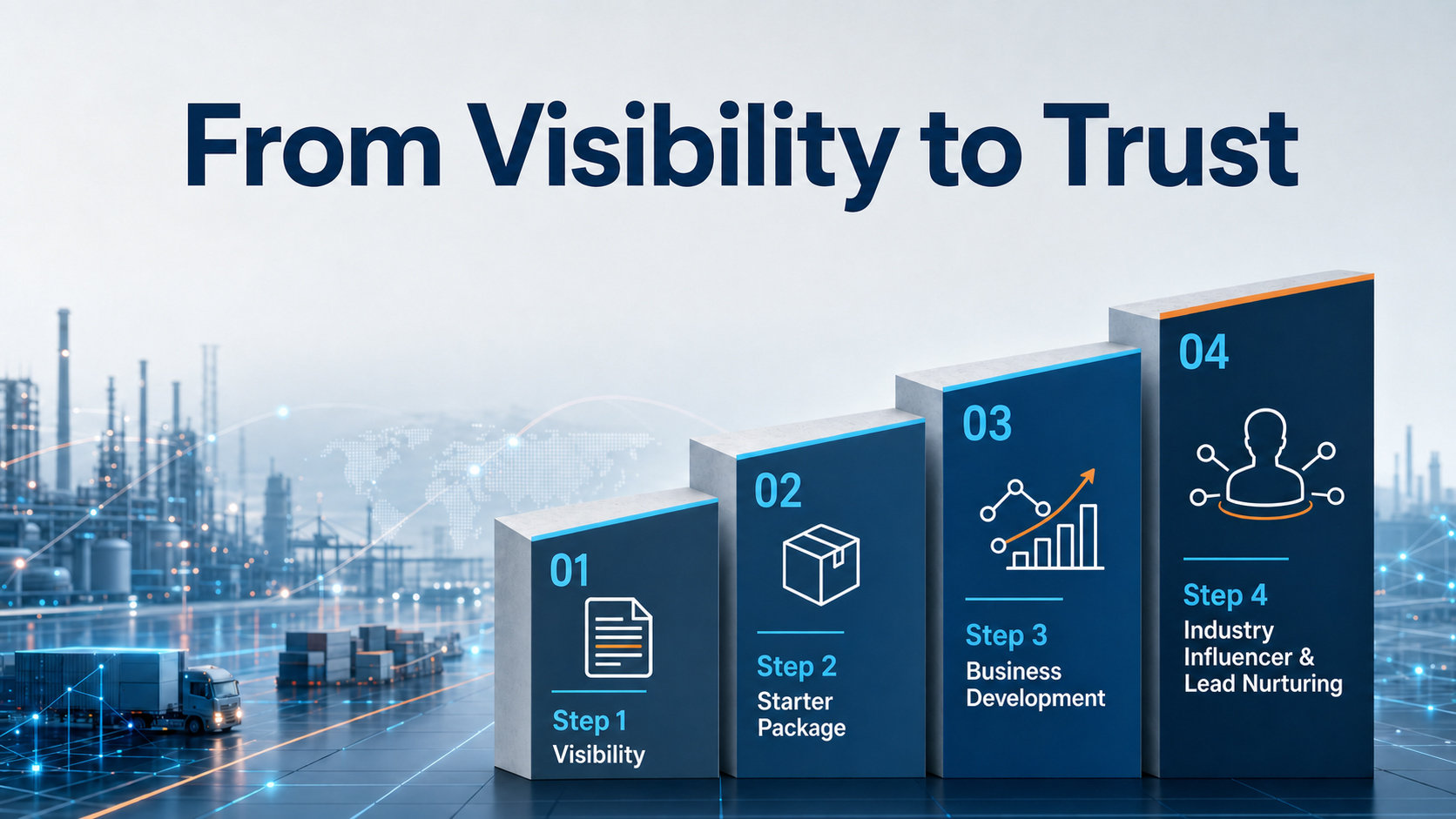
From visibility to trust: Your scalable path with Xpert.Digital - Image: Xpert.Digital
In industrial B2B, sustainable business relationships rarely emerge overnight. They develop step by step – through visibility, professional relevance, recurring touchpoints, and growing trust. Xpert.Digital's 4-stage model addresses precisely this: It offers a structured path that begins with a manageable entry point and can evolve into deeper collaboration in business development if needed.
Instead of relying on loud marketing promises, this model puts the relationship at the forefront. Companies start with clearly defined, easily calculable measures and then decide, based on their own experience, how far they want to expand the collaboration. A key factor for this undisturbed trust-building process: The platform completely avoids annoying advertising ads, so the editorial focus remains solely on the companies' expertise.
More information here: