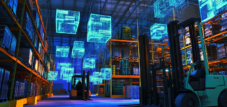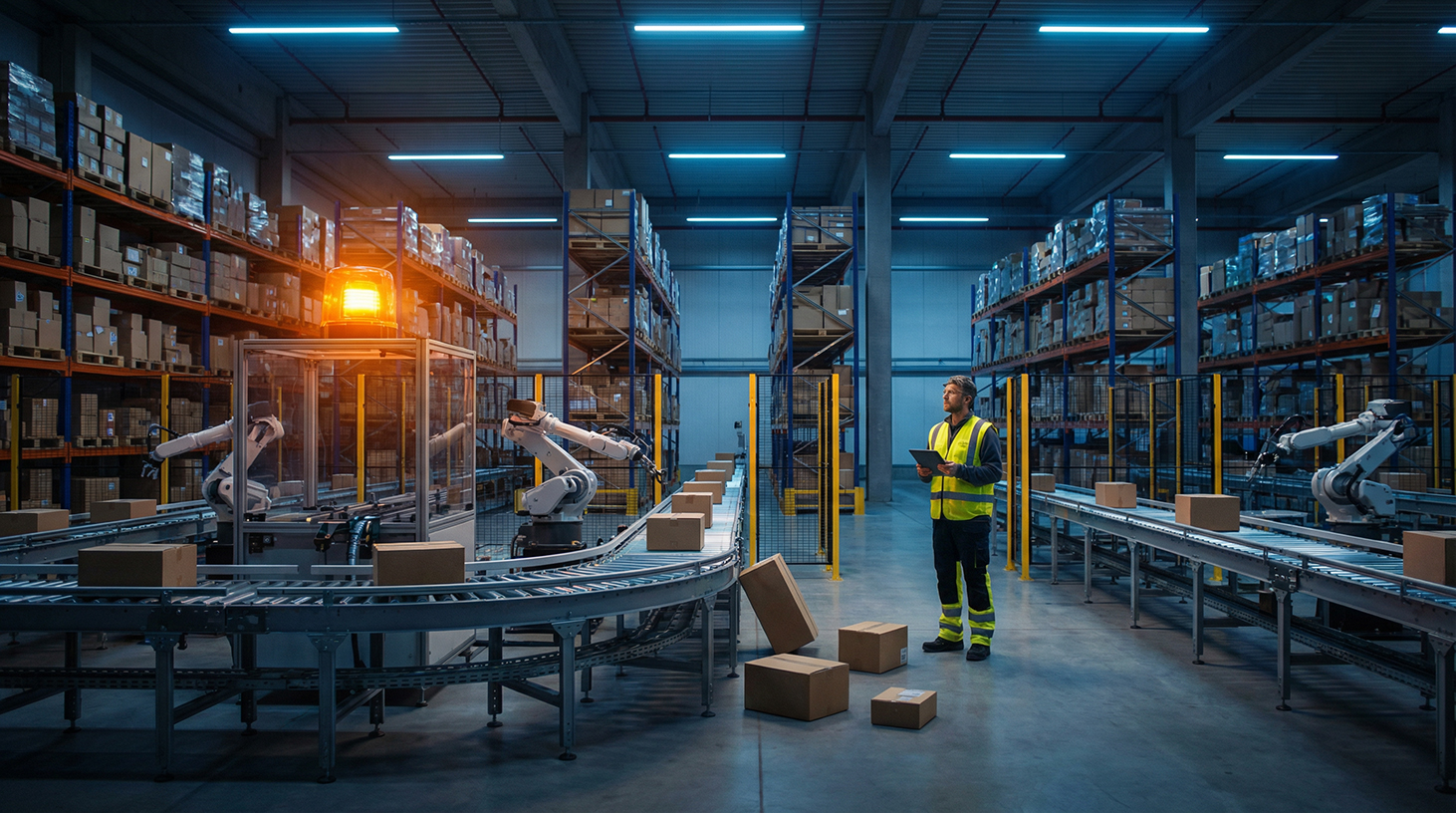
Failure faster through automation? The silent cost trap of warehouse automation – Image: Xpert.Digital
The inconvenient truth: Why robots alone cannot solve warehouse chaos
Technology can be bought, processes must be earned: Why you need to clean up first and then automate
The e-commerce boom, rapid delivery promises, and a pervasive shortage of skilled workers are driving the logistics industry massively toward automation. Billions are flowing worldwide into state-of-the-art logistics robots, driverless transport systems, and automated small parts warehouses – always in the hope of maximum efficiency, reduced error rates, and rapid returns. But behind the glittering facade of this technological euphoria lies an uncomfortable truth that is far too rarely spoken of in the industry: Up to 50 percent of all warehouse automation projects dramatically miss their targets or even burn through millions of dollars.
The reason for this almost never lies with the technology itself, but with a dangerous misconception on the part of management. Automation doesn't cure bad processes – it only accelerates them. Simply digitizing chaotic master data, unstructured slotting, and faulty goods receipts doesn't create a model warehouse, but rather multiplies the chaos on an industrial scale. This article sheds light on the silent cost trap of intralogistics and shows why the crucial step toward success happens long before the first robot even moves.
Technology can be bought. Processes must be earned.
Automation is the dominant investment theme in current logistics. The global market for warehouse automation is projected to reach nearly US$30 billion in 2026 and is expected to grow to over US$119 billion by 2034—an annual growth rate of approximately 16 percent. Nearly five million warehouse robots are already in operation worldwide in more than 50,000 warehouses, and over 450,000 new logistics robots are expected to be sold in 2025 alone—more than six times the number sold in 2019. The drivers of this development are well-known: rising order volumes due to the e-commerce boom, a structural shortage of skilled workers, and the increasing pressure for ever-faster delivery times. And yet, behind this euphoria for growth lies an uncomfortable truth that is too rarely discussed openly within the industry.
Up to 50 percent of all warehouse automation projects fail to achieve their originally defined goals. Another analysis by Ernst & Young concludes that 30 to 50 percent of all robotics and automation projects worldwide fail. In FMCG, retail, and e-commerce environments, an estimated 20 to 40 percent of projects deliver a significantly lower ROI than the business case—or even generate negative returns on investments in the tens of millions. The problem rarely lies in the technology itself. It lies in what should have been done before the first robot was deployed.
Why technology doesn't cure bad processes, but exacerbates them
The most widespread misconception in warehouse automation is: If we buy the right machines, our processes will become more efficient. This logic is tempting because it's true—but only under one crucial condition: that the underlying processes are already clean, consistent, and logically structured.
Automation accelerates and scales what it encounters. It replicates processes at high speed and with high throughput. If these processes are well-designed, measurable efficiency gains are achieved: According to practical studies, semi-automated picking systems increase efficiency by up to 97 percent, and fully automated systems by up to 140 percent compared to manual processes. However, if the underlying processes are dysfunctional, automation creates what experts aptly describe as "faster failure": A faulty process is not corrected; it is multiplied many times over.
This leads to a paradoxical result. A company that invests millions of euros in conveyor technology, automated small parts warehouses (AS/RS), or autonomous mobile robots (AMRs) can end up operationally worse off than before—if data quality is poor, slotting is not optimized, and the goods receiving process was unstable. In this case, the technology is not an efficiency enhancer, but rather an amplifier of malfunctions, and on an industrial scale.
The invisible bottleneck: What happens before the robot moves
The industry often discusses automation as a question of choosing the right technology. However, the crucial bottleneck in many warehouses lies not with the robot itself, but in the steps that take place in terms of time and process before the actual order picking.
Goods receipt is one of the most critical, yet most neglected, processes in the warehouse. If incoming deliveries are not properly recorded, are incorrectly assigned, or are booked in with faulty master data, a data basis is created on which no automation system can reliably operate. The Bosch plant in Homburg impressively demonstrated this connection: After the goods receipt process was digitized from four to 95 percent, the process duration was reduced by two-thirds—and only then did further optimization potential across the entire warehouse become apparent. The step before the robot was thus more crucial than the robot itself.
A second critical factor is master data quality. Automation relies on structured, precise data. In practice, however, product master data is often incomplete, outdated, or inconsistent across different systems. Studies show that inventory accuracy in average warehouses is sometimes only around 66 percent—a situation in which any automation solution will systematically make incorrect decisions. A PwC analysis demonstrates that companies have been able to reduce their inventory error rate by up to 40 percent through the targeted use of AI-supported data management solutions—but this requires that the data has first been consolidated.
The third often overlooked element is slotting—the thoughtful decision of which item is stored in which location. Unstructured slotting, where items are simply stored wherever there is space, leads to unnecessarily long distances, increased picking times, and a higher susceptibility to errors. Fast-moving items belong in ergonomically and spatially convenient zones near the shipping area, heavy goods on floor-level shelves, and complementary products in close proximity to each other. An automated storage system that operates based on chaotic slotting simply optimizes the wrong storage strategy—faster, but not better.
LTW Intralogistics Solutions

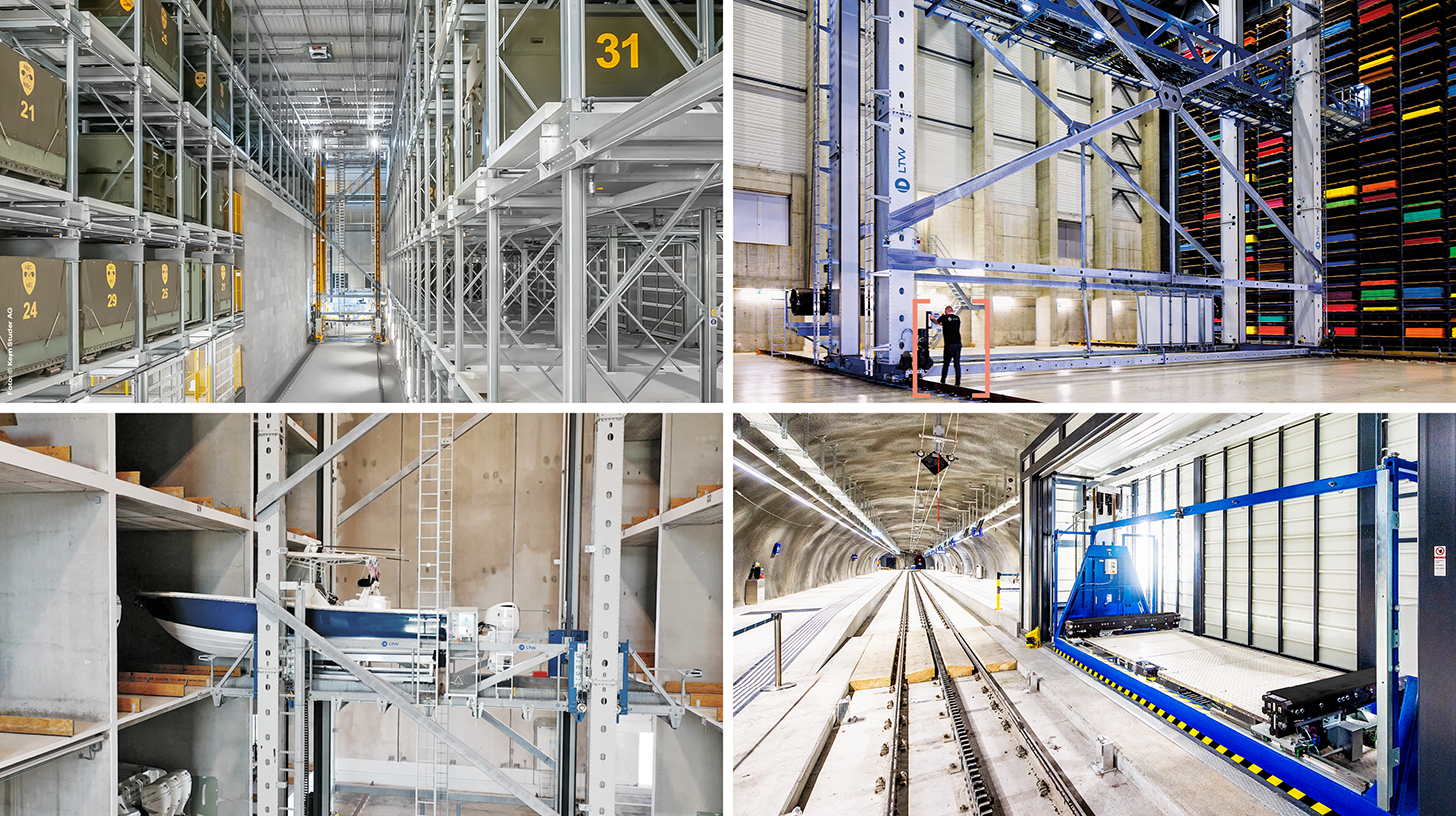
LTW Intralogistics – Engineers of Flow - Image: LTW Intralogistics GmbH
LTW offers its customers not individual components, but integrated complete solutions. Consulting, planning, mechanical and electrotechnical components, control and automation technology, as well as software and service – everything is networked and precisely coordinated.
In-house production of key components is particularly advantageous. This allows for optimal control of quality, supply chains, and interfaces.
LTW stands for reliability, transparency, and collaborative partnership. Loyalty and honesty are firmly anchored in the company's philosophy – a handshake still means something here.
Related to this:
This misconception costs logistics companies millions in automation
What distinguishes successful projects from expensive learning lessons
Industry analyses and case studies are remarkably consistent on one point: Successful automation projects do not begin with the question of which technology to procure. They begin with an honest assessment of the status quo.
The first step is always a thorough analysis of current warehouse processes—a structured recording of all procedures from goods receipt to shipping, with the explicit goal of identifying weaknesses, redundancies, and systemic inefficiencies. Only when this picture is complete can a meaningful decision be made as to where technology actually adds value—and where process optimization and data maintenance must take priority. Providers like AutoStore explicitly state this principle: Before implementing automation, maximum process optimization should be pursued, as automation simply makes a suboptimal process run on a significantly larger scale and at a faster speed.
Another key factor for successful projects is system integration. Many automation solutions are implemented in isolation—an automated picking system here, a transport robot there—without a seamless connection to WMS, ERP, and higher-level systems. The result is data silos, manual workarounds, and throughput losses that are difficult to explain. Projects that define end-to-end integration as a prerequisite from the outset avoid this classic mistake.
Then there's the question of timing. Automation isn't always cost-effective. The common rule of thumb is: the investment usually only becomes worthwhile with a picking volume of around 1,000 picks per day or a number of SKUs exceeding 2,000. For lower volumes or picks concentrated on just a few items, a well-organized, manual shelving system often remains the more economically viable solution. The target payback period for worthwhile automation projects is between two and five years—if this timeframe is significantly missed during the planning phase, it's a reliable indicator of a process-related or conceptual problem.
The state of German industry: Between ambitions and reality
German industry, as Europe's leading logistics nation, finds itself in a peculiar predicament. On the one hand, the pressure to automate is high: a shortage of skilled workers, rising wages, and increasing volume volatility are significantly intensifying the pressure. On the other hand, a recent study by Stuttgart-based TMG Consultants paints a sobering picture: 63 percent of the German companies surveyed have not automated their intralogistics at all or only to a limited extent. A mere eleven percent have highly automated, integrated processes, and only four percent have reached the level of truly autonomous intralogistics.
Particularly telling is the finding that many companies systematically overestimate the maturity level of their own intralogistics. This overestimation is dangerous because it leads to premature technology investments without establishing the necessary process foundation. Those who don't know how good or bad their current processes really are cannot make an informed decision about which technology to deploy, when, and where.
At the same time, automated truck unloading in goods receiving remains an unresolved challenge for many companies—precisely the area that, as already explained, determines the quality of all downstream processes. If you can't get the beginning of the material flow under control, you can automate the end as elaborately as you like—the systemic inefficiency will remain.
Technology as an amplifier, not as a replacement for systems thinking
The core thesis of the entire debate is this: technology is an amplifier—not a transformer. It amplifies what already exists. Good processes become better and faster. Bad processes become worse and faster. This asymmetry is systematically underestimated in practice because investment arguments are generally focused on the potential state—on what is possible when everything is right.
What this debate often lacks is the consistent application of a simple yet effective thought experiment: What would our warehouse look like if we were to build it from scratch today? This question forces us to confront the ideal state—and in doing so, it instantly reveals how far the status quo is from it. This very discrepancy determines whether an investment in automation unlocks potential or perpetuates problems.
Order picking alone often accounts for more than 55 percent of total operational warehouse costs in manual warehouses. Incorrect picks generate average follow-up costs of nearly €20 per incorrect pick. Automation can significantly reduce these cost blocks—but only if the logistics architecture on which it is built is stable and consistent. Anyone aiming to achieve 25 to 30 percent labor cost savings through automation must be prepared to first invest in what doesn't produce gleaming robots or impressive demonstration videos: clean data, structured slotting, reliable goods receiving, and a clear system design plan.
The inconvenient truth is this: those who buy the technology first and then try to understand the processes are conducting logistics policy at the level of the 20th century — only with significantly more expensive hardware.
Consulting - Planning - Implementation

Konrad Wolfenstein
I would be happy to serve as your personal advisor.
You can contact me at wolfenstein∂xpert.digital or
Just call me on +49 7348 4088 965 .
Your intralogistics experts

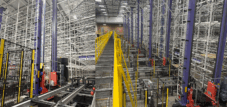
Consulting, planning and implementation of complete solutions for high-bay warehouses and automated storage systems - Image: Xpert.Digital
More information here: