The TEN-T system: Europe's underappreciated backbone of economic integration – Who actually pays for our roads, railways, and ports? – Image: Xpert.Digital
Europe's invisible multi-billion euro project: The TEN-T network – The EU's most important mega-project that hardly anyone knows about
TEN-T: How the Ukraine war is radically transforming the European transport network
Military and trade: Why the EU is now massively upgrading its transport routes
Without them, there would be no functioning European single market, yet they barely register in the public consciousness: The Trans-European Transport Networks (TEN-T) form the invisible but vital backbone of our economy. What began in the 1990s as a purely economic networking project for roads, railways, and ports has, at the latest since Russia's war of aggression against Ukraine, transformed into a highly political instrument of power. The most recent reform of 2024 makes it ruthlessly clear that transport infrastructure must no longer just efficiently transport goods and people, but also withstand geopolitical crises and military requirements. But while the European Union is pushing ahead with multi-billion-euro budgets and strict deadlines by 2030, the ambitious mega-project is threatened by national egoism, bureaucratic hurdles, and chronic underfunding. This is an in-depth analysis of an underappreciated multi-billion-euro project that will significantly shape Europe's economic and security future.
Related to this:

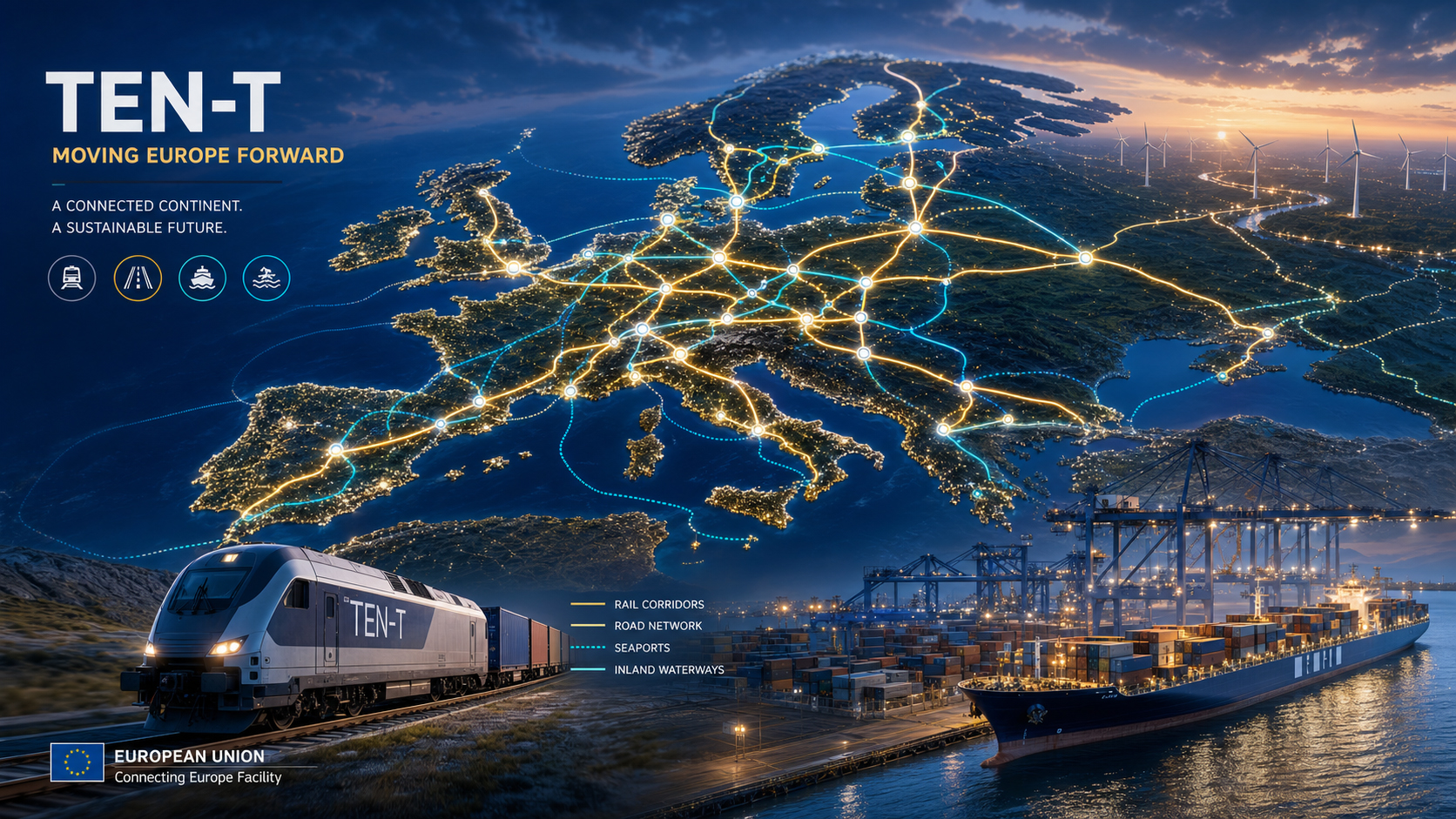
A continent in search of its connection
Who actually pays for the roads, railways and ports that keep the European single market running – and who really benefits from it?
The Trans-European Transport Network, known in European official jargon as TEN-T, is one of those infrastructure projects that receives little public attention, even though it has shaped the economic landscape of Europe for decades. The fundamental considerations for a pan-European transport network to connect the European Union economically date back to 1990, when the member states adopted a common infrastructure policy to specifically promote the European single market. The formal legal framework and the official launch of the network finally took place in 1996 with Decision No. 1692/96/EC of the European Parliament and of the Council. From an economic perspective, this was more than a symbolic act of European integration: it was the recognition that a common market without continuous physical connections remains a theoretical construct. Cross-border trade, the division of labor in production, and regional convergence require functioning transport routes that make national systems compatible, rather than allowing them to end at borders.
Where the name comes from and what's behind it
The abbreviation TEN-T comes from English and stands for "Trans-European Transport Network." The system is a central part of the so-called Trans-European Networks, which, as an overarching concept, connect the transport, energy, and telecommunications sectors. Although the abbreviation TEN-V for "Trans-European Networks Transport" is frequently used officially in German, the English short form has largely prevailed internationally and also in German-speaking countries. That an English abbreviation has prevailed over the official designation is itself a small symptom of the reality of European politics: technical terms circulate across language barriers faster than national bureaucracies can catch up, and English effectively functions as the lingua franca of the European administrative architecture.
From draft paper to binding legal norm
The legal development of the TEN-T system progressed through several waves of reform, each responding to changing economic and geopolitical realities. Following its establishment in 1996, a first major revision took place in 2004, responding to the enlargement of the European Union by ten new member states and necessitating an adaptation of the network structure to the larger, more heterogeneous territory. Perhaps the most significant conceptual shift occurred in 2013 with the introduction of a two-tiered network architecture. This architecture distinguishes between a core network of the main transport corridors and a broader overall network connecting the regions to this core network. Completion of the core network was targeted for 2030, and the overall network for 2050. This two-tiered approach was economically sound, as it concentrated limited funding on those corridors handling the largest share of cross-border freight and passenger traffic, while connecting peripheral regions over a longer timeframe.
The 2024 reform as a geopolitical turning point
The currently applicable legal framework is Regulation (EU) 2024/1679 of the European Parliament and of the Council of 13 June 2024, which completely replaces the previous regulation of 2013. This revision is not merely a technical update, but reflects a profound reassessment of priorities triggered by Russia's war of aggression against Ukraine. The new regulation introduces an interim deadline of 2040, which applies to a so-called extended core network and serves to bring forward the completion of major, especially cross-border, projects – such as closing gaps in the rail network. The expansion plan now consists of three stages: 2030 for the core network, 2040 for the extended core network, and 2050 for the entire network. It is also noteworthy that the corridors of the core network have now been merged with the existing rail freight corridors to form unified “European transport corridors” in order to eliminate planning redundancies and increase operational coherence between long-distance passenger transport and freight logistics.
When geopolitics redraws infrastructure planning
Perhaps the most consequential substantive change of the 2024 reform concerns the geographical orientation of the network itself. As a direct response to Russia's war of aggression, four European transport corridors were extended to include Ukraine and Moldova, while at the same time the priority of cross-border connections to Russia and Belarus was downgraded. This is an economically significant decision because it signals that the EU is no longer basing its infrastructure planning solely on efficiency criteria, but increasingly on security considerations. In parallel, the so-called solidarity corridors between the EU, Ukraine, and Moldova were established in 2022. These were originally set up to circumvent the Russian blockade in the Black Sea and facilitate Ukrainian grain exports. To date, more than 136 million tons of goods such as grain, ores, and steel have been exported via these corridors, and over 52 million tons of essential imports such as fuel, vehicles, fertilizers, and military and humanitarian aid have been transported. According to the EU Transport Commissioner, the solidarity corridors have so far generated around €50 billion in revenue for the Ukrainian economy, while imports worth approximately €107 billion have been handled via these routes. These figures demonstrate that transport infrastructure has long since become a strategic instrument of power that extends far beyond mere mobility issues.
The anatomy of a multilayered network
The TEN-T network is hierarchically divided into three levels: the core network, the extended core network, and the comprehensive network, with different deadlines and infrastructure requirements applying to each network level. The high-level core network comprises the most important European transport links and hubs and must be completed by 2030, while the comprehensive network connects all regions of the European Union to this core network and is not due for completion until 2050. Specifically, this means significant technical standards for the individual modes of transport: railway lines in the core network must be designed for trains with a length of 740 meters, which will significantly increase the capacity of rail freight and promote the shift to more sustainable modes of transport. Furthermore, major airports with an annual passenger volume of more than twelve million must be connected to the long-distance rail network to make rail a competitive alternative to short-haul flights within Europe. For inland waterways and ports, the regulation sets minimum standards for infrastructure and service levels to ensure efficient, reliable and safe navigation along European waterways, while for seaports, minimum requirements apply that are intended to promote short sea shipping and hinterland connections via rail.
The price of connection: Who pays for Europe's network?
The central financing instrument for the expansion of the TEN-T network is the Connecting Europe Facility (CEF), whose current funding period runs from 2021 to 2027 and has a total budget of approximately €33.71 billion. Of this amount, around €25.81 billion is allocated to the transport sector, while approximately €5.84 billion goes to energy infrastructure and around €2.07 billion to digital infrastructure. Within the transport budget, targeted special budgets are also provided, such as €1.56 billion for major railway projects in economically weaker cohesion countries and around €1.69 billion for infrastructure that can be used for both civilian and military purposes – a so-called dual-use concept that reflects the increasing convergence of economic and security policy in European infrastructure planning. EU co-financing rates for core network expansion are normally a maximum of 30 percent of project costs, but can be increased to up to 50 percent under certain conditions, while cross-border connections within the overall network can be co-financed at 50 percent across the board. In addition, European cohesion policy also provides significant support for network expansion: total investments of €32.5 billion are planned for the period 2021 to 2027, of which €25.3 billion comes from EU funding. This combination of the CEF and the Cohesion Fund demonstrates that the EU deliberately uses two parallel financing streams: a competition-oriented, project-based approach via the CEF and a redistribution-oriented approach via cohesion policy, which specifically benefits structurally weaker regions and member states.
Hub for Security and Defense - Advice and Information


Hub for Security and Defense - Image: Xpert.Digital
The Security and Defence Hub offers expert advice and up-to-date information to effectively support companies and organizations in strengthening their role in European security and defence policy. Working closely with the SME Connect Defence Working Group, it particularly promotes small and medium-sized enterprises (SMEs) that wish to further develop their innovative capacity and competitiveness in the defence sector. As a central point of contact, the Hub thus creates a crucial bridge between SMEs and European defence strategy.
Related to this:
Why the European TEN-T network needs more than just civilian transport routes
Growth engine or bottomless pit?
From a macroeconomic perspective, the TEN-T network can be interpreted as a classic public investment good with positive externalities. Reduced transport times and costs lower the transaction costs of cross-border trade, which is of considerable importance, especially for export-oriented economies like Germany. At the same time, experience with such large-scale projects shows that the actual implementation periods regularly exceed the original schedules, raising doubts about the feasibility of meeting the 2030 deadline for the core network. Critics of EU transport policy have pointed out for years that the funding provided is small in relation to the actual investment needs and that member states have to bear the lion's share of the financial burden through national budgets or private investors. Given the scale of Europe-wide infrastructure needs, which industry associations regularly estimate at several hundred billion euros, the €25.8 billion in CEF transport funding for the period 2021 to 2027 appears more like seed funding than full coverage. The real economic risk therefore lies less in the design of the network itself than in the chronic underfunding measured against actual need – exacerbated by competing fiscal priorities of member states in areas such as defence, energy transition and demographic change.
Related to this:

Germany's ambivalence between pioneer and laggard
For Germany, as a central hub of European freight transport, the TEN-T network holds particular strategic importance, as several key corridors run directly through the country and the German export industry is highly dependent on functioning cross-border connections. At the same time, a familiar pattern is evident in Germany: the bureaucratic burden of approval procedures, the fragmented federal structure of responsibilities, and the chronic backlog of maintenance in the rail network significantly hinder the swift implementation of TEN-T requirements. Applications for CEF funding involving German participation must be reviewed and approved in advance by the responsible federal ministry – an additional administrative step that can delay projects but simultaneously ensures national quality control. The implementation of the European Train Control System (ERTMS) by Deutsche Bahn, funded under the CEF, exemplifies how European funding enables concrete technical modernizations in the German rail network that would likely have progressed more slowly without this support.
The underestimated role of multimodal hubs
An often overlooked but economically crucial aspect of the 2024 TEN-T reform is the increased emphasis on multimodal transshipment points—those hubs where goods are transferred between rail, road, inland waterway, and maritime transport. The regulation specifically promotes the expansion of transshipment ports, both in number and capacity, to meet the growing demand for combined transport, where containers or swap bodies are seamlessly transferred between modes of transport. From an economic perspective, this is a response to the realization that pure rail infrastructure is of little value without functioning interfaces. A perfectly developed rail corridor offers no economic benefit if goods are stuck in hours-long queues at terminals because the transshipment facilities haven't kept pace. In addition, the regulation requires all major cities along the TEN-T network to submit plans for sustainable urban mobility, strategically focusing on the last mile of freight transport and the integration of long-distance transport with urban logistics.
Related to this:

Outlook on an uncertain funding future after 2027
The current funding period of the Connecting Europe Facility is drawing to a close, and the European Commission has already signaled its intention to present a successor proposal for the period from 2028 onwards within the framework of the next multiannual financial framework. This decision comes at a time when the European Union is simultaneously undertaking enormous financial commitments related to the reconstruction of Ukraine, the strengthening of European defense capabilities, and the financing of the energy transition. It is therefore plausible that future TEN-T funding programs will be even more closely linked to security policy and dual-use criteria, as is already indicated in the 2024 reform. For companies, municipalities, and regions that rely on European funding for infrastructure projects, this means that strategic applications will increasingly require a geopolitical interpretation of their projects to ensure eligibility.
The coordinators as silent architects of implementation
A little-noticed but institutionally important element of TEN-T governance is the role of the European corridor coordinators, whose powers were significantly expanded with the 2024 reform to incorporate the new TEN-T priorities and enable them to engage directly with participating non-EU countries. Additionally, the European Commission was granted the authority to adopt separate implementing acts for each European transport corridor, structurally strengthening its central governance power vis-à-vis individual member states. At the same time, greater harmonization between national transport plans and the overarching TEN-T strategy is being called for – an attempt to address the long-standing fundamental problem that national infrastructure planning often develops independently of European corridor logic and only subsequently has to be aligned with it. This institutional strengthening of the supranational level vis-à-vis national transport ministries is not without political controversy, as it tends to restrict the sovereignty of individual member states over their own infrastructure planning, but appears economically necessary in order to overcome the notorious fragmentation of European transport networks.
Between military mobility and civilian use
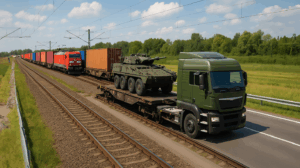
Another notable element of the recent reform concerns the increased consideration given to military requirements in the construction or expansion of civilian infrastructure that overlaps with the military transport network. This development, which must be understood against the backdrop of the changed security situation in Europe since 2022, marks a fundamental break with the decades-long premise that civilian transport infrastructure is strictly separate from military logistics. From an economic perspective, such dual-use investments can be quite efficient, as a road or railway line that accommodates both civilian freight transport and military mobility generates economies of scale in construction costs compared to building separate infrastructures. At the same time, this creates new conflicts of interest, for example, when civilian capacity planning is subordinated to military requirements, or when security concerns regarding foreign investment in TEN-T infrastructure—for which the 2024 reform explicitly introduces stricter safeguards—hinder private capital flows into European infrastructure projects.
A sober assessment
The TEN-T system remains one of the most ambitious, yet chronically underestimated, infrastructure projects of European integration. It embodies the attempt to forge a coherent, economically viable whole from 27 national transport systems without relinquishing the Union's federal structure or the fiscal sovereignty of the member states. The 2024 reform demonstrates that this project can no longer be conceived in purely technocratic terms, but is increasingly shaped by geopolitical shifts, security policy necessities, and the question of European resilience. Whether the ambitious timeline with its targets of 2030, 2040, and 2050 can actually be met depends significantly on whether European policymakers are prepared to close the funding gap between declared ambition and actual resources more decisively than they have in previous funding periods.
Consulting - Planning - Implementation

Markus Becker
I would be happy to serve as your personal advisor.
Head of Business Development
Chairman SME Connect Defense Working Group
Consulting - Planning - Implementation
Konrad Wolfenstein
I would be happy to serve as your personal advisor.
You can contact me at wolfenstein∂xpert.digital or
Just call me on +49 7348 4088 965 .