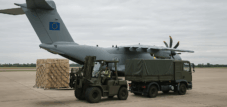
Billions for weapons, but no way to reach the front: Why Europe's real defense gap lies in logistics – Image: Xpert.Digital
Billions for weapons, 45 days for transport: NATO's fatal logistics problem
Not AI or drones: Industry expert reveals the true weakness of Europe's defense
Industry warning: Europe's defense is facing a massive logistical collapse
Artificial intelligence, drone swarms, and multi-billion-euro budgets dominate the security policy debate in Europe. But while budgets are growing rapidly, a much more fundamental question remains unanswered: How does the equipment actually get to where it's needed in a crisis? The harsh reality is that Europe's NATO states don't suffer from a lack of innovation, but from a massive bureaucratic and infrastructural implementation problem. Transporting tanks to the eastern flank often takes weeks, is thwarted by dilapidated bridges, or fails due to national approval processes. Markus Becker, logistics expert and Head of Business Development at the globally operating plant engineering company LTW Intralogistics, urgently warns of this "knowing-doing gap." He calls for a radical rethink: away from pure technology fetishism and toward a genuine "dual-use" infrastructure that utilizes civilian economic capacity in everyday life and is immediately available for military use in a crisis. A look at perhaps the biggest, but most underestimated, Achilles' heel of European security.
Europe doesn't have an innovation problem – it has an implementation problem
Dual use instead of technology fetishism: How civilian infrastructure must secure Europe's borders
When European defense ministers, Brussels strategists, and economic advisors discuss the future of European security, the debate almost reflexively revolves around the same topics: autonomous drone swarms, AI-supported reconnaissance systems, quantum communication, and cyber defense. The race for technological superiority dominates the headlines. And yet, perhaps the most serious weakness of the European defense system lies not in a lack of innovation, but in a frightening deficit of tangible, deployable logistics and infrastructure capacity. This is the assessment of Markus Becker, Head of Business Development at LTW Intralogistics GmbH in Wolfurt – one of the world's leading providers of turnkey intralogistics systems.
LTW is part of the Doppelmayr Group, manufactures according to cable car standards, and has installed over 2,000 stacker cranes in more than 30 countries since 1981. It is no coincidence that Becker comes from precisely this environment: Anyone who plans and implements automated high-bay warehouses, conveyor technology, and warehouse management systems for industry and commerce thinks daily about the same questions that Europe cannot solve in the defense context – speed of response, modular scalability, system reliability under extreme conditions, and the integration of complex supply chains. Becker therefore sees this structural failure not as an abstract observer, but as a practitioner who knows how quickly a well-planned system can fail due to a lack of standards, bureaucratic interfaces, or insufficient political commitment.
Becker's diagnosis is as precise as it is uncomfortable: "Europe is currently talking a lot about drones, AI, and innovation – but the real structural problem lies elsewhere entirely: in the lack of feasible logistics and infrastructure capabilities." He speaks not as a theorist, but as a practitioner who knows what it means when a concept fails at the implementation stage – due to approval deadlines, incompatible standards, a lack of political commitment, and national self-interest that stifle European efficiency. He sums up his core thesis in a clear formula: Europe doesn't have an innovation problem – it has an execution problem.
Strategic ambition meets operational reality
The figures sound impressive: European NATO states have agreed on a new target of at least 3.5 percent of gross domestic product for nuclear defense. By 2030, total defense spending by EU member states could rise to around 800 billion euros – a sum nearly equal to the current annual US defense budget. Germany alone is expanding its defense budget through a special fund of 86 billion euros and has announced plans to increase military spending to up to 3.5 percent of GDP by 2029. Venture capital investments in European defense tech startups are projected to reach around 2.6 billion euros by 2025 – more than ten times the figure for 2021.
But behind these figures lies a worrying discrepancy. More than 50 percent of major European arms programs are behind schedule or exceeding their budgets. The equipment stockpiles of many European NATO countries are still below 2021 levels, partly as a result of extensive aid deliveries to Ukraine. And despite record budget increases, McKinsey explicitly warns: Deterrence only emerges when resources are translated quickly and efficiently into available capabilities. The money is there. The ability to use it effectively is lacking in many places.
The Capgemini study from 2026 succinctly summarizes the problem: Europe faces a "knowing-doing gap"—a disparity between knowledge and action. While the necessary steps are known, implementation is stagnating due to technological legacies, cultural inertia, and political complexity. Only 44 percent of the surveyed companies believe they are capable of actually delivering when it matters most. This is the real structural problem: not a lack of concepts or capital, but the absence of an integrated, resilient, and rapidly deployable execution capacity.
The invisible backbone: What logistics really means in a defense context
Military mobility is not a fringe issue in the defense debate—it is its very core. Every strategy, every capability, every drone is worthless if it is not in the right place at the right time. Yet this is precisely where Europe is systematically failing. Currently, it takes 45 days to transport military equipment from key Western European ports through the EU to NATO's eastern flank. This is not a technological failure—it is a logistical and bureaucratic failure of the highest order.
The causes are manifold and deeply rooted. In contrast to the freedom of movement enjoyed by EU citizens and civilian goods within the Schengen Area, the mobility of military personnel and equipment is severely restricted by a multitude of bureaucratic hurdles. Every European country has its own permit regulations, and the lack of standardization significantly exacerbates this problem. Germany stands out negatively in this regard: even transport between federal states requires separate permits. Furthermore, military convoys are often only allowed to travel at night, and noise protection zones cause further detours and delays.
The EU's response time for granting permits for cross-border military transports is currently up to five working days – while NATO's standard operational planning time is 72 hours. This structural time loss renders European defense planning de facto unbelievable to an adversary operating under different circumstances. Germany is NATO's hub for moving military goods to the alliance's eastern flank – and yet its transport infrastructure suffers from decades of underinvestment, dilapidated bridges, a fragmented rail network, and communication systems that no longer meet modern requirements.
Dual use as a strategic principle: More than just a buzzword
In political debate, "dual use" has become a buzzword that is frequently misunderstood. Too often, the term is reduced to export control—that is, to goods that could be used for both civilian and military purposes and are therefore subject to special export licenses. This is too simplistic. The true strategic dimension of the dual-use principle lies in the development of infrastructures designed from the ground up to maximize trade efficiency in peaceful times, while seamlessly and without delay being used for military and emergency transport in a crisis.
The concept of "dual-use rapid deployment" goes a step further. It involves designing a fully integrated infrastructure strategy in which civilian and military requirements are planned as a single unit from the outset. If a railway line is upgraded for heavy military transport, civilian heavy goods traffic also benefits. If digital platforms offer military-grade tracking precision, the civilian supply chain gains transparency. Infrastructure no longer distinguishes between business and security – it serves both through intelligent multi-use.
Specific applications have already been tested: ports that act as NATO force multipliers by linking economic interests with military requirements; bridges whose new construction plans incorporate NATO load requirements as standard practice; digital radio infrastructures for authorities and organizations with security responsibilities that supplement tactical communication systems in crisis situations; and storage facilities that handle consumer goods logistics under normal circumstances and can accommodate security-relevant goods in a crisis. The German Federal Ministry of Defense and PESCO are working specifically on a network of such logistics hubs in Europe.
LTW Intralogistics Solutions

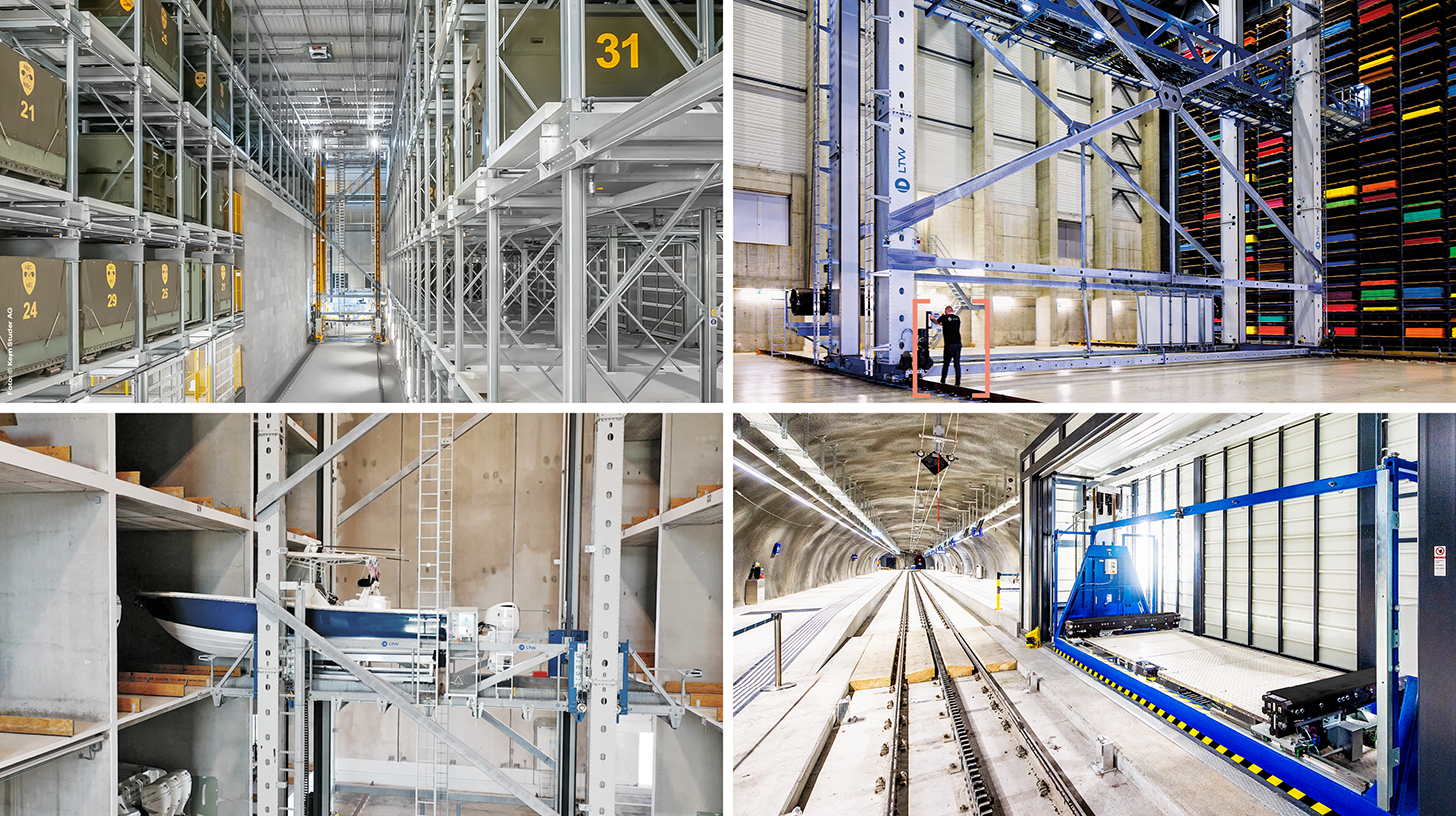
LTW Intralogistics – Engineers of Flow - Image: LTW Intralogistics GmbH
LTW offers its customers not individual components, but integrated complete solutions. Consulting, planning, mechanical and electrotechnical components, control and automation technology, as well as software and service – everything is networked and precisely coordinated.
In-house production of key components is particularly advantageous. This allows for optimal control of quality, supply chains, and interfaces.
LTW stands for reliability, transparency, and collaborative partnership. Loyalty and honesty are firmly anchored in the company's philosophy – a handshake still means something here.
Related to this:
Why Europe's best solutions fail at scaling — and how logistics can change that
The practical paradox: When solutions already exist but still don't scale
A key feature of the European implementation dilemma is the paradox of a proven but unscalable solution. In numerous areas, there are tried and tested technologies, functioning pilot projects, and robust concepts – yet the path from local application to systemic scaling regularly fails due to the same obstacles: regulatory fragmentation, lack of interoperability, national self-interest, and insufficient political commitment.
Markus Becker knows this pattern from personal experience. In projects where he acted as coordinator and metaplanner, he repeatedly witnessed how technically sound and economically compelling concepts stalled at institutional interfaces – even though technology providers, funding partners, and authorities were all nominally working together. The insight he draws from this is directly applicable to defense logistics: “The real structural problem isn't the technology – it's the lack of implementable infrastructure capability. We have excellent solutions in Europe. What's missing is the courage and the methodology to consistently deploy them on a large scale.”
This can be illustrated by an example from the field of resource technology. Since the 1990s, mechanical-biological waste treatment plants have been developed in Germany that produce biogas, alternative fuels, and recoverable minerals from municipal waste – systems that are energy self-sufficient, modular in design, and adaptable to local conditions. An international technology transfer project for the deployment of such resource centers in Russia, funded by the German Federal Ministry of Education and Research and the German Aerospace Center (DLR) with a funding rate of up to 100 percent, demonstrated both the enormous potential and the typical limitations of these approaches: The technology worked. The concept was convincing. Nevertheless, the crucial work lay in managing the interfaces between German technology providers, Russian authorities, research institutions, and private investors.
What makes such projects so revealing from a structural perspective is their transferable logic: First, their modularity – the basic architecture can be adapted to different scales and conditions without requiring fundamental redesign. Second, their multiple uses – the same facility serves simultaneously for waste disposal, energy generation, and resource recovery. Third, their resilience – systems that function economically in daily operation can be activated more quickly in a crisis than specially designed emergency facilities. And fourth, their transfer potential – the principle of the decentralized, regionally adapted, and self-sufficient facility can be directly applied to dual-use logistics centers. The solution exists. It has been tested. What is lacking is the political will to scale it up.
The structural weakness: Europe's strategic cacophony
The deep-rooted political fragmentation, which observers describe as "strategic cacophony," is the fundamental obstacle to any systemic progress in the area of dual-use infrastructure. Europe does not speak with one voice—neither in threat analysis, nor in procurement policy, nor in the planning and approval processes for infrastructure. Modernization is largely carried out nationally, not in a coordinated European manner. Differing threat analyses, divergent procurement programs, and incompatible operational concepts prevent genuine integration.
This fragmentation is not only operationally costly, it is also economically irrational. In its statement on military mobility, the BDI (Federation of German Industries) clearly stated that coordinated investments in dual-use infrastructure must be prioritized for funding and that industry must be involved early and in a binding manner. Furthermore, regulatory fragmentation must be overcome to make PESCO plans feasible at all. McKinsey has calculated that targeted consolidation of the highly fragmented European defense supply chains could unlock approximately €9 billion in efficiency and cost savings annually, totaling around €45 billion by 2030. These are not theoretical figures – this is lost value creation that is lost year after year due to structural inertia.
The paradigm shift problem: From planning to implementation
With its "EU Defence Industry Transformation Roadmap" of November 2025, the European Commission has at least set the right priorities: speed, modularity, interoperability, and rapid procurement. Lessons learned from the war in Ukraine—such as software-defined systems, open architectures, and cost-efficient mass production, particularly for drones—are being directly incorporated into new procurement and industrialization approaches. A European fund of funds with a planned volume of around one billion euros is intended to better provide start-ups and growth companies in the defense and dual-use sectors with access to venture capital.
Although 60 to 70 percent of European aerospace and defense managers expect digital transformation to have a high or very high impact by 2028, only 20 to 30 percent report having achieved an advanced level of digitalization today. A massive "execution gap" exists between intention and reality. Markus Becker puts it bluntly: Europe's political class invests in strategy papers and summit declarations – but the actual work – namely streamlining approval processes, harmonizing standards, and understanding procurement as a strategic rather than a purely administrative instrument – remains undone. For years, the German and European defense sector suffered from a structural mindset that prioritized national preferences over European efficiency. This led to expensive, overly complex developments and created supply chain inefficiencies that could be life-threatening in a crisis.
Logistics as a security resource: An underestimated economic factor
The macroeconomic dimension of dual-use logistics infrastructure is rarely given adequate consideration in public debate. According to an analysis by the real estate services provider Savills, increasing military demand could trigger an additional need for up to 37 million square meters of industrial and logistics space in Europe – in Germany alone, this would amount to up to 6 million square meters of additional space. McKinsey estimates that the planned budget increases could create up to 1.2 million new jobs across Europe by 2030. These are tangible economic opportunities arising at the intersection of civilian logistics and security policy necessities.
Companies in the freight forwarding, intermodal transport, warehousing, digitalization, and infrastructure construction sectors could directly benefit from a European dual-use infrastructure program. The strategic logic behind this is simple and compelling: Civilian logistics infrastructure that operates at optimal capacity in daily operations pays for itself. Additional capacities designed with military applications in mind increase resilience without incurring unpredictable costs during peacetime. Shared infrastructure relieves the burden on administrative and operational staff, which is a significant argument given the structural personnel shortages in public administration and the armed forces.
Technologies as a tool, not as a strategy
It would be a mistake to conclude from criticism of technology fetishism that technology plays no role in defense logistics. It plays a crucial role – but as a tool for solving concrete implementation problems, not as an end in itself. The VDI research paper from February 2025 highlights two categories that are particularly relevant: Dual-use technologies such as artificial intelligence and hyperspectral imaging offer significant applications for both civil security and military purposes; disruptive technologies such as quantum technologies and autonomous systems can substantially increase precision, efficiency, and responsiveness.
Specifically for logistics infrastructure, this means that AI-supported approval processes can drastically reduce turnaround times for military transports. Digital platforms for real-time tracking of goods—used in everyday civilian life for supply chain transparency—can be seamlessly activated for military tracking in a crisis. The modular, scalable design of logistics centers enables rapid conversion between peacetime and crisis use. This very point—the open, modularly expandable system architecture—is one of the central principles that Becker derives from his practical project experience: Systems that function economically in everyday operations can be activated much faster in a crisis than any specially designed emergency system.
The geopolitical window of opportunity: now or never
Europe's security policy context has fundamentally shifted. Russia's ongoing war of aggression against Ukraine has altered strategic planning in virtually all EU member states. At the Hague 2025 summit, NATO adopted a new spending target of 3.5 percent of GDP for nuclear defense. With its first European Defense Industrial Strategy, the EU has set clear objectives for joint procurement, European value creation, and the expansion of the defense industry. The window of opportunity for structural reforms has opened – possibly for the first time in decades.
What prevents Europe from seizing this opportunity is primarily its own structural inertia: a labyrinth of national regulations, decades of underinvestment in critical infrastructure, and a political culture that prioritizes consensus over speed of implementation. Added to this is a lack of strategic leadership, creating a paradoxical situation: rising expenditures coupled with severely limited effectiveness.
What is needed now: Infrastructure as security policy
Anyone who takes the debate about Europe's defense capabilities seriously cannot avoid understanding infrastructure as the true essence of security policy. Drones, AI, and autonomous systems are worthwhile investments – but they only have an impact if they are ready for deployment at the right time and in the right place. This doesn't require new visions. It requires the courage to implement them.
Specifically, this means that reducing bureaucratic hurdles for cross-border military transport must be an absolute priority. The EU's response time for transport permits must be reduced to a maximum of 72 hours. The European Commission's initiative to establish four military corridors is a sensible first step that must be closely coordinated with NATO. Europe needs decentralized, secure storage facilities and dual-use logistics centers, which are jointly developed by the civilian sector and defense from planning to operation.
The overarching goal is an infrastructure that no longer differentiates between the economy and security, but strengthens both simultaneously through intelligent multi-use. A railway line upgraded for heavy military transport also improves civilian freight traffic. A logistics center that strengthens the regional economy on a daily basis can be converted within hours in an emergency. Digital tracking platforms developed for commercial enterprises make military supply chains visible in a crisis.
Europe's defense capabilities will not be decided in Brussels conference rooms. They will be built in logistics centers, at rail freight terminals, and at hubs of intermodal freight transport. Markus Becker summarizes it this way: "The dual-use and rapid deployment issue is perfectly aligned with the current EU defense debate – but from a perspective that hardly anyone presents clearly. The real question is not whether Europe is innovative enough. The question is whether Europe is ready to finally and consistently implement what it already has and what it can do. Now."
Consulting - Planning - Implementation

Konrad Wolfenstein
I would be happy to serve as your personal advisor.
You can contact me at wolfenstein∂xpert.digital or
Just call me on +49 7348 4088 965 .
Your intralogistics experts

Consulting, planning and implementation of complete solutions for high-bay warehouses and automated storage systems - Image: Xpert.Digital
More information here: