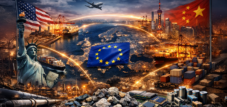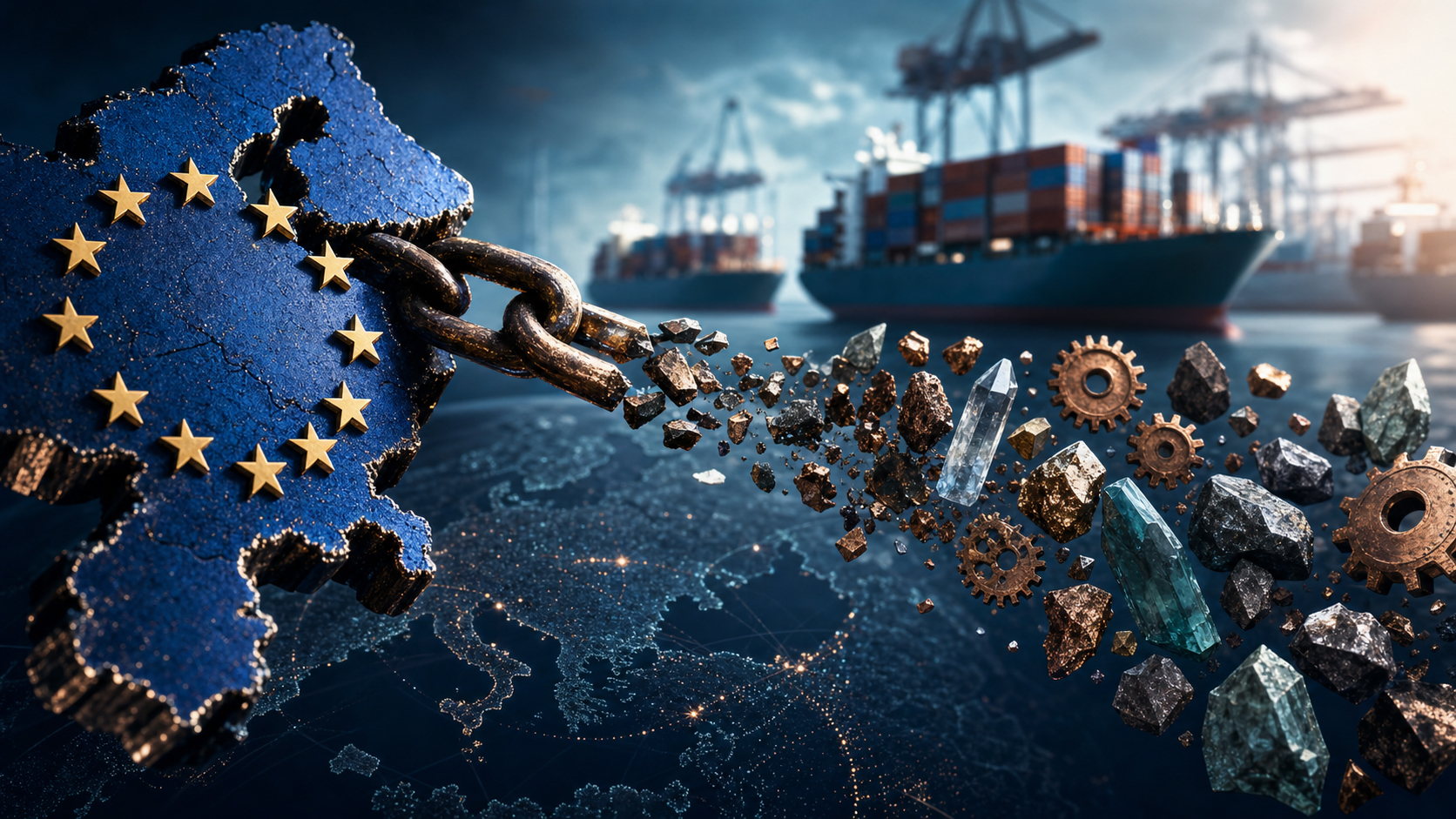
Europe's raw materials illusion: Why the green transition depends on China – The high price of strategic self-deception – Image: Xpert.Digital
Devastating verdict from the Court of Auditors: The EU's multi-billion euro plan is in danger of failing
Billions for nothing? Why Europe's most important raw materials law is out of touch with reality
The great raw materials illusion: How Europe is systematically deceiving itself regarding rare earths
Europe's ambitious plans for a green and digital future are on shaky ground – and Beijing, of all places, controls the foundation. While the EU loudly dreams of strategic autonomy, attempts to counteract this with new laws like the Critical Raw Materials Act, and pumps billions into funding programs, the harsh reality paints a far more dramatic picture: When it comes to essential critical raw materials and rare earths, European industry is more dependent on China than ever before. A recent special report by the European Court of Auditors now ruthlessly confirms the full extent of this predicament. From agonizingly slow approval processes and drastically neglected recycling concepts to the looming threat of geopolitical blackmail – the EU's path to resource independence resembles an industrial dead end. The following analysis illuminates the gaping chasm between European aspirations and global power politics. It shows why mere legal texts are not enough and which crucial levers Brussels and Berlin now urgently need to adjust in order not to be completely crushed in the merciless race between the superpowers.
Europe's raw material trap: Why our green future lies entirely in China's hands
The European Union faces a structural conflict of objectives that affects its entire industrial future: it wants to simultaneously advance the green and digital transformation, strengthen its economic sovereignty, and remain dependent on precisely those raw materials whose control lies almost entirely in the hands of a geopolitical rival. This situation is not an abstract concern for the future, but a present reality that has long since manifested itself in figures, supply bottlenecks, and displays of political power. With the Critical Raw Materials Act (CRMA) and accompanying initiatives such as the EU Energy and Raw Materials Platform and the RESourceEU Action Plan presented in December 2025, the European Union has attempted to formulate a response to this vulnerability. However, the closer one examines the actual implementation, the funding, and the structural time horizons, the clearer it becomes that there is a significant gap between political ambition and industrial reality.
This analysis examines why Europe's raw materials strategy in its current form suffers from a fundamental weakness: it focuses disproportionately on securing supply, while the equally important levers of demand reduction, genuine trade diversification and a resilient circular economy fall far short of political announcements in practical implementation.
China as the pacesetter of the global commodity order
To understand the urgency of the European debate, one must consider the actual market situation. According to consistent estimates, China controls between 60 and 70 percent of global rare earth production and up to 90 percent of global processing capacity for these elements. For certain compounds, the concentration is even more extreme: In 2025, approximately 97.3 percent of the lanthanum compounds imported into Germany originated in China. This dominance is not a product of chance geological conditions, but rather the result of a consistent industrial policy pursued by Beijing over decades, strategically coordinating production volumes, environmental standards, export controls, and processing capacities.
For Germany and the entire European Union, this dependency is reflected in hard trade figures. In 2025, Germany imported approximately 5,500 tons of rare earth elements worth €77.6 million, an increase of 4.9 percent compared to the previous year. 55.4 percent of this quantity originated from China, although this figure was declining compared to the 65.4 percent recorded in 2024. At the EU level, a total of 15,100 tons of rare earth elements worth €124.9 million were imported in 2025. Of this, 46.8 percent came from China, followed by Russia with 25.9 percent and Malaysia with 23.1 percent. These figures demonstrate a certain degree of diversification, but by no means a sufficient one.
How Beijing transforms its market power into political pressure
The true significance of Chinese dominance lies not in the dry trade statistics, but in Beijing's willingness to use this market power as a geopolitical instrument. On April 4, 2025, in response to increased US tariffs, China imposed export restrictions on seven rare earth elements and magnets made from them, which are essential in the defense, energy, and automotive sectors. In October 2025, Beijing further expanded these controls to include additional elements such as holmium, erbium, thulium, europium, and ytterbium, and for the first time, also the export of processing technologies themselves. Chinese authorities also required applicants to disclose sensitive company data as a prerequisite for export licenses, which the European Parliament considered a significant risk of technology outflow.
The economic consequences of this policy were immediately felt. In a tender for key rare earth elements in September 2025, around three-quarters of European demand remained unmet, as the European Chamber of Commerce in China publicly lamented. The price of germanium, a key component for high-tech cameras, including those used in fighter jets like the F-35, reached a ten-year high as a result of this shortage. Western automotive companies also felt the effects: Ford had to reduce its SUV production in Chicago in May 2025, and suppliers like Aptiv had to operate with reduced inventories of rare earth magnets to counter impending supply bottlenecks. Although the EU and China reached preliminary assurances in the summer of 2026 that existing export controls would not affect European supply chains, EU Trade Commissioner Maroš Šefčovič made it clear in Brussels that the current status quo, with growing Chinese exports coupled with shrinking market shares for European companies in China, was unsustainable. The president of the European Chamber of Commerce in China spoke of a fundamental shift in mentality among companies, which could no longer be certain that Chinese suppliers would reliably provide for them under all circumstances.
The Critical Raw Materials Act as a political framework
In response to this vulnerability, the European Commission created a legal framework with the Critical Raw Materials Act, which entered into force in May 2024. This framework rests on four pillars: setting clear priorities through lists of critical and strategic raw materials; building European capacity along the entire value chain; increasing resilience to supply chain shocks; and investing in research, innovation, and skills. Specifically, the Act sets clear targets for 2030: ten percent of annual raw material requirements should be sourced domestically within the EU, forty percent should be processed within the Union, and twenty-five percent should be sourced from recycling. Furthermore, no single third country should be permitted to supply more than sixty-five percent of the annual demand for any strategic raw material at any stage of processing.
To accelerate these goals, the Commission presented the RESourceEU Action Plan on December 3, 2025, which envisages the establishment of a European Critical Raw Materials Centre. From 2026 onwards, this institution is intended to develop systematic market intelligence across value chains, coordinate joint procurement processes, organize strategic stockpiles, and support Member States' investment decisions. The responsible EU Commissioner also announced plans to achieve economies of scale and more favorable prices for large orders through coordinated purchases by several Member States, with initial pilot projects for joint stockpiles scheduled to begin in the coming months. In addition, the EU aims to establish alternative trading partnerships through its Global Gateway Strategy and a planned Critical Raw Materials Club of like-minded states, while also making more proactive use of trade policy instruments such as anti-dumping duties and restrictions on foreign takeovers of European companies.
The Court of Auditors dismantles the political success story
The sobering reality of this ambitious strategy is revealed in a special report published by the European Court of Auditors in spring 2026, which delivers a damning assessment of EU raw materials policy: It simply lacks a sound strategy. The auditors state unequivocally that the Union will most likely miss its targets set for 2030. The criticism is particularly stark regarding the effectiveness of the funding deployed: Between 2014 and 2027, according to the Commission, the EU allocated a total of more than €1.8 billion to initiatives in the area of critical raw materials, largely through the Horizon 2020 and Horizon Europe research programs, as well as cohesion and development funds. However, the Court of Auditors concludes that the Commission itself is unable to demonstrate the concrete impact of these funds on the actual security of supply of critical raw materials.
Even more serious is the criticism of the structural framework for new mining and processing projects. In the European Union, up to twenty years can pass between the geological discovery of new resources and the actual commissioning of a mine—a period that practically precludes any short-term response to geopolitical shocks. This problem is exacerbated by high energy costs, which are effectively bringing existing refineries and processing plants in Europe to a standstill: Between 2019 and 2023, the EU lost around half of its primary aluminum processing capacity alone. The Court of Auditors' representative, Keit Pentus-Rosimannus, warned in no uncertain terms that without critical raw materials, there will be neither an energy transition nor competitiveness nor strategic autonomy.
Our EU and German expertise in business development, sales and marketing

Our EU and German expertise in business development, sales and marketing - Image: Xpert.Digital
Industry focus areas: B2B, digitalization (from AI to XR), mechanical engineering, logistics, renewable energies and industry
More information here:
A thematic hub offering insights and expertise:
- Knowledge platform covering global and regional economies, innovation and industry-specific trends
- A collection of analyses, insights, and background information from our key areas of focus
- A place for expertise and information on current developments in business and technology
- A hub for companies seeking information on markets, digitalization, and industry innovations
Critical raw materials: Why the EU is lagging massively behind on the circular economy
Demand reduction as a neglected lever
However, the most serious conceptual flaw in the European raw materials strategy lies not in the insufficient development of new mines, but in the systematic neglect of the demand side. While securing supply through diversification, mining, and storage dominates the political discourse, the question of how absolute raw material demand could be structurally reduced through material efficiency, substitution, and a circular economy remains conspicuously under-researched. The Court of Auditors notes in this regard that the potential of sustainable resource management is far from being fully exploited and that market barriers such as high processing costs, limited material availability, and technological hurdles continue to significantly impair the competitiveness of the European recycling sector.
Even the legally enshrined, albeit non-binding, target of covering at least 25 percent of the consumption of strategic raw materials from recycling sources by 2030 is considered by experts to be virtually unattainable. An expert from the Freiberg University of Mining and Technology explained that while recycling holds considerable potential, the target simply fails because there is currently not enough recyclable waste material in circulation in sufficient quantities. Particularly with lithium, silicon, and vanadium—three elements crucial for the energy transition—recycling is practically nonexistent. This structural gap cannot be closed in the short term through political declarations of intent, but requires a long-term transformation of industrial product designs, collection systems, and processing technologies, which is currently only inadequately reflected in the existing funding landscape.
Approval processes as a hidden bottleneck
In addition to the funding gap, the Court of Auditors identifies European permitting procedures as one of the biggest practical obstacles to new mining and processing projects within the Union. This finding sheds a revealing light on the inherent contradictions of European policy: While the necessity of domestic raw material extraction is repeatedly emphasized rhetorically, the administrative framework under which concrete projects must actually be implemented remains characterized in many member states by lengthy, complex, and unpredictable procedures. Outside the EU, European companies also encounter similar opacity when obtaining Chinese export licenses: According to reports, the permitting processes in China for foreign companies remain slow, unpredictable, and opaque.
This dual problem of delays, both within the EU and in dealing with the dominant Chinese supplier, illustrates that technical and political ambitions alone are insufficient if institutional processes are not reformed with comparable priority. While the Critical Raw Materials Act provides for simplified and accelerated permitting procedures for projects classified as strategic, its practical implementation at the national level varies considerably among member states and, overall, falls short of initial expectations.
Germany's own balancing act
At the national level, Germany is attempting to complement the European strategy with its own instruments. In 2024, the state-owned development bank KfW, commissioned by the German government, established a one-billion-euro fund for critical raw materials to ensure the long-term sustainability of the German economy's supply. In parallel, the European Investment Bank launched a strategic initiative for critical raw materials in March 2025, with an annual budget of two billion euros to finance projects along the entire value chain. While these sums appear considerable at first glance, they pale in comparison to the investment dimensions that would actually be required to build complete mining and processing capacities in Europe, particularly when considering the enormous capital costs of energy-intensive refinery technologies in a high-energy-price environment.
It is also noteworthy that despite declining import volumes from China, the value share of Chinese deliveries in German raw material imports is tending to increase. This suggests that China is increasingly exporting higher-value, technologically more sophisticated processed components, thereby achieving higher margins, while Germany structurally remains at lower value-added stages in the raw material chain. This dependency is particularly pronounced for strategically crucial elements such as neodymium, dysprosium, and samarium, which are virtually irreplaceable for permanent magnets in electric motors.
The USA as a blueprint for a more aggressive approach
In international comparison, it is striking that the United States is taking a significantly more confrontational approach to China's raw materials monopoly than the European Union. While Washington is actively attempting to break China's dominant market position in rare earths, for example through its own subsidies and export-restricting countermeasures as part of the trade dispute with Beijing, security experts believe that Europe is increasingly at risk of becoming isolated in international raw materials geopolitics. This observation raises an uncomfortable strategic question: Can the EU afford, in the medium term, to continue primarily relying on cooperation, diversification, and market-based instruments, while geopolitical rivals are increasingly resorting to open confrontation and protectionist measures?
The preliminary agreement between the US and China in October 2025, which saw Beijing suspend its export controls for a year, also demonstrates that the EU is effectively relegated to a secondary role in bilateral negotiations between the two superpowers and can only indirectly benefit from US-Chinese agreements without possessing comparable negotiating power itself. This structural dependence on decisions made outside Brussels further underscores the vulnerability of the European position.
A strategy with a substance problem
A comprehensive review of the available evidence paints a clear picture: With the Critical Raw Materials Act, the European Union has undoubtedly created a conceptually sound legal framework that identifies the right problem areas and sets ambitious, fundamentally sensible targets for 2030. However, a significant and growing gap exists between this political rhetoric and industrial reality. The financial resources deployed remain modest in relation to the required investment sums, their actual impact on security of supply cannot be demonstrated, the approval processes for new projects remain agonizingly slow, and while the demand reduction through circular economy and material efficiency necessary for genuine structural relief is articulated politically, it is hardly pursued consistently in practice.
Ultimately, the EU faces an uncomfortable truth: Strategic autonomy cannot be achieved solely through legislation, the establishment of funds, and diplomatic partnerships. It requires painful, unpopular decisions in the short term, such as accelerating approval processes, demonstrating a willingness to significantly increase public and private investment, and engaging in an honest industrial policy debate about whether and how European raw material demand can actually be reduced through technological innovation and reduced consumption. As long as these questions remain unanswered, Europe's green and digital transformation will continue to depend on political decisions made in Beijing—a situation hardly compatible with the aspiration of strategic sovereignty.
🎯🎯🎯 Data-driven B2B industry hub as a quasi-in-house solution

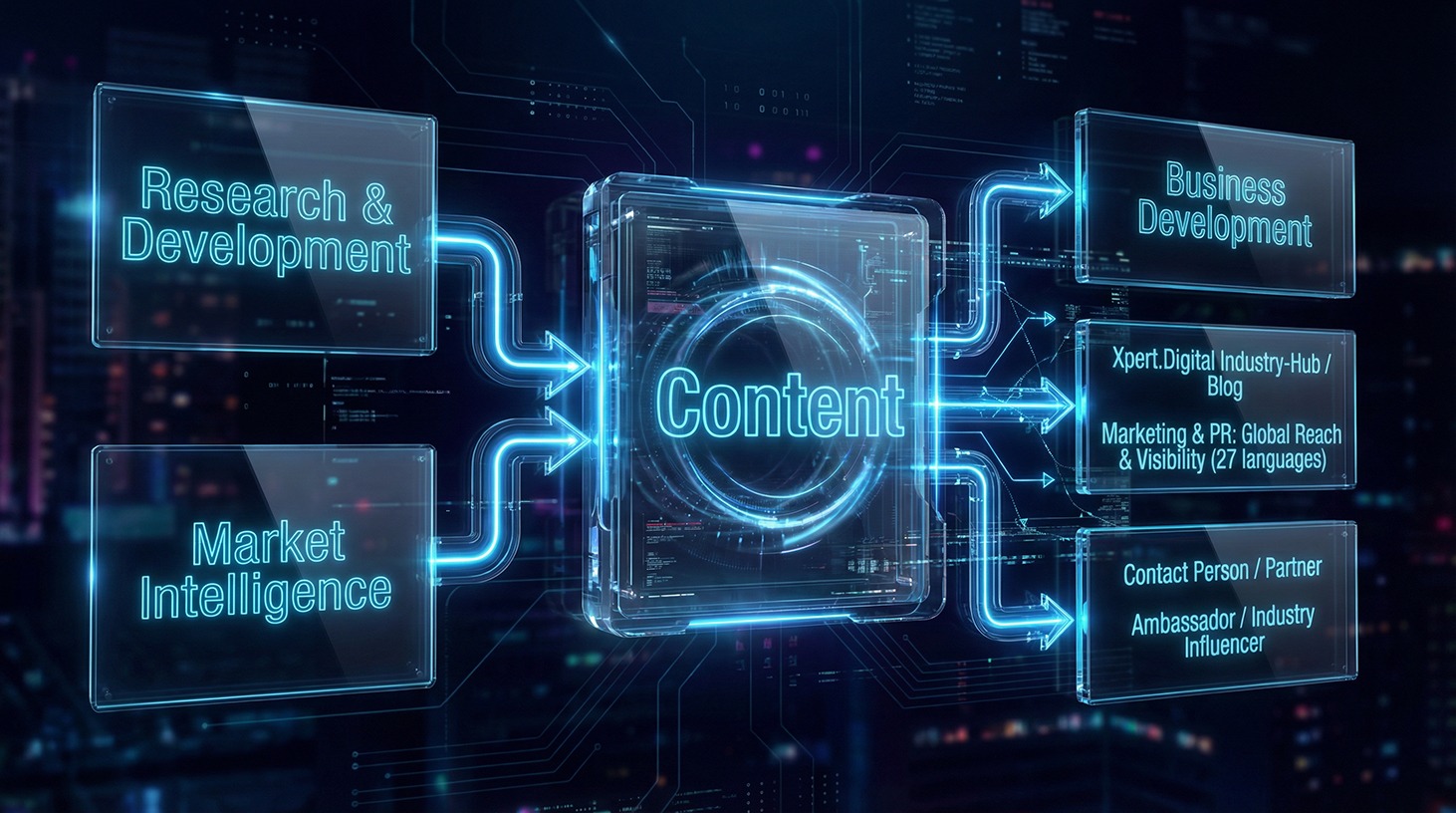
The quasi-in-house solution: How Xpert.Digital closes operational gaps in B2B marketing and sales – Smart Content-Driven Business - Image: Xpert.Digital
Xpert.Digital is a data-driven B2B industry hub led by Konrad Wolfenstein . The company acts as an external, quasi-in-house solution for industrial partners, closing operational gaps in marketing, content, and sales – without requiring additional resources on the client side.
More information here:
Your global marketing and business development partner
☑️ Our business language is English or German
☑️ NEW: Correspondence in your native language!

Konrad Wolfenstein
I and my team are happy to be available to you as your personal advisor.
You can contact me by filling out the contact form here wolfenstein@xpert.digital:or simply call me at +49 7348 4088 965. My email address is
I'm looking forward to our joint project.