Dual-use: Weapon or tool? The fascinating dual-purpose technology that brings billions to Germany – Image: Xpert.Digital
The dual-use sector is experiencing an unprecedented boom
### From the Golf to the Battlefield: How VW, Conti & Co. are now conquering the arms industry ### Gold Rush after the Turning Point: Why even printing press manufacturers are now focusing on tanks ### Germany's new billion-dollar stars: Hardly anyone knows these defense startups ### AI for war: How German companies like Helsing are revolutionizing military technology ###
The silent boom: A German industry explodes – and changes our economy forever
The German economic landscape is undergoing a transformation. While traditional industries are grappling with uncertainty, one particular sector is experiencing a veritable boom: the dual-use sector. A growing number of companies are discovering the lucrative business of technologies and products that can be used for both civilian and military purposes. This development has not only economic but also strategic dimensions that extend far beyond Germany.
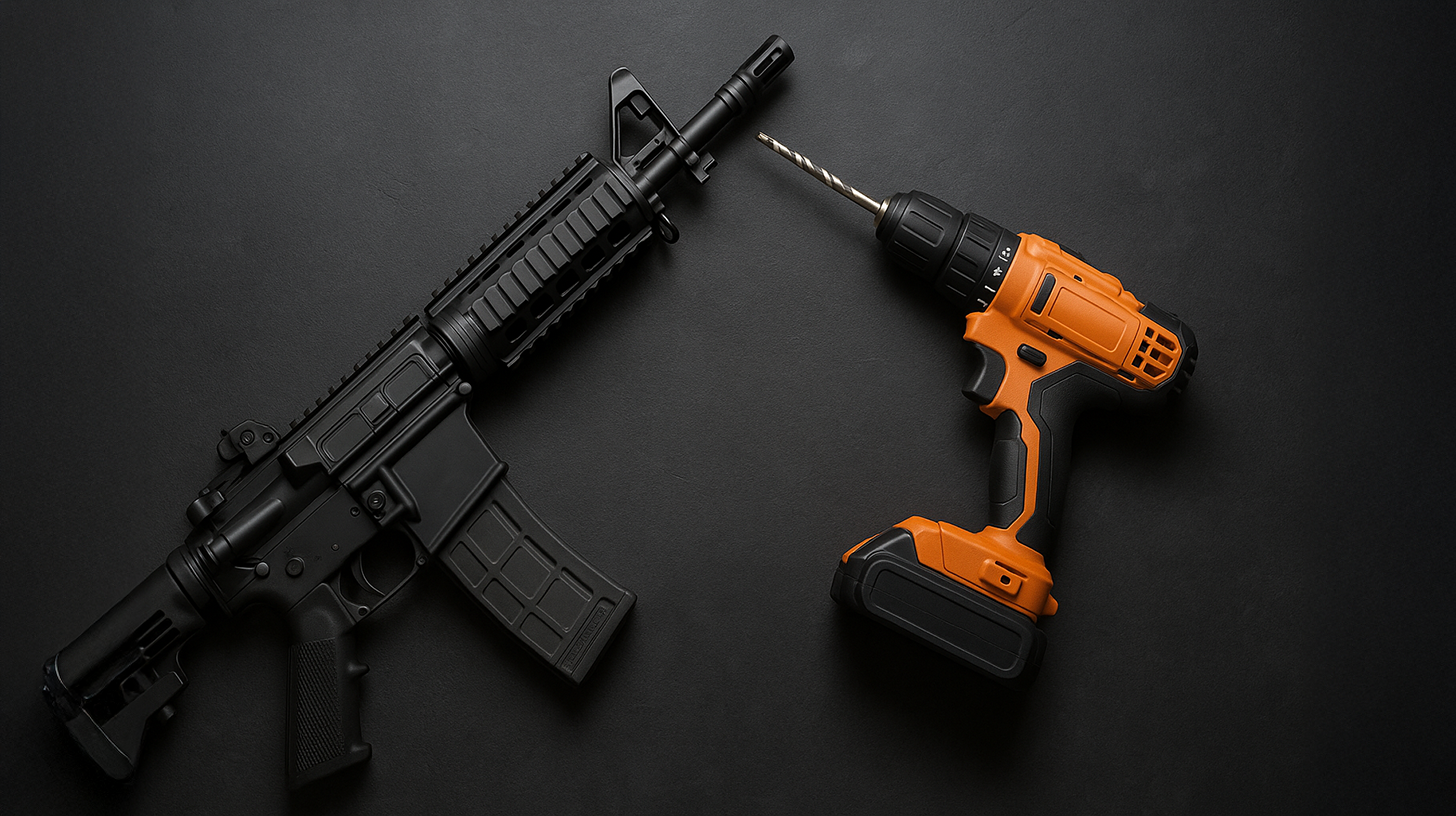
The term dual-use refers to goods, including software and technology, that have a dual purpose. They can be used for both peaceful, civilian applications and military or security-related purposes. This flexibility makes them particularly valuable at a time when the lines between civilian innovation and military application are becoming increasingly blurred.
Explosive market growth
The figures speak for themselves: The European market for dual-use goods has exploded in recent years. While the total value of approved exports amounted to €31 billion in 2019 and 2020, it had already risen to an impressive €57.3 billion by 2022. This represents an increase of more than 84 percent in just two years and now accounts for two percent of all European exports.
This dramatic development is also reflected in German export figures. Germany has established itself as a leading exporter of dual-use goods in Europe and is recording continuously increasing sales in this sector. Particularly noteworthy is the focus on high-value technology areas such as telecommunications, information security, and cryptanalysis, which alone account for 45 percent of the total value.
The most important export markets are the United States, accounting for 24 percent of the total volume, and China, with 19 percent. This distribution illustrates how German dual-use technologies interact with the tensions of global power politics and thus become an instrument of economic strategy.
Venture capital discovers the defense sector
Alongside the export boom, the financing landscape is also undergoing a revolution. The venture capital market for dual-use and defense tech startups has fundamentally changed. Since 2018, Germany has seen investments of one billion US dollars in this sector, placing it at the top in Europe. By comparison, 130 billion US dollars were invested in the USA during the same period, illustrating the enormous scale of the American market.
Particularly noteworthy is the development in 2024, when the German DefenseTech sector reached an investment volume of just over €800 million. These figures underscore the growing confidence of investors in the future viability of this sector. In its Venture Capital Market Trends Report for 2025, KfW forecasts further strong growth opportunities for cybersecurity and dual-use technologies, influenced by the current geopolitical market environment.
Investors see particularly strong growth potential in the areas of artificial intelligence, cybersecurity, and dual-use technologies. Over half of the German venture capital investors surveyed anticipate very high growth prospects for cybersecurity, while enthusiasm for artificial intelligence also appears to be unbroken.
German Dual-Use Champions: From Startups to Global Corporations
The new unicorns of defensive technology
Germany has already produced two impressive success stories in the DefenseTech sector. The Munich-based company Helsing has developed into one of the most valuable DefenseTech startups in Europe within just a few years. Founded in 2021 by Torsten Reil, Niklas Köhler, and Gundbert Scherf, the company focuses on AI capabilities for the security and defense sector.
Helsing has written an impressive success story with its software-first approach. The company develops real-time data fusion systems for military applications that network sensors from battle tanks, drones, or jets and can provide soldiers with a crystal-clear situational awareness picture, even under the most difficult conditions such as GPS failure or electronic warfare.
With products like the Altra and Cirra software, and the Centaur AI pilot, Helsing has positioned itself as a key AI provider for Europe's armed forces. The company has also developed its own hardware platforms, including the HF-1 and HX-2 drone platforms and the SG-1 Fathom autonomous underwater drone.
The impressive €600 million funding round in June 2025 led to a company valuation of €12 billion, making Helsing a so-called decacorn. Investors such as Prima Materia, Lightspeed Ventures, Accel, and General Catalyst underscore the international confidence in the German defense tech startup.
The second German DefenseTech unicorn is Quantum Systems from Gilching in Upper Bavaria. Founded in 2015, the company has evolved from a niche provider of vertical takeoff and landing (VTOL) drones into a globally sought-after player. Equipped with AI-supported image recognition and sensor fusion, the company's unmanned systems are currently operating in the armed forces of Germany, Great Britain, Australia, and Ukraine.
Quantum Systems achieved a unicorn valuation of over one billion US dollars in 2025 with a funding round of 310 million euros. The company employs around 450 people and has offices in Los Angeles, Australia, Ukraine, and Bucharest, and plans further expansion into Spain.
Quantum Systems' drones combine long flight times with the ability to take off and land vertically, making them ideal for reconnaissance missions without a runway. The company has formed strategic alliances with companies like Hensoldt to develop integrated sensor solutions.
Traditional arms giants as dual-use pioneers
Alongside emerging startups, established German defense companies have also become significant players in the dual-use sector. Rheinmetall leads the German defense industry with a turnover of approximately €7.2 billion in 2023.
The Düsseldorf-based company is no longer just a pure arms manufacturer. Rheinmetall also produces various automotive components and generates approximately 65 percent of its revenue in the defense sector. Its portfolio includes armored tracked vehicles, weapons and ammunition, protection systems, and air defense systems.
Particularly noteworthy is Rheinmetall's foray into future technologies. With the KF51 Panther, the company has achieved a technological breakthrough that integrates advanced technologies such as a 130 mm smoothbore gun, active protection systems, and state-of-the-art command and information systems.
In the Electronic Solutions sector, Rheinmetall is making significant progress in drone technology and is working on tactical reconnaissance drones and drone defense systems. In cooperation with MBDA Germany, the company developed a high-energy laser weapon system that has been successfully tested and opens up new possibilities in air defense.
Hensoldt AG has established itself as a technology group in the defense and security sector, with a clear focus on state-of-the-art sensors and electronic systems for military and civilian security applications. The company divides its core business into four main areas: radar systems and sensors, electronic warfare and avionics, optronic systems, and customer services and support.
Hensoldt has made significant advances in radar technology. A prime example is the development of the MIMO radar system for uncontrolled airspace, which uses artificial intelligence to dynamically respond to changing environmental conditions. This technology allows the radar sensor to virtually increase its signal receiving aperture without altering the physical antenna size.
The company also develops state-of-the-art night vision devices, laser rangefinders, and optronic targeting systems. These technologies are not only used for military applications but also for civilian purposes, such as assisting visually impaired people.
Airbus Defence and Space represents the European approach to dual-use technologies. The company is involved in various major European defense projects, including the Future Combat Air System (FCAS), currently the largest defense project, which aims to network fighter jets, guided missiles, and autonomous aircraft.
As the producer of the Ariane launch vehicle and various satellite models, Airbus is a major player in the military satellite business. The company is actively working on merging its space activities with other European players such as Thales and Leonardo to form a strategic alliance in the space sector.
Hub for Security and Defense - Advice and Information

Hub for Security and Defense - Image: Xpert.Digital
The Security and Defence Hub offers expert advice and up-to-date information to effectively support companies and organizations in strengthening their role in European security and defence policy. Working closely with the SME Connect Defence Working Group, it particularly promotes small and medium-sized enterprises (SMEs) that wish to further develop their innovative capacity and competitiveness in the defence sector. As a central point of contact, the Hub thus creates a crucial bridge between SMEs and European defence strategy.
Related to this:
Dual-use boom: AI, biotech and the new arms economy – How Germany is becoming a dual-use nation
Industrial groups discover the defense business
The great shift of traditional companies
The paradigm shift in German security policy has triggered a remarkable chain reaction in the German industrial landscape. Companies that for decades produced exclusively for civilian markets are suddenly discovering the lucrative arms business as a new field of activity.
Volkswagen, Germany's largest carmaker, officially confirmed plans to enter the arms industry. CEO Oliver Blume announced that, given the current global situation, the company is discussing entering the defense sector. Rheinmetall CEO Armin Papperger described the VW plant in Osnabrück as very suitable for conversion to military production, particularly for the manufacture of infantry fighting vehicles.
The plant, which previously produced convertibles and small series, could potentially be converted to manufacture military vehicles. Rheinmetall is also showing interest in other VW locations, such as Dresden. This development demonstrates how increased defense spending is creating new business opportunities for companies that previously had no involvement in the defense sector.
Heidelberg Printing Machines was one of the first traditional industrial groups to venture into the defense sector. The company entered into a strategic partnership with the defense firm Vincorion, under which Heidelberg will supply energy control and distribution systems for military applications.
For Heidelberg, this is its first project in the defense sector. CEO Jürgen Otto emphasized that the defense industry now offers great potential for companies seeking to tap into new business areas in rapidly growing markets. The company plans to announce three to four more defense partnerships by the end of the year.
The Industry division, which includes the defense business, is expected to generate at least €100 million in revenue over the next three years, with a significant portion coming from the defense sector. The announcement led to a dramatic increase in Heidelberg's share price of more than 36 percent.
Continental, one of Germany's largest automotive suppliers, is now cooperating with Rheinmetall and using plants previously used for automotive technology for defense purposes. The company produces weapons components and leverages its technological expertise from the automotive sector for military applications.
ZF Friedrichshafen is specifically offering its sites for defense production and converting capacities for military drive systems. The company is leveraging its expertise in transmission and drive technology for military vehicles and systems.
Trumpf, the Swabian machine manufacturer, is for the first time developing and producing laser weapons for drone defense. This entry into high military technology demonstrates how technology-oriented medium-sized companies can also tap into new business areas in the defense sector.
Technology companies as dual-use players
Siemens, one of Germany's largest technology companies, has been a trusted partner in the defense sector for over 140 years. The company offers PLM systems specifically for the defense industry, surveillance systems such as Siveillance, and engineering support for embedded systems in the naval sector.
Siemens has delivered over 150 submarines to NATO countries, Germany, and other allied nations, and is collaborating with IBM on Project Herkules to modernize the German Armed Forces' IT systems. The company also operates a dedicated research center focused exclusively on dual-use core technologies, robotics, and artificial intelligence.
SAP, the German software company, develops IT solutions specifically tailored to the needs of the military. Its portfolio includes management software for costs, materials, and situational awareness, as well as specialized solutions for the defense and security sector.
BASF, the world's largest chemical company, supplies dual-use coatings and plastics with explicit reference to their advantages for various military applications. The company leverages its expertise in materials science for both civilian and military purposes.
The innovation driver biotechnology
Biotechnology has become one of the most important dual-use sectors. Germany implements EU dual-use controls through the Foreign Trade and Payments Act and the Foreign Trade and Payments Ordinance, with the Federal Office for Economic Affairs and Export Control responsible for licensing and enforcement.
The new German coalition government considers biotechnology one of the key industries that will contribute to the German economy in the coming years and has committed to substantial investments in this sector. Many biotechnological advances, such as genetic engineering or the research of pathogens, are inherently dual-purpose.
Controlled goods include certain pathogens, toxins, genetic sequences for the production of dangerous substances, gene-editing techniques such as CRISPR-Cas, and equipment such as fermenters or freeze dryers that can be repurposed for the illegal production of biological agents.
The risks are further amplified by the increasing accessibility of advanced biotechnologies, the global dissemination of knowledge, and the digitalization of research processes. These developments pose new challenges for export controls, which are traditionally intended for tangible goods.
Artificial intelligence as a dual-use key technology
Artificial intelligence has become one of the most important dual-use technologies. German companies are investing heavily in AI-based solutions that have both civilian and military applications. For example, the German Armed Forces operate an innovative AI lab within Electronic Warfare Battalion 912, specializing in the integration of artificial intelligence in a military context.
Embedded AI, integrated directly into hardware or software systems, enables autonomous operation and real-time decision-making without an internet connection. These systems are increasingly used in civil security and military defense for threat detection, tracking, and identification.
In the defense sector, AI is increasingly being used in fighter jets, drones, helicopters, and naval vessels. Through fine-grained pixel analysis, AI enables the precise interpretation of images and supports decision-making under challenging conditions such as bad weather or long distances.
Systems like Guardion collect and analyze data from various sensors in real time to detect threats such as drone attacks and automatically initiate countermeasures. Palantir is used by various militaries worldwide and analyzes massive amounts of data from diverse sources to support decision-making.
Regulation and challenges
The explosive growth of the dual-use sector presents significant regulatory challenges. The European Union has established a new legal framework with Regulation 2021/821, which is regularly updated. The most recent update to Annex I entered into force on November 8, 2024.
Germany has significantly expanded its list of nationally registered dual-use goods under the 21st Ordinance Amending the Foreign Trade and Payments Ordinance. Numerous goods from the emerging technologies sector have been added to Section B of the export control list and are now subject to licensing requirements.
This development highlights the tensions between promoting innovation and security interests. Companies must immediately check whether their exported goods are now subject to licensing requirements. The European Commission already expressed concerns in 2021 that national controls could lead to a patchwork of different export control regimes.
International dimensions and geopolitical significance
The German dual-use sector operates in an increasingly complex geopolitical environment. The main destinations for German dual-use goods are the United States and China, which exposes German exporters to increased risks.
The new Trump administration could impose tariffs on imports from the EU or tighten US re-export controls, which could severely impact EU exporters. At the same time, European licensing authorities could also adopt a more restrictive licensing practice for exports to China.
NATO has launched a one billion euro venture capital fund to finance such technologies, underscoring the sector's strategic importance. This development demonstrates how dual-use technologies are becoming a tool of geopolitics.
Future prospects and growth potential
The future outlook for the German dual-use sector is exceptionally positive. German venture capital investors anticipate particularly strong growth opportunities in cybersecurity and dual-use technologies in 2025. Over half of the surveyed investors expect very high growth potential for cybersecurity.
The European Commission has presented a quantum strategy to make Europe a global leader in quantum technology by 2030. By 2040, the sector is expected to create thousands of highly skilled jobs and exceed a total value of €155 billion.
The photonics industry, in particular, is showing impressive growth figures. The more than 1,000 German photonics companies, employing 190,000 people, increased their revenue to approximately €54 billion in 2023. An export ratio of 73 percent demonstrates the international competitiveness of German photonics companies.
The German government supports this development through the Deep Tech & Climate Fund, which has a total volume of up to one billion euros and a term of 25 years. Startups can receive between one million and 30 million euros in financing.
Germany's dual-use sector faces a bright future. The combination of technological excellence, strategic partnerships, and growing political support creates ideal conditions for further growth. At the same time, this development requires a responsible approach to the associated ethical and security policy challenges. Germany has the opportunity to establish itself as a leading dual-use nation, pursuing both economic and strategic interests.
Consulting - Planning - Implementation

Markus Becker
I would be happy to serve as your personal advisor.
Head of Business Development
Chairman SME Connect Defense Working Group
Consulting - Planning - Implementation
Konrad Wolfenstein
I would be happy to serve as your personal advisor.
You can contact me at wolfenstein∂xpert.digital or
Just call me on +49 7348 4088 965 .