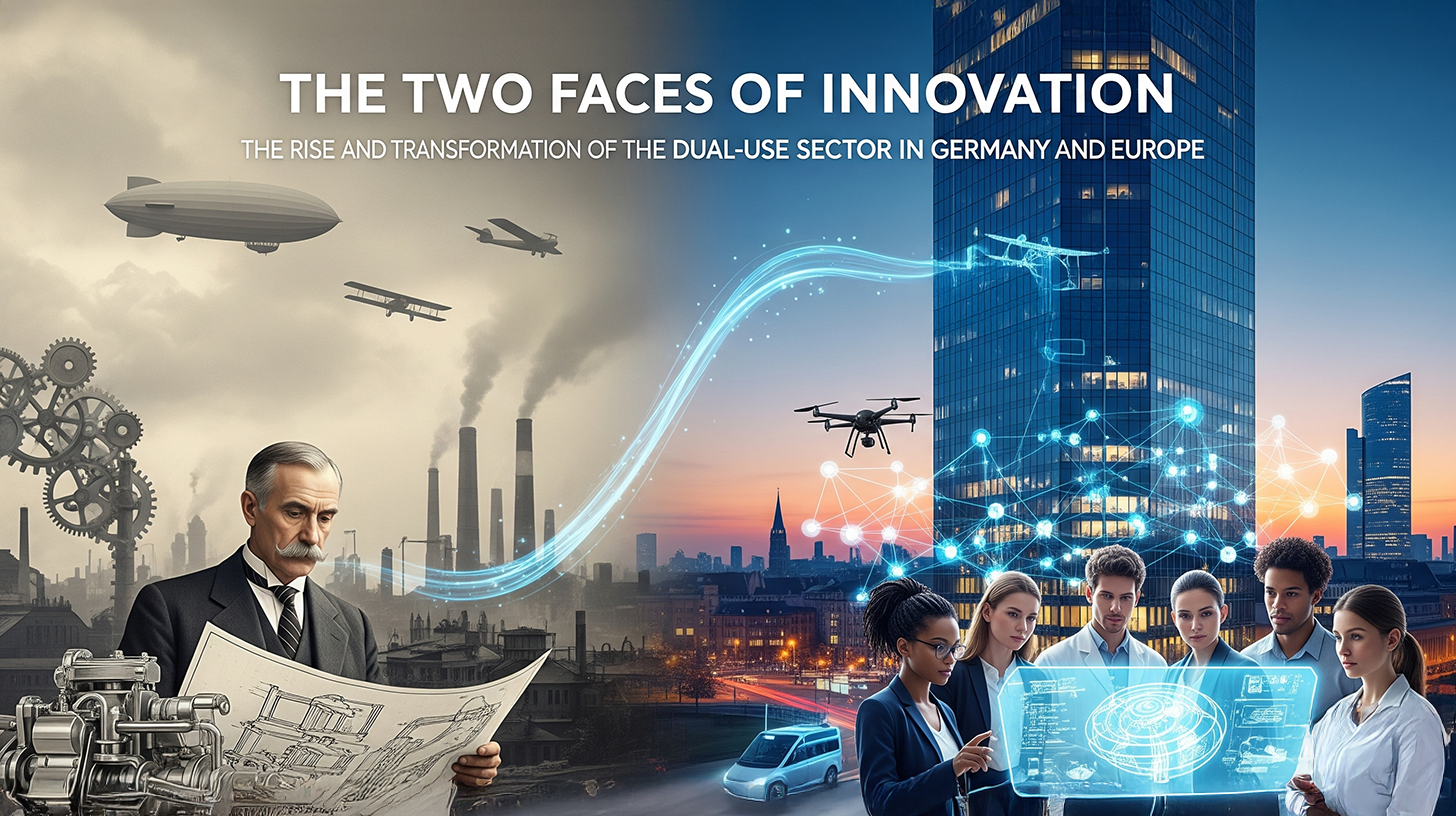
The Two Faces of Innovation: The Rise and Transformation of the Dual-Use Sector in Germany and Europe – Image: Xpert.Digital
AI, drones, quantum computers: The invisible revolution that is forever changing everyday life and warfare
### From Smartphone to Weapon: This Everyday Technology Leads a Double Life ### Putin's War as a Booster: Why Billions Are Now Flowing into German Tech Companies with Double Lives ### Not Just Tanks and Rifles: How Civilian Startups Are Turning Modern Defense Upside Down ### The "Turning Point" in the Tech Sector: Germany's Delicate Tightrope Walk Between Innovation and Armaments ### Progress with Two Faces: The Dangerous Dilemma Behind the Most Important Technologies of Our Time ###
The new relevance of dual-use technologies – definition and historical development of the term
The term "dual-use" refers to goods, software, and technologies that can be used for both civilian and military purposes. This dual usability is not a new phenomenon, but the concept and its strategic significance have fundamentally changed over time. Originally, after World War II, the term referred to a narrowly defined area: fissile material, which could be used both for energy production in civilian nuclear power plants and for the construction of nuclear weapons. This early definition was reactive and primarily served to control a state-developed, highly sensitive technology. Historically, however, the dilemma of dual-use goes back further. A striking example from the pre-term era is the Haber-Bosch synthesis of ammonia, which on the one hand revolutionized agriculture through artificial fertilizers, but on the other hand also enabled the mass production of explosives and chemical weapons in World War I.
Today, the meaning of dual-use has expanded dramatically. It encompasses a wide range of commercial products and technologies that could potentially be misused for military purposes, the production of weapons of mass destruction, or terrorist activities. Controls are no longer limited to physical goods. They explicitly extend to intangible assets such as software and technical know-how, which can be transferred via digital channels like email, cloud storage, or video conferencing. This expansion reflects the reality of a digitized and networked world in which technological capabilities are no longer necessarily tied to physical objects.
The paradigm shift: From "spin-off" to "spin-on"
The growing importance of the dual-use sector is inextricably linked to a fundamental paradigm shift in the global innovation landscape. During the Cold War, the defense industry acted as the primary driver of technological progress. Groundbreaking inventions such as the Global Positioning System (GPS), microwave technology, and digital photography originated from military research and development and were only later adapted for the civilian market—a process known as "spin-off." The state and its defense companies were the undisputed leaders in innovation.
After the end of the Cold War, this dynamic increasingly reversed. Today, the private, commercial sector drives the majority of research and development, particularly in key areas such as artificial intelligence, biotechnology, and information technology. Military organizations are now increasingly reliant on adapting and integrating these commercially developed technologies for their own purposes. This reverse process is known as "spin-on." This development has far-reaching consequences: armed forces are no longer the sole drivers of innovation but are becoming customers in a dynamic civilian market. They must learn to deal with agile startups and rapid technology cycles, which differ significantly from the traditional, lengthy procurement processes of the defense industry.
Dual-use as a strategy: More than just a product category
This shift in innovation dynamics has meant that "dual-use" is now far more than just a regulatory classification for export control. For a growing number of companies, especially technology-oriented startups and their investors, it has become a conscious and central business strategy. Instead of passively being classified as dual-use producers by authorities, these companies are actively positioning themselves in both markets – the civilian and the governmental/military.
Pursuing a dual-use strategy means making conscious decisions and compromises. It involves designing products from the ground up to meet the needs of both customer groups. This requires a deep understanding of the often very different procurement cycles, regulatory hurdles, and financing mechanisms of the commercial and military worlds. For a startup, this strategy can open access to a broader range of funding sources, from venture capital to government grant programs and defense contracts. At the same time, it enables revenue diversification and reduces dependence on a single market. The semantic and strategic shift in the term "dual-use" is therefore not accidental, but a direct consequence of the changing global research and development landscape. Its meaning has evolved from a top-down control mechanism to a bottom-up market strategy, reflecting the shift in innovation leadership from the public to the private sector.
Growth drivers of a booming industry
The rise of the dual-use sector from a niche to a strategic focus for governments, investors, and businesses is driven by a convergence of several powerful forces. These are creating an environment in which the demand for and supply of dual-use technologies are growing exponentially.
Geopolitical tensions as a catalyst
The most important demand-side driver is the deteriorating global security situation. The return of strategic competition between major powers, particularly between the US and China, and the war in Ukraine have fundamentally altered perceptions of security in Western democracies. After decades of relative stability, NATO and EU member states are faced with the need to rapidly modernize their defense capabilities and secure technological superiority. This urgency has created massive demand for innovative solutions in areas such as artificial intelligence, autonomous systems, and advanced communications—capabilities where commercially developed technologies are often more agile, advanced, and cost-effective than traditional armaments. The conflict in Ukraine serves as a real-world laboratory, dramatically demonstrating the value of adaptable, software-driven, dual-use systems such as drones and AI-powered reconnaissance.
Rising defense budgets and new sources of funding
The geopolitical upheavals have led to concrete financial consequences. Governments across Europe have drastically increased their defense spending. Germany has doubled its military procurement budget, while the EU alone allocated €1.5 billion to defense-related research and development in 2024 through initiatives such as the European Defence Fund (EDF). A particularly significant step was the establishment of the NATO Innovation Fund, which, with €1 billion in capital, is specifically investing in dual-use startups in member states. This public funding is creating an attractive and well-funded market, which in turn is attracting private capital. Initiatives such as Horizon Europe and the EDF are increasingly prioritizing dual-use potential when allocating funding, further strengthening the synergies between civilian innovation and security policy objectives.
The role of start-ups and venture capital
On the supply side, it is primarily agile startups that are challenging the traditional defense industry, which is dominated by a few large arms manufacturers. These young companies are able to quickly adapt innovations from the commercial sector and tailor them to military requirements. This trend is fueled by a growing willingness among venture capitalists (VCs) to invest in the sector. Globally, 54 VC funds have been identified that specialize explicitly in dual-use technologies. The geographic distribution of these funds is revealing: almost half (48%) are based in the USA, followed by the United Kingdom (11%). Notably, 15% are located in Ukraine, the Baltic states, and Eastern European countries such as Poland and the Czech Republic – a direct reflection of the heightened security urgency in these regions.
These developments have set in motion a self-reinforcing dynamic. Geopolitical risks generate a clear demand for new military capabilities. Governments respond with massive public investments, creating a lucrative market. This market, in turn, reduces the risk for private investors, who have traditionally shied away from the lengthy and bureaucratic sales cycles in the defense sector. The now-flowing venture capital funds agile startups that develop cutting-edge technologies, which are then sold to governments to meet the initial demand. This cycle, in which geopolitical risk is directly transformed into venture capital and technological innovation, creates a new transatlantic defense-industrial ecosystem that exists alongside and increasingly influences traditional procurement channels.
The legal framework: Control and complexity in Germany and the EU
The growing importance of dual-use technologies is accompanied by a complex and constantly evolving regulatory environment. States and communities of states face the challenge of enabling legitimate trade and promoting innovation while simultaneously preventing the proliferation of technologies that could endanger international security or be misused for human rights violations.
The EU Dual-Use Regulation 2021/821
The central legal instrument for controlling the export of dual-use goods in the European Union is Regulation (EU) 2021/821. This regulation, which replaces its predecessor from 2009, establishes a common system for controlling the export, brokering, technical assistance, transit, and transfer of dual-use goods. Its main objective is to contribute to international peace and security and to prevent the proliferation of weapons of mass destruction.
At the heart of the regulation is Annex I, a comprehensive list of controlled goods based on internationally agreed control regimes such as the Wassenaar Arrangement. Export authorization is required for goods listed on this document from the EU customs territory. The regulation provides for different types of authorization to meet the diverse needs of trade
Union General Export Authorisations (EUGEAs): These allow the export of certain goods to certain countries (e.g. Australia, USA, Japan) under specified conditions, thus simplifying trade with trusted partners.
National General Export Authorisations (NGEAs): Member States may issue their own general authorisations, provided that these are compatible with the EUGEAs.
Global and individual licenses: These are issued by national authorities for specific exporters and transactions and allow exports to multiple end users (global) or to a specific end user (individual).
Permits for major projects: A special form for exports within the framework of large-scale projects.
A key innovation of the 2021 regulation is its stronger focus on human rights. It introduces new controls for certain cyber surveillance technologies that could be used for internal repression or to commit serious human rights violations. Furthermore, the regulation requires exporters to conduct thorough due diligence on their transactions and to maintain detailed records for a period of five years.
National implementation in Germany: AWG and AWV
In Germany, the European legal framework is implemented and supplemented by national laws. The key regulations are the Foreign Trade and Payments Act (AWG) and the Foreign Trade and Payments Ordinance (AWV) based on it. The AWG establishes the fundamental principle that foreign trade is free, but can be restricted for reasons of national security, public order, or to fulfill international obligations.
The specific licensing requirements and procedures are regulated in the Foreign Trade and Payments Ordinance (AWV). The Federal Office for Economic Affairs and Export Control (BAFA) is the authority responsible for issuing licenses and enforcing the regulations. BAFA reviews applications, grants licenses, and monitors compliance with the complex regulations. Germany is known for its strict application of the EU regime, with a particular focus on controlling the transfer of intangible technological knowledge.
National enlargements and the challenge of new technologies
A crucial aspect of the EU system is that it allows member states to introduce national controls on additional goods beyond the common EU list. Germany made use of this option in July 2024, expanding its national export list (Part I, Section B of the Foreign Trade and Payments Ordinance) to include a number of so-called "emerging technologies." These now include, among other things, certain quantum computers and their components, specific semiconductor manufacturing equipment, and advanced AI systems.
This step highlights a fundamental tension within the European export control system. While the European Commission strives for a harmonized approach to avoid a regulatory patchwork, individual member states feel compelled to act unilaterally due to rapid technological advancements and acute security concerns. The speed at which technologies such as AI and quantum computing are progressing exceeds the adaptability of the often slow, consensus-based international control regimes. National solo efforts like Germany's are therefore a logical, albeit challenging for the single market, response to a security dilemma where waiting for an international consensus is perceived as too risky. Here, law itself becomes a strategic instrument in the race for technological security.
International Regimes: The Wassenaar Arrangement
At the global level, the Wassenaar Arrangement is the most important multilateral agreement for controlling the export of conventional arms and dual-use goods. It was established in 1996 as the successor to the Cold War-era COCOM regime and currently has 42 member states. Unlike COCOM, which was specifically targeted at the Eastern Bloc, the Wassenaar Arrangement is not directed against any particular state. Its main objective is to promote transparency and greater accountability in arms transfers in order to prevent destabilizing accumulations of weapons.
Member States voluntarily commit to subjecting goods listed on common lists (the munitions list and the dual-use list) to national export controls and to informing each other of the approval or rejection of exports to specific countries. However, the arrangement has crucial weaknesses: it is not legally binding, decisions are made by consensus, and there is no veto mechanism. If one member state rejects an export, another can still approve it. In a time of increasing geopolitical confrontation, this consensus-based approach is proving increasingly ineffective, further reinforcing the tendency toward unilateral or minilateral measures among like-minded states.
Hub for Security and Defense - Advice and Information
Hub for Security and Defense - Image: Xpert.Digital
The Security and Defence Hub offers expert advice and up-to-date information to effectively support companies and organizations in strengthening their role in European security and defence policy. Working closely with the SME Connect Defence Working Group, it particularly promotes small and medium-sized enterprises (SMEs) that wish to further develop their innovative capacity and competitiveness in the defence sector. As a central point of contact, the Hub thus creates a crucial bridge between SMEs and European defence strategy.
Related to this:
Germany's dual-use ecosystem: Start-ups versus industrial giants
Technology fields in focus: The 5 building blocks of modern defense
The blurring of the lines between civilian and military technology is most evident in the key technology fields of the 21st century. These areas determine not only the economic competitiveness but also the strategic capabilities of states.
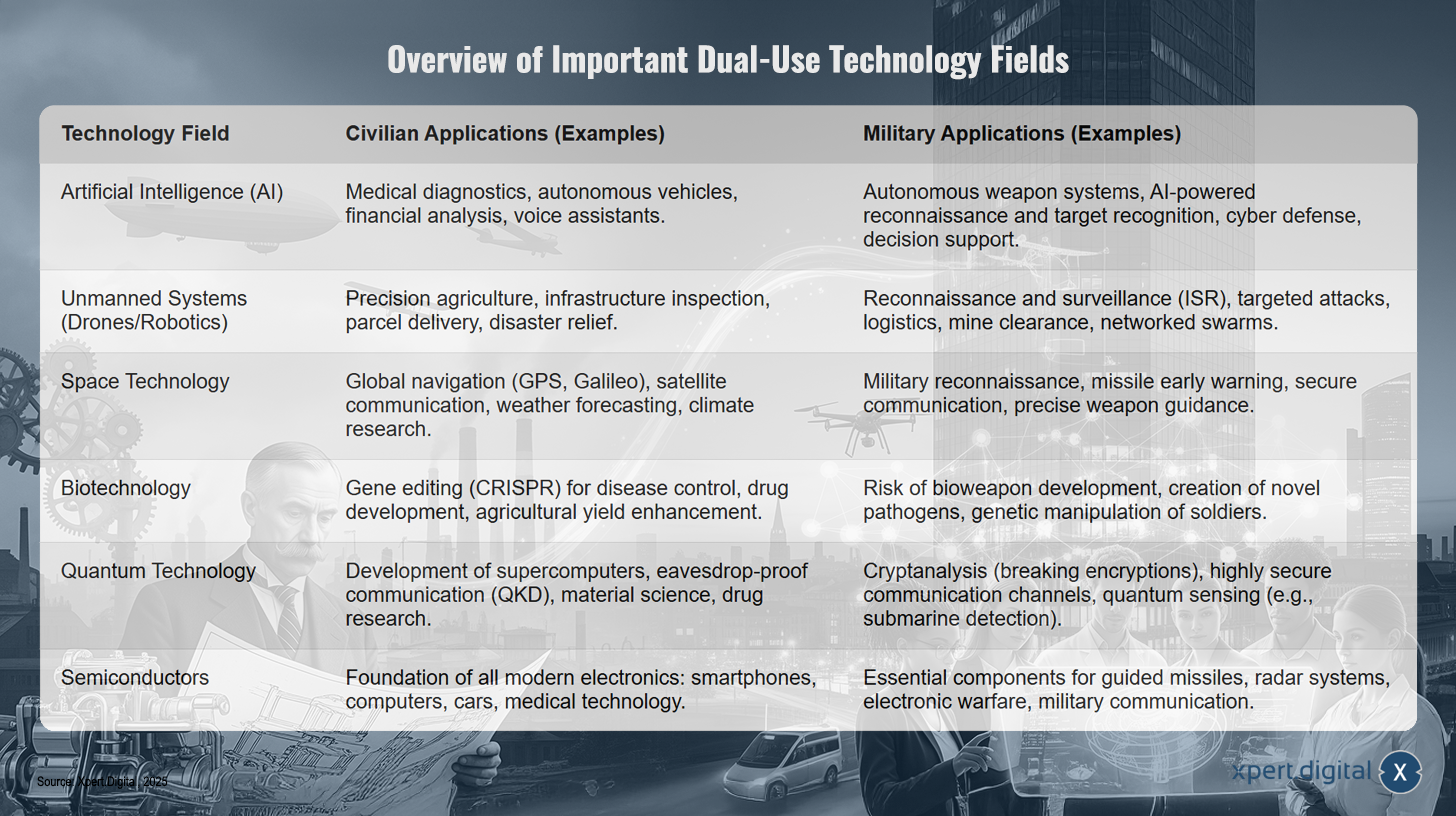
Overview of important dual-use technology fields
Overview of important dual-use technology fields – Image: Xpert.Digital
Artificial Intelligence (AI) and Autonomous Systems
Artificial intelligence is perhaps the most striking example of a profound dual-use technology. In the civilian sector, it is driving innovation in medical diagnostics, autonomous vehicles, and financial analysis. The same algorithms that recognize patterns in medical images can also be used to analyze satellite imagery for target identification. In the military sphere, AI enables the development of autonomous weapon systems, accelerates the analysis of massive amounts of data for reconnaissance, and can drastically shorten decision-making cycles in combat. AI's ability to operate autonomously in complex and dynamic environments is of central importance for both civilian robotics and military drones and unmanned vehicles.
Unmanned systems: Drones and robotics
Unmanned aerial vehicles (drones) and ground robots have become indispensable in both the civilian and military spheres. In civilian applications, they are used to inspect wind turbines and pipelines, in precision agriculture to monitor harvests, and in search and rescue operations after natural disasters. In the military context, they have revolutionized the battlefield. They serve for discreet reconnaissance and surveillance (Intelligence, Surveillance, Reconnaissance – ISR), conduct precise attacks, transport supplies to the front line, and can be used to defuse explosive devices. The ability to operate drones in networked swarms opens up entirely new tactical possibilities that are relevant for both civilian logistics and military saturation attacks.
Space technology and satellites
Space technologies are inherently dual-use. The Global Positioning System (GPS), originally a purely military system, now forms the basis for countless civilian applications, from car navigation to logistics management. Satellites provide data for weather forecasting and climate research, but also enable military reconnaissance and serve as early warning systems for missile attacks. Satellite communication is just as essential for the global internet and media transmission as it is for secure communication and the control of military units worldwide.
Biotechnology and Synthetic Biology
Biotechnology holds enormous potential for human health and agriculture, for example through gene-editing tools like CRISPR-Cas9 for treating hereditary diseases or developing new drugs. At the same time, it raises significant security concerns. The same techniques used for healing could theoretically also be misused to develop novel, highly dangerous biological weapons. Synthetic biology, which makes it possible to construct organisms from scratch, exacerbates this dilemma, as it could facilitate the production of known pathogens or the creation of entirely new ones.
Quantum technology
Quantum technology is on the cusp of practical application and promises to revolutionize computing, communication, and sensor technology. Quantum computers could solve complex problems that are unsolvable for today's supercomputers, potentially leading to breakthroughs in materials science and drug development. At the same time, their immense computing power poses an existential threat to current cryptography, as they would be capable of breaking common encryption standards. Quantum communication, on the other hand, promises, through methods such as quantum key distribution (QKD), fundamentally secure data transmission. Quantum sensors could enable navigation without GPS or drastically improve the tracking of submarines, which would alter the strategic balance of power on the world's oceans.
Prominent players: The German dual-use landscape in detail
The German and European dual-use landscape is characterized by a two-tiered ecosystem. On the one hand, there are new, highly specialized, and software-driven startups that are disrupting the market with agile solutions. On the other hand, there are established industry giants that provide the fundamental technologies and platforms that make many of these new applications possible in the first place.
The new challengers: Software and AI-driven startups
Helsing
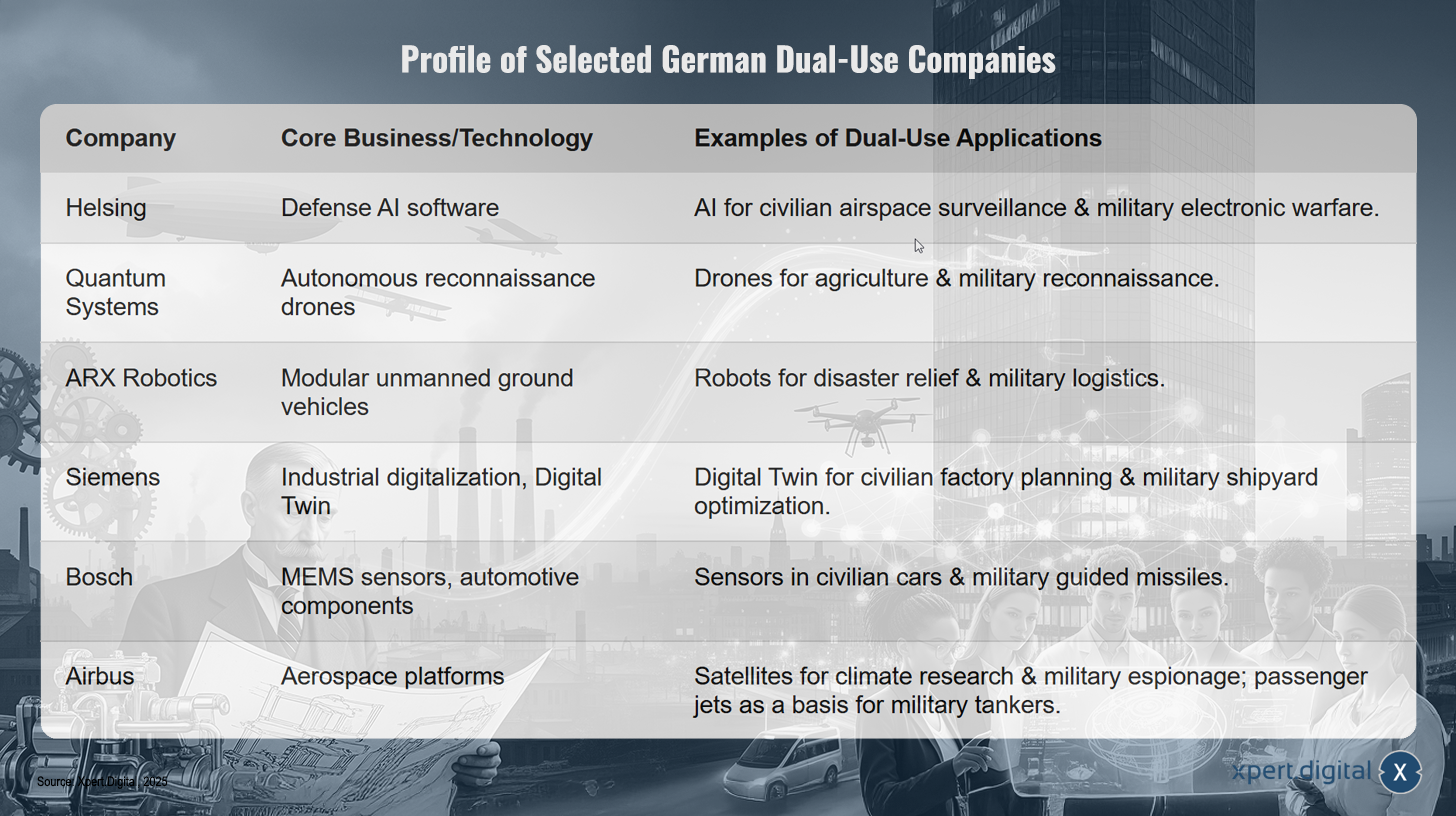
Founded in Munich in 2021, the company has quickly become one of the most prominent players in the field of defense AI in Europe. Helsing pursues a consistent "software-first" approach. Instead of primarily developing new hardware, the company focuses on enhancing existing military platforms, such as the Eurofighter combat jet, with AI-powered software and equipping new unmanned systems with superior intelligence. Its core products include Centaur, an AI system for autonomous air combat that has already successfully flown a Gripen jet; Cirra, AI software for analyzing radar signals for electronic warfare; Altra, a networked reconnaissance and effects platform that fuses data from drones and ground sensors to accelerate target acquisition; and the HX-2, a software-defined attack drone capable of precise operation even in environments without GPS reception and under heavy electronic interference. With a valuation of over 12 billion euros following a 600 million euro funding round in 2025 and strategic partnerships, such as with the French AI company Mistral AI, Helsing is positioning itself as a European champion for technological sovereignty in the AI field.
Quantum Systems
Also based near Munich, Quantum Systems is a leading manufacturer of unmanned aerial systems (UAS) with a clear dual-use model. The company develops and produces electrically powered vertical takeoff and landing (eVTOL) drones designed for both military and civilian customers. Its flagship, the Vector drone, has proven itself in service in Ukraine as a robust reconnaissance system capable of navigating and identifying targets even in GPS-deficient environments, thanks to AI support. Simultaneously, the company's drones are used by commercial customers in agriculture for field monitoring, in mining for volume calculation, and by energy providers for power line inspection. This dual focus allows Quantum Systems to leverage innovations from both markets and achieve economies of scale.
ARX Robotics
This company specializes in unmanned ground vehicles (UGVs) and impressively demonstrates the dual-use potential of land robotics. The GEREON platforms are modular and can be configured for a wide variety of missions. In a military context, they serve for transporting supplies and wounded soldiers (medEvac), reconnaissance and surveillance, or as mobile weapons platforms. Their robustness and autonomous capabilities were also proven in the Ukraine war. However, these same robots can be seamlessly deployed in civilian and humanitarian scenarios, such as delivering aid to disaster areas, fighting fires, or conducting search and rescue operations.
The established giants: Fundamental enabling technologies
Siemens
As a global technology company, Siemens is not a traditional defense contractor, but a fundamental pioneer in the dual-use sector. Its core competence lies in providing industrial software and digitalization solutions. The concept of the digital twin is central to this. It enables the virtual mapping, simulation, and optimization of complex physical systems—from a single machine to an entire factory, or even an aircraft or ship—before they are physically built. This technology is used to increase efficiency in civilian manufacturing as well as for the modernization of entire US Navy shipyards, the largest known industrial digital twin project. With its Product Lifecycle Management (PLM) software, such as NX and Teamcenter, Siemens provides the digital backbone for the development of complex products in the aerospace and defense industries.
Bosch
Similar to Siemens, Bosch is a crucial supplier of core technologies with inherent dual-use capabilities. MEMS sensors (microelectromechanical systems) play a key role here. These tiny sensors, which measure acceleration, rotation rates, or pressure, are now ubiquitous in automotive electronics (e.g., for airbags and ESP) and consumer electronics (e.g., in smartphones for image stabilization). However, these same high-precision and robust sensors are also indispensable components in military systems. They are used for drone navigation and stabilization, missile and smart munition guidance, and avionics systems. While Bosch does not primarily develop its MEMS sensors for military purposes, their performance and reliability are of critical importance to the defense sector.
airbus
As one of the world's largest aerospace companies, Airbus is a prime example of a company strategically implementing dual-use capabilities in its platforms. A prime example is the Airbus A330 MRTT (Multi-Role Tanker Transport), which is based on the civilian A330 passenger aircraft and converted into a versatile military aircraft for aerial refueling, troop and cargo transport, and medical evacuations. Airbus pursues a similar strategy in space. The high-resolution Earth observation satellites of the Pléiades Neo constellation deliver images with a resolution of 30 cm. This data is used by commercial customers for applications such as urban planning, agriculture, and disaster management, as well as by governments and defense ministries for intelligence gathering and mission planning.
Profile of selected German dual-use companies
Profile of selected German dual-use companies – Image: Xpert.Digital
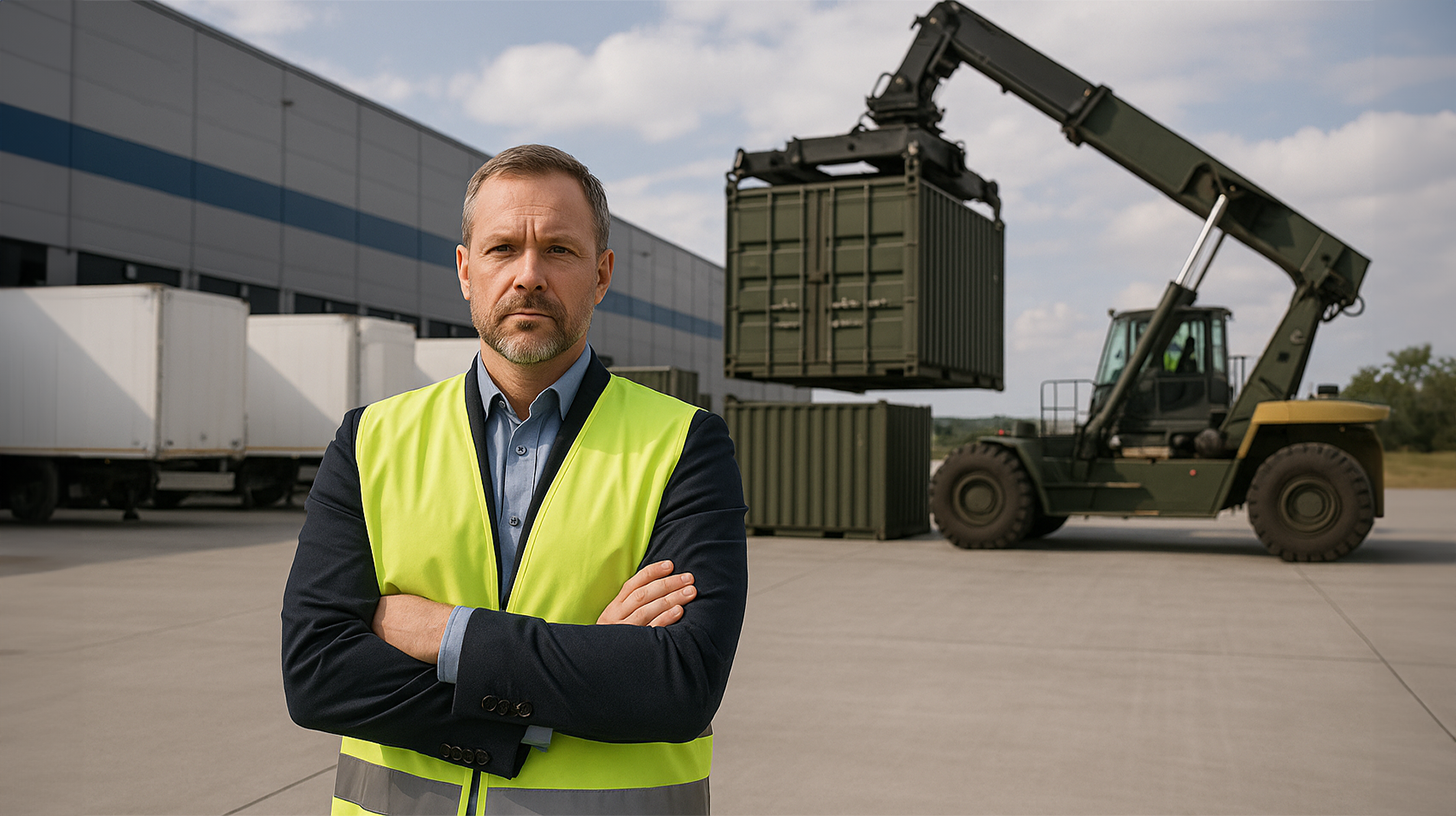
Your dual-use logistics experts
Dual-use logistics experts - Image: Xpert.Digital
The global economy is currently undergoing a fundamental transformation, a watershed moment that is shaking the foundations of global logistics. The era of hyper-globalization, characterized by the relentless pursuit of maximum efficiency and the "just-in-time" principle, is giving way to a new reality. This new reality is marked by profound structural breaks, geopolitical power shifts, and increasing fragmentation of economic policy. The once taken-for-granted predictability of international markets and supply chains is dissolving and being replaced by a period of growing uncertainty.
Related to this:
Dual-use in Germany: An engine of innovation with societal conflicts
Economic and social dimensions
The growing dual-use sector is not only a technological and security policy phenomenon, but also has profound economic and social implications. Particularly in Germany, a complex dynamic is unfolding between economic opportunities, structural challenges for new companies, and deep-seated public skepticism.
The dual-use sector as an economic factor for Germany
The German security and defense industry, which includes many dual-use companies, is a significant economic factor. In 2024, the German aerospace industry, a core segment of the sector, generated €52 billion in revenue and employed 120,000 people. The entire German defense industry generated nearly €11.3 billion in revenue in 2020. Studies, such as the one by the Kiel Institute for the World Economy, suggest that increased and targeted defense spending can have considerable positive effects on gross domestic product (GDP). In particular, investments in domestically produced, high-tech armaments can create so-called "spillover" effects: technological advances from defense research diffuse into other sectors of the economy and increase their productivity. An increase in military spending of 1% of GDP could therefore boost long-term productivity by a quarter of a percent. This economic outlook is a key argument for the politically driven expansion of national and European defense capabilities.
The “Valley of Death”: Challenges for Start-ups
Despite increased investment and the sector's strategic importance, innovative startups face significant hurdles. The so-called "Valley of Death" describes the critical phase in which a startup, after successful pilot projects and initial funding, struggles to secure long-term, large-scale orders and transition to mass production. The reasons for this are manifold:
Lengthy procurement processes: Government procurement cycles are often slow, bureaucratic, and geared towards collaboration with established corporations. This system is difficult to navigate for startups with short innovation cycles and limited financial resources.
Risk aversion: Military clients are often risk-averse and hesitant to rely on young, financially less stable companies, even if their technology is superior.
Scaling problems: Most startups lack the infrastructure for mass-producing hardware. The step from prototype development to manufacturing thousands of units presents a massive financial and logistical challenge.
These structural problems mean that promising innovations often do not find their way into widespread use in the armed forces, and companies fail before they can reach their full potential.
Public perception and the German debate
Germany's strategic realignment, often discussed under the heading of a "turning point," is taking place in a society where the arms industry traditionally has a negative image. Surveys reveal deep-seated skepticism among the population, particularly regarding arms exports. A 2018 YouGov poll found that almost two-thirds of Germans favor a complete halt to all arms exports. Even though public opinion has become more nuanced since the attack on Ukraine, a fundamental rejection remains widespread.
This societal attitude also has institutional consequences. A striking example is the debate surrounding so-called "civilian clauses" at German universities. Over 70 publicly funded universities have committed themselves in their statutes to conduct research exclusively for civilian purposes and to reject any military-related research. This "strong wall" between civilian and military research, which is increasingly being questioned by some politicians, such as the Federal Minister of Research, stands in stark contrast to the innovation model in countries like the USA or Israel, where close collaboration between universities, startups, and the defense sector is a key driver of technological progress. This gap between political ambition and socio-institutional reality represents a significant obstacle to the development of a dynamic dual-use ecosystem in Germany. The success of this "transition" therefore depends not only on financial resources and technological expertise, but also on the ability to overcome this deep-seated cultural and institutional inertia.
Future developments and strategic challenges
The dynamics in the dual-use sector will accelerate further in the coming years. The convergence of disruptive technologies, the associated ethical questions, and the overarching struggle for strategic sovereignty will significantly shape the political, economic, and social agenda.
The convergence of technologies: AI, quantum physics, and biology
The future of dual-use technology lies not in the isolated development of individual fields, but in their increasing convergence. The combination of artificial intelligence, quantum computing, and synthetic biology will generate capabilities whose potential and risks are currently only partially foreseeable. Imagine autonomous drone swarms whose collective behavior is optimized by quantum algorithms to solve complex tasks in logistics or on the battlefield. Or the combination of synthetic biology with AI to develop biosensors that can detect diseases early or identify chemical warfare agents. This convergence will push the boundaries of what is possible, but it will also create new, complex threat scenarios that require proactive and interdisciplinary regulation.
The ethical dilemma: Responsibility in innovation
With the growing power of these technologies, the "dual-use dilemma" is moving to the center of ethical debate. It describes the irresolvable contradiction that research and innovation aimed at good—such as curing diseases or increasing efficiency—simultaneously carry the potential for catastrophic misuse. This paradox presents researchers, companies, and governments with difficult choices.
Ethical challenges are becoming particularly acute in the field of artificial intelligence. The use of commercially available, internet-collected data to train AI systems, which are later used for military target acquisition, raises fundamental questions about data protection and human dignity. Algorithms can inherit biases from their training data and make discriminatory decisions. A faulty AI system on the battlefield could lead to devastating civilian casualties. The demand for transparency, accountability, and robust governance structures is therefore growing ever louder. The aim is to ensure that humans retain control over critical decisions, even in highly automated systems, and that ethical principles are firmly embedded in the technology.
Strategic sovereignty in the 21st century
Ultimately, the debate on dual-use technologies leads to the overarching question of strategic sovereignty. For Germany and Europe, the ability to develop, produce, and deploy critical technologies themselves has become a matter of survival in global competition. It is about reducing dependence on geopolitical rivals and securing their own capacity to act in an uncertain world.
Fostering a strong and innovative dual-use sector is a key component. However, this requires a delicate balancing act: innovation must be encouraged without neglecting safety risks. Economic growth must be reconciled with ethical responsibility. And the strategic necessity must be debated in an open society and legitimized through public acceptance. The path to a technological future requires not only engineering expertise and capital, but also political vision, regulatory wisdom, and a broad societal dialogue about the two faces of innovation.
Consulting - Planning - Implementation

Markus Becker
I would be happy to serve as your personal advisor.
Head of Business Development
Chairman SME Connect Defense Working Group
Consulting - Planning - Implementation
Konrad Wolfenstein
I would be happy to serve as your personal advisor.
You can contact me at wolfenstein∂xpert.digital or
Just call me on +49 7348 4088 965 .