
Digital Transformation & Strategy: It’s not just AI that’s important! – Survey on digital technologies in companies

Available in 27 languages 📢
Prefer Xpert.Digital on GoogleⓘPublished on: August 30, 2024 / Updated on: August 30, 2024 – Author: Konrad Wolfenstein
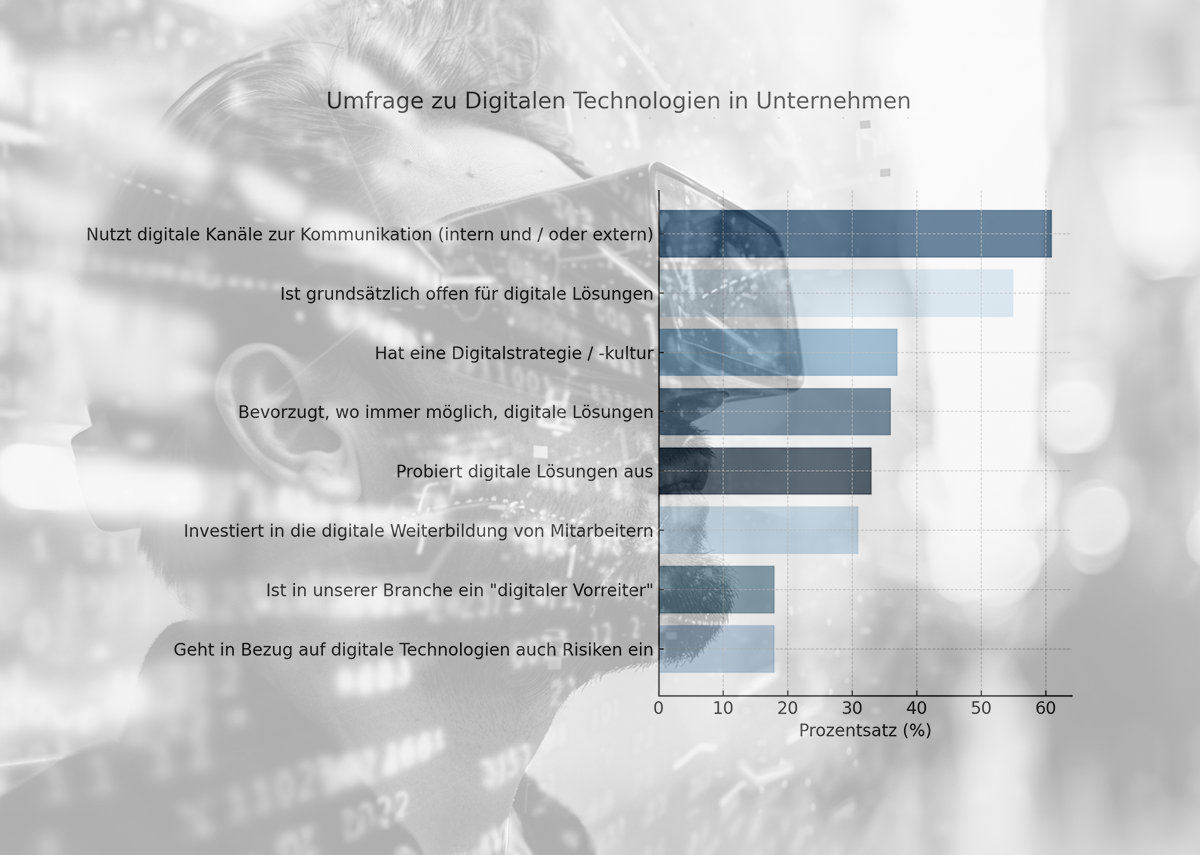
Survey on Digital Technologies in Companies – Image: Xpert.Digital
🌟🌐 Survey on Digital Technologies in Companies
🌐📊 The figures from the survey shown in the graphic ( more information here ) illustrate the different levels of digitalization in companies and their willingness to integrate digital technologies. These figures provide important insights into the current situation and the challenges companies face in their digital transformation.
✉️ Digital channels for communication (61%)
At 61%, the use of digital channels for communication (internal and/or external) is the most widespread aspect of digitalization in companies. This shows that most companies have already firmly integrated digital communication tools such as email, instant messaging, video conferencing, and collaboration tools like Slack or Microsoft Teams into their workflows. Using these technologies enables companies to communicate more efficiently, especially in a globalized world where teams are often distributed across different locations. Digital communication also contributes to a more flexible working environment by supporting remote work and hybrid work models.
💡 Openness to digital solutions (55%)
With 55% expressing openness to digital solutions, over half of companies are generally receptive. This figure signals a positive attitude towards digitalization, which is a crucial step for businesses that want to remain competitive in the digital age. Openness to digital solutions is a prerequisite for the successful adoption of new technologies, as it fosters a culture of innovation and encourages a willingness to explore new avenues. However, this openness does not automatically translate into effective use of these technologies; a clear strategy and the necessary resources are also required for successful implementation.
🚀 Digital Strategy and Culture (37%)
Only 37% of companies report having a digital strategy and culture. This is a crucial point, as a well-defined digital strategy is necessary to establish the direction and priorities for digital initiatives. A digital culture, on the other hand, fosters the acceptance and use of new technologies throughout the entire organization. This comparatively low figure indicates that many companies are still at the beginning of their digital transformation and that there is significant potential for developing a comprehensive digital strategy that encompasses all aspects of the business.
🎯 Preference for digital solutions (36%)
Only about a third of companies (36%) prefer digital solutions whenever possible. This figure suggests that many companies are still stuck in traditional ways of working and do not consistently consider digital solutions as a preferred option. It also indicates that companies may still be hesitant to fully transition to digital processes, whether due to fear of risks, a lack of trust in the technologies, or insufficient resources. However, a preference for digital solutions is an indicator of a forward-thinking corporate culture that recognizes the efficiency and flexibility of digital technologies.
🧪 Experimenting with digital solutions (33%)
33% of companies are trying out digital solutions. This figure suggests that a third of companies are willing to test and experiment with new technologies before considering full implementation. This willingness to experiment is important for discovering innovative solutions and assessing their suitability for the business. However, the figure also shows that a large proportion of companies are still hesitant to conduct such experiments, indicating a certain degree of uncertainty or reluctance towards digital innovations.
📚 Investments in digital training of employees (31%)
Only 31% of companies invest in the digital training of their employees. This low figure suggests that many companies may not yet have recognized the need to prepare their staff for the challenges of digital transformation. However, training is a key factor for the success of digitalization, as new technologies often require specialized knowledge. Companies that invest in their employees' skills are better equipped to use digital technologies effectively and remain competitive in the long term.
🔝 Digital pioneers in the industry (18%)
Only 18% of companies see themselves as digital pioneers in their industry. This figure illustrates that the majority of companies are lagging behind when it comes to adopting and using digital technologies. Digital pioneers often set standards and drive innovation from which the entire industry can benefit. However, the low percentage of pioneers shows that many industries still have considerable catching up to do when it comes to integrating and using digital technologies to differentiate themselves from the competition.
⚠️ Dealing with the risks of digital technologies (18%)
Similarly, only 18% of companies report consciously taking risks when using digital technologies. This is a critical point, as innovation and the use of new technologies are always associated with a certain degree of uncertainty and risk. Companies willing to take these risks can gain significant competitive advantages by implementing new technologies early and leveraging their potential. However, the low number indicates that many companies tend to avoid risks and may miss opportunities to drive digital transformation.
Suitable for:
📈 Developing a digital strategy
The figures in the graphic illustrate that many companies are still in the early stages of digital transformation. While the use of digital communication channels is widespread, there is still considerable room for improvement in other areas such as developing a digital strategy, providing further training for employees, and being willing to take risks.
Companies that position themselves as digital pioneers and invest in a comprehensive digital strategy have the opportunity to strengthen their market position and achieve long-term success. The figures underscore the need not only to be open to digital solutions but also to proactively invest in their implementation and cultural transformation in order to fully leverage the potential of digitalization.
📣 Similar topics
- 📊 Degree of digitalization in companies
- 📣 Digital Communication: The Leading Aspect of Business Transformation
- 🚀 Pioneers of digital transformation: Who is leading the industry?
- 💡 Openness to innovation: Digital solutions in companies
- 📈 Strategies and cultural change: Why a digital strategy is crucial
- 🔍 Challenges of the digital age: Risks and opportunities
- 💼 Preference for digital technologies: One third of companies
- 📘 Professional development in the digital age: Investing in employees
- ⚡ Willingness to experiment in companies: Testing digital solutions
- 🌐 The future of digital communication and collaboration
#️⃣ Hashtags: #Digitalization #BusinessTransformation #DigitalStrategy #DigitalCommunication #Innovation
Our recommendation: 🌍 Limitless reach 🔗 Networked 🌐 Multilingual 💪 Strong sales: 💡 Authentic with strategy 🚀 Innovation meets 🧠 Intuition

From local to global: SMEs conquer the global market with clever strategies - Image: Xpert.Digital
At a time when a company's digital presence determines its success, the challenge is how to make this presence authentic, individual and far-reaching. Xpert.Digital offers an innovative solution that positions itself as an intersection between an industry hub, a blog and a brand ambassador. It combines the advantages of communication and sales channels in a single platform and enables publication in 18 different languages. The cooperation with partner portals and the possibility of publishing articles on Google News and a press distribution list with around 8,000 journalists and readers maximize the reach and visibility of the content. This represents an essential factor in external sales & marketing (SMarketing).
More about it here:
🚀🛡️ Opportunities and challenges of digital transformation for companies
🚀🔍📊 In today's business world, digital transformation is a crucial factor for corporate success. It encompasses far more than just the use of artificial intelligence (AI). Other technological developments such as extended reality (XR), the Internet of Things (IoT), blockchain, and cloud computing also play a vital role. These technologies offer enormous potential for optimizing work processes, developing new business areas, and increasing competitiveness. However, in practice, many companies are still hesitant to fully leverage these opportunities.
🌐📈🏢 A survey shows that 55% of companies are generally open to digital solutions
This is a positive indicator that the majority of companies are willing to engage with new technologies and integrate them into their business models. However, this openness alone is not enough to realize the full benefits of digital transformation. A clear strategy, a supportive corporate culture, and above all, the courage to try new things are essential.
📉🛠️🏃♂️ Only 37% of the companies surveyed say they already have a mature digital strategy and culture
This figure illustrates that less than half of companies have developed a holistic approach to digital transformation. However, a digital strategy is essential for the targeted use of digital technologies and long-term success. It forms the basis for the introduction of new technologies and supports employees in engaging with and actively shaping these changes.
💻📉🏢 It is particularly noteworthy that only 36% of companies prefer digital solutions whenever possible
This figure suggests that the majority of companies continue to rely on traditional working methods and do not consistently consider digital solutions as their first choice. There are various reasons for this reluctance: some companies fear that switching to digital processes involves high risks, while others may not yet have developed the necessary confidence in the new technologies. A lack of resources, such as qualified IT specialists, can also pose an obstacle.
🏆🚀💡 However, the hesitant attitude of many companies towards digital transformation could lead to a competitive disadvantage in the long term
Companies that are unwilling to embrace new technologies and adapt their work processes accordingly risk being left behind by more agile and innovative competitors. "It's important to have the courage to try new things and learn from mistakes," says one expert in the field. Only through experimentation and continuous improvement can companies ensure they don't fall behind.
🧪🔬🚀 Encouragingly, 33% of companies are willing to try out and experiment with digital solutions before considering full implementation
This willingness to experiment is a crucial aspect of digital transformation, as only through practical testing can innovative solutions be discovered and their suitability for the company assessed. However, this figure also shows that a large proportion of companies remain hesitant to conduct such experiments. This reluctance could indicate uncertainty regarding the new technologies or a conservative management style that tends to be skeptical of change.
🕶️🌍📈 Extended Reality (XR) is another example of a technology that is becoming increasingly important in the context of digital transformation
XR encompasses virtual reality (VR), augmented reality (AR), and mixed reality (MR), opening up new possibilities in various fields, from training and education to marketing and product development. Companies that successfully implement XR can offer their customers entirely new experiences and thus differentiate themselves from the competition. However, the use of XR in many companies is still in the experimental phase, and further investment and research are needed to fully realize the potential of this technology.
📡🔗🚀 Another field that plays a central role in the digital transformation is the Internet of Things (IoT)
By connecting devices and machines, companies can make their production processes more efficient, optimize maintenance, and develop new business models. The IoT enables the collection and analysis of vast amounts of data in real time, leading to better decisions and increased productivity. Nevertheless, it is evident that many companies are not yet ready to make the necessary investments to implement the IoT on a large scale.
🔒⛓️📉 Blockchain technologies are also gaining increasing importance in the course of digital transformation
They offer secure and transparent ways to process transactions and store data. Particularly in the financial sector, but also in supply chains and healthcare, blockchain opens up new opportunities to optimize processes and build trust. Despite these advantages, many companies still lack the necessary knowledge and resources to successfully implement blockchain technologies.
☁️💻💡 Finally, cloud computing also plays a crucial role in digital transformation
By outsourcing data and applications to the cloud, companies can operate more flexibly and cost-effectively. They no longer need to operate expensive in-house data centers and can quickly access additional resources as needed. Nevertheless, reservations remain, particularly regarding data security and privacy, which prevent many companies from fully utilizing cloud solutions.
🔮📈💼 Digital transformation is a complex challenge that encompasses far more than just the use of artificial intelligence
Extended reality, the Internet of Things, blockchain, and cloud computing are further key technologies that companies can use to increase their competitiveness and tap into new business areas. However, in practice, many companies are still hesitant to implement these technologies comprehensively. A clear strategy, a supportive cultural shift, and above all, the courage to try out new technologies and embrace change are essential. Only in this way can companies fully exploit the opportunities of digital transformation and achieve long-term success.
📣 Similar topics
- 💡 Digital Transformation: Key Technologies and Strategies
- 🚀 Extended Reality: Opportunities and Challenges
- 🌐 The Internet of Things: Potential for Production
- 🔗 Blockchain: Transparent and secure transactions
- ☁️ Cloud Computing: Flexibility and cost efficiency
- 📊 Digital Strategies: Necessity and Implementation
- 🤖 Artificial Intelligence: More than just a trend
- 🛠️ A spirit of experimentation: The key to innovation
- 📉 Risks and concerns in digital transformation
- 🎯 Competitive advantages through innovative technologies
#️⃣ Hashtags: #DigitalTransformation #ExtendedReality #InternetDerDinge #Blockchain #CloudComputing
We are there for you - advice - planning - implementation - project management
Xpert.Digital - Pioneer Business Development
Smart Glasses & KI - XR/AR/VR/MR industry expert
Consumer metaverse or meta -verse in general
If you have any questions, further information and advice, please feel free to contact me at any time.

Konrad Wolfenstein
I would be happy to serve as your personal advisor.
You can contact me by filling out the contact form below or simply call me on +49 7348 4088 965 (Munich) .
I'm looking forward to our joint project.
Write to me

Xpert.Digital - Konrad Wolfenstein
Xpert.Digital is a hub for industry with a focus on digitalization, mechanical engineering, logistics/intralogistics and photovoltaics.
With our 360° business development solution, we support well-known companies from new business to after sales.
Market intelligence, smarketing, marketing automation, content development, PR, mail campaigns, personalized social media and lead nurturing are part of our digital tools.
You can find out more at: www.xpert.digital - www.xpert.solar - www.xpert.plus
Keep in touch









