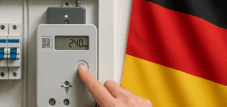
Digital Energy Darkness: Why Germany has failed miserably at smart meter installation – Image: Xpert.Digital
Last place in Europe: Why Germany of all places is despairing over simple electricity meters
Bureaucracy devours progress: The absurd story of the German smart meter disaster
The Federal Network Agency's ultimatum: The dispute over the smart meter rollout is now escalating
Germany wants the energy transition, but progress on the crucial foundation is stalled. While other European countries have long since implemented nationwide smart metering and achieved rates of nearly 100 percent, Germany is lagging dramatically behind. After almost a decade of regulatory hurdles, excessive security requirements from authorities, and a highly fragmented market structure, the installation rate in Germany is a meager 5.5 percent. The consequences of this "digital energy blackout" are serious: the prerequisites for dynamic electricity tariffs are lacking, grid congestion management devours billions annually, and valuable renewable energy has to be curtailed because the grid cannot intelligently respond to supply and demand. Now, the Federal Network Agency has lost patience – resorting to drastic supervisory procedures and threatening fines against delinquent municipal utilities. But is pressure alone the solution for a system that is structurally blocking itself? The chronology of a predictable failure.
In March 2021, the Higher Administrative Court of Münster issued an interim injunction halting the entire mandatory installation of smart metering systems—thus paralyzing a rollout that had barely gotten off the ground. The proceedings were initiated by an Aachen-based company that sold alternative metering systems and felt it was being driven out of the market by the BSI's (Federal Office for Information Security) general order. Simultaneously, around 50 metering point operators, mostly municipal utilities, filed suit for a different reason: they did not want to be legally obligated to install devices that did not yet technically meet the interoperability and certification requirements stipulated in the Metering Point Operation Act. The court ruled in favor of both sides, declaring the BSI general order likely unlawful—because the BSI had issued the so-called market declaration even though the three generations of devices available on the market did not fully implement the minimum legal standards, and regular certification had been replaced by an internally constructed BSI guideline. Under pressure to finally get the long-delayed rollout underway, the BSI had therefore disregarded the legal framework. In May 2022, the authority retrospectively withdrew its own ruling and issued a new one—this time based on actual certifications. The result: almost two more years of stagnation, deeply shaken industry confidence, and proof that the real failure lay not with the municipal utilities, but within the regulatory apparatus itself.
Smart meters in Germany: The digital nervous system of the energy transition and its systematic blockages
From pious wish to regulatory farce: The story of a predictable failure
The story of Germany's smart meter rollout is not a story of technical failure. It is the story of a regulatory system that is hindering itself – and thereby undermining the foundations of the energy transition. Since the 2016 law on the digitalization of the energy transition, the political will has been clearly articulated: Germany should digitalize its electricity system, introduce smart metering systems nationwide, and thus create the basis for a flexible, renewable energy grid. Around ten years later, the actual installation rate across all nearly 54 million metering points has risen to a meager 5.5 percent – and even this modest figure is the result of intensive regulatory escalation.
The Metering Point Operation Act (MsbG) of 2016 laid the legal foundation. It stipulated that basic metering point operators must equip certain consumer groups with smart metering systems: households and businesses with an annual consumption exceeding 6,000 kilowatt-hours, operators of photovoltaic or combined heat and power plants with a capacity of 7 kilowatts or more, and users of controllable load devices such as heat pumps or night storage heaters. The logic behind this was sound: those who consume or generate a lot of energy need precise, real-time data to efficiently balance the grid. However, for years, reality fell far short of this requirement.
Ten years of regulatory slumber: The chronology of failure
To understand where Germany stands today, one must trace the cascade of errors and delays that has accumulated since 2016. Initially, the Federal Office for Information Security (BSI), with its exceptionally high security requirements for smart meter gateways—the communication hub of every intelligent metering system—prevented a swift market launch. The certification processes dragged on for years, as the BSI demanded IT security standards at a level internally within the industry referred to as "intelligence service level." Nine manufacturers went through the process simultaneously, but global security vulnerabilities such as Meltdown and CPU attack surfaces repeatedly set back the testing process.
The law itself made the rollout obligation contingent on at least three independent manufacturers offering certified devices on the market – a safeguard against monopolization. However, this very provision became a bottleneck: as long as three devices were not certified, the mandatory installation could not legally commence. When the Federal Office for Information Security (BSI) finally acted and issued its general order confirming the availability of technically suitable devices on the market, the next legal blow followed. In March 2021, the Higher Administrative Court of Münster, by way of an interim injunction (Case No. 21 B 1162/20), completely halted the installation obligation. The reasoning was damning: the devices available on the market did not meet the legal requirements regarding security and interoperability. The BSI order was classified as "likely to be unlawful." Around 50 municipal utilities had challenged the general order in court and thus achieved a preliminary victory.
This setback triggered another regulatory restart. In 2021, the legislature responded with an amendment to the Metering Point Operation Act (MsbG), which created grandfathering provisions for already installed systems and aligned the law with the administrative practice of the Federal Office for Information Security (BSI). This meant that the definition of a smart metering system was expanded, and data protection and interoperability requirements were clarified. A significant delay of at least two to three years was thus structurally inherent. It wasn't until 2023 that a comprehensive revision of the MsbG followed with the "Act to Restart the Digitization of the Energy Transition," which defined its current operational objectives with the 2025 amendment to the MsbG.
The self-inflicted standstill: How the BSI halted the rollout with a shortcut
In the spring of 2020, the German Federal Office for Information Security (BSI) believed it could finally end years of stagnation. With its so-called market declaration, the agency officially stated that a sufficient number of certified smart meter gateways were available on the market—the legal prerequisite for the mandatory installation requirement for metering point operators to come into effect. However, the declaration was built on shaky ground: Instead of full legal certification according to Section 24 of the Metering Point Operation Act (MsbG), the BSI had created a self-designed internal transitional solution that certified the products of device manufacturers as sufficient—even though the required interoperability had not yet been fully implemented technically. An Aachen-based company that distributed competing metering systems and felt it was being driven out of the market by the ruling filed a lawsuit. At the same time, around 50 metering point operators, mostly municipal utilities, joined the resistance—not out of obstruction, but because they refused to burden their customers with the costs of devices that did not meet the minimum legal standard. In March 2021, the Higher Administrative Court of Münster ruled in their favor by way of an interim injunction, declaring the BSI's general order likely unlawful. In May 2022, the BSI retrospectively withdrew its own order and replaced it with a new one, this time based on actual certifications. The attempt to expedite proceedings through a legal shortcut had achieved precisely the opposite: two more years of stagnation and a loss of trust within the industry, the repercussions of which are still being felt today.
BSI errors with political faces
The BSI issued its flawed market declaration on February 7, 2020. The responsible persons were:
At the BSI level: Arne Schönbohm, then President of the BSI, signed the market declaration and had shortly before personally presented the third certificate for a smart meter gateway to a device manufacturer—a signal that the rollout could finally begin. Schönbohm headed the BSI from 2016 to 2022, when he was succeeded by then Interior Minister Karl Lauterbach for other reasons. Since January 1, 2023, he has been President of the Federal Academy for Public Administration. From 2023 to 2025, he also served as Special Representative for the Modernization of the Federal Government's Continuing Education Landscape. Since 2024, he has also been an honorary professor at the Bonn-Rhein-Sieg University of Applied Sciences, where he represents the area of "Security in Digitalization for State, Economy, and Society" at the Institute for Security Research.
At the ministerial level: In 2020, the BSI was subordinate to the Federal Ministry of the Interior, Building and Community (BMI) under Federal Interior Minister Horst Seehofer (CSU). Seehofer thus held political and technical oversight of the BSI when the legally questionable market declaration was issued.
Additionally involved: Since the rollout fell under the umbrella of energy policy, the Federal Ministry for Economic Affairs and Energy (BMWi) under Peter Altmaier (CDU) was also involved — the market declaration was explicitly published “in coordination with the BMWi”.
This means: Schönbohm as the executive head of the authority, Seehofer as the supervisory minister and Altmaier as the coordinating economic ministry — all three shared responsibility for a decree that was classified as likely to be unlawful two years later and ultimately had to be withdrawn.
The Anatomy of Stagnation: Why 77 Companies Never Started
On March 27, 2026, the Federal Network Agency initiated supervisory proceedings against 77 basic metering point operators – companies that, despite repeated warnings from the agency, had not yet installed a single smart meter. This step marks the end of years of acquiescence and the beginning of serious regulatory enforcement. But the question that goes beyond the legal proceedings is: How could it have come to this?
The answers are multifaceted and structural. The German market for metering point operation is extremely fragmented. Around 800 basic metering point operators – predominantly municipal utilities – bear the legal obligation for the rollout. The problem: 787 of these operators are responsible for fewer than 500,000 metering points each, which means they can structurally never reach the break-even point – which, according to industry experts, is only achievable with around 500,000 installed devices. The costs for setting up the necessary IT infrastructure, system integration, and process organization are largely independent of the number of households to be served. An operator responsible for 10,000 households has to build the same digital platform as an operator with one million metering points. For smaller municipal utilities, the math simply doesn't add up.
Added to this are operational overload and a lack of willingness to innovate. Many municipal utilities are not organizationally equipped to build complex smart grid infrastructures. The bureaucratic effort per installation is considerable: double visits are the norm when customers are not home, every meter replacement requires a meticulous IT process chain, and the requirements for a secure supply chain for the devices—the German Federal Office for Information Security (BSI) stipulates that gateways must be transported between production and installation in secure transport boxes—further increase the cost and complexity of installation. A refusal to cooperate with competing metering point operators, who could operate more efficiently, is also a widespread problem. Although the Metering Point Operation Act (MsbG) mandates cooperation, competing providers regularly report obstacles to access.
Another structural problem is price regulation. The legally mandated price caps for smart metering systems—between €20 and €100 per year for the default operator, depending on the consumption class—do not cover the actual full costs for small operators. At the same time, an investigation revealed that some operators were charging up to €973.59 per installation for voluntary installations at the customer's request—many times the economically reasonable level. These excessive price demands demonstrate how severely the incentive structures within the system are distorted: The default metering point operator has an interest in discouraging voluntary installation through inflated prices because they want to keep out competing metering point operators who could challenge their market share.
The digital nervous system: Why smart meters are far more than just clever meters
It would be a fundamental mistake to view the smart meter as merely a modernized electricity meter. Intelligent metering systems are the central nervous system of a decarbonized energy system. Without them, the energy transition remains structurally blind – a system that generates renewable energy but fails to coordinate it, distribute it flexibly, or use it intelligently.
The technical core is the smart meter gateway, a certified communication unit that records consumption in near real-time and securely transmits it to all authorized market participants: network operators, suppliers, direct marketers, and in the future, aggregators who pool flexibility and offer it on the balancing energy market. Only through this data communication are three key instruments of the energy transition technically possible: firstly, dynamic and time-variable electricity tariffs; secondly, grid-supportive control of consumption facilities in accordance with Section 14a of the German Energy Industry Act; and thirdly, efficient load management that synchronizes supply and demand in 15-minute intervals.
Dynamic electricity tariffs, which allow consumers to benefit from the quarter-hourly fluctuations in electricity prices on the exchange, have been mandatory for all energy suppliers since 2025. However, without smart meters, this instrument remains largely ineffective. A study published in 2025 by Neon Neue Energieökonomik (Neon New Energy Economics) determined that households with flexible consumption could reduce their electricity costs by up to 82 percent. A smartly charged electric car uses up to 42 percent of the electricity that would otherwise have been curtailed due to negative electricity prices on the exchange. These figures illustrate the untapped economic potential as long as the rollout is stalled.
The impact on grid stability is even more profound. Renewable energy sources produce the most when the sun shines and the wind blows – not when consumption is highest. This structural imbalance between fluctuating generation and fixed demand creates grid bottlenecks that are costly and endanger the system. In 2025, total grid congestion management cost nearly €3.1 billion – an increase of four percent compared to the previous year. As early as 2024, 3.5 percent of total renewable electricity generation had to be curtailed due to grid constraints. This was simply wasted resources. Smart meters could avoid a significant portion of these costs by shifting peak demand to off-peak hours, charging electric vehicles when electricity is plentiful, and scheduling heat pumps to alleviate grid congestion rather than exacerbate it.
An EY study commissioned by the German government estimated the systemic savings potential from 2032 onwards, assuming a full rollout of the 28 million legally mandated smart meter installations, at between two and 10.6 billion euros annually – solely through more efficient use of renewable energy generation and the avoidance of distribution grid expansion. The grid of the future, which will require approximately 750 billion euros in investment by 2045, could be reduced by a third through intelligent demand-side management. The equation is therefore clear: Every euro invested in smart meters today will save many times that amount in grid expansion costs tomorrow.
New: Patent from the USA – install solar parks up to 30% cheaper and 40% faster and easier – with explanatory videos!

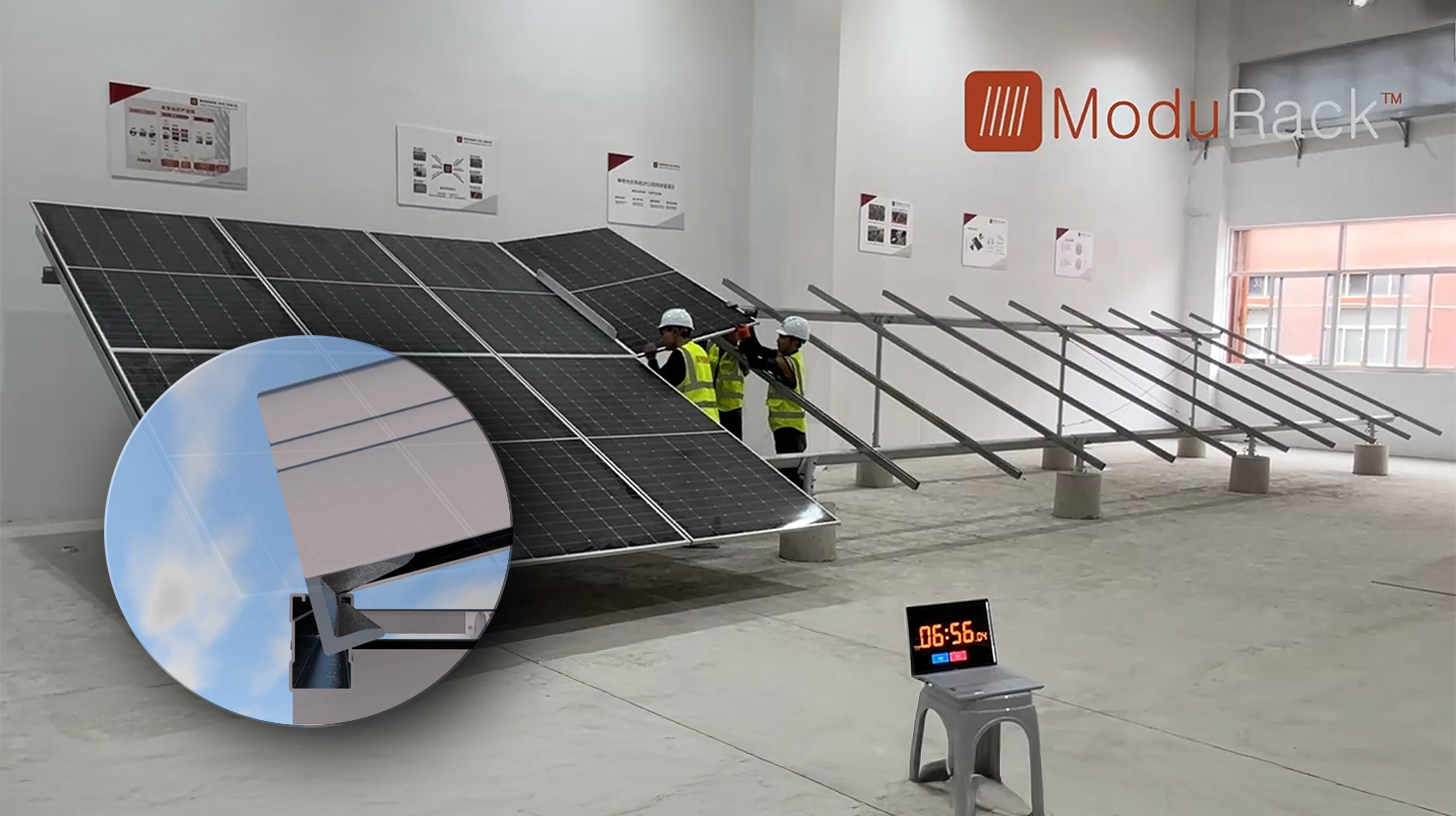
New: Patent from the USA – Install solar parks up to 30% cheaper and 40% faster and easier – with explanatory videos! - Image: Xpert.Digital
The core of this technological advancement is the deliberate departure from conventional clamp mounting, which has been the standard for decades. The new, more time- and cost-effective mounting system addresses this with a fundamentally different, more intelligent concept. Instead of clamping the modules at specific points, they are inserted into a continuous, specially shaped support rail and held securely in place. This design ensures that all forces – whether static loads from snow or dynamic loads from wind – are distributed evenly across the entire length of the module frame.
More information here:
Why Germany is falling behind Europe in the smart meter rollout
The European Mirror: Germany as a cautionary example
International comparisons starkly reveal the extent of Germany's failure. Sweden began its smart meter rollout as early as 2002 and completed it in 2009 – with a 100 percent penetration rate and approximately 5.3 million installed devices. Spain achieved full rollout for private households by the end of 2018, with around 28 million devices. In Sweden, Norway, and Finland, coverage is now almost 100 percent. France and Spain also report installation rates of around 90 percent.
At the end of 2024, according to data from Berg Insight, around 63 percent of all electricity customers in the EU-27 plus Norway, Switzerland, and the United Kingdom had a smart meter, following the installation of more than 195 million devices. A penetration rate of approximately 80 percent is expected in the region by 2029. With a total rate of 5.5 percent at the end of 2025, Germany is not only far below the European average—it is literally at the bottom of the rankings. While Europe is digitizing its grid, Germany is still manually reading meter readings every winter.
It's not that Germany hasn't recognized the problem. The targets have been repeatedly formulated, tightened, and rescheduled. By the end of 2025, at least 20 percent of mandatory installations were supposed to be completed, by 2028 at least 50 percent, by 2030 at least 95 percent, and by 2032 around 90 percent of all mandatory installations. Only the first target was narrowly achieved: For the mandatory installations relevant to the quota, the 20 percent target was just barely reached by the end of 2025, with 23.3 percent of the corresponding category. This statistically reassuring figure is misleading, however: In absolute terms, this means that of 4.65 million mandatory installations, only around 941,000 are actually equipped with a smart meter. The remaining 3.7 million mandatory installations are waiting for installation – not to mention the tens of millions of households that are not yet subject to any legal obligation but are relevant to the overall system.
Market imbalance: How size determines success
Data from the Federal Network Agency shows a significant correlation between the size of a metering point operator and its rollout progress. For the 18 metering point operators with more than 500,000 metering points, the average installation rate is already at 25 percent – exceeding the mandatory target. Operators with 100,000 to 500,000 metering points achieve an average of 14.6 percent, the group with 30,000 to 100,000 metering points reaches 11.2 percent, and smaller operators with fewer than 30,000 metering points manage an average of only 8.2 percent. Market leader E.ON will have installed around one million smart meters by the end of 2025, thus completing around 30 percent of its mandatory installations – significantly above the legal minimum target.
This economies of scale are no coincidence. Large operators can amortize their IT infrastructure across a broad base, build professional rollout teams, organize efficient logistics, and develop standardized installation processes. Smaller municipal utilities, on the other hand, face the choice of either making substantial investments whose amortization is questionable from a business perspective, or ignoring the obligation and waiting for penalties. A considerable number have apparently opted for the second option – with the result that 77 operators are now subject to formal supervisory proceedings.
The solution, which market experts have been discussing for years, is obvious: market consolidation through cooperation or outsourcing. Competitive metering point operators, who are not bound by a geographically restricted basic responsibility and can operate more efficiently, should be structurally integrated into the rollout. However, the resistance to cooperation among many basic-responsibility operators and unclear incentive structures are hindering this process. Furthermore, while the regulatory framework theoretically permits competition, in practice it grants basic-responsibility operators considerable discretion to keep potential competitors at bay.
The dimension of inaction: The economic cost of standstill
The economic damage caused by the delayed smart meter rollout is real, although difficult to quantify precisely. Every year without nationwide smart metering means higher costs for grid congestion management, more curtailed renewable energy, inefficient load management, and missed consumer savings. With 3.5 percent of renewable electricity generation curtailed in 2025 and grid congestion management costs of nearly €3.1 billion, Germany is missing out on a significant portion of the efficiency gains that the smart grid would promise, year after year.
For consumers with electric cars, heat pumps, and photovoltaic systems, the lack of smart meters means a concrete loss of potential savings with dynamic tariffs. Without smart meters, hourly billing is impossible – and without this type of billing, there is no economic incentive to shift consumption to the cheapest times. This hinders the market economy in the energy transition: Price cannot function as a steering instrument. Instead, the system remains in a regulated, sluggish equilibrium that is more expensive and more harmful to the climate than it needs to be.
On the supply side, the delayed rollout is hindering the development of new business models: Aggregators that could pool the flexibility of hundreds of thousands of small consumers and market it on the balancing energy market or in capacity markets depend on a critical mass of smart meters. Energy service providers that want to offer data-driven energy management systems cannot find a sufficiently broad market. The entire ecosystem of the digital energy industry remains underdeveloped – with direct consequences for innovation, competition, and employment in a future market that is currently emerging with great dynamism across Europe.
The regulatory architecture and its weaknesses
A key problem with German smart meter regulation lies in the complexity of the multi-level system. At least four federal agencies and institutions are directly involved: the Federal Office for Information Security (BSI) as the certification authority and guardian of technical standards, the Federal Network Agency as the regulatory and supervisory authority, the Federal Physical-Technical Institute (PTB) for metrological requirements, and the Federal Ministry for Economic Affairs and Energy as the legislative body. Each of these institutions pursues legitimate goals, but coordination between them has systematically failed.
The BSI certification regime is a prime example of well-intentioned but poorly coordinated regulation. The security requirements themselves are justified: a compromised smart meter network could theoretically be misused to manipulate power supplies in entire regions or endanger critical infrastructure. However, the operational consequences of these requirements—lengthy certification procedures, subsequently added requirements such as the regulations for a secure supply chain, which even mandate the transport of gateways in secure vehicle boxes—have created an almost unreasonable burden and delayed the market availability of certified devices for years. Legal experts in the field, such as Dr. Michael Weise from the Berlin-based consulting firm BBH, have repeatedly warned that the cost-benefit analysis used in the BSI requirements has led to distortions and have called for an adjustment of the Metering Point Operation Act (MsbG).
The Metering Point Operation Act (MsbG) itself contains structural flaws. Linking the rollout obligation to the BSI's certification created a bottleneck that, in a worst-case scenario—as happened in 2021—could bring the entire rollout to a standstill. While the market concentration protection clause, which requires at least three certified providers on the market, is understandable from a competition policy perspective, it delayed a nationally critical rollout project by valuable years as a starting condition. Furthermore, the price caps, which structurally make installation economically unviable for small operators without simultaneously providing sufficient funding instruments, create compliance deficits that now have to be addressed with fines.
What follows now: legal proceedings, fines, and the next stage of escalation
The 77 supervisory proceedings initiated by the Federal Network Agency follow a clearly defined process. First, the companies concerned are given the opportunity to comment. The information provided is then reviewed and considered in further decisions. If deficiencies remain, the agency can, pursuant to Section 76 of the Metering Point Operation Act (MsbG) in conjunction with Section 94 of the Energy Industry Act (EnWG), impose fines to enforce compliance with its orders. The amount of these fines depends on the operators' economic capacity – a discretionary power that obligates the Federal Network Agency to act appropriately and proportionately in each individual case.
The agency makes it clear that this is just the beginning. Further supervisory proceedings against small and medium-sized metering point operators that have begun but have not yet reached the 20 percent quota have already been announced. Monitoring of the next quota levels will follow in the coming years: 50 percent must be reached by the end of 2028, at least 95 percent of mandatory installations by the end of 2030, and the majority of the rollout should be completed by 2032. The Federal Network Agency has unequivocally signaled that it will no longer merely tolerate these targets but will actively enforce them.
For the affected municipal utilities and metering point operators, this shift in regulatory behavior represents a fundamental challenge. Those who have previously played for time, hoping that regulatory patience would last indefinitely, now find themselves confronted by an authority demonstrating seriousness. At the same time, pressure alone does nothing to address the structural problems: Small operators lack neither goodwill nor patriotic zeal – they lack the business foundation and organizational capacity required for an efficient rollout. Fines do not solve these structural deficiencies. They create pressure to act – but pressure to act without the ability to act will, at best, only lead to a wave of transfers of metering point responsibilities to competing operators or cooperation partners.
Structural reform instead of punitive measures: What the rollout really needs
A sober economic analysis of the German smart meter rollout leads to the conclusion that the primary problem is not one of implementation, but of structure. The architecture of the German metering market – highly fragmented, with unclear incentives, capped prices, and a lack of support mechanisms – was designed from the outset to fail for small operators. The solution lies not primarily in harsher sanctions, but in a reform of the market structure.
First, a consolidation strategy is needed. Metering point operators below a minimum economically viable size should be systematically motivated or obligated to transfer their basic responsibilities to more efficient operators – whether large municipal utilities, competitive providers, or cooperative associations of smaller operators. Market concentration is not an end in itself, but rather a vehicle for economies of scale, which are essential for making the rollout cost-effective.
Secondly, price caps and support instruments need to be reviewed. If regulated prices do not cover the full rollout costs for many operators, a systemic incentive to inaction arises. Either price caps must be adjusted to meet demand, or specific investment subsidies are needed for small operators – similar to the system in Spain, where state-coordinated support programs made the national rollout possible in the first place.
Thirdly, the BSI certification architecture should be fundamentally reconsidered. The security level for smart meter gateways is non-negotiable, but the question of whether the certification process itself must be designed in such a way as to repeatedly bring national infrastructure projects to a standstill is debatable. International best practices show that robust security standards and rapid certification need not be mutually exclusive – provided the process is designed from the outset for scalability and time efficiency.
Fourth, greater involvement of competitive metering point operators, who already operate more efficiently and innovatively than many default providers, would be a crucial lever. Market design should actively incentivize the transfer of default responsibilities to more efficient providers, rather than forcing structurally overburdened operators into compliance through fines.
The big picture: Smart meters as a crucial issue for the energy transition
It would be a gross oversimplification to dismiss the debate surrounding smart meters as a niche, technically bureaucratic issue. The rollout of intelligent metering systems is the crucial prerequisite for the massive investments in wind power, photovoltaics, electromobility, and heat pumps to reach their full efficiency potential. An energy system that relies on volatile renewable sources absolutely requires the ability to coordinate generation and consumption in real time. Without this coordination, renewables will be increasingly curtailed, gas-fired power plants will have to be kept on standby as backup systems, and network costs will rise for all consumers.
Germany has wasted a decade. The reasons are obvious: excessively high regulatory hurdles, a fragmented market structure, a lack of business incentives, and a multi-agency system lacking clear coordination. The Federal Network Agency's move to initiate 77 proceedings is correct and long overdue – but it is only the first step. The real challenge lies in a structural reform of the entire metering market that doesn't rely on punitive measures against overburdened players, but rather on market-driven consolidation, intelligent funding structures, and a BSI certification architecture that prioritizes both security and speed.
The political will for the energy transition is firmly established in Germany. But will alone is not enough. The necessary infrastructure is needed, and the most important of these foundations is a nationwide network of smart metering systems. As long as this network is lacking, the German energy transition is like a house with a roof of solar panels and wind turbines – but built without a foundation. That foundation is the smart meter.
Your partner for business development in the fields of photovoltaics and construction
From industrial rooftop PV to solar parks and larger solar parking lots
☑️ Our business language is English or German
☑️ NEW: Correspondence in your native language!

Konrad Wolfenstein
I and my team are happy to be available to you as your personal advisor.
You can contact me by filling out the contact form here wolfenstein@xpert.digital:or simply call me at +49 7348 4088 965. My email address is
I'm looking forward to our joint project.
☑️ EPC services (Engineering, Procurement and Construction)
☑️ Turnkey project development: Development of solar energy projects from start to finish
☑️ Site analysis, system design, installation, commissioning, maintenance and support
☑️ Project financier or intermediary of capital providers
Innovative photovoltaic solution for cost reduction (up to 30%) and time savings (up to 40%)

Innovative photovoltaic solution for cost reduction and time savings - Image: Xpert.Digital
More information here: