Thanks for nothing? Germany is paying billions for Ukraine, but China and Turkey are raking in the contracts.
Xpert pre-release

Language selection 📢
Published on: December 16, 2025 / Updated on: December 16, 2025 – Author: Konrad Wolfenstein

Thanks for nothing? Germany is paying billions for Ukraine, but China and Turkey are raking in the contracts – Creative image: Xpert.Digital
$524 billion for the reconstruction of Ukraine: Why German companies are left out of Europe's largest infrastructure project
The battle for Ukraine billions: How Asian competitors are outbidding German companies
With an estimated total need of $524 billion over the next ten years, the reconstruction project dwarfs historical comparisons such as the Marshall Plan. Frustration is growing in German industry, and there are calls to link aid more closely to the awarding of contracts to German companies—a practice known as tie-in financing. This scenario forces Germany and the European Union into a dilemma between loyalty to a rules-based, multilateral order and the need to protect their own interests in a world of strategic economic nationalism. The debate raises a fundamental question: Should the EU cling to the ideal of free competition while other powers have long since used their aid as an instrument for export promotion, or is it time for a more pragmatic policy that combines solidarity and self-interest?
German taxpayers finance, foreign companies build: The paradoxical business of Ukraine's reconstruction
The irony of European economic history takes a remarkable turn in 2025: Germany, which since February 2022 has provided or pledged around €36 billion in bilateral civilian aid and approximately €40 billion in military support to Ukraine, now watches as Chinese, Indian, and Turkish companies snap up lucrative reconstruction contracts in Kyiv. The aid to Ukraine is becoming a cautionary tale about the limits of altruistic foreign policy in a world where other nations have long since internalized the rules of strategic mercantilism.
The trap of decency
It is a systemic problem in which German economic interests have long been subordinated to politically desired moral principles. Nevertheless, Germany has knowingly walked into this trap. Here is a breakdown of why interest groups (such as the Eastern Committee or the BDI) have so far been unable to achieve much:
The principle
Germany strictly adheres to the OECD rules of so-called Untied Aid. This means: We provide money, but do not stipulate that it must be used to purchase German products. This is considered "good" development aid in order to avoid corruption and cronyism.
The reality
Countries like Turkey, China, and France take a more pragmatic approach. They utilize gray areas or bilateral agreements ("tied aid") to ensure that the money flows back into their own economies. For years, German lobbyists who protested against this were rebuffed in Berlin with references to "international rules" and "solidarity."
The bureaucratic own goal (The 5% hurdle)
A concrete example where the lobbyists actually ran up against a wall for a long time is the Hermes guarantees (export credit guarantees).
To deliver goods to a war zone, companies need government guarantees.
The problem
The German government typically requires banks/companies to maintain a 5% deductible. While this sounds fair in peacetime, it's disastrous for business during wartime. Banks are often prohibited from granting loans with a 5% default risk in war zones (due to internal risk regulations).
The consequence
German companies want to deliver, but cannot obtain financing. Turkish companies, on the other hand, are often more aggressively protected by their state or take on higher risks. Only at the end of 2025 will the Eastern Committee loudly demand 100% federal guarantees to remove this bureaucratic obstacle – a demand that is actually two years too late.
The “Aldi principle” in tenders
Ukraine (and international donors) usually award contracts through public tenders. The main criterion is often simply the lowest price.
German suppliers (high labor costs, high environmental standards, expensive compliance) are almost always more expensive than Turkish or Chinese competitors.
The oversight: The opportunity to negotiate quality or sustainability criteria into the aid packages early on (e.g., "contractors must comply with EU environmental standards") was missed. This would have disqualified low-cost Chinese providers. German negotiators and lobbyists were either asleep at the wheel here or overestimated their influence.
So much for our so-called "political experts": While billions in aid were being arranged, German negotiators and lobbyists didn't even manage to ensure that EU standards for quality and the environment applied to the reconstruction – a simple lever that would have immediately eliminated cheap Chinese suppliers from the competition. Instead of negotiating strategically, they apparently either slept through the situation or hopelessly overestimated their influence.
The dimensions of an unprecedented economic project
The reconstruction figures speak for themselves. According to the latest estimates from the World Bank, the United Nations, the European Commission, and the Ukrainian government, direct war damage amounts to US$176 billion. The total need for reconstruction and restoration over the next ten years is estimated at US$524 billion. This is almost three times Ukraine's 2024 GDP. For 2025 alone, the fourth rapid damage and needs assessment puts the financing requirement at US$17.32 billion. Despite US$7.37 billion already provided by the Ukrainian government and international donors, a funding gap of almost US$10 billion remains.
These sums highlight a reconstruction need that invites historical comparisons. The Marshall Plan, implemented after World War II, mobilized the equivalent of approximately 150 billion US dollars in today's prices for several Western European countries. Ukraine needs more than three times that amount. However, while the Marshall Plan was coordinated by a single superpower and linked to clear economic expectations, the international reconstruction architecture for Ukraine is a fragmented network of diverse actors with diverging interests.
The European Union established the Ukraine Facility in March 2024, a financing instrument intended to provide up to €50 billion by 2027, comprising €33 billion in loans and €17 billion in grants. These funds are designed not only to finance immediate reconstruction but also to support the structural reforms necessary for Ukraine's EU accession. The facility's three pillars comprise macro-financial stability and reform implementation, an investment framework, and technical assistance and capacity building.
Structural asymmetries in global procurement competition
The frustration of German businesses is becoming increasingly apparent. Michael Harms, Managing Director of the German Eastern Business Association, succinctly summarized the problem: Germany and the European Union are transferring substantial sums to Ukraine, yet Chinese, Indian, and Turkish companies regularly win the tenders because contracts are awarded solely based on the lowest price. German businesses are now demanding a greater share of the reconstruction aid.
This demand is by no means new in international development cooperation. Supply chain agreements, in which capital aid is granted on the condition that it be used for procurement contracts in the donor country, were common practice for decades. Studies show that supply chain agreements are on average 15 to 30 percent more expensive than those awarded through international tenders, and in the case of food aid, even up to 40 percent more expensive. For this reason, development policymakers have long called for the reduction of supply chain agreements. In 2001, the Organisation for Economic Co-operation and Development (OECD) recommended abolishing supply chain agreements for aid to the least developed countries.
But in the case of Ukraine, development policy ideals clash with geopolitical realities. Other countries have long practiced clever strategic protectionism. The United States, for example, traditionally links a significant portion of its development aid to the obligation to purchase American goods and services. The raw materials agreement signed between the US and Ukraine in April 2025 creates a joint investment fund that grants privileged access to Ukrainian natural resources while explicitly safeguarding American economic interests. Ukraine pays 50 percent of its revenue from licensing and sales of raw materials into this fund without having to repay previous military aid. A prime example of the intertwining of security policy and economic interests.
China, in turn, has perfected its strategy through the Belt and Road Initiative. By 2021, Chinese state-owned banks had granted Ukraine an estimated seven billion US dollars in loans, primarily for infrastructure projects. The Chinese company COFCO has invested more than 200 billion US dollars in the Ukrainian agricultural industry since 2008 and established comprehensive logistics centers. The China Harbor Engineering Company completed contracts for deepening the water basin in the southern port three months ahead of schedule, saving ten percent of the contract sum.
Three demands from German businesses to politicians
The Eastern Committee has formulated three concrete demands for the German government. First, future aid should be more closely tied to the participation of German companies. Second, the business community demands that the federal government guarantee 100 percent of trade transactions. Currently, private banks must bear a deductible, which makes lending more difficult. The federal government has already responded by reducing the deductible for export credit guarantees to as little as 2.5 percent. Through Euler Hermes export credit guarantees, exports can be secured despite the war; both economic and political risks are covered. Furthermore, the federal government has introduced an exceptional provision, the special Ukraine guarantee, which allows investment guarantees even for war risks. It is noteworthy that Ukraine now accounts for the largest share of all current investment guarantees.
Thirdly, the issue concerns more transparent tendering processes in Ukraine. Numerous German companies complain about opaque procurement procedures. This reveals a fundamental problem: In Transparency International's 2024 Corruption Perceptions Index, Ukraine ranks 105th out of 180 countries with 35 points. After a significant increase of three points in 2023, the country lost another point in 2024. The implementation of many anti-corruption reforms is either merely formal or deliberately delayed. Transparency International Ukraine emphasizes that the progress of recent years is primarily attributable to international commitments within the framework of EU integration and the receipt of international financial assistance.
Public procurement remains a risky sector. Ukraine has established ProZorro, an electronic platform for public procurement, which is said to have enabled savings of six billion US dollars between 2017 and 2021. Nevertheless, German companies report a lack of transparency and distortions of competition. The digital platform DREAM, intended to serve as a central interface for reconstruction projects, has so far failed to create the hoped-for transparency.
Economic realities beyond the rhetoric of aids
Despite all the difficulties, economic relations between Germany and Ukraine are developing dynamically. German exports to Ukraine rose by 30 percent to €4.6 billion in the first half of 2025. This makes Ukraine an increasingly important trading partner for Germany in the region, while Russia is dramatically losing ground. Imports from Ukraine, on the other hand, fell by 4.5 percent to €1.5 billion. By October 2025, German exports to Ukraine had grown by 14 percent, a figure that holds true even when considering only civilian goods.
These figures illustrate remarkable economic resilience. Despite intensified Russian attacks on critical infrastructure, the Ukrainian economy grew by approximately four percent in 2024. Analysts expect more moderate growth of between 1.6 and 4.3 percent for 2025. The European Commission, in its autumn forecast, predicts only 1.6 percent for 2025 and 1.5 percent for 2026, significantly less than six months ago. The outlook for 2027 was raised to 4.7 percent due to the expected boost from the ongoing reconstruction efforts; however, this scenario remains highly uncertain if the war continues.
Private consumption is expected to increase by 5.6 percent in 2025 and remain a significant growth driver thereafter. Gross fixed capital formation is gaining momentum, driven by high defense spending and the development of a domestic defense industry. Reconstruction programs to repair destroyed infrastructure and housing, as well as investments in logistics and the relocation of production capacities from frontline regions to safer locations in western Ukraine, are providing additional impetus.
Sectoral opportunities and strategic positioning
The key reconstruction sectors offer diverse opportunities for international actors. The housing sector requires the most support, at US$83.7 billion. Approximately 13 percent of the total housing stock was damaged or destroyed, affecting more than 2.5 million households. The energy sector, which suffered the most during the conflict, requires US$47 billion. Damage in the energy sector more than doubled to US$20.51 billion by December 2024, compared to the previous year.
German companies are already active in several areas. Siemens Healthineers has been cooperating with the German Society for International Cooperation (GIZ) since July 2025 on the training of specialists in the field of medical technology. The program is financed through the DevelopPPP development policy program of the Federal Ministry for Economic Cooperation and Development. In the defense sector, the German start-up Quantum Systems has agreed with the Ukrainian company Frontline Robotics to produce Ukrainian drones in Germany. The German government has already supported bilateral cooperation between defense companies with over half a billion euros.
The infrastructure sector offers opportunities for companies established in Central and Eastern Europe. European infrastructure developers such as Ferrovial, a major player in Poland through its subsidiary Budimex, and Acciona, which completed a 57-megawatt solar power plant near Kyiv in 2019, demonstrate a long-term commitment. Building materials giant CRH recently acquired Buzzi's Ukrainian cement operations and is positioning itself for long-term reconstruction.
Our EU and Germany expertise in business development, sales and marketing

Our EU and Germany expertise in business development, sales and marketing - Image: Xpert.Digital
Industry focus: B2B, digitalization (from AI to XR), mechanical engineering, logistics, renewable energies and industry
More about it here:
A topic hub with insights and expertise:
- Knowledge platform on the global and regional economy, innovation and industry-specific trends
- Collection of analyses, impulses and background information from our focus areas
- A place for expertise and information on current developments in business and technology
- Topic hub for companies that want to learn about markets, digitalization and industry innovations
Supply chains or free market? What role does Germany's economy really play in the Ukraine reset?
Political economy of reconstruction policy
The demands of German industry for stronger supply chain ties touch upon fundamental questions of the international economic order. On the one hand, Germany stands in the tradition of a rules-based, multilateral order that rejects discrimination in global trade and upholds the principle of free competition. The European Union has enshrined these principles in its public procurement law. On the other hand, most other donor countries have long operated according to a logic of strategic economic nationalism, which views development aid as an instrument for promoting exports and securing long-term economic relationships.
At the German-Ukrainian Business Forum in December 2025, Federal Minister for Economic Affairs Katherina Reiche declared that the demands of the Eastern Committee were entirely legitimate. However, she emphasized that German companies would then also have to be able to deliver quickly. This presents a key challenge: the German economy is suffering from a shortage of skilled workers, high energy costs, bureaucratic hurdles, and increasing international competition fueled by Chinese state subsidies. The strong export orientation, traditionally a strength of the German economy, could prove to be a weakness if protectionism and decoupling tendencies lead to a situation where current export markets will have to be served by local production in the future.
The German government has developed a ten-point plan for cooperation with Ukraine, which includes, among other things, a liaison office for the Ukrainian defense industry in Berlin, increased staffing for the military attaché's office at the German embassy in Kyiv, and the identification of flagship projects for joint research, development, and production. The strategic promotion of defense industry joint ventures is to be continued and expanded. Germany is also aiming for joint procurement of defense equipment with European partners for the benefit of Ukraine.
EU integration as a transformative framework
Ukraine was granted EU candidate status in June 2022. Accession negotiations officially began in June 2024. The European Commission had submitted a list of seven comprehensive reform projects to the country, including improvements to the justice system and the fight against corruption. In early November 2023, the Commission concluded that Ukraine had fulfilled well over 90 percent of the requirements. However, meeting the Copenhagen criteria – institutional stability, democracy, the rule of law, human rights, a functioning market economy, and adoption of EU law – remains a lengthy process.
The Ukrainian government's Ukraine Plan for the period 2024 to 2027 outlines its reform and investment strategy and is closely linked to the EU's Ukraine Facility. The document sets out a medium-term vision for reconstruction measures, which are connected to the key structural reforms required for EU accession. The aim is to align reconstruction with economic modernization and to create a solid foundation for the desired EU membership. Experts consider EU accession for Ukraine realistic no earlier than 2030, provided that the requirements regarding democracy, the rule of law, and the fight against corruption are met and the EU acquis is transposed into national law.
The EU itself still needs to implement significant reforms before it can admit Ukraine. These reforms primarily concern simplifying decision-making procedures and agricultural policy. The abolition of the unanimity principle in many policy areas is under review to ensure the EU's ability to act effectively with more member states.
Structural Dilemmas of an Auxiliary Architecture
The reconstruction debate reveals several structural dilemmas. First, the normative demand for free competition and cost efficiency contradicts the political desire to allow the recipient country's own economy to benefit from the aid. Aid tied to specific deliveries is demonstrably more expensive, but it generates political support in the donor country and secures jobs there.
Secondly, the urgency of reconstruction clashes with the necessary institutional reforms. Ukraine must simultaneously wage war, keep its economy running, repair destroyed infrastructure, and implement far-reaching structural reforms. This Herculean task overwhelms the state's capacity. There is a risk that reforms will only be formally implemented to secure international funding, while actual enforcement will fail to materialize.
Third, there is a significant gap between the estimated funding needs and the resources mobilized. Even if all pledged public funds are disbursed, they will only cover a fraction of the need. Private investment is essential to close this funding gap. Estimates suggest that private capital could cover approximately one-third of the total need. However, private investors require stable conditions, legal certainty, anti-corruption measures, and foreseeable prospects for peace. As long as the war continues, investment risks remain prohibitively high, despite government guarantees and insurance.
Comparative perspectives: The Marshall Plan as a backdrop
The comparison with the Marshall Plan, which is often invoked as a blueprint for Ukraine's reconstruction, proves problematic upon closer examination. Eastern Europe expert Heiko Pleines from the Research Centre for Eastern Europe emphasizes that the Marshall Plan is more of a metaphor than a blueprint. Three differences are particularly relevant: First, the financial volume of the Marshall Plan was relatively small, approximately 150 billion US dollars in today's prices for several countries. More important than the specific sum was the signal it sent to foreign investors that they could count on stable conditions. Second, the Marshall Plan was organized solely by the USA, whereas aid to Ukraine comes from many countries and organizations with diverse interests. Third, the first Marshall Plan aid was disbursed in 1948, three years after the end of the war. Ukraine's reconstruction must proceed concurrently with the war.
Furthermore, it should be considered that the recipient countries of the Marshall Plan possessed intact institutional structures, functioning administrations, and a culture of the rule of law. Ukraine, on the other hand, has been struggling for decades with structural corruption, weak institutions, and oligarchic structures. The German Economics Minister Ludwig Erhard argued at the time that it was not American aid, but rather the currency reform that fueled the German economic miracle. Institutional and regulatory reforms proved to be more decisive than the sheer volume of transfers.
Geoeconomic dimensions and geopolitical upheavals
Ukraine's reconstruction is not taking place in a vacuum, but rather in an environment of intensified geoeconomic competition. China is systematically using the Belt and Road Initiative to secure economic influence. Ukraine is strategically located at the crossroads of Europe and Asia and was viewed by Beijing as a potential gateway to Europe. The Russian war of aggression thwarted these plans, but China is closely monitoring reconstruction opportunities. The European Union and the US are trying to keep Chinese companies out of security-critical infrastructure projects, but in the commercial sector, Chinese firms are successfully competing on low prices.
Under the Trump administration, the United States largely discontinued its development aid program USAID in February 2025, a move that hit Ukraine particularly hard. In 2024, USAID still provided $5.4 billion for projects in Ukraine. The sudden halt created considerable uncertainty. The bilateral commodity agreement signed in April 2025 signals a shift from traditional development aid to transactional economic relations. President Trump emphasized that the US would receive far more in return than it had invested.
Institutional fragmentation and coordination deficits
The large number of actors involved leads to significant coordination problems. The World Bank, the International Monetary Fund, the European Commission, the European Investment Bank, the European Bank for Reconstruction and Development, bilateral donors, private foundations, and non-governmental organizations each pursue their own agendas and priorities. The Ukrainian government in Kyiv sets nationwide priorities, but each region has different needs and potential. Reconstruction programs must be flexible and take regional specificities into account.
The annual Ukraine Recovery Conferences, held in Lugano, London, Berlin, and Rome between 2022 and 2025, established guidelines: Ukraine itself should lead the reconstruction, ensure transparent processes, and involve both international donors and civil society. The practical implementation of these principles is proving challenging. Decentralized structures clash with the need for central coordination. Transparency is at odds with administrative efficiency.
The European Investment Bank, together with the European Bank for Reconstruction and Development and the European Commission, launched the Ukraine FIRST program, which provides €30 million in funding for feasibility studies, technical assessments, and procurement planning. Such initiatives aim to improve project preparation and support Ukraine in translating its reconstruction priorities into concrete investments. Nevertheless, the gap between planning ambitions and operational reality remains significant.
Medium-term scenarios and strategic options
Several strategic options are available to German businesses and politicians. The first option is to maintain the status quo and continue providing financial support without strict delivery commitments. This approach adheres to the principles of free competition but leads to other countries systematically benefiting. The political sustainability of this strategy is questionable if the German public realizes that billions in aid are not resulting in significant contracts for domestic companies.
The second option is a moderate supply tie-in, as demanded by the Eastern Committee. German aid would be partially contingent on the purchase of German goods and services. This would increase costs but secure political support domestically. The challenge lies in finding a balance that is not perceived as exploiting Ukraine's plight.
The third option is to pursue an EU-first approach at the European level. Instead of national supply restrictions, the EU as a whole would insist that projects financed with EU funds be preferentially awarded to companies from EU member states. This would strengthen the European single market while avoiding accusations of narrow-minded nationalism. However, such an approach would create tensions with third countries and could potentially violate global trade rules.
The fourth option focuses on qualitative rather than quantitative criteria in tenders. Instead of considering only the lowest price, criteria such as sustainability, labor standards, technology transfer, local value creation, and long-term maintenance could be included. This would make German and European companies, which are often superior in these areas, more competitive without being explicitly protectionist.
Long-term implications for the European economic order
The debate surrounding Ukraine's reconstruction touches upon fundamental questions about the future European economic order. If Ukraine does indeed join the EU, it will be the Union's largest country by area, with considerable agricultural potential and significant natural resources. The integration of this agricultural nation will fundamentally alter the Common Agricultural Policy. Western European farmers fear competition from large Ukrainian farms. The financing of structural funds would have to be renegotiated, as Ukraine, being one of the poorest countries in Europe, would require massive transfers.
At the same time, Ukraine offers strategic opportunities. The country could become a major energy producer, with significant potential for solar and wind power as well as for the production of green hydrogen. Ukraine's role as the breadbasket of Europe could be further strengthened by modern agricultural technology. Ukraine's IT sector is highly developed, and the capital, Kyiv, is considered a center for digitalization. Low labor costs make the country attractive for labor-intensive production, while a well-educated population opens up potential in mechanical engineering and high technology.
Ukraine's geostrategic location at the crossroads of Asia makes it a potential logistics hub. Investments in modern transport infrastructure and multimodal transport corridors could transform the country into a transit hub for goods flowing between Asia and Europe. However, this requires lasting peace and a resolution to the conflict with Russia.
Between altruism and self-interest
The reconstruction of Ukraine marks a turning point in European economic and development policy. The traditional dichotomy between altruistic aid and self-serving trade policy is dissolving. Other powers have long practiced a strategic economic nationalism that views aid as an instrument for promoting exports and securing long-term spheres of economic influence. Germany and the European Union must decide whether to continue clinging to the ideal of free competition and watch as others reap the rewards of their generosity, or whether to adopt a more pragmatic approach that combines legitimate economic self-interest with solidarity.
The demands of German industry are not only understandable, but also reflect the realities of international economic relations. At the same time, Ukraine must not become a pawn in competing economic interests. The country needs effective, cost-efficient reconstruction programs, not expensive, delivery-based aid that primarily benefits donor countries. Finding a balance between the legitimate economic interests of donor countries and the needs of Ukraine will be the central challenge in the coming years.
Ultimately, this is about more than just money and contracts. It's about the kind of economic order Europe wants to embody in the 21st century: a rules-based, transparent, competitive order oriented towards the common good, or an order characterized by power politics and national egoism, in which every actor tries to extract maximum benefit from the misfortune of others. The way Europe shapes the reconstruction of Ukraine will answer this question for decades to come.
Your global marketing and business development partner
☑️ Our business language is English or German
☑️ NEW: Correspondence in your national language!
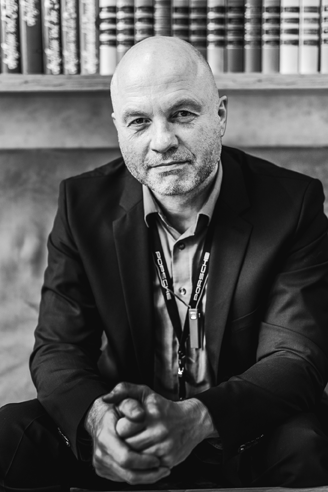
Konrad Wolfenstein
I would be happy to serve you and my team as a personal advisor.
You can contact me by filling out the contact form or simply call me on +49 89 89 674 804 (Munich) . My email address is: wolfenstein ∂ xpert.digital
I'm looking forward to our joint project.
☑️ SME support in strategy, consulting, planning and implementation
☑️ Creation or realignment of the digital strategy and digitalization
☑️ Expansion and optimization of international sales processes
☑️ Global & Digital B2B trading platforms
☑️ Pioneer Business Development / Marketing / PR / Trade Fairs
🎯🎯🎯 Benefit from Xpert.Digital's extensive, five-fold expertise in a comprehensive service package | BD, R&D, XR, PR & Digital Visibility Optimization

Benefit from Xpert.Digital's extensive, fivefold expertise in a comprehensive service package | R&D, XR, PR & Digital Visibility Optimization - Image: Xpert.Digital
Xpert.Digital has in-depth knowledge of various industries. This allows us to develop tailor-made strategies that are tailored precisely to the requirements and challenges of your specific market segment. By continually analyzing market trends and following industry developments, we can act with foresight and offer innovative solutions. Through the combination of experience and knowledge, we generate added value and give our customers a decisive competitive advantage.
More about it here: